Shiroi Koibito Park with Kids: A Sweet Stop, Best Booked Ahead.
A sweets factory park with a hands-on workshop can be the best hour of a Sapporo trip for a child, and the difference is usually booked before you arrive.
Age 3 and under free; workshops ¥1,500 to ¥2,000; the rose garden is free. Park tickets need no booking.
Paid-area last admission 16:30; open all year, with shorter hours over New Year.
Built around a workshop of 15 to 40 minutes; the clock show plays on the hour.
One adult may accompany each child in a workshop; preschoolers should have one.
Limited, first come, no booking; free coin lockers too.
Some links on this page are affiliate links. LuNi may earn a commission at no extra cost to you.
Is Shiroi Koibito Park worth it with kids?
The short version, before the costs, the timings and the case for each child.
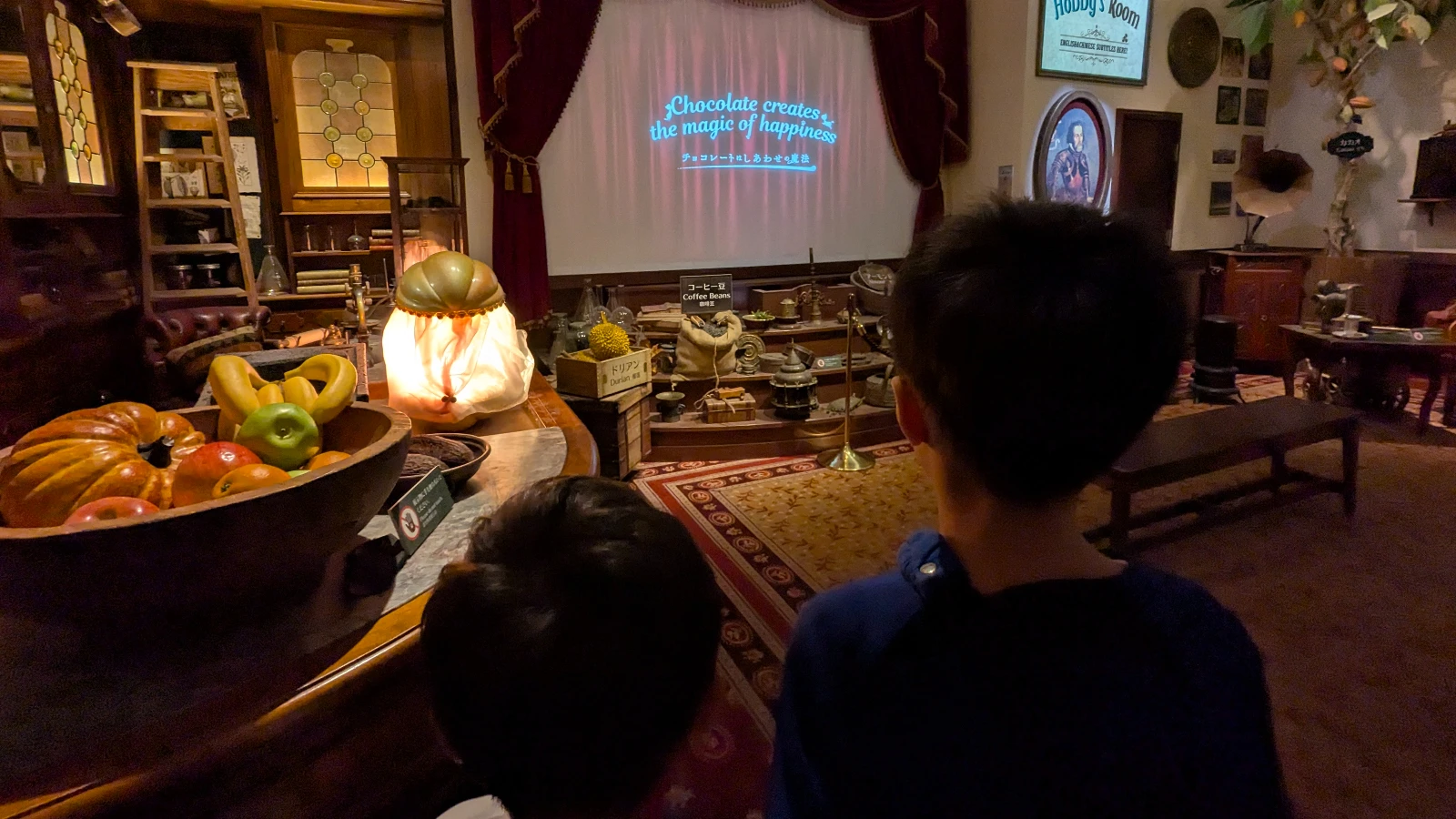
Yes, with one condition: book the workshop. The park is run by ISHIYA, the maker of Shiroi Koibito, and the part children remember is not watching sweets being made but making their own, decorating a cookie or drawing on a Shiroi Koibito of their own. It suits the child who likes to make things and the child who likes a plan, since the workshop time fixes the day. It asks more of a child who takes in everything, because of the projection show and the clock show on the hour, and of a child who tires, since the bus stop is now a walk from Sapporo Station. Book the workshop, then build the visit around it.
Planning Your Visit to Shiroi Koibito Park with Kids.
Plan this one backward from the workshop. Choose the course and book it online first, which you can do for any day in the current or next month; then set the rest of the visit around its start time. Buy the park ticket online too, because it comes with a priority line at the paid-area entrance. Decide how you are arriving: the bus from Sapporo Station now leaves from a stop about seven minutes’ walk from the station itself, and the park runs no shuttle of its own, so a car is simpler, with discounted parking on a paid-area ticket. Last, check the season, because hours change over New Year and in the winter illumination season. With the workshop done, the afternoon is free for another of Sapporo’s family stops.
Every LuNi attraction guide starts with a visit, with our own children
LuNi rates and writes about attractions only after visiting them with children. Luca and Nico were at Shiroi Koibito Park, and what they did there is recorded further down this page, including how each child actually met it.
Children arrive with different tolerances: for noise, for lines, for standing still, for being on their feet all day. A guide written for the average of them helps almost nobody. So every place on this site is read four ways, and each verdict says which children it already suits and what makes it work for the rest. Whoever you are bringing, the answer here is built for your family rather than for a general reader.
Restricted-movement depletion stays low when the visit centers on making something by hand, so book the workshop and walk the rose garden between.
Sensory-input depletion builds around the projection show and the hourly clock show, so skip the projection set and let the workshop anchor the visit.
Unfamiliarity and unconfirmed structure ease when the workshop is booked with a set course and time, so reserve it and name it in advance.
Sustained walking and standing build from a bus stop that moved away from the station, so drive, borrow a stroller, and keep the visit short.
- Cost
- ¥1,200 adults / ¥600 age 4 to junior highAge 3 and under free; workshops ¥1,500 to ¥2,000; the rose garden is free. Park tickets need no booking.
- Booking
- Book the workshop onlineWorkshops book for the current and next month; an online park ticket gives a priority line.

Hotels we would book for this visit.
Three city hotels, for a park that is a half-day out by bus or car, each chosen as a base for the whole Sapporo stay rather than for the park alone.
| Property | The LuNi Reason |
|---|---|
| LUNI Pick Keio Plaza Hotel Sapporo | Keio Plaza Hotel Sapporo is the pick for a family planning the park as a half-day out by bus or car from a large central hotel. With the workshop booked, the rest of the day can be planned from the room the night before, down to the bus. |
| Hotel Sosei Sapporo MGallery Collection In Sapporo | A city base for a family whose Sapporo days start with a bus or a car. The park is a half-day out, so a child who made their own sweets that morning has the afternoon free for the city, with the room as the midday stop. |
| Sapporo Excel Hotel Tokyu | The southern option of the three, for a family that wants the park day to start slowly. A child with a mid-morning workshop can have a full breakfast and a quiet first hour here, and arrive at the park ready to make something rather than tired from the ride. |
Hotel Sosei Sapporo MGallery Collection
Nearby attractions, matched to your child.
Three pairings for what a workshop morning leaves behind: a moving child who wants a sport to try, a child who wants open, quiet space, and legs that want a short stop reached underground.
| Pairing | Why This Solves the After-Visit | For Your |
|---|---|---|
| LUNI Pick Sapporo Olympic Museum A separate half-day, via Maruyama-Koen | After a still workshop, the Sapporo Olympic Museum asks a child to jump, race and keep goal, each for a couple of minutes, and children through junior high go free. Restricted-movement depletion has little chance to build where moving is the exhibit. | Dynamo |
| Odori Park Sapporo Back in the city center, by the Tozai Line | After a projection show and a clock that plays on the hour, Odori Park is open ground to wander at the child’s own pace, with a sunken rose garden at its far end. Sensory-input depletion settles when the next place runs on the child’s schedule. | Sensor |
| Sapporo TV Tower Underground from Sapporo Station to Exit 27 | Back at Sapporo Station, the Sapporo TV Tower is reached without going outside, by the underground walkway to Exit 27, and it is one deck. Sustained walking and standing stay low when the day’s second sight is that short and that close to a station. | Sprinter |
Sapporo Olympic Museum
A separate half-day, via Maruyama-Koen For YourDynamo
Odori Park Sapporo
Back in the city center, by the Tozai Line For YourSensor
Sapporo TV Tower
Underground from Sapporo Station to Exit 27 For YourSprinter
How two children actually met this attraction.
Two children went through the same sweets park and ended at the same table. One passed quickly through the brighter, louder rooms and only settled once the workshop gave him a single thing to do; the finished cookie was his reason for the visit. The other was in motion from the start and only stopped when the workshop let him use his hands, squeezing and piling and decorating. Neither was held for long by watching the factory. Both of them, in the end, wanted the same hour of the visit, for different reasons. Between them they show that the workshop is the heart of this park for very different children, which is why it is the one part of the visit worth securing before you leave the hotel.
Luca moved through the louder, brighter parts of the park without lingering, but settled completely at the workshop table. He liked the chocolate itself, and the part that held him was icing his cookie: a single, contained task he could give his full attention to without the surrounding noise crowding in. He stayed focused on his own piping the entire time, and treated the finished cookie as the point of the visit.
This is the Sensor pattern. A child whose Reserve depletes through sensory input engages most where the input is lowest and most contained, which is what drew Luca to the workshop rather than the brighter rooms. Families with a similar child should treat the booked workshop as the center of the visit, arrive in time for it rather than early, and let the projection show and the busier rooms be optional, taken only if the child asks.
Nico was all motion until the workshop gave him something to do with his hands. He thought the chocolate was cute, but what he loved was the doing: squeezing the icing, piling on the toppings, working the cookie over with obvious enjoyment rather than sitting back to watch. The making absorbed him in a way that watching the production line through glass never quite did.
This is the Dynamo pattern. A child whose Reserve depletes through restricted movement refills it through physical engagement rather than passive watching, which is why Nico’s attention jumped the moment he could act instead of observe. Families with a similar child should weight the visit toward the workshop and the rose garden, and keep the looking, at the factory and the displays, short, so most of the day is spent doing rather than standing and watching.
Watching sweets being made behind glass and then decorating one at a workshop table lets a child see both halves of how things are made: the machines that make many, and the hands that make one. That contrast is quietly and genuinely educational, and the workshop adds pride in something personal. Children learn that the things they buy begin somewhere, and that care goes into each one. A morning that ends with a sweet they decorated themselves is a lesson in craftsmanship a child can taste.
The LUNI Rating for Shiroi Koibito Park.
One fact sits under all four verdicts: the best thing at Shiroi Koibito Park is a short workshop best booked ahead. Children who need to move, and children who need structure, both do well once it is secured. Two need a plan because of the rest of the visit: a projection show and an hourly clock show for a child who takes in everything, and a bus stop now some way from Sapporo Station for a child who tires on foot. The child the bus-stop walk wore down gets an easier day at Sapporo Science Center, which sits right at a subway exit, with a real subway car to try.
Book the making, walk the garden between. The Dynamo depletes through restricted movement, and a factory park could easily be a morning of watching through glass. What makes it work is the workshop: a course of fifteen to forty minutes in which the child decorates a cookie, draws on a Shiroi Koibito or builds a chocolate pie sandwich with their own hands. The rose garden outside is free and open, a place to move between the paid parts.
Get the order of the visit right. Put the workshop in the middle, not at the end, so the child arrives with energy and leaves with a finished object. Use the rose garden before and after it, and the hourly clock show as a marker for moving on. Keep the paid-area viewing short for this child, because watching is the part that asks them to stand still. A set ticket with a drawing activity adds one more thing to do.
What this means for your Dynamo: restricted movement is answered by making something. A younger Dynamo needs the cookie decoration and the garden; an older one can take a longer course and the paid area.Skip the projection, keep the workshop. The Sensor depletes through sensory input, and the park stacks up more of it than its sweet reputation suggests. One of the paid-area ticket sets includes a projection-mapping show. A mechanical clock show plays every hour on the hour through the day. None of this is extreme, but together it is a lot of performance for a child who takes everything in, which is the whole difficulty.
Choice protects this child. Buy the plain paid-area ticket rather than the projection set, and time the rose garden walk away from the top of the hour if the clock show bothers the child. The workshop is the refuge: a small task with a clear end. Arrive close to its start time rather than early, so the child spends the waiting in the garden rather than inside.
What this means for your Sensor: sensory input builds from the shows, not the workshop. A younger Sensor needs the plain ticket and the garden between; an older one can choose one show and skip the other.Reserve the course, and name it in advance. The Anchor depletes through unfamiliarity and unconfirmed structure, and the workshop system suits this child well. Courses are booked online for a set date and time, each has a named task and a published length of about fifteen to forty minutes, and the rooms are assigned by the park. An online park ticket adds a priority line at the paid-area entrance, which removes one more unknown.
Make the booking part of the child’s plan. Choose the course together, show them what they will make, and say the time. Then build the rest of the visit around that fixed point: the garden, the workshop, the clock show on the hour, the way home. Tell the child that the courtyard food stands are closed for renovation, so the missing ice cream is not a surprise.
What this means for your Anchor: unfamiliarity shrinks to one booked course at a known time. A younger Anchor needs the course and its time named at home; an older one can choose and book it.Drive, borrow a stroller, keep it short. The Sprinter depletes through sustained travel-style walking and standing, and arriving is most of what it costs here. Works for the Shinkansen have moved the Sapporo Station bus stop, which is now about seven minutes on foot from the station, and the park runs no shuttle of its own. Inside, the courtyard food stands, one easy place to stop, are closed until about summer 2027.
Shorten both ends of the day. Drive if you can: parking is discounted to three hours for 300 yen with a paid-area ticket. Borrow a stroller at the park, free and first come, for a younger child. Make the workshop the long stop of the visit, and leave soon after it rather than filling the afternoon. If you take the bus, allow for the walk to the moved stop at Sapporo Station on the way back as well, when legs are tired.
What this means for your Sprinter: walking and standing build before the park and inside it. A younger Sprinter needs the car, a borrowed stroller and a short visit; an older one can manage the bus if the visit stays compact.The questions parents actually ask.
The workshop is the one thing to book at Shiroi Koibito Park, online and as early as the dates allow. The prices step by school level rather than by age, so check the ages in your family against the bands. Getting there takes a little more planning than it used to, with the Sapporo Station bus stop moved about seven minutes’ walk away. The paid area, the rose garden and the clock show all fit around the workshop time, so fix that first and let the rest follow. A child the two shows overwhelm can have a quiet morning at the Hill of the Buddha, where voices stay low.
Is Shiroi Koibito Park worth visiting with kids?
Yes, if you book a workshop. The sweets workshops, where children decorate cookies or draw on their own Shiroi Koibito, are the part that holds them, and they are reserved online first. The rose garden and shops are free, the paid area is priced by school level, and an hourly clock show plays in between.
How much does Shiroi Koibito Park cost?
The paid area costs 1,200 yen for adults, from high school up, and 600 yen for children from age 4 through junior high; children 3 and under are free. Two adults and two children pay 3,600 yen, and each workshop course adds 1,500 to 2,000 yen. The rose garden and shops are free.
What are Shiroi Koibito Park’s opening hours?
The park opens 10:00 to 18:00, and the last admission to the paid area is 16:30. Hours change over New Year and during the winter illumination season, and the park may change hours or close on short notice, so check its site before a visit in either period.
How do the sweets workshops work?
Courses take about 15 to 40 minutes. Booking is online only, for dates in the current and next month; the hand-made Shiroi Koibito course gives reservations priority. One adult may accompany each child without paying for the workshop, though the adult still needs a paid-area ticket. A child who can work alone needs no adult; preschoolers should have one.
How do you get to Shiroi Koibito Park?
By bus from Sapporo Station, where bus stop 1 has moved for the Shinkansen works and is now about 7 minutes on foot from the station, or by car. The park runs no free shuttle of its own. Parking costs 300 yen an hour, with the first 30 minutes free, or 300 yen for 3 hours with a paid-area ticket.
Is Shiroi Koibito Park stroller-friendly?
The park lends strollers and wheelchairs free of charge, in limited numbers, first come, with no reservations, and the coin lockers are free. For a toddler, bring a stroller from home if you can rather than rely on the loan, because a busy morning can empty the supply before you arrive.
Is anything closed at Shiroi Koibito Park right now?
Yes. The courtyard food stands, Soft Cream House Canterbury and Drink Stand Brighton, are closed for renovation from September 3, 2026 until about summer 2027. Plan snacks elsewhere in the park. The rest of the park, including the paid area and the workshops, is open as usual.
When is the clock show at Shiroi Koibito Park?
The mechanical clock show plays every hour on the hour from 10:00 to 17:00, and is canceled in strong wind or for maintenance. Use it as a timer for the day: a workshop between shows, a walk through the rose garden, and the next show as the signal to move on.
Where Shiroi Koibito Park fits your Japan trip.
Official site and opening information: Shiroi Koibito Park