Japan with kids, planned in four stages.
Every other Japan family travel resource is organized by topic. This one is organized by where you are in the decision. It runs on the premise behind The LUNI Framework: family travel spends three currencies, not two. Money and time, and your child’s Reserve. Tell us your stage and we will hand you the next four reads, not the next forty.
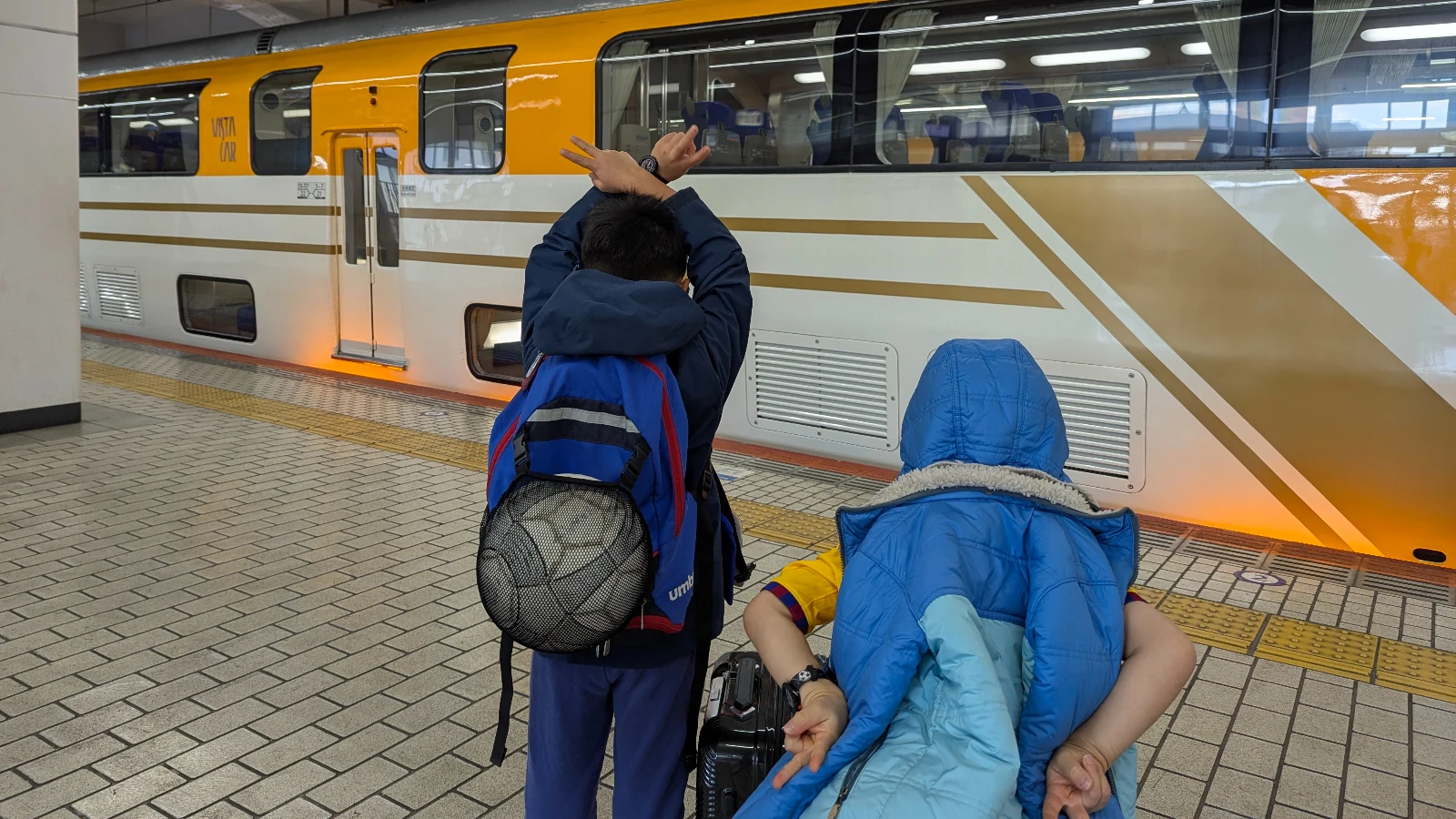
“The right Japan itinerary is the one your child can actually finish.“
Three answers in. Four reads plus one verdict.
Your child’s profile, your trip length, and your city shortlist. The four reads we surface are calibrated to your specific combination, not the average family’s.
Every guide is labeled by when to read it.
A planning library is only useful if the reader knows when each guide applies. Every guide here carries the moment it is for, and the moment to skip it.

Built around your child.
Don’t build your own path. Follow ours.
Six curated reading orders that move through the planning stages in sequence. Each sequence is built for a specific kind of family. Pick the one that fits yours.
The First-Timer’s Sequence
Six reads, in order, that take a family from “Is Japan even right for us?” to packed and ready.
The Sensory-Sensitive Sequence
Six reads built around the recovery-first pacing strategy that makes Japan workable for a sensory-sensitive child.
The School-Age Sequence
Six reads for the planning sweet spot: kids old enough to walk and engage, young enough to still travel as a family unit.
The Teen Sequence
Six reads built around the trip many families realize, too late, was the last one they had together.
The Toddler-Family Sequence
Six reads that map the logistical levers families with very young children need to know about before they book.
The Two-Week Sequence
Seven reads that build a sustainable itinerary across multiple cities without losing the kids by day eight.
Bilingual tools for high-stakes moments.
Two downloadable cards designed for situations where language gaps matter most: crowded stations and restaurant conversations about allergens.
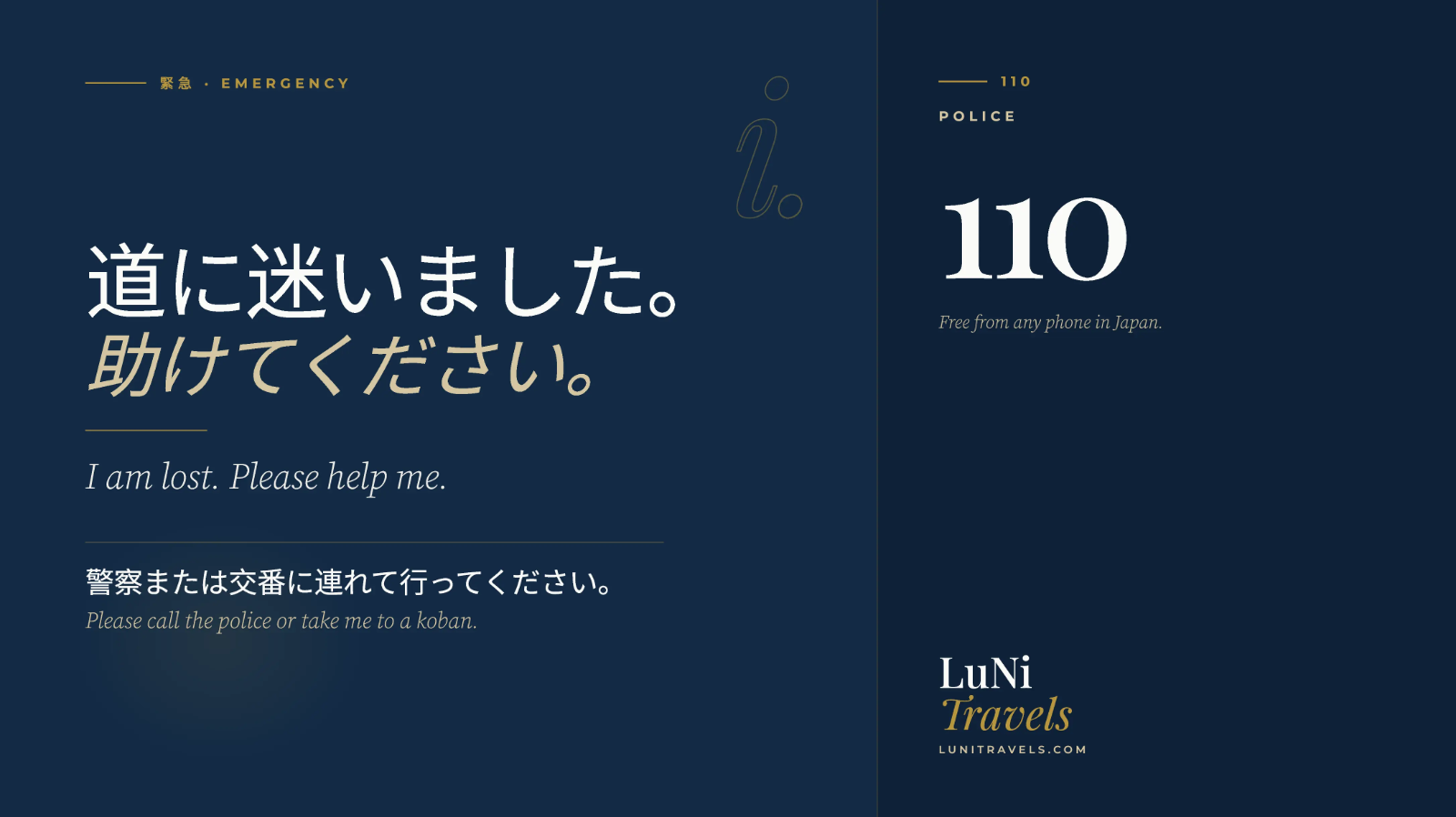
Lost Child Help Card
Bilingual card stating “I am lost. Please help me.” in Japanese and English. Fill in your hotel name and contact number before departure. Designed for crowded stations and high-traffic areas.
Download PDF →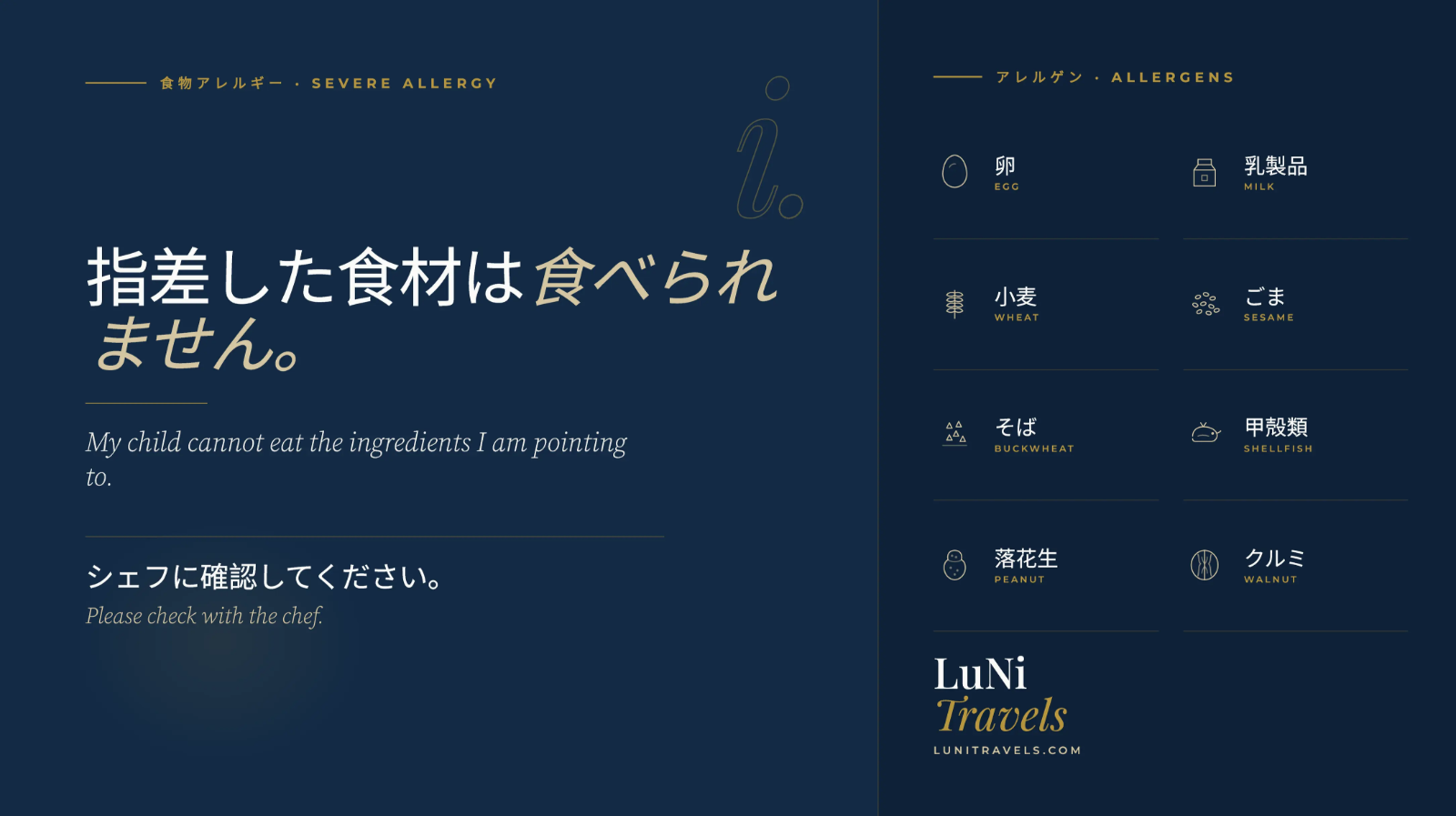
Food Allergy Translation Card
Lists common allergens in Japanese with follow-up prompts about shared oil, dashi stock, and garnishes: the questions most allergy cards omit and Japanese restaurant staff actually need to answer.
Download PDF →