The Sapporo Family Travel Hub

Sapporo,
for families.

Sapporo sits at the head of Hokkaido and at the bottom of every Japan family itinerary built around the Golden Route. The city earns its place not through landmark density but through what it makes possible beyond it, the airport, the rail terminus, and the hotel depth that turn Hokkaido from a complicated detour into a route a family can actually plan.
Recommended stay
2–3 nights
Best base
Sapporo Station Area
Strongest profiles
Sensor & Anchor
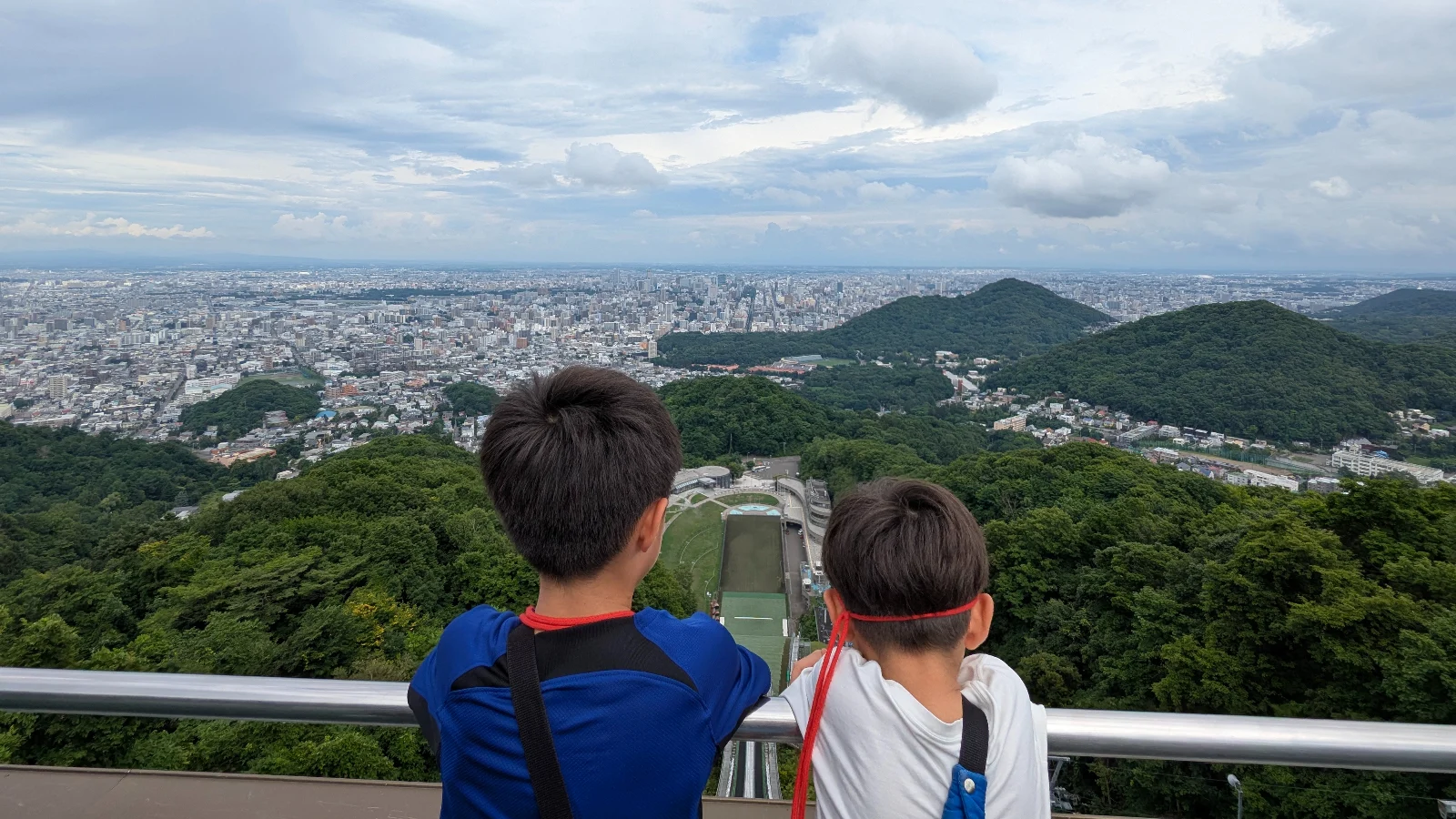
Luca and Nico at the Okurayama Ski Jump observation deck overlooking Sapporo, Hokkaido
Start Here

Four ways to orient yourself before you plan.

A ranked Sapporo guide, a profile quiz, the framework that powers every recommendation on this site, and the wider Japan context. Begin wherever the question feels most urgent.

Stage 1: Where to Base Your Family

Choose your basecamp before anything else.

Sapporo is large enough that three neighborhoods genuinely work as a family base, and the choice still shapes every day. The Sapporo Station Area is the transit-led default; Odori trades transit for walkable density; Nakajima Park trades both for genuine evening quiet.
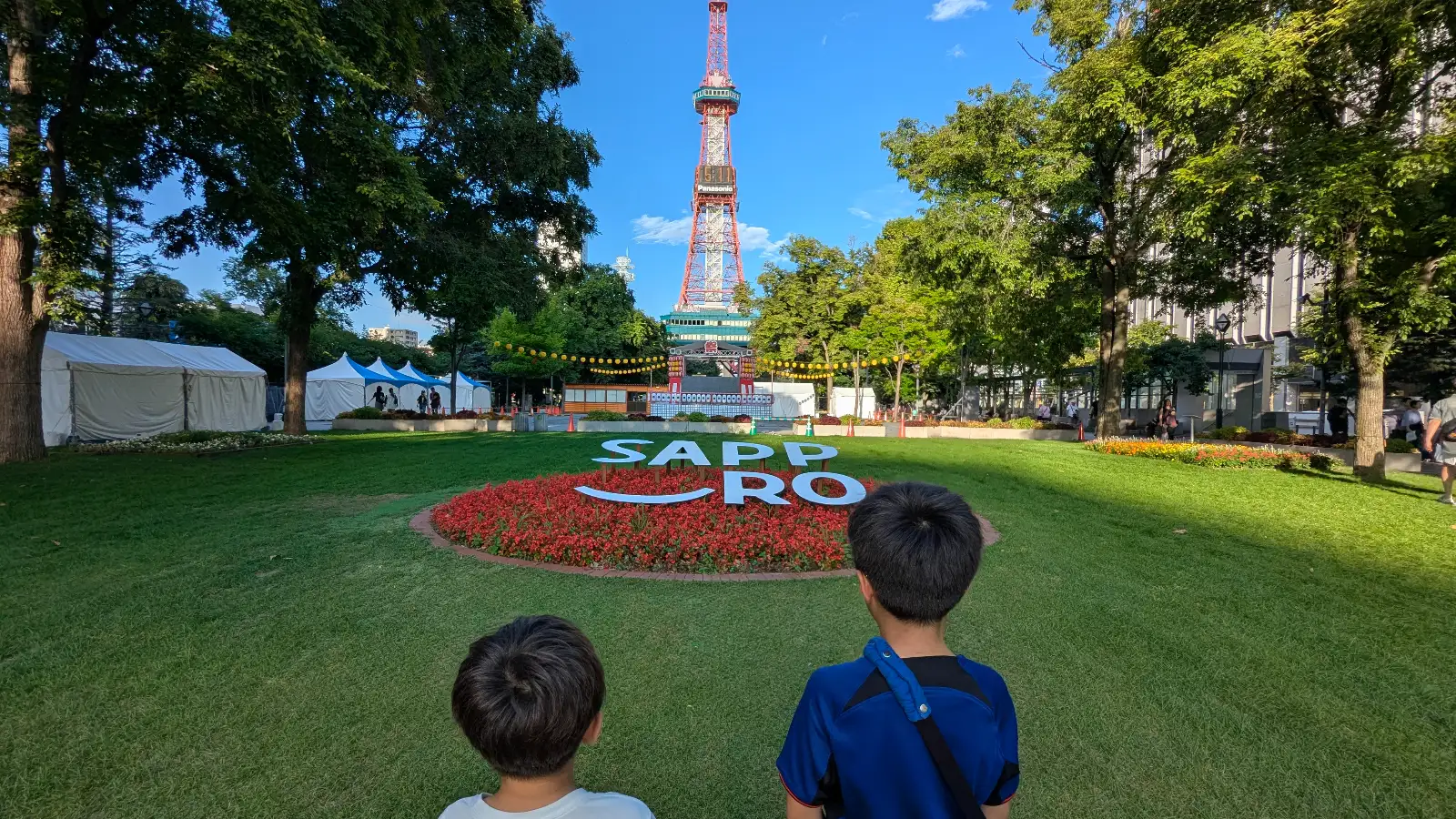
Luca and Nico at Odori Park with the Sapporo TV Tower behind in Sapporo, Hokkaido
01 / Where to Sleep
Sapporo Station Area
Best base for first-time families & multi-city Hokkaido trips
Sapporo’s transit anchor and the only neighborhood with hotel inventory dense enough to make the city a real Hokkaido basecamp. JR Sapporo terminates every rail line into the city, the Namboku and Toho subway lines feed Odori in two stops, and the Hokkaido Shinkansen extension will eventually arrive here. Day trips to Otaru run thirty minutes west on the JR Hakodate Line, and New Chitose Airport sits thirty-seven minutes south on the Rapid Airport service. The single station-radius arrival is the lowest-navigational-complexity entry into Hokkaido a family can have.
02 / Walkable Density Choice
Odori
Best for park-front pacing & central-city walking
Sapporo’s commercial and civic core, fronting Odori Park and one subway stop south of the station. The walkable density is the strongest in the city: department stores, family-accessible restaurants, and the underground passages connecting Sapporo Station to Susukino all converge here. Hotel inventory skews mid-tier and business-tier rather than family-suite, and the trade is foot access to nearly everything central without a daily train decision.
03 / Residential-Quiet Choice
Nakajima Park
Best for Sensor families & quiet evenings
The residential district anchored by Nakajima Park, three subway stops south of the station on the Namboku Line and just past Susukino. The park frontage carries a slower pace than anywhere else inside the city, evenings stay genuinely quiet, and the subway connection still reaches Odori and Sapporo Station in under ten minutes. Hotel inventory is thinner here, but families on a longer Hokkaido loop often place Nakajima Park in the recovery slot after a higher-stimulation day.
Stage 2: What to Do in Sapporo

Sapporo by category, filtered by profile.

Select your child’s profile to instantly see which Sapporo attractions suit them. A missing profile label means the attraction is a weaker fit for that profile, not that it should be skipped.

Prefer a Curated Path?

Sapporo itineraries built for families.

Browse the full Japan family itinerary index for ready-made frameworks, including the multi-city Hokkaido routes that anchor on Sapporo.

Stage 3: Getting Around Sapporo

Sapporo transit for families.

Sapporo runs on a three-line subway grid that converges on Odori and a JR network that connects the city to New Chitose Airport, Otaru, and the rest of Hokkaido. The JR Pass changes the math on any inter-regional leg, and the linear north-south geography means most family days inside the city stay short. Four guides resolve every transit decision a family faces.
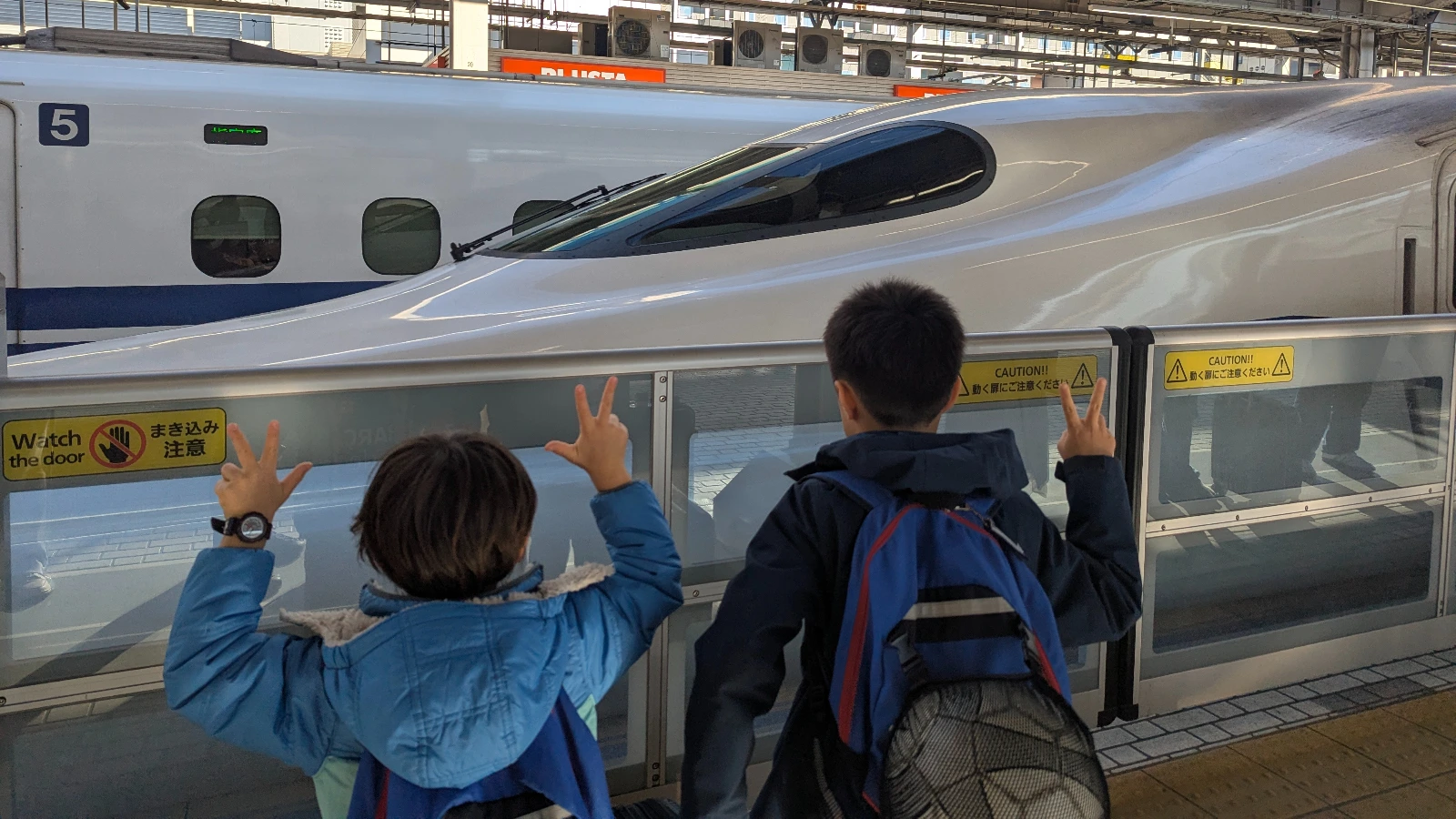
Luca and Nico raising peace signs as a Shinkansen pulls into the platform in Japan