A 3-Day Kobe ItineraryThat Adapts to Your Child.
- The Three Days
- Harbor, mountain and port, one a day
- Where to Start
- The harbor and Kobe Animal Kingdom
- With Teens
- The Rokko day: cable car and Arima
- With Toddlers
- Flat harbor parks and a foot bath
- A Fourth Day
- Himeji Castle
How many days a family needs here, and which things to keep for the middle of the trip, while young legs still have climbing in them.
Some links on this page are affiliate links. LuNi may earn a commission at no extra cost to you.
Three days in Kobe with kids covers harbor, mountain and port, one cluster a day. Start by the water on Day 1, with the harbor and Kobe Animal Kingdom, part-indoor and low-stakes for a jet-lagged arrival. Kobe looks like the easy city, compact and scenic, but the flat harbor and the mountain day cost a child completely different amounts, so the Mount Rokko cable car and Arima sit in the middle, where the legs can still take it. A teenager can lead that day and read the trains; a toddler gets flat harbor parks and a foot bath. A fourth day unlocks Himeji Castle.
Why the day breaks when it breaks.
Family travel runs on three currencies, not two. Money and time are the ones parents already watch. The third is the child’s Reserve, their finite capacity to absorb what a travel day asks of them. Kobe spends that Reserve unevenly, through the seated ropeway a restless child cannot climb out of, the crowded Chinatown lanes at dinner, the stepped Nunobiki climb that reads as ten flat minutes on the map, and the early-afternoon collapse is simply the account hitting zero. The LUNI Framework counts that third currency so the day stops going bankrupt at 2 p.m.
This guide works in two moves. First, the route: three clusters, one a day, arranged so the mountain day sits in the middle where the legs can still take it. Then the one change your child needs, because Kobe’s crowd (Nankinmachi) and Kobe’s climb (Rokko) empty completely different children. The route holds for everyone. The adjustment is yours alone to make.
Three days, one cluster a day.
Kobe’s best family stops fall into three pockets: the harbor and Port Island, the northern mountains of Rokko and Arima, and the port museums around Meriken Park. One pocket a day, and the mountain gets a whole one.
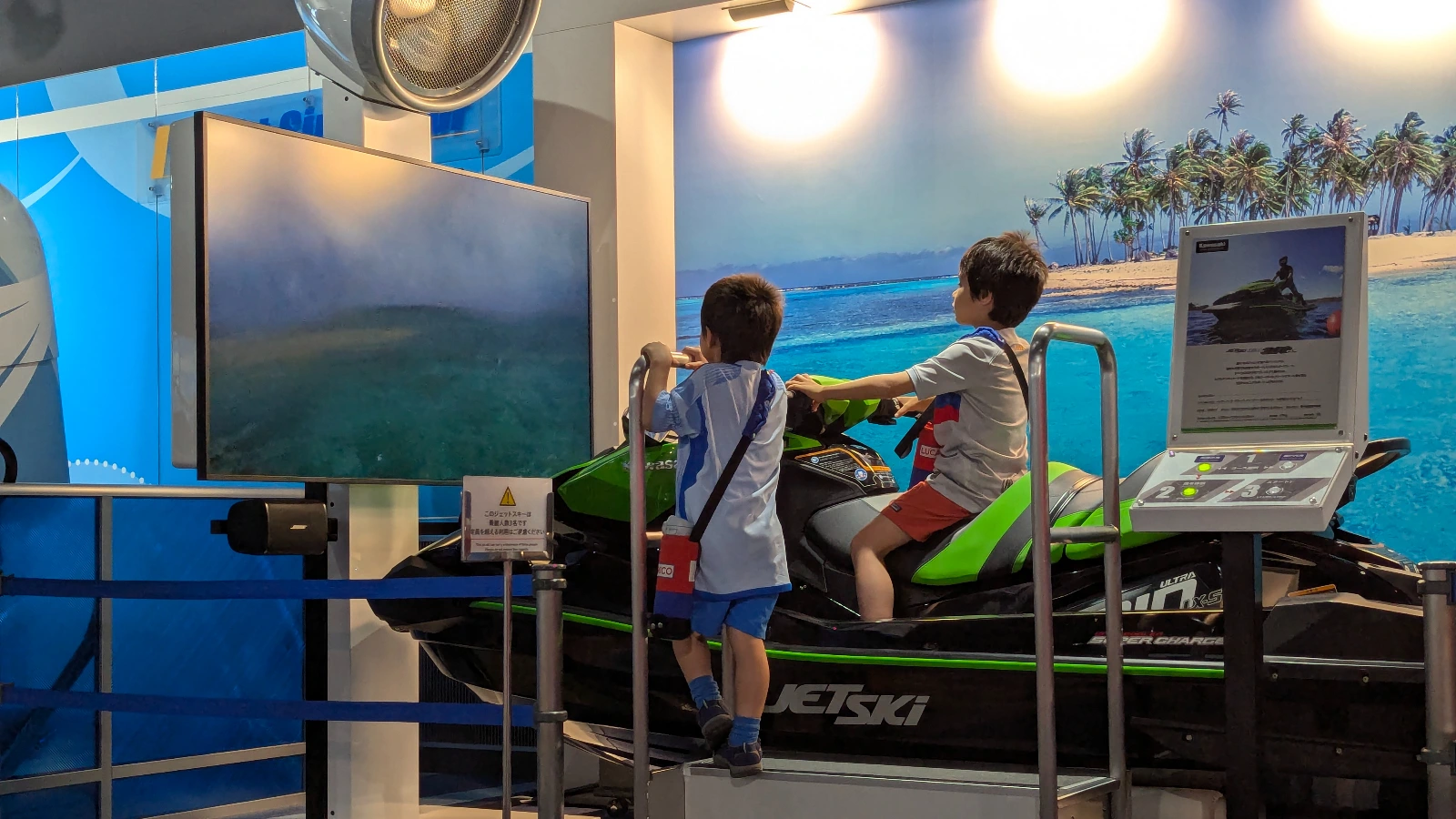
Kobe stacks its highlights against the sea and up the mountains behind it, and this route keeps each day inside one pocket so the Reserve goes into the city rather than the trains that cross it. Day 1 stays by the water: Kobe Animal Kingdom on Port Island for the morning, the Nunobiki Herb Gardens ropeway for the afternoon views, and Harborland with its Mosaic waterfront and Ferris wheel for the evening. Day 2 goes north to the mountains for the Rokko cable car, the Rokko Garden Terrace, and the thousand-year-old hot-spring town of Arima Onsen, closing with the illuminated mansions of the Kitano district. Day 3 works the port itself, the Kobe Maritime Museum and Kawasaki Good Times World, the open lawns of Meriken Park, and a final dinner in Nankinmachi, the city’s Chinatown.
Run it in this order and the mountain lands on Day 2 rather than at either end, which is the whole point. The Mount Rokko and Arima day is kept whole on purpose: the cable car, the garden terrace, and the hot springs sit north of the city and are a full day on their own, so they earn their own day rather than a slot bolted onto a harbor afternoon. The indoor Kawasaki simulators stand ready as a swap-in for weather or age. What follows turns that route into your family’s version of it.
The one change your child needs.
Same three days, four different trips. One of the four below is setting your family’s ceiling, whether you have named it or not. Find it, make the one change it asks for, and the route stops being theoretical.
The change: take the Rokko cable car up and walk down, so Day 2 gives this child a descent rather than a seat. The Dynamo’s Reserve depletes through restricted movement, so the danger stops are the ones that pen a child in place: the seated Nunobiki ropeway and the Mount Rokko cable car, which strap a movement-driven child into a slow box with nothing to convert energy into, and the enforced stillness of an onsen soak or a teppanyaki counter. Kobe hands this profile real relief if you use it. Mount Rokko’s summit trails and the Rokko Garden Terrace turn the mountain into sanctioned roaming, and the short Nunobiki Falls path above Shin-Kobe discharges restlessness on the climb rather than bottling it. Let them walk the ridge before anything asks them to sit.
On the harbor day, Meriken Park is the release valve, a wide open waterfront where a Dynamo can run between the sculptures before the Maritime Museum asks them to file past exhibits. Send them up the falls path or across the park early, then let the museum land once the movement is spent. A younger Dynamo burns it on the park lawns and the Animal Kingdom’s open enclosures; an older one takes the full Rokko ridge trail and paces the group on the Port Liner back into town.
The change: take Nankinmachi at lunchtime on Day 3 and leave, rather than making it the evening. The Sensor’s Reserve depletes through sensory input, and in Kobe the expensive rooms are the ones marketed at children. Nankinmachi, the Chinatown dinner, packs steam, crowds, and competing smells into lanes too narrow to step out of once you are inside them, and the Kobe Anpanman Children’s Museum runs loud with character shows and soft-play noise. For this child, keep Chinatown to one short pass, and if the Anpanman hall is on your list, decline it in favor of the quieter harbor deck. Kobe is generous here: the Nunobiki herb gardens and Meriken Park are real recovery, not padding.
The Nunobiki Herb Gardens at the top of the ropeway drop input rather than raise it, open air and quiet paths with nothing to decode, and the back streets of Arima Onsen are among the stillest hours in the whole trip. Take the ropeway before eleven and the whole of Day 1 runs off that hour. Most of all, do not stack the intense stops back to back: drop the calmest half-day you can spare, a slow morning at the herb garden or an afternoon in the hot-spring town, between a crowded harbor evening and the next big stop, so the Sensor comes in with Reserve still in hand rather than already drained.
The change: stay in Sannomiya all three nights, and tell this child the night before that Day 2 involves a cable car. The Anchor’s Reserve depletes through unfamiliarity and unconfirmed structure, and the unconfirmed thing in this itinerary is the Rokko cable car: a steep, enclosed ride most families do not think to mention beforehand. Arima tempts families into a second hotel for the onsen night. For this child a new room costs more than the train back. Kobe is compact enough that every cluster is a single clean ride away, and the City Loop Bus runs a fixed, repeating circuit an Anchor can learn by the second day. A cable car described the night before is transport. One sprung on the morning is a negotiation.
Then keep the mornings identical. Name the day in order before leaving: Animal Kingdom, ropeway, lunch by the water, Harborland, back by four. Do tomorrow’s the night before. This child sleeps better having already heard it. The route’s most Anchor-friendly stop rewards it by design: Kobe Animal Kingdom’s marked enclosure loop gives a single, followable path from the door, so the order you promised the night before is the order the child actually walks. Nankinmachi has no route and no fixed shape, so keep it for the day this child is steadiest.
The change: ride the cable car both ways on Day 2, and treat the Nunobiki falls path as optional. The Sprinter’s Reserve depletes through sustained travel-style walking and standing on hard ground, and Kobe’s two nature stops are where it drains fastest: the Nunobiki Falls path above Shin-Kobe and the Mount Rokko trails, both uneven and stepped, and the Nunobiki path banks most of its steps in the first ten minutes, so the climb is paid for before the first viewpoint. The rest of Kobe is gentler than Kyoto, but these two undo an afternoon if you run them cold. For this profile, set a firm turn-back point on each: the first falls viewpoint rather than the full loop, the Garden Terrace rather than the ridge trail beyond it.
Then build the recovery in. Kobe gives a Sprinter genuine gifts if you use them: the Nunobiki ropeway and the Rokko cable car are fully seated for their whole run, nothing to climb, and Harborland is flat, covered, and paced as browse-sit-browse rather than a standing queue. Sit down properly for lunch every day. Kobe makes this easy, and for this child the forty-five minutes is what pays for the afternoon. Day 3 is flat by design. Do not move the mountain to the end of the trip to fit something else in. A younger Sprinter does the Animal Kingdom from the stroller and eats at Mosaic. An older one walks the lower Nunobiki falls path and calls the turnaround.
Few families travel with one child, and siblings almost never share a profile. In Kobe the collision is Day 2: the cable car a Sprinter needs is the seat a Dynamo resents. The tighter limit wins. Pair a Sensor with a Dynamo and the day runs to the Sensor’s ceiling, with the Dynamo’s movement slotted into the gaps, never the other way around, because a blown sensory threshold ends the day for everyone while unspent energy only needs somewhere to go. In practice that is the Day 2 collision: the cable car the Sprinter needs is the seat the Dynamo resents, so the Dynamo walks the Garden Terrace paths while the car does the climbing, and the Anchor gets the running order named at the bottom station rather than at the top. Find the child who caps the day soonest, build to them, and one itinerary carries the whole family instead of two plans pulling against each other.
The questions parents actually ask.
How many days do you need in Kobe with kids?
Two to three. Two days cover the city core: the harbor and Port Island one day, the port museums and Chinatown the next. A third day is what buys the Mount Rokko cable car and the Arima Onsen hot springs without cutting into the harbor, and a Himeji Castle day trip can stretch it to four. Kobe also works as a single day trip from Osaka or Kyoto.
What is there to do in Kobe with kids?
The core is animals, harbor, and mountains, held in three clusters: Kobe Animal Kingdom and Harborland by the water, the Kobe Maritime Museum and Nankinmachi Chinatown across the port, and the Mount Rokko cable car with the Arima Onsen hot-spring town to the north. Part-indoor stops like the Animal Kingdom and the museums keep the plan working rain or shine.
What is the best Kobe itinerary by age?
Ages 3 to 16 run the same three clusters; what changes is how much of each one you spend. A toddler gets more harbor-park downtime and a foot bath instead of a full onsen, while a teen leads the Mount Rokko day and reads the trains. Age sets how far a child can go before the Reserve runs low, not which stops they see.
How much walking should families expect in Kobe?
Plan for roughly 3 to 5 miles on active days, less than Kyoto but concentrated in two places: the Nunobiki Falls path and the Mount Rokko trails are where a low-stamina child empties fastest, while the harbor and Meriken Park stay flat and stroller-friendly. Build a genuine seated meal into the middle of the Rokko day so the afternoon has something left in it.
What is the best time of year to visit Kobe with kids?
Spring and autumn are easiest on a child’s Reserve, when mild days make the Nunobiki ropeway, Mount Rokko, and the harbor walks cost far less to get through. Summer heat is a depletion multiplier on the outdoor climbs, so in July and August move Rokko and Nunobiki to the morning and lean on indoor anchors like the Maritime Museum and Kawasaki Good Times World. Winter adds the warm Arima onsen, and the Kobe Luminarie lights, which run in late January and early February rather than December.
Is Himeji Castle worth a day trip from Kobe?
Yes, if you have a fourth day. Himeji Castle sits about 40 minutes west of Kobe by train and is a half to full day on its own. Rather than squeeze it into the three core clusters, treat it as the day-four unlock, the same way Mount Rokko and Arima Onsen earn a full day of their own.
What is the most common mistake families make in Kobe?
Treating Mount Rokko and Arima Onsen as an afternoon add-on rather than a full day. The cable car, the garden terrace, and the hot-spring town sit north of the city and need their own day; folding them onto a harbor afternoon is what drains a child’s Reserve on the trains. Keep each cluster to its own day, with real rest around the one anchor stop.