This post is part of our ongoing Luca & Nico’s Travel Journal series, inspired by our actual adventures, interactions, and discoveries in Japan with kids.
What happens when you mix science, shadows, bicycles, and a full-size space capsule? You get one of the best family activities in Miyazaki. The Miyazaki Science Center is part museum, part playground, and part energy-powered adventure, easily one of our favorite things to do in Miyazaki with kids. With interactive exhibits and a full-sized Gemini capsule, it also stands out among the top science museums in Japan for kids.
To give you a real sense of what it’s like to experience the Miyazaki Science Center through young eyes, here’s what Luca and Nico had to say about our visit.
Luca’s Journal Entry
Dear Journal,
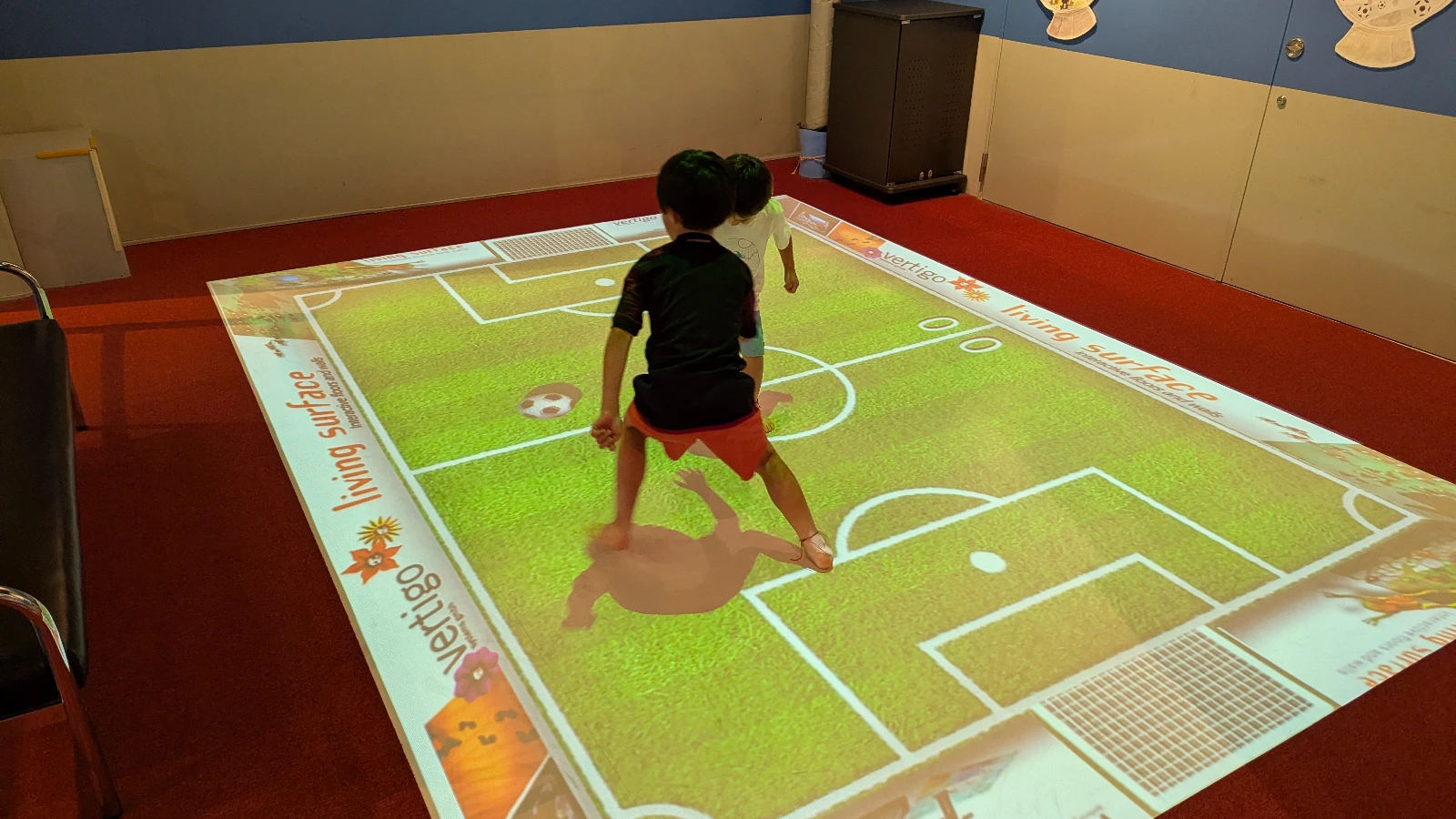
The Gemini capsule looked small from the outside, but once I climbed in, it felt even smaller. It’s a two-person spacecraft, and I don’t know how astronauts fit in there for days. The buttons, panels, and switches were all real. I sat down and imagined what it would be like to blast off with Nico… though I think he’d press every wrong button. Then I found something even more unexpected, a robot version of Albert Einstein. He had wild white hair and blinked while he talked about the real Einstein’s life. I actually listened. I didn’t even realize I was standing still that long. Later, we tried the shadow soccer game. It looked simple, but you had to kick the ball using your shadow, not your feet. I missed the first few times, but once I figured it out, we started winning. We scored 10 goals in our final match before the museum closed. The lights went out on the screen, and Nico yelled, “We did it!” so loud the staff laughed.
~ Luca
Nico’s Journal Entry
Dear Journal,
I found a bike that creates electricity. Not a regular bike, a science bike. I pedaled like crazy and made a glowing ball zoom through a twisty track like it was on a rollercoaster. It was called the Energy Circus. You could use different kinds of power, solar, wind, jumping, even spinning handlebars, to keep things moving. I did all of them. Multiple times. I powered EVERYTHING. Then I ran through the play tunnel, which had a crazy microphone, some glasses that made Luca’s head look huge, and a weird twisty path that felt like a maze. I kept popping out and yelling, “I’m BACK!” every time. We also climbed into a real spaceship. It was squishy. If I had to go to space with Luca, we’d probably end up doing loop-de-loops. Best part? Shadow soccer. You kick a ball with your shadow. That’s weird. But once I figured it out, I was on FIRE. We scored ten goals in the last game before the museum closed. We are science soccer champions now.
~ Nico
The LUNI Framework
Planning around Japan.
Or planning around your child?
Every child travels differently. The LUNI Profile Quiz identifies your child's specific profile in three minutes, and tells you exactly how to structure your itinerary around it.
Luca & Nico’s Challenge:
Can you power every machine at the Energy Circus without giving up? Try all six types of energy and see which one makes the ball move the fastest.
Parent Insight
STEM learning doesn’t need to feel academic, it can be active, loud, physical, and joy-filled. Let kids explore science museums without rushing or over-explaining. Sometimes just pedaling a bike and watching energy turn into motion teaches more than any diagram ever could.
Did You Know? Fun Facts About Miyazaki Science Center
- The full-scale Gemini capsule at the museum was built using similar specifications and materials as the original NASA spacecraft, including the control panel layout.
- The robotic Einstein exhibit uses voice guidance and lifelike motion to introduce children to Einstein’s real-life accomplishments in a relatable way.
- The Energy Circus lets kids explore different types of power generation, all through physical activity.
- The shadow soccer game uses motion sensors and projection mapping to teach reaction speed, coordination, and teamwork in a digital play zone.
Until Next Time…
From shadow-kicking soccer balls to riding energy-powered rollercoasters, the Miyazaki Science Center turned science into one big game. And yes, we definitely want a rematch.
