Nagasaki With Kids:which stop is for which child.
- Day Trips Too
- Huis Ten Bosch and Kujukushima
- Two Timed Stops
- Inasa at dusk, and a Gunkanjima tour
- Room to Move
- Nagasaki Bio Park and Glover Garden
- Quieter Stops
- Peace Park and the Penguin Aquarium
- A Plan to Follow
- Dejima and the Science Museum
The activities and things to do in a hilly harbor city, and how a family arranges them around the harbor and its hills.
Some links on this page are affiliate links. LuNi may earn a commission at no extra cost to you.
Nagasaki with kids holds twelve stops and two big day trips, Huis Ten Bosch and Kujukushima, and two timed stops set the shape of the day: Mount Inasa at dusk, and a Gunkanjima tour, which books out. Nagasaki Bio Park and Glover Garden suit a child who has to move. Peace Park, the Penguin Aquarium and Suwa Shrine are the quieter stops. Dejima and the Nagasaki Science Museum give structure to a child who settles once the plan is clear, and Spectacles Bridge and the Kujukushima cruise rest tired legs. Peace Park, Megane and the seaside also make the low-cost route.
Which stop is for which child.
These stops are not ordered best to worst. They are grouped by which child each one is for. The reason is simple: Nagasaki spreads from a dense harbor center to hillside gardens, hot-spring day trips, and a famously crowded winter festival, and the stop that thrills one of your children is the stop that empties another. So instead of one list, you get four short ones, organized by how each child runs out of steam. The Dynamo runs short when they cannot move. The Sensor runs short on noise and crowds. The Anchor runs short when nothing is predictable. The Sprinter runs short on walking and standing. Find your child below, and start there.
For the Dynamo
Stops that relieve restricted-movement depletion.
For a child who depletes through restricted movement, the strongest stops are Nagasaki Bio Park, Glover Garden, and Huis Ten Bosch.
The open, walk-through enclosures let a movement-driven child roam beside capybaras, kangaroos, and free-ranging birds rather than file past glass, which is exactly the discharge restricted-movement depletion demands, so Reserve is spent on motion instead of on holding still. A younger Dynamo follows the animals from one open habitat to the next without a single rope line; an older one can cover the full hillside loop at pace. In Saikai, about an hour and twenty minutes by bus from Nagasaki Station, it is a half-day on its own.
Who it costs.The Sprinter. The hillside inclines and the distances between the open enclosures that free the Dynamo are a real, sustained walk for a low-stamina child.
How to make it work.Go in the morning when the hands-on areas are calmest, and treat the trip out to Saikai as the day’s anchor rather than an add-on, since the travel time commits the better part of a day on its own.
If this isn’t your child: a genuinely charming animal park, just a longer trip than a city stop and busiest with contact at midday.The hillside garden of Western merchant houses climbs in open terraces with harbor views at every turn, giving a movement-driven child room to range upward and outward rather than wait in line, so the layout itself returns the energy a queue would drain. A younger Dynamo takes the moving walkways up and the open paths down; an older one can explore the houses and the high lookout at their own pace. Thomas Glover’s story and the harbor panorama hold attention without asking anyone to stand still.
Who it costs.The Sprinter. The terraced climb is sustained even with the assisted walkways, and seating thins toward the upper houses.
How to make it work.Ride the outdoor escalators to the top and walk down, so the Sprinter banks the climb, and pair it with neighboring Ōura Cathedral at the foot of the hill to fold two stops into one short outing.
If this isn’t your child: one of Nagasaki’s signature views, worth the entry for the harbor alone.The European-styled theme park near Sasebo is the definitive Dynamo discharge: vast walkable grounds of canals, gardens, and attractions where a high-energy child can move almost without limit, and the scale that would tire another profile is precisely the point. A younger Dynamo runs the open flower fields and boat rides; an older one covers the rides, the towers, and the evening illuminations across a full day. It is a day-trip in scale, roughly ninety minutes from the city, so it stands as its own day rather than a city stop.
Who it costs.The Sprinter. The distances are real and the day is long, and the open grounds ask for sustained walking from open to close.
How to make it work.For a Sprinter, rent a park bicycle or use the canal boats to cover ground, and for an Anchor, fix three or four anchor attractions in advance so the open layout reads as a plan rather than a sprawl.
If this isn’t your child: a spectacular full-day park, but commit to the day-trip or skip it; it does not fold into a city afternoon.For the Sensor
Stops that let a sensory-loaded child recover.
For a child who depletes through sensory input, the strongest stops are Peace Park, the Penguin Aquarium, and Suwa Shrine.
The park is wide, quiet, and unhurried, with dispersed sound, soft sightlines, and broad seating, an acoustic and visual calm that a sensory-loaded child can recover inside rather than brace against. The adjoining museum is sober and low-stimulation in tone. A younger Sensor moves gently among the sculptures and doves; an older one can take in the museum’s history at a measured pace. The subject matter is heavy, so the emotional weight, not the sensory load, is what to pace here.
Who it costs.The Anchor. The museum’s difficult content can unsettle a child who relies on predictable, reassuring structure, so it is best confirmed in advance rather than met cold.
How to make it work.Walk the open park before the museum so the calm is banked first, and preview the museum’s themes with an older child so the visit is confirmed rather than a surprise. Adjacent Urakami Cathedral adds a second quiet stop within a short walk.
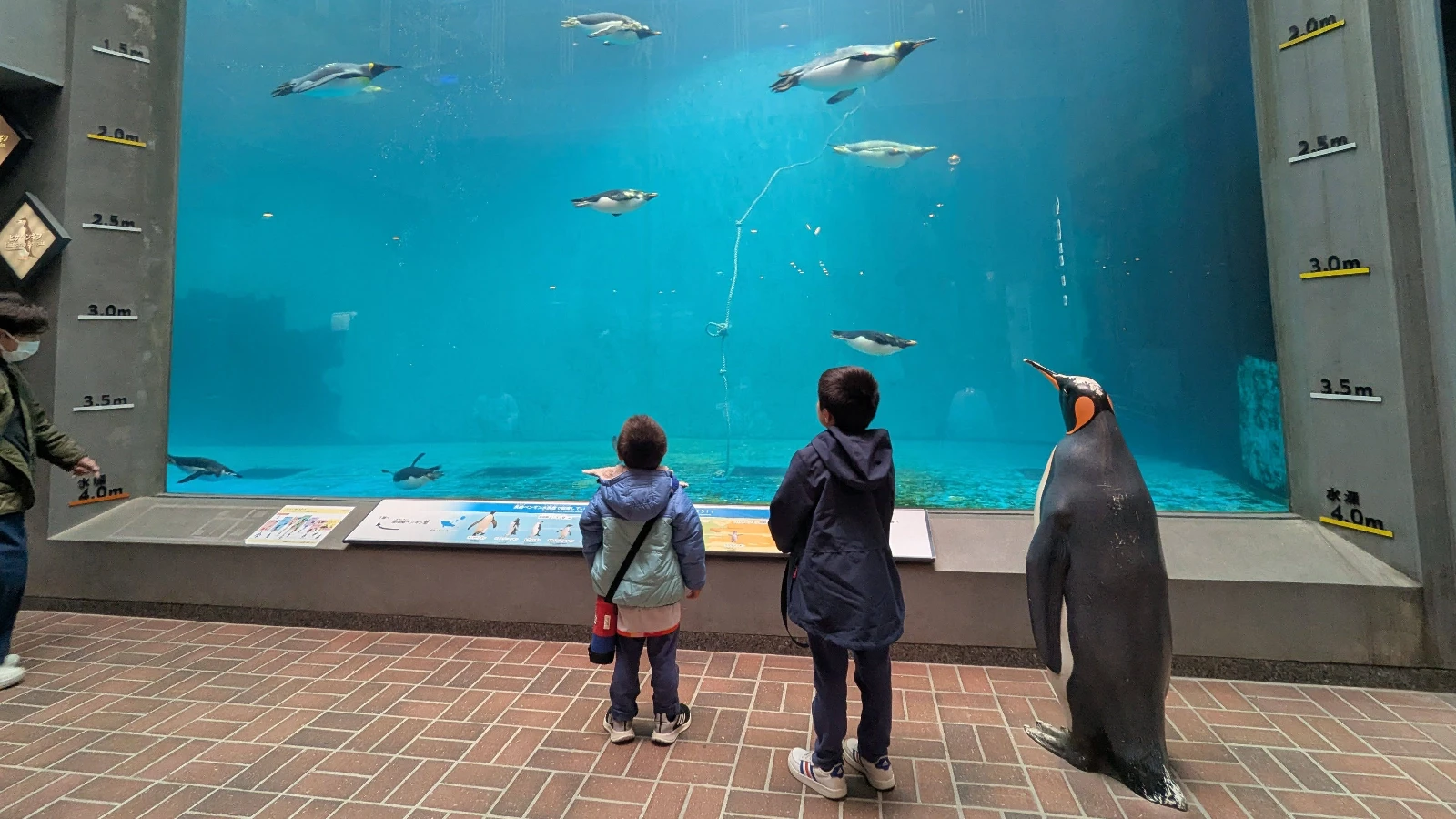
If this isn’t your child: an essential, moving part of any Nagasaki visit, paced for reflection rather than energy.A compact, calm aquarium built around penguins, with low ambient noise, gentle lighting, and a clear single route, the controlled environment a sensory-sensitive child can stay regulated inside while still being delighted. The outdoor beach walks, where penguins waddle close at feeding time, deliver the wonder without the acoustic compression of a big indoor attraction. A younger Sensor watches the swimming from the calm indoor pool; an older one follows the feeding sessions outdoors.
Who it costs.The Dynamo. The viewing-and-watching format offers limited discharge, so chain it to a movement stop rather than another still one.
How to make it work.Visit on a weekday morning before the school groups arrive, when the indoor hall is at its quietest and the Sensor’s Reserve is highest.
If this isn’t your child: a charming, easy aquarium for any family, just a calmer pace than a major-city aquarium.The city’s grand hilltop shrine sits in forested calm above the center, reached by a long stone stairway into dispersed sound and soft, dappled light, the dial-down a sensory-loaded child needs after the harbor’s bustle. The grounds are spacious and unhurried, with a single clear circuit and no sudden shifts in noise or crowd. A younger Sensor takes the approach slowly; an older one explores the shrine buildings and the view back over the city.
Who it costs.The Sprinter. The stone stairway up to the shrine is a sustained climb with limited seating along the steps.
How to make it work.Take a streetcar to the base to save the legs for the stairs, and for a calm indoor alternative on a hot or wet day, the nearby Nagasaki Prefectural Art Museum offers the same low-stimulation quiet without the climb.
If this isn’t your child: a beautiful, peaceful shrine, though the stairway is the price of the quiet.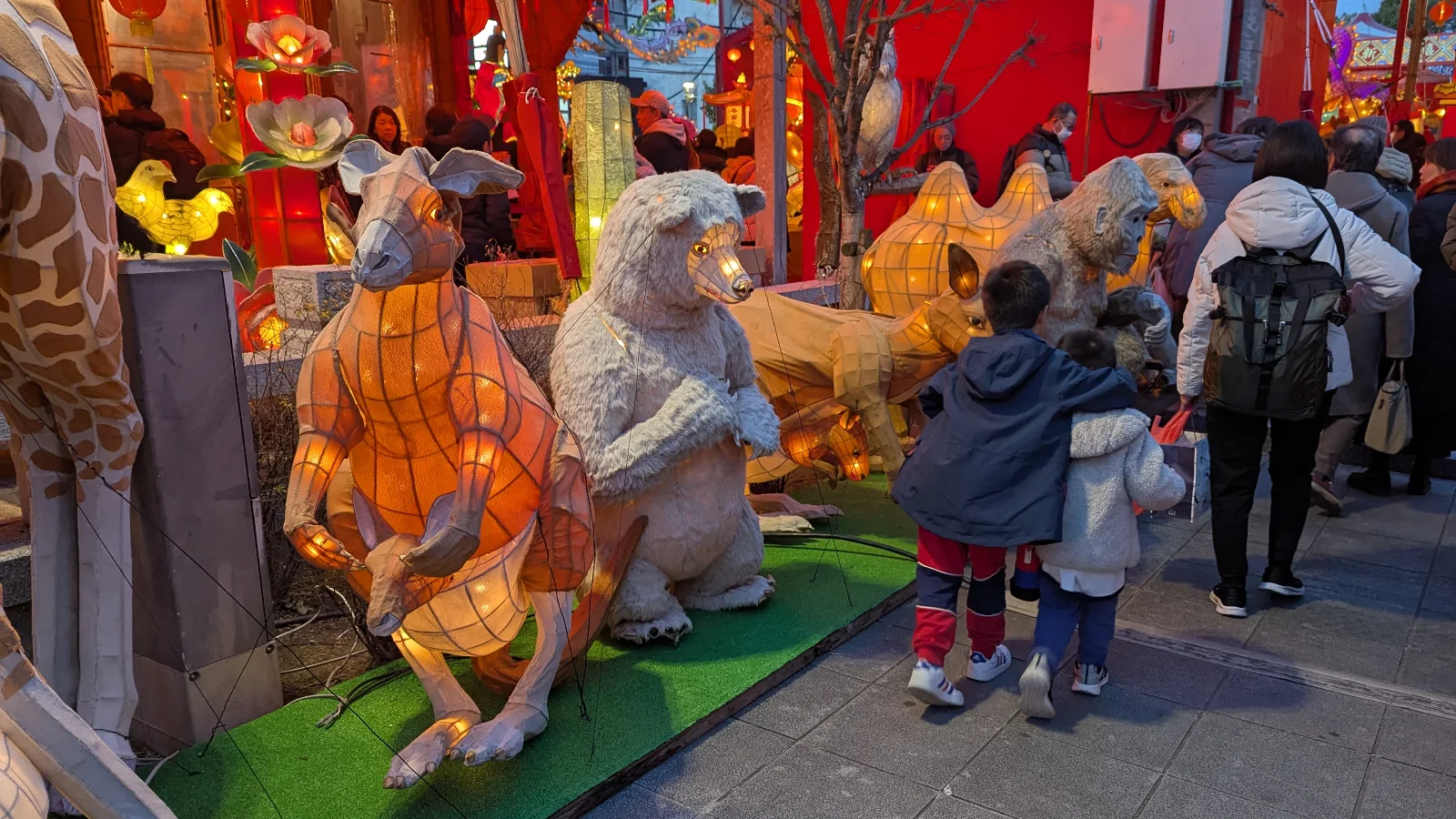
For the Anchor
Stops with confirmed, predictable structure.
For a child who depletes through unfamiliarity and unconfirmed structure, the strongest stops are Gunkanjima, Dejima, and the Nagasaki Science Museum.
The guided landing tour of the abandoned island runs on a booked time slot, a fixed ferry, and a single defined walking route along set viewing points, one of the most structurally predictable outings in the city, which is exactly what an Anchor relies on. The whole sequence can be confirmed in advance and nothing about it improvises. A younger Anchor follows the marked path with the guide; an older one absorbs the mining history they can read up on beforehand. A firm safety age floor of around six applies on the island.
Who it costs.The Sprinter. The uneven island terrain and the standing time on the ferry ask the most of a low-stamina child across the outing.
How to make it work.Book the tour ahead, since slots sell out and rough seas cancel sailings, and if the age floor or the weather rules out the landing, the Gunkanjima Digital Museum recreates the island indoors with the same confirmable structure and no ferry.
If this isn’t your child: a remarkable history-and-adventure tour for older kids, weather permitting.The reconstructed Dutch trading post is a contained, clearly signed walking circuit through restored buildings in a fixed order, a confirmable sequence with a defined start and end that gives an Anchor the predictable structure unfamiliarity erodes. A younger Anchor follows the marked route building to building; an older one works through the exhibits on Nagasaki’s role as Japan’s gateway at a confirmable pace. Nothing about the loop is open-ended.
Who it costs.The Dynamo. The indoor, read-and-look format offers a movement-driven child little discharge across the circuit.
How to make it work.Pick up the site map at the entrance so an Anchor can see the full route in advance, and pair it with the nearby Nagasaki Museum of History and Culture, which runs on the same orderly, exhibit-by-exhibit structure.
If this isn’t your child: a compact, walkable history stop that folds easily into a central day.Hands-on exhibits and a scheduled planetarium give the museum a confirmable rhythm: a set show time, a clear floor layout, and stations that work the same way every visit, the dependable structure that steadies an Anchor. A younger Anchor returns to favorite exhibits in a familiar order; an older one plans the visit around the planetarium schedule they can confirm in advance. The indoor setting holds steady regardless of weather, removing one more variable.
Who it costs.The Sprinter, mildly, only across a long visit; otherwise the seated planetarium and contained floor keep walking low.
How to make it work.Check the planetarium time first and build the visit around it so the Anchor has a fixed anchor point, and for a child fixed on dinosaurs, the Nagasaki City Dinosaur Museum offers the same orderly indoor format on the Nomozaki coast.
If this isn’t your child: a reliable rainy-day stop that earns its place in any weather.For the Sprinter
Short, low-stamina stops with little walking.
For a child who depletes through sustained walking and standing, the strongest stops are Spectacles Bridge, Mount Inasa, and the Kujukushima cruise.
The stone bridge whose double arch reflects into a pair of spectacles is a quick, low-walk canal stop steps from the streetcar, asking almost nothing of a low-stamina child’s legs, a real landmark that costs no stamina. A younger Sprinter spots the glasses in the reflection in a minute; an older one gets the photo and rests on the canal wall. The reward is immediate and the standing time is near zero.
Who it costs.Almost no one, which is the point. Only a Dynamo wants more, with little room to move beyond the short canal path.
How to make it work.Fold it into the walk between central stops rather than treating it as a destination, and chain the nearby Shinchi Chinatown, Sofuku-ji temple, and the Confucius Shrine (Koshi-byo) with its attached Historical Museum of China in the same low-walk riverside cluster, so the Sprinter banks several close stops for the legs of one.
If this isn’t your child: a five-minute photo landmark and a good story, easy to add to any route.One of Japan’s celebrated night views, reached by ropeway rather than a climb, which is what makes it a Sprinter stop rather than a hike: the cable car does the ascent, the observation deck is a short level walk, and a low-stamina child banks the view without spending the legs. A younger Sprinter rides the cabin up to the lights; an older one stays for the full dusk-to-dark transition. The payoff is high and the walking is minimal.
Who it costs.The Anchor, if the timing is loose. The view is best at dusk, a narrow window that benefits from being confirmed in advance.
How to make it work.Take the ropeway rather than the road, time arrival for just before sunset so the Sprinter waits as little as possible for the lights, and for a quieter, free alternative, Mt. Nabekanmuri Park offers a city overlook without the ropeway crowd.
If this isn’t your child: the signature Nagasaki night view, worth the trip up for the panorama alone.The Kujukushima sightseeing cruise threads an archipelago of pine-topped islands from a seated deck, a low-stamina outing where the boat does the moving and a child who tires on their feet rests while the scenery comes to them. A younger Sprinter watches the islands pass from a bench; an older one tracks the route and the wildlife from the rail. Near Sasebo, about ninety minutes out, it pairs naturally with Huis Ten Bosch on the same day-trip axis.
Who it costs.The Dynamo. A seated cruise offers almost no movement, so a high-energy child is best given a discharge stop on either side of it.
How to make it work.Pick a calm-weather morning sailing for the smoothest water, and on the same trip pair the seated cruise with active Huis Ten Bosch so a mixed-profile family serves both children in one day out.
If this isn’t your child: a scenic, restful boat trip, best as part of a Sasebo day rather than a city stop.Open with the child who runs short first.
The order of a Nagasaki day is set by Reserve, not by the map. Each route opens with the stop that protects the named child, then chains to the nearest compatible one.
Settle these first. Gunkanjima is a booked, weather-dependent tour: reserve the slot in advance, because a booking-gated stop controls the day’s shape more than the route does. Mount Inasa is a dusk stop, so anchor the evening around it. Everything else is walk-up fill-in arranged around those two.
When to go, and what costs nothing.
Spring and autumn are the widest windows, with cherry blossoms in late March and cool, clear weather in October and November; winter brings the sharpest night views from Mount Inasa and the Lantern Festival in February. Summer suits the coastal day trips but runs humid. The free stops carry real weight here: Peace Park and its sculpture grounds, the canal walk at Spectacles Bridge, and Nagasaki Seaside Park all cost nothing, and they are also among the calmest stops in the city, so the free route and the calm route are largely the same route.
Three bases that fit a family’s Reserve.
A shortlist chosen for location logic, not price tier. The full set is in the complete Nagasaki hotel guide.
| Property | The LuNi Reason | Budget |
|---|---|---|
|
LUNI Pick
Hilton Nagasaki
Central, over the station
|
A polished base set above Nagasaki Station with room-to-spread family rooms that hold an Anchor’s routine across a multi-night stay and let a sensory-loaded child decompress fully at the end of a harbor-heavy day, with the streetcar network at the door. | ¥¥¥ |
| Marriott Nagasaki Waterfront, near the center | A waterfront base near the central stops that gives a Sprinter the shortest daily walk to the streetcar and a Dynamo quick reach to the harbor front, with space to reset between stops on a high-stimulation day. | ¥¥¥ |
| Luke Plaza Hotel Hillside, near Mount Inasa | A hillside hotel with sweeping harbor views near the Mount Inasa ropeway, a calmer base away from the center that pairs naturally with a dusk view and an early start the next morning. | ¥¥ |
Budget: ¥¥¥
Budget: ¥¥¥
Budget: ¥¥
These three are a location-logic shortlist. For every family-friendly option across Nagasaki, see the full Nagasaki family hotel guide.