Osaka with Kids a city built for improvisation.
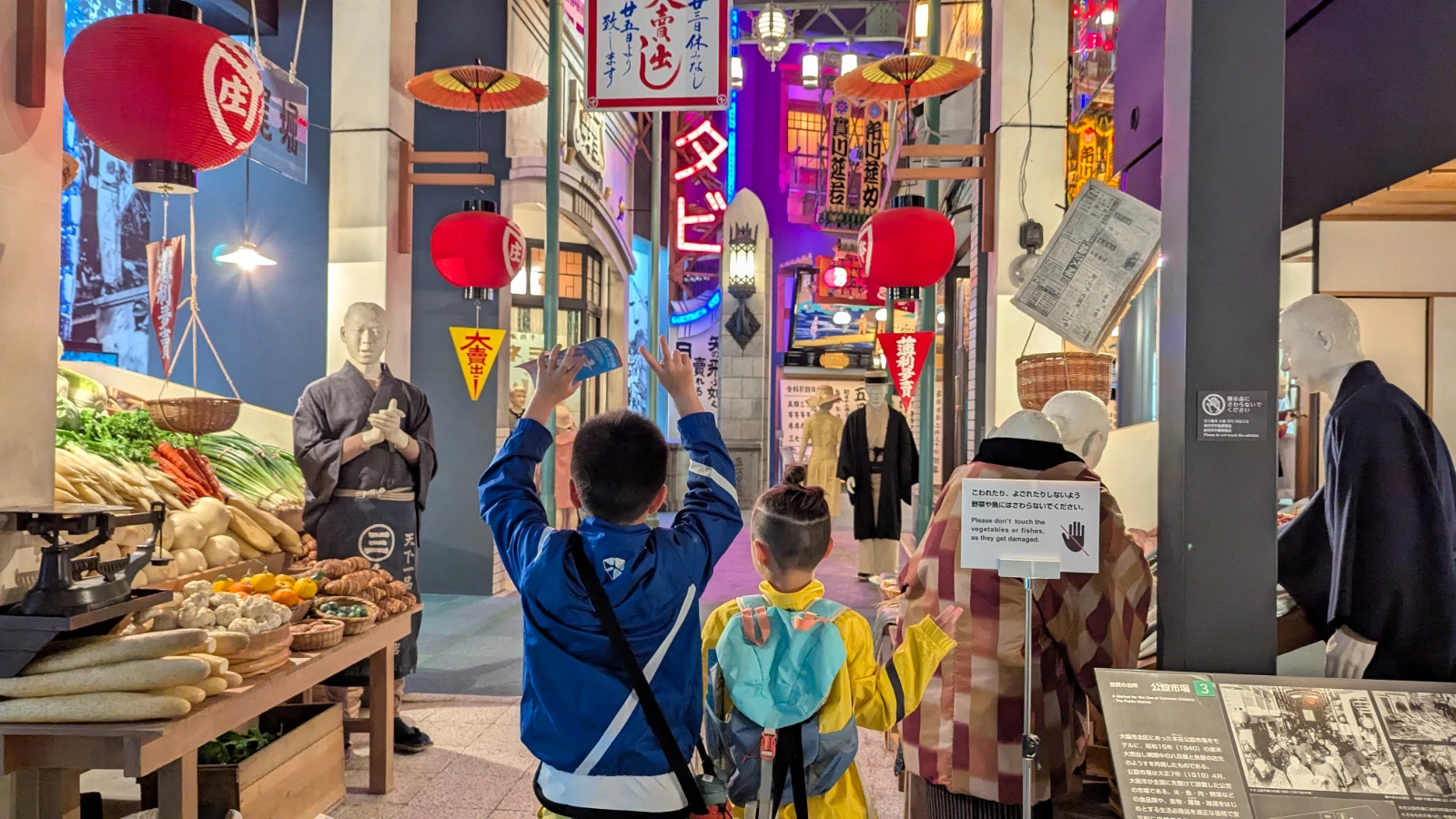
Osaka is Japan’s most approachable big city for families. The ones who struggle here are almost always the ones who mistook approachable for effortless.
Flat underground links, dense hotel supply, calm evenings. Tennoji is the quieter second base.
USJ, the castle and center, an aquarium day. Two if Kyoto is your base.
Street food suits under-fives; Den Den Town rewards independent teens.
Spring blossoms and mild autumn. Summer pushes families indoors by midday.
The JR Haruka runs to Shin-Osaka for the Umeda base; the Nankai Rapi:t is faster if you are staying in Namba.
Some links on this page are affiliate links. LuNi may earn a commission at no extra cost to you.
Why Osaka works for families.
In Osaka, lunch is bought standing up and eaten walking, which removes a decision most families otherwise make three times a day. That is the LUNI Framework’s third currency at work, the child’s Reserve, and this is a city that spends less of it than almost anywhere in Japan.
Osaka’s dominant food culture involves children rather than requiring them to be quiet and still, and that is where the city does its work. Takoyaki, okonomiyaki, kushikatsu, and melonpan are eaten standing or walking, which means a picky eater or a restless toddler is never the logistical problem a 45-minute restaurant service makes them. The food comes to the family, not the family to the food. What that protects is the Reserve, the child’s specific, finite capacity to absorb what a travel day asks of them, which in most cities is drained three times a day before anyone has seen anything.
The flat central geography does the rest. Namba, Dotonbori, Shinsaibashi, and the ground around Osaka Castle Park are compact and stroller-navigable, so a day can be built around two anchor points instead of four, without the uphill shrine walks that tire families in Kyoto. Osaka Castle Park works as a free, shaded recovery space between stimulating stops, and Universal Studios Japan sits fifteen minutes from a major transit hub as a full-day pressure release. The case for Osaka is simple: the city itself carries pacing work most cities leave entirely to the parent.
Osaka rewards exactly the short-attention, movement-driven exploration young children default to. The parents who stop trying to replicate a structured sightseeing schedule, and instead treat the city as a place designed for improvisation, are the ones who report it as the smoothest stop of their whole Japan trip. Osaka does not punish a plan that bends; it was built for one.
A pacing lens, not a rating.
The LUNI Framework reads a city through how each child depletes, not through whether the city is “good.” Osaka suits all four profiles. What changes is how you sequence the day.
The Dynamo depletes through restricted movement, and Osaka is one of Japan’s strongest cities for this profile, because constant visual stimulation and short distances match a need for novelty far better than a shrine-heavy route ever could. Universal Studios Japan is the natural anchor: a Dynamo who burns energy at Super Nintendo World arrives at every later activity calmer and more manageable. The planning consequence is to open on movement and build in genuine unstructured time in the large outdoor spaces, Osaka Castle Park and Nakanoshima Park, rather than stacking attraction onto attraction. For a younger Dynamo, those parks are the release valve; for an older one, a self-navigated Metro hop between districts turns the same need into independence. The one real risk here is over-scheduling.
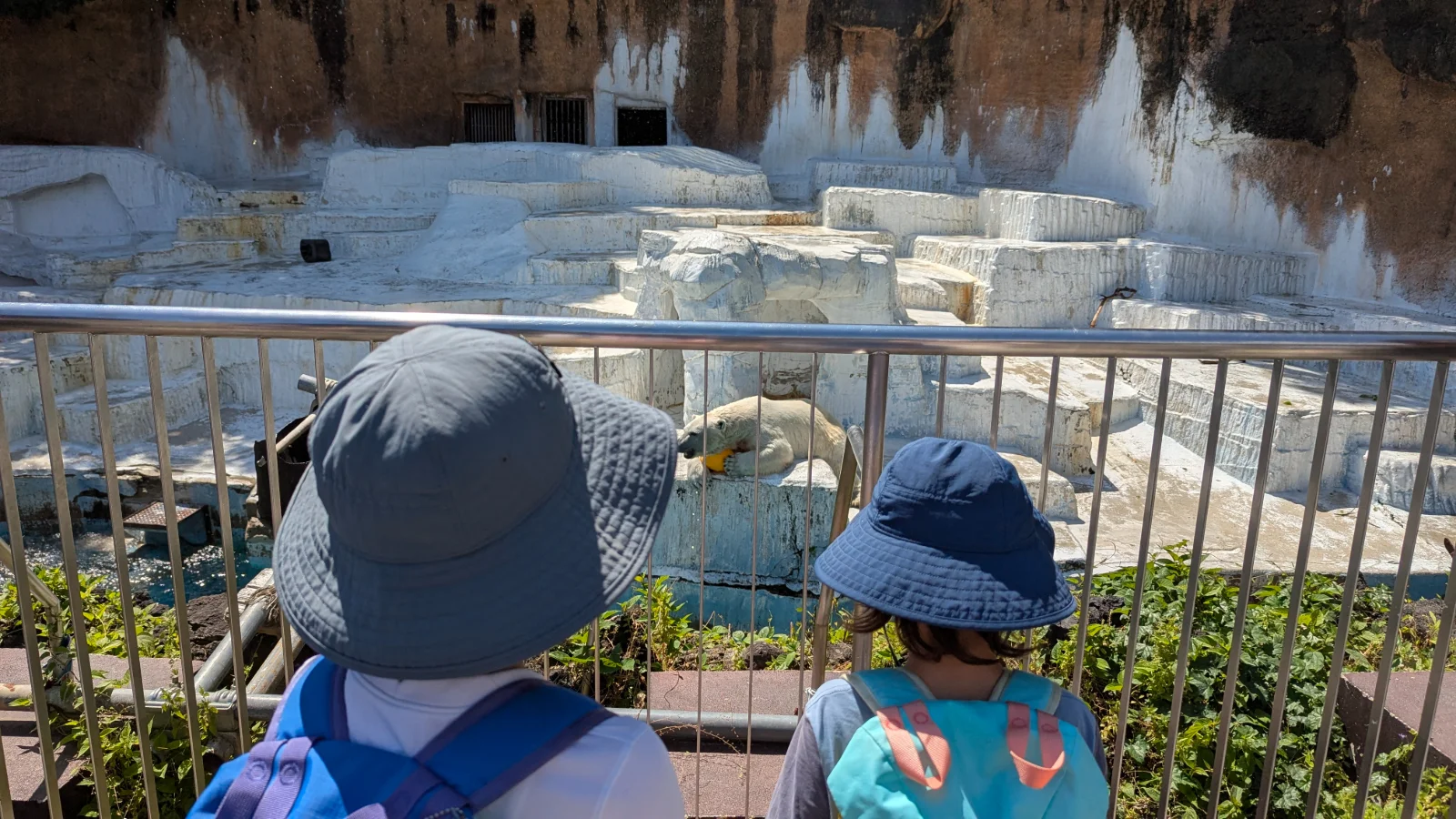
The Sensor depletes through sensory input, and Osaka’s entertainment core, Dotonbori and the Namba arcades at peak hours, is among the densest environments in Japan: narrow channels, overlapping sound, neon, food smells, and crowd proximity that can push a Sensor child to cascade faster than parents expect. This does not rule the city out; it means the structure must protect the baseline. Dotonbori at 9:00 a.m. is a different street than Dotonbori at 8:00 p.m., with the signage and the canal intact and the crowds gone. The planning consequence is to keep a low-stimulation counterweight in reach: Osaka Castle Park, Nakanoshima Park, and Minoo Park all let a Sensor recalibrate. A younger Sensor resets best in open outdoor space; an older one can self-regulate at the Tennoji Zoo safari sections, where the crowd density sits below any indoor equivalent.
The Anchor depletes through unfamiliarity and unconfirmed structure, and Osaka’s food culture is one of Japan’s best environments for this child. Japanese curry at CoCo Ichibanya, ramen, udon, and plain grilled items are available in every district without a formal restaurant, and a convenience store is minutes from almost any point in the city, so fuel is never in doubt. The structural challenge is the sensory variety of Namba and Dotonbori, which an Anchor can read as disorienting rather than exciting. The planning consequence is to commit to one neighborhood as a base and build the first full day entirely within walking distance of the hotel. A younger Anchor settles once the immediate blocks feel known; an older one anchors on a fixed IC-card routine and a reliable meal before the city widens out.
The Sprinter depletes through sustained walking and standing, and Osaka is unusually kind here, because the flat central geography removes the uphill climbs that drain this profile in Kyoto and Nara. A family based in Namba can reach a full day of activity without a long transfer. The planning consequence is disciplined daily volume: the primary attraction in the morning block, the 1:00 to 3:00 p.m. window for hotel recovery, and a short, low-demand afternoon, which Osaka’s shorter distances make easier to hold than Tokyo’s. Universal Studios Japan needs its own plan, since the park is large and offers no natural rest rhythm: map the ride zones by proximity, take Super Nintendo World first when stamina is highest, and seat a break between zones. A younger Sprinter keeps the stroller for the park circuit; an older one paces best when the hard walking lands early.
What the city works for.
A profile is a depletion mechanism, not an age. Osaka holds up across the span, but what it offers shifts as a child grows.
Toddlers do better on Osaka’s street food and flat core than most families expect. The one real challenge is crowd density in Namba and Dotonbori, where a small child at street level is invisible to oncoming foot traffic, resolved by a lightweight stroller or a carrier without restricting mobility. Osaka Aquarium Kaiyukan is the strongest dedicated toddler attraction in the city, its dim lighting, slow-moving marine life, and wide corridors suited to short attention spans and stroller access. Kids Plaza Osaka holds a dedicated under-five floor for days when heat or crowds make city exploration impractical.
School-age children are the primary beneficiaries of Osaka’s attraction mix. Universal Studios Japan’s Super Nintendo World is calibrated almost exactly for this range, its interactive wristband elements and the Mario Kart ride generating sustained, focused engagement rare at this age in a museum. Osaka Castle holds attention too, through the interactive samurai-era exhibits and battle-formation models rather than a decorative interior. A castle morning paired with a full afternoon at Kids Plaza Osaka, with its science experiments and climbable multi-story play structure, is the highest-value two-stop day in the city for this age.
Teens get something most Japan destinations do not: genuine independence-compatible exploration. Shinsaibashi and Den Den Town are navigable without adult supervision for a teen comfortable with a prepaid IC card and the Osaka Metro. Den Den Town, the city’s answer to Akihabara, offers capsule-toy machines, anime merchandise, and retro gaming at accessible prices, and a two-hour self-directed afternoon there lands harder than most structured stops. For teens who have aged out of Mario Kart, Universal Studios Japan’s Wizarding World of Harry Potter and the newer thrill rides are the strongest draw.
When to go, by profile.
Spring and autumn carry the lowest Reserve cost for every profile. Summer and winter are profile-specific choices, not defaults.
The strongest window for most families is late March through early April. Cherry blossoms at Osaka Castle Park and Kema Sakuranomiya Park are genuinely spectacular and reachable without the hillside climbs Kyoto’s blossom spots require. The trade-off is Golden Week, from late April into early May, which brings heavy domestic crowd pressure to USJ and the castle grounds, so spring visits are best timed for the week before it begins. October through November is the mild, lower-crowd second window, with Minoo Park foliage peaking in mid-November and the most comfortable outdoor conditions of the year for Sensor children.
Summer and winter each reward a specific profile. July and August are the hardest season for Sprinter and Sensor children, with high humidity and radiated heat that make outdoor activity inadvisable between roughly noon and four, so summer days should hang on indoor anchors, USJ, the aquarium, and Kids Plaza Osaka, with the outdoors kept to early morning and evening. Winter is quietly underrated, especially for a Universal-focused trip of under ten days: January and February hold the lowest park crowds of the year, the December illuminations along Midosuji are real, and the cool air is far kinder to Sprinter and Dynamo children than August heat.
| Season | What It Is Good For | Watch For |
|---|---|---|
| Mar–AprThe default window | Mild air and blossoms at Osaka Castle Park and Kema Sakuranomiya. Suits every profile. | Golden Week crowds from late April. Aim for the week before it begins. |
| Jul–AugIndoor-anchor season | USJ, the aquarium, and Kids Plaza as air-conditioned anchors for a Dynamo who still needs to move. | Humidity and radiated heat. Midday outdoor time is hard on Sprinter and Sensor children. |
| Oct–NovThe quiet window | Mild temperatures, Minoo Park foliage, and lower crowds than spring. Best for Sensor families. | Cooler evenings. Pack a light layer for the parks and river cruises. |
Mar–Apr
The default windowJul–Aug
Indoor-anchor seasonOct–Nov
The quiet windowThe questions parents actually ask.
Is Osaka worth visiting with kids?
Yes. For families with children under eight, Osaka is often the most manageable major city in Japan. It is physically compact, the central districts are flat and walkable, and the street-food culture removes the pressure of finding a child-friendly restaurant three times a day. Tokyo offers more overall variety, but its scale and transit complexity add planning load that Osaka does not.
How many days do families need in Osaka?
Three full days covers the core for most families: one at Universal Studios Japan, one across Osaka Castle and the central districts, and one for the aquarium, Tennoji, or a Minoo Park excursion. Families using Osaka as a base for Kyoto day trips can manage the city highlights in two focused days.
Where should families stay in Osaka with kids?
Umeda, the Osaka Station area, is the strongest practical base for most families: the Shinkansen terminus, the densest international hotel infrastructure in the city, and a flat underground passage network that keeps daily logistics frictionless, with evenings that stay calm in clear contrast to Namba and Dotonbori. Tennoji is the secondary base, with genuine evening quiet south of the station and transit access across the JR, Midosuji, Tanimachi, Hanwa, and Kintetsu lines, though its hotel-area walking distances run longer than Umeda’s. Namba puts Dotonbori and Shinsaibashi on foot, but it does not calm at night, so it suits families using its reach rather than basing the day around it. Families whose trip is anchored around the theme park should weigh a Universal City hotel for proximity. For specific properties, see the Osaka family hotels guide.
Is Osaka good for toddlers and babies?
Yes, more than most families expect. The flat, stroller-navigable core around Namba and Osaka Castle Park makes days manageable, and Osaka Aquarium Kaiyukan, with its dim lighting, slow marine life, and wide corridors, is the city’s strongest dedicated toddler attraction. Kids Plaza Osaka has a dedicated under-five floor for days when crowds or heat make city exploration impractical. The main challenge is crowd density in Dotonbori, where a lightweight stroller or carrier keeps a small child visible.
What is the best time to visit Osaka with kids?
Late March through early April is the strongest window: cherry blossoms at Osaka Castle Park without the hillside climbs Kyoto’s spots require. October through November is the mild, lower-crowd second choice and the most comfortable season for Sensor children. Summer heat pushes families indoors by midday, and winter is quietly the best time for a Universal-focused trip, when park crowds are at their lowest.
Is Osaka stroller-friendly?
Yes, across the central districts. Namba, Umeda, and the area around Osaka Castle Park are largely stroller-navigable, and the Osaka Metro has elevators at most major stations, though some smaller interchanges need a one-level stair transfer. The narrow arcades of Shinsaibashi and the peak-hour crowds of Dotonbori are the two spots where a lightweight, foldable stroller performs better than a large frame.