Best Kyoto Neighborhoodsfor Families, ranked.
- Number One
- Kyoto Station, where the long trains leave
- Food on Foot
- Downtown, by Nishiki Market
- Temples on Foot
- Gion and Higashiyama, by Yasaka Shrine
- By the River
- Arashiyama, on the JR Sagano Line
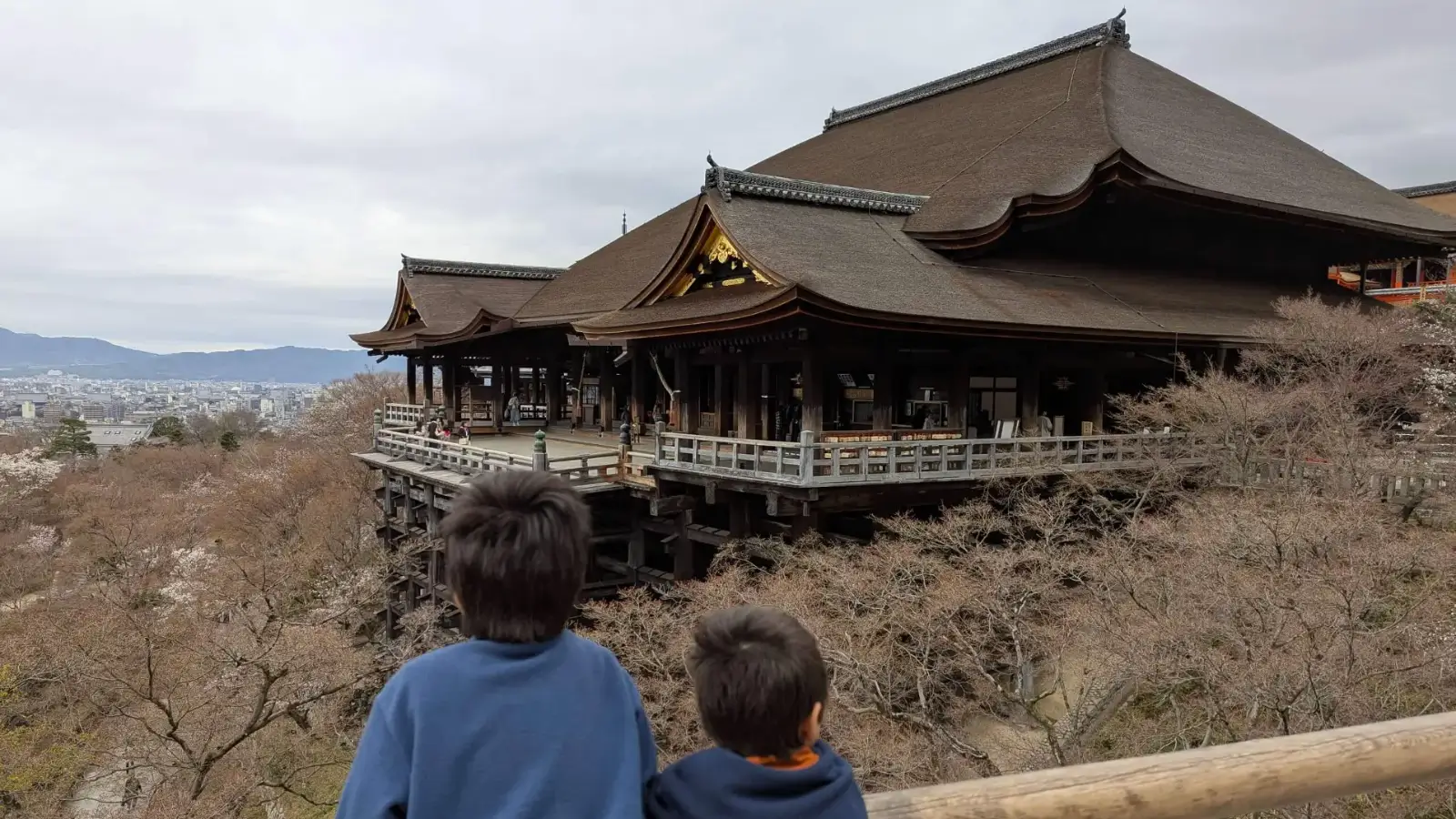
- Kiyomizu-dera
- No rail station close by at all
Kyoto Station is the best Kyoto base for a family, because the airport train, the Shinkansen and the JR day trips all run from its platforms, and a temple is easier to reach with a day bag than a train is with the luggage. Downtown puts Nishiki Market on foot; Gion and Higashiyama put Yasaka Shrine and the temples on foot; Arashiyama sits by the river on the JR Sagano Line. In Kyoto the base decides how a family meets the trains, so the choice is how far each one sits from the station, and what it puts within a child’s walk.
Where a Kyoto family sleeps.
These five are ranked best to worst on one axis: how well each base protects a child’s Reserve over several nights in a city whose trains and temples sit apart. Family travel runs on three currencies, not two: money and time, plus the child’s Reserve, their finite capacity to absorb what travel asks of them. Here the Reserve goes on the distance between the two: sleep by the station and the travel days are short; sleep by the temples and the mornings are. In the terms of The LUNI Framework, the temple crowds cost the child whom noise and a crush wear out first, and the luggage days cost the child who is unsettled until each step of the route is known.
Which Kyoto neighborhood is best for a family? Kyoto Station, because the airport train, the Shinkansen and the JR day trips all run from its platforms, and a temple is easier to reach with a day bag than a train is with the luggage.
| Neighborhood | Best For | Main Station and Lines |
|---|---|---|
| Kyoto StationRank 01 | Day trips, airport days and a first stay: the long-distance trains leave from here. | Kyoto Station: the Tokaido Shinkansen, the Haruka, five JR lines, Karasuma subway, Kintetsu. |
| DowntownRank 02 | Food and rain cover on foot, between Karasuma and Kawaramachi. | Shijo and Karasuma Oike on the subway, with Hankyu Karasuma and Kyoto-kawaramachi. |
| Gion and HigashiyamaRank 03 | The great temples on foot, for a family that came to Kyoto for them. | Keihan Gion-shijo and Kiyomizu-gojo, with Hankyu Kyoto-kawaramachi across the river. |
| Nijo Castle and the Imperial PalaceRank 04 | Two great sights on two subway lines, with the Sagano Line at Nijo. | Nijojo-mae and Nijo on the Tozai subway, with Marutamachi and Imadegawa on the Karasuma. |
| ArashiyamaRank 05 | A stay by the river, for a family whose Kyoto is mostly the west side. | JR Saga-Arashiyama, Randen Arashiyama and Hankyu Arashiyama, each on its own line. |
Kyoto Station
Rank 01Kyoto Station: the Tokaido Shinkansen, the Haruka, five JR lines, Karasuma subway, Kintetsu.
Downtown
Rank 02Shijo and Karasuma Oike on the subway, with Hankyu Karasuma and Kyoto-kawaramachi.
Gion and Higashiyama
Rank 03Keihan Gion-shijo and Kiyomizu-gojo, with Hankyu Kyoto-kawaramachi across the river.
Nijo Castle and the Imperial Palace
Rank 04Nijojo-mae and Nijo on the Tozai subway, with Marutamachi and Imadegawa on the Karasuma.
Arashiyama
Rank 05JR Saga-Arashiyama, Randen Arashiyama and Hankyu Arashiyama, each on its own line.
Best to worst, and why.
Five bases, from the one that makes the most of a Kyoto trip’s trains to the one that asks the longest journey of each day.
Kyoto Station ranks first because the trip’s long journeys start there: the airport, the Shinkansen and the day trips. Sleeping beside it makes the luggage days the short ones, since the Haruka from Kansai Airport arrives at the same station the Shinkansen leaves from. For the Anchor, the child who tires fastest when the day’s structure is unconfirmed, the trip’s biggest journeys then start from a station the family has already walked through on the first day. A younger child has a tower, an aquarium and trains without a transfer: Kyoto Tower, the Kyoto Aquarium and the Kyoto Railway Museum can all be reached on foot from it, the museum also one stop on the Sagano Line. By the second day a teenager can be sent to the platform alone.
Who it costs. The Sensor, because a station carrying the Shinkansen, the JR lines, a subway and a private railway is a great deal of noise and crowding to cross at the start and end of every day.
What this means for your family: book the hotel close enough to a station exit that the walk in from a long day stays short.Downtown ranks second because food, shelter and three rail lines sit within a few minutes of each other. For the Dynamo, who wears thin when kept still, a wet afternoon here can still be spent moving, with lunch, a roof and a museum all on foot. Nishiki Market’s covered street of food shops is a few minutes from Shijo or Hankyu Karasuma, and the Kyoto International Manga Museum is a short walk from Karasuma Oike, where the Karasuma subway meets the Tozai Line. The market is a teenager’s to roam with a time to meet, and a younger child is never far from food.
Who it costs. The Sensor, inside Nishiki itself. The market is a covered street a few meters wide whose food shops pack people close together, and that press of noise and crowding is the part of the day this child has least room for.
What this means for your family: take Nishiki early and briefly, as a stop on the way somewhere rather than the afternoon itself.Gion and Higashiyama rank third: the temples a family came to Kyoto for are on foot, and the long-distance trains are not. The gain is the hour before the streets fill, when a family that sleeps here can already be at a temple, and it goes to the Sensor, the child worn down by noise and crowding. Yasaka Shrine is a short walk from Gion-shijo, and the city bus from Kyoto Station stops right outside it. In that early hour a younger child can be at the shrine before breakfast, and a teenager out on the old streets with a parent. The Kiyomizu-dera temple is the harder one, with no rail station close by.
Who it costs. The Sprinter, because the district’s great temple sits at the end of a walk. Twenty-five minutes on foot, or a bus and ten more, is a long way to spend walking and standing before the temple itself begins.
What this means for your family: take City Bus 207 from Gion-shijo to Kiyomizu-michi, so only the last ten minutes to Kiyomizu-dera are on foot.Nijo Castle and the Imperial Palace rank fourth: two of Kyoto’s great sights, and less else for a child on foot. Sleeping here buys two easy mornings, one at each sight, and then the rest of the city is a ride away. For the Anchor, who needs a plan confirmed before it starts, two sights with a known way in are an easy pair to promise: the stop for Nijo Castle is Nijojo-mae on the Tozai subway, and the palace is a short walk from Imadegawa on the Karasuma subway. Nijo, one stop on from the castle, is also on the JR Sagano Line to Arashiyama. The castle’s grounds suit a younger child, and the palace’s English tour a teenager.
Who it costs. The Dynamo, on the days after the two sights. Each of those mornings opens with a ride, and a child who needs to move spends it held still before the day has begun.
What this means for your family: on the days spent elsewhere, make the first stop after the ride one where a child can run.Arashiyama ranks fifth because every other part of Kyoto is a ride away from it. Mornings by the river with no train to catch first are the reward here for the Dynamo, who drains when there is no room to move. Arashiyama Park, with a play area on the Kameyama hillside and a deck over the Hozu gorge, is a short walk from the Randen and Hankyu stations, and the bamboo grove and the Monkey Park are close. JR, Randen and Hankyu all stop here, but each line runs to a different part of the city. The climb to the monkeys as soon as the gate opens is a teenager’s, and the park before breakfast a younger child’s.
Who it costs. The Anchor, from the airport on. Kansai Airport is two trains away, the Haruka to Kyoto and then the Sagano Line, and every day elsewhere in the city starts with a journey, which leaves a child who needs confirmed structure re-learning the route every morning.
What this means for your family: sleep here for a night or two at the end of a stay, not as the base for a whole week.Start with your situation.
Choose the base by the trip’s hardest day, not its prettiest evening. If that day is the flight in or a day trip to Nara, the station decides it. If it is a temple morning, Gion does.
| If Your Family Is | Why It Fits | Start Here |
|---|---|---|
| First-timers | The Haruka, the Shinkansen and the day trips share one station. | Kyoto Station |
| Younger children | Trains, a tower and an aquarium, every one reachable on foot. | Kyoto Station |
| Older children or teens | A market a teenager can be given, and Hankyu to Osaka. | Downtown |
| Temples first thing | Yasaka Shrine is about 5 minutes from Gion-shijo on foot. | Gion and Higashiyama |
| A stay by the river | The park, the bamboo and the monkeys are close to the stations. | Arashiyama |
First-timers
Start here: Kyoto Station
Younger children
Start here: Kyoto Station
Older children or teens
Start here: Downtown
Temples first thing
Start here: Gion and Higashiyama
A stay by the river
Start here: Arashiyama
Kyoto asks children to slow down for places built long before them. The patience that takes is spent first on the way in, on platforms and buses, and a child who reaches the gate after a short walk still has some left for what lies past it, which turns an old temple from a wait into a memory.
The method, and your questions.
These five are sorted by what each base asks of a child before and after the sights: the way in from the airport, the reach of its trains to the day trips and the city’s other districts, the family stops within walking distance, and the honest drawback each one carries. A base that wins on atmosphere and adds a long journey to every morning ranks below one that makes the mornings short.
The questions parents actually ask.
What is the best neighborhood in Kyoto for families?
Kyoto Station. The Shinkansen, the Haruka from Kansai Airport and the lines to Nara and Arashiyama all leave from it, so the long journeys of a trip start at the hotel door. Downtown is second, for food and the subway on foot.
Where should families stay in Kyoto for day trips?
Near Kyoto Station, where the JR Nara and Sagano lines, the Shinkansen and the Kintetsu Kyoto Line all stop. Downtown is the alternative for Osaka, since the Hankyu Kyoto Line runs from Karasuma and Kyoto-kawaramachi to Osaka-umeda.
Is Gion a good place to stay with young children?
For the temples, yes: Yasaka Shrine is about 5 minutes on foot from Gion-shijo, and an early start reaches Kiyomizu-dera before the day fills. A Keihan local or semi-express runs from Gion-shijo to Fushimi Inari in 8 to 9 minutes with no change, but Kansai Airport takes two changes, at Tofukuji and Kyoto Station, and Kiyomizu-dera itself is 25 minutes on foot from the nearest station.
What is the easiest way from Kansai Airport to Kyoto with kids?
The Haruka runs from Kansai Airport to Kyoto Station in about 75 to 100 minutes with no change. The airport bus to Kyoto Station takes about an hour and a half, and from Itami the bus takes about 50 to 55 minutes.
Is Arashiyama too far out to stay in?
As the base for a whole week, yes. The JR Sagano Line reaches Kyoto Station in 11 to 17 minutes and Randen reaches Shijo-Omiya in 24, so every day elsewhere starts with a ride. For a night or two by the river at the end of a stay, it is a fine finish.
Which Kyoto hotels suit a family in these neighborhoods?
The Kyoto family hotels guide sets out the hotels by what a family needs, and the neighborhood ranked first here is the one to search from first.