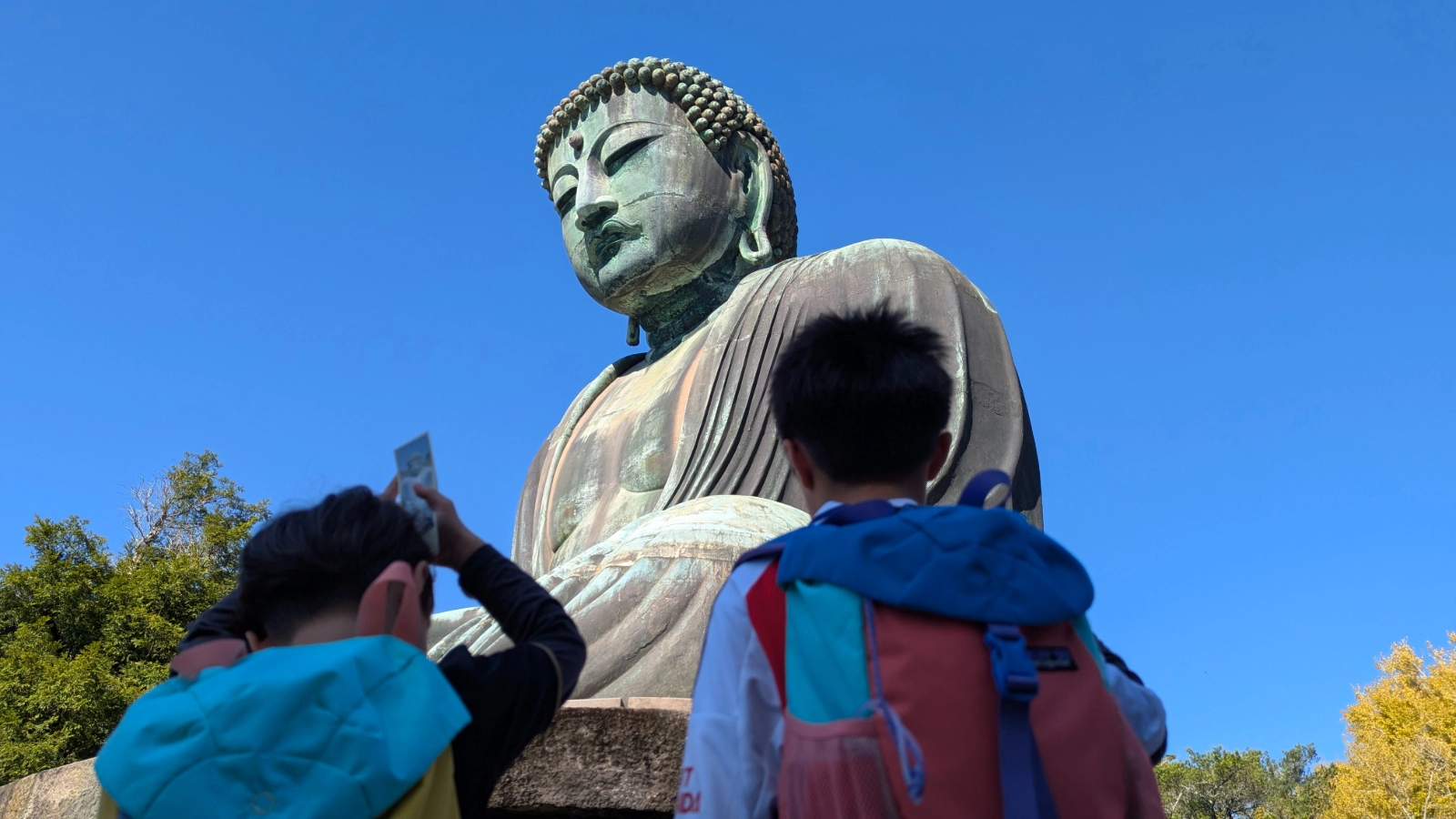
Kamakura’s reputation as a temple circuit requiring sustained walking across hilly, spread-out terrain is the specific hesitation that stops parents from adding it to the itinerary without question. The competing pull is real: the visual scale of the Great Buddha at Kotoku-in, the open coastal air, and the immediate shift away from Tokyo’s density make the city genuinely appealing to families who want cultural weight without urban confinement.
Whether Kamakura belongs in your routing depends on your family’s travel profile rather than the city’s general reputation, and the Family Fit™ framework makes that determination precise. For families weighing how Kamakura fits against Japan’s broader day-trip landscape, our complete Japan family travel hub addresses multi-city sequencing.
Is Kamakura Worth Visiting with Kids? (Quick Answer)
Kamakura is conditionally worth visiting for families whose children can sustain moderate physical output across varied terrain for a half-day without a transit shortcut between major sites. The city’s open-air temple grounds and dramatic coastal setting reward high-energy travel styles naturally, while its geography places compounding physical friction on Sprinters and eliminates stroller access at most major temple approaches. The breakdown below details the specific profile dynamics and developmental fit that determine whether this day trip belongs in your itinerary.
Pros of Visiting Kamakura with Kids
- The open grounds at Kotoku-in allow children to move through the site freely, rather than constraining them in a queue or an indoor exhibit, which makes the visit structurally compatible with children who struggle to stay still.
- The immediate visual scale of the Great Buddha provides a tangible anchor point that requires no historical context for a child to register its impact, lowering the engagement threshold for younger visitors who would otherwise disengage from observational cultural sites quickly.
- The transition from Tokyo’s ambient noise and crowd density to the bamboo-lined temple precincts and coastal air of Kamakura creates a measurably quieter sensory environment, which gives Sensors a genuine recovery environment mid-trip rather than a continuation of urban overstimulation.
- Komachi Street consolidates casual dining and snack options into a single, walkable corridor directly off the station, which solves the sudden-hunger problem before families move into the more isolated temple areas where food access disappears.
- The outdoor format of major sites means the physical environment itself generates engagement, reducing the pressure on parents to narrate or facilitate the visit in the way an indoor museum typically requires.
Cons of Visiting Kamakura with Kids (Important for Parents)
- The geographic distance between major landmarks requires sustained neighborhood walking that cannot be meaningfully shortened by transit, which creates a cumulative endurance test that hits Sprinters hard before the second site of the day.
- Most significant temple approaches involve steep stone staircases and uneven paved paths that make stroller navigation impractical, requiring parents of younger children to carry them across extended sections of the day.
- The absence of climate-controlled indoor environments leaves families fully exposed during peak summer heat and humidity, which compresses the viable visiting window and forces earlier retreats than families typically plan for.
- The cultural format relies on observational engagement with historical architecture rather than interactive or participatory activity, which can cause Anchors to lose focus rapidly when confronted with a sequence of structurally similar sites without a familiar rhythm between them.
- No single compact zone concentrates multiple major sites within walking distance of each other, meaning that attempting more than two landmarks in different districts commits the family to significant transit or cross-town walking that compounds fatigue.
How Kamakura Works for Your Child’s Profile
Kamakura’s outdoor, geographically dispersed format naturally advantages certain travel styles and places structural pressure on others. The Family Fit™ framework makes those dynamics predictable before you board the train, not after you have already lost the afternoon.
The Dynamo
The open grounds and continuous movement between outdoor sites provide natural physical release that keeps high-energy children regulated throughout the morning. The compounding transit and walking time from Tokyo forward, combined with a full day of continuous outdoor movement, can push even high-output children past their productive window by mid-afternoon if the itinerary is not capped deliberately. Anchor the day around two outdoor sites maximum and pair the visit with an active coastal or beach segment to channel remaining energy rather than attempting a third temple district.
The Sensor
Kamakura’s wooded temple precincts and coastal geography deliver a quieter, lower-density environment than any Tokyo district, giving Sensors a genuine sensory reset that the city itself cannot provide. The peak midday crowd concentration on Komachi Street, which funnels high visitor volume through a narrow commercial corridor, creates sudden sensory spikes that are difficult to avoid entirely. Arrive early enough to move through Komachi Street before the midday crowd peaks, and sequence the forested temple areas for the hours when the shopping corridor is at its busiest.
The Anchor
The straightforward direct train from Tokyo and the city’s historical focus create a contained, structured day with a clear narrative that Anchors can hold onto across the visit. The repetitive observational format of the temple circuit, without the predictable rhythm of familiar interactive elements, can cause disengagement to arrive earlier than parents expect. Structure the day with a fixed, previewed schedule shared with your child before departure, and build in a confirmed familiar food stop at a predictable point in the afternoon.
The Sprinter
Kamakura’s terrain is among the most physically demanding of Japan’s major day-trip destinations for low-stamina children, because the steep approaches to primary sites and the long inter-site distances offer no meaningful shortcut options. The physical wall arrives faster here than at any comparable cultural destination near Tokyo, because the walking begins at the station and does not stop until the family is back on the platform. Limit the itinerary to a single district, identify rest points in advance before leaving the hotel, and treat any impulse to add a second district as a guarantee of a collapsed afternoon.
If you have not yet identified which profile fits your child, the Family Fit™ Quiz takes less than two minutes and produces a planning profile that changes how every destination decision in your Japan itinerary reads.
Who Will Enjoy Kamakura with Kids (By Age Group)
Toddlers (under 3)
The steep stone staircases and uneven paths that characterize Kamakura’s major temple approaches eliminate stroller access at the sites that anchor most family itineraries here, and the physical distance between landmarks makes carrying a toddler for extended periods an exhausting baseline. Kamakura is not worth the days for this age band unless the visit is restricted to the flat commercial corridor near the station and kept to under two hours.
Preschoolers (3 to 5)
Children at this stage have a strong appetite for visual novelty, and the sheer scale of the Great Buddha satisfies that appetite immediately, but their patience for the transit time between sites and the long walking approaches exhausts faster than Kamakura’s layout allows for. It is conditionally worth routing here if the visit is limited to a single landmark and a relaxed meal on Komachi Street, with no attempt to reach a second major site.
School-Age Kids (6 to 10)
Developing physical stamina and a growing capacity to absorb historical context make this the age band most naturally suited to Kamakura’s format. Children in this range can engage meaningfully with the visual scale of the sites, tolerate the walking demands between them, and follow a structured day without the behavioral friction that plagues younger age groups here. Kamakura is fully worth routing through for this group.
Older Kids and Teens (11+)
The combination of physical stamina, independent navigation capacity, and genuine appetite for cultural depth makes this the strongest age match for Kamakura’s format. Teens who are given latitude to explore Komachi Street independently or lead the navigation on wooded hiking paths engage with the city on their own terms rather than on a managed schedule. Kamakura is unconditionally worth visiting for this age band and provides a cultural experience that functions at a genuinely mature level.
Family Fit™ Travel Method
Most families skip this.
It's why Day 3 falls apart.
The Family Fit™ Quiz identifies the specific planning adjustments your child needs. Two minutes now saves the whole trip.
Best Alternatives to Kamakura for Families with Kids
- Nikko — Best for Anchors. The ornate, visually dramatic shrine complex at Nikko delivers comparable cultural depth in a more contained geographic footprint, which removes the inter-site walking that Kamakura’s layout places on routine-reliant children.
- Yokohama — Best for Sprinters. The modern waterfront infrastructure concentrates a high volume of family-appropriate activity within a compact, flat, and transit-accessible radius that eliminates the terrain friction Kamakura imposes on low-stamina children.
- Tokyo — Best for Sensors. The proximity of large green spaces to structured indoor attractions within Tokyo’s family-oriented districts allows families to dial the sensory environment up or down at short notice, without the commitment of a long day-trip transit that Kamakura requires.
For families who have confirmed Kamakura is the right routing decision, the Kamakura family travel hub covers operational strategy for making the day succeed by profile.
Final Recommendation: Is Kamakura Worth Visiting with Kids?
Kamakura is worth visiting for families whose children can sustain a moderate physical pace across hilly, stair-intensive terrain for a structured half-day focused on a maximum of two major outdoor sites. It delivers a genuinely distinctive cultural experience for high-energy travel styles and school-age children, but its geographic spread and steep approaches make it a poor routing choice for toddlers, stroller-dependent families, and children who struggle to sustain output without transit relief between sites. The visit fails most predictably when families attempt to cover more than one district or schedule more than two major sites, which converts a manageable cultural day into a physically punishing one. Visiting during the peak summer heat months drastically reduces the usable window for any child, compressing what should be a half-day into an hour of productive touring before conditions become unworkable.
The Kamakura Briefing: Essential Intel
Families planning a Kamakura day trip with children return to these questions consistently, from whether the physical demands are manageable for young kids to how the city’s cultural format holds the attention of older ones.
A: Kamakura is worth visiting for families with school-age children or teens who can manage sustained walking across varied terrain without transit shortcuts between sites. The outdoor format and visual scale of major landmarks reward physical stamina, but the dispersed layout makes the city a poor choice for families seeking compact, low-effort sightseeing.
A: Kamakura is exceptionally safe, low-density outside peak hours, and structurally open in a way that gives children physical room to exist within the environment. The cultural format skews heavily toward observational sightseeing rather than participatory engagement, which means Anchors in particular require a structured day with confirmed rest points to avoid early disengagement.
A: Kamakura provides a strong visual introduction to Japan’s historical cultural landscape without the behavioral regulation demands of an indoor museum. Children who can tolerate long walks between sites and find genuine engagement in the physical environment itself will get strong value. Children who require interactive elements or predictable pacing formats will find the format harder to sustain.
A: The value of the day trip is directly proportional to how disciplined the family is about limiting the itinerary. A two-site day structured around the morning hours, before peak heat and peak crowds intersect, delivers strong value. A four-site day that crosses district lines produces a physically depleted afternoon for most children regardless of their travel profile.
A: No. The combination of steep stone staircases at major temple approaches, extended distances between sites, and the absence of stroller-accessible alternatives at key landmarks makes this a physically demanding day for parents of toddlers rather than a rewarding one for the children.
A: Kamakura is not a practical destination for families with infants or babies. The uneven terrain, steep approaches, and long inter-site distances create significant carrying and logistics demands that undercut any cultural value the visit might otherwise provide.
A: Yes, unconditionally. Kamakura’s combination of physically demanding walking routes, high visual payoff at major sites, and the independence available on Komachi Street and the wooded hiking paths aligns precisely with what teens need from a cultural day trip: autonomy, physical challenge, and an environment that rewards engagement rather than passive observation.
