Best Day Trips From Tokyo With Kids:
which escape is for which child.
The wrong day trip does not fail because the destination is bad. It fails because the family spent more reserve reaching it than the day ever gave back.
Each way. No transfers on seven of the nine.
10 to 12 hours door to door. Protect the next morning.
Dated tickets. The other seven are walk-up on an IC card.
Grouped by the profile each one fits.
Which escape is for which child.
Organized not by which day trip is best, but by which child each one is best for, across the four profiles of The LUNI Framework.
These nine escapes are not ordered best to worst. They are grouped by which child each one is for. The reason is structural: a day trip is a sequence, not a place, and the same journey that restores one child empties another. Family travel runs on three currencies, not two. Money and time are the two parents already track, and the third is the child’s reserve, their finite capacity to absorb what travel asks of them. A day trip spends that reserve before the family arrives anywhere, which is why the escape that looks easiest on a map is so often the one that ends worst. The Dynamo runs short when they cannot move. The Sensor runs short on noise and crowds. The Anchor runs short when nothing is predictable. The Sprinter runs short on walking and standing. Find your child below, and start there.
For the Dynamo
Escapes that relieve restricted-movement depletion.
For a child who depletes through restricted movement, the strongest day trips are Mount Takao and Fuji-Q Highland.
Seventy minutes from Shinjuku, and the only escape on this map where the family chooses how much the child moves rather than having it imposed by the venue. A week of trains, queues, and museum galleries builds restricted-movement depletion in a Dynamo faster than anything else in Japan, and a forest trail that can be walked hard or ridden past is the discharge that clears it. A younger Dynamo takes the cable car up and runs the flat summit paths; an older one climbs the full trail and reaches the top having spent what needed spending. The tengu statues along the route give the climb a sequence of things to find rather than a single distant reward.
Who it costs.The Sprinter. The summit paths are uneven and the descent is longer than it looks, so a low-stamina child finishes with nothing left. The cable car solves the ascent and does not solve the rest.
How to make it work.Ride the cable car up and walk down, not the reverse. It places the hardest walking at the point of the day when the Dynamo most needs to discharge, and it caps total distance for everyone else.
If this isn’t your child: the easiest genuine nature day within reach of the city, though a family with no movement-led child will wonder why they traveled 70 minutes for a walk.Two hours each way for a park built around world-record roller coasters, which is a long journey to make for one thing. It earns a place here because for an older Dynamo that one thing is the only entry on this map that answers restricted-movement depletion at the intensity they actually need. A ten-year-old who has spent five days sitting still on trains discharges more here in an afternoon than in three days of walking. Below roughly eight, height restrictions gate most of the rides and the trip stops making sense.
Who it costs.The Sensor, at high risk. Queue density, scream volume, and the ride-adjacent noise floor are the highest of any destination on this map, and a sensory-loaded child reaches a cascade long before the family has justified the travel.
How to make it work.Check the official site the morning of departure. The rides are weather-sensitive and close without notice, and a closed park at the end of a two-hour journey is the worst single outcome on this page.
If this isn’t your child: the one escape here that genuinely does not repay an unmatched family, who get a two-hour trip to rides they will not take and a Fuji view available from Kawaguchi at the same distance.For the Sensor
Escapes that let a sensory-loaded child recover.
For a child who depletes through sensory input, the strongest day trips are Yokohama, Kawagoe, and Sanrio Puroland.
Thirty minutes, and the best first escape a family can take. Shibuya and Shinjuku push a Sensor’s threshold through compressed density and concentrated crowd noise, and an open waterfront answers both directly: sightlines run long, and sound disperses instead of stacking. The Cup Noodles Museum gives the day one anchoring event, which is what separates a day trip from an aimless walk. A four-year-old designs a cup and is finished; a fourteen-year-old designs the same cup and is quietly delighted by it.
Who it costs.The Anchor, mildly. Yokohama has no single obligatory sight, which is its strength for the Sensor and its weakness for a child who needs the day’s shape confirmed before it starts.
How to make it work.Treat it as a half day with an optional second half. It is the only escape here that can be abandoned at lunch without waste, and that exit is exactly what makes it the right first attempt.
If this isn’t your child: the safest recommendation on this map for any family, easy and forgiving, if not the most exciting.Sixty minutes to a preserved Edo-period merchant district, and the closest a family gets to Kyoto’s texture without Kyoto’s crowd density. This is the escape that most directly serves the Sensor: the streets are historic rather than commercial, the visual field is warm and low-contrast, and there is no amplified sound anywhere in the district. Candy Alley gives a younger child a concrete reason to be there; an older one registers the architecture as genuinely unlike anything in Tokyo, which is more than most day trips manage.
Who it costs.The Sprinter. The district is walked entirely, on hard surfaces, with limited seating, and the day is longer on the legs than its gentle reputation suggests.
How to make it work.Go on a weekday if the itinerary allows. The low sensory baseline is the entire value proposition here, and a Saturday afternoon erases it.
If this isn’t your child: the calmest historic streets within an hour of Tokyo and a genuinely good snack street, though a child who needs stimulation exhausts the district in ninety minutes.Sixty minutes to an entirely indoor, climate-controlled park, and the reason it earns a place here is not the characters. It is the roof. A Sensor’s threshold is pushed hardest by unpredictable input, and an indoor park removes weather, temperature, and glare from the day in one decision. The environment inside is controlled and consistent rather than quiet, which is a meaningful distinction: this is not a calm day, but it is a day whose intensity never changes shape. It holds through roughly age nine and thins quickly after that without a specific attachment to the characters.
Who it costs.The Dynamo. The park is compact, indoor, and largely seated or queued, which is close to the definition of restricted movement. A movement-led child is climbing the walls by mid-afternoon.
How to make it work.Hold it in reserve as the weather day. Its highest value is not as a planned trip but as the destination a family switches to when the forecast collapses and the outdoor plan dies.
If this isn’t your child: an expensive indoor park a family would not otherwise choose, and best treated as a contingency rather than an itinerary item.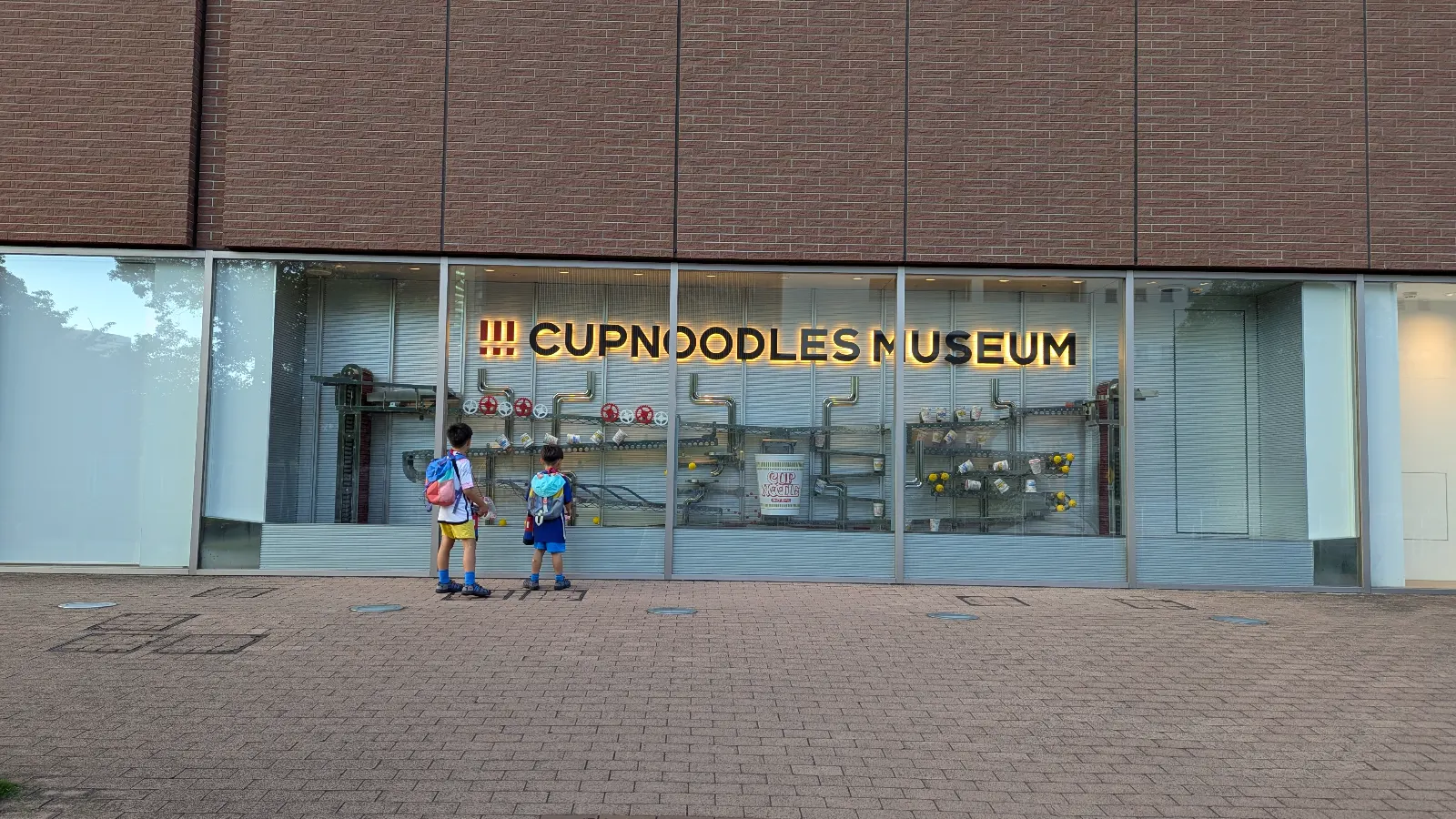
For the Anchor
Escapes whose structure can be confirmed before the day begins.
For a child who depletes through unfamiliarity and unconfirmed structure, the strongest day trips are Tokyo Disney Resort and Kamakura.
Forty-five minutes, and the most structurally confirmable day a family can build near Tokyo. This reads as counterintuitive, because a Disney day is loud and crowded and long, and none of that is what depletes an Anchor. An Anchor depletes through unfamiliarity and unconfirmed structure, and Disney is the rare destination where the whole day can be known in advance: published opening times, an app with live wait times, a map studied on the train, a sequence rehearsed the night before. A six-year-old who has seen the map is not walking into the unknown. A fifteen-year-old runs the app and owns the plan. The two parks are distinct machines and cannot be combined in one day with children, so choosing between them is the consequential call.
Who it costs.The Sprinter. This is a twelve-hour day spent almost entirely standing, and it carries the heaviest walking-and-standing load on this map. The travel time is short and the day is not.
How to make it work.Plan nothing for the following morning. A Disney day requires a recovery half day, and families who schedule a museum for the next morning discover why.
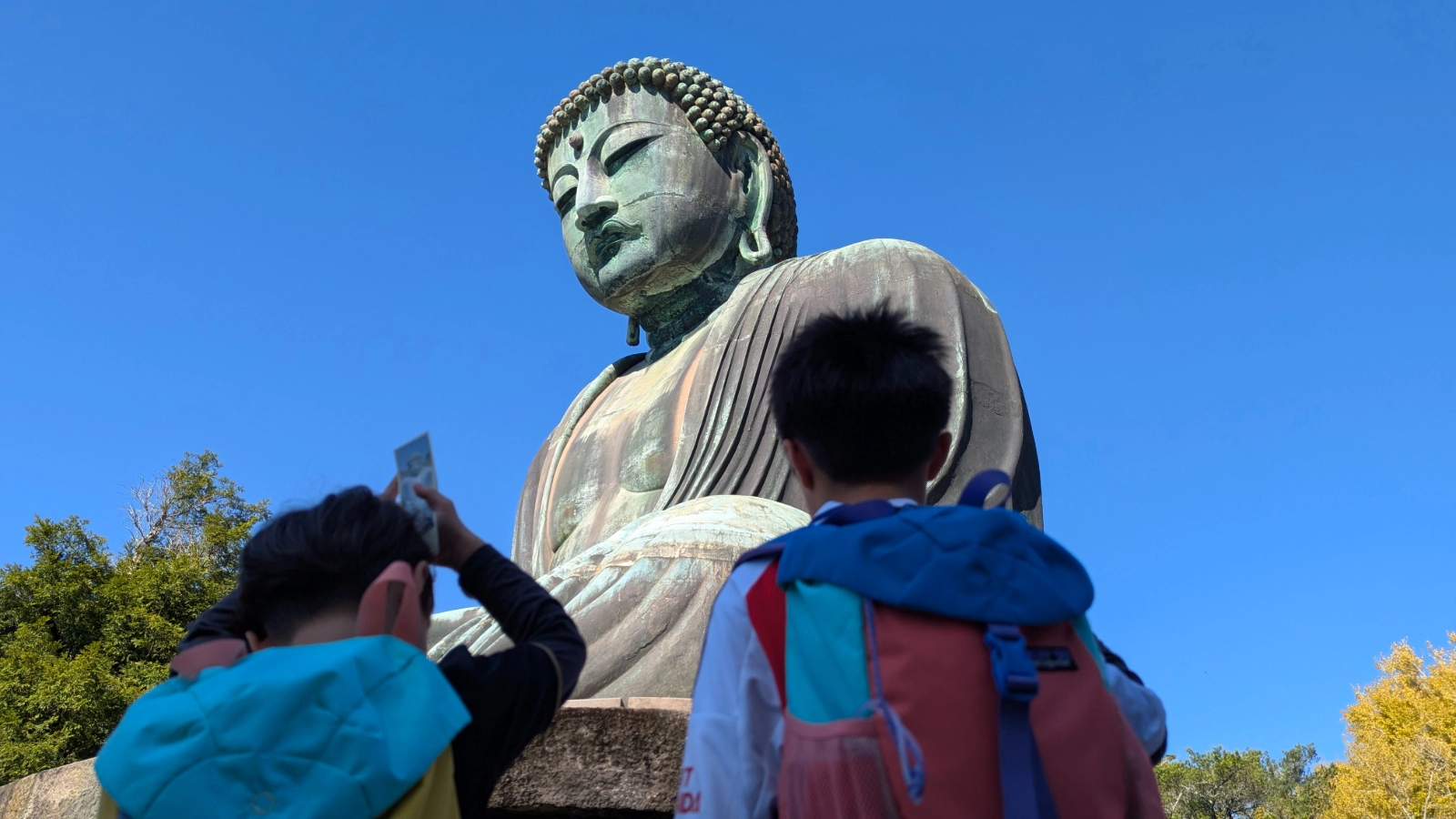
If this isn’t your child: a world-class park for every family, and a restful day for none. The structure that serves the Anchor does nothing to reduce the physical cost.Sixty minutes to a coastal town with one enormous landmark, and the day works because its shape can be described in a single sentence before it begins. The Great Buddha, then Komachi-dori, then the beach. That is the whole plan, and it can be told to a child on the train, which is exactly the confirmed structure an Anchor runs on. The failure mode here is the temple-hopping itinerary: it converts a confirmable day into an open-ended sequence of unfamiliar sites, and it depletes an Anchor precisely as efficiently as the single-landmark version protects them. A younger Anchor is steadied by knowing there is one big thing; an older one gets a genuine landmark without a history lesson attached.
Who it costs.The Sprinter. Kamakura is walked between its sights, the Daibutsu sits uphill from the station, and the beach adds distance at the end of the day rather than the start.
How to make it work.Pick one major site and stop. The instinct to add a second temple because the family is already there is the instinct that ruins this day.
If this isn’t your child: an iconic landmark and a beach within the same hour, a combination Tokyo cannot offer at any price.For the Sprinter
Escapes that carry the child instead of asking them to walk.
For a child who depletes through sustained walking and standing, the strongest day trips are Hakone and Lake Kawaguchi.
Ninety minutes out, and a full day that asks almost nothing of a child’s legs. This is the counterintuitive entry on the map: Hakone reads as the most ambitious escape here and is in fact the most physically forgiving. Walking-and-standing depletion is what actually ends most family days in Japan, and the Hakone loop answers it with a sequence that is almost entirely seated, a mountain railway, a ropeway, a boat across Lake Ashi, and a bus back. The child is carried between short walks rather than marched between sights. A five-year-old rides the pirate ship and sees a volcano; a fifteen-year-old collects four distinct landscapes in a day.
Who it costs.The Anchor. The loop is four unfamiliar transfer points in sequence, each a new mode with its own boarding logic, and a child who needs confirmed structure spends the day not knowing what happens next.
How to make it work.Commit to the loop and refuse the museums. Hakone punishes families who add stops, because the loop’s timing is what holds the seated rhythm intact, and a detour turns a carried day into a walked one.
If this isn’t your child: the most varied single day available from Tokyo for any family, and a ten-hour commitment regardless of who is traveling.Two and a half hours, the longest journey on this map, for a lakeside day with a ropeway doing the climbing. The Sprinter is served here for the same structural reason as Hakone: the central experience is a cable car rather than a hike, and the lake path is flat and short. It sits below Hakone for one honest reason. Its payoff is a view of Mount Fuji, and a view is weather-dependent in a way a boat and a ropeway are not. A cloudy day removes the entire reason the family traveled 2.5 hours, and Hakone carries no equivalent risk.
Who it costs.The Anchor. The outbound journey is the least predictable here, and the day’s central event may simply not happen if the mountain is hidden, which is the specific kind of unconfirmed structure this child cannot absorb.
How to make it work.Check the forecast the night before and be willing to cancel. If the sky is closed the day has no second reason to exist, and the family should take the Yokohama escape instead.
If this isn’t your child: on a clear day, the defining image of the trip. On a cloudy one, a five-hour round trip to a pleasant lake, which is why this escape asks more of the forecast than of the child.Open with the child who runs short first.
Which escape you choose matters. Where it sits in the week matters nearly as much, because a day trip is a rhythm instrument before it is a destination.
Settle the tickets first. Only two of the nine are booking-gated, and both control the shape of the week more than the route does. Tokyo Disney Resort and Fuji-Q Highland require dated tickets bought in advance, and Disney sells out on weekends and Japanese school holidays. Everything else on this map is walk-up on a Suica or PASMO, which means the other seven escapes can be decided on the morning of, against the weather and against how the family actually slept.
The escape you cancel is also a decision.
Leave between 7:00 and 8:30 a.m. for the long escapes, and treat anything after 10:30 a.m. as viable only under an hour out. Avoid boarding between 7:30 and 9:00 a.m. or 5:00 and 6:30 p.m., when commuter density makes a stroller genuinely difficult. And skip the day entirely when the family slept badly, when the weather is extreme, or when the trip is being planned to justify the travel rather than to serve the child. A day trip taken to avoid wasting a day is the most reliable way to waste one, and a slower city day returns more reserve than a mistimed escape.
The method, and the questions parents actually ask.
Every other guide to leaving Tokyo sorts its destinations by distance. That is the wrong axis, and it is why families keep choosing days that look manageable on a map and are unmanageable by 3:00 p.m.
The ranking axis here is not distance. It is one ratio: if the family will spend more time in transit than at the destination, the day spends reserve without returning any. Ninety minutes to a place that holds a child for two hours is a day the family gets through. The same ninety minutes to a place that holds them for five is a day worth the fare. That is why the far escapes here are not ranked lower, they are grouped differently. Hakone and Lake Kawaguchi are ten-to-twelve-hour commitments, and for the matched child they are the best day of the trip. For the wrong child, they are the day the trip does not recover from. The distance did not change. The match did.
The questions parents actually ask.
How far can you travel from Tokyo for a day trip with kids?
The working limit is not distance, it is the ratio between transit and exploration. When a family spends more time traveling than at the destination, the day spends reserve without returning any. Under one hour each way is comfortable for most families. Between one and 1.5 hours works when the destination carries a single clear payoff. Beyond two hours the day becomes a 10-to-12-hour commitment, and it only earns its place when the child is matched to what the destination actually offers.
What is the best first day trip from Tokyo with kids?
Yokohama, at roughly 30 minutes each way. It is the only destination on this map that can be abandoned halfway through without the day feeling wasted, which is what makes it the right first attempt. The waterfront is open, the Cup Noodles Museum gives the day one anchoring event, and the short return means a tired child is never more than half an hour from the hotel.
Which day trips from Tokyo work with toddlers?
Yokohama and Kawagoe, both under one hour each way, and Sanrio Puroland, which is entirely indoors and removes weather from the decision. Hakone, Lake Kawaguchi, and Fuji-Q Highland are poor choices below roughly age six. The transit length alone consumes more reserve than a young child has to spend, however appealing the destination looks on paper.
Which day trips from Tokyo work for teenagers?
Fuji-Q Highland, Lake Kawaguchi, and Hakone. All three ask for a long transit day and return something a teenager registers as worth the journey: world-record roller coasters, an unobstructed Mount Fuji, or a four-mode loop they can navigate themselves. Kamakura also holds up well for teens who respond to scale and atmosphere rather than rides.
Do you need to book day trips from Tokyo in advance?
For seven of the nine, no. Yokohama, Kamakura, Kawagoe, Mount Takao, Hakone, and Lake Kawaguchi are all reached on regular trains with a Suica or PASMO, and nothing needs reserving, which also means the family can change its mind on the morning of. The two theme parks are the exceptions. Tokyo Disney Resort and Fuji-Q Highland both require dated tickets bought in advance, and Disney tickets sell out on weekends and Japanese school holidays.
How many day trips should you plan during a Tokyo stay?
One or two. A day trip works by interrupting the rhythm of city days, which means a third one stops interrupting the rhythm and becomes the rhythm. At that point the family has simply added transit to their week and called it variety. Budget one escape for a five-day stay and two for a week.
Is Hakone or Lake Kawaguchi better with kids?
Hakone, for most families. Both are long days, but Hakone’s loop carries a child between seated transit modes, which is precisely why it protects the child who depletes through sustained walking and standing. Lake Kawaguchi’s payoff is a view, and a view is weather-dependent in a way a boat and a ropeway are not. If the forecast is cloudy, Kawaguchi’s central reason to go disappears while Hakone’s does not.
When should you skip the day trip entirely?
When the family slept badly, when the weather is extreme, or when the trip is being planned to justify the travel rather than to serve the child. A day trip taken to avoid wasting a day is the most reliable way to waste one. A city day at a slower pace returns more reserve than a mistimed escape, and staying put is a legitimate planning decision rather than a failure of ambition.