Tokyo, Osaka, or Kyoto with Kids:
which city fits your family.
The wrong city match does not ruin a trip. The right one can transform it, and the decision is mostly a question of which family you are traveling as.
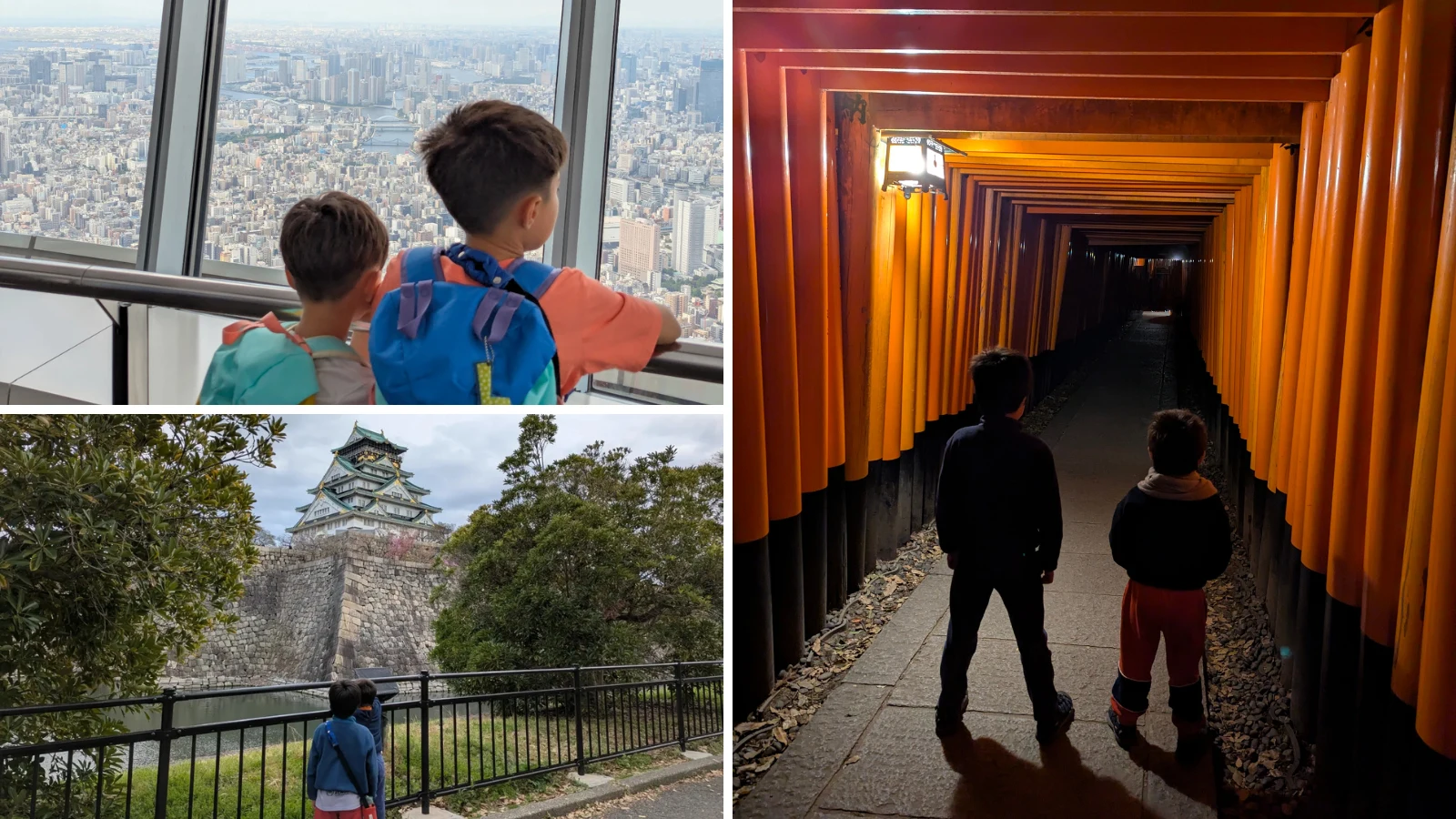
Compact, casual food, short transit hops.
Two Kansai cities, forty minutes apart.
Cheaper rooms, easiest movement with kids.
Widest range, strongest wet-weather backup.
Start with Osaka or Kyoto.
Most families arrive at this as a three-way race. The decision that actually shapes the trip is narrower, and it is the one between the two cities that sit closest together.
Tokyo, Osaka, and Kyoto are three distinct versions of Japan, and the choice between them is one of the most consequential planning decisions a family makes. But framed honestly, the hard part is rarely whether to include Tokyo. Tokyo is the broad, capable, all-around answer, and for a first trip it is the forgiving one. The real fork is Osaka against Kyoto: two Kansai cities forty minutes apart that ask completely different things of a family. One is easy, compact, and food-forward. The other is slow, culturally dense, and far less casual. Choosing between them by reputation is how families end up in the right country and the wrong city.
This is the question The LUNI Framework is built to answer. Most family travel advice matches a city to an age or a checklist. The framework matches it to what a child can actually absorb across a full day, which is why the Osaka-or-Kyoto decision turns out to be less about what each city contains and more about what each one costs a child to experience. A short trip spent in the city that fits will outperform a rushed circuit of all three every time.
Families who decide Kyoto earns its place will find the strongest things to do with children, ranked for engagement rather than reputation, in the best things to do in Kyoto with kids.
Which family are you.
Families already track two currencies, money and time. The framework names a third, a child’s reserve, and most of the city decision is a question of which city protects it.
Families with toddlers and preschoolers are the clearest case for Osaka. The city is compact, the walking distances between attractions are short, and the street food is casual, cheap, and immediate. Kyoto is the least optimized of the three for very young children: bus-based transit, gravel shrine paths, and a more formal food culture press on the Anchor, whose reserve depletes through unfamiliarity and unconfirmed structure. The planning consequence is concrete. In Kyoto, lock a known-safe breakfast and confirm the day’s shape before leaving the hotel; in Osaka, a toddler can be carried lightly through an improvised day without the same cost. Tokyo sits between the two, deep in toddler infrastructure but larger and more tiring to cross.
Families chasing culture and history belong in Kyoto, and the trade is worth naming plainly. A day built largely around temples and quiet interiors gives the Dynamo, who depletes through restricted movement, nowhere to put their energy, so an outdoor block, a riverbank, a hillside walk, an open shrine approach, has to be treated as load-bearing rather than a nice extra. Older children who genuinely engage with history get more from Kyoto than from anywhere else in Japan. Younger ones, or restless ones, will spend reserve faster than the city replaces it. Osaka and Tokyo both carry culture, but neither is a cultural destination in the way Kyoto is.
Food-led families tilt to Osaka without much contest. Takoyaki, okonomiyaki, and a street-food culture built around accessibility turn eating into an activity rather than a daily negotiation, which matters most for the child whose reserve drains when a meal becomes one more unfamiliar demand. Budget-led families reach the same answer from a different direction: Osaka carries the lowest accommodation costs on the Golden Route, and for a family of four those nightly savings compound across a stay.
The pace question is where reserve becomes the whole argument. A child can physically walk a full Japan day. What they cannot do is process a foreign country for twelve unbroken hours, and the city you choose sets how hard that processing runs. Osaka’s short distances and easy navigation keep the load low. Tokyo’s scale rewards planning and punishes its absence. Kyoto’s depth is real but demands unhurried mornings, which is exactly why it fails as a half-day stop and succeeds as a two-night stay.
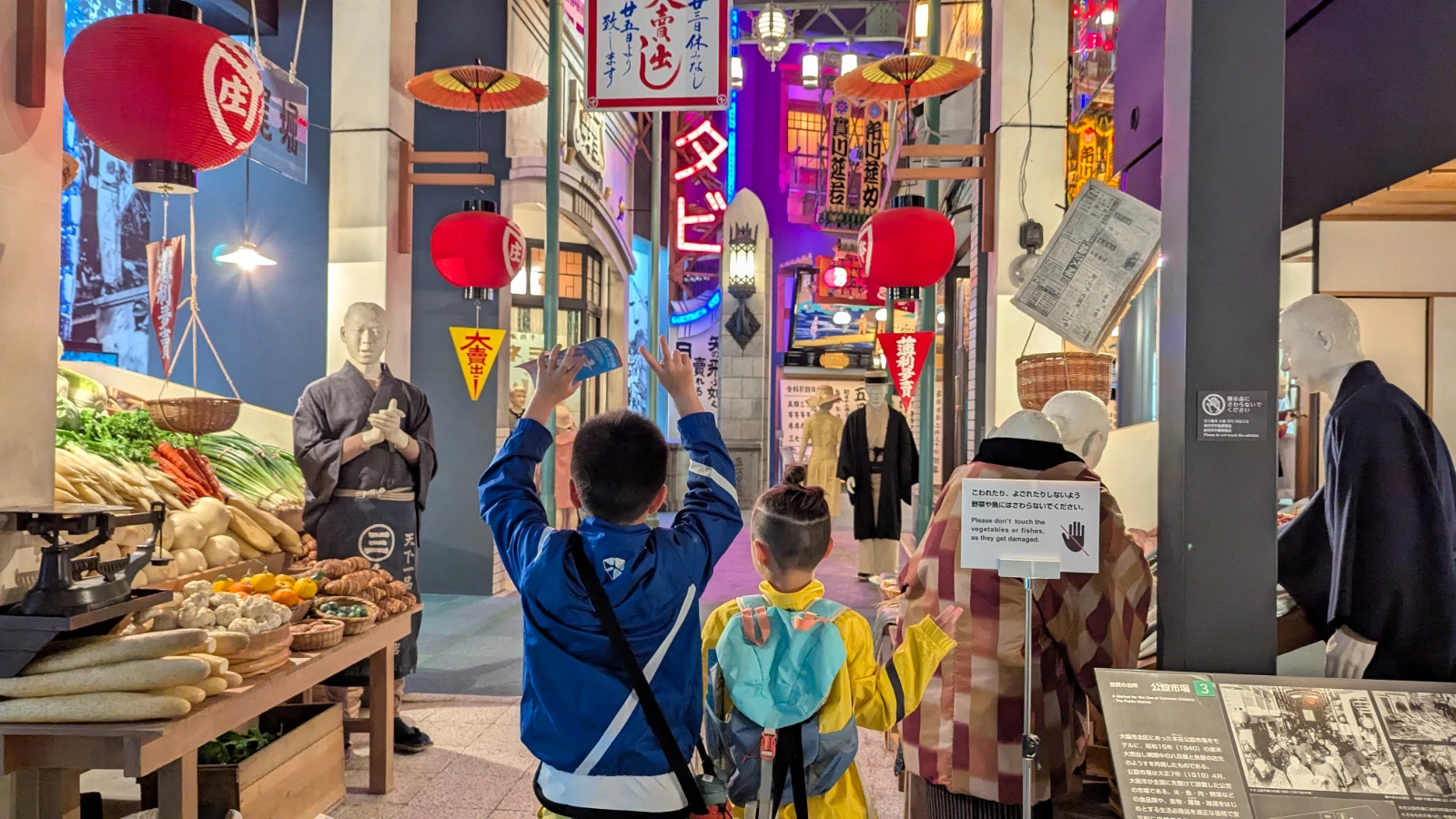
The three cities, side by side.
The same four factors decide most family trips: how hard the city is to move through, what it costs, how fast it runs, and what it does best. Here is where each city lands.
| Factor | Tokyo | Kyoto | Osaka |
|---|---|---|---|
| Ease with kids | Complex but manageable | Hardest (buses) | Easiest |
| Walking distances | Long | Medium | Short |
| Overall cost | ¥¥¥ Highest | ¥¥ Mid-range | ¥¥ Best value |
| Pace | Fast | Slower | Medium |
| Strongest for | Range, wet weather, first trips | Culture, history, slow days | Young kids, food, value |
Tokyo
Kyoto
Osaka
The table resolves the question families ask most once the shortlist is down to Kansai: where to actually sleep. Osaka makes the stronger base. Rooms are cheaper and larger for the money, the metro is short and logical, and Kyoto is a forty-minute train ride for day trips, which means a family can hold a calm home base and still spend full days among the temples. The reverse, basing in Kyoto and commuting into Osaka, works on paper but spends more reserve, because Kyoto evenings are exactly where a tired child meets the most friction.
The city a family chooses quietly decides whether a child spends the trip as a participant or a passenger. Given a pace they can actually meet, a child starts to lead: noticing the next turn, choosing the snack, recognizing the route home. That feeling of being capable in an unfamiliar place is the thing they carry back long after the temples blur together, and it is built less by where you go than by whether the day left them room to rise to it.
The questions families ask most.
Is Osaka or Kyoto better for families with kids?
Osaka is the stronger choice for most families, particularly with younger children. It is more compact, more affordable, and easier to move through with kids, and its casual street-food culture removes the mealtime friction that follows families into more formal dining cities. Kyoto is the better match when cultural immersion is the primary goal and the children are old enough to engage with history and atmosphere rather than be marched past it. The two cities sit forty minutes apart, so the practical question is usually which one you base in rather than which one you skip.
Is Osaka worth visiting with kids?
Yes, Osaka is one of the most family-friendly cities in Japan, and it is the easiest of the three to recommend without conditions. The compact layout, short transit hops, casual street food, and lower costs all reduce the load on a child’s reserve, which makes it especially strong for toddlers, preschoolers, and families on a tighter budget. The honest trade is historical depth: Osaka carries Osaka Castle and a handful of cultural sites, but its identity is urban and contemporary rather than traditional, so families who came to Japan primarily for temples and heritage will get more of that in Kyoto.
Is Kyoto worth visiting with kids?
Yes, Kyoto is worth visiting with kids, with one honest condition: it rewards children who are old enough to engage with culture and a family willing to keep the pace unhurried. For an engaged older child, nothing else in Japan matches its temples, preserved streets, and hands-on cultural workshops. For a restless or very young child, a day of quiet interiors gives the Dynamo, who depletes through restricted movement, nowhere to put their energy, so the planning consequence is to pair every cultural block with an outdoor one and to treat unhurried mornings as the price of admission. Treated as a half-day stop, Kyoto returns the least of the three cities; given two full nights, it returns the most.
Should we base in Osaka or Kyoto when visiting Kansai?
Osaka makes the stronger home base for a family. Hotel rooms are cheaper and larger for the money, the metro is logical and short between stops, and Kyoto is a straightforward forty-minute train ride for day trips. Basing in Kyoto and commuting into Osaka is possible, but Kyoto evenings ask more of a child than its temples do, because the less casual food scene and bus-based transit press on the unfamiliarity a tired child handles worst at the end of a day. Most families lose less reserve by sleeping in Osaka.
Which Japan city is best for a family’s first trip?
Tokyo is the safest first-trip choice for families. It offers the widest range of attractions across a large age spread, the strongest wet-weather backup in the country, and the most comprehensive public transport, which together make a first international trip forgiving of planning mistakes. Osaka is a close and often better second option for families with very young children, because the smaller scale is easier to manage while everyone is still adjusting to the country.
Which Japan city is easiest to get around with children?
Osaka is the easiest of the three to navigate with kids. Its compact layout keeps transit times short, the metro is logical and well signed in English, and the distances between major family attractions are smaller than in Tokyo or Kyoto. Tokyo offers far greater coverage but adds complexity through peak-hour crowding and longer transfers, which is manageable with planning. Kyoto’s bus-based system is the most demanding, with inconsistent stroller access and heavy tourist loads at peak times.
Should families visit one city or all three?
For trips of seven days or more, visiting Tokyo, Kyoto, and Osaka delivers a genuinely balanced Japan experience, because the three cities complement rather than duplicate each other. For shorter trips, a single city chosen to match your family’s travel style will consistently outperform an overpacked multi-city route. The most common mistake is treating Kyoto as a half-day stop between the other two, when its best experiences require unhurried mornings and time for the atmosphere to register.