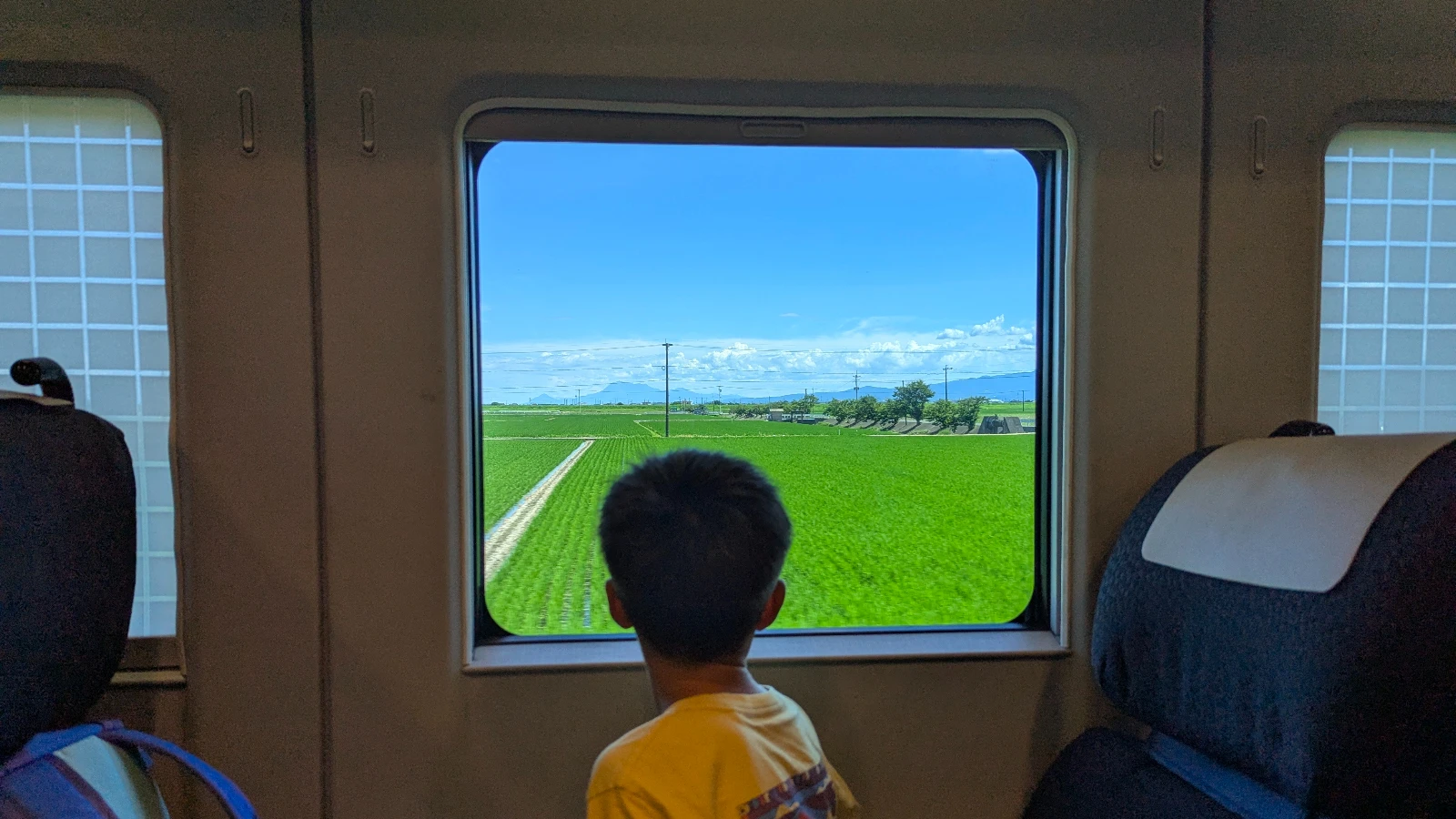
Japan rewards families who plan with precision. The country’s train system is among the most reliable in the world, its cities are clean and safe, its food culture is genuinely accommodating for children, and its attractions span every age and energy level. Yet the families who struggle in Japan almost always fail for the same reasons: too many cities, too much daily distance, and an itinerary built around highlights rather than around the specific child making the trip.
This guide gives families planning a trip to Japan with kids a complete planning framework, and sits within our broader Japan family travel hub for everything the country offers families across every city and season. The organizing principle is not “see everything Japan offers.” It is “build the itinerary your child can actually sustain.”
Japan with Kids: Planning at a Glance
The details below represent the baseline decisions for most families. Use them as anchor points before working through the full guide.
| Category | Details |
|---|---|
| Best Travel Seasons | Spring (March to May) and autumn (October to November) |
| Ideal Trip Length | 10 to 14 days |
| Best First Cities | Tokyo and Kyoto, with Osaka if time allows |
| Strongest Age Range | Ages 5 to 18, though all ages are manageable with the right structure |
| Primary Transport | Trains and IC cards |
| Overall Difficulty | Lower than most international destinations |
Best Travel Seasons
Ideal Trip Length
Best First Cities
Strongest Age Range
Primary Transport
Overall Difficulty
When to Visit Japan with Kids
Season selection is the first planning decision that genuinely changes the experience, not just the weather. Spring and autumn are the strongest seasons for families with children, and the reasoning goes beyond the standard “mild temperatures and beautiful scenery” framing.
Spring (March to May)
Delivers cherry blossom season in late March through mid-April, with comfortable walking temperatures across most of Japan. This is peak travel season nationally, which means higher hotel prices and busier attractions. Book accommodation and timed-entry tickets at least three months in advance for spring travel.
Golden Week, running from late April through early May, is Japan’s busiest domestic holiday period. Prices spike and long queues are standard at major attractions. Families who cannot avoid Golden Week should prioritize less-visited destinations and book everything months in advance.
Autumn (October to November)
Offers arguably the most comfortable conditions for families: low humidity, clear skies, and autumn foliage that peaks across different regions through November. Crowds are lighter than spring at most sites outside Kyoto, and prices are more stable.
Summer (June to August)
Is the most demanding season for families with young children. Humidity in Tokyo and Osaka regularly exceeds 80 percent in July and August, and daily step counts of 15,000 to 20,000 become significantly harder to sustain in heat. Families traveling in summer should front-load outdoor activities before 10:00 AM, build mid-afternoon hotel returns into every itinerary day, and identify air-conditioned rest points at every major site.
Summer also spans Obon, the annual Buddhist memorial period observed from approximately August 10 to 18. During Obon, domestic travel surges sharply: trains, bullet trains, and popular attractions fill to capacity, and hotel prices in major cities spike. Families should either plan around Obon entirely, shifting travel to late July or late August, or book all accommodation and transport a minimum of four months in advance and accept that popular sites will be at peak crowding.
Winter (December to February)
Offers quieter cities and significant cost savings outside the New Year holiday window (late December through early January). Hokkaido and northern Honshu are excellent for families with children who respond well to snow-focused travel, including ski resorts and winter festivals.
Japan demands 15,000 to 20,000 steps a day, and the difference between a memorable trip and a daily meltdown comes down to one thing: knowing your child’s exact physical and sensory threshold before you lock in non-refundable bookings.
Take the free, 60-second Family Fit Check to discover your child’s travel profile and get the exact pacing strategies that prevent a breakdown on day three.
How Long to Stay in Japan with Kids
The most common planning mistake families make is underestimating how much time city transitions consume. Every overnight move requires packing, station navigation, luggage management, and a new hotel orientation, all of which drain children’s reserves before the actual day begins. The optimal trip length for most families traveling Japan with kids is 10 to 14 days, structured around a maximum of two or three bases.
The information below is designed for families using the Family Fit™ framework. Anchor and Sprinter families benefit most from fewer bases and more recovery time; Dynamo families can tolerate more variety but still need discharge zones built into each day.
| Trip Length | Recommended Structure |
|---|---|
| 7 Days | One city base with day trips |
| 10 Days | Two cities, one overnight move |
| 14 Days | Two to three cities with at least one scheduled rest day |
7 Days
10 Days
14 Days
Families who try to visit four or five cities in 10 days spend the majority of their time managing logistics rather than experiencing Japan. Fewer bases almost always produces a better trip.
The Most Costly Planning Mistakes for Families
Families who have done their research still tend to make the same structural errors. Understanding them in advance is worth more than most destination lists.
- Stacking cities: Japan’s train system makes multiple cities look effortless on a map. The reality for families is that every city change adds a full logistical day. Three cities in seven days is two cities too many for most families with children under 10.
- Large luggage on trains: Standard suitcases become genuine problems in busy stations, in narrow train aisles, and inside compact Japanese hotel rooms. Pack to a size that can be managed by one adult without assistance. Alternatively, use Japan’s takuhaibin luggage forwarding service, which ships bags directly between hotels for approximately ¥2,000 per bag per transfer.
- Hotels chosen for price over position: A 20-minute walk from the nearest station adds 40 minutes of transit to every day, multiplied across a family carrying children and bags. Proximity to a well-connected train station is the single most important accommodation variable for families.
- Underestimating daily distances: A standard sightseeing day in Japan involves 15,000 to 20,000 steps. Families with Sprinter-profile children, those who tire quickly or whose energy depletes faster than peers, need this number factored into every itinerary before a single booking is made.
- No unscheduled time: Overfilled itineraries leave no capacity for a child who needs to stop, an unexpected street discovery, or an afternoon that runs long. The days that families remember most clearly from Japan are almost never the ones with six planned activities.
Parent Insight: Children who travel Japan with genuine downtime built into the schedule engage more deeply with the experiences they do have. A morning at a neighborhood shrine where a child has time to watch, ask questions, and simply be present produces a more lasting impression than a five-stop day where every site is a transition. This is not a comfort concession. It is the structural condition that makes Japan meaningful for children rather than exhausting for everyone.
Where Families Should Go in Japan
Japan has more than a dozen cities with genuine, substantive offerings for families. The guide below reflects an honest hierarchy: Tokyo and Kyoto are the anchor cities for most family itineraries and receive the depth they deserve. Secondary cities are genuinely strong additions for families with time and the right profile match.
Tokyo
Tokyo is the strongest first city in Japan for families with children, and it is not particularly close. The city’s combination of world-class interactive museums, large public parks, age-appropriate themed districts, and the highest concentration of English signage in Japan makes it the most accessible entry point for first-time family visitors. A dedicated four to five nights gives enough time to cover core experiences without rushing.
Key family attractions include teamLab Planets (recommended timed-entry booking at least three to four weeks in advance), the National Museum of Nature and Science in Ueno, Ueno Zoo, Harajuku’s Takeshita Street, Shibuya Sky, and the Pokémon Centers spread across the city. Tokyo Disneyland and DisneySea, located in Chiba prefecture roughly 30 minutes from central Tokyo by train, warrant a full dedicated day each and are most efficiently accessed from a central Tokyo base.
Best for: All profiles. Dynamo children respond well to the variety and energy. Sensor children should prioritize off-peak timing at high-traffic attractions and pre-map quieter green spaces (Shinjuku Gyoen, Yoyogi Park) for mid-day sensory breaks.
Kyoto
Kyoto is the most culturally substantive city in Japan for families and the natural complement to Tokyo on a two-city itinerary. Where Tokyo is high-stimulation and high-variety, Kyoto is slower, more walkable within individual neighborhoods, and structured around experiences, shrines, temples, bamboo forests, and traditional streets, that reward a more deliberate pace.
The Fushimi Inari Shrine is the most iconic site and is best visited before 8:00 AM to avoid crowds on the lower torii gate paths. The Arashiyama bamboo grove, the Philosopher’s Path during cherry blossom season, Nishiki Market for food exploration, and the Gion district at dusk are all suitable for children ages 5 and above. Kimono rentals, available throughout central Kyoto for ¥3,000 to ¥5,000 per person, are a consistently high-engagement activity for children and can be combined with a walking route through Higashiyama.
Best for: Anchor children who benefit from Kyoto’s walkable neighborhood structure and predictable daily rhythm. Older children (10 and above) tend to engage more deeply with Kyoto’s cultural density; younger children do best with a mix of structured sites and open exploration time.
Osaka
Osaka earns its place on a Japan family itinerary primarily through two anchors: Universal Studios Japan, home to Super Nintendo World and The Wizarding World of Harry Potter, and the Kaiyukan Aquarium, one of the largest and most family-accessible aquariums in Asia. Beyond these, Osaka’s Dotonbori district and its food culture provide a high-energy contrast to Kyoto, which makes it a strong third city for families with enough time.
Universal Studios Japan requires advance planning. Super Nintendo World in particular operates on a timed-entry reservation system, and capacity fills weeks in advance during school holiday periods. Book through the official USJ app as soon as dates are confirmed.
Best for: Dynamo children who need high-stimulation environments and families with older children or teenagers who want theme park depth alongside city experience.
Hiroshima
Hiroshima is Japan’s most emotionally significant city for families and one of its most underrated practical destinations. The city is compact, genuinely walkable, and structured around the Peace Memorial Park and Museum in a way that produces one of the most memorable single-day experiences available to families in Japan. The Peace Memorial Museum is appropriate for children ages 8 and above; parents should preview content before visiting with younger or more sensitive children.
The day trip to Miyajima Island, reachable by ferry in 10 minutes from Miyajimaguchi, adds a visually striking half-day to any Hiroshima visit. The island’s famous floating torii gate, free-roaming deer, and accessible hiking paths make it one of the most photogenic and child-friendly natural sites in western Japan.
Best for: Families with children ages 8 and above seeking cultural depth alongside natural beauty. Sprinter children benefit from Hiroshima’s compact, low-transit structure.
Okinawa and Miyakojima
Okinawa’s main island and the smaller Miyakojima offer Japan’s only genuine beach-focused family experience. The Churaumi Aquarium on the main island ranks among the best aquariums in the world and warrants a full half-day. Miyakojima’s beaches, particularly Yonaha Maehama, are among the most visually dramatic in East Asia and accessible without the crowds of Okinawa’s more developed resort areas.
Best for: Families seeking a fundamentally different pace from mainland Japan, or those combining a cultural Japan itinerary with a beach extension. Most efficiently accessed as a separate trip or a final-leg add-on rather than embedded in a standard Tokyo-Kyoto itinerary.
Hokkaido
Hokkaido’s primary family draw varies sharply by season. Winter travel centers on Sapporo’s Yuki Matsuri (Snow Festival, held in early February), Niseko’s family ski infrastructure, and the Asahiyama Zoo in Asahikawa, one of Japan’s most innovative animal parks. Summer delivers Hokkaido’s lavender fields in Furano (peak bloom: mid-July), open-landscape hiking, and dramatically lower temperatures than Honshu, making it the most comfortable region in Japan for families during peak summer months.
Best for: Dynamo and Sprinter children in summer, who benefit from Hokkaido’s open spaces and cooler temperatures. Winter travelers should note that Hokkaido’s cold requires specific layering and gear preparation beyond standard Japan packing lists.
Flying to Japan with Kids

The three primary international airports for family itineraries are Tokyo Haneda (HND), Tokyo Narita (NRT), and Kansai International (KIX) near Osaka.
Haneda is the stronger Tokyo option for families: more compact terminal layout, shorter immigration queues on most international routes, and significantly closer to central Tokyo (approximately 30 to 45 minutes by monorail or Keikyu Line versus 60 to 90 minutes from Narita). If itinerary and fare options allow, prioritize Haneda for Tokyo arrivals.
Narita handles more budget international routes and remains the primary airport for many long-haul carriers. The Narita Express (N’EX) connects directly to Shinjuku and Tokyo stations and accepts IC cards and rail passes.
Kansai International is the correct gateway for itineraries that begin in Kyoto, Osaka, or Hiroshima. The Haruka limited express connects KIX to Kyoto in approximately 75 minutes.
Passport validity must cover the full duration of the stay. Visa-free entry applies to citizens of the United States, most EU member states, Australia, Canada, and the United Kingdom for tourism stays up to 90 days. Always verify current entry requirements with the relevant Japanese embassy before booking.
Most international carriers allow stroller check-in at the gate. Request gate-side return on arrival and confirm the protocol during check-in.
Family Accommodation in Japan
The decision that most affects daily quality of life in Japan for families is not which hotel brand to choose. It is whether the property sits within a five-minute walk of a well-connected train station. This single variable determines how much physical and logistical load accumulates at the start and end of every day.
Hotels
Business and city hotels in Japan are clean, reliably located near major stations, and typically offer family rooms or interconnecting options in the ¥15,000 to ¥35,000 per night range. Room sizes trend smaller than Western equivalents; always confirm square footage and bed configuration before booking. Look for properties that include breakfast, in-room laundry, and elevator access.
Vacation Rentals
Apartments and vacation rentals suit larger families or those staying five or more nights in a single city. Kitchen access reduces daily food costs significantly and provides a more stable environment for Anchor children who need familiar breakfast foods and predictable morning routines. Book only properties licensed under Japan’s Minpaku Law. Confirm that the property includes elevator access for families with strollers or young children.
Ryokans
Traditional Japanese inns offer tatami rooms, futon bedding, and formal multi-course meals (kaiseki). They are a genuinely memorable experience for families with children ages 7 and above, but require specific preparation: removing shoes at the entrance, maintaining quiet in shared spaces, and managing a dinner format that many younger or pickier children will find challenging. Research ryokans that specifically welcome families rather than booking general adult-focused properties.

Getting Around Japan with Kids
Japan’s train system is the operational backbone of any family itinerary, and the IC card (Suica or Pasmo) is the most important practical tool for families on the ground. A preloaded IC card taps in and out of virtually every train, subway, and bus in major cities, and also works at convenience stores, vending machines, and many tourist facilities. Load ¥5,000 to ¥10,000 at the start of the trip and top up as needed at station machines.
For intercity travel, Japan Rail Pass eligibility has narrowed in recent years, and the pass is now cost-effective primarily for itineraries that include multiple bullet train (Shinkansen) journeys. Families visiting only Tokyo and Kyoto may find that purchasing individual Shinkansen tickets provides better value than the full JR Pass. Calculate both options against the specific itinerary before purchasing.
Stroller accessibility at stations is genuine but inconsistent. Major stations in Tokyo, Kyoto, and Osaka have elevators, but locating them in large hubs like Shinjuku or Umeda requires attention to the colored floor guide lines and signage. Compact, foldable strollers navigate Japan significantly more easily than full-size travel systems. For children three years and older who can walk but tire quickly, a lightweight stroller or a compact carrier functions as a portable rest station during long station transfers and queue lines.
Avoid peak commute hours when traveling with children: 7:30 to 9:30 AM and 5:00 to 7:00 PM in Tokyo and Osaka. Trains during these windows are genuinely packed, and navigating with a stroller or young child is difficult.
LuNi Intel: At large stations with multiple exits, designate one specific exit as the family meeting point before splitting up for any reason. Shinjuku Station has over 200 exits; agreeing on “South Exit, under the big clock” before entering is the single fastest way to prevent a lost-child situation that every parent of an active child should anticipate.
What Families Should Eat in Japan
Japan is one of the most accommodating food environments in the world for families with children, including families with selective eaters. The concern that children will not find food they recognize dissolves quickly on the ground.
The most reliably child-friendly options in Japan are udon (thick, mild noodles in a simple broth), katsu curry (breaded pork cutlet with mild curry sauce and rice), onigiri rice balls available at every convenience store for ¥100 to ¥200, conveyor belt sushi (kaiten-zushi, where children choose from a visual selection at table speed), and tamagoyaki sweet rolled omelet, which appears in bento sets and sushi menus throughout the country.
Japan’s convenience stores deserve more credit than most travel guides give them. The prepared food sections of 7-Eleven, FamilyMart, and Lawson operate at a quality level substantially above what the category implies in most countries. Pre-made bento boxes, onigiri, sandwiches, hot snacks, fresh fruit cups, and yogurt are all available 24 hours. For families managing early starts, late returns, or selective eaters, the convenience store is not a fallback. It is a legitimate daily resource.
Food allergies require specific preparation in Japan. Common allergens including wheat, egg, dairy, sesame, and shellfish are present across many traditional Japanese dishes, and not all restaurants maintain separate cooking equipment. Carry a printed Japanese-language allergy card specifying the relevant allergens and asking about cooking oil and dashi stock. Cards can be printed from our resources page or downloaded from allergy-focused Japan travel sites. Present the card at every meal rather than relying on verbal communication alone.
Etiquette for Families Visiting Japan
Japan’s public behavioral norms are specific, and introducing children to them in advance produces a noticeably more comfortable experience for the whole family.
The three most important rules for children to understand before arrival are: shoes come off at the entrance of homes, many ryokans, some restaurants, and certain temple interiors (look for a step-up threshold or shoes lined up at the entrance); voice volume on trains, subways, and buses is kept at conversation level or lower; and walking while eating is not practiced outside of specific festival contexts. These are not rigid enforcement situations in tourist areas, but observing them makes daily interactions with locals materially warmer.
At shrines and temples, the hand-washing ritual at the temizuya purification fountain is an engagement point for children rather than a formal obligation. The process, scooping water with the wooden ladle, rinsing each hand, and returning the water to the basin, is easy to demonstrate and gives children a participatory role in cultural space. Ema wooden wish plaques, available for ¥500 to ¥800 at most major shrines, are among the most effective child-focused cultural activities in Japan.

How to Build a Japan Family Itinerary
The common error in Japan family itinerary planning is treating the daily schedule as a maximization problem: how many sites can be covered in each day? The correct question is: what is the maximum sustainable pace for the specific child in this family, and how do we build an itinerary that keeps every day under that ceiling?
For families using the Family Fit™ framework, pace constraints are non-negotiable. A Sprinter-profile child who hits a physical wall at 2:00 PM requires an itinerary with a hard afternoon cutoff, regardless of what the schedule lists. A Sensor-profile child needs mid-day decompression built in before the afternoon session, not as a concession but as a structural requirement that makes the second half of the day possible.
Seven-Day Itinerary
Designed for first-time families visiting Japan or families with Anchor and Sprinter-profile children who need schedule stability and minimal transitions.
| Day | Focus |
|---|---|
| Days 1 to 4 | Tokyo base: rotate across core attractions with one scheduled rest half-day |
| Day 5 | Day trip from Tokyo: Kamakura or Yokohama |
| Days 6 to 7 | Kyoto: two-night base, two focused neighborhood days |
Days 1 to 4
Day 5
Days 6 to 7
Fourteen-Day Itinerary
Designed for families comfortable with three city transitions and children ages 7 and above.
| Day | Focus |
|---|---|
| Days 1 to 5 | Tokyo base, including one full day for Tokyo Disneyland or DisneySea |
| Day 6 | Bullet train to Kyoto |
| Days 7 to 9 | Kyoto base: Arashiyama, Fushimi Inari, Gion |
| Days 10 to 11 | Osaka: Universal Studios Japan plus Kaiyukan |
| Day 12 | Hiroshima day trip or overnight from Osaka |
| Days 13 to 14 | Return to Tokyo for departure buffer |
Days 1 to 5
Day 6
Days 7 to 9
Days 10 to 11
Day 12
Days 13 to 14
What to Pack for a Family Trip to Japan
Two decisions categorically change how Japan travel functions with children, and they should be resolved before considering anything else on the packing list.
The first is footwear. Japan’s walking culture produces 15,000 to 22,000 daily steps on a moderate itinerary. Shoes that are comfortable at 5,000 steps but cause friction at 18,000 will ruin the second half of every day. Every family member, adults included, needs footwear tested and confirmed for full-day walking before departure. The second is luggage size. Any bag that cannot be comfortably managed by one adult while also attending to a child is too large for Japan. The standard test: if you cannot move it quickly through a crowded train station without stopping, it will cause problems daily.
Beyond those foundational decisions, pack according to the specific child profiles traveling. Sensor families should include active noise-cancelling headphones: major transit hubs like Shinjuku regularly exceed 80dB, and headphones prevent sensory overload before the day has started. Sprinter families traveling with children aged five or six should consider a lightweight compact stroller; Japan’s stroller infrastructure is better than most visitors expect, and a portable rest station makes queue lines and long station transfers sustainable. Anchor families should pack a seven-day supply of familiar breakfast foods; for children who need food predictability to feel settled, the morning meal is the single most important regulatory anchor of the day.
Universal packing additions for Japan family travel: a compact umbrella (Japan’s spring and autumn seasons include significant rain), layers that can adjust to a 15-degree temperature swing within a single day, a portable power bank for navigation-heavy days, and a small amount of cash in yen for shrines, local markets, and smaller restaurants that do not accept cards.
How Much a Family Trip to Japan Costs
Japan’s reputation as an expensive destination is largely a function of flight costs rather than in-country spending. Once on the ground, families on a managed budget can travel Japan well.
The most useful budget framework separates volatile costs, those that change significantly based on timing and booking decisions, from stable costs, those that are predictable regardless of when or how you book.
Volatile costs requiring specific planning: Flights represent the single largest variable and are most efficiently purchased four to six months before travel for spring and autumn departures. Hotel rates near major events (Golden Week, Cherry Blossom peak, Obon) increase by 30 to 80 percent compared to off-peak equivalents. Book accommodation before flights for spring travel if dates are locked.
Stable costs for reference planning:
| Category | Daily Estimate (Family of 4) | Cost |
|---|---|---|
| Budget / Value-Focused | ¥25,000 to ¥35,000 | ¥ |
| Comfortable / Mid-Range | ¥35,000 to ¥58,000 | ¥¥ |
| Premium / Luxury | ¥70,000 and above | ¥¥¥¥ |
Budget / Value-Focused
¥Comfortable / Mid-Range
¥¥Premium / Luxury
¥¥¥¥These figures include accommodation, food, local transport, and attractions. They exclude international flights.
Where families consistently find budget leverage in Japan: convenience store breakfasts and lunches reduce daily food costs significantly without sacrificing quality. Department store food halls (depachika) serve high-quality bento and prepared food at prices below restaurant equivalents. Local ramen and udon shops offer complete family meals in the ¥1,000 to ¥2,000 range per person. The budget pressure in Japan is almost always at the accommodation and intercity transport level, not at the food level.
Safety, Health, and Emergencies
Japan is consistently ranked among the safest countries in the world for international travelers. Crime affecting tourists is extremely low. Public spaces are maintained to high cleanliness standards, and children are treated with consistent warmth by locals across the country.
Practical preparation covers three areas. First, medical access: hospitals and clinics in major cities are modern, and English-speaking staff can be found at international hospitals in Tokyo (Tokyo Medical and Surgical Clinic, St. Luke’s International Hospital) and Kyoto (Japan Baptist Hospital). Pharmacies, identified by the character 薬 or the word “kusuri,” carry over-the-counter medications, but brand names will not match those familiar from home. Pack a family medicine kit with fever reducers, antihistamines, rehydration salts, and any prescription medication in original labeled containers.
Second, travel insurance: coverage is strongly recommended and should confirm that it covers children, activity-related injuries, and emergency medical evacuation. Verify coverage terms for Japan specifically.
Third, a simple lost-child protocol: teach children to approach police box (koban) staff or station attendants, both of whom are universally helpful and present at all major transport hubs. Prepare a card with the hotel name, hotel phone number, and a parent mobile number that a child can present if separated. See our resource page to download one.
Public bathrooms across Japan are consistently clean and well-equipped. Major stations, department stores, and large parks include dedicated baby rooms with changing tables, nursing areas, and child-height sinks. The standard of public family facilities in Japan is among the highest of any country families are likely to visit.
The Japan Family Trip Briefing: Essential Intel
A: For a family of four, daily in-country costs range from ¥25,000 to ¥35,000 at a budget-managed level and ¥35,000 to ¥58,000 at a comfortable mid-range level. These figures include accommodation, food, local transport, and attractions, and exclude international flights. Strategic use of convenience stores, depachika food halls, and local noodle restaurants keeps daily food costs well under ¥10,000 for most families.
A: Ten to fourteen days is the optimal range for most families visiting Japan with children. This allows two to three city bases without compressing transition days. Families with Anchor or Sprinter-profile children should prioritize fewer cities and more time per base: five nights in Tokyo followed by four nights in Kyoto, with a rest day at each transition, produces a substantially better trip than a four-city sweep in the same timeframe.
A: Tokyo is the strongest first city for families in Japan, offering the widest range of age-appropriate attractions and the most accessible English infrastructure. Kyoto is the essential cultural complement and performs particularly well for families with children ages 7 and above. Osaka adds theme park depth and food energy, and is most valuable on itineraries of 12 days or more. Hiroshima deserves serious consideration for families with children ages 8 and above and consistently outperforms expectations.
A: Yes. Japan ranks consistently among the safest countries for international family travel. Crime affecting tourists is very low, public spaces are clean, children are welcomed across virtually all cultural sites, and the quality of public restroom and baby room facilities is among the highest in the world. Standard supervision near train platforms and in busy station concourses is appropriate, as it would be anywhere.
A: The two highest-leverage packing decisions are footwear tested for full-day walking (15,000 to 20,000 steps per day is standard) and luggage sized for single-adult management in crowded stations. Profile-specific additions: Sensor families need noise-cancelling headphones for major transit hubs; Sprinter families should bring a lightweight stroller even for children aged five or six; Anchor families should carry a week’s supply of familiar breakfast foods. All families should pack a compact umbrella, cash in yen, and a family medicine kit with familiar fever and allergy medications.
A: Japan is significantly more accommodating for selective eaters than most families expect. Udon, katsu curry, onigiri rice balls, tamagoyaki sweet omelet, and conveyor belt sushi give children familiar flavor and texture profiles without requiring adventurous eating. Japan’s convenience stores (7-Eleven, FamilyMart, Lawson) stock high-quality prepared food at every price point and are a reliable daily resource for families. Families managing serious food allergies should carry a printed Japanese-language allergy card specifying relevant allergens and ask about dashi stock and shared frying oil at every restaurant.
What Comes Next
With the planning framework established, the next decision is itinerary construction at the city level. Begin with the Tokyo Family Travel Hub for the most comprehensive coverage of neighborhood selection, attraction sequencing, and accommodation positioning in Japan’s primary family destination. For families adding Kyoto, the Kyoto Family Travel Hub provides the same depth with specific attention to the city’s unique pacing requirements and cultural site strategy.