Tokyo DisneySea with Kids: Where Movement Meets the Queue.
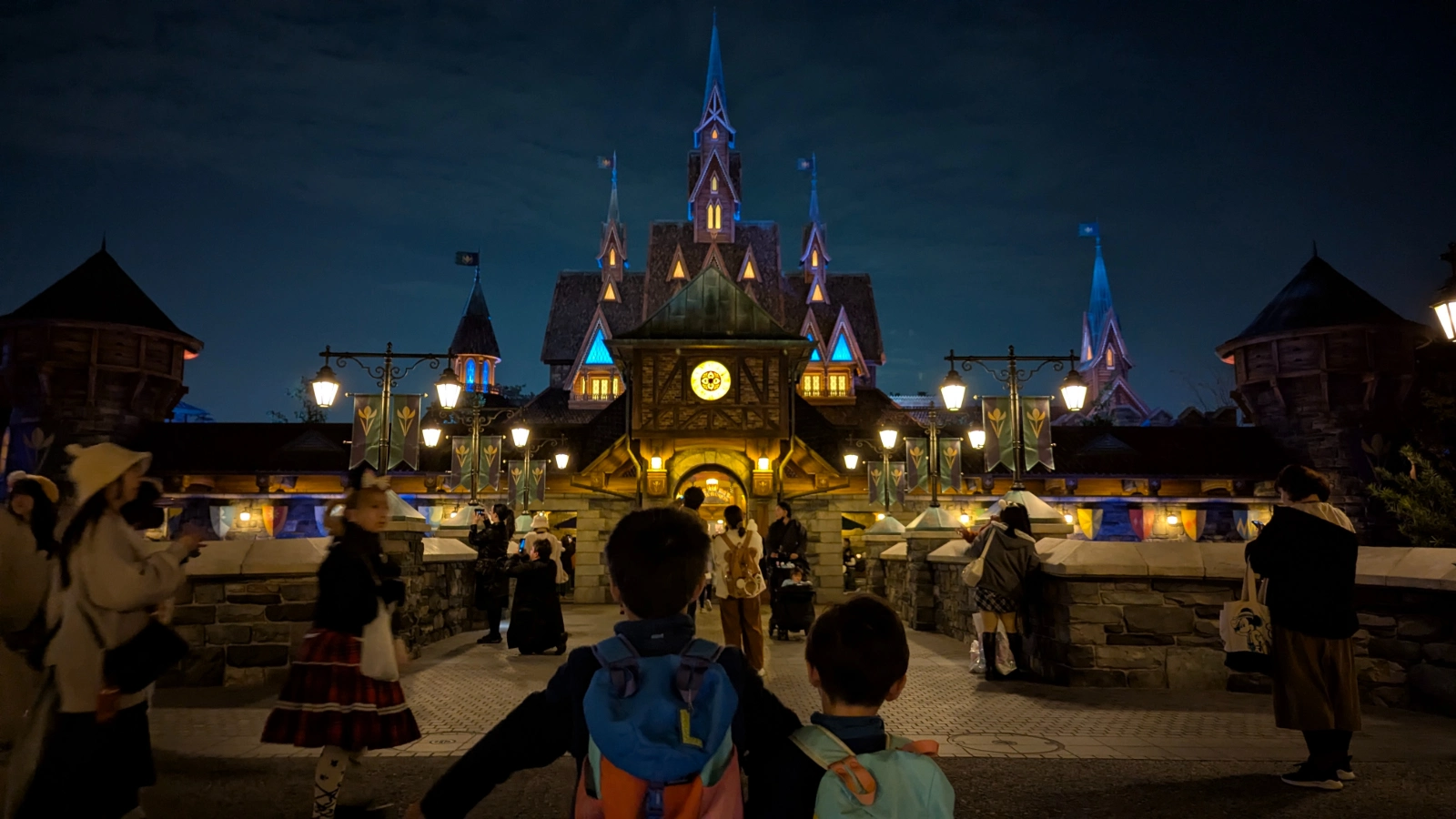
Tokyo DisneySea is one of the great family days in Japan, and the price of it is waiting: running is banned, and every line has to be planned.
After 5, weekday evenings, as of October 2026. Full day from ¥8,900 adult, by date; 3 and under free.
Check the operating calendar for your date.
Hours vary by date, so check the calendar before planning the evening.
Under 7 rides with a companion of 16 or over; the park lists rides with no height limit for 3 and under.
Rentals at Mediterranean Harbor; your own must be pushed by hand, wheels locked when parked.
Some links on this page are affiliate links. LuNi may earn a commission at no extra cost to you.
Is Tokyo DisneySea worth it with kids?
The short version, before the costs, the timings and the case for each child.
Yes, and it is one of the best family days in Japan, but only for the family that plans it. DisneySea is a park of rides and shows with lines, and it asks children to walk, stand and wait, with running banned outright. The waiting is the whole problem, and Premier Access is the whole answer: a paid, timed return to one ride at a time, bought in the App or at counters in the park. Decide which two or three rides matter most to your children, buy access for those, and treat the rest of the day as a bonus. Book the ticket itself early, too, since sales pause when a day reaches its limit. A day planned this way is a delight; a day improvised is a long one.
Planning Your Visit to Tokyo DisneySea with Kids.
Three decisions shape a DisneySea day, and all three are made before you reach Maihama. The first is the date. Tickets are dated and sell to a daily limit, so book as early as your plans allow, and a fixed date on a school vacation will not slip away from the family. The second is Premier Access: choose the rides worth paying to skip the line for, knowing you can hold one at a time and the next opens after 60 minutes. The third is the youngest child in the family, since the park publishes a list of rides with no height limit and keeps a Baby Center for infants. Name the child’s two must-do rides at home, and the dated ticket and the Premier Access plan follow from them.
Every LuNi attraction guide starts with a visit, with our own children
LuNi rates and writes about attractions only after visiting them with children. Luca and Nico were at Tokyo DisneySea, and what they did there is recorded further down this page, including how each child actually met it.
Children arrive with different tolerances: for noise, for lines, for standing still, for being on their feet all day. A guide written for the average of them helps almost nobody. So every place on this site is read four ways, and each verdict says which children it already suits and what makes it work for the rest. Whoever you are bringing, the answer here is built for your family rather than for a general reader.
Restricted-movement depletion builds in every line in a park where running is banned, so buy Premier Access for the rides this child wants most.
Sensory-input depletion builds through a long day of shows and lines, and the boats stop for harbor shows, so plan a set quiet break.
Unfamiliarity eases with a dated ticket, timed Premier Access returns and published ride rules for small children, so plan the order of rides at home.
Walking and standing stay manageable with the Resort Line station a minute from the gate and timed returns, though the boats stop for shows.
- Cost
- From ¥8,900 adult / ¥5,300 childJuniors 12 to 17 from ¥7,400; 3 and under free; prices vary by date. Tickets are dated and bought ahead. Cheaper afternoon entry to DisneySea alone: After 5 for weekday evenings from 5:00 p.m., from ¥6,000 adult / ¥3,800 child; After 3 for Saturdays, Sundays and national holidays from 3:00 p.m., from ¥7,900 / ¥4,400. Prices as of October 2026.
- Booking
- Online, two months aheadOn sale daily at 2:00 p.m. for the same date two months on; Premier Access is bought separately.
Hotels we would book for this visit.
Three of the resort’s six Official Hotels, each with a free shuttle bus to the nearest Resort Line station, so a child’s journey to the park is two short rides from the door.
| Property | The LuNi Reason |
|---|---|
| LUNI Pick Hilton Tokyo Bay | One of the six Official Hotels, with a free shuttle to the nearest Resort Line station, and the pick for a family that wants the park from the first hour. A child who needs the morning to go smoothly gets a short, fixed route from breakfast to the gate: shuttle, monorail, then the harbor. |
| Grand Nikko Tokyo Bay Maihama | Another Official Hotel on the same shuttle, for a child who is spent by early evening. It serves the same DisneySea day: an early start with no train from the city, and an evening return that asks a tired child for nothing more than two short rides. |
| Sheraton Grande Tokyo Bay Hotel | The third Official Hotel with the shuttle, for a family giving the resort two days. A child who spends one day at Disneyland and the next at DisneySea keeps the same room, the same breakfast and the same route to the monorail, so the second park is the only new thing in it. |
Sheraton Grande Tokyo Bay Hotel
Nearby attractions, matched to your child.
Three pairings for the day after DisneySea: an aquarium for quiet wonder rather than rides, a cinema for a child whose legs have had enough, and the resort’s first park for a family with another day.
| Pairing | Why This Solves the After-Visit | For Your |
|---|---|---|
| LUNI Pick Tokyo Sea Life Park Closed on Wednesdays | Tokyo Sea Life Park exhibits Pacific bluefin tuna and penguins, a slower kind of wonder after a day of rides and shows. For a Sensor whose sensory input climbed in the park, it is a gentler next day. Check the date first: it is closed on Wednesdays. | Sensor |
| Ikspiari cinema Ikspiari; a cinema, schedule published | Ikspiari has a cinema with its schedule published ahead, which makes it easy to plan. For a Sprinter whose walking and standing ran long at DisneySea, a film is a long spell in a seat that still feels like part of the trip, not a rest day forced on a tired child. | Sprinter |
| Tokyo Disneyland JR Maihama Station, about 5 min on foot | For a Sprinter, Tokyo Disneyland is about five minutes on foot from JR Maihama, rents strollers inside the gate, and sells timed Premier Access returns that trade standing for a set time. Its lines cost a Dynamo’s restricted movement as these did, so plan that child’s breaks the same way. | Sprinter |
Tokyo Sea Life Park
Closed on Wednesdays For YourSensor
Ikspiari cinema
Ikspiari; a cinema, schedule published For YourSprinter
Tokyo Disneyland
JR Maihama Station, about 5 min on foot For YourSprinter
How two children actually met this attraction.
Two children rode the same rides and judged them by completely different rules. One rated each ride by whether it held together, and dropped it the moment it did not; the other rated each ride by how much it let him do, and lost patience with anything that asked him to sit and wait. Both of them loved the same two rides, which is the useful thing to take from their day. The rides that won were the ones that gave a child a job, a score to keep or a world to believe in. Those are the rides to spend Premier Access on. The rest, and especially anything that asks for a long wait, can wait for another visit or be skipped without regret.
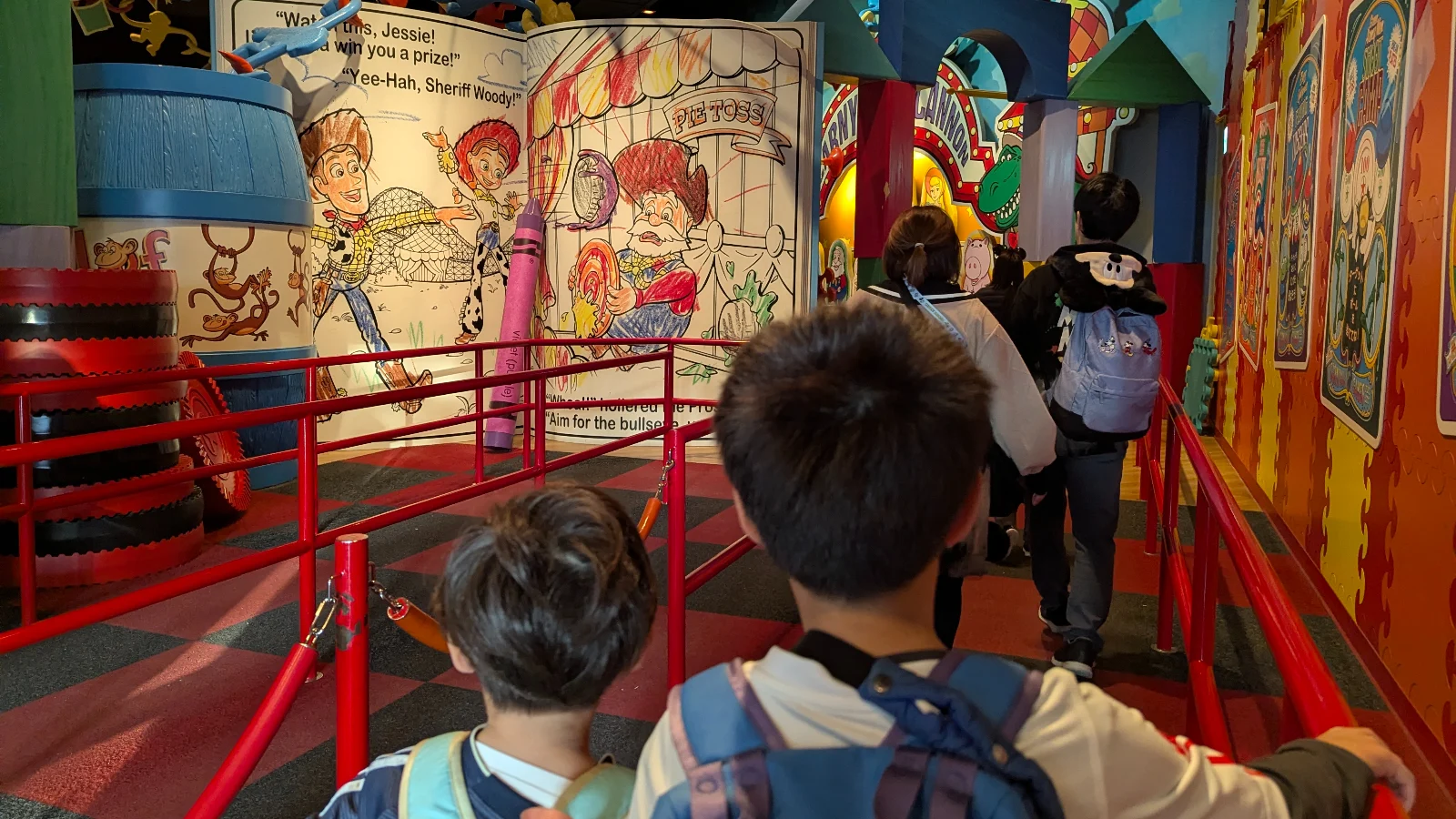
Luca read every ride as a system, and rated it by whether the system held together. Toy Story Mania was the high point because it kept his score, so he could track his points and confirm whether he had beaten the rest of the family. Peter Pan won him over the same way: the 3D glasses made Never Land coherent enough that it felt real. Soaring lost him when he kept noticing other riders’ feet hanging in front of him.
This is the Anchor pattern. A child whose Reserve depletes through unfamiliarity and unconfirmed structure settles into a ride once its rules are clear and hold, and drops it the moment it contradicts itself. For a similar child, read the ride descriptions together before the trip and lead with the ones whose promise is plain, a score to keep or a story that stays whole. A day built from rides this child already understands is one he will enjoy to the end.
Nico ran hot and fast, and the rides that kept him moving kept him happy. Toy Story and Peter Pan were, in his words, the best rides in the world, both active, quick and full of things to do. The Dreams Take Flight show held him only until he got restless, Rapunzel was too short to be worth anything to him, and Soaring lost him the moment he clocked other people’s feet.
This is the Dynamo pattern. A child whose Reserve depletes through restricted movement stays happy on a ride that gives him something to do, and loses patience with anything that asks him to sit or wait. For a similar child, spend Premier Access on the active rides he will love and skip the long waits for short ones. Plan the day with open space between rides, and remember that he may walk, never run, however full of energy he is.
DisneySea rewards the child who believes in a place, and that capacity for belief is worth protecting. Harbors, volcanoes and lagoons invite a child into stories they can walk through, and the rides that win are the ones that hand the child a role inside the story. Imaginative play is how children rehearse the world, and a park built on it is, at its best, a giant stage for that rehearsal. The height rules and the lines are real, but so is the moment a child steps into a world they had already half invented.
The LUNI Rating for Tokyo DisneySea.
The verdicts split on one thing: waiting. DisneySea is a day of lines in a park where running is banned, which is why the Dynamo pays the most and the Sensor needs a plan. The Anchor is well served because the day can be planned in detail, with dated tickets and timed Premier Access returns. The Sprinter is well served too, because the Resort Line station is a minute from the gate and the hotels offer free shuttles. A good plan tips each verdict toward the family. Tokyo Disneyland sets the Dynamo the same test, restricted movement in long lines, so its day needs the same breaks.
Spend Premier Access on the active rides, and never run. The Dynamo depletes through restricted movement, and DisneySea asks a moving child for the two things that cost them most: waiting in line and holding back. The park bans running outright, and every popular ride has a line. Premier Access helps, a paid, timed return to a single ride, but you can hold only one at a time, and the next opens after 60 minutes, so it shortens the day’s waiting rather than removing it.
The fix is choosing, not hoping. Buy Premier Access for the rides your child will love, and skip the long lines for short rides entirely. Plan the gaps between rides as walks through open parts of the park, never as more lines. And set the rule before you arrive: walk, do not run, however exciting the next ride looks.
What this means for your Dynamo: a park of lines with running banned is where restricted movement builds fastest. A younger Dynamo needs short lines and walks between them; an older one needs Premier Access spent on the most active rides.Plan the quiet break, and do not count on the boats. The Sensor depletes through sensory input, and a full day of rides, shows and lines adds up for this child. The park’s boats are not the retreat they look like: the Venetian Gondolas and the Transit Steamer Line stop or change route while the harbor shows are prepared and performed, so the calm ride you planned may not be running when you need it.
Set the break yourself, at a fixed time, somewhere the family can sit and eat. For an infant, the Baby Center is built for nursing, meals and changing. For an older Sensor, Premier Access means less time standing in lines, which is its own relief. Keep the evening shows for a child who is still enjoying the day, and leave early for one who is not.
What this means for your Sensor: input builds through a long day, and the boats stop for harbor shows. A younger Sensor needs a planned break and the Baby Center if an infant is along; an older one can choose the quieter hours.Plan the order of rides at home. The Anchor depletes through unfamiliarity and unconfirmed structure, and few big days out can be mapped as fully as this one. Tickets carry a date and are bought in advance. Premier Access gives a fixed return time for each ride it covers. The park publishes a list of rides with no height limit for children of 3 and under, with their rules, some needing a child who can sit steadily alone and some allowing a lap child.
So build the day together before you go. Read the ride descriptions, choose the order, and tell the child which rides have a booked time and which may mean a wait. Mention the boats too, since they may stop for shows, so the change does not come as a surprise. A child who knows the plan will follow it happily through a long day.
What this means for your Anchor: a dated ticket and timed returns for the rides that matter ease unfamiliarity. A younger Anchor needs the plan told at home; an older one can hold the order and the booked times.Let the monorail and the timed returns carry the day. The Sprinter depletes through sustained travel-style walking and standing, and a theme park day is long on both. DisneySea helps at the edges. The Disney Resort Line carries a family from JR Maihama almost to the gate, so the walking starts at the park rather than at the station, and the Official Hotels each offer a free shuttle bus to the nearest Resort Line station.
Inside the park, the answer is standing less rather than walking less. Premier Access turns the longest lines into timed returns, which spares a Sprinter the standing. Do not plan on the boats to carry a tired child between areas, since they stop for harbor shows. Plan a seated meal in the middle of the day, and leave before the child is spent.
What this means for your Sprinter: walking and standing ease with the monorail at the gate and timed returns in place of lines. A younger Sprinter needs a seated midday meal; an older one can manage the day if the long lines are avoided.The questions parents actually ask.
DisneySea is a park of lines where running is banned, and Premier Access, bought one ride at a time, is the way through them, at a price paid per ride. Tickets are sold by date, and sales pause at each day’s limit. The park publishes rides for children of 3 and under. Outside food is allowed only for dietary restrictions. And the no-running rule applies everywhere, so set it clearly with the children before you arrive. Settle first whether this is the right park at all, since DisneySea or Disneyland is a choice made by the youngest child. At DisneySea, choose the rides before the day.
Is Tokyo DisneySea worth visiting with kids?
Yes, for most families, and it rewards planning more than almost any day in Tokyo. The park is built around rides and shows with lines, and running is banned, so a child who needs to move pays for every wait. Premier Access shortens the lines one ride at a time, for a fee, and choosing those rides is most of the plan.
How much are Tokyo DisneySea tickets for children?
Prices vary by date. The lowest current prices are 8,900 yen for adults 18 and over, 7,400 yen for juniors aged 12 to 17, and 5,300 yen for children aged 4 to 11. Children of 3 and under are free. Tickets go on sale at 2:00 p.m. two months ahead, and sales pause without notice when a day reaches its limit. A child pays less on an afternoon ticket: from 4,400 yen on After 3 (Saturdays, Sundays and national holidays, in from 3:00 p.m.) and 3,800 yen on After 5 (weekdays, in from 5:00 p.m.), as of October 2026. Each is for DisneySea alone, fixed at purchase; buy it online when sales open (2:00 p.m. Japan time), as the ticket booths are closed. It suits an arrival evening, or a younger child who would fade before a full day is out, though After 5 runs four hours at most.
How does Premier Access work at DisneySea?
Premier Access is a paid, timed return to one ride or show, bought one at a time; the next opens after 60 minutes or at your booked time. Prices range from 1,500 to 2,500 yen. Refunds are given only when a ride is stopped for the park’s own reasons or a show is canceled, and children of 3 and under ride free with a buyer.
Where can you buy Premier Access at DisneySea?
In the App, once your park ticket is linked, or at counters in the park. Guest Relations sells it all day, as do Lost River Outfitters and Agrabah Marketplace, and there are counters at Fantasy Springs and Valentina’s Sweets for part of the day. Height rules still apply with Premier Access, so check your child’s height first.
Are there rides at DisneySea for children under 3?
Yes. The park publishes a list of rides with no height limit that suit children of 3 and under. Some need a child who can sit steadily alone, and some allow a child on a parent’s lap. There is also a Baby Center for nursing, meals and changing, which is the place to plan a break for an infant.
Can you bring food into Tokyo DisneySea?
Only for dietary restrictions such as food allergies; other outside food is not allowed. Selfie sticks and tripods are banned too. Photographs and video are fine for private use. For a family, that means planning meals inside the park, and bringing any allergy-safe food a child needs along with a clear reason for carrying it.
How do you get to Tokyo DisneySea?
From JR Maihama Station, it is about two minutes on foot to Resort Gateway Station, then about nine minutes on the Disney Resort Line to Tokyo DisneySea Station, which is about a minute from the park. The Resort Line costs 300 yen for adults and 150 yen for elementary children, and up to two preschool children ride free with each paying rider.
Where should families stay for Tokyo DisneySea?
Hilton Tokyo Bay, Grand Nikko Tokyo Bay Maihama and Sheraton Grande Tokyo Bay Hotel are three of the resort’s six Official Hotels, each with a free shuttle bus to the nearest Resort Line station. For a family with young children, that shuttle is the reason to stay inside the resort: the park becomes two short rides from the room.
Where Tokyo DisneySea fits your Japan trip.
Official site and opening information: Tokyo DisneySea