Tokyo passes for families 2026:subway prices and kids’ fares.
- Buses Too?
- The ticket covers no buses; a Suica does
- 24-Hour Ticket
- ¥1,000 adult, ¥500 child aged 6 to 11
- Which to Get
- The Tokyo Subway Ticket, for central days
- 48 and 72 Hours
- ¥1,500 and ¥2,000 adult; child half
- Under School Age
- Free on Tokyo Metro, two per paying passenger
How the subway pass fits with the rest of Tokyo’s public transportation, from the buses and JR lines to the regional passes for trips out.
Some links on this page are affiliate links. LuNi may earn a commission at no extra cost to you.
The Tokyo Subway Ticket costs ¥1,000 for 24 hours, ¥1,500 for 48 and ¥2,000 for 72, with children aged 6 to 11 paying exactly half, and it buys unlimited rides on every Tokyo Metro and Toei Subway line from the first tap. Younger children ride Tokyo Metro free, up to two per paying passenger. It does not cover JR lines, the Yamanote loop included, buses or the airport trains, so a Suica card handles those. For families spending their days in central Tokyo it is the pass the math points to: two or three days of sightseeing clear its cost.
The Tokyo Subway Ticket, priced for 2026.
The Tokyo Subway Ticket buys unlimited rides on all Tokyo Metro and Toei Subway lines for a fixed window of 24, 48, or 72 hours, counted from the moment of first use rather than from the calendar day. It applies The LUNI Framework’s reading of money and Reserve together: a flat, prepaid fare removes the small running tax of working out each leg, which matters as much for the adult holding the plan as for the child following it. What it does not cover is the part families most often get wrong, so the second table below is as important as the first.
| Duration | Adult | Child (ages 6 to 11) | What It Covers |
|---|---|---|---|
| 24-hour | ¥1,000 | ¥500 | All Tokyo Metro and Toei Subway lines. Children below school age ride Tokyo Metro free, up to two per paying passenger. |
| 48-hour | ¥1,500 | ¥750 | Same coverage, two consecutive days from first tap. |
| 72-hour | ¥2,000 | ¥1,000 | Same coverage, three consecutive days from first tap. |
24-hour ticket
Adult ¥1,000 · Child ¥500
48-hour ticket
Adult ¥1,500 · Child ¥750
72-hour ticket
Adult ¥2,000 · Child ¥1,000
The ticket does not cover JR lines, including the Yamanote loop, and it does not cover buses or airport trains. That single exclusion is what sends families to a second product, so the next question is rarely which subway ticket, but which pass handles each separate job.
The table below maps the common family scenarios to the pass that fits each, so the rest of this guide can take them one at a time.
| Travel Scenario | The Pass That Fits |
|---|---|
| A day in central Tokyo | Tokyo Subway Ticket for unlimited subway, or a Suica IC card for pay-as-you-go. |
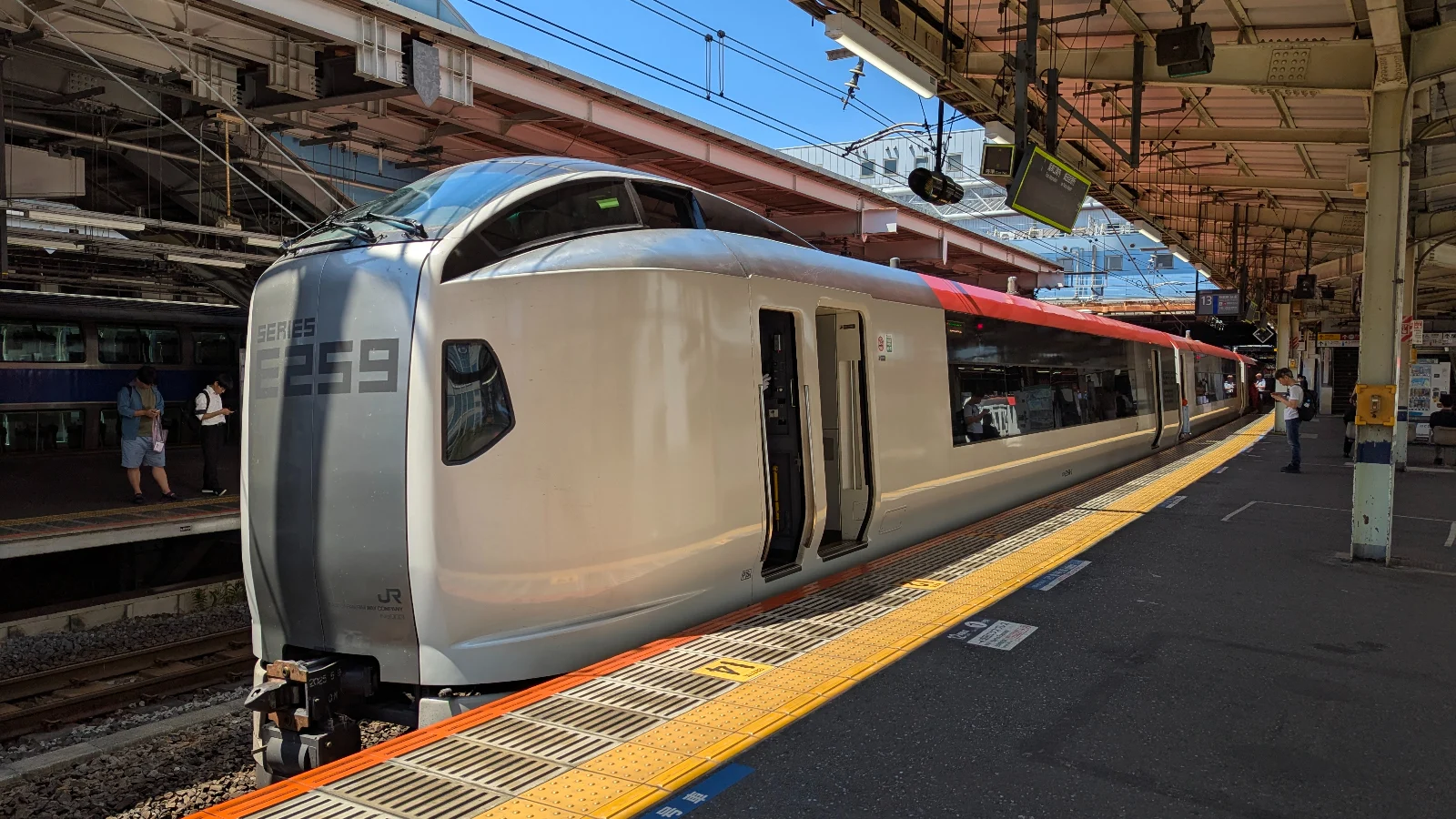
| Airport arrival and departure | Narita Express (N’EX) or the Keisei Skyliner. |
| Bay area and neighborhood lines | Yurikamome 1-Day Pass or the Tokyu Line 1-Day Pass. |
| Day trips (Hakone, Nikko, Mt. Fuji) | Hakone Freepass, NIKKO PASS Digital, or the Kawaguchiko to Tokyo ticket. |
| On to Osaka, Kyoto, or beyond | Shinkansen tickets, or the Japan Rail Pass for longer routes. |
What a child actually pays.
Japanese transit fares follow three age bands, and they are simpler than most families fear. The complication is not the price. It is the gate, where a child needs the right ticket or card in hand for the discount to register.
| Age Band | What They Pay | What Parents Need to Do |
|---|---|---|
| Under 6 | Free on most trains with a paying adult. | No ticket needed. On reserved or limited-express seats, a young child may need to share a seat rather than occupy a paid one. |
| Ages 6 to 11 | Roughly half the adult fare. | Buy a child ticket or set up a child IC card. The discount only applies when the child taps their own card or ticket at the gate. |
| Ages 12 and up | Full adult fare. | Treated as an adult on all networks, including passes and reserved seats. |
Under 6
Ages 6 to 11
Ages 12 and up
The fare a child pays is only the visible cost. The LUNI Framework treats a family trip as running on three currencies, not two: money and time, which every parent already tracks, and a third, the child’s Reserve, their finite capacity to absorb what travel asks of them. A travel day spends that Reserve before a single attraction opens, and which pass you choose can either protect it or drain it. The four profiles below describe how each kind of child depletes on a transit day, and what that means for how you move.
The Dynamo depletes through restricted movement. Packed rush-hour cars and long waits behind fare gates are exactly the conditions this child cannot hold still through, so the planning consequence is to travel between the morning and evening peaks where possible and to favor a pass that lets you board and exit freely rather than rationing rides to justify a per-ticket fare. For a younger Dynamo that means short hops with a clear endpoint they can see coming. For an older one it means handing them the route on the map so the movement feels chosen rather than imposed.
The Sensor depletes through sensory input. Japanese trains are quiet by global standards, so the load here is not noise but density: a peak-hour Yamanote car packs bodies, motion, and closeness into the exact press this child’s threshold struggles to absorb. The planning consequence is to travel around the peak rather than through it, and to build one calm leg into the day as a counterweight. A younger Sensor settles with a window-facing seat and a clear view out. An older one copes well when you name the crowded stretch before it arrives, so the press is expected rather than sprung on them.
The Anchor depletes through unfamiliarity and unconfirmed structure. The repeated small uncertainty of working out a fare, finding the right gate, and not knowing what happens next is what unsettles this child, and here a single tap-to-pay card does real work, because it removes that uncertainty from every leg of the day. The planning consequence is to set the card up before you arrive and to confirm the route out loud as a known sequence. A younger Anchor settles when the next stop is named. An older one settles when they can hold the plan themselves.
The Sprinter depletes through sustained travel-style walking and standing. Tokyo’s largest interchange stations carry underground transfers that can run several hundred meters with stairs, and a pass that tempts you into one more transfer to save a few hundred yen spends this child’s legs to save your wallet. The planning consequence is to favor a direct route over a cheaper multi-transfer one, even at a small fare premium, and to treat seated train time as recovery rather than dead time. A younger Sprinter needs the stroller kept for the station, not just the street. An older one needs the day’s walking budget spent on the destination, not the commute.
Suica, and why it works almost everywhere.
Where the Subway Ticket is a fixed wager on heavy subway use, Suica is the flexible counterpart: a rechargeable card that taps to pay on nearly every train, subway, and bus in the region, and at a great many shops and vending machines besides.
Suica is not an unlimited pass. You load it with a balance and it deducts each fare as you ride, which means it rarely beats the Subway Ticket on a heavy subway day but almost always wins on a mixed one, when a family rides a JR leg, a private line, and a bus without wanting to hold three different tickets. A child version is available for ages 6 to 11 and applies the half fare automatically. For the Anchor in particular, the value is not only financial. One card that opens every gate removes the repeated friction that quietly drains a travel day.
| Detail | Family Specifics |
|---|---|
| Cost | ¥1,000 to ¥10,000 Each card includes a refundable ¥500 deposit; the rest is a usable balance. Recharge as needed. Set Up Your Suica→ |
| Where It Works | Tokyo Metro, Toei, JR, most private rail, buses, and many shops and vending machines. Far wider than the Subway Ticket. |
| Children | A child Suica covers ages 6 to 11 and applies the half fare automatically at the gate. On Tokyo Metro, children below elementary-school age still ride free, up to two per fare-paying passenger. |
| Best For | Mixed travel days across different networks, and families who would rather not calculate fares or hold multiple tickets. |
Suica IC card
Cost ¥1,000 to ¥10,000
Hopping neighborhoods and the bay.
A handful of single-operator day passes earn their place when a family plans to stay on one line. The clearest case is the bay: Odaiba’s waterfront attractions sit along the Yurikamome, an elevated automated line that children tend to treat as a ride in its own right.
| Pass | Adult | Child (6 to 11) | Best For |
|---|---|---|---|
| Yurikamome 1-Day Pass | ¥820 | ¥410 | Odaiba and the Tokyo Bay waterfront: science museums, seaside parks, and the elevated views children ride for their own sake. |
| Tokyu Line 1-Day Pass | ¥780 | ¥390 | Neighborhood-hopping across Shibuya, Jiyugaoka, and easy side trips toward Yokohama on a single network. |
| Special Tour Pass (Odaiba) | Check when booking | Varies | A full day in Odaiba bundling sightseeing and food extras for families settling in one area. |
Adult ¥820
Adult ¥780
Adult: check when booking
Getting in, getting out, and getting away.
The trips that bracket a Tokyo stay are the ones where Reserve is lowest: the jet-lagged arrival with luggage, and the day trip that asks a family to travel before they have even reached the destination. These are the legs worth paying a little more to make easy.
An arrival is the worst moment to ask a tired child to navigate. A reserved airport express trades a modest premium for a guaranteed seat, luggage space, and a single confirmed leg into the city, which is exactly the structure an Anchor needs and the seated recovery a Sprinter’s legs need after a long flight. Day-trip passes follow the same logic: each bundles the round-trip from Tokyo with unlimited local transport at the destination, so the travel day runs on one confirmed ticket rather than a string of decisions.
| Ticket or Pass | Adult | Child (6 to 11) | Best For |
|---|---|---|---|
| Narita Express (N’EX) | ¥3,140+ | ¥1,560+ | A stress-free transfer from Narita to Tokyo, Shibuya, or Shinjuku with reserved seats and luggage space. |
| Keisei Skyliner | ¥2,580 | ¥1,290 | The quickest transfer from Narita to Ueno or Nippori, ideal for families staying in the northeast of the city. |
| Hakone Freepass | ¥7,100+ | ¥1,600+ | Onsen, lake cruises, and cablecars on one pass, with the round trip from Shinjuku included. |
| NIKKO PASS Digital | ¥3,000+ | ¥1,500+ | Nikko’s shrines, waterfalls, and nature, with the train from Tokyo and local buses bundled. |
| Shinkansen | ¥14,170 to Kyoto | ¥7,080 to Kyoto | Fast, comfortable travel on to Kyoto, Osaka, and beyond, and the option worth weighing against the Japan Rail Pass for multi-city trips. |
Adult ¥3,140+
Adult ¥2,580
Adult ¥7,100+
Adult ¥3,000+
Adult ¥14,170 to Kyoto
For a single intercity hop, individual Shinkansen tickets usually win. For a multi-city loop, the Japan Rail Pass can be the cheaper and simpler choice, so it is worth a direct comparison before you book.
Compare the Japan Rail Pass→The questions parents actually ask.
How much is the Tokyo Subway Ticket in 2026?
The Tokyo Subway Ticket costs 1,000 yen for 24 hours, 1,500 yen for 48 hours, and 2,000 yen for 72 hours for adults. Children ages 6 to 11 pay exactly half: 500, 750, and 1,000 yen. On Tokyo Metro, children below elementary-school age ride free, up to two per fare-paying passenger. The clock starts at first use, not at midnight.
Do children need their own train ticket or IC card in Tokyo?
Yes. Children ages 6 to 11 need their own child ticket or child Suica card, and they must tap it themselves at the gate for the half fare to register. On Tokyo Metro, children below elementary-school age ride free, up to two per fare-paying passenger, though on reserved or limited-express trains a young child may need to share a seat rather than occupy a paid one.
Can I use the Tokyo Subway Ticket on JR trains like the Yamanote Line?
No. The Tokyo Subway Ticket is valid only on Tokyo Metro and Toei Subway lines. It does not cover JR trains, including the Yamanote loop, and it does not cover buses or airport trains. The two subway networks still reach most central sightseeing areas, but a Suica card is the better choice if your days mix JR and subway travel.
Is the Suica card only for Tokyo?
No. Suica works far beyond Tokyo on most trains, subways, and buses across much of Japan, as well as at many shops and vending machines. It is a pay-as-you-go card rather than an unlimited pass, so you load a balance and each fare is deducted as you ride. For families crossing several networks in a day, that flexibility is its main advantage.
How much is a Suica IC card, and is it worth it for a short family trip?
A Suica is sold at 1,000, 2,000, 3,000, 4,000, 5,000 or 10,000 yen, each including a refundable 500-yen deposit, with the rest as a usable balance. For short trips it is worth it: you tap to pay across trains, subways, buses, and shops without calculating fares or holding multiple tickets. A child Suica covers ages 6 to 11 and applies the half fare automatically at the gate.
How much should a family budget for transport in Tokyo?
For days based in central Tokyo, a 72-hour Subway Ticket at 2,000 yen per adult and 1,000 yen per child covers most local movement across three days. Add a Suica with a starting balance for JR legs and buses, the airport transfer at each end, and a separate day-trip pass for any excursion to Hakone, Nikko, or Mt. Fuji. Most families find central transit is a modest line in the budget once the right pass is matched to each job.
Are the Klook Pass and THE TOKYO PASS transit passes?
No. Both are attraction discount bundles, offering reduced entry to museums and theme parks rather than transport. Any train add-on they carry is optional and does not replace a subway ticket or Suica. Decide on attraction bundles separately from how your family will move around the city.