Otaru With Kids:which stop is for which child.
- How Many Days
- One day; two in winter
- From Sapporo
- By JR rapid along the coast
- On the Canal
- A canal walk, or a canal cruise
- The Aquarium
- Seals, penguins and fixed show times
- In Winter
- The Snow Light Path, in February
Some links on this page are affiliate links. LuNi may earn a commission at no extra cost to you.
Otaru with kids takes one day, or two in winter, and it is more than the half day of canal photos most itineraries give it: a compact, walkable port town of stone warehouses and glass. A JR rapid runs up the coast from Sapporo, a line children watch from the window. Tenguyama and the canal walk suit a child who has to move; the Otaru Aquarium, with seals, penguins and fixed show times, and the Steam Locomotive Museum give a clear shape to a child who likes a plan. The canal cruise rests tired legs, and in February the Snow Light Path lights the canal.
A port city most families pass straight through.
That variety is the reason this guide is built the way it is. The LUNI Framework holds that family travel runs on three currencies, not two: money and time, which every parent already tracks, and a third that most do not, each child’s Reserve, their finite capacity to absorb what a travel day asks of them. Otaru spends that Reserve unevenly. The canal lanes reward a child who needs to move and tax one who tires on their feet; the craft halls calm a sensory-sensitive child and leave a restless one looking for the door.
So the stops below are not ranked best to worst. They are mapped by which child each one is for.
Which stop is for which child.
Organized not by which stop is best, but by which child each one is best for, across the four profiles.
These stops are not ordered best to worst. They are grouped by how each child runs out of steam. The Dynamo runs short when held still. The Sensor runs short on noise and bright, busy rooms. The Anchor runs short when nothing is confirmed in advance. The Sprinter runs short on a day of walking and standing. Find your child below, and start there.
For the Dynamo
Stops that relieve restricted-movement depletion.
For a child who depletes through restricted movement, the strongest stops are Tenguyama and the canal walk.
The cable car ends at an open mountaintop terrace with room to roam, which gives a movement-driven child the discharge the town’s narrow lanes deny them. A younger Dynamo runs the flat viewing deck; an older one takes the short summit trails and the Tengu-mask hall, with no rope line holding them in place.
Who it costs.The Sprinter, mildly. Reaching the base needs a short bus or taxi, and the summit paths add standing time for tired legs.
How to make it work.Ride up in the late afternoon for golden-hour light, so the Dynamo discharges and the view pays the Sprinter back for the climb.
If this isn’t your child: still the best view in Otaru, worth the ride for the harbor panorama alone.The canal promenade and the old Temiya railway path are flat, open, stroller-smooth routes a child can simply move along, which is exactly what the Dynamo needs between indoor stops. Younger children have unbroken room to walk the cobblestones; older ones can take the longer Temiya loop under the cherry trees without a queue in sight.
Who it costs.The Sprinter again. It is genuine walking distance end to end, with limited seating along the water.
How to make it work.Walk one direction only and pair it with the seated canal cruise back, so a low-stamina sibling rides while the Dynamo keeps moving.
If this isn’t your child: the postcard Otaru everyone comes for, lovely at any pace, just not where a tired child should start.For the Sensor
Calm, contained stops where sensory load drops.
For a child who depletes through sensory input, the strongest stops are the Stained Glass Museum and the Snow Light Path.
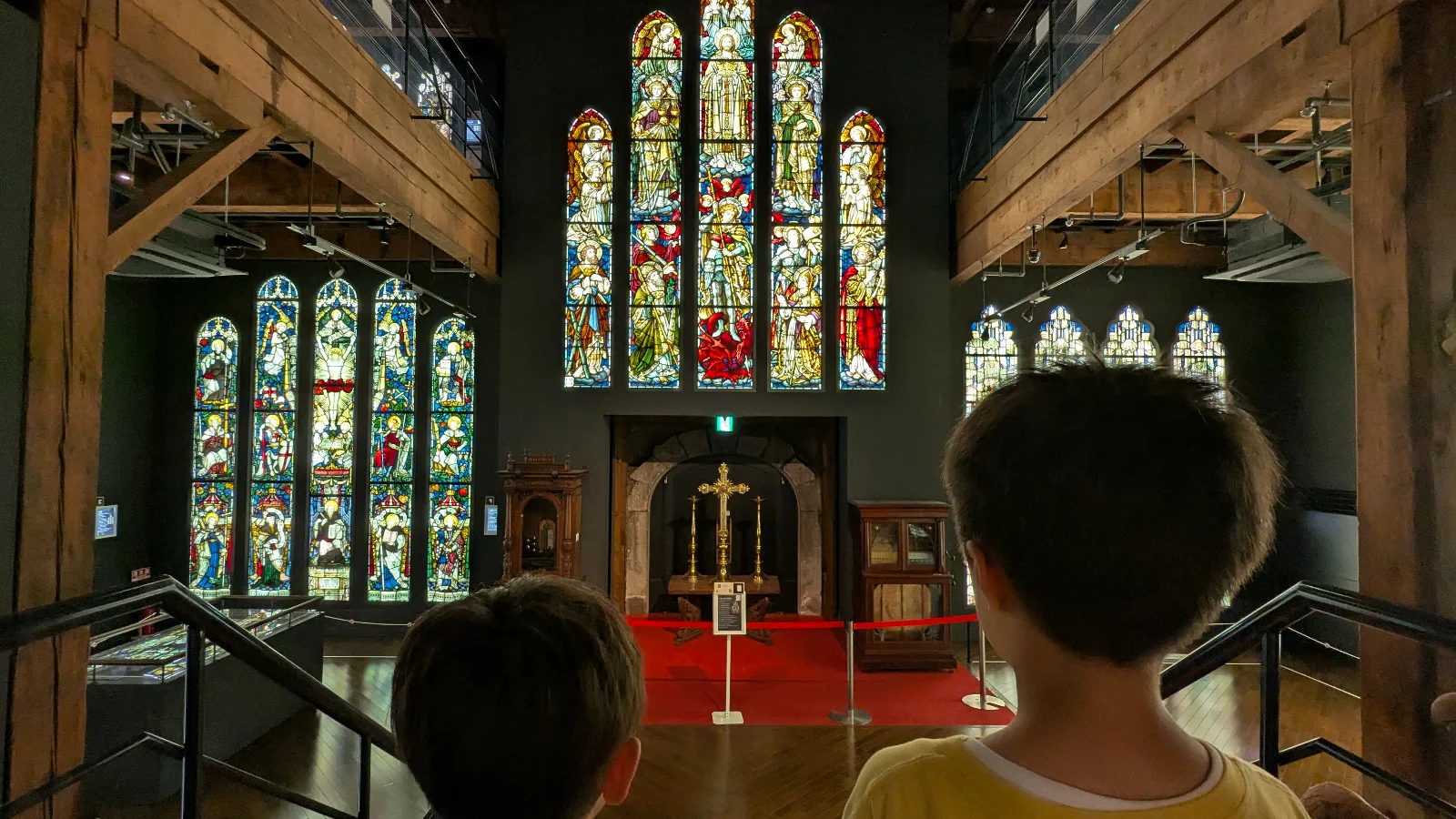
Housed in a quiet former church, the museum is dim, hushed, and slow, an acoustic and visual opposite to a craft-shop street. For a child whose sensory threshold is easily spent, the soft colored light and the low murmur let input drop and the visit continue. A younger Sensor hunts for shapes and figures in the glass; an older one takes in the craftsmanship at their own pace.
Who it costs.The Dynamo, mildly. It is a look-and-move-on room with little to do with the body, so it offers no discharge.
How to make it work.Use it as the planned reset between two busier stops, ideally at midday when the sun lights the windows brightest.
If this isn’t your child: a short, genuinely beautiful stop, though a restless child will be ready to leave inside ten minutes.The main hall is a warm wooden room of soft, repeating melodies, contained and predictable in a way a sensory-sensitive child can settle into. The sound is gentle rather than loud, and the displays reward quiet attention. A younger Sensor watches the gears and glittering snow globes turn; an older one can sit with the hands-on workshop and build a box to a melody they choose.
Who it costs.The Sensor itself, but only on a busy afternoon, when the ground floor fills with tour groups and the calm tips into crowd noise.
How to make it work.Arrive in the morning before the coach groups, when the hall is quietest and the workshop has open benches.
If this isn’t your child: a charming browse and a good souvenir stop, useful to any family even without the sensory need.For about a week each February, handmade snow lanterns and candles line the canal in a low, warm glow, the rare nighttime event pitched at a calm register rather than a loud one. The soft light, gentle pace, and open air let a sensory-sensitive child take in something special without the crowd-and-noise load that usually comes with an evening out. Younger children count the lantern shapes; older ones take in the snow sculptures along the water.
Who it costs.The Sprinter. It is an evening of slow outdoor walking on cold, sometimes uneven snow, after a full day.
How to make it work.Go in the first hour after the candles are lit, early enough to beat both the peak crowd and a young child’s bedtime, and stay near the cleared main canal path.
If this isn’t your child: one of the most beautiful free things to do in Hokkaido in winter, worth a short visit for any family in Otaru that February.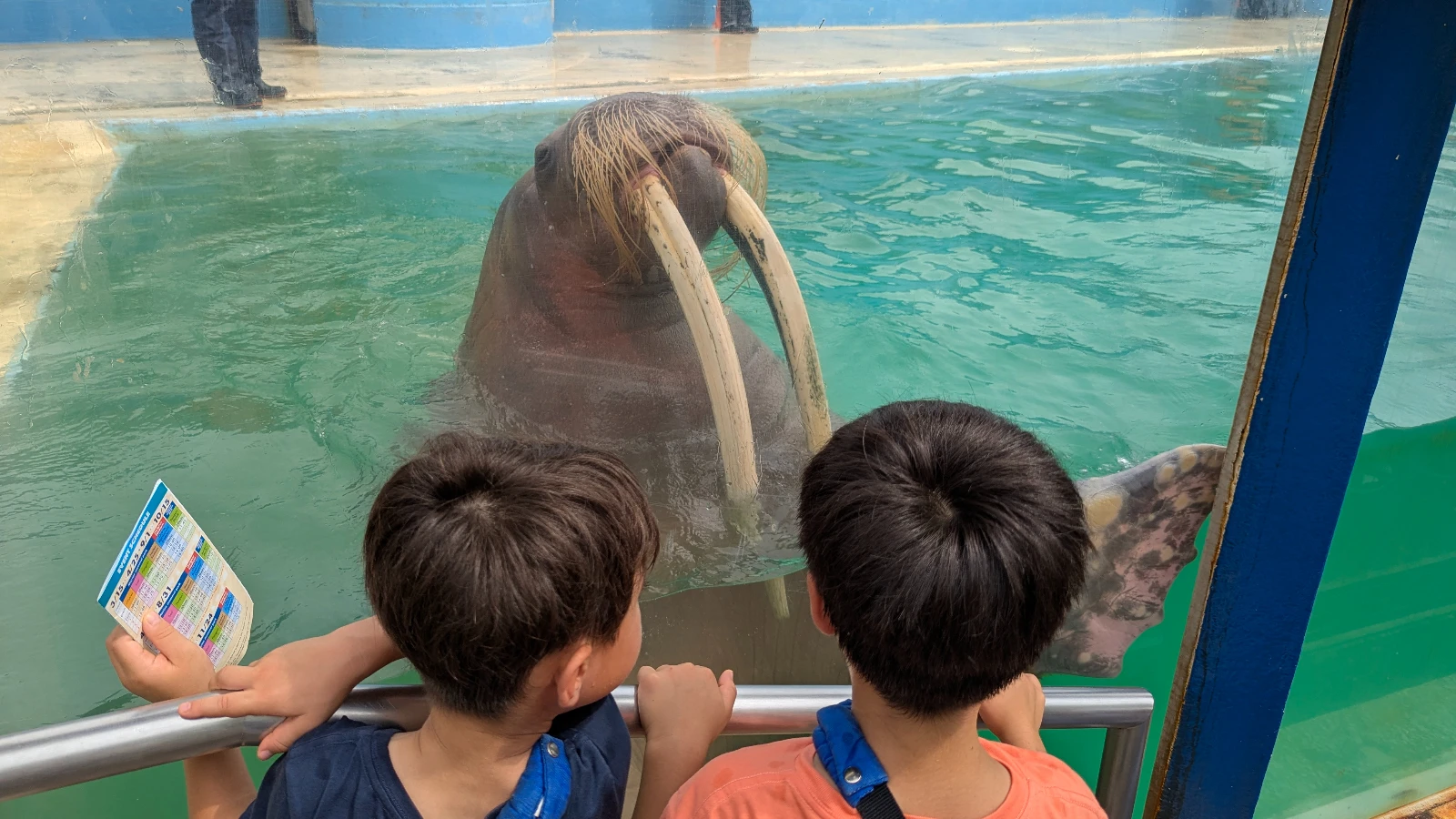
For the Anchor
Stops with confirmed, predictable structure.
For a child who depletes through unfamiliarity and unconfirmed structure, the strongest stops are the Otaru Aquarium and the Steam Locomotive Museum.
A posted show schedule, a clear indoor-to-outdoor route, and animals that appear on cue give the day a confirmed shape, which is exactly the predictability an Anchor relies on to keep their Reserve up. The seal, sea lion, and penguin shows run to a timetable a child can be told in advance and then watch arrive. A younger Anchor is steadied by knowing the penguin walk is coming; an older one tracks the schedule and leads the family between pools.
Who it costs.The Sprinter, mildly. The outdoor marine park sits on a slope with real walking between the indoor halls and the sea pools.
How to make it work.Pick up the show schedule on arrival and build the visit around the next two showtimes, so the Anchor always knows what is next and the walking comes in short, purposeful bursts.
If this isn’t your child: one of Hokkaido’s most family-friendly aquariums, a solid two to three hours for any visiting family.Real engines sit in the open on fixed tracks a child can walk up to, touch, and climb, a small, self-contained site with no surprises and a clear beginning and end. For an Anchor, the simplicity is the appeal: nothing here improvises. A younger Anchor climbs into a cab and stays put; an older one reads the restored carriages and the railway tools end to end.
Who it costs.Few profiles, which is what makes it a safe filler. At most the Sensor, if a school group arrives at once.
How to make it work.Treat it as the short, low-stakes stop between two bigger ones, an hour that asks nothing of a child running low.
If this isn’t your child: a nostalgic hour and a good photo stop for any little train lover.A grand old bank turned hands-on museum, with a fixed route through the vault and a handful of clearly labeled, do-this-here exhibits. The structure is explicit, which gives an Anchor a confirmed sequence to move through rather than an open room to negotiate. A younger Anchor heads straight for the vault and the gold bars; an older one follows the printing and currency displays in order.
Who it costs.The Dynamo. It is an indoor, read-and-look stop with little for the body to do.
How to make it work.It is free and central, so use it as a confirmed, low-cost anchor point near the canal rather than a destination in itself.
If this isn’t your child: a surprisingly fun free stop, with a real vault and gold bars that hold most kids for a while.For the Sprinter
Seated or single-stop options with little walking.
For a child who depletes through sustained walking and standing, the strongest stops are the canal cruise and the Yoichi Space Dome.
A cruise is a seat, and for a low-stamina child a seat is the whole point: the canal and Blue Grotto boats deliver the scenery the walking routes do without spending the leg reserve a Sprinter runs out of first. The short canal cruise suits younger children; the longer Blue Grotto coastal trip rewards older ones who can sit out the open-water stretch for the electric-blue caves.
Who it costs.The Dynamo, who gets no discharge from a seated ride and will need a movement stop chained to it.
How to make it work.Book the cruise as the Sprinter’s reset in the middle of the day, between two on-foot stops, so the legs recover before the next walk. Note both cruises run late spring through autumn only.
If this isn’t your child: a relaxing way to see the harbor, and the Blue Grotto caves are a genuine highlight in calm summer seas.A single, self-contained indoor museum a short hop from Otaru, the Space Dome packs rockets, satellites, and hands-on astronaut exhibits into one stop a child can take in without a walking day around it. For a Sprinter, that containment is the value: high interest, low distance, plenty of places to sit. Younger children test the astronaut-skills stations; older ones work through the real mission footage and spacecraft models.
Who it costs.Time and transit more than any profile, since reaching Yoichi adds a short train ride that only pays off if you are already heading that way.
How to make it work.Save it for a second Otaru day or a Yoichi side trip, and pair it with the nearby Fisheries Museum so one trip out covers two indoor stops.
If this isn’t your child: an inspiring stop for any space-curious kid, built around Hokkaido-born astronaut Mamoru Mohri.Open with the child who runs short first.
The order of an Otaru day is set by Reserve, not by the map. Each route opens with the stop that protects the named child, then chains to the nearest compatible one.
Settle these first. The canal and Blue Grotto cruises run late spring through autumn only, and the Snow Light Path Festival is February evenings (candles lit 5:00 to 9:00 p.m.). From Sapporo, take the JR rapid and aim to arrive by mid-morning, because the seasonal and timed pieces shape the day more than the route does. Everything else is walk-up fill-in arranged around them.
When to go, and what costs nothing.
Spring and winter are the two strongest windows, for opposite reasons. Spring brings cherry blossoms over the Temiya path and calm canal walks; February brings the Snow Light Path Festival, the city’s signature evening. Summer is the easiest season for a child who tires on their feet, trading the lantern walk for seated cruises and outdoor aquarium feedings. The free stops carry real weight here: the canal, the Temiya railway path, the Bank of Japan museum, and the winter lanterns all cost nothing, and several of them are also the calmest stops on the map, so the free route and the low-reserve route often run together.
Three bases that fit a family’s Reserve.
A shortlist chosen for location logic, not price tier. Most families visit Otaru as a Sapporo day trip; these matter most if you stay over for the winter festival.
| Property | The LuNi Reason | Budget |
|---|---|---|
| LUNI Pick OMO5 Otaru by Hoshino Resorts Steps from the canal | Playful Hoshino design with family rooms and easy canal access. The calmest base for an evening at the Snow Light Path, with no cold walk back to settle a tired child. | ¥¥¥ |
| Dormy Inn Premium Otaru Beside JR Otaru Station | Hot-spring baths and family rooms right at the station, the arrival point from Sapporo. The location holds an Anchor’s routine and shortens every tired-legs return at the end of the day. | ¥ |
| Grand Park Otaru At Otaru-Chikko Station | A seaside resort with spacious family rooms and direct station and shopping access. The easiest base for a Sprinter who needs short, flat walks between the room, the trains, and dinner. | ¥¥¥ |
Budget: ¥¥¥
Budget: ¥