LuNi HomeJapanJapan in Winter

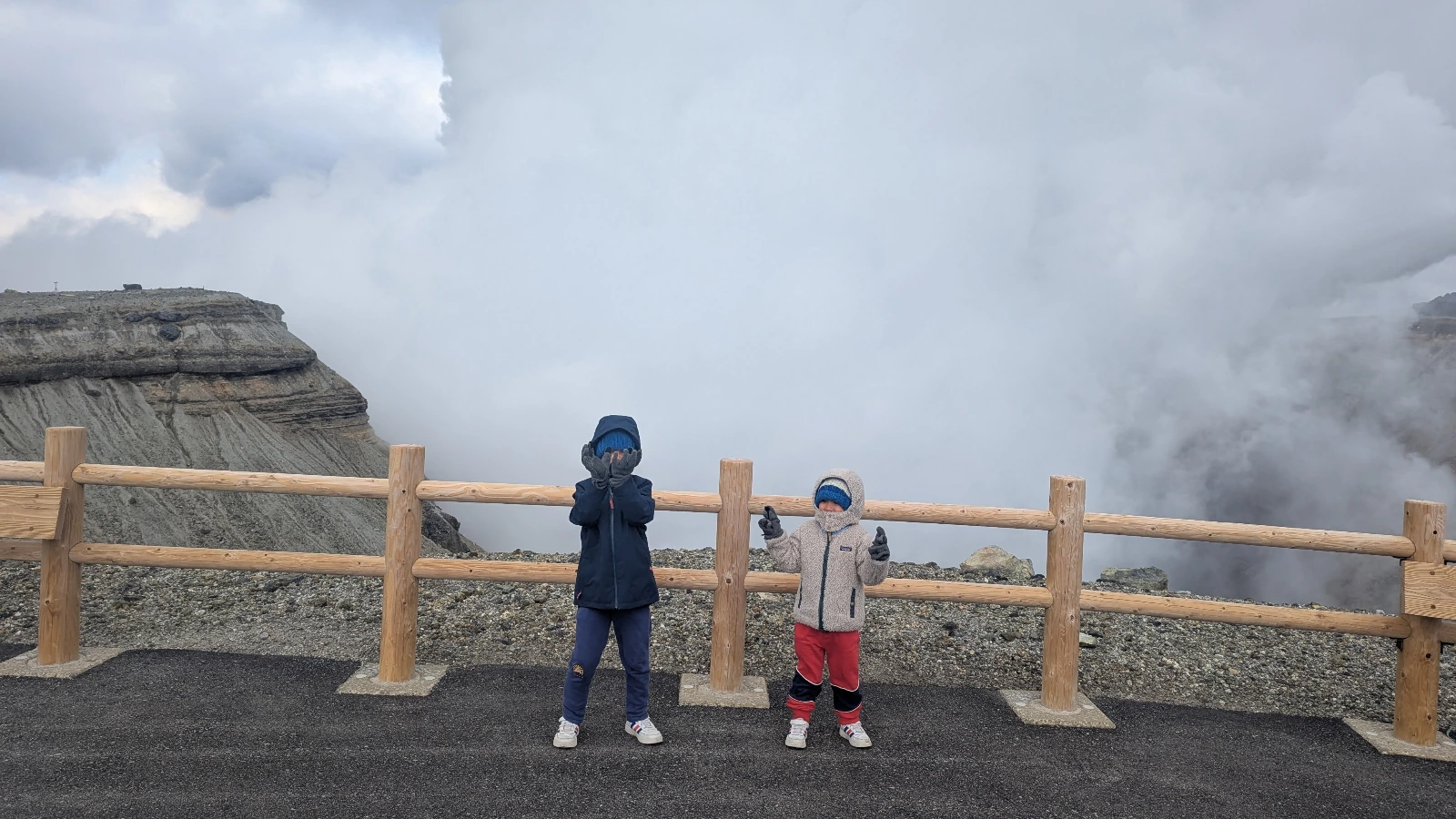
Luca & Nico standing at the edge of Mount Aso’s crater, surrounded by volcanic steam in Kumamoto, Japan.

Japan in Winter with Kids (2026): Full Guide to Weather, Snow, Illuminations, Packing & Best Family Destinations

By Josh Hinshaw

April 7, 2026

Japan in winter with kids is one of the most underestimated travel decisions a family can make. While other seasons compete for attention through cherry blossoms and autumn foliage, winter quietly delivers something more useful for families: lower crowds, dry predictable weather, and a seasonal lineup that splits cleanly between snow-play destinations and calm, culture-rich cities. The planning question is not whether winter works for families; it is which version of winter your family is built for.

The operative distinction is this: Japan in winter is not one experience but two. Families heading to Hokkaido, Nagano, or Niigata will encounter deep powder, beginner ski resorts, and snowfall that transforms ordinary parks into sledding terrain. Families staying in Tokyo, Kyoto, or Osaka will find the same cities they always wanted to visit, now cooler, quieter, and dressed in illuminations after dark.

This guide maps both versions, tells you how to choose, and gives you the operational detail to execute either one confidently. For the full seasonal context and planning overview, the Japan Family-Friendly Travel Hub is the right place to begin before committing to winter.

Some links on this page are affiliate links. If you book through them, LuNi Travels may earn a small commission at no extra cost to you.

Japan Winter With Kids: At a Glance

The following reference captures the decisions that genuinely determine how a winter trip performs for families with children of different ages and profiles.

What Parents Want to Know Quick Answer
Best Value Window Mid-January to late February; December is festive but busier and more expensive near New Year
City WeatherTokyo, Kyoto, Osaka Cold, dry, and clear; approximately 1-12°C (34-54°F) depending on city and month
Where Snow Actually Is Reliable in Hokkaido, Nagano, Niigata, and Tohoku; rare in Tokyo and Kyoto
Top Family Experiences Beginner skiing, snow play areas, winter illuminations, onsen towns, indoor museums and aquariums
Crowd Levels Low to moderate, except December 28 through January 3 and peak ski weekends
Child Comfort Level Very manageable with layering and warm indoor breaks; easier than it sounds
Hardest Daily Constraint Cold mornings and early sunset; plan outdoor activities before 3pm
Packing Priority Thermal base layer, packable mid-layer, waterproof outer; waterproof boots for snow regions
Overall Family Rhythm Calm, cozy, and naturally slower-paced than spring or autumn

Best Value Window


Answer Mid-January to late February; December is festive but busier and more expensive near New Year

City Weather


Cities Tokyo, Kyoto, Osaka
Answer Cold, dry, and clear; approximately 1-12°C (34-54°F) depending on city and month

Where Snow Actually Is


Answer Reliable in Hokkaido, Nagano, Niigata, and Tohoku; rare in Tokyo and Kyoto

Top Family Experiences


Answer Beginner skiing, snow play areas, winter illuminations, onsen towns, indoor museums and aquariums

Crowd Levels


Answer Low to moderate, except December 28 through January 3 and peak ski weekends

Child Comfort Level


Answer Very manageable with layering and warm indoor breaks; easier than it sounds

Hardest Daily Constraint


Answer Cold mornings and early sunset; plan outdoor activities before 3pm

Packing Priority


Answer Thermal base layer, packable mid-layer, waterproof outer; waterproof boots for snow regions

Overall Family Rhythm


Answer Calm, cozy, and naturally slower-paced than spring or autumn

Is Japan Worth Visiting in Winter with Kids?

Yes, and for a specific reason most seasonal guides miss: Japan in winter performs best for families who struggle with peak-season Japan. The crowds that make Golden Week exhausting and cherry blossom season feel like a competition simply are not present in January and February. Temples that are genuinely difficult to navigate with children in spring become walkable, spacious, and photogenic in winter without requiring early departures or crowd management strategies.

What winter gives families in practical terms is margin. There is margin in the schedule, margin at popular attractions, and margin in the budget. Mid-range hotels in Tokyo that are fully booked in late March at inflated rates are available in February at considerably lower prices. Shinkansen reservations that require weeks of advance booking in peak autumn are straightforward in winter. That operational ease changes the daily texture of the trip, and families who have done Japan in multiple seasons consistently report winter as the most relaxed.

The tradeoff is honest: daylight is shorter and mornings are cold. The productive outdoor window runs roughly from 9am to 3pm, after which temperatures drop and younger children tire faster. Families who plan outdoor activities in the morning and build afternoons around indoor experiences, warm meals, and early evening illuminations find the structure intuitive and sustainable. Families who try to replicate a summer-style itinerary, heavy on full-day outdoor excursions, will struggle.

Japan demands 15,000 to 20,000 steps a day, and the difference between a memorable trip and a daily meltdown comes down to one thing: knowing your child’s exact physical and sensory threshold before you lock in non-refundable bookings.

Take the free, 60-second Family Fit Check to discover your child’s travel profile and get the exact pacing strategies that prevent a breakdown on day three.

Japan Winter Weather With Kids

Understanding winter weather in Japan precisely matters because the country spans enough latitude that “winter in Japan” can mean either 2°C and powder snow in Sapporo or 12°C and blue skies in Fukuoka on the same day.

December in Japan with Kids

December is winter’s opening month: crisp, festive, and building toward Christmas and New Year energy. Temperatures in Tokyo, Kyoto, and Osaka typically sit between 5-12°C (41-54°F). Mountain and northern regions begin receiving regular snowfall in the second half of the month. Rain is minimal, humidity is low, and clear days are the norm.

For children, December feels brisk rather than punishing. Mid-day is comfortable with light layers and movement. The festive atmosphere, winter illuminations appearing from late November onward, and seasonal treats create a sensory richness that travels well. Families should be aware that the final week of December is high season across Japan: hotels are expensive, transportation is heavily booked, and major tourist sites are crowded. The period from December 28 through January 3 requires advance planning and a higher budget.

January in Japan with Kids

January is the coldest month and the heart of the winter season. Major cities register between 1-10°C (34-50°F), while Hokkaido, Nagano, and Niigata are reliably colder with consistent snow coverage. Skies are clear and bright. Winter sports are operating at full capacity. Crowds in cities are at their annual low.

For children, January is true winter: cold enough to require proper kit, warm enough to enjoy with the right layers. Indoor spaces across Japan are well heated, and the transition between cold outdoors and warm interiors becomes a natural rhythm that kids adapt to quickly. This is the best single month for families committed to snow play, beginner skiing, or attending winter festivals.

February in Japan with Kids

February matches January’s temperature range (2-11°C in major cities) but often feels more settled and predictable. Snow quality in ski areas peaks. Late winter festivals and snow events add a festive layer, and crowds remain thin. Late February brings the first hints of spring in warmer regions, while mountain destinations maintain excellent conditions.

For children, February is arguably the best winter month: cold and clear, with dry air that prevents the damp chill that makes cold feel worse, and a calm pace that allows families to settle into a daily rhythm rather than spending energy managing crowds.

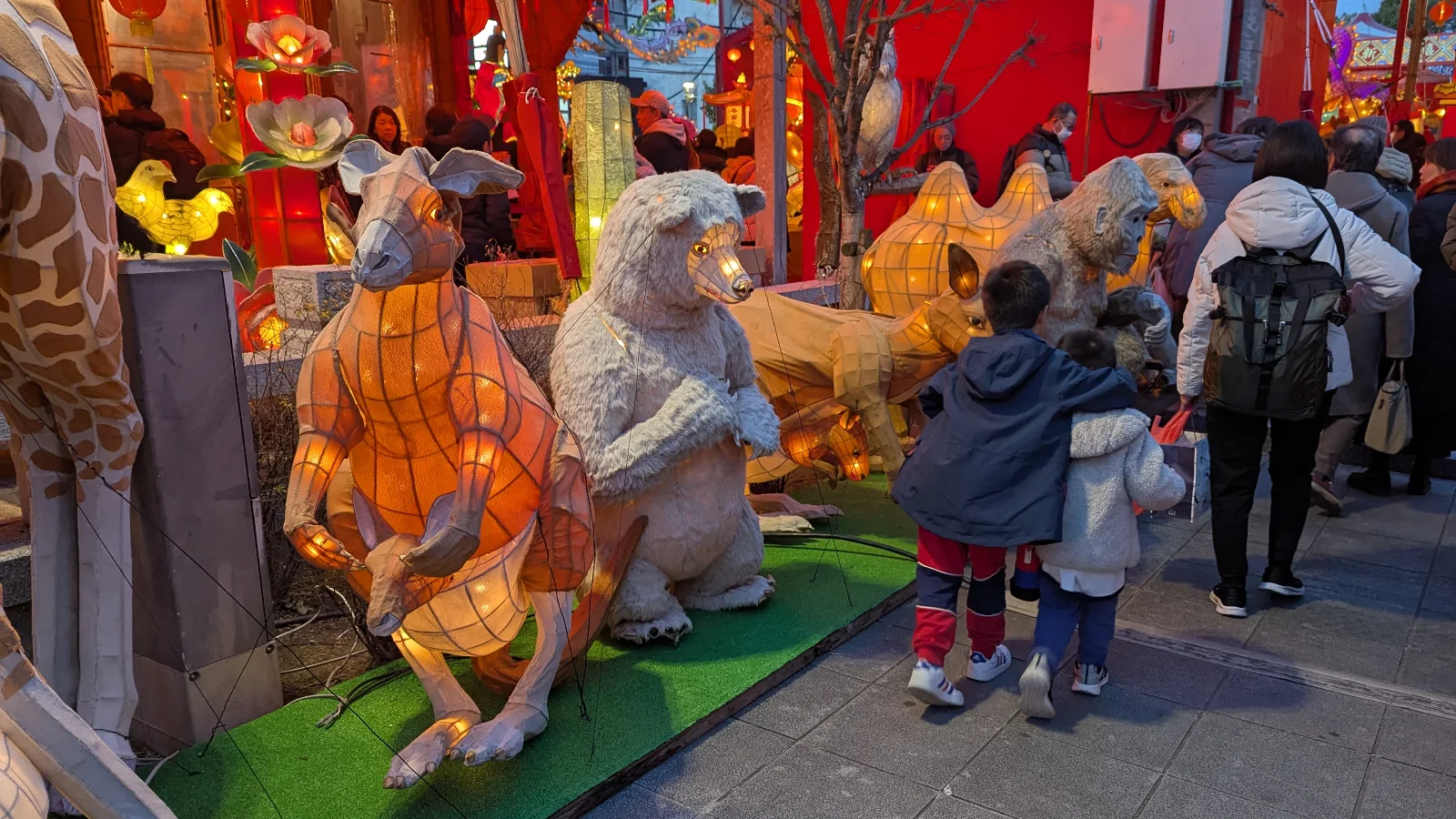
Luca & Nico exploring glowing zodiac animal lanterns during the Nagasaki Lantern Festival, engaging in a family-friendly scavenger hunt to learn about the Chinese Zodiac legends.

Best Places to Visit in Japan in Winter with Kids

Not every destination earns equal coverage in a winter context. The selections below are organized by the experience type they deliver, because the first planning decision for winter in Japan is what kind of winter your family wants: snow-focused, city-focused, or both.

Tokyo in Winter with Kids

Tokyo is the correct base for families who want a manageable, child-friendly introduction to Japan without the variable of snow. The city is cold but dry, transportation is frictionless, and the density of indoor attractions, aquariums, science museums, interactive art spaces, and train experiences, means a cold or wet day never creates a planning problem. Winter illuminations run from late November through mid-February, providing reliable evening structure for families wrapping up outdoor days before dark.

Tokyo also functions as the most practical jump-off point for snow. Day trips or overnight excursions to Nikko and its snow-covered shrine complexes, or Shinkansen access to Nagano and Niigata, allow families to mix city days with snow days from a single urban base.

Best for: Sprinter and Anchor families; first-time Japan visitors; families with toddlers who need reliable indoor options and easy logistics.

Kyoto in Winter with Kids

Kyoto’s strongest seasonal argument is this: the temples that define the city exist to be experienced quietly, and winter is the only season when that quiet is genuinely available to families. Fushimi Inari, Kinkaku-ji, and the Arashiyama bamboo groves become photographable, navigable, and unhurried in January and February in a way they rarely are from April through November.

Snow in Kyoto is occasional rather than reliable. When it does fall, even lightly, the effect on the wooden architecture and zen gardens is significant enough that families who encounter it tend to describe it as a trip highlight. The city is compact and walkable with children, and the absence of a major ski infrastructure nearby keeps the visitor demographic calmer and more culturally oriented.

Best for: Sensor families who thrive in quieter, less stimulating environments; older children interested in cultural depth; families combining Kyoto with a Nara day trip.

Osaka in Winter with Kids

Osaka offers the best indoor-outdoor balance of Japan’s major winter cities. Universal Studios Japan runs its full winter program including holiday events. Osaka Aquarium Kaiyukan is one of Japan’s finest, a half-day anchor that works for every age group. The Dotonbori district’s winter illuminations and food scene give evenings genuine energy even in cold temperatures.

The practical advantage of Osaka in winter is that its indoor infrastructure is extensive enough to absorb a full day of poor weather without the itinerary collapsing.

Best for: Dynamo families who need physical engagement and variety; mixed-age groups with both toddlers and school-age children.

Hakone in Winter with Kids

Hakone earns a specific mention in a winter context because clear winter skies produce the best Mount Fuji views of the year. Families who have visited in other seasons and missed the mountain entirely often find that a late January or February Hakone stay delivers the unobstructed views they had expected. Onsen accommodation in winter feels purposeful rather than optional, and many family-friendly ryokan offer private family baths that make the experience accessible to young children without the pressure of public bathing etiquette.

Best for: Families seeking a nature and relaxation day or overnight away from a Tokyo base; any profile that benefits from a slower, shorter excursion.

Sapporo in Winter with Kids

Sapporo is the correct destination for families who want urban infrastructure and serious snow. The city does not treat winter as an inconvenience; it treats it as its primary identity. Sidewalks are cleared, taxis and subways run normally, snow play areas exist within city parks, and the Sapporo Snow Festival in early February adds a playful civic energy. The logistics of a snowy city with young children are far less complicated in Sapporo than in smaller mountain towns because the urban systems absorb winter as standard operating conditions.

Best for: Dynamo families who need physical variety; families who want snow without skiing; a strong standalone destination rather than a Tokyo add-on.

Nagano in Winter with Kids

Nagano is the most practical snow destination for families based in Tokyo who want a complete winter experience without committing to Hokkaido travel times. The Shinkansen from Tokyo takes approximately 90 minutes. Snow monkey visits at Jigokudani are one of Japan’s most family-memorable experiences, requiring no ski gear, no extreme cold management, and no special fitness. Traditional onsen towns like Nozawa Onsen and Yudanaka add the cultural texture that distinguishes a Japan winter trip from a generic ski holiday.

Best for: Families combining snow and culture; school-age children; any profile as a two to three night excursion from a Tokyo base.

Niseko in Winter with Kids

Niseko is the destination for families who are specifically coming to Japan to ski or snowboard. It delivers world-class powder conditions, excellent English-language ski schools, and resort infrastructure designed for families. Beginner terrain is well developed, rental equipment is high quality, and non-skiing family members can access snow play areas, tubing lanes, and gondola rides without touching a slope. The caveat is that Niseko is expensive relative to other Japanese winter destinations, and families who do not ski will find the value proposition less compelling.

Best for: Dynamo families and older children committed to ski lessons; families where at least one adult skis and wants to introduce the sport to children.

Fukuoka in Winter with Kids

For families who want mild winter conditions, cultural richness, and excellent food without any cold-weather management, Fukuoka is the correct answer. Snow is essentially absent. Temperatures stay in the 5-13°C range throughout the season. The city is compact, walkable, and food-forward in a way that travels particularly well with children. It is also the quietest of Japan’s major cities in winter, which makes it an unusually comfortable urban experience.

Best for: Anchor families; families with babies or toddlers who cannot manage cold weather well; any family who wants Japan’s culture without Japan’s winter conditions.

Penguins waddling and swimming near the open-sea shoreline at Nagasaki Penguin Aquarium’s outdoor beach enclosure.

Best Things to Do in Japan in Winter with Kids

Winter activity in Japan clusters around three distinct types of experience, and understanding which type aligns with a given day’s energy level is what separates a well-executed winter itinerary from an exhausting one.

Snow and Outdoor Winter Experiences

Snow and outdoor activities are the experiences that most families associate with Japan in winter, and they deliver in ways that are accessible even to families with no prior snow travel experience. Snow play areas at resorts across Hokkaido and Nagano welcome children who have never seen powder, with dedicated zones for sledding and tubing that require no instruction and no equipment beyond waterproof outerwear. Beginner ski lessons at resorts like Niseko and Rusutsu are structured specifically for young learners, with English-speaking instructors and gentle terrain designed to build confidence rather than challenge it. Snow monkey visits at Jigokudani in Nagano and gondola rides through snow-covered mountain landscapes round out the outdoor options for families who want the visual drama of winter Japan without a full ski commitment. Plan these activities for the morning window, roughly 9am to early afternoon, before cold temperatures and shorter daylight reduce outdoor stamina.

Cultural and City Experiences

Cultural and city experiences are winter Japan’s most underrated offering, because the crowds that make famous sites difficult to navigate in spring and autumn are largely absent. Fushimi Inari, Senso-ji, and Kinkaku-ji become genuinely walkable with children in January and February without requiring pre-dawn arrivals or queue management. Museums, science centers, aquariums, and digital art spaces anchor the afternoon hours across every major city, providing the heated indoor environment that makes cold days feel structured rather than limiting. These experiences have no weather dependency and no daylight constraint, which makes them the reliable second half of any winter day that opened with outdoor activity.

Evening Illumination Walks

Winter illuminations are Japan’s most family-friendly evening experience: free, short, and visually immediate enough to hold attention for children who have already spent a full day exploring. The best illumination events, including Shibuya’s Ao no Dokutsu blue tunnel and Tokyo Midtown’s wide-path light displays, require fifteen to thirty minutes of easy walking and deliver a payoff that registers even for toddlers. Plan illumination walks as the natural close to active days rather than adding them to an already full schedule. Early dinner before the walk, and a direct return to accommodation after, keeps the evening sustainable for younger children and prevents the late-night fatigue that compounds across a multi-day trip.

Parent Insight: Winter travel in Japan changes how children experience unfamiliar environments. When cold contracts the sensory field, children naturally pay closer attention to what is directly in front of them: the detail on a temple gate, the steam rising from a bowl of ramen, the weight of snow in their hands. This contraction is not a limitation; it is a developmental gift. Families who lean into the shorter days and slower rhythm often report that their children engaged more deeply with each individual experience than they did on any prior trip.

Best Snow Destinations in Japan for Kids and Beginner Skiers

Japan’s snow destination hierarchy for families is not equal, and treating all ski areas as interchangeable is a common planning error that affects both experience quality and value. The destinations below are organized by suitability for families who are new to snow sports, because Japan in winter is one of the few places in the world where a child’s first ski lesson and first powder day can happen simultaneously.

Niseko

Niseko is the benchmark for beginner family skiing in Japan. The snow, which falls as dry powder due to the cold air traveling over the Sea of Japan from Siberia, is genuinely forgiving for falls, which matters significantly for children learning to ski. Ski schools offer English-language instruction with patient instructors experienced with young learners. Beginner and intermediate terrain is well separated from advanced slopes. Non-skiing family members can access dedicated snow play areas within resort grounds.

Best for: Families committed to skiing; English-preference families; Anchor families who need well-organized predictable logistics.

Rusutsu Resort

Rusutsu is the best single resort for families who want both skiing and non-ski winter activities in one place. Sledding hills, tubing lanes, and indoor play areas mean that a child who does not want to ski on a given day has genuine alternatives without leaving the resort. The terrain is beginner-friendly, and the resort scale is large enough to provide variety while remaining manageable for families.

Best for: Mixed-age groups; families uncertain whether all children will take to skiing.

Hakuba Valley

Hakuba offers multiple distinct resorts in one valley, which gives families the flexibility to move between beginner areas and more varied terrain as confidence develops. The Shinkansen connection from Tokyo, combined with direct shuttle buses to individual resorts, makes logistics manageable. English-speaking ski schools are available across the valley.

Best for: Families planning three or more ski days; any profile that benefits from having options rather than committing to a single resort atmosphere.

Nozawa Onsen

Nozawa Onsen is the destination for families who want skiing alongside a genuinely authentic Japanese village experience. The slopes are beginner-friendly and the village is walkable, with free public footbaths (ashiyu) that children can use safely throughout the day. The combination of morning skiing and evening village wandering gives the trip a cultural dimension that pure resort destinations do not provide.

Best for: Sensor families who find large resort environments overstimulating; families who want cultural texture alongside snow.

Zao Onsen

Zao is worth visiting primarily for the snow monsters, trees encased in thick ice and snow that create one of Japan’s most visually striking winter landscapes. A gondola ride to the upper viewing area requires no skiing and is accessible to families with young children. Skiing is available but secondary to the experience.

Best for: Families who want a dramatic winter visual with minimal physical commitment; any profile as a one-day excursion.

LuNi Intel: At beginner slope areas across Hokkaido and Nagano, most ski rental shops will fit children’s boots while parents complete paperwork if you arrive with the child’s foot measurements written down (length in centimeters). Measure at home before departure. It eliminates a standing-in-cold-boots waiting problem that can end a ski morning before it starts.

Winter Illuminations, Snow Festivals, and Onsen Towns for Families

Winter after dark in Japan is one of the strongest evening programs in global family travel, and it requires almost no stamina to execute well. The three categories below each serve a different moment in the day: illuminations close an active evening, festivals anchor a dedicated half-day, and onsen towns structure an overnight. Used together across a multi-day itinerary, they give winter Japan a rhythm that feels full without being exhausting.

Winter Illuminations in Japan

Winter illuminations in Japan are not a single event but a citywide season running from late November through mid-February across every major destination. The events with the clearest family value are short, flat, and visually immediate enough to hold attention for children finishing a long day. The info below identifies the four strongest options for families and what makes each one specifically manageable with kids.

Illumination Event Location Why It Works for Families
Tokyo Midtown Minato, Tokyo Wide walkways, stroller-accessible paths, and enough open space that children can move freely without creating congestion.
Shibuya Ao no DokutsuBlue Cave Shibuya, Tokyo A single tunnel of blue LED light that registers as genuinely magical for children; the route takes fifteen minutes and requires no route-finding.
Nabana no Sato Kuwana, Mie Prefecture Japan’s most spectacular standalone illumination event; flat, themed light landscapes across large grounds that reward a dedicated half-day visit.
Kobe Luminarie Chuo, Kobe A walk-through corridor of European-arch light structures held in early December; the visual scale is significant enough to hold older children’s attention as a cultural experience, not just decoration.

Tokyo Midtown


Location Minato, Tokyo
Why It Works Wide walkways, stroller-accessible paths, and open space for children to move freely without congestion.

Shibuya Ao no Dokutsu Blue Cave


Location Shibuya, Tokyo
Why It Works A single blue LED tunnel; the route takes fifteen minutes and requires no navigation.

Nabana no Sato


Location Kuwana, Mie Prefecture
Why It Works Japan’s most spectacular standalone illumination event; flat, themed light landscapes worth a dedicated half-day.

Kobe Luminarie


Location Chuo, Kobe
Why It Works Walk-through light corridors in early December; the visual scale holds older children’s attention as more than decoration.

Snow Festivals in Japan

Snow festivals give families a reason to plan around winter rather than just through it. Unlike illuminations, which work as an add-on to any day, the best snow festivals are destinations in themselves, with enough space and activity to anchor a full morning or afternoon. The two events with the clearest family value proposition are in Hokkaido; a third, in Otaru, suits families looking for a quieter, more atmospheric alternative, also in Hokkaido.

Snow Festival Location and Timing Why It Works for Families
Sapporo Snow Festival Sapporo, Hokkaido — early February Massive snow and ice sculptures across three sites, dedicated sledding areas, and wide open grounds that give children genuine room to explore without crowd pressure.
Asahikawa Winter Festival Asahikawa, Hokkaido — mid-February Smaller and less crowded than Sapporo, with snow slides and ice art at a pace that works comfortably for younger children and families who find large festivals overstimulating.
Otaru Snow Light Path Festival Otaru, Hokkaido — early February Canals lit by candles and lanterns in a quiet, walkable historic town; the atmosphere is calm and unhurried, best suited for families who prefer beauty over spectacle.

Sapporo Snow Festival


Location Sapporo, Hokkaido — early February
Why It Works Massive sculptures across three sites, dedicated sledding areas, and wide open grounds with room for children to explore without crowd pressure.

Asahikawa Winter Festival


Location Asahikawa, Hokkaido — mid-February
Why It Works Smaller and less crowded than Sapporo; the calmer pace works well for younger children and families who find large festivals overstimulating.

Otaru Snow Light Path Festival


Location Otaru, Hokkaido — early February
Why It Works Canals lit by candles and lanterns in a quiet historic town; best for families who prefer calm atmosphere over large-scale spectacle.

Onsen Towns for Families in Winter

Winter is the correct season to experience Japan’s onsen culture for the first time with children. The combination of cold air and warm water makes the contrast feel purposeful rather than incidental, and many family-friendly ryokan offer private family baths that remove the etiquette pressure of shared public bathing for families with young or uninitiated children. The three towns below cover the main access scenarios from Tokyo and Osaka.

Onsen Town Access and Atmosphere Why It Works for Families
Hakone 90 minutes from Tokyo by Romancecar; mountain lake setting with clear winter Fuji views Widest selection of family-friendly ryokan with private family baths; ropeway and lake cruise add non-onsen activities for children who need variety.
Kusatsu Onsen Approx. 3 hours from Tokyo by direct bus or train; dramatic steam-filled town center Compact and walkable with a central yubatake (hot spring field) that works as a visual spectacle for children; footbaths throughout the town are free and child-safe.
Nozawa Onsen Approx. 2.5 hours from Tokyo via Shinkansen and local bus; traditional ski village Combines skiing, free public footbaths safe for children, and a walkable historic village, making it the strongest all-in-one option for families who want snow and onsen culture together.

Hakone


Access 90 minutes from Tokyo by Romancecar; mountain lake setting with clear winter Fuji views
Why It Works Widest selection of ryokan with private family baths; ropeway and lake cruise add non-onsen activities for children who need variety.

Kusatsu Onsen


Access Approx. 3 hours from Tokyo by direct bus or train; compact, walkable town center
Why It Works The central yubatake hot spring field is a visual spectacle for children; footbaths throughout town are free and child-safe.

Nozawa Onsen


Access Approx. 2.5 hours from Tokyo via Shinkansen and local bus; traditional ski village
Why It Works The strongest all-in-one option: skiing, free child-safe footbaths, and a walkable historic village in a single destination.

What to Pack for Japan in Winter with Kids

The two packing decisions that categorically change how a Japan winter trip functions with children are the layering system and the footwear. Everything else is supporting detail.

Layering, not bulk: A thermal base layer, a fleece or light down mid-layer, and a packable waterproof outer shell outperforms a single heavy coat in every practical respect. Japan’s winter days move between cold outdoors and well-heated trains, restaurants, and interiors constantly. A single heavy coat becomes a burden to carry once indoors. Three packable layers allow rapid adjustment and fit into a day bag.

Waterproof boots with traction: For city-only itineraries, insulated walking shoes are sufficient. For any destination with snow, waterproof boots with a textured sole are non-negotiable. Children who spend a morning in wet boots are done for the day. Pack an extra pair of socks regardless of destination.

Core Clothing by Layer

Layer What to Pack
Base Thermal tops and leggings; long-sleeve shirts for layering; warm socks in quantity
Mid Fleece jacket or sweater; lightweight packable down jacket
Outer Waterproof winter coat; waterproof snow pants (snow destinations only); hat, gloves, scarf or neck gaiter
Footwear Waterproof boots with grip (snow destinations); comfortable insulated walking shoes (city only); thick socks

Base


Pack Thermal tops and leggings; long-sleeve shirts for layering; warm socks in quantity

Mid


Pack Fleece jacket or sweater; lightweight packable down jacket

Outer


Pack Waterproof winter coat; waterproof snow pants (snow destinations only); hat, gloves, scarf or neck gaiter

Footwear


Pack Waterproof boots with grip (snow destinations); comfortable insulated walking shoes (city only); thick socks

Snow-Specific Gear

Waterproof snow gloves rather than knit gloves; goggles or wraparound sunglasses for snow glare; a neck gaiter for wind exposure on gondolas or open slopes. Most ski resorts in Japan offer excellent helmet and ski equipment rental, so families do not need to bring their own.

Stroller Considerations

City sidewalks are well maintained in winter. In snow destinations, a baby carrier is more practical than a stroller on uneven terrain. A stroller rain and snow cover and clip-on hooks for gloves and hats are worth packing regardless.

What to Leave Behind

Heavy single coats, multiple bulky sweaters, full snow gear for city-only itineraries, and large blankets. Japan’s indoor heating is reliable. Bulk in a suitcase costs mobility.

Children visiting Fuchi Shrine in Nagasaki during winter, standing at the entrance and experiencing a quiet cultural moment while exploring Japan with kids.

Japan in Winter with Kids: 3, 5, and 7-Day Itineraries

These itineraries are structured starting points, not prescriptions. Each is designed for a specific family profile and travel scenario. The most important instruction before reading any of them: identify your child’s Family Fit profile first, because the appropriate pace and activity density differs significantly between a Dynamo-led family and an Anchor or Sprinter family.

3-Day Tokyo Winter Itinerary

For Sprinter and Anchor families, first-time visitors, and families with toddlers who need reliable indoor infrastructure and low daily step counts.

Day Area Highlights
Day 1: UenoUeno Park area Ueno Park area Morning: Ueno Zoo or a nearby indoor museum. Afternoon: Relaxed park walk and sit-down lunch. Evening: Short walk through nearby winter illuminations.
Day 2: Harajuku, ShibuyaCentral west Tokyo Central west Tokyo Morning: Meiji Jingu Shrine, which is quieter and more parklike in winter. Afternoon: Harajuku lunch followed by an indoor attraction, museum, or digital art space. Evening: Early dinner and hotel time.
Day 3: Asakusa, WaterfrontEast Tokyo East Tokyo Morning: Senso-ji Temple and surrounding streets, which are uncrowded in winter. Afternoon: Sumida River walk or Odaiba for indoor attractions. Evening: Indoor observation deck for city views before departure.

Day 1: Ueno


Area Ueno Park area
Morning Ueno Zoo or a nearby indoor museum
Afternoon Relaxed park walk and sit-down lunch
Evening Short walk through nearby winter illuminations

Day 2: Harajuku, Shibuya


Area Central west Tokyo
Morning Meiji Jingu Shrine, which is quieter and more parklike in winter
Afternoon Harajuku lunch followed by an indoor attraction, museum, or digital art space
Evening Early dinner and hotel time

Day 3: Asakusa, Waterfront


Area East Tokyo
Morning Senso-ji Temple and surrounding streets, which are uncrowded in winter
Afternoon Sumida River walk or Odaiba for indoor attractions
Evening Indoor observation deck for city views before departure

5-Day Tokyo and Snow Destination Itinerary

For school-age children and mixed-profile families who want both city days and a focused snow experience without overextending.

Day Area Highlights
Day 1: Tokyo ArrivalCentral Tokyo Central Tokyo Light neighborhood exploring to manage travel fatigue. Low-key dinner close to accommodation.
Day 2: TokyoCity City Morning shrine or temple visit when crowds are light. Afternoon museum, aquarium, or hands-on experience.
Day 3: Tokyo to Hakone or NaganoTransition Transition Scenic Shinkansen journey (itself a highlight). Afternoon ropeway, lake, or winter scenery. Check into family-friendly ryokan.
Day 4: Mountain AreaHakone or Nagano Hakone or Nagano Morning snow play, onsen, or nature. Afternoon downtime and private family bath. Early evening.
Day 5: Return to TokyoTokyo Tokyo Return at relaxed pace. Final snack shopping, favorite neighborhood, or last park visit.

Day 1: Tokyo Arrival


Area Central Tokyo
Plan Light neighborhood exploring to manage travel fatigue. Low-key dinner close to accommodation.

Day 2: Tokyo


Area City
Plan Morning shrine or temple visit when crowds are light. Afternoon museum, aquarium, or hands-on experience.

Day 3: Tokyo to Hakone or Nagano


Area Transition
Plan Scenic Shinkansen journey (itself a highlight). Afternoon ropeway, lake, or winter scenery. Check into family-friendly ryokan.

Day 4: Mountain Area


Area Hakone or Nagano
Plan Morning snow play, onsen, or nature. Afternoon downtime and private family bath. Early evening.

Day 5: Return to Tokyo


Area Tokyo
Plan Return at relaxed pace. Final snack shopping, favorite neighborhood, or last park visit.

7-Day Tokyo and Snow Destination Itinerary

For Dynamo families and school-age children who want a complete winter experience including dedicated snow days, cultural depth, and city time.

Day Area Highlights
Day 1: Tokyo ArrivalCentral Tokyo Central Tokyo Light exploring and early bedtime. Adjust plans to weather and arrival energy.
Day 2: TokyoCity City Zoo, shrine, or indoor attraction in the morning. Indoor engagement or relaxed afternoon shopping.
Day 3: Tokyo to NaganoTransition Transition Shinkansen to Nagano. Gentle afternoon in the snow town. Early dinner and rest.
Day 4: Snow AreaNagano Nagano Snow play, beginner ski lesson, sledding, or tubing in the morning. Rest and recovery at the ryokan in the afternoon.
Day 5: Snow AreaNagano Nagano Cultural highlight in the morning: snow monkeys, village walk, or gondola ride. Onsen or footbath experience in the afternoon.
Day 6: Return to TokyoTokyo Tokyo Shinkansen return at a relaxed pace. Evening illuminations or a favorite meal.
Day 7: TokyoCity City Child-selected final day: parks, toy stores, animal café, aquarium return, or snack shopping. Let the child set the agenda.

Day 1: Tokyo Arrival


Area Central Tokyo
Plan Light exploring and early bedtime. Adjust plans to weather and arrival energy.

Day 2: Tokyo


Area City
Plan Zoo, shrine, or indoor attraction in the morning. Indoor engagement or relaxed afternoon shopping.

Day 3: Tokyo to Nagano


Area Transition
Plan Shinkansen to Nagano. Gentle afternoon in the snow town. Early dinner and rest.

Day 4: Snow Area


Area Nagano
Plan Snow play, beginner ski lesson, sledding, or tubing in the morning. Rest and recovery at the ryokan in the afternoon.

Day 5: Snow Area


Area Nagano
Plan Cultural highlight in the morning: snow monkeys, village walk, or gondola ride. Onsen or footbath experience in the afternoon.

Day 6: Return to Tokyo


Area Tokyo
Plan Shinkansen return at a relaxed pace. Evening illuminations or a favorite meal.

Day 7: Tokyo


Area City
Plan Child-selected final day: parks, toy stores, animal café, aquarium return, or snack shopping. Let the child set the agenda.

Japan Travel Costs in Winter for Families

The budget leverage in winter Japan sits in two categories: flights and hotels. Everything else, trains, attractions, food, is either stable year-round or already low-cost.

Flights: Mid-January through late February consistently delivers the lowest international airfares to Japan. The difference versus spring cherry blossom season or peak autumn can be substantial for long-haul routes. December is the exception: late December airfares spike sharply for the New Year travel period.

Hotels: City hotels in Tokyo, Kyoto, and Osaka are meaningfully cheaper in January and February than at any point from late March through November. Family rooms, which sell out earliest in peak season, are available at reasonable rates with standard advance booking. Ski resort destinations follow the opposite pattern: Hokkaido and Nagano ski areas price at premium on weekends and during Japanese school holiday windows. Onsen ryokan maintain relatively consistent pricing year-round because they typically include two meals in the rate, which compresses the real cost per night when food is factored in.

Transport: Shinkansen fares do not change seasonally. Local trains and subways are priced identically throughout the year. Child fares (typically half adult fare for ages 6-11, free for children under 6) apply year-round.

Attractions: A significant portion of Japan’s winter highlights are free. Winter illuminations, snow festivals, temples and shrines, and public parks cost nothing. Museums and aquariums range from ¥500 to ¥2,500 per person. Ski lessons and equipment rental are the main variable cost for snow-focused itineraries, though many resorts offer family packages that reduce the per-lesson cost for groups.

Winter Budget Estimates for a Family of Four

The following ranges are mid-trip estimates excluding flights.

Category Typical Range (Family of Four)
Hotels Per night Budget: ¥12,000–¥18,000 / Mid-range: ¥20,000–¥35,000 / Premium: ¥40,000–¥80,000+
Food Per day Budget: ¥9,000–¥14,000 / Moderate: ¥14,000–¥24,000 / Higher-end casual: ¥24,000–¥36,000
Attractions Per person Low-cost: ¥500–¥900 / Mid-range: ¥1,000–¥2,500 / Premium: ¥3,000–¥9,000
Local transport Per ride Subway and bus: ¥150–¥400 / Shinkansen: ¥8,000–¥15,000 per adult

Hotels

Per night
Budget ¥12,000–¥18,000
Mid ¥20,000–¥35,000
Premium ¥40,000–¥80,000+

Food

Per day
Budget ¥9,000–¥14,000
Moderate ¥14,000–¥24,000
Higher-end ¥24,000–¥36,000

Attractions

Per person
Low-cost ¥500–¥900
Mid ¥1,000–¥2,500
Premium ¥3,000–¥9,000

Local Transport

Per ride
Subway / Bus ¥150–¥400
Shinkansen ¥8,000–¥15,000 per adult

The practical summary: a family of four can execute a high-quality winter Japan itinerary, city days plus one snow overnight, at a meaningfully lower total cost than the same family visiting in late March or November. The savings on accommodation and flights alone typically cover two or three Shinkansen rides.

Children bundled in winter jackets watching a soccer practice in Japan, showing everyday family life and outdoor activities during winter with kids.

The Japan Winter Briefing: Essential Intel

Q: Is Japan worth visiting in winter with kids?

A: Yes, Japan is worth visiting in winter with kids, particularly for families who value calm travel and predictable logistics. Winter delivers lower crowds, clear skies, winter illuminations, and snow experiences in mountain regions, while major cities remain fully operational and easy to navigate with children. For many families, winter is the most relaxed version of a Japan trip they will take.

Q: What is the weather like in Japan in winter for families with kids?

A: Japan in winter is cold, dry, and predictably clear across most regions. Major cities like Tokyo, Kyoto, and Osaka experience temperatures of approximately 1-12°C (34-54°F), with minimal rain and low humidity. Snow is concentrated in Hokkaido, Nagano, Niigata, and Tohoku. Cities are cold but not extreme, and children in proper layers are comfortable for outdoor activity through most of the day.

Q: Does it snow everywhere in Japan during winter?

A: No, Japan’s snowfall is regional. Reliable heavy snow is found in Hokkaido, Nagano, Niigata, and northern Tohoku. Tokyo receives occasional light snow, usually one or two dustings per winter, while Kyoto and Osaka see very little. Families who want guaranteed snow need to include a northern or mountain destination. Families staying in major cities can expect cold, clear weather without snow management.

Q: When is the best time to visit Japan in winter with kids?

A: Mid-January through late February is the best window for most families, combining low crowds, lower prices, and the full range of winter experiences. December is festive but more expensive and crowded, particularly in the final week of the month. February is often the best single month for snow quality, festival events, and operational ease.

Q: What should kids wear in Japan during winter?

A: Children should be dressed in a thermal base layer, a mid-layer fleece or light down jacket, and a waterproof outer shell rather than a single heavy coat. Hats, gloves, and waterproof boots with traction are essential for snow regions. The layering approach allows rapid adjustment between cold outdoor temperatures and well-heated indoor spaces, which is the defining environmental pattern of a Japan winter day.

Q: Can families enjoy Japan in winter without skiing?

A: Yes, and the majority of winter Japan’s best family experiences have nothing to do with skiing. Winter illuminations, snow festivals, snow monkey visits, onsen towns, cultural sites in their least crowded seasonal state, museums, aquariums, and hands-on experiences across all major cities deliver a full, high-quality trip without any ski component. Snow play areas at many mountain destinations are also accessible without ski lessons.

Q: Is Japan safe in winter for families with kids?

A: Japan in winter is very safe for families. Crime rates are low, public spaces are well maintained, and snow regions have robust infrastructure for winter conditions including cleared sidewalks and reliable public transport. Cold weather is well managed by indoor heating systems and easily controlled through appropriate clothing. Families consistently find winter Japan easier to navigate with children than they anticipated.

Q: Is public transportation reliable in winter Japan with kids?

A: Yes, Japan’s public transportation is highly reliable in winter, including in snow regions. Shinkansen services experience minimal weather-related disruptions. City subways and buses operate normally. Mountain destinations and ski resorts with train access maintain reliable winter schedules. Transportation reliability is one of Japan’s most consistent advantages for family travel regardless of season.

What Comes Next

Choosing winter sets the season; choosing where to stay within it determines everything else. The next planning decision is accommodation: whether a Tokyo hotel base with Shinkansen day trips, a snow-country ryokan, or an onsen town overnight best matches the family profile and itinerary structure mapped in this guide. The Ultimate Guide to Family Hotels in Japan covers the full accommodation landscape, with dedicated guides for Tokyo, Kyoto, Osaka, Fukuoka, and Kobe for families ready to lock in their base.