Shinjuku Gyoen National Garden with Kids: Space to Move.
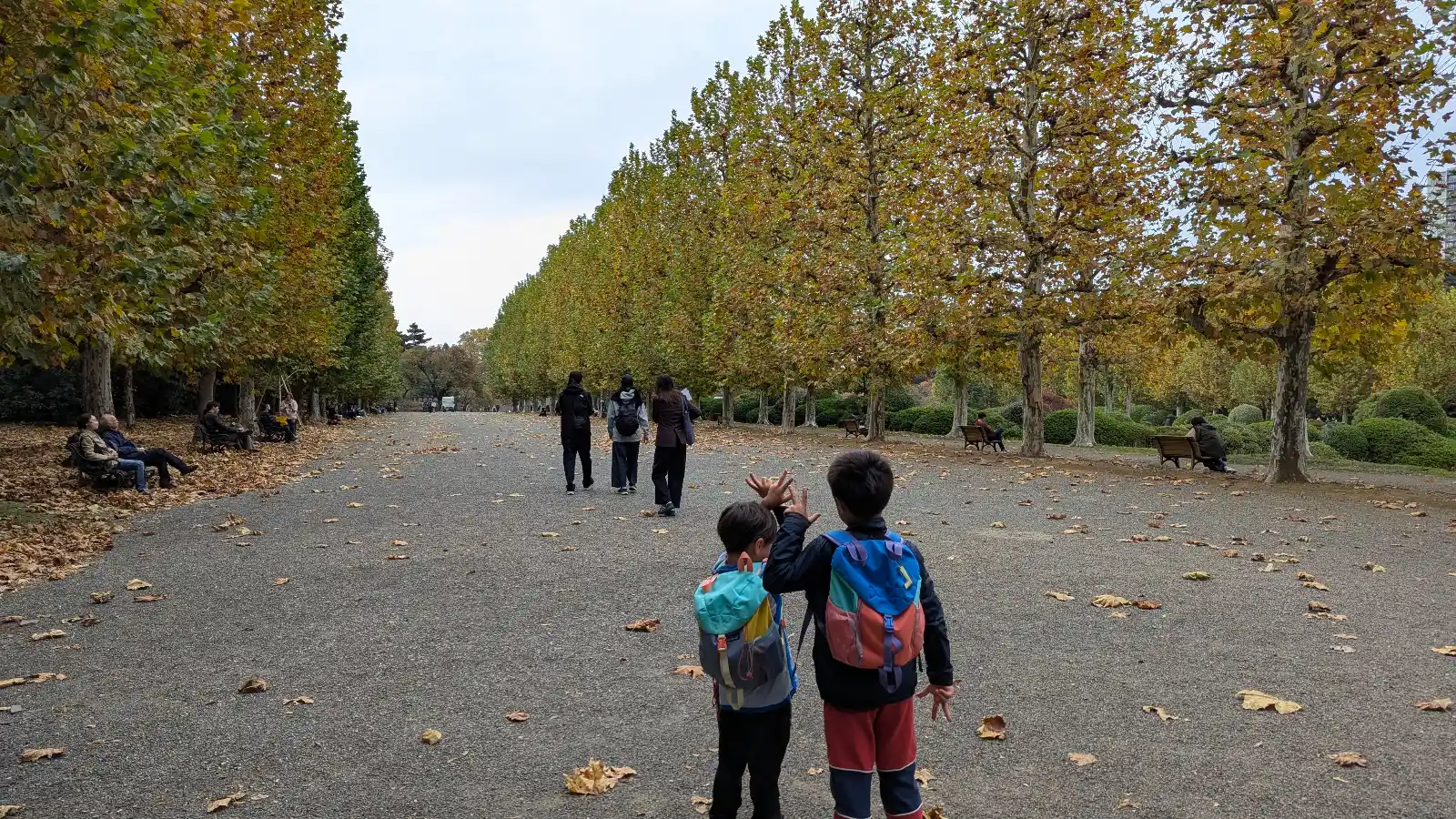
Shinjuku Gyoen gives a Tokyo child something rare: wide lawns and room to breathe, free for younger children, as long as the family knows the garden’s firm rules.
High school and university students ¥250; 65 and over ¥250. Web tickets skip the machines; booking is not required.
Hours from October to mid-March. Closed Mondays (the next weekday after a Monday holiday) and December 29 to January 3.
Three gates, each about five minutes on foot from a station.
The Children’s Square lets elementary-age and younger children use soft balls and skipping ropes.
The formal and Japanese gardens are gravel. Bicycles, striders and tricycles cannot come in; scooters cannot be ridden. Wheelchair ramps and loans, diaper-changing tables and a nursing room.
Some links on this page are affiliate links. LuNi may earn a commission at no extra cost to you.
Is Shinjuku Gyoen National Garden worth it with kids?
The short version, before the costs, the timings and the case for each child.
Yes, and for a family that has spent days in stations and museums, it may be the best hour of the week. Shinjuku Gyoen is a national garden with wide lawns, and it gives a child something Tokyo rarely does: room. It suits best the child who needs open ground to cross, and the Children’s Square gives younger children a place for soft balls and skipping ropes. It costs most the child who arrived expecting to ride or kick a ball across the lawns, because the rules are firm and the answer to both is no. Tell that child at breakfast what the garden allows, and let the lawns do the rest of the work.
Planning Your Visit to Shinjuku Gyoen National Garden with Kids.
Three decisions shape a visit here, and the first is the day. The garden has a weekly closing day, which moves after a holiday and lifts in the cherry and chrysanthemum seasons, so check it against your dates before anything else. The second is what to bring, because bicycles, striders and tricycles cannot come in, scooters and most balls cannot be used, and a child who arrives expecting to ride will be disappointed at the gate; a soft ball for the Children’s Square is the better choice. The third is the season: in the cherry blossom weeks, entry may need a reservation, mainly on weekends, so check before you set out on a spring day. In a three-day Tokyo stay, give the garden the morning after the busiest museum day, when a child most needs room.
Every LuNi attraction guide starts with a visit, with our own children
LuNi rates and writes about attractions only after visiting them with children. Luca and Nico were at Shinjuku Gyoen National Garden, and what they did there is recorded further down this page, including how each child actually met it.
Children arrive with different tolerances: for noise, for lines, for standing still, for being on their feet all day. A guide written for the average of them helps almost nobody. So every place on this site is read four ways, and each verdict says which children it already suits and what makes it work for the rest. Whoever you are bringing, the answer here is built for your family rather than for a general reader.
Restricted-movement depletion eases on open lawns and in the Children’s Square, though bikes and balls stay out, so bring a soft ball for the square.
Sensory-input depletion falls away across wide lawns and gardens, so give a Sensor the open grass first and let the city’s noise recede for an hour.
Unfamiliarity eases with three named gates, a fixed closing day and a published rules list, so choose the gate and read the rules together first.
Walking and standing build across a large garden with gravel in its formal sections, so plan a lawn route and borrow a wheelchair if needed.
- Cost
- ¥500 adult / free junior high and underHigh school and university students ¥250; 65 and over ¥250. Web tickets skip the machines; booking is not required.
- Booking
- Walk in, except cherry seasonIn the cherry blossom weeks, entry may need a reservation, mainly on weekends.
Hotels we would book for this visit.
The garden is most useful as the first thing in a day, before the city’s stations and crowds have worn a child down. Three of Tokyo’s family hotels around Shinjuku, the pick first.
| Property | The LuNi Reason |
|---|---|
| LUNI Pick MIMARU Tokyo Shinjuku West | MIMARU Tokyo Shinjuku West has a kitchen, cooking tools and a dining table in every room, so a family can eat breakfast in and reach the lawns with the whole morning still ahead. For a child who needs open ground, an early start without a meal out first is the point. |
| Park Hyatt Tokyo | Park Hyatt Tokyo is for a family that wants the garden as one quiet morning inside a longer Shinjuku stay. A child who spends the days in stations and museums needs the lawns as a reset rather than an outing, and a base in the same district lets the family go on the day the child most needs them. |
| Citadines Shinjuku Tokyo | Citadines Shinjuku Tokyo suits a family planning the garden and the toy museum in the same short week. The lawns are best used early, before stations and crowds have worn a child down, and a base on this side of the city keeps that early start easy on the morning the child needs it most. |
Nearby attractions, matched to your child.
Three pairings for what the garden leaves over: elevators and a seated cafe for tired legs, a shrine with a known order of worship for a child who likes a set sequence, and a toy museum a short walk away.
| Pairing | Why This Solves the After-Visit | For Your |
|---|---|---|
| LUNI Pick Tokyo Skytree Tokyo Skytree Town; timed Deck tickets | After a garden on foot, Tokyo Skytree carries a Sprinter up by elevator, with a seated cafe on the Tembo Deck, so walking and standing ease for a tired child. Its deck gets busy, though, and a Sensor’s sensory input rises there, so book a late slot. | Sprinter |
| Meiji Jingu Shrine Harajuku; free wooded approaches | At Meiji Jingu Shrine, worship follows a known order: wash hands and mouth at the temizuya, then bow twice, clap twice and bow once. Unfamiliarity eases when an Anchor can learn the steps in advance at home and perform them correctly on arrival. | Anchor |
| Tokyo Toy Museum Yotsuya, about 8 min on foot; closed Thursdays | About eight minutes on foot from the garden, the Tokyo Toy Museum fills a former school with rooms of toys to handle and build with, made for a small child’s best two hours. For a Dynamo, restricted movement has room after room to spend itself in, with nothing asked but play. | Dynamo |
Tokyo Skytree
Tokyo Skytree Town; timed Deck tickets For YourSprinter
Meiji Jingu Shrine
Harajuku; free wooded approaches For YourAnchor
Tokyo Toy Museum
Yotsuya, about 8 min on foot; closed Thursdays For YourDynamo
How two children actually met this attraction.
Two children came to the same garden and needed completely different things from it, and both found them. One valued the space because it let him see the whole place before deciding anything; the other valued it because there was finally somewhere to use his body. That is the best argument for Shinjuku Gyoen in a Tokyo trip. After days of stations, streets and indoor attractions, it gives a child room, and room means something different to each child. Let the watcher take in the whole view first, calmly, from a spot with the lawns in front of him. Let the mover have the grass early, while his energy is highest, before the garden asks him to walk quietly and slowly past the formal sections.
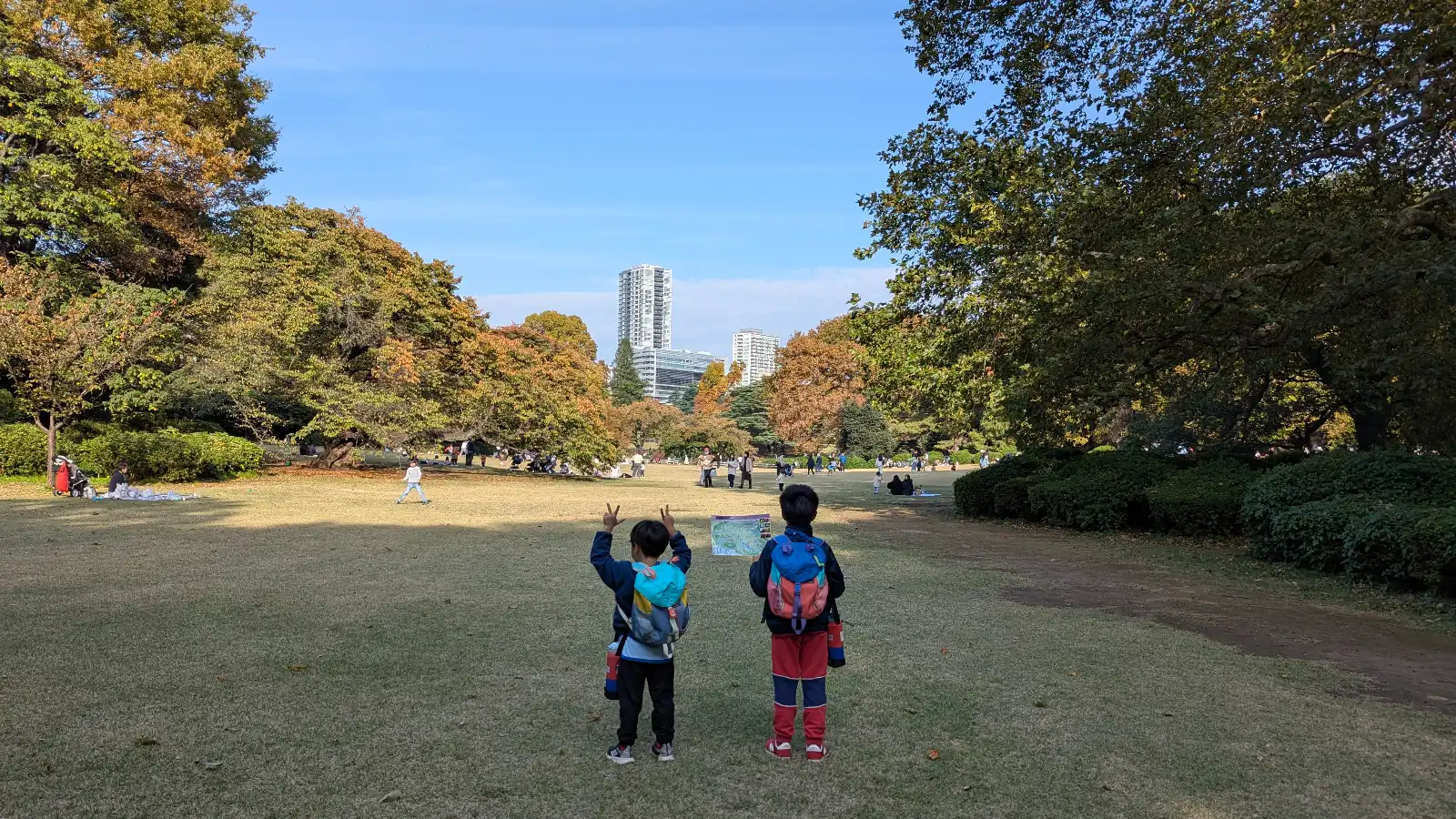
Luca is slow to commit in a genuinely new place until something gives his mind a hold. What he singled out at Shinjuku Gyoen was the openness, and the word he reached for was space: room enough that the garden did not crowd him into deciding what to do all at once. It read less as a place to sprint than as a place where he could see the whole shape of things before settling into it.
This is the Anchor pattern. A child whose Reserve depletes through unfamiliarity and unconfirmed structure settles in an open place he can take in at a glance, because seeing the whole lowers the cost of choosing any part of it. For a similar child, choose the gate before you arrive, show him the map, and let him stand and look before the family moves off. Openness that he can read feels safe to him; the same openness, unexplained, would not.
Nico is restless unless he is moving, and at his best in the morning before his energy fades. At Shinjuku Gyoen the autumn lawns were the whole point for him: he ran through the leaves and across the grass, and it helped that the cooler air let him keep going without wilting. Where Luca read the space, Nico used it, turning the open ground into continuous motion the moment he had it.
This is the Dynamo pattern. A child whose Reserve depletes through restricted movement needs somewhere his body can go, and after days in a city, open grass is exactly that. For a similar child, lead with the lawns on arrival, in the morning, and take a soft ball for the Children’s Square if he is of elementary age or younger. Then walk the formal gardens afterward, when the need to move has been met and he can manage a slower pace.
A garden of wide lawns gives a child something the rest of a city trip rarely does: time that is not scheduled. Unstructured hours on grass let a child choose what to do, how long to do it and when to stop, and those small choices restore more than any attraction can. Travel tends to fill every gap with something to see. A morning spent on a lawn reminds a family that rest belongs in the itinerary, and that a child who has had room to breathe meets the city again refreshed.
The LUNI Rating for Shinjuku Gyoen National Garden.
Three of the four profiles do well here, because open space suits most children in different ways. The Dynamo gets room to move and a Children’s Square for younger ones, the Sensor gets quiet lawns, and the Anchor gets named gates and a rulebook that says exactly what is allowed. Only the Sprinter needs a plan, because this is a large garden to cover on foot, with gravel in the formal sections. Plan a lawn route, and borrow a wheelchair at the gate if a child tires partway. Enter by the gate nearest the lawns you mean to use, and the walk shrinks for everyone.
Lead with the lawns, and pack a soft ball. The Dynamo depletes through restricted movement, and after days of trains and museums, open lawns are what this child needs most. Shinjuku Gyoen gives them in quantity. The rules are firm, though, and a family should know them before arriving: bicycles, striders and tricycles cannot come in, kick scooters cannot be ridden, ball games and frisbees are banned, and jogging is kept to a designated route.
The answer is the Children’s Square, where children of elementary age and under may use safe toys such as soft rubber balls and skipping ropes. Bring one, lead with the lawns and the square in the morning, and save the formal gardens for afterward, when the child can walk calmly. For an older child who has outgrown the square, a long walk across the lawns does the same work. Either way, the child who has used the grass first will walk the quieter gardens far more happily afterward.
What this means for your Dynamo: open lawns give restricted movement room, within firm rules. A younger Dynamo needs the Children’s Square and a soft ball; an older one needs a long walk across the grass before the formal gardens.Give the Sensor the open grass first. The Sensor depletes through sensory input, and a city garden of this size is one of the best antidotes to Tokyo that a family can find. Wide lawns and gardens put distance between the child and the noise of the streets. The rules help, too: music players and whistles are banned, as are ball games, so the rules themselves are on this child’s side.
Start on the open grass, let the child sit and settle, and move through the formal gardens only when they are ready. Avoid the cherry blossom weeks if a quiet visit matters, since entry may need a reservation on weekends in that season. For a Sensor, a morning here can reset the whole trip. Plan it after the loudest day of the week, not before it, and keep the visit unhurried: the whole value of the place for this child is that nothing in it asks them to be quick. Let them choose where to sit, and let the family follow.
What this means for your Sensor: input falls away across wide lawns with rules against music and whistles. A younger Sensor needs a quiet spot on the grass first; an older one can choose the route and the pace.Choose the gate, and read the rules together. The Anchor depletes through unfamiliarity and unconfirmed structure, and Shinjuku Gyoen is easy to explain in advance. There are three gates, each five minutes from a station: the Shinjuku Gate and the Okido Gate from Shinjuku-gyoemmae, and the Sendagaya Gate from JR Sendagaya. The closing day is fixed, and the rules are published as a clear list of what is and is not allowed.
So plan it together. Choose the gate, look at the garden’s map, and read the rules as a family, so the child knows before arriving that bikes stay home and a soft ball is welcome in the Children’s Square. Tell them about the Monday closing, too. A child who knows the gate, the map and the rules walks into the garden already at home in it, and spends the visit enjoying it rather than asking.
What this means for your Anchor: unfamiliarity eases with three named gates, a fixed closing day and a clear rules list. A younger Anchor needs the gate and the map shown at home; an older one can lead the route in.Plan a lawn route, and keep off the gravel. The Sprinter depletes through sustained travel-style walking and standing, and this is a large garden to cover on foot. The formal and Japanese gardens are marked as gravel, which is harder going for a tired child and for a stroller, and the garden publishes a map of its slopes and steps. That is the one cost to plan for.
The fixes are simple. Plan a route across the lawns rather than through the gravel sections, check the slopes-and-steps map before you arrive, and use the free wheelchair loans at every gate if a child tires. Coin lockers at the gates let a family leave bags behind. Stop often on the grass, and keep the visit to the parts of the garden this child can enjoy. A shorter visit that ends with the child still walking is a better one than a complete tour that ends in tears.
What this means for your Sprinter: a large garden with gravel in its formal parts is where walking and standing build. A younger Sprinter needs a lawn route and frequent stops; an older one can take the formal gardens after a rest.The questions parents actually ask.
The garden’s rules, more than its hours, decide how a visit goes. Children of junior high age and under enter free. The garden closes on Mondays for most of the year. Bicycles, scooters, frisbees and ball games are not allowed, but the Children’s Square welcomes soft toys for younger children. Parts of the garden are gravel, which matters for a stroller. And in the cherry weeks, entry may need a reservation. A child who knows the gate, the lawn and the toy before leaving hears no refusals. The garden itself deserves a whole unhurried morning, and a child who arrives knowing its rules gets the most from it.
Is Shinjuku Gyoen National Garden worth visiting with kids?
Yes, especially for a child who needs space. It is a large national garden with open lawns, free for children of junior high age and under, and a Children’s Square where younger children may use soft balls and skipping ropes. The rules are firm, though: no bicycles, scooters, frisbees or ball games, so arrive expecting a garden, not a playground, and pack accordingly.
How much does Shinjuku Gyoen cost for a family?
Children of junior high age and under enter free. Adults pay 500 yen, high school and university students 250 yen, and visitors 65 and over 250 yen. A disability card holder and one carer enter free. An annual pass costs 2,000 yen, or 1,000 yen for high school students, which pays for itself in four adult visits for a family staying in the area.
When is Shinjuku Gyoen closed?
It closes every Monday, or on the next weekday when a Monday is a public holiday, and from December 29 to January 3. It opens on Mondays during two seasons: March 25 to April 24 for the cherry blossom, and November 1 to 15 for the chrysanthemums. From October to mid-March it opens 9:00 to 16:30, with last entry at 16:00.
What can children play with at Shinjuku Gyoen?
In the Children’s Square, children of elementary age and under may use safe toys such as soft rubber balls and skipping ropes, though hard balls are banned there too. Elsewhere, ball games, frisbees, badminton, kites and skipping ropes are not allowed, bicycles, striders, tricycles and unicycles may not be brought in at all, and kick scooters may not be ridden.
Can children run at Shinjuku Gyoen?
The garden’s running rule is for jogging: it is allowed only on a designated route, never in groups of 10 or more, and not at all in the cherry blossom season. The garden also bans climbing trees, catching insects or fish, and playing in the ponds. For a child who needs to move, the lawns and the Children’s Square are the place for it.
Which gate should families use at Shinjuku Gyoen?
There are three. The Shinjuku Gate and the Okido Gate are each about five minutes on foot from Shinjuku-gyoemmae Station on the Marunouchi Line, and the Sendagaya Gate five minutes from JR Sendagaya Station. Each gate lends wheelchairs free and has coin lockers, so choose the one that suits your train line and your plans for after.
Is Shinjuku Gyoen good for strollers?
Partly. The formal and Japanese gardens are marked as gravel, and the garden publishes a map of slopes and steps, which is worth checking before you go. Wheelchairs are lent free at every gate. Plan a route across the lawns rather than through the gravel for a small child on wheels, and keep the formal gardens for a walk.
Do you need to book Shinjuku Gyoen in advance?
Usually not. The exception is the cherry blossom season, when entry may be by reservation only, mainly on weekends. If your dates fall in late March or April, check before you go. The rest of the year, a family can simply arrive, though the Monday closing is the rule to remember when you plan the week, so write it on the plan.
Where Shinjuku Gyoen National Garden fits your Japan trip.
Official site and opening information: Shinjuku Gyoen National Garden