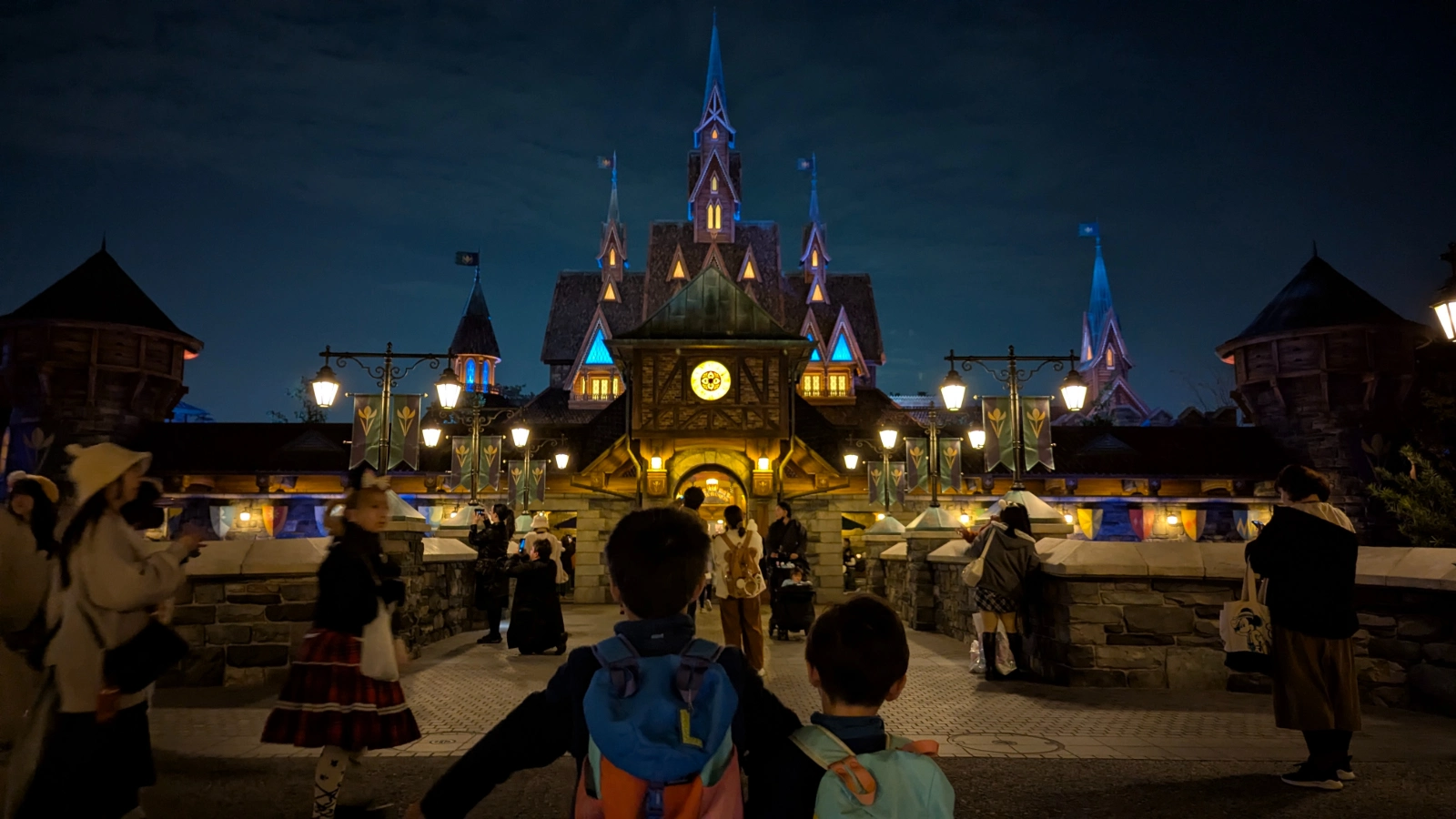
Tokyo DisneySea carries a reputation as Disney’s most adult-oriented park, with alcohol service, no fairy-tale castle, and a nautical atmosphere that signals sophistication over spectacle, and that reputation is enough to give most parents pause before committing to a full-day ticket. The competing pull is real: Mermaid Lagoon and the newly opened Fantasy Springs are purpose-built for families, and the park’s standing as the most visually elaborate Disney property on earth keeps it firmly on the consideration list.
Whether the visit pays off depends entirely on which child is walking through the gates, and that is precisely what the Family Fit™ method is designed to answer. For a complete picture of how DisneySea fits into your Tokyo days, see our hub to Tokyo family-friendly travel.
Is Tokyo DisneySea Worth Visiting with Kids? (Quick Answer)
Tokyo DisneySea is worth visiting with kids if your family treats it as an immersive environment to explore rather than a ride checklist to complete, but it is a conditional recommendation that collapses quickly for families without a clear strategy for managing its queues. Anchors and Sprinters are the strongest natural fits here: the park’s structured Disney format and built-in transit rides provide exactly the containment and pacing support those profiles need, while Dynamos face standby queues that routinely exceed 120 minutes with strict behavioral expectations and no guaranteed bypass. Read on to see exactly how your child’s profile changes the experience, and which specific areas of the park act as either a saving grace or a compounding problem.
Pros of Visiting Tokyo DisneySea with Kids
- Mermaid Lagoon is a fully indoor, climate-controlled zone with gentle rides and low-stimulation theming, giving Sensors a guaranteed decompression space that requires no planning to access once inside the park and no tolerance for the heat and crowd density of the outdoor Mediterranean Harbor.
- The DisneySea Transit Steamer Line and DisneySea Electric Railway function as legitimate rest mechanisms, moving families across the park’s unusually large footprint without adding to the physical walking toll, which makes the park’s scale a manageable logistical challenge for Sprinters rather than a disqualifying one.
- Fortress Explorations provides a multi-level, self-directed interactive area with climbing, discovery, and no queue requirements, giving Dynamos a genuine high-engagement discharge zone that does not depend on securing paid passes or surviving a 90-minute standby line.
- Fantasy Springs delivers immersive story environments from Frozen and Peter Pan that school-age children can step into without needing to meet height requirements, making the park’s newest and most spectacular area accessible to a broader age range than its thrill-ride counterparts.
- Extensive sit-down theatrical shows, including Big Band Beat and character greeting programs, provide high-value scheduled entertainment that allows families to structure rest into the itinerary without sacrificing engagement, a critical pacing tool for Sprinters managing stamina across a full park day.
Cons of Visiting Tokyo DisneySea with Kids (Important for Parents)
- Standby queues for the park’s major headliners, including Anna and Elsa’s Frozen Journey and Soaring: Fantastic Flight, routinely exceed 120 minutes inside narrow, regulated holding areas with no mid-queue exit option, making these attractions a structural problem for any child whose behavioral baseline requires movement, noise release, or the freedom to leave a confined space on their own terms.
- The park’s central body of water forces all inter-port movement around its perimeter, meaning that crossing from one area to another on foot covers significantly more ground than a comparable distance in a traditional castle park, and families with young children who skip the transit rides will feel that distance acutely by mid-afternoon.
- The Mediterranean Harbor’s main thoroughfares lack consistent shade cover during peak summer afternoon hours, placing families with Sensors in an exposed, high-stimulus environment that has no architectural solution short of retreating to an indoor area entirely.
- Height restrictions on the park’s premier thrill attractions, including Journey to the Center of the Earth, mean that families with toddlers must plan around a significant portion of the park’s most famous rides being inaccessible, which restructures the entire visit toward atmosphere and shows rather than headline experiences.
- The nighttime harbor spectacular involves dense, stationary crowds in dark conditions with loud pyrotechnic sequences, a combination that can push Sensors into acute sensory overload if the family positions itself in the front viewing area without an established exit route.
Why “Worth It” Depends on Your Child
Two families can spend the same day at Tokyo DisneySea and return with entirely opposite verdicts, and both are correct, because the park’s design creates fundamentally different experiences depending on which child is navigating it. The Family Fit™ method makes that divergence predictable rather than a matter of luck.
The Dynamo – High Risk. The structural mechanism driving this verdict is the queue design: DisneySea’s most compelling attractions require standby waits that consistently reach 90 to 120 minutes inside narrow, regulated holding areas where movement and noise are socially unacceptable. Families with Dynamos must make a decision before purchasing tickets: either budget for Disney Premier Access passes to bypass the standby system for headliners, or plan the day entirely around open-access areas like Fortress Explorations and the transit rides, accepting that the park’s signature experiences will remain out of reach.
The Sensor – Caution. The Mediterranean Harbor functions as the park’s social and visual center, which means it is also its highest-density, highest-stimulus environment, with ambient crowd noise, entertainment programming, and no architectural containment to dampen input during peak afternoon hours. The mitigation is genuine and accessible: Mermaid Lagoon is always available as a quieter indoor retreat, and arriving before the park reaches capacity significantly reduces the sensory load of the outdoor areas, but families must plan around these dynamics in advance rather than discovering them on the day.
The Anchor – Go. The park’s enclosed, structured format and the pervasive presence of internationally recognizable Disney characters provide the familiar reference point Anchors require to move comfortably through a novel environment. The ports look nothing like any Disney park most children will have seen before, so previewing the park’s layout and key areas via walkthrough before the visit is the single most effective preparation step for this profile.
The Sprinter – Go. The DisneySea Electric Railway and Transit Steamer Line transform the park’s largest logistical liability, its scale, into a series of seated transit experiences that allow the family to keep moving without depleting the physical reserves Sprinters have available. Budget for a stroller for children on the younger end of the low-stamina range, and build the day around shows and transit rides rather than walking the full perimeter between ports.
Identify your child’s profile before building your DisneySea itinerary by taking the Family Fit™ Quiz.
The LUNI Framework
Most families skip this.
It's why Day 3 falls apart.
The LUNI Profile Quiz identifies the specific planning adjustments your child needs. Three minutes now saves the whole trip.
Who Will Enjoy Tokyo DisneySea with Kids (By Age Group)
Toddlers (under 3)
A toddler’s inability to meet the height requirements for DisneySea’s most recognizable thrill attractions, combined with the park’s massive walking distances and the behavioral demands of extended outdoor heat exposure, means the visit requires a complete reorientation toward Mermaid Lagoon’s gentle indoor rides. It is conditionally worth it for toddlers only if parents fully accept that the day centers on one zone and the transit rides, not the park at large.
Preschoolers (3 to 5)
Children at this stage have the imaginative engagement to respond to the park’s elaborate themed environments but not the emotional regulation to sustain two-hour standby queues or the stamina to walk between ports without regular rest. It is conditionally worth it for preschoolers if the day is structured around character greetings, boat rides, Mermaid Lagoon, and the theatrical shows, with no expectation of reaching the major headliners.
School-Age Kids (6 to 10)
This age group has the cognitive capacity to appreciate the layered world-building of Fantasy Springs and Mysterious Island, the stamina to navigate the park with transit support, and the emotional resilience to tolerate queue waits at a level that would defeat a younger child. It is absolutely worth it for school-age kids, who sit at the developmental sweet spot where the park’s storytelling ambition lands with full effect.
Older Kids and Teens (11+)
Teens respond to DisneySea’s sophisticated, non-infantilized atmosphere and its genuine thrill offerings, particularly Journey to the Center of the Earth and the darker sensory experience of Mysterious Island, in a way that distinguishes it clearly from the neighboring castle park. It is highly worth it for this age group, and often the stronger single-day theme park choice over Tokyo Disneyland for families traveling with older children.
Best Alternatives to Tokyo DisneySea for Families with Kids
- Tokyo Disneyland — Best for families with toddlers and children who need unrestricted access to rides without height barriers. A higher proportion of classic dark rides and height-unrestricted attractions means young children and routine-reliant kids spend the day riding, not watching from the sidelines. Tokyo Disneyland guide
- teamLab Planets Tokyo — Best for children with high energy who cannot sustain DisneySea’s queue environment. The barefoot, movement-reactive floor installations require physical participation rather than enforced stillness, making a high-energy child’s natural behavior an asset rather than a liability. teamLab Planets guide
- Ueno Zoo — Best for sensory-sensitive children who found DisneySea’s outdoor peak-hour crowds inescapable. Wide, open pathways between exhibits allow families to exit any area immediately, with no enclosed corridor or timed experience trapping a child inside sustained sensory input. Ueno Zoo guide
For the full picture of how to build a Tokyo itinerary that works for your family’s profile, the Tokyo family-friendly travel hub is the correct next resource.
Final Recommendation: Is Tokyo DisneySea Worth It with Kids?
Tokyo DisneySea rewards families who understand that its value lies in immersive atmosphere, structured entertainment, and the transit network connecting its ports, not in the volume of thrill rides a child can complete in a single day. Anchors and Sprinters are the profiles this park is genuinely built to serve; Sensors can have an excellent visit with deliberate timing and a pre-identified indoor retreat; Dynamos face a structural queue problem that no amount of enthusiasm for the setting resolves without a paid bypass strategy. The visit succeeds or fails at the planning stage, not at the gate: families who arrive knowing which areas anchor their day and how they will manage the headliner queues leave satisfied; those who arrive expecting a frictionless Disney experience discover a park that demands more strategic effort than its castle-park neighbor. Arriving before official park opening is the single preparation step that most directly improves the probability of securing Disney Premier Access passes for Fantasy Springs before they sell out.
The Tokyo DisneySea Briefing: Essential Intel
Families planning a Tokyo DisneySea visit with kids ask these questions most consistently, from whether the park’s adult reputation disqualifies it for young children to how The Dynamo’s profile changes the go/no-go calculation entirely.
A: Yes, conditionally. The park is worth visiting for families who approach it as a themed exploration space anchored by shows, transit rides, and Mermaid Lagoon, rather than a collection of thrill rides to queue for sequentially. Families with Dynamos face a significantly harder day than those with Anchors or Sprinters, and the gap between a well-planned DisneySea day and an unplanned one is larger here than at almost any other attraction in Tokyo.
A: The park is selectively family friendly: Mermaid Lagoon is purpose-built for young children with indoor gentle rides and controlled environments, but the majority of the park’s most famous attractions carry height restrictions that exclude toddlers and many preschoolers entirely. Families with children under five should treat DisneySea as a Mermaid Lagoon and show-focused day rather than a full-park experience.
A: It is conditionally worth visiting with toddlers if the day centers entirely on Mermaid Lagoon’s indoor gentle rides and the park’s transit systems, and if parents have adjusted their expectations away from the thrill headliners. The park’s outdoor scale and heat exposure during summer make extended time outside the climate-controlled zones physically demanding for children under three.
A: No, not without a paid bypass strategy. Dynamos face standby queues that routinely exceed 120 minutes at the park’s most compelling attractions, with no guaranteed fast-track alternative unless Disney Premier Access passes are secured, which is neither guaranteed nor inexpensive. Families without a queue management plan should build the day around open-access areas rather than attempting the headline rides on standby.
A: If your children are school-age or older and the family has a clear profile-matched plan for the day, DisneySea is worth the single-day commitment. Families with toddlers or with Dynamos who cannot secure Disney Premier Access passes will typically extract more value from a single day at Tokyo Disneyland, where unrestricted attraction access is broader and queue pressures are more manageable.
A: Yes. Teens are the age group for whom DisneySea’s sophisticated atmosphere and genuine thrill offerings make the clearest case. Journey to the Center of the Earth, the immersive scale of Mysterious Island, and Fantasy Springs’ story-driven environments provide the kind of high-engagement, autonomy-friendly experience that older kids consistently rate above the more family-uniform format of the neighboring castle park.
