Kanazawa With Kids:which stop is for which child.
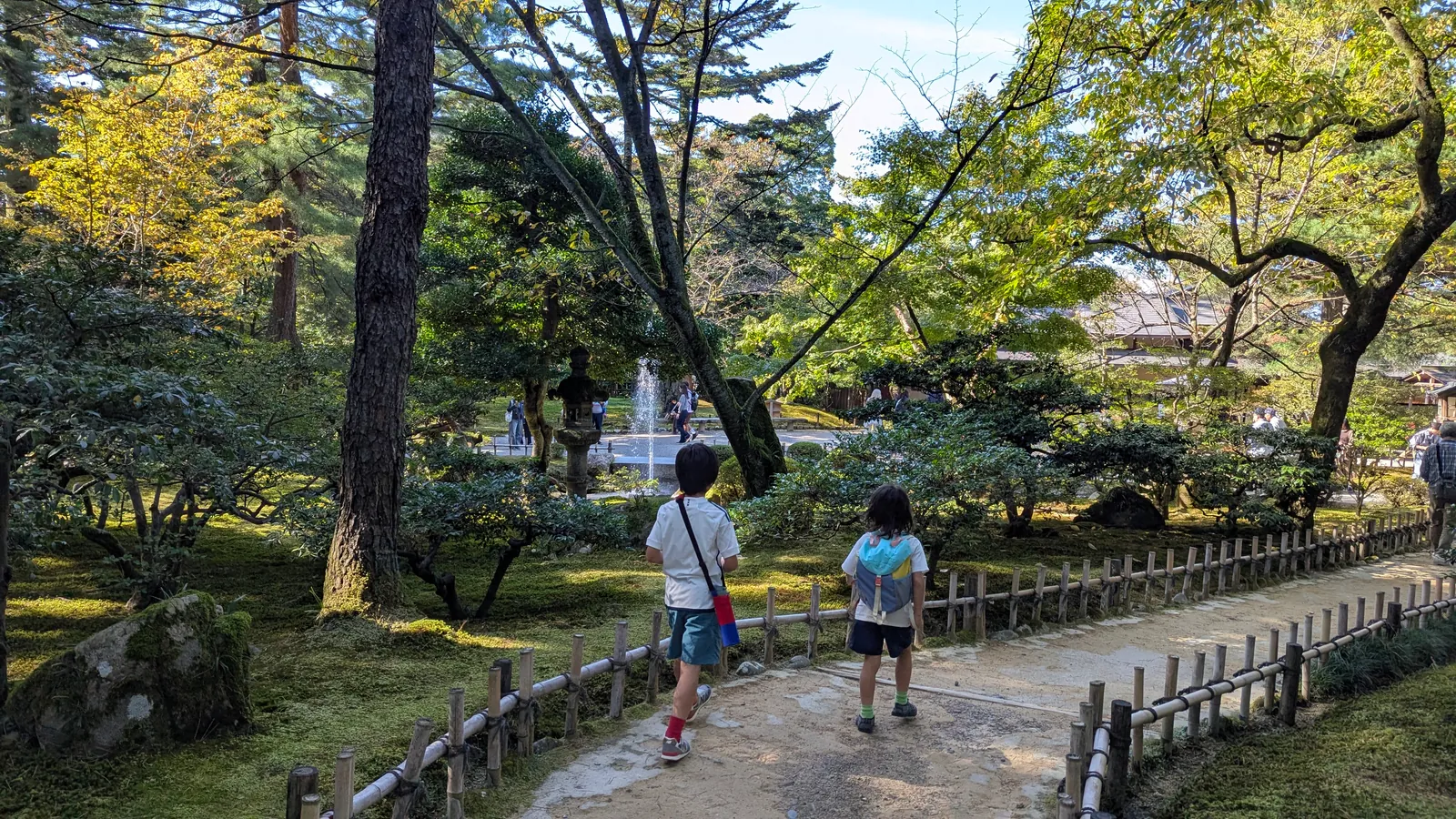
- The One to Start With
- Kanazawa Castle Park, free to enter
- For a Small Child
- The 21st Century Museum, strollers lent free
- Plan Around
- Myoryuji admits no preschool children
- Day Out
- Shirakawa-go, about 1 hr 15 min by bus
- Book Ahead
- The Shirakawa-go bus, a month before
Kanazawa with kids rests on a short list of sights: a castle park that charges nothing at the gate, Kenrokuen garden beside it, a contemporary art museum whose public zone is free to walk into, a teahouse district, and a temple whose tour climbs steep, narrow stairs. Kanazawa Castle Park is the place to start, because entry is free and its gates open early, from 4:00 between April and August, so a child can cover ground before the turrets and museums open. Shirakawa-go’s thatched village is a bus ride away, and Fukui’s dinosaur museum makes a day trip. Each stop below sits with the child it serves most.
Which stop is for which child.
These six are not ordered best to worst. They are grouped by which child each one is for, across the four profiles of The LUNI Framework. Family travel runs on three currencies, not two: money and time, plus the child’s Reserve, their finite capacity to absorb what travel asks of them. In Kanazawa the city stops sit within a bus ride of one another and Shirakawa-go takes a day of its own, so the first choice is whether a day stays in the city, and it belongs to the child whose energy gives out soonest. The Dynamo runs short when they cannot move, the Sensor on noise and crowding, the Anchor when nothing is predictable, and the Sprinter on walking and standing. Find your child below, and start there.
Kanazawa Castle Park, free at the gate.
Kanazawa Castle Park is the stop to start with because it charges nothing to enter and opens early. Its gates open before the regular hours, from 4:00 between April and August, so a child can spend the first hour of the day on open ground, and the free gatehouses and the paid turrets open at 9:00 for a child who wants to go inside. Kenrokuen sits beside it, so the morning can move from the park into the garden without another bus.
| The Stop | What It Settles | Best For |
|---|---|---|
| Shirakawa-goAbout 1 hr 15 min by bus from Kanazawa | A thatched village seen on foot in 2 to 3 hours. | Dynamo |
| Kanazawa Castle ParkFree grounds, ticketed turrets | A free park, open from early morning. | Dynamo |
| Kenrokuen12 min by bus from Kanazawa Station | A garden with free entry before paid hours. | Sensor |
| MyoryujiThe ninja temple, booked by phone | A guided tour of about 40 minutes. | Anchor |
| Higashi Chaya and the Shima teahouse4 min on foot from Hashiba bus stop | A teahouse whose rules can be told in advance. | Anchor |
| 21st Century Museum of Contemporary ArtAbout 10 min by bus from the station | A barrier-free museum with free strollers. | Sprinter |
Shirakawa-go
Dynamo
Kanazawa Castle Park
Dynamo
Kenrokuen
Sensor
Myoryuji
Anchor
Higashi Chaya and the Shima teahouse
Anchor
21st Century Museum of Contemporary Art
Sprinter
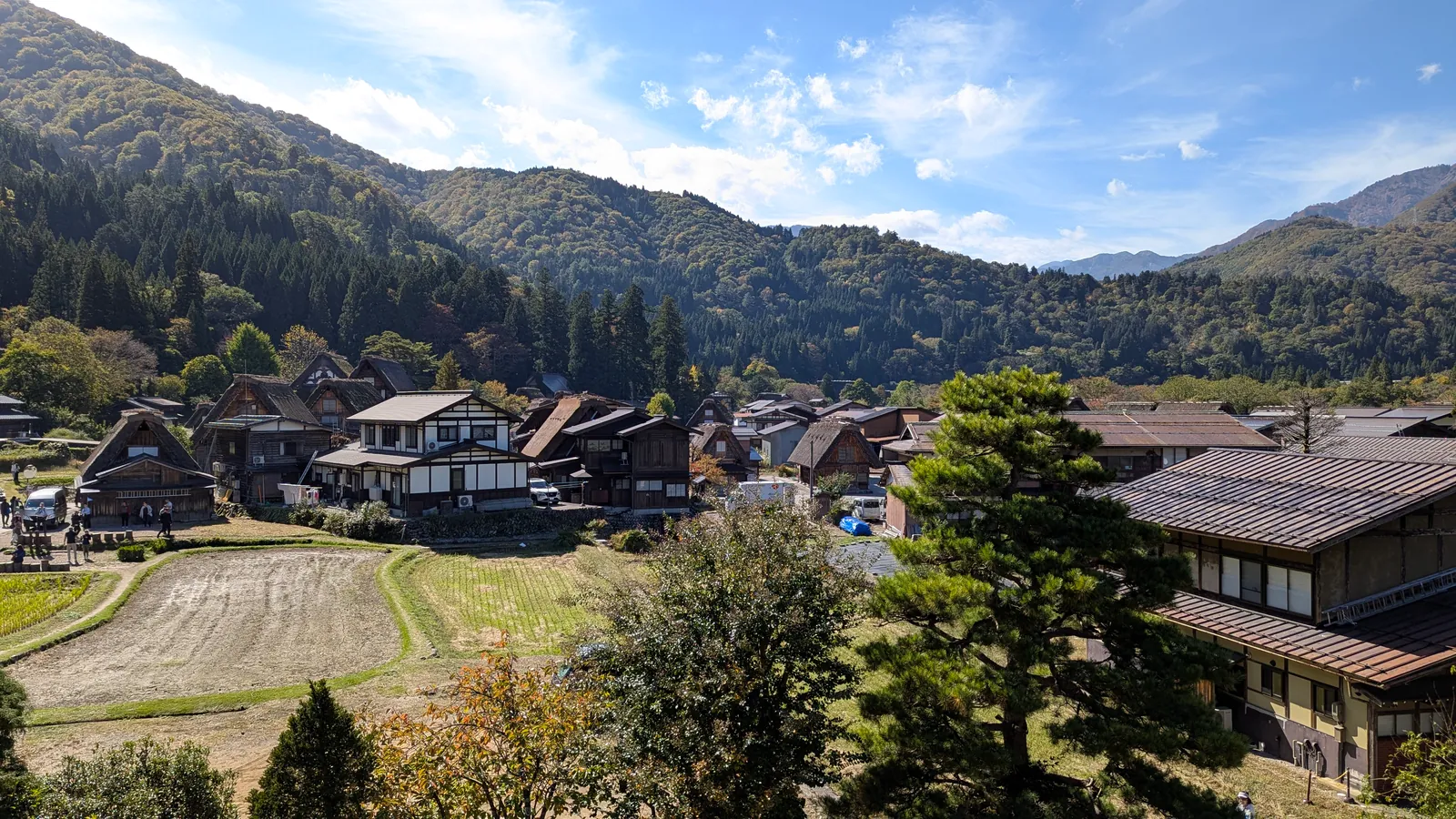
For the Dynamo
Stops with open ground and a long walk to fill.
A child who depletes through restricted movement needs room to cover before any indoor visit. The castle grounds and a village seen only on foot both give it.
A village of thatched farmhouses, seen on foot. Shirakawa-go has no sightseeing bus inside the village: it is seen on foot, and walking the whole of it takes about 2 to 3 hours. Gassho houses that open their interiors charge 300 to 400 yen each, and the open-air museum, Minkaen, charges 800 for an adult and 400 for a child from elementary to high school, with preschool children free. For a child whose energy builds when movement is restricted, a village with no bus turns the hours after the ride in into walking, with houses to go inside along the way. A six-year-old can be given two houses to choose between; a teenager can cover the whole village and ride up to the viewpoint.
Who it costs.The Sprinter, since the village is walked end to end. The shuttle to the viewpoint leaves from Wada House daily, 9:00 to 15:40 every 20 minutes, with none in the 12:00 hour, at 300 yen one way for an adult and half for an elementary child, paid in cash on leaving; a preschooler without a seat rides free.
How to make it work.The bus run jointly by Hokutetsu and Meitetsu from Kanazawa Station’s West Exit, stop 4, takes about 1 hour 15 minutes and needs a seat reservation, which opens one month before. The 8:00 departure reaches Shirakawa-go at 9:15, and the 12:40 return reaches Kanazawa at 13:55; later buses leave Kanazawa at 15:50 and Shirakawa-go at 17:55. The fare is 2,800 yen for an adult and 1,400 for a child, and on Hokutetsu’s rule a preschooler from age 1 rides free with a paying passenger of elementary age or older, one per passenger, though a reserved seat for a preschooler is charged.
If this isn’t your child: a walking day among thatched houses, worth the early bus for a child who needs to move.A free castle park whose gates open at 4:00 in summer. Kanazawa Castle Park is free and open every day, 7:00 to 18:00 from March 1 to October 15 and 8:00 to 17:00 for the rest of the year, and its gates open before then: from 4:00 between April and August, 5:00 in March, September and October, and 6:00 from November to February. For a child whose energy builds when movement is restricted, a free park open from early morning is the place to spend it before a bus, a museum or a garden asks them to slow down. The Kahoku-mon and Nezumita-mon gatehouses are free to enter from 9:00 to 16:30. A five-year-old covers the grounds between the gates; a fourteen-year-old can take the ticketed turrets as well.
Who it costs.The Sprinter, since the park has many slopes and gravel paths crossed by log stops, and Imori-zaka, the slope between Ninomaru square and the Gyokusen-inmaru gate, is too steep for a wheelchair. The area around Ishikawa-mon is relatively flat; the other gates have slopes or steps.
How to make it work.The Hishi Yagura, Gojukken Nagaya and Hashizume-mon turrets open 9:00 to 16:30, last entry 16:00, every day, at 320 yen for an adult and 100 for a child from 6 to under 18, with preschool children free; a combined ticket for Kenrokuen and one facility costs 500. There is no dedicated nursing room, but a nursing space can be arranged at the Ishikawa-mon information center. At Gyokusen-an, matcha with a sweet costs 1,000 yen, 9:00 to 12:00 and 13:00 to 16:30. Bicycles are not allowed, even pushed, and visitors may not fly drones.
If this isn’t your child: open ground that costs nothing, a good first hour for any child, with the garden beside it.For the Sensor
A garden whose hour the family can choose.
A child who depletes through sensory input does better when the family controls the hour of arrival. Kenrokuen’s free early entry gives that control.
A garden whose free early hours let the family choose when to arrive. Kenrokuen is open every day, 7:00 to 18:00 from March 1 to October 15 and 8:00 to 17:00 for the rest of the year, at 320 yen for an adult and 100 for a child from 6 to under 18. Before the paid hours, entry is free through the Hasuike-mon and Zuishinzaka gates only, from 4:00 between April and August and from 6:00 between November and February, and visitors must leave 15 minutes before the paid hours begin. For a child who depletes through sensory input, that choice of hour is the useful part. A seven-year-old can walk the paths in the early window; a teenager can come back for an evening light-up.
Who it costs.The Sprinter, since the paths inside rise and fall on slopes and are laid with gravel, slippery in places. The area by the Kodatsuno gate is flat, and wheelchairs are lent at all four gates.
How to make it work.Entry is free on set days: about seven days in cherry season, late March to early April, three days of the Hyakumangoku festival in early June, August 14 to 16, November 3 and December 31 to January 3. Night openings run in the cherry and autumn-leaf seasons. From Kanazawa Station, the bus takes 12 minutes to Kenrokuen-shita/Kanazawa-jo, then 5 minutes on foot.
If this isn’t your child: a garden at an hour the family picks, with the castle park beside it for a child who needs to run first.For the Anchor
Visits with a booked time or rules told in advance.
A child who depletes through unfamiliarity and unconfirmed structure needs the shape of a visit before arriving. These two come with a booked slot or a short list of house rules.
The ninja temple, seen only on a booked, guided tour, and closed to preschool children. The tour takes about 40 minutes, walked in a group, and is booked by telephone at 076-241-0888, with same-day places if any are left; only the visitor can book, never someone on their behalf, and the call can be made in English. Tours run 9:00 to 16:00, on the hour or half hour, at 1,200 yen from junior high up and 800 for an elementary child, cash only, rising to 1,300 and 1,000 from December 1, 2026. For a child who depletes through unfamiliarity and unconfirmed structure, a booked time and a fixed route can be told before arriving. An eight-year-old is told what the inside is like; a teenager can be told plainly that it is not a ninja show.
Who it costs.Any preschool child, who is not admitted. A child counts as school age from first grade, judged by the Japanese school-entry date even for children from overseas, so a child already in first grade at home can still be too young here, and an elementary child brings proof of age. The tour is in Japanese only, with no interpreting allowed inside, and the Sprinter meets steps everywhere, with no wheelchairs inside.
How to make it work.Book by phone a month ahead to the day, since places for elementary children are capped separately from adults’, and arrive early: entry opens 10 minutes before the booked time, the tour starts on time, and a party that arrives late loses its booking. Tell the child before the date what the inside is like: dim, with dangerous spots and steep, narrow stairs, and no photographs or recording. The temple closes on January 1 and 2 and on memorial service days.
If this isn’t your child: a booked, fixed tour for a school-age child, and no visit at all with a preschooler.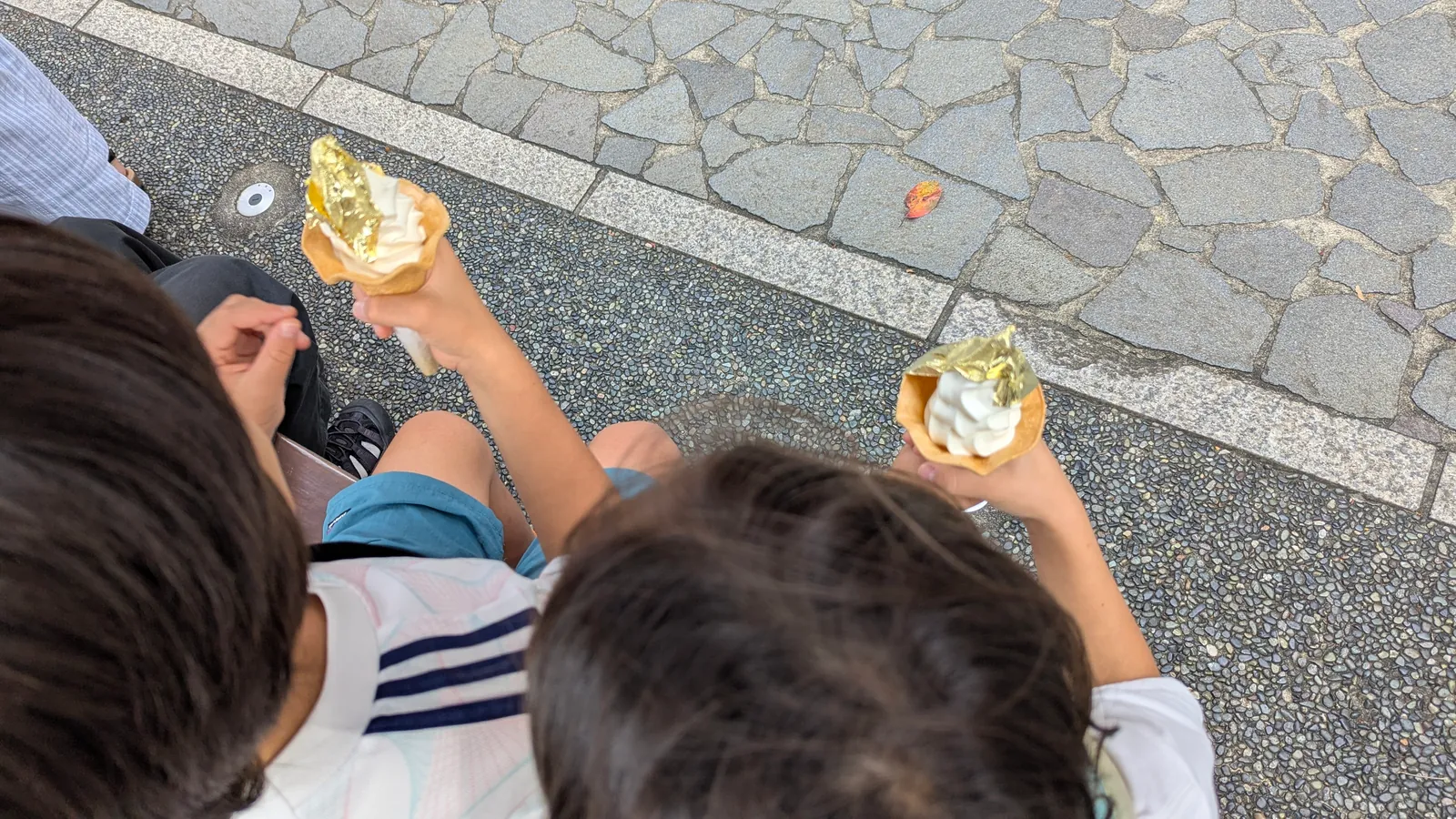
A street of privately owned houses, with an Edo-period teahouse open inside. Shima is an Edo-period teahouse in the Higashi Chaya district, open every day 9:30 to 17:30, and to 17:00 from December to February, at 600 yen for an adult and 300 for an elementary or junior high student. Inside, only phones may be carried: bags go in coin lockers, bare feet are not allowed, so everyone needs socks, and video is not allowed. For a child who depletes through unfamiliarity, a house with a short list of rules can be prepared for on the walk there: socks on, bag in the locker, phone only. A six-year-old is given the three rules to keep; a teenager can be handed the locker key.
Who it costs.The Dynamo, since the district’s houses are privately owned, people live along the street, and visitors are asked not to disturb them, and Shima’s rooms are seen with empty hands.
How to make it work.From Hashiba bus stop the walk is about 4 minutes. Bring socks for anyone in sandals, and empty bags into the lockers before going in.
If this isn’t your child: a short visit with its rules known before the door, on a street walked quietly whichever child it is.For the Sprinter
A museum without steps, with strollers at the door.
A child who depletes through sustained walking and standing can still take in a whole museum here, because the building is barrier-free.
A barrier-free museum whose public zone costs nothing. The 21st Century Museum of Contemporary Art is barrier-free throughout, and strollers and wheelchairs are lent free at three entrances, with no reservation. Entering the building is free: the public zone opens 9:00 to 22:00, and only the exhibition zone, 10:00 to 18:00 and to 20:00 on Fridays and Saturdays, needs a ticket, with preschool children free. For a child who runs out on sustained walking and standing, a building with no steps and a stroller at the door lets the family see as much as the child can manage. A four-year-old rides in a borrowed stroller; a teenager takes the exhibition zone on foot.
Who it costs.The Anchor, since the Swimming Pool’s lower level is booked on the day itself, from 9:00, on the web or at the machine by the Hondadori entrance, so it is not settled until that morning. A visit there lasts 5 minutes or less, and every child of about 2 or over who can stand needs a reservation of their own, plus an exhibition ticket. The booking is a place in line: the museum emails when the turn comes, and the place is canceled 20 minutes after that email.
How to make it work.The Kids Studio is a rest space for preschool children and parents from Tuesday to Friday, 10:00 to 15:00, and runs making programs for children and adults on weekends, 13:00 to 16:00, with young children accompanied by a guardian; events close it on some days. There are diaper tables in the multipurpose restrooms and one nursing room. Eating is not allowed in the building, though drinks in capped bottles are allowed in the public zone, and the museum has a cafe, Fusion21. The exhibition zone closes on Mondays, or the next weekday when Monday is a public holiday, and at year end. From Kanazawa Station, buses from stops 3 and 8 take about 10 minutes to Hirosaka/21seiki Bijutsukan.
If this isn’t your child: a museum without a step, worth the bus for any child and kind to one who tires on their feet.A day out for the dinosaurs.
The Fukui Prefectural Dinosaur Museum, in Katsuyama, makes a day trip from Kanazawa for a child who wants dinosaurs. Tickets are sold online by date, as a permanent exhibition ticket, a special and permanent exhibition ticket, a fossil research experience with the permanent exhibition, or a ticket for the outdoor dinosaur museum, so the family can choose the parts of the day before setting out.
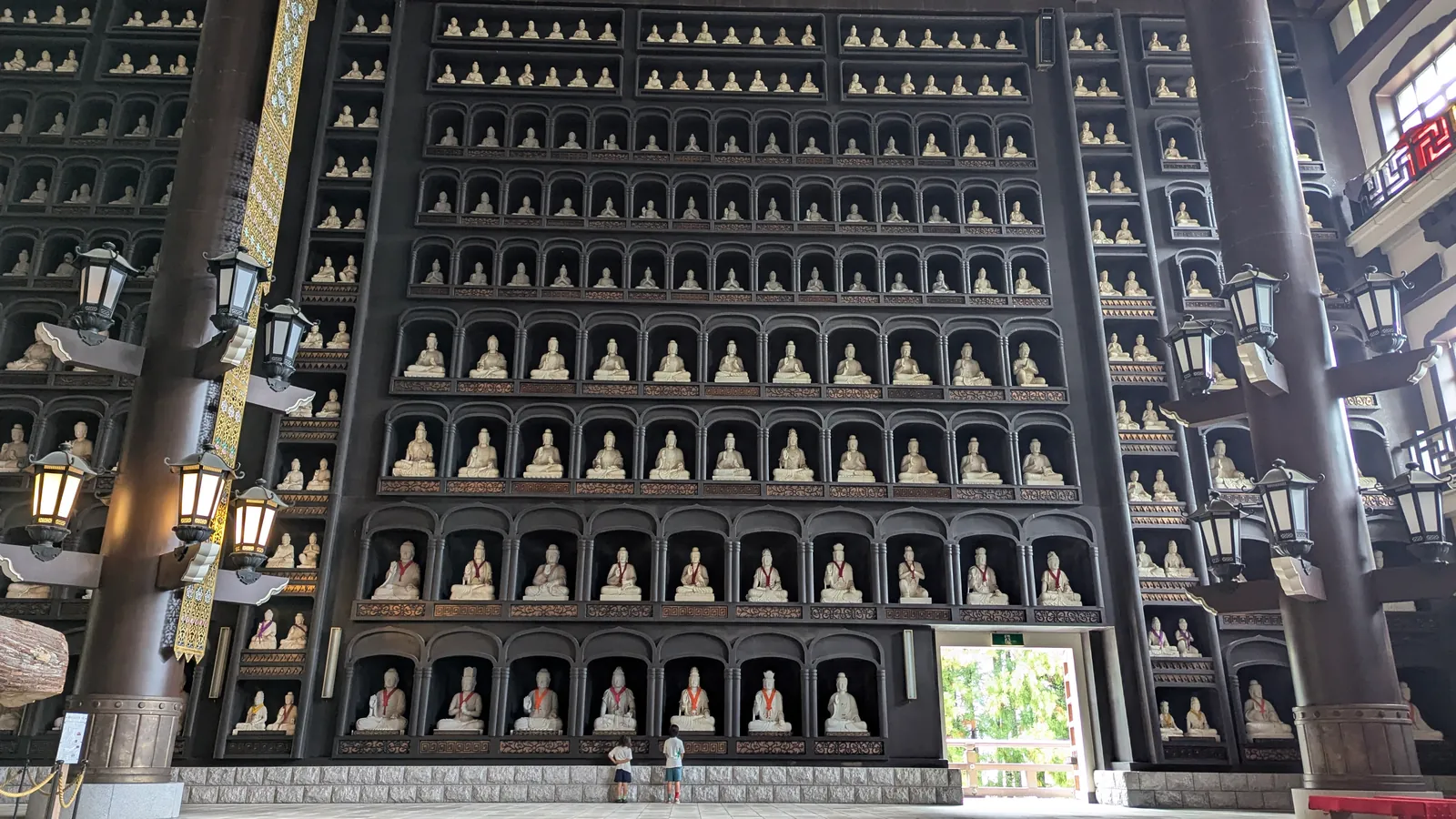
In the same town, Echizen Daibutsu is a temple whose great hall holds a giant seated Buddha, set before a towering wall of small Buddha figures.
Start each day with the child who tires first.
Kanazawa’s city stops sit within a bus ride of one another, and the Kanazawa one-day free pass covers the Kanazawa Loop Bus, the Shopping Bus, the Flat Bus and the Hokutetsu buses in its zone, at 800 yen for an adult and 400 for an elementary child. Give the city stops a day or two, Shirakawa-go a day of its own and Fukui another, and let the child who tires first choose each day’s opening stop.
Around the city, and out to the village.
The Kanazawa Loop Bus leaves from stop 7 at the East bus terminal of Kanazawa Station, and Omicho Market is a 15-minute walk from the station or a Hokutetsu bus from East Exit stops 6 to 9 to Musashigatsuji. The D.T. Suzuki Museum, 4 minutes on foot from Hondamachi, opens 9:30 to 17:00 and closes on Mondays, or the next weekday after a Monday public holiday, and from December 29 to January 3; it charges 310 yen for an adult and nothing for high school students and younger, and lends strollers and wheelchairs at reception.
For Shirakawa-go, snow usually lies from late December to late February; boots rent at the village bus terminal for 1,000 yen a day in sizes 23.0 to 27.0 centimeters only, so bring a child’s own, drivers need winter tires from December to March, and the village has no trash bins. Coin lockers stand in the bus terminal, with a luggage room nearby, and when both are full the tourist association keeps bags for the day from 500 yen, 8:00 to 17:00.
The questions parents actually ask.
What are the best things to do in Kanazawa with kids?
Start at Kanazawa Castle Park: it is free, and its gates open early. Then choose by the child: a day walking Shirakawa-go for one who needs to move, Kenrokuen at an early hour for one who needs calm, Myoryuji’s booked tour or the Shima teahouse for one who needs the day set out, and the barrier-free 21st Century Museum for one who cannot walk far.
Is Kanazawa good for toddlers?
Mostly, with one firm exception: Myoryuji, the ninja temple, admits no preschool children. The 21st Century Museum lends strollers free at three entrances, and its Kids Studio is a rest space for preschool children and parents from Tuesday to Friday. Preschool children enter the castle turrets free and ride the Shirakawa-go viewpoint shuttle free without a seat. For the rest of a trip at that age, see Japan with toddlers.
Are children allowed inside the ninja temple in Kanazawa?
From first grade. Myoryuji admits no preschool children and judges age by the Japanese school-entry date, including for children from overseas, and an elementary child brings proof of age. Visits are by telephone booking only, from the same date one month ahead, and the tour of about 40 minutes is in Japanese only, with steep, narrow stairs inside.
How do you get from Kanazawa to Shirakawa-go with kids?
Take the bus run jointly by Hokutetsu and Meitetsu from the West Exit of Kanazawa Station, about 1 hour 15 minutes, booked from one month before, since every seat is reserved: 2,800 yen for an adult and 1,400 for a child. On Hokutetsu’s rule, a preschooler from age 1 rides free with a paying passenger of elementary age or older, unless the family reserves a seat for them, which is charged.
Is Kanazawa a good trip with kids in winter?
It works with two things planned. At Shirakawa-go snow usually lies from late December to late February, and the rental boots there run from 23.0 centimeters, so a small child needs their own. In the city, Kenrokuen and the castle park keep their shorter hours, 8:00 to 17:00, from October 16 to the end of February.
Is Kanazawa good for teenagers?
Yes. Shirakawa-go takes 2 to 3 hours to walk in full, Myoryuji’s guided tour climbs steep, narrow stairs, and the D.T. Suzuki Museum is free for high school students. The guide to Japan with teens covers the wider trip.