Japan with Toddlers:why it works better than you expect.
- Japan With a Toddler
- One outing a day, then a midday reset
- Restroom Stops
- Fold-down baby seats inside many stalls
- Stroller or Carrier
- Both: stroller for distance, carrier for stairs
- Long Train Days
- Shinkansen: restrooms aboard, an aisle to walk
- Toddler-Friendly?
- Yes: konbini and drugstores restock you
What traveling around Japan with a child under five really asks of a parent, and the trip habits that keep a toddler day calm from the first train to bedtime.
Some links on this page are affiliate links. LuNi may earn a commission at no extra cost to you.
Japan works with a toddler when the day is built around one main outing, then a midday return to the room. The country does much of the rest. Many restroom stalls in stations and department stores carry baby keepers, a fold-down seat that holds a toddler safely beside a parent. The Shinkansen has restrooms on board, and a child can walk the aisle when sitting still stops working. Konbini like 7-Eleven, Lawson and FamilyMart have warm meals, and diapers and wipes are easy to restock at drugstores or at Akachan Honpo. Bring a stroller and a carrier both.
Japan is the easiest hard country.
The families who find Japan hard with a child under five are almost never underprepared in the conventional sense. They have the right stroller, the right snacks, the right carry-on. What they are missing is a different mental model for how a toddler day here actually works, and what success looks like when your travel companion still naps and cannot reliably communicate hunger.
What already does the work.
Japan’s complexity is mostly visual. At the operational level it is one of the most predictable travel environments in the world, and predictability is precisely what a toddler requires.
Baby keepers turn solo trips viable. Inside toilet stalls throughout the country, including in train stations and department stores, a fold-down child seat is mounted to the wall so a parent can use the restroom while a toddler stays secured beside them. At most stations the seat lives in the wider accessible stall marked with the blue wheelchair symbol rather than a standard one, so it pays to know which door to open before you need it. This single detail removes one of the most stressful problems of solo-parent travel with a young child.
The convenience-store network is your emergency plan. 7-Eleven, Lawson, and FamilyMart branches are spaced through every urban area and sell warm meals, and drugstores and baby stores such as Akachan Honpo sell diapers and wipes, so a family can restock rather than pack for the worst case. That reliability quietly lowers the volume of gear a toddler trip usually demands.
The Shinkansen makes transit days into rest. Long-distance travel on the bullet train is one of the strongest arguments for the destination. The ride is smooth and quiet, the cars are spacious by rail standards, restrooms are on board, and a child can walk the aisle when stillness becomes untenable. A transit day on the Shinkansen is downtime rather than an endurance exercise, which is the opposite of what long travel days usually cost a family.
The streets remove a background anxiety. Public spaces are maintained to a standard that eliminates the low-level germ worry parents carry in most major cities. The toddler who touches every surface, crouches on the station floor, and investigates pavement cracks is doing it in one of the cleanest urban environments they will ever encounter.
How to make the promise hold.
The families who report the hardest Japan trips share one error. They treat the itinerary as a commitment rather than a framework. The destination rewards the opposite.
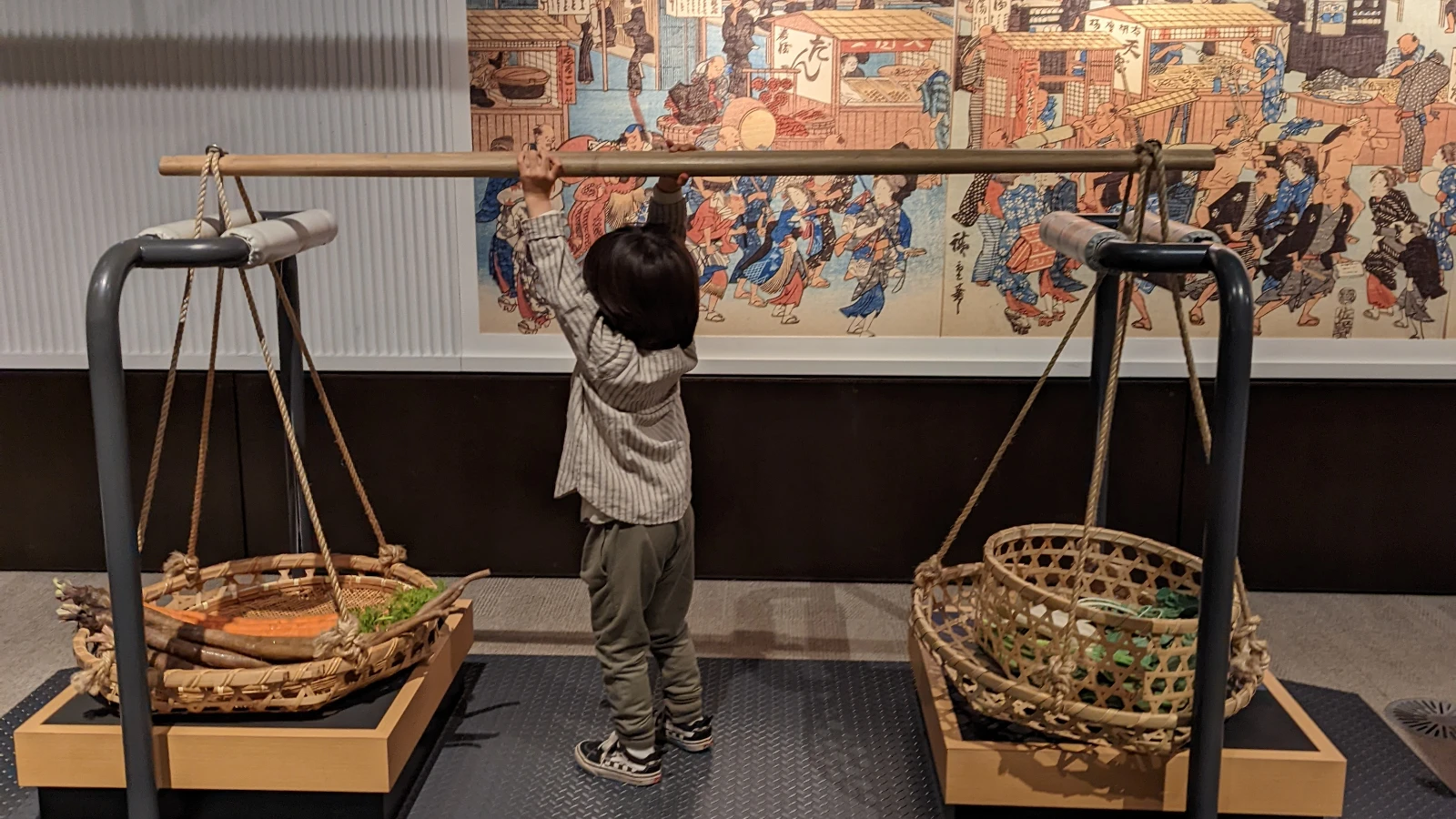
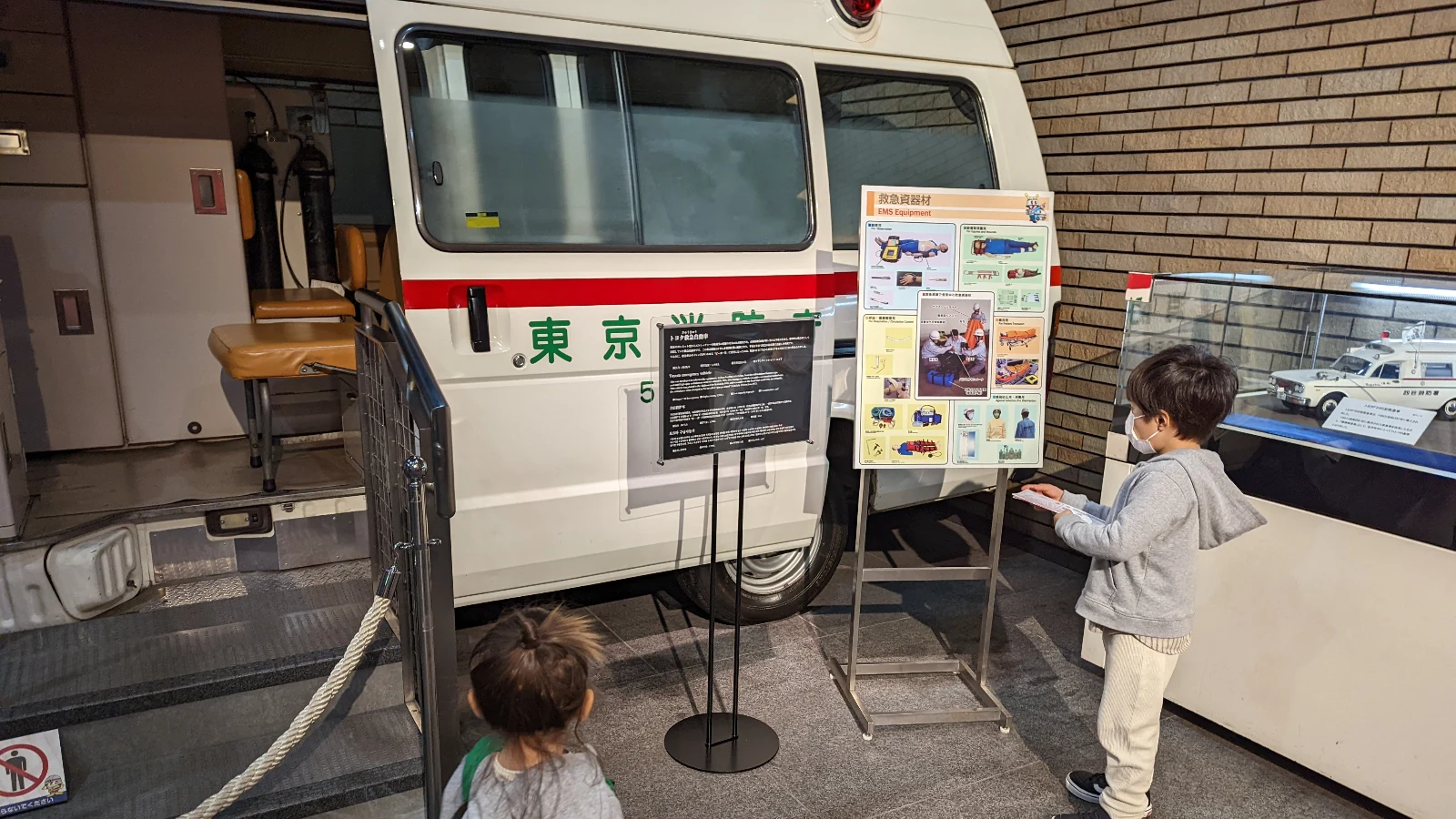
Run one anchor per day. Structure each day around a single primary destination. If the morning anchor is the Railway Museum in Omiya or a barefoot hour through the water rooms of teamLab Planets, the afternoon stays unscheduled: a park, a convenience store, the hotel. Three temples in a day is an adult metric a toddler cannot sustain and should not be asked to. The families who ignore this and run a full adult itinerary are the same families who come home describing travel burnout, not because Japan was difficult, but because the pace was wrong from the first morning.
Choose the anchor for how a toddler engages. The venues that actually work for a child under five share two traits, sensory engagement without containment and freedom of movement, which is why the transport museums, the barefoot installations, and the aquariums outperform the landmark most adults would pick. A perimeter-tank aquarium such as the Sumida in Tokyo or the Osaka Kaiyukan lets a toddler approach, retreat, and return to a single tank for forty minutes, which is the correct tempo for a toddler morning.
Book the Kaiyukan on a dated, timed e-ticket, because same-day entry at a chosen hour is not guaranteed. When the city reaches saturation, a park reset costs almost nothing: Yoyogi Park is free, never closes, and gives running space that a shrine approach cannot. Shinjuku Gyoen does the same, but it takes a ticket, keeps fixed gates, and prohibits ball games, so it is the planned stop rather than the improvised one. One park stop belongs in every full day as a transition point rather than a fallback.
Protect the midday return. Coming back to the hotel between 2:00 and 4:00 p.m. feels counterintuitive when the trip is short and the list is long. Do it anyway. Leave the morning anchor by one, let the child nap or decompress in a familiar room while the adults review the next day, then head out again around 5:30 for an early dinner before restaurant crowds peak after seven. That quieter evening window, cooler in warm months and staffed by a toddler who has recovered rather than crashed, is consistently when the country feels most accessible. The families who skip the reset call the afternoon the hardest part of the trip. The families who guard it call it the decision that changed the shape of the day.
Choose the hotel for the exit, not the view. Proximity to a train station matters more with a toddler than with any other kind of traveler, because the ability to leave quickly when the day demands it is a functional requirement rather than a luxury. Station-adjacent family neighborhoods such as Shinjuku, Shibuya, and Ueno all deliver it. For a toddler family the room is not only sleeping space. It is the reset environment the itinerary is built around, which is why a cheaper room twenty minutes from the nearest station quietly removes the most useful scheduling tool you have.
Where the promise has limits.
Honest guidance names the friction rather than the encouragement alone. Four constraints deserve planning in advance, not discovery in the field.
The walking load lands on the parent. A standard Japan day runs 15,000 to 20,000 steps. For a toddler who refuses the stroller but cannot sustain that distance, the parent absorbs the difference. This is the single most underestimated variable in toddler planning here. Carry a compact foldable stroller and a structured carrier both, and switch between them based on the day’s terrain rather than the child’s preference in the moment.
Heritage crowds are a sensory tax. Kyoto’s headline sites, Kiyomizudera, the Fushimi Inari approach, and the Arashiyama bamboo path at midday, run at pedestrian densities that are genuinely hard for a Sensor toddler, the child who processes crowd noise and physical proximity as accumulating stress rather than excitement. The mechanism is depletion through sensory input, and the consequence is a mid-visit cascade that no snack reverses. The correction is timing, not substitution: arrive before 8:30 a.m. or in the late afternoon, and the same sites drop to a manageable load.
Elevator coverage is not universal. Older subway stations are improving but uneven, and a single platform elevator can sit at an exit three hundred meters from the main entrance. With a heavy stroller and a sleeping toddler, build an extra five to ten minutes into any transfer and keep the Google Maps accessibility filter on as a default setting rather than an afterthought.
High chairs are not guaranteed. Family restaurant chains and mall food courts carry them as standard. Ramen shops, izakayas, and small independent restaurants often do not. A portable fabric harness that clips to an adult chair weighs under 200 grams and removes the constraint completely.
Where it turns on Reserve.
Every decision above resolves to one lens. Families already budget two currencies, money and time. The trip breaks on a third they rarely track.
The LUNI Framework names that third currency Reserve, a child’s specific, finite capacity to absorb what a travel day asks of them. One caveat belongs here rather than later: the four profiles describe how a child depletes, and they only start to read clearly from about three. Below that, what looks like a profile is usually just the stage the child is in, so at the youngest end of this guide the Reserve is the useful idea and the profile is not yet. With a toddler the account empties earlier than the schedule expects, and on things an adult itinerary never counts: being carried, being set down, being moved out of somewhere they had just settled into. The midday return and the one-anchor rule are how you keep the day inside that budget.
Where the profiles do read, two of them dominate a Japan trip with a small child. The Anchor, who depletes through unfamiliarity and unconfirmed structure, is handed confirmation in printed form: the departure minute on the platform display, the same konbini layout in every neighborhood, the identical hotel breakfast on day four. Photograph the platform board on day one and show it again each morning. The harder case is the Sprinter, who depletes through sustained travel-style walking and standing, because a standard Japan day runs 15,000 to 20,000 steps across transfers that are mostly stairs and corridors. A toddler who refuses the stroller but cannot sustain that does not simply slow down; the load transfers to whoever carries them, which is how one child’s threshold ends two people’s day. Route transfers by elevator, and keep the stroller in the plan as the carry option even on days it is refused.
Japan is one of the few destinations where the environmental baseline actively lowers a parent’s vigilance load, and the families who travel best with a toddler are not the ones who plan most thoroughly. They are the ones who have learned to locate a good day in the unplanned moment rather than the completed checklist. The most useful thing to pack is a reduced definition of success.
The questions families ask most.
Should I bring a stroller, a carrier, or both to Japan with a toddler?
Both. A compact foldable stroller handles long walking days, nap windows, and convenience-store runs with purchased weight. A structured carrier handles crowded shrines, rush-hour train boarding, and stations with limited elevator access. These are not redundant tools. They address different terrain types, and Japan presents both on the same day.
Do trains in Japan have bathrooms?
The Shinkansen and most long-distance trains have onboard restrooms, which is one of the strongest arguments for the destination with a toddler. Local commuter and subway lines generally do not, but stations are frequent and station restrooms are clean and well maintained, so the gap between trains is short. On the bullet train, a child can also walk the aisle when stillness becomes untenable.
Are diapers easy to find in Japan?
Yes. Diapers are stocked at drugstores and at baby stores such as Akachan Honpo. Japanese brands such as Merries and Moony are widely regarded as high quality. Toddler sizes are typically sold as pants-type pull-ups; if you need tape-style, check the packaging illustration rather than the text.
Do Japanese restaurants have high chairs?
Family restaurant chains and shopping-mall food courts carry them as standard. Independent restaurants, including most ramen shops and izakayas, do not. A portable fabric harness that clips to an adult dining chair weighs under 200 grams and removes the constraint entirely. It is the single most useful toddler-specific item on a Japan packing list.
Is Japan safe enough for a toddler to move freely in public?
Yes. Japan consistently ranks among the safest countries in the world for international travelers. For toddler families that translates to a meaningfully reduced parental vigilance load in parks, stations, and public spaces, which allows a degree of physical freedom that is difficult to replicate in most other international destinations.