Kumamoto With Kids:which stop is for which child.
- Day Trip From Fukuoka
- 40 minutes by Shinkansen from Hakata
- The Landmark
- Kumamoto Castle, a fixed top-down route
- Quieter Stops
- Shirakawa Springs and Kikuchi Gorge
- The Aso Crater
- Check the volcanic status before you go
- Room to Move
- Lake Ezu and the Kumamoto City Zoo
The attractions and things to do in the city and beyond it, and how much of a day each one asks of a young family.
Some links on this page are affiliate links. LuNi may earn a commission at no extra cost to you.
Kumamoto is a day trip from Fukuoka, about 40 minutes by Shinkansen from Hakata, with no car needed for the center. Kumamoto Castle is the landmark, a fixed top-down sequence of one and a half to two and a half hours, and Kumamon Square, Lake Ezu and Shirakawa make the low-cost route. Lake Ezu and the Kumamoto City Zoo give a restless child room; Shirakawa Springs and Kikuchi Gorge are the quiet water. Suizenji Jojuen Garden rewards tired legs more than most stops in the city. Access to the Aso crater is conditional, so check the volcanic status before you drive.
Which stop is for which child.
Organized not by which stop is best, but by which child each one is best for, across the four profiles of The LUNI Framework.
These stops are not ordered best to worst. They are grouped by which child each one is for. The reason is simple: Kumamoto’s list is good almost everywhere, and the stop that suits one of your children is the stop that drains another. So instead of one list, you get four short ones, organized by how each child runs out of Reserve. The Dynamo runs short when they cannot move. The Sensor runs short on noise and crowds. The Anchor runs short when nothing is predictable. The Sprinter runs short on walking and standing. Find your child below, and start there.
For the Dynamo
Stops that relieve restricted-movement depletion.
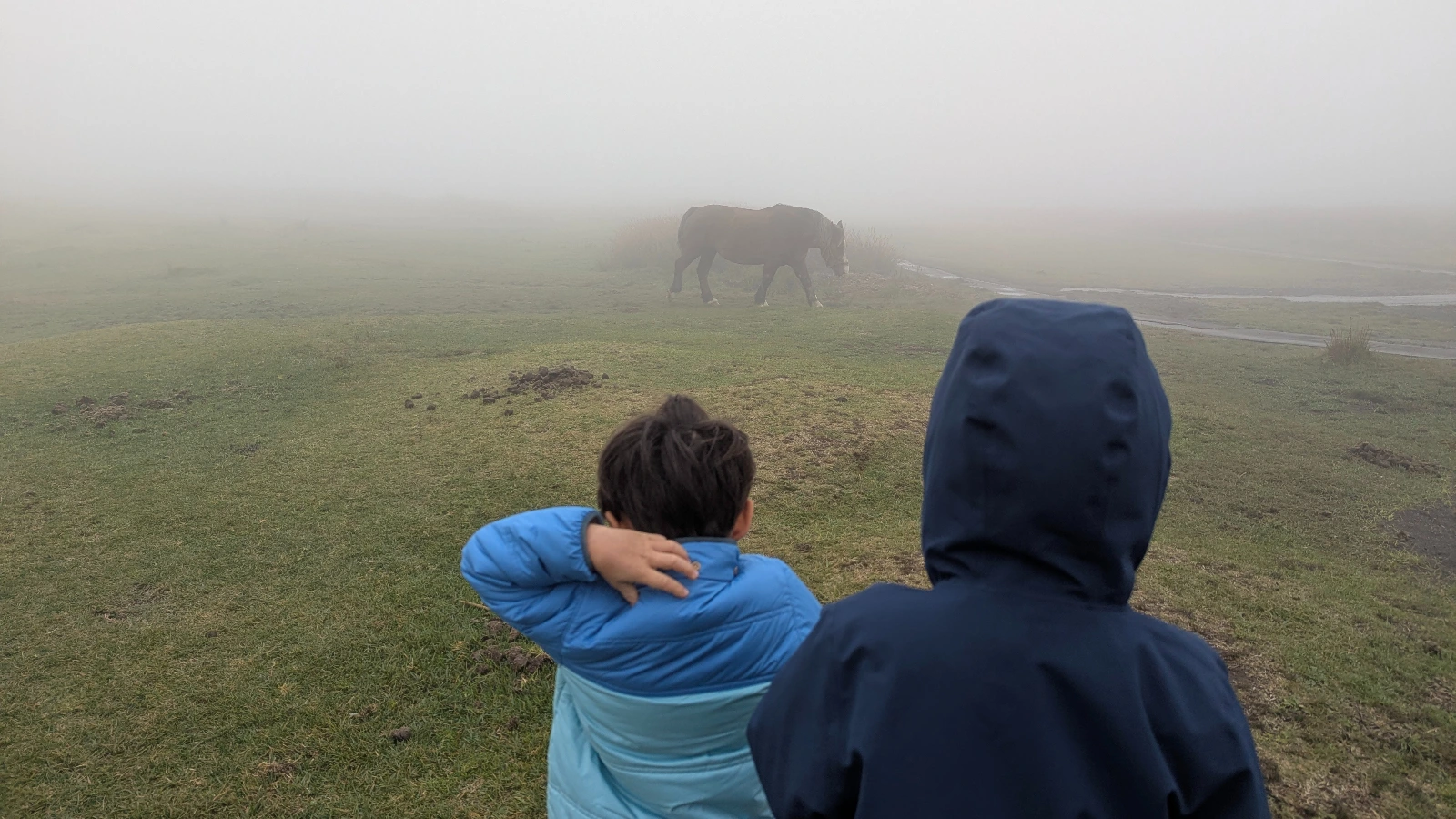
For a child who depletes through restricted movement, the strongest stops are Lake Ezu, the Kumamoto City Zoo, and the Mt. Aso volcano area.
Lake Ezu is a spring-fed lake with a flat lakeside circuit and paddle-boat rental on site, and for a movement-driven child the boats are the point: a structured physical outlet with a clear objective, set against enough open distance for genuine large-motor discharge without crowd-management friction. A younger Dynamo works the paddle boat and the open bank; an older one takes the full lakeside loop at pace. It shares a tram stop with Suizenji Jojuen Garden, which makes the two a natural paired session rather than two planning decisions.
Who it costs.The Sprinter, whose sustained-walking depletion runs down on the full lakeside loop: the circuit covers real distance on foot, and a low-stamina child who tries to walk the whole bank rather than working the paddle-boat area tires well before the loop closes.
How to make it work.Chain it directly to Suizenji Jojuen on the shared tram stop, taking the movement here first so the garden’s enforced slow pace lands after the Dynamo has already discharged, and keep a Sprinter to the paddle boat and the near bank rather than the full circuit.
If this isn’t your child: a free, low-stress lakeside hour with turtles on the southern bank, an easy reset stop for any family in the Suizenji area.The city zoo is a compact, mid-sized facility with the children’s zoo and petting area set near the entrance, so families reach the highest-engagement zone without navigating the full grounds first. For a Dynamo the petting area, animal density, and open-air layout give continuous physical and sensory engagement across a half-day, with none of the stillness demands that make indoor stops hard for this profile. A younger Dynamo lives in the petting area; an older one covers the wider grounds and the adjoining botanical circuit.
Who it costs.The Sprinter, who meets the primary friction here: the grounds ask for sustained walking across a moderate footprint, and a low-stamina child can hit a wall before mid-afternoon.
How to make it work.For a Sprinter, walk the botanical gardens section first and use it as a wind-down rather than a continuation, so the animal core lands while the Reserve is still full.
If this isn’t your child: a well-priced half-day with a natural extension into the botanical gardens if the animals run short faster than expected.The Aso caldera delivers a landscape scale unlike anything on a standard Japan family itinerary, and for a Dynamo the open ground is the value: the drama and the room to move supply natural stimulation without the crowd-management of urban stops and without the enclosed stillness that accumulates restricted-movement depletion. The Aso Volcano Museum anchors the visit and, critically, carries it in full when crater access is closed, which it routinely is, so the day holds a confirmed structure regardless of the volcanic status.
The wider region extends the Dynamo’s moving target: the nine One Piece bronze statues are scattered across the Aso area as an earthquake-recovery trail, so two or three chain naturally into the day between viewpoints, and for older kids the mossy stone steps of Kamishikimi Kumanoimasu Shrine make a striking detour. A younger Dynamo ranges the paved viewpoints and chases the statues; an older one works the museum exhibits, the shrine climb, and the crater rim when it is open.
Who it costs.The Sprinter, whose sustained-walking depletion runs down across the spread-out viewpoints and the steep shrine steps, which cover real ground on foot with few places to sit between them.
How to make it work.Check the crater status before departure and treat the museum as the confirmed core, then keep a Sprinter to the paved viewpoint decks and skip the shrine climb, banking the walking for the one or two features the child most wants to reach.
If this isn’t your child: the single most distinctive landscape in Kyushu, worth the day for the museum and viewpoints alone even when the crater is sealed.For the Sensor
Stops that let a sensory-loaded child recover.
For a child who depletes through sensory input, the strongest stops are Shirakawa Springs and Kikuchi Gorge.
Shirakawa Springs is a freshwater source site on a forested hillside where the sound environment is defined by running water and forest birds rather than urban noise, which makes it categorically different in sensory register from every other stop in this guide. For a Sensor the near-total absence of crowd density and the steady acoustic backdrop of moving water make it the most effective single-stop recovery option in the Kumamoto area, particularly midway through several days of urban Kyushu density. A younger Sensor decompresses at the water’s edge; an older one walks the inner trail and takes the spring in full.
Who it costs.The Dynamo, on the opposite axis to the Sensor: the site offers restorative quiet but no real outlet for restricted-movement energy, so a movement-driven child has nothing to discharge into. The Sprinter pays differently again, on the terrain, since the gravel inner trail asks for 45 to 60 minutes of independent walking on uneven ground and is not stroller-compatible.
How to make it work.Reserve it for a day when the higher-movement stops are already done, so a Dynamo arrives ready to slow down rather than needing to burn energy, and keep a Sprinter to the shorter, firmer sections near the entrance rather than the full inner trail.
If this isn’t your child: a free, genuinely restorative forest-and-water stop, best for kids who can walk independently on natural surfaces.Kikuchi Gorge is a forested river gorge north of the city where clear water runs over rock under a canopy, and like Shirakawa Springs its value for a Sensor is acoustic: the ambient sound is water and forest, not crowd, and the visual stimulus is spread across open outdoor space rather than compressed indoors. It reads as the second nature-recovery stop that lets the Sensor group hold two options rather than one. A younger Sensor stays on the lower, easier riverside sections; an older one takes the full trail to the upper falls.
Who it costs.The Sprinter, on terrain and distance. The trail is uneven, involves steps and river-adjacent footing, and is not stroller-compatible, so a low-stamina child needs the shorter lower loop rather than the full circuit.
How to make it work.Go in the warmer months when the gorge is at its best and the footing is dry, and plan the shorter riverside section for a Sprinter rather than committing the whole family to the upper trail.
If this isn’t your child: a beautiful seasonal nature stop, weather- and season-dependent and worth checking conditions for before committing the drive.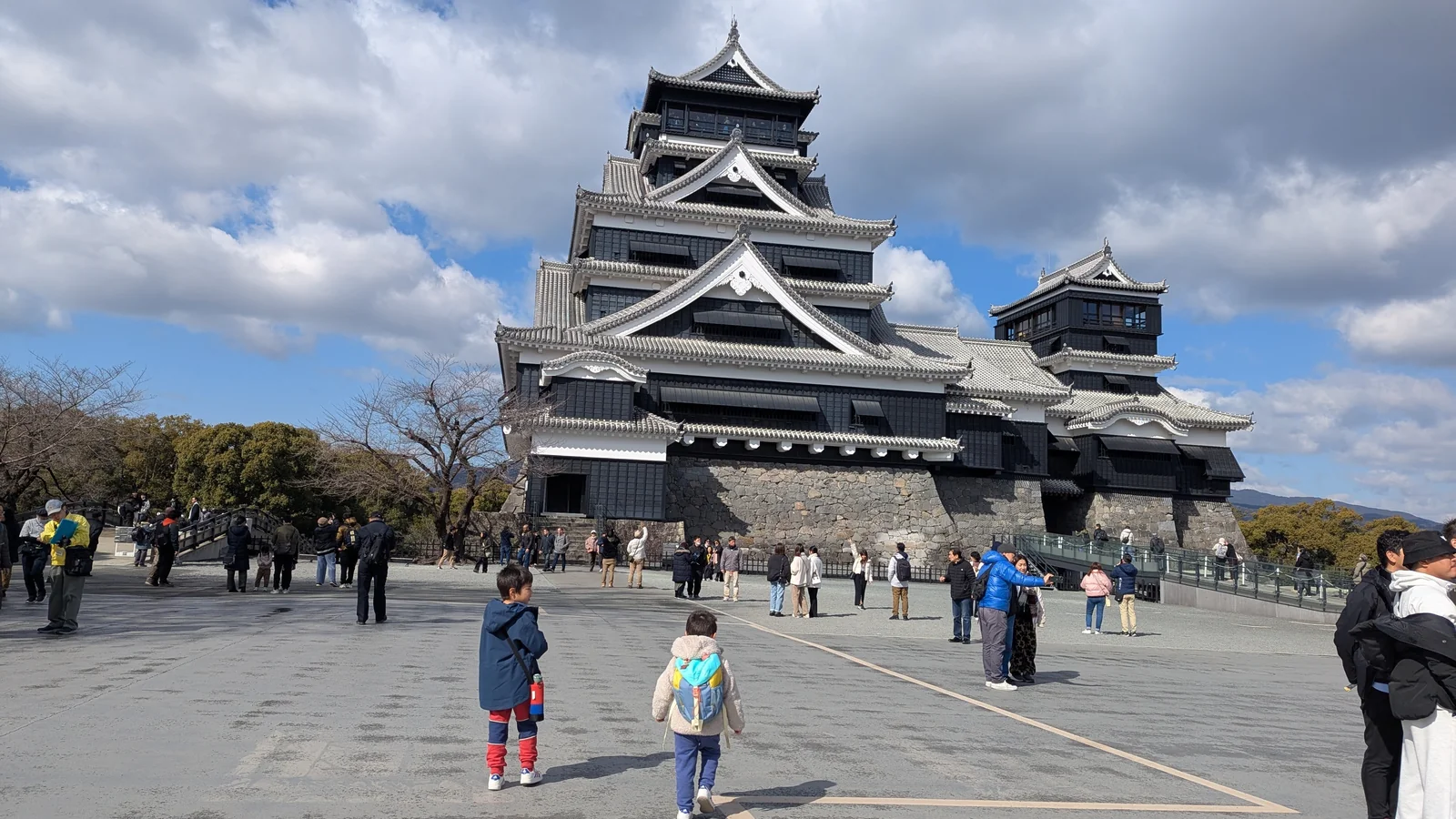
For the Anchor
Stops with confirmed, predictable structure.
For a child who depletes through unfamiliarity and unconfirmed structure, the strongest stops are Kumamoto Castle, Kumamon Square, and the Mifune Dinosaur Museum.
The castle runs its interior as a linear, narrated sequence across multiple floors, so a child moves through in a defined order with no dead ends or backtracking, which is exactly the confirmed structure an Anchor needs. The post-earthquake restoration is built into the exhibit itself rather than displayed separately, so the visit is organized around the recovery as much as the original architecture, and the route can be described the night before as a sequence with a fixed endpoint. A younger Anchor anchors to the keep on the skyline and the clear start-to-finish path; an older one, with some samurai-history familiarity, takes far more from the interior exhibits.
Who it costs.The Sensor, who meets the sharpest friction: the interior is enclosed, and peak school-group windows compress noise into narrow corridors. The Sprinter also pays on the cobbled, steep approach, which is better managed with a carrier than a stroller.
How to make it work.Enter before 10:00 a.m. on a weekday so a Sensor clears the corridors before the school groups arrive; the castle-front Sakuranobaba Josaien complex sits at the base as a low-commitment cultural and food pairing an Anchor can fold in on a confirmed plan.
If this isn’t your child: the signature Kumamoto landmark, with free outer grounds to walk even if you skip the paid interior.Kumamon Square runs on a posted show schedule in an open, stroller-accessible floor space with no ticket and no timed entry, and that format is precisely what steadies an Anchor: arrive, watch a scheduled performance, browse the shop, leave, a sequence predictable enough to explain to a child before you go. The absence of a ticket or entry commitment also removes the sunk-cost pressure that makes unstructured stops hard for a routine-reliant child. A younger Anchor settles into the show and the mascot; an older one treats it as a short, certain fixture between larger stops.
Who it costs.The Dynamo, who meets the primary friction: the show asks for 20 to 30 minutes of stillness in a contained indoor space.
How to make it work.Position it as a midday regulation stop between higher-intensity stops rather than a standalone visit, with outdoor access planned immediately afterward so a Dynamo discharges what the show contained.
If this isn’t your child: a free, cheerful, 30-to-60-minute stop in the central shopping district, easy to fold into any city day.The Mifune Dinosaur Museum runs on a fixed, sequential exhibit route built around real fossil finds from the surrounding Mifune beds, and that set path through a self-contained subject is exactly the confirmed structure an Anchor relies on: the sequence does not change, and the dinosaur draw gives a clear reason to move through it in order. A younger Anchor follows the skeletons and the clear room-to-room order; an older one works the fossil-science exhibits that explain how the local digs connect.
Who it costs.The Dynamo. The exhibit is an enclosed, single-direction route with no room to range, so a movement-driven child works through it faster than the content rewards and needs an outlet immediately after. The museum is compact enough that the visit itself is short, which limits the damage.
How to make it work.Confirm opening days before the drive so the fixed route an Anchor is counting on is actually open, and chain an open-air stop straight afterward so a Dynamo discharges what the enclosed route contained.
If this isn’t your child: a genuinely distinctive dinosaur hour for fossil-minded kids, a deliberate out-of-center choice rather than a drop-in.For the Sprinter
Short, low-stamina stops with little walking.
For a child who depletes through sustained walking and standing, the strongest stop is Suizenji Jojuen Garden, and Kumamoto rewards this profile more than most cities.
Suizenji Jojuen is a 17th-century daimyo garden built as a single continuous circuit with no branching paths and open sight lines across most of the grounds, and for a Sprinter the entirely flat, gravel-paved loop is the value: the natural stopping points at the koi ponds let a low-stamina child rest without the visit feeling cut short, because the circuit still reaches its defined endpoint. A younger Sprinter rests at the ponds between short walks; an older one takes the full loop at an unhurried pace. The garden also serves an Anchor well, since the circuit can be described the night before as a defined loop with a clear finish.
Who it costs.The Dynamo, who meets the primary friction: the enforced slow pace conflicts directly with a movement-driven child’s need to move, so this belongs after a higher-energy start rather than as the opener.
How to make it work.Chain it to Lake Ezu on the shared tram stop and schedule it second, after a high-movement morning; on a wet day, the covered Shimotori and Kamitori arcades in the center give a Sprinter an equally low-stamina, fully sheltered alternative.
If this isn’t your child: the most reserve-friendly cultural stop in Kumamoto, flat and calm, and the point in the day many families report their child visibly resets.Open with the child who runs short first.
The order of a Kumamoto day is set by Reserve, not by the map. Each route opens with the stop that protects the named child, then chains to the nearest compatible one.
Settle these first. The Mt. Aso volcano area is the one stop that controls its own day: check the crater status before departure, because access is activity-dependent, and plan the Aso Volcano Museum as the confirmed core when the rim is closed. Shirakawa Springs and Kikuchi Gorge both sit well outside the center on natural-surface trails, so they need their own day rather than a central-city add-on. Everything in the Suizenji area (the garden, Lake Ezu) pairs on a single tram stop and fills the middle of a central day.
When to go, and what costs nothing.
Mornings hold the most Reserve, so the enclosed castle interior belongs early, before 10:00 a.m. on a weekday, ahead of the school-group crowds that are hardest on a sensory-sensitive child. The free stops carry real weight here: Kumamon Square, Lake Ezu, and Shirakawa Springs all cost nothing, and the outer castle grounds are free to walk with only the interior carrying a fee. Two of the free stops, Lake Ezu and Shirakawa Springs, are also among the calmest in the area, so for those the low-cost route and the reserve-protecting route are the same route. The nature stops (Shirakawa, Kikuchi Gorge, the Aso trails) run on natural surfaces and reward the warmer, drier months, so check conditions before committing a day to them.
Three bases that fit a family’s Reserve.
A shortlist chosen for location logic, not price tier. Each sits close to the central tram lines and the shinkansen, so the daily walk to transit stays short.
| Property | The LuNi Reason | Budget |
|---|---|---|
|
LUNI Pick
THE BLOSSOM KUMAMOTO
Central, near the tram
|
A polished central base a short tram ride from the castle and Suizenji, giving an Anchor a confirmed daily rhythm and a sensory-loaded child a quiet room to decompress fully at the end of a stimulating Kumamoto day. | ¥¥¥ |
| REF Kumamoto by VESSEL HOTELS Value, central location | A well-priced central option with the shortest daily walk to the tram for a Sprinter, and quick reach to Kumamon Square and the shopping arcades for a Dynamo who needs an outdoor discharge close to the room. | ¥¥ |
| Hotel Nikko Kumamoto Full-service, castle side | A full-service base on the castle side of the center, so an Anchor starts the day on the fixed castle route with no long transfer and a family with a low-stamina child banks the morning reserve for the stop rather than the commute. | ¥¥¥ |
Budget: ¥¥¥
Budget: ¥¥
Budget: ¥¥¥