Takachiho Gorge with Kids: a parent at the oars, a walk that adds up.
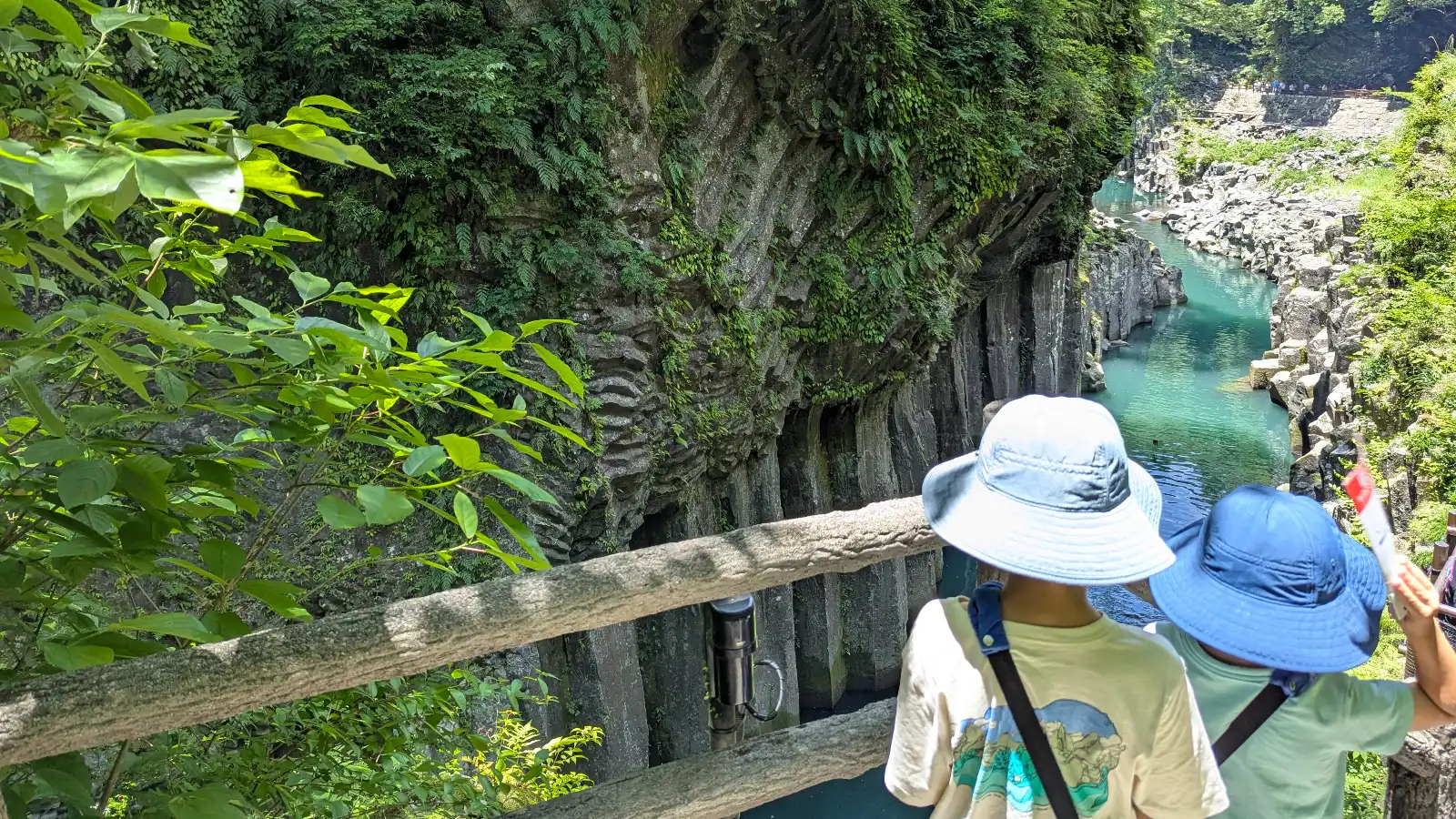
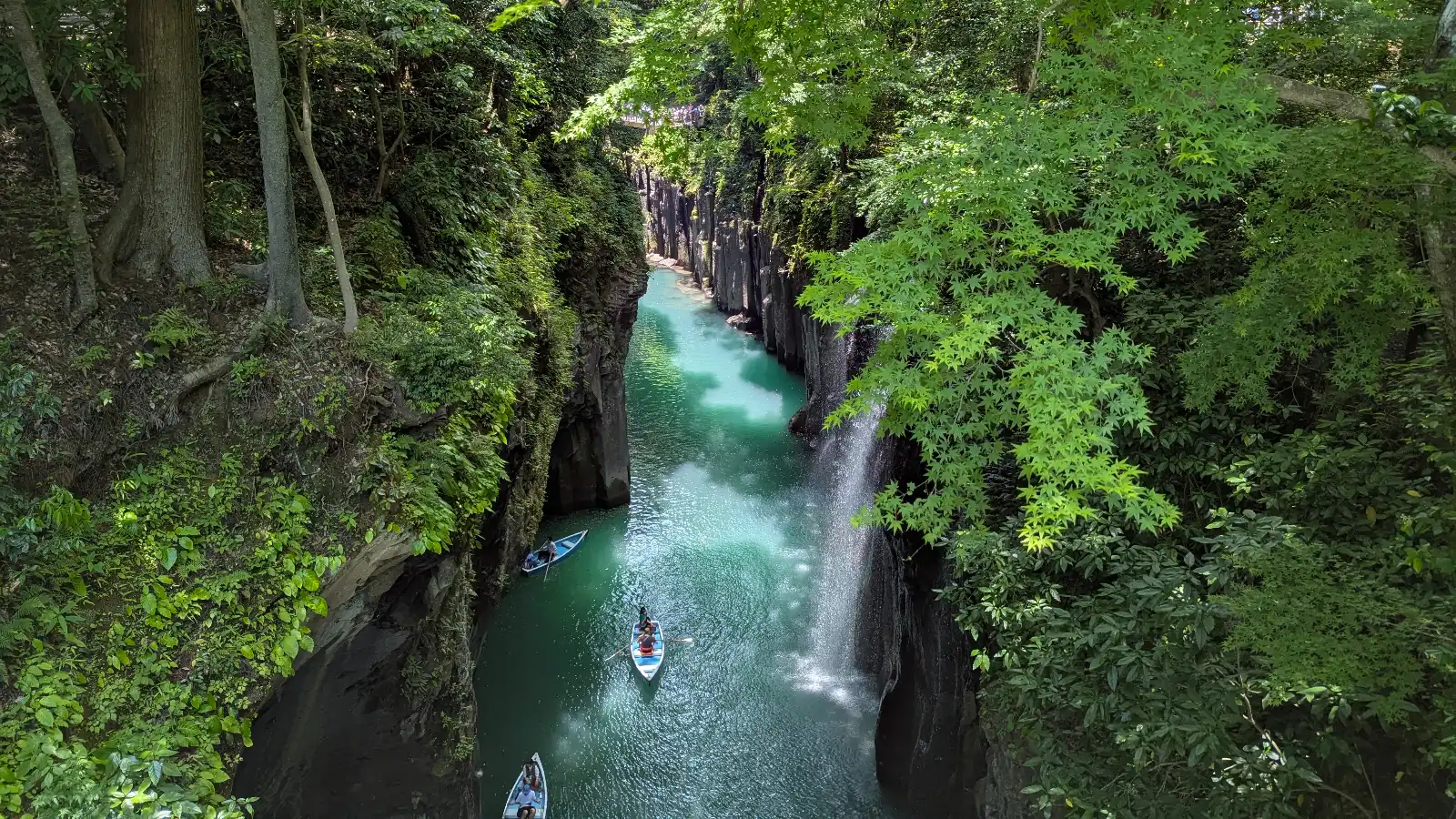
The boat is thirty minutes on the river, and only junior high students and older may row it, so for most families it is a parent pulling the oars.
30 minutes, priced by date; three aboard, or four with a preschooler. Book online; same-day tickets are what is left.
Boats stop whenever the river runs high, and for quarterly safety inspections.
The boat ride is 30 minutes.
Younger children ride seated; standing and swapping rowers are prohibited aboard.
One falls-viewing platform is barrier-free; most lots are 15 to 30 minutes’ walk from the boats.
Some links on this page are affiliate links. LuNi may earn a commission at no extra cost to you.
Is Takachiho Gorge worth it with kids?
The short version, before the costs, the timings and the case for each child.
Yes, and it is a beautiful half hour on the water, as long as the parents go in knowing who rows and what can go wrong. Only junior high students and older may row, and rowers cannot swap once the boat is out, so with younger children a parent rows the whole way. The boats stop whenever the river runs high, even on a sunny day, and after earthquakes and on inspection days, so the ride can never be promised. What can be promised is the gorge itself: the waterfall is also visible from the promenade’s viewing platforms, one of them barrier-free. So book the boat, but build the day on the walk and treat the boat as the bonus.
Planning Your Visit to Takachiho Gorge with Kids.
Three decisions shape the day. The first is the booking, which opens online two weeks ahead and closes two days before, with no phone line and no waiting list; on a reservation-only day that sells out, no same-day tickets are sold at all. The second is where to park, because the lots run from a paid one near the boats to a free one about 30 minutes’ walk away, and that walk is a real cost for a small child, paid twice, once in and once back to the car. The third is a plan for a suspended boat, which happens when the river is high: agree in advance that the viewing platforms are the day. The high rivers come with Japan’s rainy seasons, so a family traveling then should plan for the platforms from the start.
Every LuNi attraction guide starts with a visit, with our own children
LuNi rates and writes about attractions only after visiting them with children. Luca and Nico were at Takachiho Gorge, and what they did there is recorded further down this page, including how each child actually met it.
Children arrive with different tolerances: for noise, for lines, for standing still, for being on their feet all day. A guide written for the average of them helps almost nobody. So every place on this site is read four ways, and each verdict says which children it already suits and what makes it work for the rest. Whoever you are bringing, the answer here is built for your family rather than for a general reader.
Restricted-movement depletion builds on a seated boat where standing is banned, so spend the moving on the walk in and the promenade first.
Sensory-input depletion stays low in an open gorge with small boats and a waterfall seen from viewing platforms, so choose the view that suits.
Unfamiliarity and unconfirmed structure meet a boat that can be suspended on the day, so promise the viewing platforms and treat the boat as extra.
Sustained walking and standing come from lots up to two kilometers out, so arrive early for a near lot and rest in the boat.
Hotels we would book for this visit.
Takachiho is a long day from a city base, and these are Kumamoto family hotels chosen for that base. The one limited-express bus a day from Kumamoto Station takes about 3 hours and needs a reservation.
| Property | The LuNi Reason |
|---|---|
| LUNI Pick THE BLOSSOM KUMAMOTO | In the Kumamoto Station area, where the one limited-express bus a day to Takachiho leaves. For a gorge day that starts early and ends late, it is the base with the fewest moving parts: the station is the hub for the rest of a Kyushu route, and the family returns to the same room each night. |
| REF Kumamoto by VESSEL HOTELS | REF Kumamoto sits in the middle of the city rather than by the station. It suits a family that wants evenings in central Kumamoto after a long outdoor day, and does not mind an early start across town to the bus on the morning of the gorge. |
| Hotel Nikko Kumamoto | Hotel Nikko Kumamoto is the established choice for a family that prefers a large central hotel. A gorge day ends late, after a three-hour bus ride, and a child who is done by then needs a familiar room that asks nothing new of them on the way in. |
Nearby attractions, matched to your child.
Two pairings for the rest of a Kyushu trip: a shrine in the same town with a performance every day, and a Kumamoto garden with a cool rest house for a child whose legs the gorge used up.
| Pairing | Why This Solves the After-Visit | For Your |
|---|---|---|
| LUNI Pick Takachiho Shrine Takachiho: kagura every night, 20:00 to 21:00 | Takachiho Kagura is performed every day at the shrine’s kagura hall, so it stays on the calendar when the river closes the boats. Unfamiliarity and unconfirmed structure ease when one part of a day away from home is certain, whatever the weather decides about the rest of it. | Anchor |
| Suizenji Jojuen Garden Kumamoto: Suizenji Koen tram stop, about 5 minutes’ walk | The stroll around Suizenji Jojuen Garden takes thirty to forty minutes, and inside it an air-conditioned rest house is open all day. Sustained walking and standing after a gorge day of lots and promenades need a shorter, cooler walk with a cool rest house by the gate. | Sprinter |
Takachiho Shrine
Takachiho: kagura every night, 20:00 to 21:00 For YourAnchor
Suizenji Jojuen Garden
Kumamoto: Suizenji Koen tram stop, about 5 minutes’ walk For YourSprinter
How two children actually met this attraction.
Two children rode the same boat through the same gorge and needed opposite things from it. One wanted the place explained before he would enjoy it, and once he had the story and the shape of the ride, he settled into it completely. The other had no patience for the story at all and wanted his hands on something from the moment he stepped aboard. The boat served the first child perfectly. The second found the gorge on foot afterward, on the bank, which is the honest lesson for a family with a restless younger child: the rowing is for older hands, and the walking is where a child who needs to move gets the day. Plan the bank and the promenade for that child as deliberately as the boat is booked for the other.
Luca wanted the gorge explained before he wanted to ride it. He read the sign about how the volcanic cliffs were formed, worked out why the columns of rock line up the way they do, and connected the Manai Waterfall to the Amaterasu legend he already half-knew. The reserved time slot suited him: he liked knowing the ride was half an hour and that the plan was fixed. He was slower to warm up at the pier.
This is the Anchor pattern with an analytical hook. A child whose Reserve depletes through unfamiliarity and unconfirmed structure settles once the shape of the thing is known, and a thirty-minute ride with a story attached gives it a shape. Families with a similar child should tell the story before the pier and name the length of the ride, and have the viewing platforms ready as the same story told from land if the boats are stopped.
Nico could not sit still for the story. He wanted the oars from the moment they boarded. Off the water he was the one scrambling along the riverbank, testing the echo under the cliffs, keeping up a running commentary about nothing in particular.
This is the Dynamo pattern. A child whose Reserve depletes through restricted movement feels a seated boat as confinement, and the wish for the oars is that restlessness looking for a job. The oars are not his to take: only junior high students and older may row, and rowers may not swap. Families with a similar child should say so before boarding and give the child the walking instead, both before and after the ride on the water.
A deep gorge with a waterfall dropping into it and a boat drifting below shows a child the slow power of nature in a way a city never can. Walking the promenade above the water and looking down gives them a sense of time on a scale they can only begin to grasp. Accepting the river’s rules, who rows and how close the boat may go, is a lesson too: some places set their own terms. A child who meets nature on its terms comes home with a deeper kind of respect.
The LUNI Rating for Takachiho Gorge.
One fact runs under all four verdicts: the gorge is the attraction, and the boat, however memorable, is a fragile extra that the river decides on the day. Three of the four profiles do well here for that reason, each one conditional on building the day around the walk and the viewing platforms rather than around a booking that the river can cancel. The difficulty falls on the child who tires, because some of the parking lots are up to two kilometers out. Build the day on the walk and the platforms, and the boat becomes a bonus rather than the whole plan.
Spend the moving on foot, before the boat. The Dynamo depletes through restricted movement, and the famous part of Takachiho is the part that restricts it most. On the boat, no one may stand, rowers may not change places, and only junior high students and older may row at all, so a younger child sits for thirty minutes while a parent does the work. What makes it work is everything around the boat: a day spent on foot, from the parking lots, some of them two kilometers out, to the promenade and its viewing platforms over the falls.
So plan the day as a walk with a boat in it rather than a boat with a walk. Attendants send cars to whichever lot has space, so treat a walk in from a far one as the child’s first stretch, walk the promenade before the ride, and let the child set the pace to the platforms. Tell them plainly before boarding that the oars belong to the adult and that nobody stands up; a child told in advance sits far better than one stopped mid-ride. Keep the promenade for afterward too, so the boat sits in the middle of the moving.
What this means for your Dynamo: a seated boat restricts movement, and the walk around it releases it. A younger Dynamo needs the rules told before boarding and the walk either side; an older one can walk the promenade ahead of the family.Choose the view that suits the child. The Sensor depletes through sensory input, and the gorge offers this child a gentle day. It is outdoors, the boats are small, three people to a boat or four with a preschool child, so a family has its boat to itself, and the waterfall can be seen from the promenade’s viewing platforms as well as from the water. The boats keep out of the zone where the waterfall comes down, which keeps the spray at a distance.
The practical choice is between the water and the platforms. A child who dislikes being enclosed or splashed can watch the falls from a platform, one of them barrier-free, and never board. A child who likes the boat can ride it knowing the spray is off limits. Raincoats are sold for 200 yen, cash, for a wet day. Boat reception closes early when there is a wait, so arrive in the morning.
What this means for your Sensor: sensory input stays mild in an open gorge with private boats. A younger Sensor needs the platform option offered first; an older one can choose between the boat and the view.Promise the platforms, not the boat. The Anchor depletes through unfamiliarity and unconfirmed structure, and the booking makes part of this day very certain: reservations open online at 9:00 two weeks ahead and close at 9:00 two days before, and a ride lasts exactly thirty minutes. The rest is less certain than any booking suggests. The boats stop whenever the river is high, even in sunshine, after any earthquake of intensity 3 or more in Takachiho, and on inspection days.
So the day depends on what a parent promises. Promise the gorge and the waterfall, which can be seen from the promenade’s viewing platforms whatever the river does, and describe the boat as the part that may happen if the river allows. Check the status board on the morning and tell the child the result before leaving the hotel. If the boat runs, describe the ride in order: the boarding lesson from staff, the life vests, the thirty minutes, and back.
What this means for your Anchor: a booked ride that the river can cancel is only half a structure. A younger Anchor needs the platforms promised and the boat called a maybe; an older one can check the status board himself.Arrive early, and let the boat be the rest. The Sprinter depletes through sustained travel-style walking and standing, and at Takachiho the walking starts in the parking lot. There is no parking just for the boats. From the Araragi lot the walk is about fifteen minutes, some 700 meters; from the Ohashi lot about twenty, a kilometer; from Oshikata about twenty-five; and from the free Taguchino lot about thirty, some two kilometers. That is each way, before any walking along the promenade to the viewing platforms.
An early start and the right order keep it manageable. Attendants direct cars to whichever lot has space, so arrive early for a near one, and plan the walk from a far one before setting out. Use the boat as the seated half hour in the middle of the day, and do the promenade after it, as far as the child still wants to go. A barrier-free viewing platform exists for the falls, which helps a family with a stroller or a tired younger child. Leave the evening empty.
What this means for your Sprinter: the walk from the lots and along the promenade carries the walking and standing. A younger Sprinter needs an early arrival for a near lot and the boat as a rest; an older one can walk from farther out.The questions parents actually ask.
Takachiho turns on the boat, and its rules are stricter than most families expect. Only junior high students and older may row, and no one may swap places once the boat is out. Booking is online only, with no waiting list. The ride can be canceled on the day by a high river, with no warning beyond the morning status board. The good news is that the waterfall does not depend on the boat at all. A wet, walking day in rural Kyushu needs rain gear and good shoes, which the packing list for Japan with children should carry from the start.
Is Takachiho Gorge worth visiting with kids?
Yes, with the right expectations. The rowboat is a parent’s job, because only junior high students and older may row, and it can be suspended on the day when the river runs high. The waterfall can also be seen from the promenade’s viewing platforms, one of them barrier-free, so the gorge still works on a day the boats do not.
Who is allowed to row the boats at Takachiho Gorge?
Only from junior high school age. Rowing is limited to junior high students and older, changing rowers during the ride is prohibited, and no one may stand up aboard. Staff do not row for visitors, but they teach rowing at the boarding point. A family with only younger children needs an adult or a junior high student at the oars.
How much does the Takachiho Gorge boat cost?
The boat is priced per boat, not per person, for a 30-minute ride, and the price depends on the date: September 2026 shows dates at 4,100 yen and at 5,100 yen. Each extra 10 minutes costs 1,000 yen. A boat takes three people, or four when one of them is a preschool child. Raincoats cost 200 yen, cash.
How do you book the boats at Takachiho Gorge?
Online, from 9:00 two weeks before the date until 9:00 two days before. There are no phone or email bookings and no waiting list. Same-day tickets are sold at the boat reception on the morning, but on reservation-only days (weekends and holidays in September and October, every day in November), a sell-out means no same-day tickets, so book ahead for those dates.
Why are the Takachiho Gorge boats sometimes closed?
Because of the river and the safety checks. The boats stop whenever the river is high, even on a sunny day, after any earthquake of intensity 3 or more in Takachiho, on quarterly safety inspection days in January, April, July and October, and on emergency inspection days. Check the status board on the morning.
Where do you park for Takachiho Gorge?
There is no parking only for the boats. The two nearest lots, Oshioi and Araragi, charge 1,000 yen; Ohashi charges 800, Oshikata 500, and Taguchino is free. From Araragi the walk to the boats is about 15 minutes, and from the free lot about 30 minutes, some 2 kilometers. Attendants direct cars to whichever lot has space, so arrive early for a near one.
Can you get close to Manai Falls in the boat?
Not into the falls themselves. Boats may not enter the zone where the waterfall comes down, and the life vests inflate automatically if they get soaked, with a 3,000-yen charge for the cylinder. Tell the children before boarding that the boat stays out of the spray, so the rule is part of the plan rather than a disappointment.
What are the boat hours at Takachiho Gorge?
Boats run from 8:30 to 17:00, with the last reception at 16:30, and reception can close earlier when there is a wait. A ride lasts 30 minutes, and passengers cannot change boats. Pets are not allowed aboard, and neither is large luggage, so leave bags in the car or at the hotel.
Where Takachiho Gorge fits your Japan trip.
Official site and opening information: Takachiho Gorge rowboats