Suizenji Jojuen Garden with Kids: The Pacing Tool Kumamoto Days Need.
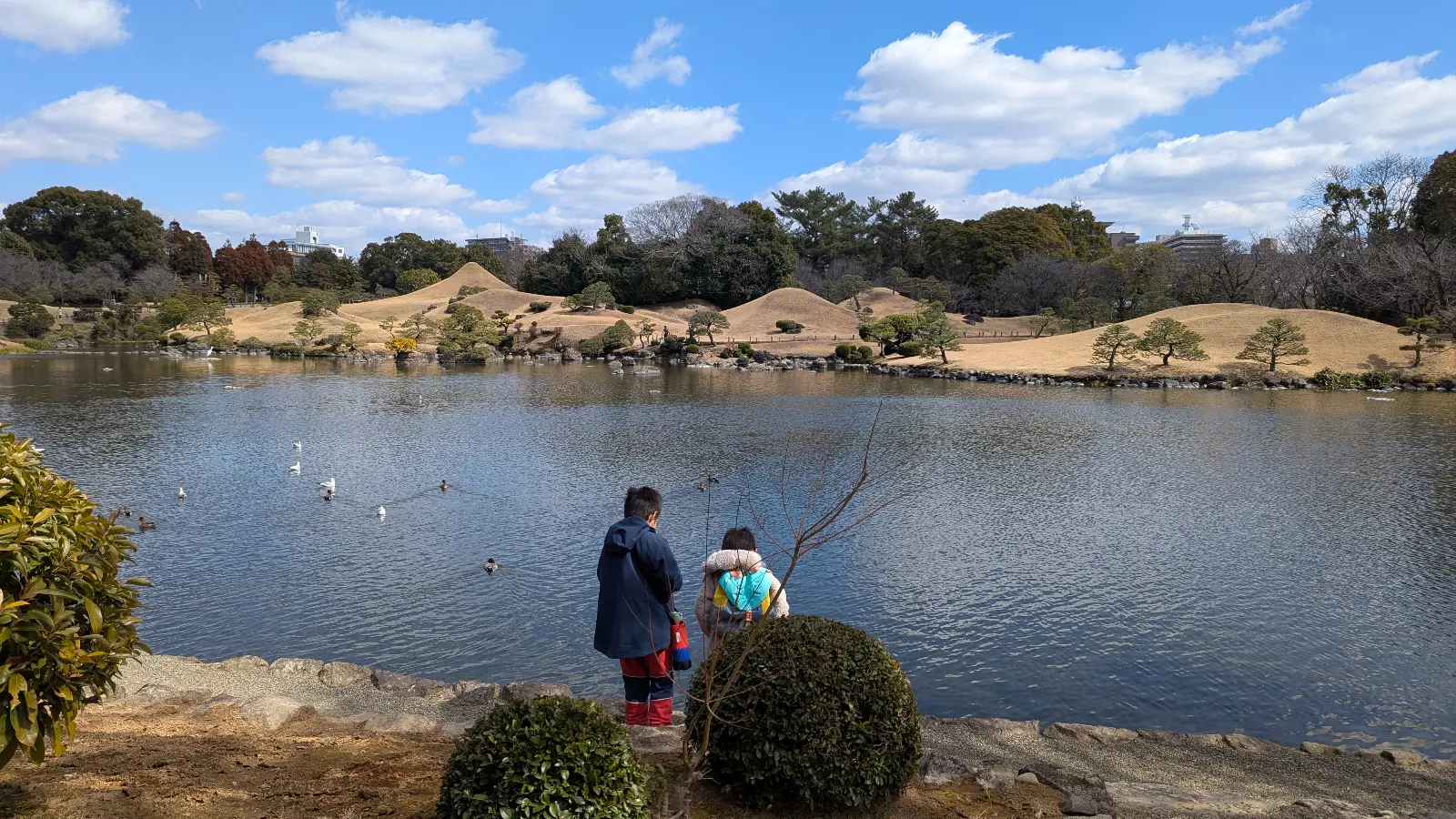
The garden is a short loop on foot, and inside it sits an air-conditioned rest house, which changes the whole plan for a child who tires in the heat.
Prices from April 1, 2026; card, QR code and transit IC accepted. No booking needed.
Open every day of the year; the North Gate opens 9:30 to 16:00, and event days can differ.
For the walk around the garden; add time for a stop at the rest house.
Landmarks to find, a long straight archery track, and a rest house for younger legs.
Wheelchair users and visitors with limited mobility enter by the north approach; a wheelchair can be borrowed at the entrance.
Some links on this page are affiliate links. LuNi may earn a commission at no extra cost to you.
Is Suizenji Jojuen Garden worth it with kids?
The short version, before the costs, the timings and the case for each child.
Yes, and it earns its place in a Kumamoto trip as the slow morning that makes the busier days possible. The garden is a stroll of about thirty to forty minutes, open every day of the year from early morning, with shrines, a Noh stage and a long, straight archery track to find along the way. The loop is the whole visit, and a child can take it at their own speed. It will not hold a child for a whole day, and it is not meant to: its value is as the calm first hour before something bigger. Come by tram, because there is no parking, arrive at opening, and hand the child the map.
Planning Your Visit to Suizenji Jojuen Garden with Kids.
Three decisions make this morning. The first is how to arrive, because there is no parking at the garden: the tram stop is about five minutes’ walk away, and a family by car has to find a paid lot. The second is the gate. The Main Gate keeps the longer hours and the North Gate the shorter ones, so an early family uses the Main Gate and keeps the North Gate as a second way out for a child who is done before the loop is. The third is the pace: thirty to forty minutes in the garden is short for an adult and can be long for a small child, so plan one pause rather than pressing on. The garden is one morning of a Kumamoto stay, and a child who finished the loop early has the rest of the day free.
Every LuNi attraction guide starts with a visit, with our own children
LuNi rates and writes about attractions only after visiting them with children. Luca and Nico were at Suizenji Jojuen Garden, and what they did there is recorded further down this page, including how each child actually met it.
Children arrive with different tolerances: for noise, for lines, for standing still, for being on their feet all day. A guide written for the average of them helps almost nobody. So every place on this site is read four ways, and each verdict says which children it already suits and what makes it work for the rest. Whoever you are bringing, the answer here is built for your family rather than for a general reader.
Restricted-movement depletion stays low when the stroll becomes a hunt for landmarks and a long, straight archery track, so hand the child the map.
Sensory-input depletion stays low in an open garden with an air-conditioned rest house inside, so arrive at opening and plan the rest house stop.
Unfamiliarity and unconfirmed structure ease with published daily hours, two named gates and landmarks listed on the map, so describe the route first.
Sustained walking and standing build over a thirty-minute stroll plus the tram walk, so stop at the rest house and use the second gate.
Hotels we would book for this visit.
A Kumamoto base serves both the garden and the rest of the week, so these are city family hotels chosen for the whole stay, each in a different part of the city.
| Property | The LuNi Reason |
|---|---|
| LUNI Pick THE BLOSSOM KUMAMOTO | In the Kumamoto Station area, for a family arriving and leaving by train, which is how most families move around Kyushu, with the garden as one quiet morning in a busier week and the station as the front door for every day out, the tram to the garden included. |
| OMO5 Kumamoto by Hoshino Resorts | OMO5 Kumamoto is for a stay centered on the city itself rather than on the station, with the garden, the shops and the evenings all in the same part of Kumamoto. It suits a family that would rather walk out to dinner than ride to it. |
| Hotel Nikko Kumamoto | Hotel Nikko Kumamoto is for a family that wants a large, established hotel in the center of the city, with the garden as one quiet morning among many. A child who settles best in one place starts every day of the week from the same central door. |
OMO5 Kumamoto by Hoshino Resorts
Nearby attractions, matched to your child.
Three pairings from the same Kumamoto base: the castle in the city, a zoo out along the tram line, and, for another day, a gorge in Miyazaki with its waterfall seen from the promenade.
| Pairing | Why This Solves the After-Visit | For Your |
|---|---|---|
| LUNI Pick Takachiho Gorge Takachiho, Miyazaki: one bus a day from Kumamoto, about 3 hours | At Takachiho Gorge the walk in from the farther lots runs up to two kilometers, then along the promenade, and the walking is the child’s, on another day rather than an afternoon, about three hours from Kumamoto. Restricted-movement depletion after a quiet garden wants that longer day on foot. | Dynamo |
| Kumamoto Castle Central Kumamoto; on weekdays, the south gate | For an Anchor, Kumamoto Castle’s day can be set out at home: open 9:00 to 17:00 from September to June, with the keep’s last climb at 16:30, and on weekdays visitors enter and leave by the south gate. Unfamiliarity eases when the gate and the clock are known before the tram ride. | Anchor |
| Kumamoto City Zoological and Botanical Gardens Tram toward Kengun, then 10 min on foot | For a Dynamo, the Kumamoto City Zoological and Botanical Gardens is a morning on foot among animals and planted gardens, reached by the tram toward Kengun and ten minutes’ walk from the Dobutsuen-iriguchi stop. Restricted movement gets real paths to cover; the gardens close on Mondays, so check the day first. | Dynamo |
Takachiho Gorge
Takachiho, Miyazaki: one bus a day from Kumamoto, about 3 hours For YourDynamo
Kumamoto Castle
Central Kumamoto; on weekdays, the south gate For YourAnchor
Kumamoto City Zoological and Botanical Gardens
Tram toward Kengun, then 10 min on foot For YourDynamo
How two children actually met this attraction.
Two children walked the same garden and each found one thing in it to work on. Neither of them was interested in the garden as a garden, the designed views and the history they carry. One stopped at the water and stayed there far longer than anyone expected; the other kept moving and turned a single feature into a game he played the whole way around. That is the honest shape of a strolling garden with children: it works when a child has a task, and it drags when the only task is admiring. For a parent, the practical lesson is to bring the task, a landmark list or a question, before the gate. The garden will not supply one on its own, and a child without one will want to leave long before the walk around is finished.
Luca spent twenty minutes at the edge of the spring-fed inlet near Izumi Shrine, and not watching the koi. He was studying the surface flow where the spring enters the pond, trying to map where the currents originated and trace them across the water. He treated it as a problem to confirm over time rather than a view to admire, adjusting his vantage point twice to check his reading. The rest of the family moved ahead twice before he followed.
This is the Sensor pattern, engaging on its own terms. A child whose Reserve depletes through sensory input spends far less on a focus they choose, at a distance and for a length they control, than on input that arrives unasked. Families with a similar child should leave the schedule loose enough for that focus to run its course, and let the rest of the family walk on and wait, because a self-chosen task keeps this child steady.
Nico turned the miniature Mt. Fuji mound into an active task for the whole circuit. He checked its silhouette from each new position along the loop and narrated how its shape was changing as he moved. By the time the family reached the far side of the pond he had settled on a single preferred viewing angle and insisted on walking back a short stretch to confirm it. He never stopped to ask what the mound represented.
This is the Dynamo pattern, turning a strolling garden into movement. A child whose Reserve depletes through restricted movement finds a slow walk hard only when it asks for nothing but looking. Given a landmark to track, he turns the stroll into a task and walks it happily. Families with a similar child should hand over a landmark to follow at the gate, and let him double back as often as he likes to check it.
A garden made to be walked around and looked at invites a child to search: a path circling the pond, a new view at each turn, fish moving under the surface. Turning a stroll into a hunt shifts a child’s attention from impatience to discovery, and a garden rewards that attention with small surprises. Children who learn to find beauty in a designed landscape begin to notice design everywhere. A calm morning spent looking closely can teach a child that the quietest places often hold the most to see.
The LUNI Rating for Suizenji Jojuen Garden.
One fact runs under all four verdicts: this is a short, calm, well-marked garden with a cool room inside it. So three of the four are served without conditions, and each rests on the same short list a parent brings: a map, a task and a stop in the cool room. The difficulty is for the child who tires, because the stroll, the walk from the tram and a hot morning still add up, even with the rest house. In Japan’s summer, go to the cool room before the child asks, and the whole difficulty shrinks to one short, easy stroll.
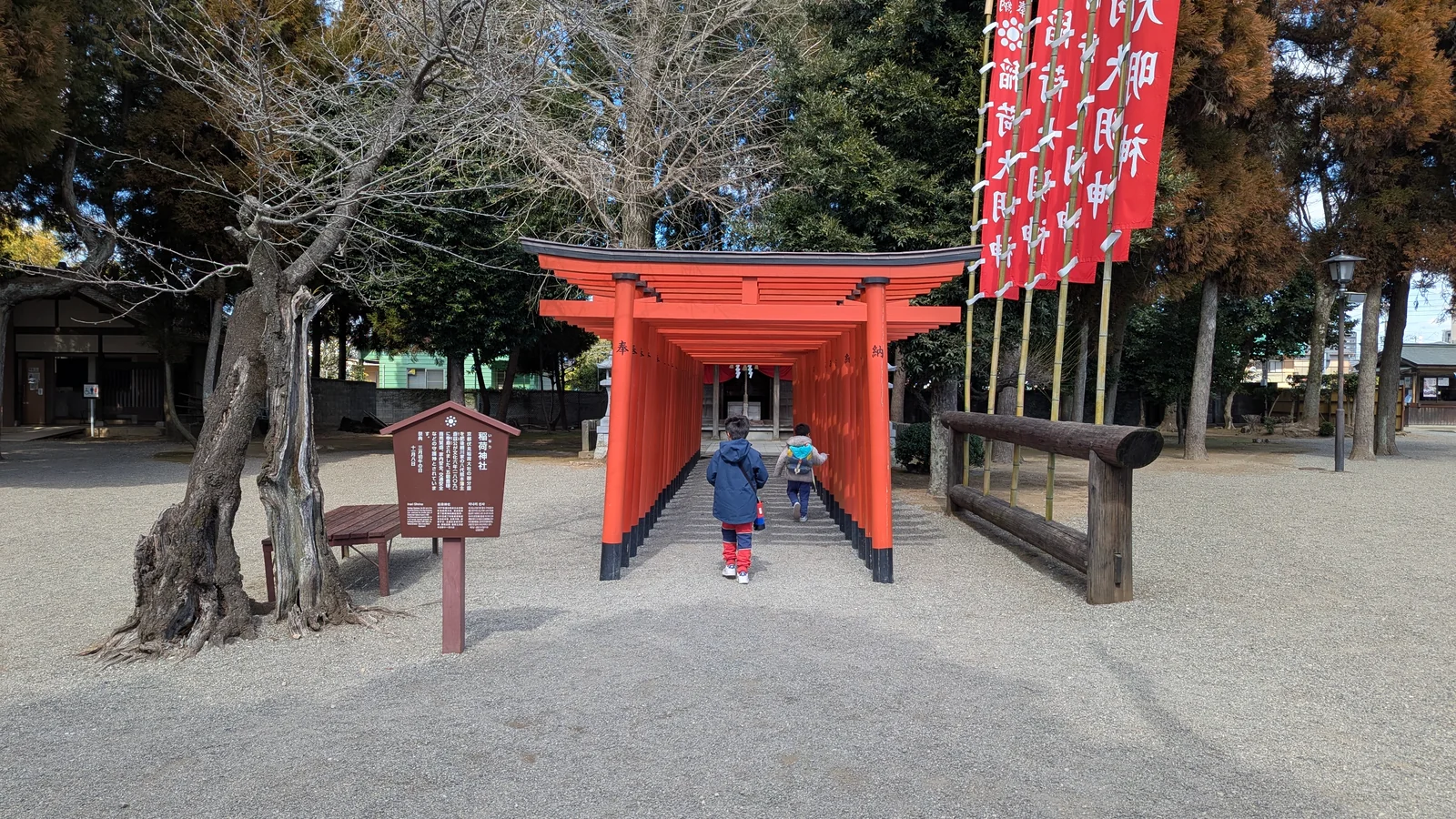
Hand over the landmark list at the gate. The Dynamo depletes through restricted movement, and a strolling garden asks for slow walking by design. What saves it for this child is how much there is to find. The garden’s map names Izumi Shrine, a small Inari shrine, the Noh stage, a torii rebuilt from the pillars of the great torii that fell in the 2016 earthquake, and a yabusame archery track about 150 meters long: a long, straight run of open ground.
Everything depends on turning the stroll into a search. Give the child the list of landmarks at the gate and let them lead the walk from one to the next, doubling back as often as they like. The archery track is the obvious place to let a child stretch out, at a fast walk, since this is a garden people come to for its calm. The stroll takes about thirty to forty minutes, which a moving child will cover happily if each stretch ends in something found. If the list runs out before the loop does, ask the child to find the way back to the gate they came in by, which is a task in itself.
What this means for your Dynamo: a slow garden turns into movement once it becomes a search. A younger Dynamo needs a short list and a parent to race; an older one can navigate by the map and set the order.Arrive at opening, and plan the cool room. The Sensor depletes through sensory input, and this garden asks little of that budget. It is open ground around a pond, walked at a stroll. What makes it dependable is the rest house just inside the Main Gate: a building with heating and air-conditioning, open all day except during some events, where a child can step out of the sun and the open air into a room of exhibits about the garden and the Higo flowers.
Heat is the input to plan around. Arrive at the 8:30 opening on a warm day, walk the loop in the cool of the morning, and come back to the rest house by the gate before anyone is uncomfortable rather than after. Event days are the one exception worth checking, since hours can differ and the rest house may be closed to visitors. Personal photographs need no permission, so a child who likes to take pictures can make that their task, at their own pace and distance.
What this means for your Sensor: the garden’s input is mild, and the cool room absorbs the heat. A younger Sensor needs the rest house planned before it is needed; an older one can pace the walk and choose the stop.Describe the gates, the walk and the stops. The Anchor depletes through unfamiliarity and unconfirmed structure, and this visit can be laid out in full before the family leaves the hotel. The garden is open every day of the year, 8:30 to 17:00, with last entry at 16:30. There are two public gates: the Main Gate, which keeps the garden’s full hours, and the North Gate, open 9:30 to 16:00. A stroll takes about thirty to forty minutes, and the map names the landmarks along the way.
The work is to tell the child the shape of the morning before the tram: in by the Main Gate, a stop at the rest house just inside it, around past the shrines and the Noh stage, and out by either gate. Payment by card or transit IC is accepted, so there is no fumbling at the entrance. The one thing that can change is an event, which may alter the hours or close the rest house, so check the day before and say so if it applies.
What this means for your Anchor: published hours, two named gates and a mapped route leave unfamiliarity little room. A younger Anchor needs the order of the landmarks told; an older one can carry the map and lead the family around.Plan the rest house by the gate as the stop. The Sprinter depletes through sustained travel-style walking and standing, and the Suizenji morning is walking from start to finish. The tram stop is about five minutes from the garden, the JR station about twelve, and there is no parking at all, so a family arriving by car still walks from a paid lot. A stroll takes about thirty to forty minutes. On a hot day, all of that is harder on the legs than it looks from the map.
It stays manageable because the garden has a seat and a second exit. The air-conditioned rest house by the Main Gate is the planned stop, before the loop and again at the end of it, open all day except during some events. The North Gate gives a second way out, so a tired child does not have to finish the loop to leave. Come by tram rather than car, keep the garden as the only walking of the morning, and leave the afternoon for something seated. A younger child who still naps will do best with the garden first thing and the rest of the day at the hotel.
What this means for your Sprinter: the tram walk and a half-hour stroll carry the walking and standing. A younger Sprinter needs the rest house stop and the nearer gate; an older one can walk the loop if the morning ends there.The questions parents actually ask.
Suizenji Jojuen Garden is short, calm and well marked, and the rules that shape a visit are few. A stroll takes about thirty to forty minutes. Adult tickets rose to 500 yen in April 2026, and children pay 200. There is a cool rest house inside and a second gate. The catches are small ones: no parking at all, hours that can change on event days, and a North Gate that opens an hour later than the main one. It is short enough to fit before lunch, and calm enough that a child tired by the week can still walk it slowly.
Is Suizenji Jojuen Garden worth visiting with kids?
Yes. It is a strolling garden walked in about thirty to forty minutes, with shrines, a Noh stage and a long archery track along the way, and it keeps an air-conditioned rest house inside. Admission is modest, and the garden opens at 8:30 every day of the year, early enough to beat the heat.
How much does Suizenji Jojuen Garden cost?
Adults 16 and over pay 500 yen and children aged 6 to 15 pay 200 yen, prices that took effect on April 1, 2026. A family of two adults and two children in that age band pays 1,400 yen. Groups of 30 or more pay 450 and 180. Credit cards, QR code payment and transit IC cards are all accepted.
What are Suizenji Jojuen Garden’s opening hours?
The garden is open every day of the year, 8:30 to 17:00, with last entry at 16:30, though hours can differ on event days. The Main Gate keeps those hours; the North Gate opens later and closes earlier, 9:30 to 16:00. Plan an early visit through the Main Gate, and use the North Gate as a second way out.
Is there anywhere to rest at Suizenji Jojuen Garden?
Yes. Inside the garden there is a rest house with heating and air-conditioning, open 8:30 to 17:00, with exhibits about the garden and the Higo flowers. It may be unavailable during events. On a hot morning, plan the rest house as the first stop and the place to return to, rather than waiting until a child asks to sit down.
How do you get to Suizenji Jojuen Garden?
By tram, to the Suizenji Koen stop, about 5 minutes’ walk away; or by JR to Shin-Suizenji, about 12 minutes on foot. There is no parking at the garden, so a family arriving by car has to use a paid lot nearby. For most families the tram is simpler than finding a space.
Can you visit Suizenji Jojuen Garden with a wheelchair or stroller?
Wheelchair users and visitors with limited mobility enter by the north approach, which is otherwise reserved for people coming to pray at Izumi Shrine. Other visitors use the Main Gate or the North Gate. Ask at the gate on arrival which route suits a stroller.
What is there for children to find at Suizenji Jojuen Garden?
The garden’s map names a string of landmarks: Izumi Shrine, a small Inari shrine, the Noh stage, a yabusame archery track about 150 meters long, and a torii rebuilt small from the pillars of the great torii that fell in the 2016 earthquake. Handed to a child as a list, they turn a slow garden into a hunt.
Can you take photos at Suizenji Jojuen Garden?
Yes. Visitors taking personal photographs of the scenery or family photos with each other need no application. Commercial shoots, model shoots, TV and film, and promotional photography need an application about a week ahead and are usually paid. A family taking pictures of its own children needs to do nothing at all.
Where Suizenji Jojuen Garden fits your Japan trip.
Official site and opening information: Suizenji Jojuen Garden