Himeji Castle with Kids: A fortress built to be solved.
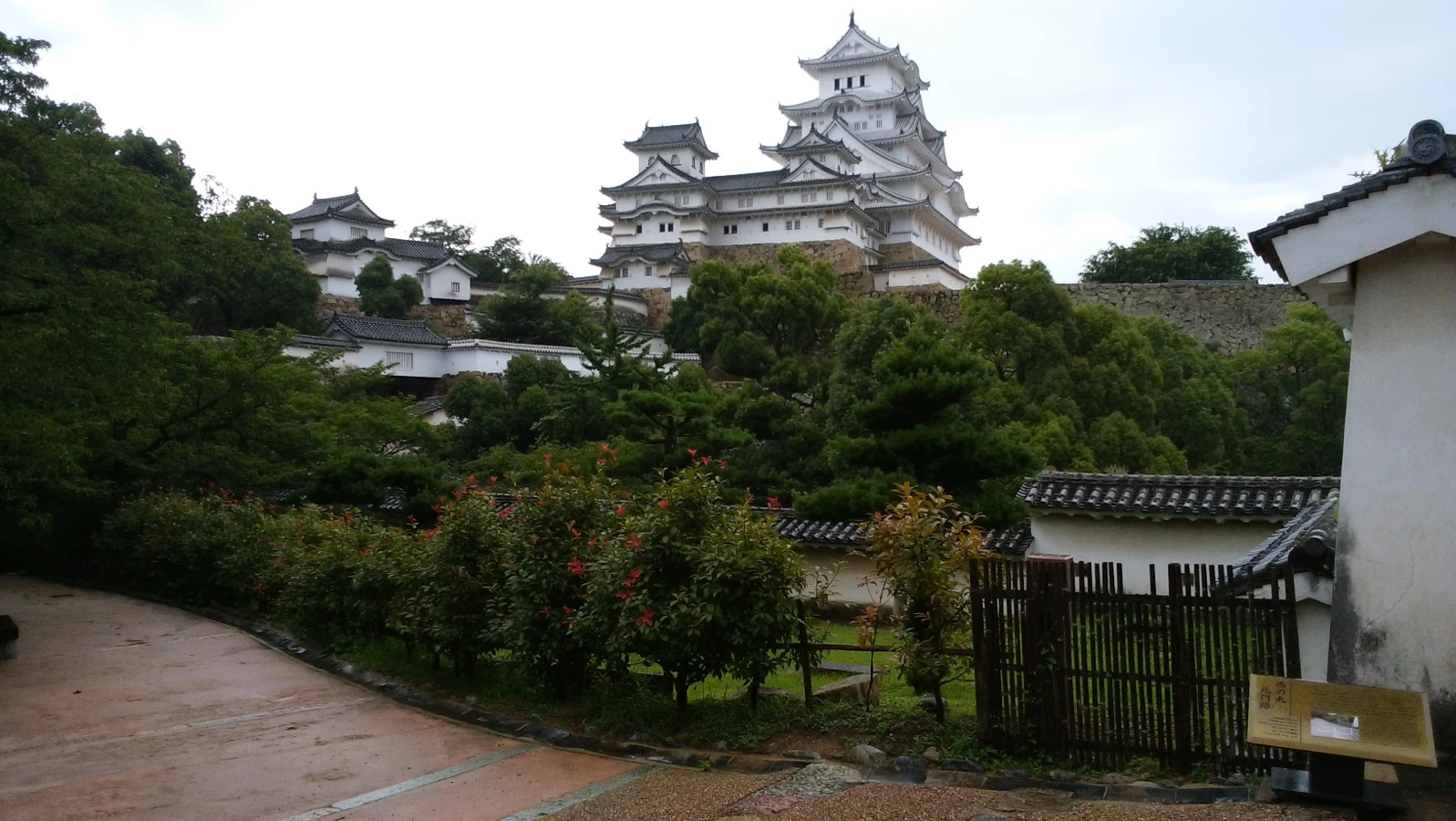
The gate is twenty minutes’ walk from the station, the keep another fifteen, and inside it the stairs are steep, narrow and the only way up, with no elevator.
Free until the first March 31 after an 18th birthday; castle and Kokoen together ¥2,600. Booking ahead is recommended: dated digital tickets sell 90 days ahead in 30-minute slots, some slots may sell no day tickets, and a family from abroad books an under-18 digital ticket as Child and shows the child’s passport at the castle’s ticket counter.
The keep and other buildings close from 16:30; reach the keep entrance by 16:10. Closed December 29 and 30.
Busy seasons add a wait of about an hour at the keep.
Very steep, narrow keep stairs with handrails and no elevator.
Strollers stay at a set place on entry; slopes, steps and stairs throughout, and no elevators.
Some links on this page are affiliate links. LuNi may earn a commission at no extra cost to you.
Is Himeji Castle worth it with kids?
The short version, before the costs, the timings and the case for each child.
Yes, and the reason is the keep, which a family climbs floor by floor rather than simply walking through it. It suits the child who needs to move and the one who likes to decode a building, since every floor is a stage of the climb. It costs most the child who tires, because the walk in, the wait and the steep, narrow stairs inside are all paid in legs. A younger child who wants to climb can, with a hand on the rail and an adult below. None of that makes the castle hard to love, but it does make the order matter: arrive at opening, spend the legs on the keep, and keep the rest of the day short.
Planning Your Visit to Himeji Castle with Kids.
Three decisions shape a day at Himeji. The first is how to get to the gate, because the twenty-minute walk from the station is a real cost for a younger child and a bus from the North Exit cuts it to five. The second is time. In busy seasons the wait at the keep entrance is about an hour, and the keep is a fifteen-minute walk from the gate, with the line still ahead, so the morning is the visit, and the afternoon is for something easier. The third is expectations: from early July 2026 to about late July 2027, conservation works put scaffolding around the main keep and narrow parts of the route. Tell a child about the scaffolding before the train, so the first view of the keep matches what they were promised.
Every LuNi attraction guide starts with a visit, with our own children
LuNi rates and writes about attractions only after visiting them with children. Luca and Nico were at Himeji Castle, and what they did there is recorded further down this page, including how each child actually met it.
Children arrive with different tolerances: for noise, for lines, for standing still, for being on their feet all day. A guide written for the average of them helps almost nobody. So every place on this site is read four ways, and each verdict says which children it already suits and what makes it work for the rest. Whoever you are bringing, the answer here is built for your family rather than for a general reader.
Restricted-movement depletion finds its outlet in a long walk in and a keep climbed floor by floor, so let the child lead on the stairs.
Sensory-input depletion stays manageable because keep entry is capped for safety, so arrive early and plan the lunch in the open squares outside.
Unfamiliarity and unconfirmed structure ease when the gate, the walk, the keep and its fixed closing time can all be described before the day.
Sustained walking and standing stack up from the station, the gate walk, a possible hour in line and steep stairs, with no stroller inside.
Hotels we would book for this visit.
A night in Himeji puts the castle at the start of a fresh morning, and all three family hotels sit by the station: about 10 minutes’ walk to the castle from Daiwa Roynet, 15 from Hotel Monterey, which connects to the station.
| Property | The LuNi Reason |
|---|---|
| LUNI Pick Daiwa Roynet Hotel Himeji About a 10-minute walk to the castle | Daiwa Roynet is about five minutes’ walk from the station’s castle exit and about ten to the castle. For a family the argument is the morning: the castle rewards the opening, and a room by the station means the day begins with the walk or the bus, not a train. |
| Hotel Monterey Himeji A 15-minute walk to the castle | Hotel Monterey connects directly to JR Himeji Station, for a family arriving late the night before. Tired children go straight from the platform to the room without stepping outside, and the castle morning starts from the same station as the short bus to the gate. |
| Hotel Nikko Himeji | On the south side of the station, the side away from the castle, for a family passing through Himeji by rail. Allow a few extra minutes each morning for the station crossing, and the castle walk begins as for the other two, with a child who slept close to the next day’s train. |
Nearby attractions, matched to your child.
Three pairings in the same city: a garden on the castle’s joint ticket for a child who likes the day settled, a zoo open all year but the New Year break, and a history museum inside the castle site.
| Pairing | Why This Solves the After-Visit | For Your |
|---|---|---|
| LUNI Pick Kokoen West side of the castle, on its joint ticket | Kokoen is on the castle’s joint ticket, and its nine gardens are entered one gate at a time, koi in the central pond, each garden a small, finished world a child can take in before the next. Unfamiliarity and unconfirmed structure ease when the afternoon is already decided before the morning begins. | Anchor |
| Himeji City Zoo Himeji: 9:00 to 17:00, entry until 16:30 | After a morning of lines and narrow stairs, Himeji City Zoo gives a Dynamo animals to walk between inside the castle grounds, so a child who held a rail all morning can roam. Restricted-movement depletion needs open ground to walk, and a zoo afternoon gives exactly that without another train. | Dynamo |
| Hyogo Prefectural Museum of History Inside the castle site; closed Mondays | For a Sprinter, the Hyogo Prefectural Museum of History sits inside the castle site, a walk north along the inner moat from the Sannomaru square, so walking and standing are spent on no second journey. Its first floor is free, and children through high school enter the galleries free. | Sprinter |
Kokoen
West side of the castle, on its joint ticket For YourAnchor
Himeji City Zoo
Himeji: 9:00 to 17:00, entry until 16:30 For YourDynamo
Hyogo Prefectural Museum of History
Inside the castle site; closed Mondays For YourSprinter
How two children actually met this attraction.
Two children climbed the same keep and found completely different things in it. One of them slowed down the moment he understood what the building had been designed to do, and spent the climb working out its defenses one opening at a time. The other treated the climb itself as the point, and was happiest on the stairs and least happy standing still between them. The castle gave both of them what they came for, which is rarer than it sounds. What it asked of their parents was patience with the line and a plan for the legs, because the walk up costs more than a child notices while it is happening. For a mixed pair of children, the useful plan is to let the climber set the pace on the stairs and let the decoder stop where he wants, with a parent each.
Luca spent the first minutes inside the keep hanging back on the lower floor. Then he found the angled windows. He wanted to know what each one was for, why some pointed down at the walls and others out across the approach, and he lingered at the stone-drop openings long enough that he had to be walked forward so the line behind could pass. By the third floor he was predicting the next slit.
This is the Anchor pattern. A child whose Reserve depletes through unfamiliarity and unconfirmed structure hangs back until the building offers a logic, and then settles deeply into decoding it. Families with a similar child should expect the slow start and not rush it, and give the child the question before the keep, what is each opening for, so the climb becomes a set of answers to find rather than a building to endure, floor after floor.
Nico moved before anyone had finished reading the first sign. On the grounds he ran the open baileys while the walk crept forward, and once inside the keep he attached himself to a single mission: counting the floors out loud, announcing each landing as he reached it. The stairs were the point, not an obstacle; he took them two at a time where the line allowed and grew restless only when it stalled and he had to stand still.
This is the Dynamo pattern. A child whose Reserve depletes through restricted movement does best when the day gives the body a job, and a keep climbed floor by floor is exactly that job, which is why the stairs felt like release to him. Families with a similar child should keep that child moving through the keep rather than stalled, spend the waiting time outside on the grounds, and put the whole visit early in the day.
Climbing the steep wooden stairs of a castle keep gives a child a physical sense of history that no book quite matches. The narrow steps and the view from the top make it easy to imagine the people who once guarded the walls, and the effort of the climb makes the reward feel earned. Children remember what their legs and hands tell them. A castle that asks a little effort and gives back a real sense of the past can turn history into something a child wants to know more about.
The LUNI Rating for Himeji Castle.
One fact runs under all four verdicts: this is a castle a family climbs rather than tours, and everything good and hard about it follows from that. The climb suits the child who needs to move and the one who needs a building to decode, and a capped keep keeps the crowding within bounds, so three profiles are well served. The hardest cost falls on the child who tires, because the walk, the wait and the stairs all fall on the same legs. Take the bus from the North Exit, and that child’s legs are saved for the stairs that matter.
Let the climb be the point. The Dynamo depletes through restricted movement, and Himeji spends movement from the moment the family leaves the station. The walk to the gate takes about twenty minutes, the gate to the keep about fifteen, and the keep itself is climbed floor by floor on very steep, narrow stairs with handrails. For a child who needs to move, a building that has to be climbed is a gift, and the open squares outside, Sannomaru and the square north of it, give room before and after.
The one thing that costs this child is waiting. In busy seasons the line at the keep entrance runs to about an hour, and there is no reservation to skip it. So arrive at the 9:00 opening, head for the keep first, and spend any waiting time on the grounds rather than standing in place if the family can split up. Inside, keep the child moving at the pace the stairs allow, with a parent close on the steepest steps. Leave the grounds for afterward, when the open squares finish the visit.
What this means for your Dynamo: a keep that must be climbed turns restricted movement into the day’s work. A younger Dynamo needs a parent close on the steep stairs; an older one can lead the climb and count the floors.Arrive at opening, and eat outdoors. The Sensor depletes through sensory input, and the input at Himeji gathers in one place: the keep, where people line up to enter and climb narrow stairs together. What keeps it within bounds is the castle’s own rule. Entry to the keep is limited in number for safety and conservation, so the building is never allowed to fill without limit. Outside, the grounds are open and the lunch squares are unroofed and wide, which gives this child space either side of the climb.
The works matter for this child. From early July 2026 to about late July 2027, conservation repairs around the main keep put up scaffolding, may bring works vehicles in, and narrow parts of the route. That means some stretches are tighter than usual, so tell the child in advance and plan to move through them without stopping. Arrive at the 9:00 opening, before the line at the keep builds, and plan lunch in Sannomaru Square or the square north of it rather than a busy street, so the quiet comes straight after the climb.
What this means for your Sensor: a capped keep keeps crowding within bounds, and the narrowed route is the new pinch point. A younger Sensor needs the tight stretches named first; an older one can time the climb for the opening.Describe the whole walk, gate to keep. The Anchor depletes through unfamiliarity and unconfirmed structure, and the Himeji day can be told in full before it begins. The walk from the station is about twenty minutes, or a bus from the North Exit to Otemon-mae and five minutes on foot. From the ticket gate to the keep entrance is about fifteen minutes. The keep closes earlier than the grounds, which is worth naming. Tickets are for the day only, with no re-entry, and strollers stay at the entrance.
The one real unknown is the line. At busy times the wait at the keep entrance is about an hour, because entry is capped, and it cannot be booked away. Say that in advance, so a wait is part of the plan rather than a surprise, and give the child the order of the day: the walk, the gate, the long approach, the line, the stairs, the top, the way out. The works add one more thing to name: from July 2026 to about late July 2027, scaffolding stands around the keep.
What this means for your Anchor: a day that can be described from station to keep leaves unfamiliarity little room. A younger Anchor needs the line named as part of the plan; an older one can hold the times and the closing rule.Take the bus, and save the legs for the keep. The Sprinter depletes through sustained travel-style walking and standing, and Himeji puts all of it on the same morning. The walk from the station is about twenty minutes. From the gate to the keep entrance is about fifteen more. In busy seasons the wait at the keep runs to about an hour, standing. Then the keep is climbed on very steep, narrow stairs, with no elevator. Strollers cannot be used in the castle and are left at the entrance, and there is no re-entry once inside.
That sequence is the honest difficulty, and the answers are about what a family refuses to spend. Take the Shinki Bus from the North Exit to Otemon-mae, which cuts the station walk to five minutes. Arrive at the 9:00 opening, when the line is shortest. Decide in advance whether a younger child climbs the keep at all, since a child who stops on the stairs has to be held there; the grounds and the squares are a real visit on their own. Leave the afternoon empty.
What this means for your Sprinter: the walk, the line and the stairs fall on the same legs. A younger Sprinter needs the bus and a decision about the keep before the gate; an older one can climb it if nothing else fills the morning.The questions parents actually ask.
Himeji Castle turns on time and legs, and its rules are firmer than most castles give. It is free for anyone under 18, which makes a family visit cheaper than most. The keep closes before the castle does, the wait at the keep can run to an hour, and strollers stay at the entrance. The one new thing is the scaffolding around the keep, which stays until about late July 2027 and narrows parts of the route. Wheeled bags cannot go into the castle, so a family moving on the same day can send its cases ahead with Japan’s luggage delivery service rather than pay for lockers.
Is Himeji Castle worth visiting with kids?
Yes. Entry is free for everyone under 18, and the keep is a real climb through a real fortress, which most children remember. The cost is on foot: 20 minutes from the station, about 15 more from the gate to the keep, then very steep, narrow stairs with no elevator. Plan the legs before the day.
How much does Himeji Castle cost for a family?
Adults 18 and over pay 2,500 yen. Visitors under 18 enter free, and the free entry runs until the first March 31 after an 18th birthday, so a high school senior still enters free. A joint ticket for the castle and Kokoen costs 2,600 yen. A family of two adults and any number of children under 18 pays 5,000 yen.
What are Himeji Castle’s opening hours?
The castle opens 9:00 to 17:00 and closes December 29 and 30. The main keep and the other buildings close from 16:30, so to climb the keep, reach its entrance by 16:10. The walk from the ticket gate to the keep takes about 15 minutes, so an afternoon family should be through the gate well before 16:00.
Can you bring a stroller into Himeji Castle?
Not into the castle itself. Strollers cannot be used inside, and they are left at a designated place on entry. The keep and the turrets have very steep, narrow stairs with handrails and no elevator, so a child who cannot climb will need to be held by an adult. Wheeled bags go to the paid lockers.
How long is the wait at Himeji Castle?
At busy times, about an hour at the keep entrance. There is no reservation system for the keep, and the number of people inside is limited for safety and conservation, so a line forms outside it. Tickets are valid only for their day, and there is no re-entry, so decide on the keep before leaving the gate area.
Is there construction at Himeji Castle?
Yes. Conservation works around the main keep run from early July 2026 to about late July 2027, with scaffolding. They affect the view and the keep’s appearance, as well as the night lighting, and parts of the route are narrower. Works vehicles may enter, and the scaffolding will show in photographs of the keep until the works end.
How do you get to Himeji Castle from Himeji Station?
Walk, or take the bus. From JR Himeji or Sanyo Himeji Station it is about 20 minutes on foot. The Shinki Bus runs from the station’s North Exit to Otemon-mae, which leaves about 5 minutes’ walk. With a child whose legs matter later in the day, take the bus: the climb inside the keep is the part worth saving them for.
Can you eat a packed lunch at Himeji Castle?
Yes, outdoors: in Sannomaru Square, in the square north of it, or on the peony garden hill. None of them has a roof, and the Sannomaru lawn is closed at times for turf care, so check the weather. There are no bins, so carry out everything the family brings in, and remember that the castle may close without notice in bad weather.
Where Himeji Castle fits your Japan trip.
Official site and opening information: Himeji Castle