Asahiyama Zoo with Kids: a hillside zoo with a free shuttle.
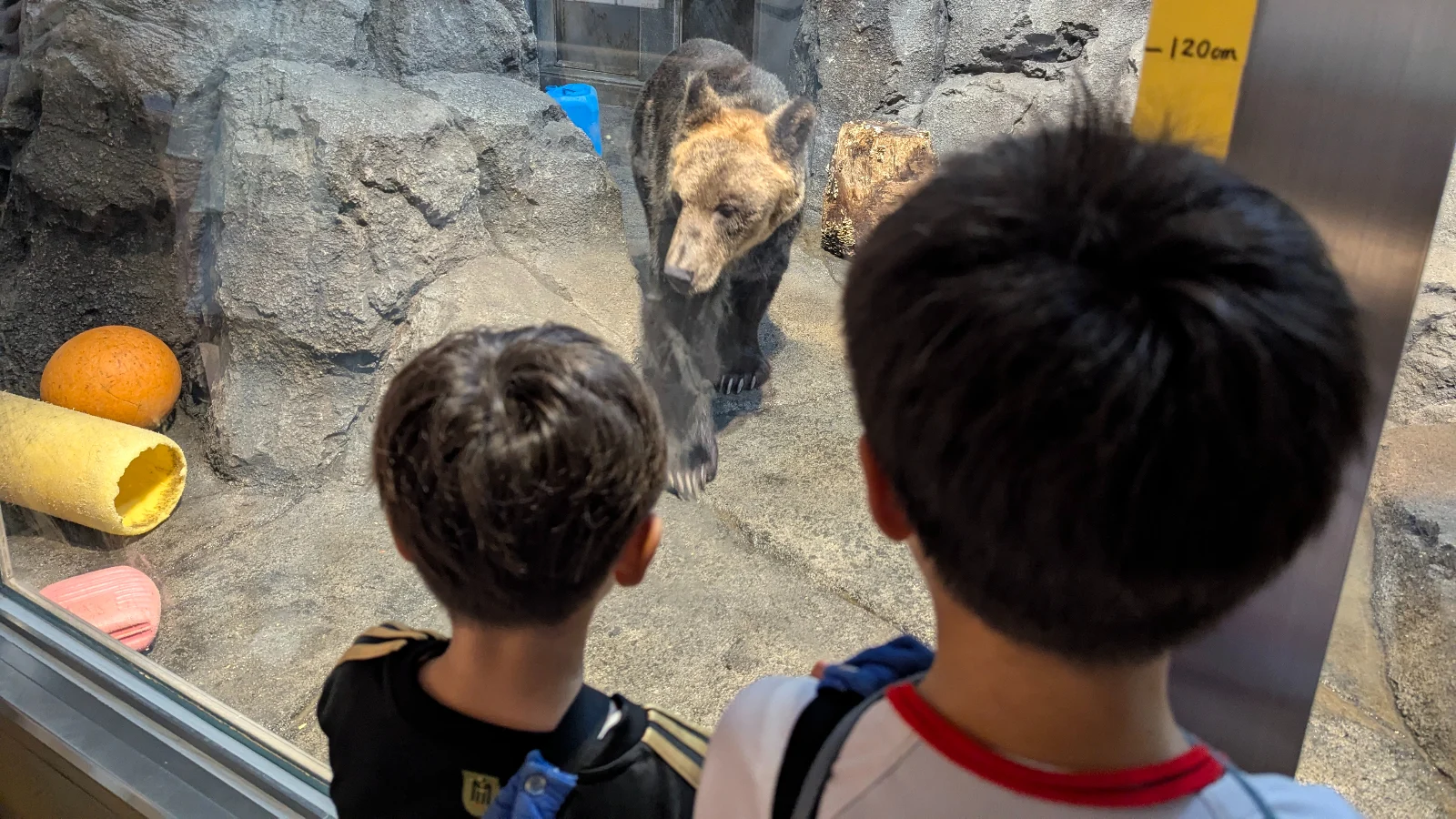
A zoo built on a mountain slope, where the real planning question is not which animals to see but how small legs will climb between them.
¥1,400 from April 29, 2027; Asahikawa residents pay less. No booking needed; web tickets smooth the gate.
Last entry 16:00; winter 10:30 to 15:30. Closed between seasons and December 30 to January 1.
Breaks included; the whole zoo stands on a mountain slope.
A younger child rides in a free summer stroller; an older one walks the slope.
Seventy across the gates, first come; they may be withheld in bad weather.
Some links on this page are affiliate links. LuNi may earn a commission at no extra cost to you.
Is Asahiyama Zoo worth it with kids?
The short version, before the costs, the timings and the case for each child.
Yes, and it is worth the bus ride out of the city, but only with a plan for the slope. The zoo stands on a mountain slope and a full visit takes three to four hours with breaks, which is a long time on hilly ground for a small child. Two things make it work: a route chosen before the gate, and the efficient way around, which is counterclockwise, whichever gate you use. It suits the child who needs to move, who gets a whole mountain of animals to walk between, and it costs most the child whose legs tire first, because three to four hours on a slope is a heavy spend for those legs. For that child, summer’s loan strollers and rests planned at the animal houses make the difference.
Planning Your Visit to Asahiyama Zoo with Kids.
Four decisions come before the gate. First the season: summer brings free strollers and longer hours, a Hokkaido winter brings shorter days and, once the snow is deep enough, the penguin walk, which is worth planning for and then waiting on. Second the approach, a city bus or a taxi out from JR Asahikawa, which is the only real journey of the day and worth timing so the family arrives near opening. Third the route, which is the one that decides how the child feels by the afternoon: decide the gate before boarding the zoo bus, then go counterclockwise from it. Fourth the bag, because once inside there is no coming back out. Settle all four, and the only thing left to chance is the snow.
Every LuNi attraction guide starts with a visit, with our own children
LuNi rates and writes about attractions only after visiting them with children. Luca and Nico were at Asahiyama Zoo, and what they did there is recorded further down this page, including how each child actually met it.
Children arrive with different tolerances: for noise, for lines, for standing still, for being on their feet all day. A guide written for the average of them helps almost nobody. So every place on this site is read four ways, and each verdict says which children it already suits and what makes it work for the rest. Whoever you are bringing, the answer here is built for your family rather than for a general reader.
Restricted-movement depletion stays low across a mountainside of animal houses to walk between, so set a counterclockwise loop and let the child lead it.
Sensory-input depletion builds at the crowded houses, the penguins, seals and polar bears, so choose which of them matter and let the others go.
Unfamiliarity and unconfirmed structure ease with a counterclockwise route, a shuttle every ten minutes and fixed season hours, so draw the loop before arriving.
Sustained walking and standing run for hours on a mountain slope, so board the free East Gate shuttle and plan the rest houses in.
Hotels we would book for this visit.
The zoo bus leaves from the JR Asahikawa station front and takes about forty minutes each way, so a base in the city of Asahikawa is the right call, and all three are city hotels.
| Property | The LuNi Reason |
|---|---|
| LUNI Pick OMO7 Asahikawa by Hoshino Resorts | OMO7 Asahikawa is a city room for the zoo day. The zoo bus leaves from stand 6 at the JR Asahikawa station front and takes about forty minutes, so a city room and an early bus out is the plan that works best with children, arriving near opening with the slope still ahead of them. |
| ART HOTEL Asahikawa | ART HOTEL Asahikawa is for a family that wants a way out on a hard day. After hours on a mountain slope, a comfortable room matters more than a view, and a taxi between the zoo and the station takes about thirty minutes on the days when small legs are finished early. |
| JR INN Asahikawa | JR INN Asahikawa faces the station’s bus stands, which suits a zoo day: the zoo bus leaves from the station front and runs about forty minutes, so an early start costs only a short walk. Its large twin rooms sleep three, with a preschooler allowed to share a bed; a family of four takes two rooms. |
OMO7 Asahikawa by Hoshino Resorts
Nearby attractions, matched to your child.
Three ways to spend the next day on whatever the zoo used up: legs that need one level floor, senses that need an open garden, and a child who needs a ride with a known shape and length.
| Pairing | Why This Solves the After-Visit | For Your |
|---|---|---|
| LUNI Pick Asahikawa Science Museum Miyamae: bus from JR Asahikawa, about 5 minutes | After a day on a mountain slope, the Asahikawa Science Museum keeps every exhibit corner on its first floor, five minutes by bus from JR Asahikawa. Walking and standing stay short for a Sprinter, with a rest corner on the same floor and a seated planetarium show to break the visit. | Sprinter |
| Ueno Farm Nagayama: seasonal bus, late April to mid-October | The garden at Ueno Farm is an open-air garden with a gnome garden inside it, a path out to a small hill, and a view around the basin from its summit. Sensory-input depletion from the zoo’s crowded houses eases in a garden, where the day slows to a walk. | Sensor |
| Shikisai-no-oka Biei: Bibaushi Station, 25 minutes’ walk | At Shikisai-no-oka the tractor bus makes one fixed circuit of about fifteen minutes, runs in rain, and costs the same every time. After a zoo with three gates and many routes, unfamiliarity and unconfirmed structure ease on a ride whose whole shape can be told first. | Anchor |
Asahikawa Science Museum
Miyamae: bus from JR Asahikawa, about 5 minutes For YourSprinter
Ueno Farm
Nagayama: seasonal bus, late April to mid-October For YourSensor
Shikisai-no-oka
Biei: Bibaushi Station, 25 minutes’ walk For YourAnchor
How two children actually met this attraction.
The same zoo produced two very different days, and the difference is the planning lesson. One child needed the order of exhibits before he would commit to a direction, and once he had it he stayed long enough at single animals to see how they moved. The other covered ground fast from the first gate and was running low by the afternoon. Neither reaction is really about the animals. Both are about the shape of a big hillside zoo, a place with many routes and a lot of ground between the houses. Decide the route before the gate, as a family, and put the stretch that matters most into the morning, while the fast child still has his speed and the careful one has time to settle.
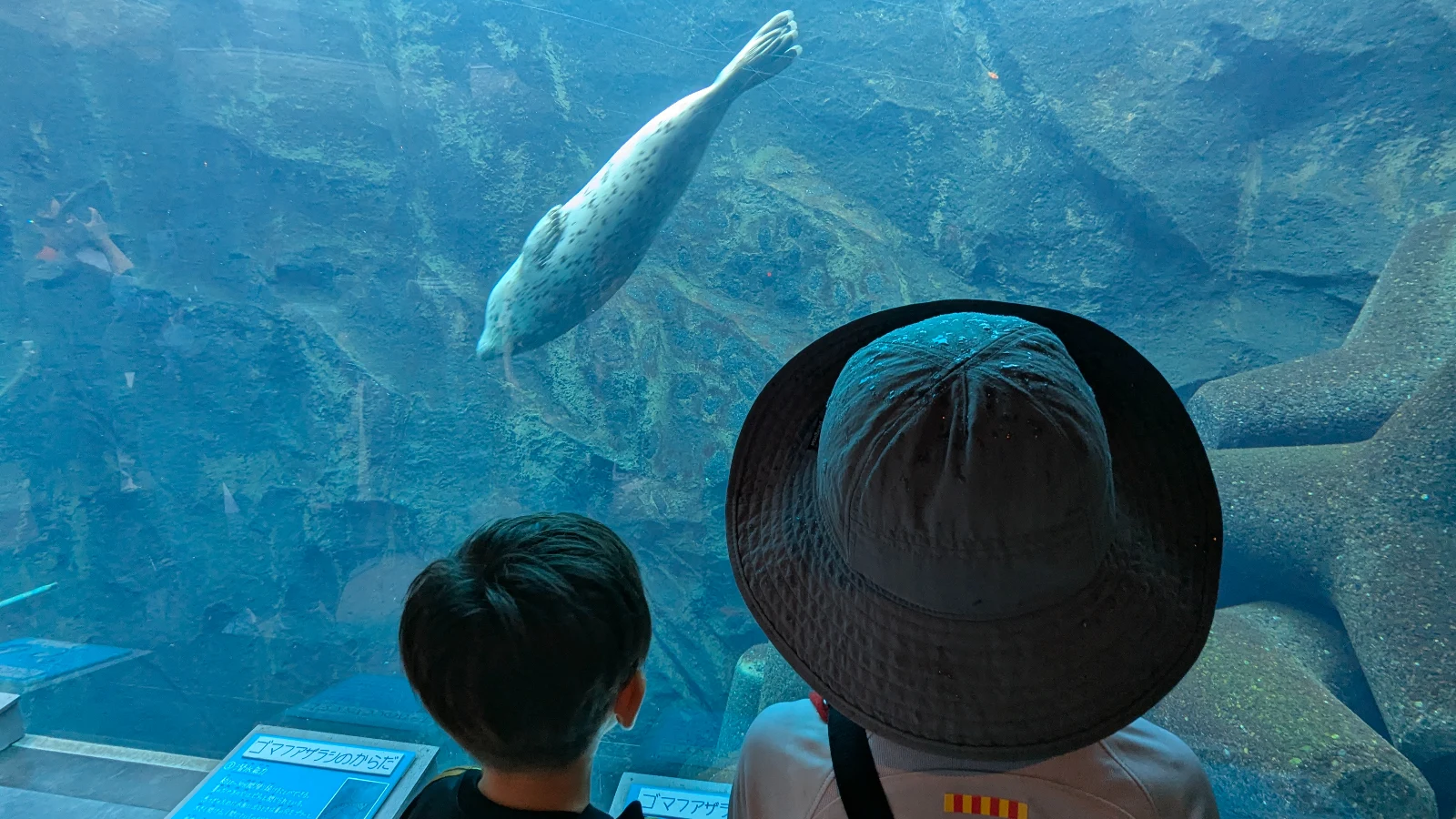
Luca slowed the day down. He stopped at the explanatory panels and read them in full, working out how each enclosure was built to show the animal behaving rather than just sitting, and he wanted to know the order of the exhibits before he committed to a direction. Once the layout made sense to him he was absorbed, lingering at the seal cylinder and the polar bear dome, watching one animal long enough to see how it moved.
This is the Anchor pattern. A child whose Reserve depletes through unfamiliarity and unconfirmed structure wants the sequence before the first step, and a zoo with three gates and many possible routes offers none until someone chooses one. Once Luca had the order, he settled and stayed. Families with a similar child should decide the route at breakfast, counterclockwise, the efficient way around from any gate, and name the first three houses aloud, so the structure is in place before the gate rather than discovered inside it.
Nico met the zoo at a sprint. He moved fast between enclosures, narrating as he went, doubling back to whichever animal was doing something, and treating the downhill paths as ground to cover rather than a sequence to study. His energy ran highest in the morning and thinned out as the afternoon wore on, and he was at his best where the layout let him keep moving freely between close encounters instead of standing in one place.
This is the Dynamo pattern. A child whose Reserve depletes through restricted movement does best where nothing asks him to hold still, and a big hillside of animal houses gave Nico ground to cover all morning. His afternoon fade is the part to plan for. Families with a similar child should put the houses they most want to see early, let the child set the pace between them, and leave balls and scooters at the hotel, since play equipment is not allowed inside.
Asahiyama shows animals in ways that invite children to notice how they actually live: swimming, climbing, walking out through the snow. Watching a penguin waddle or a seal swim turns an animal from a picture into a creature with habits of its own. That shift builds empathy in a way no book can. A child who has seen an animal move in its own element begins to understand that other lives keep their own rhythms, and that respecting them means taking the time to look properly.
The LUNI Rating for Asahiyama Zoo.
One fact sits under all four verdicts: the zoo stands on a mountain slope, and a full visit takes three to four hours. For the child who needs to move, that is the attraction, which is why the Dynamo is well served. The Anchor is served too, because the route can be fixed in advance. The Sensor needs a plan because the penguin, seal and polar bear houses draw the crowds. And the Sprinter pays the most, because hours on a slope are a heavy spend for legs that tire first. Fix the gate and the direction before the bus, and the slope becomes a route with rests.
Let the slope be the playground. The Dynamo depletes through restricted movement, and a zoo spread over a mountain slope, with three gates and many animal houses to walk between, gives this child ground to cover for three to four hours. Walking between the houses is the activity, and a Dynamo who is moving between animals is spending energy on the right thing. What the zoo does not allow is play equipment: kick scooters, sleds, balls, tricycles and roller shoes all stay outside the gate.
Give this child freedom inside a fixed loop. Set the counterclockwise route before the gate, then let the child lead the pace inside it, doubling back when an animal is doing something worth seeing. Put the houses the child most wants into the first half of the visit, since hours on a slope thin anyone’s energy by the afternoon, and use the rest houses as refueling stops, where food brought from outside may be eaten. Leave the ball and the scooter at the hotel.
What this means for your Dynamo: restricted movement has a whole hillside to spend itself on. A younger Dynamo needs a short loop and early stops; an older one can lead the whole counterclockwise route.Pick the crowded houses; do not collect them. The Sensor depletes through sensory input, and at Asahiyama the load gathers at the famous exhibits. The penguin, seal and polar bear houses, and the winter penguin walk, are the places where tripods are banned because of crowding, which tells a parent where the crowds gather. Flash toward the animals is not allowed anywhere, which helps, but a Sensor still meets those crowds at the very exhibits the family came to see.
Two things help: a choice, and a reset. Decide with the child which one or two of the crowded houses matter most, see those, and let the others go without regret. Between them, use a rest house to reset: the Central free rest house on the first floor of the seal house seats about eighty and has a nursing room, Yasuragi no Mori seats about fifty, and Ikoi no Hiroba about a hundred. Put one rest on the plan before the child needs it.
What this means for your Sensor: sensory input peaks at the crowded houses. A younger Sensor needs one crowded house and a scheduled rest; an older one can choose two and decide when to step out.Fix the route, then walk it. The Anchor depletes through unfamiliarity and unconfirmed structure, and a zoo with three gates and many possible routes could be hard on this child. It is not, because the route can be decided before arriving: counterclockwise from whichever gate you use is the efficient way around. The hours are fixed by season, the shuttle from the East Gate runs about every ten minutes, and the one hard rule, no re-entry, is simple to explain in a sentence.
Say all of it at breakfast. Tell the child which gate, which direction and which houses come first, and that once the family is inside it stays inside until the end. In winter, explain that the penguin walk happens only once there is enough snow, usually between late December and mid-March, often twice a day and sometimes once, so it is a maybe rather than a promise until the morning of the visit.
What this means for your Anchor: a route fixed in advance leaves unfamiliarity little room. A younger Anchor needs the first three houses named; an older one can hold the map and call the turns.Ride the part you can. The Sprinter depletes through sustained travel-style walking and standing, and this is the verdict the zoo cannot talk its way out of. The whole zoo stands on a mountain slope, a full visit takes three to four hours with breaks, and strollers are lent free only in the summer season. For legs that tire first, hours of slope and standing are a heavy spend however the day is arranged.
Start with the free shuttle, then lean on the rest houses. A microbus runs from the East Gate to the Kumozaru and Capybara house about every ten minutes all year, weather permitting, so enter there and ride it. In summer, borrow one of the seventy free strollers at the gate early, since they go first come. Plan sit-downs in the rest houses, and cut the visit to the houses that matter before the child, rather than the clock, decides it is over.
What this means for your Sprinter: walking and standing on a slope decide the day. A younger Sprinter needs a summer stroller and the shuttle; an older one needs the shuttle and a shorter list of houses.The questions parents actually ask.
Asahiyama runs on Japan’s seasons: summer and winter hours differ, the zoo closes between seasons, strollers are lent only in summer, and the penguin walk needs snow before it starts. The price rises from April 29, 2027, too. The month decides which zoo a child meets: a summer of loan strollers and long hours, or a winter of short days and the penguin walk. In winter the day is shorter by the clock, so arrive near opening and keep the route tight. Once the month is fixed, a family can settle the gate, the bus and the bag in one evening.
Is Asahiyama Zoo worth visiting with kids?
Yes, with a plan for the slope. The zoo covers a mountainside and a full visit runs three to four hours, so ride the free East Gate shuttle, go counterclockwise, and build in rests. Junior high school students and younger enter free, and nobody gets back in after leaving, so bring what the day needs.
How much are Asahiyama Zoo tickets?
Adults pay 1,000 yen, or 700 yen for Asahikawa residents, and junior high school students and younger enter free. From the summer opening on April 29, 2027, the adult price rises to 1,400 yen, or 800 yen for residents, and group rates rise with it.
What are the opening hours?
In summer the zoo opens 09:30 to 17:15, last entry 16:00, until October 15, then 09:30 to 16:30 until November 3. It closes November 4 to 10 between seasons, then opens 10:30 to 15:30 in winter, from November 11 to December 29 and from January 2 to April 7. August adds evening openings.
How do you get to Asahiyama Zoo from Asahikawa Station?
Take the Asahikawa Denki Kido bus from stand 6 at the JR Asahikawa station front, about 40 minutes, or a taxi, about 30 minutes. The zoo has three gates, the main gate, the West Gate and the East Gate, and the free shuttle inside starts at the East Gate.
Is there a shuttle inside the zoo?
Yes. A free microbus runs from the East Gate to the Kumozaru and Capybara house about every ten minutes, all year, though it may stop in bad weather. It turns one stretch of the slope into a ride, which matters most for children whose legs tire first, so plan the entry around it.
Can you borrow a stroller at Asahiyama Zoo?
Strollers are lent free, seventy of them across the gates, first come, first served, but only during the summer season. In winter, bring a carrier for the youngest. Wheelchairs and electric carts are lent too, and the Central rest house and Yasuragi no Mori both have nursing rooms.
When is the penguin walk?
It begins once enough snow has fallen to make the course, usually from late December to mid-March, and runs twice a day on most days and once on some, depending on the snow. Treat it as likely rather than certain until the day itself, and check the zoo’s news before promising it to a child.
What can you not bring into Asahiyama Zoo?
No pets, drones, costumes or large headgear, and no kick scooters, sleds, balloons, snowball makers, megaphones, balls or other play equipment, tricycles or roller shoes. There is no re-entry, no feeding the animals and no flash aimed at them. Food brought in may be eaten in the rest houses and outdoors.
Where Asahiyama Zoo fits your Japan trip.
Official site and opening information: Asahiyama Zoo