Asahikawa, Furano & Biei With Kids:which stop is for which child.
- Getting Around
- A car unlocks Biei, 30 to 40 minutes out
- In Winter
- The Winter Festival, in February
- Flower Season
- Late spring to early autumn, Furano and Biei
- The Zoo Families Come For
- Asahiyama Zoo; shut in April and early November
- Easy on the Legs
- Shikisai-no-oka and the Shirogane Blue Pond
Some links on this page are affiliate links. LuNi may earn a commission at no extra cost to you.
Asahikawa, Furano and Biei work with kids in two seasons. From late spring through early autumn the flower farms, Biei and the Shirogane Blue Pond are at their peak; in winter the Asahiyama Zoo has its penguins, and the Winter Festival runs in February. A car unlocks Biei, 30 to 40 minutes from Asahikawa, with Furano farther. Base by the station in Asahikawa for the trains, or at an onsen in Furano or Biei for the scenery. Tokiwa Park and the zoo give a restless child room, and Shikisai-no-oka and Shirahige Waterfall spare tired legs.
Which stop is for which child.
These stops are not ordered best to worst. They are grouped by which child each one is for. Central Hokkaido is wide and slow, and the same drive that delights a movement-driven child is dead time for a low-stamina one, while the open flower fields that calm a sensory-sensitive child leave a routine-dependent one looking for the next fixed point. So instead of one list you get four short ones, organized by how each child runs out of Reserve. The Dynamo runs short when they cannot move. The Sensor runs short on noise and crowds. The Anchor runs short when nothing is confirmed. The Sprinter runs short on walking and standing. Find your child below, and start there.
For the Dynamo
Stops that relieve restricted-movement depletion.
For a child who depletes through restricted movement, the strongest stops are Tokiwa Park, Asahiyama Zoo, and the Asahikawa Winter Festival.
Wide tree-lined paths, open lawns, and a boating pond give a movement-driven child the discharge that a museum or a long drive denies them. It is the one central stop that returns Reserve rather than spending it, which is why it works as the opener of an Asahikawa day rather than its collapse point. A younger Dynamo gets unbroken running room on the flat lawns, and an older one can take a longer loop of the pond or work the oars on a swan boat.
Who it costs.The Sprinter. The size that frees the Dynamo is real walking distance for a low-stamina child, and the looping paths put the far side of the pond a genuine hike from the entrance.
How to make it work.Keep a low-stamina sibling near the boat dock and the playground at the entrance rather than walking the full perimeter, so the Dynamo ranges while the Sprinter stays close to a seat.
If this isn’t your child: still a calm green break between the indoor stops, just not the reason to build the day around it.Asahiyama is built to be walked, not stood in: a self-paced circuit of glass tunnels, overhead tanks, and the winter penguin walk that keeps a movement-driven child moving from one enclosure to the next with no queue holding them in place. The animals are the draw, but for the Dynamo it is the layout that protects the visit, energy discharging across the hill rather than building behind a rope line. A younger Dynamo is pulled forward stop to stop; an older one can lead the route and set the pace.
Who it costs.The Sprinter, at high risk. The zoo climbs a long hill on packed snow in winter and open slopes the rest of the year, and the full circuit is a sustained walk that a low-stamina child cannot recover from mid-visit. The Sensor pays a secondary cost on peak days, when the indoor enclosures concentrate crowd noise.
How to make it work.Start at the top entrance and work downhill, and plan a half-circuit with a low-stamina child rather than forcing the whole hill, so the Sprinter sees the headline animals without paying for the climb back.
If this isn’t your child: still the region’s signature visit and worth a half-day for the enclosures alone, just structured short for tired legs.Every February the festival turns the riverside into sanctioned movement: snow slides, a snow maze, and ice tunnels that let a high-energy child run, climb, and slide where the rest of winter keeps them bundled and still. For the Dynamo it discharges energy that the cold otherwise traps indoors. A younger Dynamo rides the toddler slides and sleds; an older one takes the larger slides and works the maze.
Who it costs.The Sensor, at the evening illumination, when crowd density, cold, and lit sculptures compress at once. The same load builds in the heated food tents at peak meal times.
How to make it work.Go in daylight for the slides and maze and leave before the evening illumination crowd builds, so the Dynamo gets the movement without the Sensor paying the night-time crush.
If this isn’t your child: a genuine winter spectacle worth seeing once, best in a short daytime visit rather than the full lit evening.For the Sensor
Stops that let a sensory-loaded child recover.
For a child who depletes through sensory input, the strongest stops are the Asahikawa Science Museum and the Kawamura Kaneto Ainu Memorial Museum.
The science museum is the region’s reset button: a calm, climate-controlled space with predictable sightlines, hands-on exhibits taken at the child’s own pace, and a planetarium that drops the lights and the volume together. For a child whose sensory threshold is spent by a loud festival or a crowded zoo, it is the indoor stop where input falls and the day can continue. A younger Sensor works the light-and-motion exhibits without time pressure; an older one settles into the planetarium and the deeper displays.
Who it costs.No profile is taxed here, which is rare. The honest cost is movement, not a child: the browse-and-sit format offers a Dynamo little discharge, so it should be paired with a movement stop rather than stacked against another still one.
How to make it work.Use the museum as the planned reset on a rainy or snowy day, or as the calm hour between two louder stops, so a sensory-loaded child refills before the next demand.
If this isn’t your child: a genuinely strong hands-on museum and the best bad-weather stop in the city, useful to any family.This small memorial museum is the acoustic opposite of the zoo and the festival: a quiet, low-input space of handmade crafts, traditional dress, and tools, sized so a child takes it in without the sensory overload of a large institution. For a Sensor it is where the dial turns down, dispersed sound and soft light with a clear, single route through the rooms. A younger Sensor follows the objects at a calm pace; an older one engages with the Ainu history the displays carry.
Who it costs.The Dynamo. The museum is still and seated learning with no room to discharge, so a movement-driven child empties here rather than recovers.
How to make it work.Keep the visit to the museum’s natural 45 to 90 minutes and chain it to Tokiwa Park or an open stop afterward, so a Dynamo sibling gets the discharge the museum denies.
If this isn’t your child: a meaningful, manageable introduction to Ainu culture, rewarding even without the sensory need.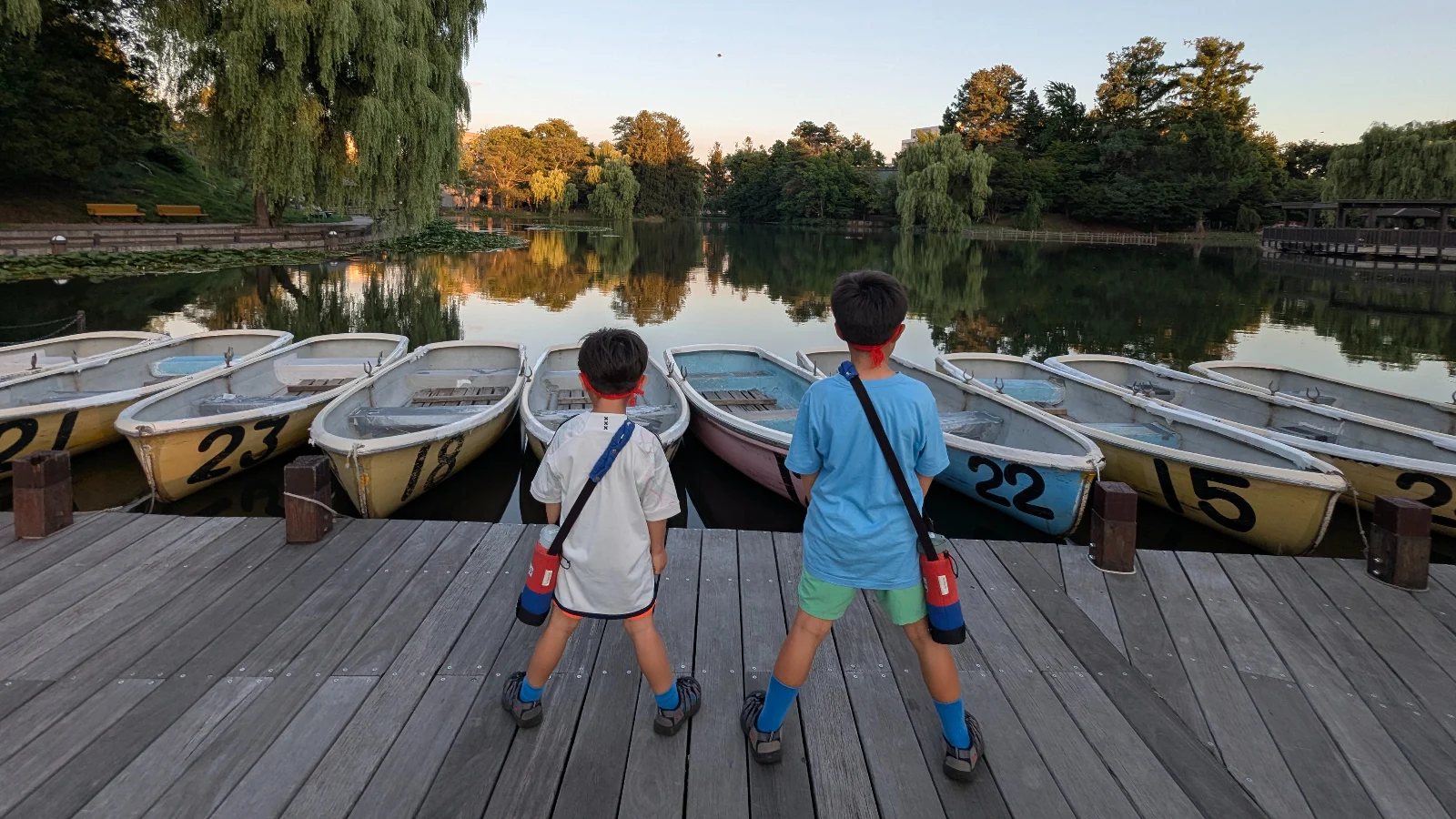
For the Anchor
Stops with confirmed, predictable structure.
For a child who depletes through unfamiliarity and unconfirmed structure, the strongest stops are Kamikawa Shrine, Ueno Farm, and the Daisetsuzan Sounkyo Kurodake Ropeway.
A shrine runs on confirmed ritual, which is exactly the predictability an Anchor relies on: a known sequence of bells, a wish written on a wooden ema plaque, and a single quiet circuit beneath the torii with nothing improvised. For a routine-dependent child the structure is the appeal, each step the same one any shrine offers, so the unfamiliar town suddenly has a fixed point in it. A younger Anchor follows the simple bell-and-bow sequence; an older one takes in the grounds and the ritual at their own pace.
Who it costs.The Sprinter. The approach is a flat gravel walk with a few steps near the main hall and limited seating, so a low-stamina child feels the standing time.
How to make it work.Keep the visit to its natural 30 to 60 minutes and treat it as a calm pause between active stops, so the Anchor gets the structure without the Sprinter standing too long.
If this isn’t your child: a peaceful stop that is especially lovely under snow, worth a short walk on any route.Ueno Farm is a contained, gently looping English-style garden: defined paths, repeating arches, and a clear circuit that ends where it began, which gives an Anchor the confirmed structure an open field never does. The whimsy is real, but for a routine-dependent child it is the boundedness that protects the visit, a small world they can read and predict. A younger Anchor follows the path hunting the garden’s gnome sculptures; an older one walks the full loop knowing it returns to the café and the entrance.
Who it costs.The Sprinter. The garden is gravel paths with gentle slopes, and the full loop is more walking than its small footprint suggests.
How to make it work.Use the café and benches mid-loop as a built-in rest, and take the inner paths rather than the full perimeter with a low-stamina child, so the Anchor keeps the circuit while the Sprinter keeps a seat in reach.
If this isn’t your child: a calm, pretty garden stop from late spring through early autumn, easy for younger children who like open space.The ropeway is a confirmed sequence an Anchor can hold onto: a fixed cable-car route up, a defined upper station, and the same way back down, all knowable before you board. For a routine-dependent child the structure of the ride is the reassurance, a clear up-and-down with no improvisation even though the mountain is unfamiliar. A younger Anchor is steadied by the predictable cabin ride; an older one anticipates the lookout they have been told is coming.
Who it costs.The Sprinter. The ride is easy, but the upper station has uneven mountain terrain and short nature walks with real footing, so a low-stamina child reaches the top and then faces the part that costs stamina.
How to make it work.Keep a low-stamina child at the paved lookout near the upper station rather than the rougher trails, so the Anchor gets the full confirmed sequence and the Sprinter skips the uneven ground.
If this isn’t your child: one of Hokkaido’s best mountain views, spectacular in autumn foliage, worth the ride for the lookout alone.For the Sprinter
Short, low-stamina stops with little walking.
For a child who depletes through sustained walking and standing, the strongest stops are Shikisai-no-oka, the Shirogane Blue Pond, and Shirahige Waterfall.
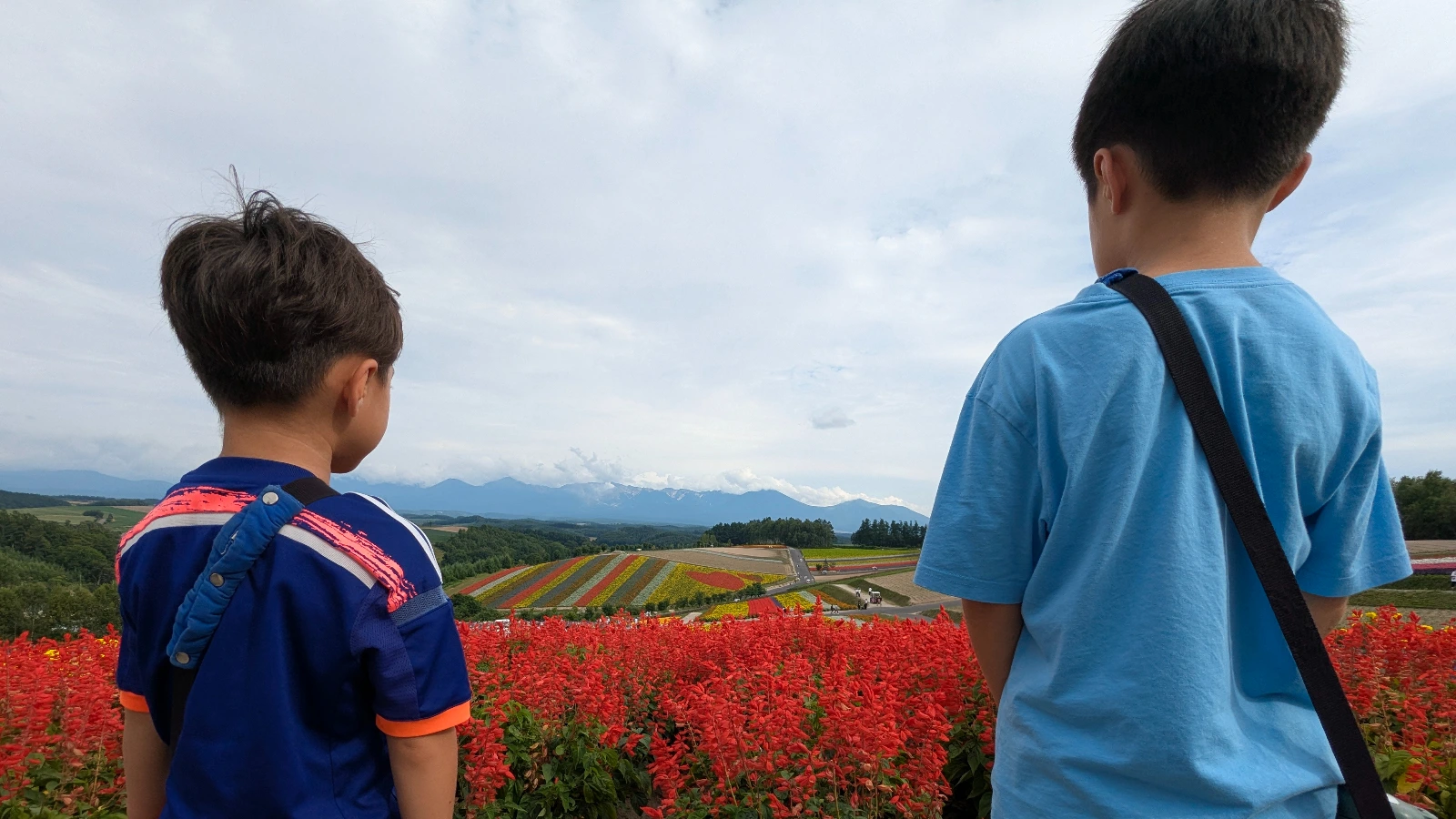
Shikisai-no-oka covers ground so a low-stamina child does not have to: the tractor-wagon ride carries the family across the flower hills that would otherwise be a long uphill walk, turning the region’s biggest field into a sit-and-ride stop. For the Sprinter it is the rare scenic attraction that asks almost nothing of the legs while still delivering the headline view. A younger Sprinter rides the wagon and meets the alpacas near the entrance; an older one gets the full hilltop panorama without the climb.
Who it costs.The Sensor, mildly. The upper fields are open and shadeless at peak bloom, and the busiest summer days draw crowds and engine noise around the ride.
How to make it work.Take the tractor ride rather than walking the fields, and go earlier in the day before the peak-bloom crowds and midday sun build, so the Sprinter saves the legs and the Sensor avoids the busiest hours.
If this isn’t your child: the most photogenic flower field in Biei and a highlight for any family from late spring through autumn.The Blue Pond is a short, flat circuit around a single famous view: a compact walking path with the turquoise water in sight almost the whole way, so a low-stamina child gets the headline sight without a sustained walk to earn it. For the Sprinter it is a high-reward, low-cost stop, minutes of easy walking for one of Hokkaido’s signature scenes. A younger Sprinter watches the color shift with the light; an older one walks the loop for the angles.
Who it costs.The Anchor. It is a rural, unstructured stop whose whole appeal, the blue, depends on weather and light that cannot be confirmed in advance, so a child who needs certainty arrives to a variable.
How to make it work.Tell a routine-dependent child in advance that the color changes with the sky so the variability is expected, and pair the pond with Shirahige Waterfall a few minutes away to make the rural drive worth one trip.
If this isn’t your child: a brief, striking stop that is worth the detour in clear weather and underwhelming in dull light.Shirahige is a viewpoint stop, not a hike: the falls are seen from a bridge a short, level walk from parking, a 30 to 60 minute stop that delivers a dramatic sight for almost no stamina cost. For the Sprinter it is the natural partner to the Blue Pond minutes away, two signature scenes on one short, low-walk rural loop. A younger Sprinter counts the streams pouring from the cliff; an older one takes in the blue river the falls feed.
Who it costs.The Anchor. Like the pond, it is a quick rural stop with little structure to confirm, more a pause than a planned sequence, which leaves a certainty-dependent child without a fixed shape to hold.
How to make it work.Chain it directly to the Blue Pond as a single short rural loop so the drive serves two stops, and frame it for an Anchor as the second half of a known pair rather than a separate detour.
If this isn’t your child: a quick, memorable photo stop, especially when the winter falls are lit, easy to fold into the Blue Pond visit.Open with the child who runs short first.
The order of a central-Hokkaido day is set by Reserve, not by the map. Each route opens with the stop that protects the named child, then chains to the nearest compatible one.
Settle these first. A rental car is the real planning decision: Biei is 30 to 40 minutes from Asahikawa and Furano farther still, and the Blue Pond, Shirahige, and the flower farms are far easier to reach by car than by the seasonal sightseeing buses. The Kurodake Ropeway is seasonal and weather-dependent, so confirm it is running before building a day around it. Asahiyama Zoo and the museums are walk-up. The Winter Festival runs only in February. Everything else arranges around the car and the season.
The same region, two different trips.
Summer is the widest window: the Furano and Biei flower farms reach peak bloom, the Blue Pond runs its clearest turquoise, and Tokiwa Park opens its swan boats and shaded lawns, so the low-walk scenic stops and the open-movement stops are all in play at once. Winter narrows the region to its two strongest cold-weather stops, the Asahiyama Zoo penguin walk and the February Winter Festival, both of which reward a movement-driven child but ask a low-stamina one to plan around snow-packed hills and standing in the cold. Spring and autumn sit between the two, milder and quieter, with autumn foliage making the ropeway lookout its most spectacular.
Three bases that fit a family’s Reserve.
A shortlist chosen for location logic, not price tier. The full set is in the complete Asahikawa hotel guide.
| Property | The LuNi Reason | Budget |
|---|---|---|
| LUNI Pick OMO7 Asahikawa by Hoshino Resorts Station-side, family-built | A large-room family base steps from Asahikawa Station, which keeps the zoo, the museums, and the Furano and Biei day-trip trains within easy reach. The station-side location holds a routine-dependent child’s anchor across a multi-night trip while the guided local experiences suit a movement-driven one. | ¥¥¥ |
| ART HOTEL Asahikawa Central, with a spa | Spacious rooms and an on-site spa in a central location, an easy walk-up base that keeps the indoor reset stops and the station close for families splitting time between the city and the day trips. | ¥¥ |
| Hotel La Vista Daisetsuzan Onsen, near the ropeway | A mountain onsen retreat that shortens the drive to the Kurodake Ropeway and the Daisetsuzan scenery, a calmer rural base for families building the trip around the lookouts and the rural stops rather than the city. | ¥¥¥ |
OMO7 Asahikawa by Hoshino Resorts
Budget: ¥¥¥
Budget: ¥¥
Budget: ¥¥¥
The three above are chosen for location logic, not price. A station-side base suits families splitting time between the city stops and the day trips, while a Daisetsuzan or Furano onsen base suits a trip built around the rural scenery.