HomeJapanTokyoWorth Visiting?

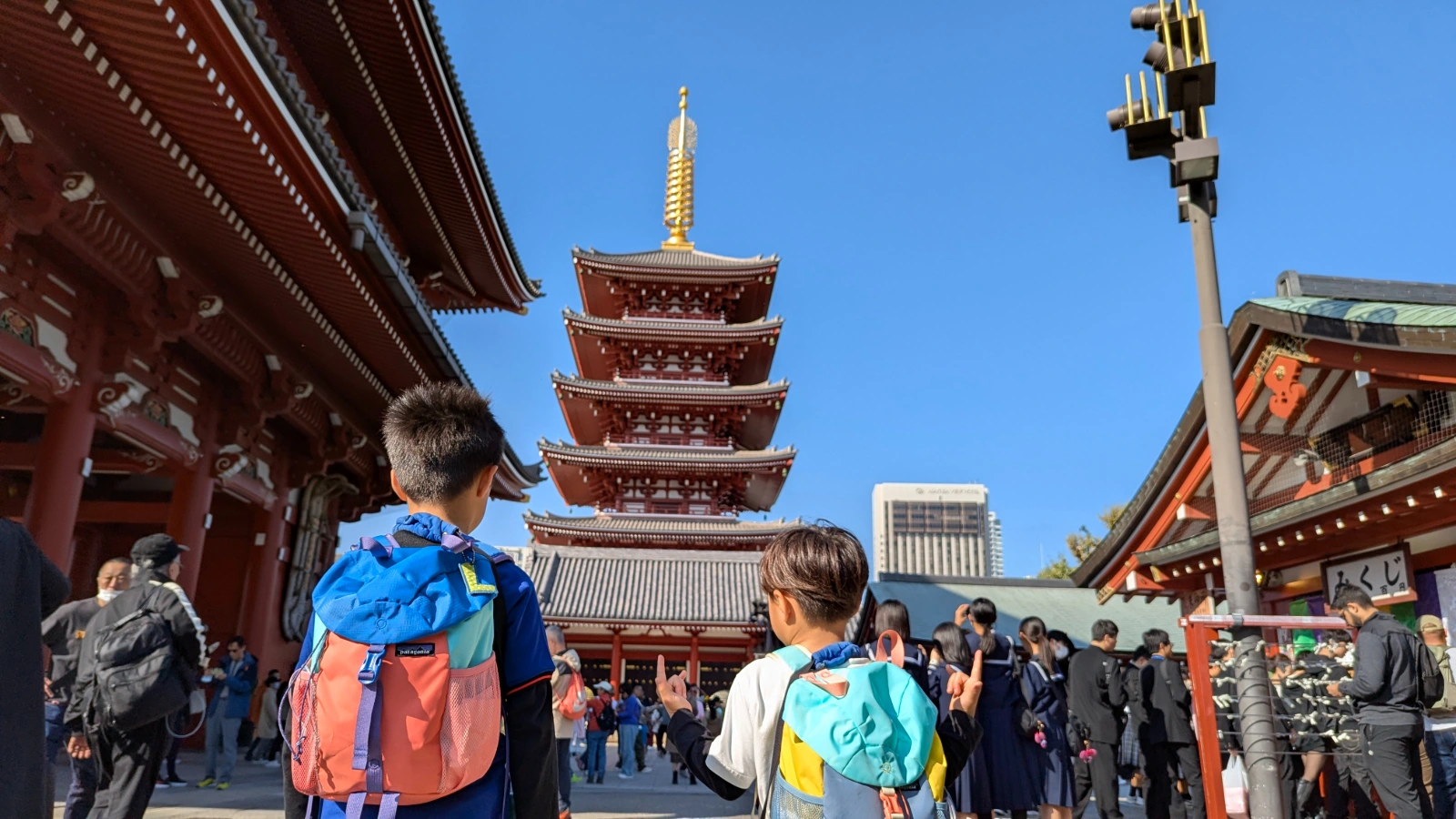
Luca and Nico looking up at the Sensō-ji five-story pagoda in Asakusa, Tokyo

Tokyo Is Worth It – If You Stop Trying to See All of It

By Josh Hinshaw

April 24, 2026

Tokyo’s transit system is what stops parents mid-planning. Shinjuku Station processes more passengers daily than any other station on earth, and navigating it with children in tow, across underground corridors that extend for hundreds of meters between lines, creates a legitimate logistical concern that no amount of excitement about teamLab Planets fully resolves. The competing pull is equally real: no other city in Japan offers this combination of total street safety, immersive digital culture, pop-culture depth, and an urban environment that actively rewards curious children with independence.

Whether Tokyo succeeds for your trip depends not on what the city offers, but on what your child’s travel profile can absorb. To place this decision inside your broader Japan routing strategy, review our complete hub to Japan family-friendly travel.

Some links on this page are affiliate links. If you book through them, LuNi Travels may earn a small commission at no extra cost to you.

Is Tokyo Worth Visiting with Kids? (Quick Answer)

Yes, Tokyo is worth visiting with kids whose travel profile can absorb sustained daily movement and high sensory input, but it places significant structural pressure on low-stamina and sensory-sensitive children regardless of how well the itinerary is planned. The city naturally rewards Dynamos and older children seeking independence, while Sprinters and Sensors require deliberate day-building adjustments to avoid a compounding fatigue that no amount of in-the-moment problem-solving fully repairs. The breakdown below maps Tokyo’s environment to all four Family Fit™ profiles so parents can determine exactly how much structural adjustment their specific family requires before committing itinerary days to the capital.

Pros of Visiting Tokyo with Kids

  • Tokyo’s train and subway networks connect every major family district without requiring families to navigate intercity transfers, giving older children and teens a rare opportunity to practice genuine travel independence on systems that run precisely on time.
  • The visual density of Akihabara’s multi-floor arcades, Harajuku’s character stores, and Odaiba’s entertainment complexes provides the kind of constant movement-driven engagement that high-energy children pursue without redirection.
  • Shinjuku Gyoen National Garden sits within walking distance of one of Tokyo’s densest commercial corridors, giving Sensor children a confirmed outdoor decompression zone with a clear exit route that does not require additional transit.
  • High-budget immersive experiences like teamLab Planets operate with predictable entry flows and defined physical sequences, giving routine-reliant children a structured format inside an otherwise unpredictable mega-city.
  • The shift from Asakusa’s temple precincts to the futuristic waterfront of Odaiba requires less than 40 minutes by direct line, allowing families to rotate environments within a single day without accumulating transit fatigue across multiple transfers.

Cons of Visiting Tokyo with Kids (Important for Parents)

  • Platform-to-platform transfers at Shinjuku, Shibuya, and Tokyo Station require sustained underground walking that registers as a meaningful physical load for low-stamina children before any surface-level exploration begins.
  • Major pedestrian crossings and station concourses at rush hour create environments dense enough that departing the immediate area on your own schedule is not always possible, and this is precisely the condition most likely to overwhelm a Sensor before any planned decompression is within reach.
  • The concentration of world-class experiences within a single city consistently leads parents to build days that prioritize attraction count over pacing depth, producing the exhausted third afternoon that is the most common Tokyo family planning failure.
  • Standard hotel rooms in core districts are compact by international standards, reducing the family’s ability to decompress as a group after high-input days.
  • Waits of 30 minutes or more of continuous standing are standard at sought-after dining and ticketed experiences, compounding the physical drain on children already carrying high daily step counts.

How Tokyo Works for Your Child’s Profile

Tokyo’s default operating environment runs at a scale and speed that naturally supports travel styles driven by motion and stimulation, while requiring intentional structural adjustments for those that are not. The Family Fit™ framework makes these dynamics predictable before arrival, which is the difference between managing Tokyo well and losing a day to a situation that a different itinerary structure would have prevented.

The Dynamo

Tokyo’s density of high-stimulation, movement-driven environments, multi-floor arcades, physical immersive installations, and transit systems that deliver novel neighborhoods within minutes, matches the Dynamo’s core needs at a scale no other Japanese city replicates. The primary friction is queue time: waits exceeding 90 minutes at peak-season attractions are standard, and a Dynamo child held in a static queue past that threshold will not recover behavioral equilibrium in time for the next activity.

The Sensor

Tokyo’s quieter back-district network, Yanaka’s residential lanes, Ueno Park before 9:00 AM, and Odaiba’s wide waterfront boardwalks provides the Sensor with genuine low-input environments if the itinerary is built around them rather than around the city’s headline commercial districts. The friction is the underground transit system: enclosed station corridors during busy hours create inescapable sensory load at the precise moments families are moving between experiences, which is the condition most likely to overwhelm a Sensor child before the day’s main activity has even begun. Route mornings from quiet to progressively busier environments, and designate one confirmed decompression zone per full day that does not require additional transit to access.

The Anchor

Tokyo’s transit network operates on schedules precise enough to be briefed in advance, and its highly structured service culture creates a macro environment with enough procedural consistency to give routine-reliant children a legible daily format. The friction emerges when families enter major commercial districts without a pre-established briefing: the volume and novelty of visual and auditory input across a neighborhood like Shinjuku or Shibuya places the Anchor directly inside an unpredictable macro environment with no structural shelter available at street level. Brief the Anchor on each district’s format and sequence before arrival, and carry familiar items as a portable stability mechanism for moments when the surrounding environment offers no recognizable anchor point.

The Sprinter

Tokyo’s surface terrain is largely flat across its central and eastern districts, which removes one of the most common Sprinter friction points present in hillside cities like Kyoto’s Higashiyama or Kamakura’s temple approaches. The challenge is cumulative: underground station transfers add meaningful walking before surface exploration begins, and Tokyo’s scale ensures that nearly every family outing extends into a full-day physical commitment with no structured rest interval unless one is deliberately built in. Limit the day to two destination stops, sequence the highest-value activity in the morning when the child’s physical reserves are fullest, and treat the afternoon return as a deliberate structural choice rather than an early exit.

Take the Family Fit™ Quiz to identify your child’s profile before finalizing Tokyo’s place in your itinerary.

Who Will Enjoy Tokyo with Kids (By Age Group)

Toddlers (under 3)

A toddler’s developmental requirement for contained physical space and short stimulation windows collides repeatedly with Tokyo’s pedestrian scale, dense station concourses, and the absence of flat, fenced outdoor environments in its central commercial districts. Tokyo is conditionally worth routing for toddlers only if the itinerary is anchored to the city’s large public parks rather than its commercial hubs, with a strict limit of one neighborhood per day.

Preschoolers (3 to 5)

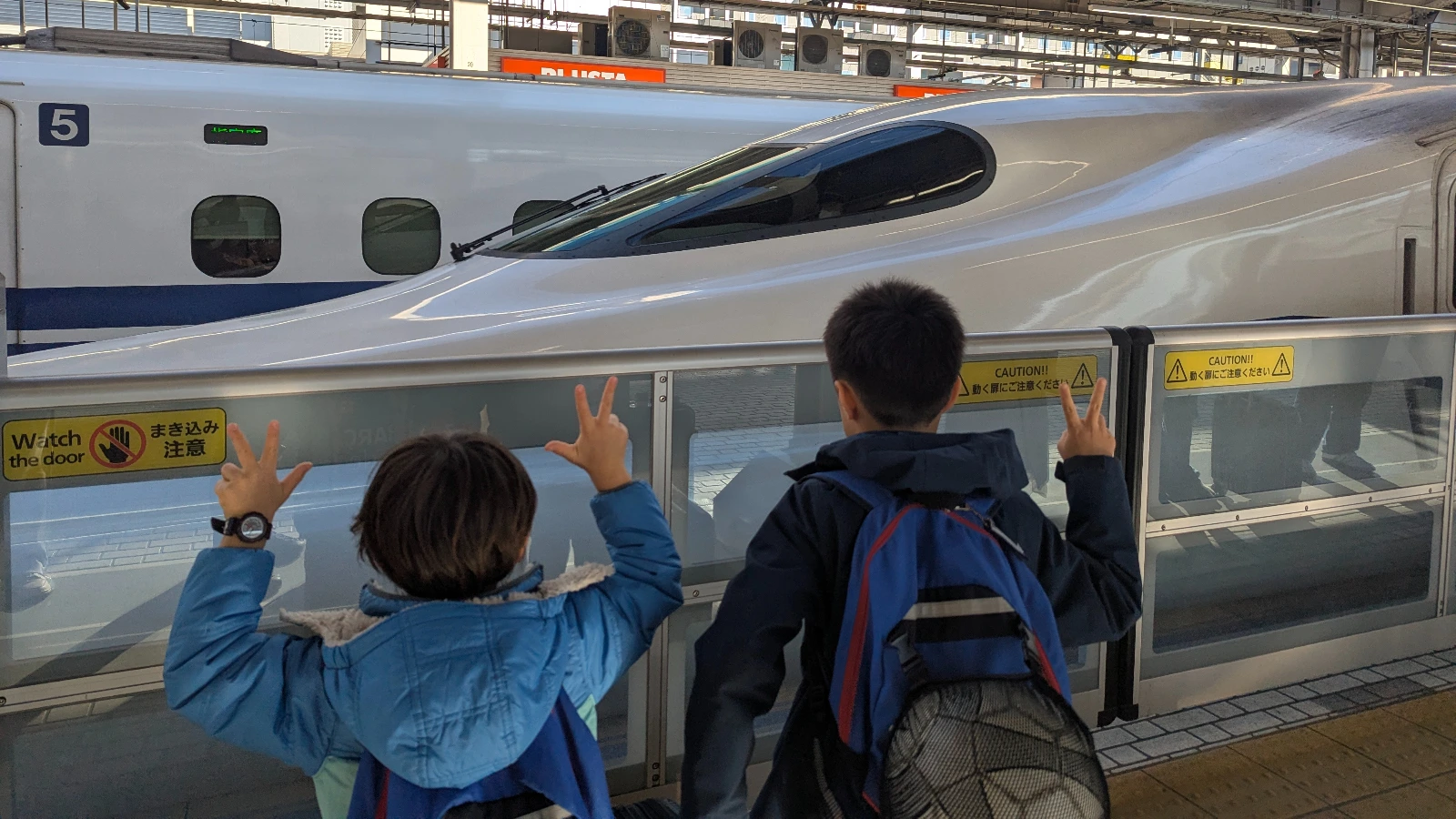
A preschooler’s appetite for novelty is one of the most effective built-in filters for Tokyo’s environment: bullet trains visible from station platforms, animated food displays in department store basement floors, and the physical engagement of teamLab Planets all land with genuine impact at this developmental stage. Tokyo is highly worth the days for this age group, provided parents build firm quiet-time intervals into the mid-afternoon before the novelty window closes and fatigue takes its place.

School-Age Kids (6 to 10)

A school-age child’s growing capacity to understand procedural systems makes tapping transit cards, reading route maps, and navigating the behavioral norms of a distinctly different culture deeply satisfying in a way that younger children cannot yet access. Tokyo is entirely worth the itinerary commitment for this age band, functioning as one of the strongest environments in Japan for building genuine travel competence.

Older Kids and Teens (11+)

A teenager’s need for autonomy and the freedom to pursue niche interests maps precisely onto Tokyo’s combination of ultra-low street crime and hyper-specialized districts: a teen who wants to spend three hours in a single Akihabara floor has a city that not only accommodates that choice but was built for it. Tokyo is a must-route destination for this age group, and it is one of the few cities in the world where a parent can extend meaningful unsupervised exploration time without a legitimate safety concern.

Family Fit™ Travel Method

Most families skip this.
It's why Day 3 falls apart.

The Family Fit™ Quiz identifies the specific planning adjustments your child needs. Two minutes now saves the whole trip.

Find My Child's Profile → Free · Under 2 minutes

Best Alternatives to Tokyo for Families with Kids

  • Kyoto — Best for Sensors and Anchors. Kyoto replaces Tokyo’s commercial density with concentrated historic districts and a daily rhythm governed by temple hours and neighborhood quiet rather than transit volume, producing an environment that sensory-sensitive and routine-reliant children navigate with significantly less structural adjustment.
  • Osaka — Best for Dynamos who want Tokyo’s energy at a fraction of the transit scale. Osaka’s central family destinations are positioned within a compact core that eliminates the underground transfer corridors responsible for a meaningful share of Tokyo’s daily physical load.
  • Kamakura — Best for Sprinters. Kamakura’s coastal footprint connects its primary temples, beaches, and green spaces at surface level, removing the multi-level station transfers that compound the Sprinter’s fatigue before the day’s main activities begin.

Final Recommendation: Is Tokyo Worth Visiting with Kids?

Yes, Tokyo is worth visiting with kids who can absorb sustained daily movement, high sensory input, and the physical demands of navigating one of the world’s largest transit systems. The city is the strongest Japan destination for Dynamos and for teenagers seeking independence, and it delivers a category of urban experience no other city in the country replicates. It is not worth routing through for families seeking a low-walking, low-input itinerary: Tokyo only succeeds for Sprinter and Sensor children when parents radically reduce their daily ambitions, committing to a single neighborhood or district per day rather than treating the city as a list of attractions to complete. The most common planning failure is not choosing Tokyo but attempting to see it at an adult pace with a child who cannot sustain one.

The Tokyo Briefing: Essential Intel

Families planning a Tokyo trip with kids ask the following questions most consistently, from whether the city is genuinely manageable for young children to how its daily walking demands affect children with low stamina.

Q: Is Tokyo worth visiting with kids?

A: Tokyo is worth visiting for families whose children draw energy from high-stimulation environments and can handle sustained daily movement. The city’s combination of total street safety and immense cultural variety captivates curious children across a wide age range. It becomes a liability only when parents apply an adult-paced itinerary to a child whose profile requires structural pacing adjustments.

Q: Is Tokyo family friendly?

A: Tokyo provides a clean, structured, and highly organized baseline environment that actively supports traveling families. Its societal emphasis on procedural consistency makes even the busiest districts feel navigable. The challenge is the city’s sheer physical scale, which demands that families proactively manage daily walking distances rather than discovering the limit mid-afternoon.

Q: Is Tokyo good for kids?

A: Tokyo is excellent for school-age children and teenagers, and conditionally strong for preschoolers when days are kept to a single-neighborhood scope. The city’s transit system, cultural variety, and street safety create an environment where older children can access a level of structured independence unavailable in most global cities.

Q: Is Tokyo worth it for families?

A: Yes, Tokyo delivers an urban contrast between ancient tradition and contemporary infrastructure that defines the Japan experience for many traveling families. Families who study their transit route in advance and commit to a slower pacing rhythm will find the capital consistently rewarding across multiple days.

Q: Is Tokyo worth visiting with babies?

A: Tokyo’s flat central terrain and elevator-equipped major stations make stroller navigation more manageable than many visitors expect. The significant challenge is the absence of dedicated infant-friendly rest environments in commercial districts, which requires parents to plan feeding and nap logistics around the city’s cafe and department store infrastructure rather than purpose-built family facilities.

Q: Is Tokyo worth visiting with toddlers?

A: Tokyo is conditionally worth visiting for toddlers when the itinerary is anchored to the city’s large public parks and kept to one neighborhood per day. Toddlers’ developmental need for open, contained physical space conflicts directly with Tokyo’s dense pedestrian crossings and compact commercial footprints, making the city one of Japan’s more demanding environments for this age group.

Q: Is Tokyo worth visiting with teens?

A: Tokyo stands as one of the strongest global destinations for teenagers. The city’s ultra-safe streets allow a level of semi-independent exploration in niche pop-culture districts that adolescents rarely access elsewhere, and its specialized neighborhood structure means a teen with any particular interest, from gaming arcades to streetwear to anime, will find a district built around it.