LuNi HomeJapanJapan in Summer

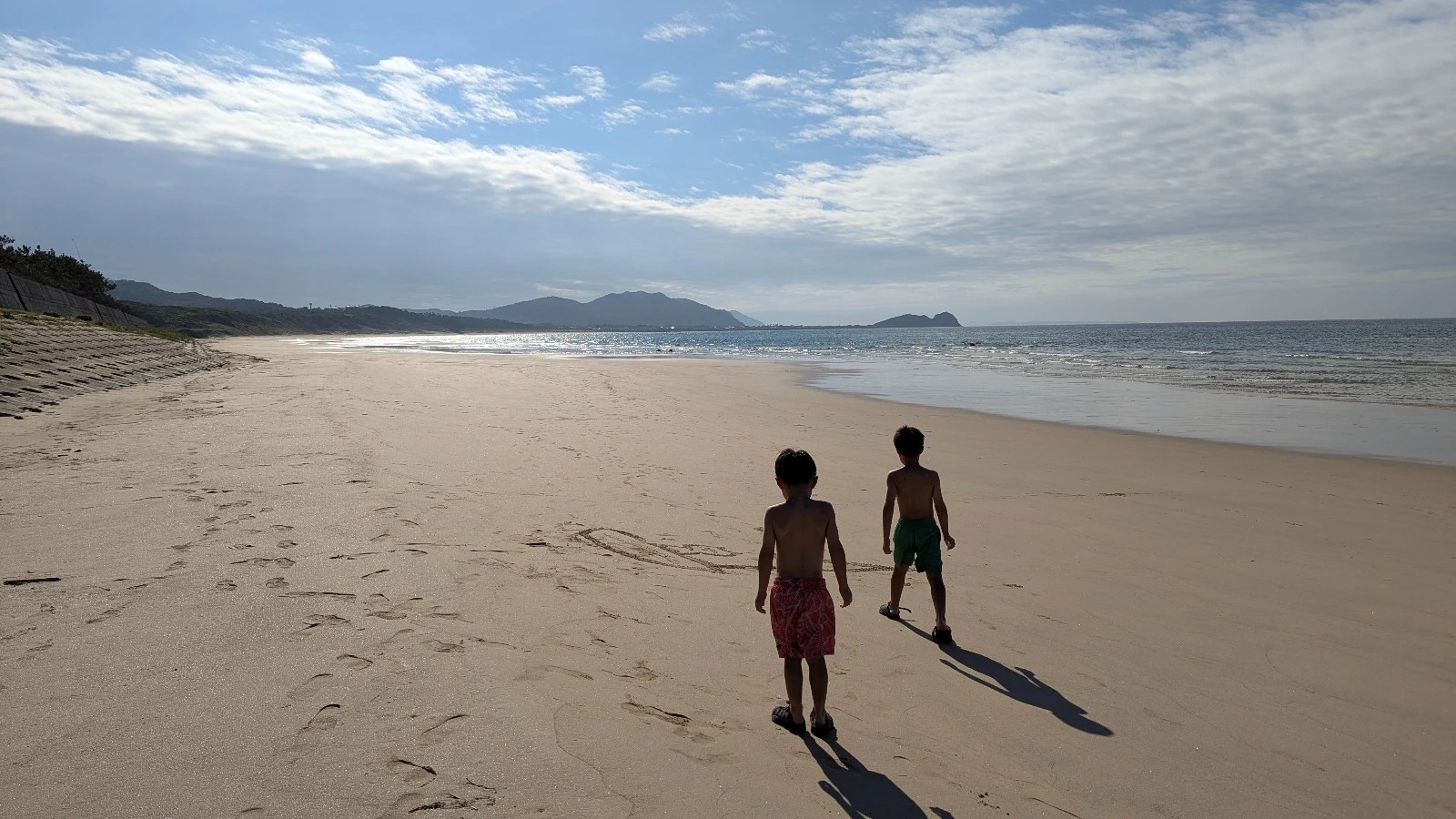
Two children walk barefoot along a wide sandy beach, in Japan, toward the water, sunlight reflecting on the sea and mountains in the distance.

Japan in Summer with Kids: The 2026 Guide to Weather, Festivals & Beat-the-Heat Activities

By Josh Hinshaw

March 30, 2026

Japan in summer is not a season to endure. It is a season to decode. Understand its rhythm, and the country rewards families with fireworks over ancient rivers, lantern-lit festival streets that children never forget, and a quality of evening light that makes even a walk to the convenience store feel like it belongs in a film. Miss the rhythm, and the heat becomes the story.

This guide is the complete planning framework for families visiting Japan in June, July, or August: what the season actually feels like on the ground, which destinations earn the trip and which require more careful planning, how to keep children genuinely comfortable rather than barely coping, and how to build days that end with energy left over. For the full Japan family planning framework, begin with the Japan Family-Friendly Travel Hub, then return here for the summer-specific detail.

Some links on this page are affiliate links. If you book through them, LuNi Travels may earn a small commission at no extra cost to you.

What the Season Delivers: Japan Summer at a Glance

Japan in summer moves fast, and this gives families the essential picture before planning begins.

Factor What Families Need to Know
Best window June for cooler heat and lighter crowds; July for peak festival season; late August as Obon crowds begin to thin
Temperature range June: 20–28°C (68–82°F) / July: 25–33°C (77–91°F) / August: 27–35°C (81–95°F)
Rain June to early July is rainy season (tsuyu): intermittent showers, not sustained rain. Typhoon risk increases late August.
Crowd pressure Moderate in June; high in July; peak during Obon, August 10–18
The season’s headline Fireworks, matsuri, beach days, and evenings that children remember for years
The honest challenge Heat and humidity that reward paced days and penalize overscheduled ones
Who thrives here Families with flexible daily structures, indoor options pre-booked, and no expectation of covering everything

Best window


June for cooler heat and lighter crowds; July for peak festival season; late August as Obon crowds begin to thin

Temperature range


June: 20–28°C (68–82°F) / July: 25–33°C (77–91°F) / August: 27–35°C (81–95°F)

Rain


June to early July is rainy season (tsuyu): intermittent showers, not sustained rain. Typhoon risk increases late August.

Crowd pressure


Moderate in June; high in July; peak during Obon, August 10–18

The season’s headline


Fireworks, matsuri, beach days, and evenings that children remember for years

The honest challenge


Heat and humidity that reward paced days and penalize overscheduled ones

Who thrives here


Families with flexible daily structures, indoor options pre-booked, and no expectation of covering everything

Is Japan Worth Visiting in Summer with Kids?

The short answer is yes, with a specific kind of preparation that most travel guides underweight.

Japan in summer is not simply hot. It is a combination of consistent heat, persistent humidity, and strong UV that compounds across a day of walking. A family that plans for 18,000 steps of outdoor sightseeing from 9am to 5pm will not have a good summer in Japan. A family that plans for outdoor mornings, air-conditioned afternoons, and long breezy evenings will have one of the best trips of their lives.

The season’s advantages are genuine and significant. Summer is when Japan’s festival culture reaches full expression: hanabi fireworks that light entire city skylines, neighborhood matsuri where children in yukata eat shaved ice and watch taiko drumming until well past bedtime, Obon celebrations where entire cities move outside together in the warm evening air. Long daylight hours extend every day naturally. Japan’s transport infrastructure, fully air-conditioned trains, station cooling, an extraordinary density of convenience stores, makes managing the heat more achievable than in almost any comparable climate worldwide. And the country’s beaches, from the calm lagoons of Okinawa to the coast within an hour of Tokyo, give families an entire category of experience that Japan’s spring and autumn simply cannot offer.

The families who struggle in Japan’s summer are almost always the ones who bring a spring or autumn itinerary and expect it to hold. The families who thrive are the ones who design for the season specifically.

Parent Insight: Summer in Japan introduces children to a concept the Japanese call 夕涼み (yūsuzumi): the deliberate act of stepping outside at dusk to cool down, breathe slowly, and savor the evening breeze. When parents build this pause into the day, even informally, children begin to internalize the value of pacing. They learn that the best part of an exciting day is not always the busiest part. That lesson travels home with them.

Japan demands 15,000 to 20,000 steps a day, and the difference between a memorable trip and a daily meltdown comes down to one thing: knowing your child’s exact physical and sensory threshold before you lock in non-refundable bookings.

Take the free, 60-second Family Fit Check to discover your child’s travel profile and get the exact pacing strategies that prevent a breakdown on day three.

Japan Summer Weather by Month: What It Actually Feels Like for Families

Understanding summer in Japan month by month is not an academic exercise. The difference between June and August on the ground is the difference between a trip that requires modest adjustment and one that requires deliberate operational planning.

Japan in June with Kids

June is Japan’s most underrated summer month for families. Temperatures sit between 20-28°C (68-82°F), rainy season (tsuyu) brings intermittent showers rather than sustained downpours, and crowds are meaningfully lighter than July or August. The country is green, flowering, and genuinely beautiful in a way that summer heat later suppresses.

What tsuyu actually means for families: showers typically arrive in the morning or late afternoon and clear. Most outdoor plans survive with a compact umbrella and flexibility around the hour. Forested shrines, covered temple corridors, and shaded parks remain comfortable throughout the day. For families with children who struggle in heat, June is the strongest summer month by a significant margin.

Japan in July with Kids

July is when summer becomes summer. Temperatures climb to 25-33°C (77-91°F), tsuyu ends, and Japan enters full festival season. This is the month of Gion Matsuri in Kyoto, major hanabi events across the country, and the kind of long bright evenings that make outdoor exploration feel genuinely magical after 5pm.

The operational implication for families: the outdoor morning window narrows. By 10am, direct sunlight and humidity are already significant. By noon, outdoor activity for children without shade and consistent hydration is inadvisable. The daily rhythm framework described below becomes non-negotiable in July rather than simply recommended.

Japan in August with Kids

August is the peak. Temperatures reach 27-35°C (81-95°F) or higher in major cities, humidity regularly exceeds 70-80%, and Japan’s domestic travel season hits its apex during Obon week (August 10-18). Outside air conditioning, August registers immediately and physically. Children tire faster. Appetite can dip during peak heat hours. The urge to spend the entire afternoon in an aquarium is not weakness: it is correct planning.

The season’s paradox is that August is also when Japan’s summer culture is most fully alive. Obon week brings festivals, dances, and a kind of collective outdoor energy to Japanese cities that is genuinely worth experiencing. The families who plan August well, with protected mornings, committed indoor afternoons, and evenings built around specific events, consistently report it as memorable rather than exhausting.

Children on a boat tour at Shiretoko Peninsula in Hokkaido, exploring dramatic coastal cliffs and ocean scenery.

The Daily Rhythm Framework: The Single Most Important Summer Planning Decision

Every practical decision in summer Japan flows from one framework. Families who internalize it have good trips. Families who ignore it spend the third day recovering.

Morning (open until approximately 10am): This is the outdoor window. Temples, shrines, parks, beaches, and market streets before the heat builds. Cooler air, lighter crowds, and the most manageable UV levels of the day. Plan the highest-value outdoor experiences here.

Midday to mid-afternoon (approximately 10am to 4pm): This window belongs indoors. Aquariums, museums, teamLab installations, shopping centers with family facilities, indoor play spaces. This is not dead time; it is where Japan’s most extraordinary indoor family attractions live. Plan specifically for this window, not as a fallback.

Late afternoon to evening (approximately 4pm onward): Japan’s summer reveals itself here. Temperatures drop, breezes arrive, and the country’s festival culture reaches full intensity. Evening matsuri, riverside walks, hanabi shows, night markets, yatai food stalls: these are not afterthoughts. They are the reason summer in Japan with children is worth every degree of the afternoon heat.

This rhythm is not a suggestion. It is the operational standard for summer Japan. Apply it to every day of the itinerary, including travel days.

Best Destinations for Japan in Summer with Kids

Not every destination handles summer equally. The cities and regions below earn the season specifically, either because they offer natural heat relief, direct beach or water access, or a festival culture significant enough to justify the operational effort.

Tokyo in Summer with Kids

Tokyo is Japan’s most complete summer family destination because it offers every category of summer experience within easy reach. Beach day trips to Kamakura and Enoshima are under 90 minutes by train. Major aquariums, teamLab installations, and world-class indoor family attractions anchor the midday window. Evening options, from the Sumida River fireworks, one of the country’s largest, to neighborhood matsuri in nearly every ward, run from July through August without interruption.

The practical advantage Tokyo holds over other summer destinations is density. When a child needs to transition indoors immediately, there is always somewhere within five minutes. That reliability changes the quality of the day in a way that less dense cities cannot replicate.

Best for: Families who want maximum flexibility, access to coastal day trips, and the full range of Japan’s summer culture concentrated in one base city.

Kyoto in Summer with Kids

Kyoto’s summer reward requires an early start. The forested shrine corridors of Fushimi Inari, the bamboo groves of Arashiyama, and the moss gardens of the city’s quieter temple complexes all carry natural coolness before 9am that disappears entirely by midday. The trade-off is real: summer in Kyoto at peak heat, without the forest cover of its famous sites, is genuinely uncomfortable.

The payoff is Gion Matsuri, Japan’s most celebrated summer festival, which runs through the entirety of July with street events, processions, and the kind of lantern-lit atmosphere that children describe for years afterward. Kyoto’s summer evenings along the Kamo River, breezy, walkable, and lined with outdoor restaurant platforms called kawayuka, are among the most pleasant in the country.

Best for: Families who will commit to early morning starts and who have July dates overlapping with Gion Matsuri’s major events.

Osaka in Summer with Kids

Osaka concentrates its summer family value in two places: its indoor attractions and its waterfront evenings. Kids Plaza Osaka, Osaka Aquarium Kaiyukan, and Kidzania Osaka are three of Japan’s strongest family indoor destinations, all near the city center. The Okawa River and Dotonbori waterfront become genuinely festive after dark, with summer events, food stalls, and the city’s characteristic energy operating at its most accessible for children.

Osaka also functions as the natural second city for families doing a Tokyo-Osaka route in summer. The shinkansen connection keeps the trip to under three hours, and Universal Studios Japan, with its extended summer evening hours and water attractions, adds a full-day option that families with older children consistently rate highly.

Best for: Families combining indoor attractions with evening festival culture, and those doing a multi-city itinerary anchored in the Kansai region.

Okinawa in Summer with Kids

Okinawa is the only destination in Japan where summer is the explicit design season. The water is warm, clear, and calm, with multiple beaches offering shallow entry zones and gentle wave action that suit younger swimmers. Coastal winds consistently moderate the heat in a way that inland cities cannot replicate. Churaumi Aquarium, one of the world’s largest, sits within Ocean Expo Park alongside Emerald Beach, giving families an entire complex that functions as a full-day family destination without any logistical overhead.

The operational note: Okinawa’s heat is real, and UV intensity near water is significant. SPF discipline and shade access are non-negotiable. But the fundamental discomfort profile of Okinawa in summer is lower than Tokyo or Kyoto, because the beach and ocean provide the natural cool-down that other destinations require planning to access.

Best for: Families whose primary summer goal is beach time and ocean play, particularly those with children under eight.

Hokkaido in Summer with Kids

Hokkaido is Japan’s most significant heat escape. Summer temperatures in Sapporo and across the island sit meaningfully lower than Honshu, averaging 20-25°C during the same weeks Tokyo reaches 35°C. Lavender fields in Furano peak in July. Lake Toya and Lake Shikotsu offer swimming, canoeing, and paddleboarding in refreshingly cool water. Wildlife parks, open-air farms, and the island’s wide-open spaces make it the single best summer destination in Japan for families with children who struggle in heat or who have Sprinter or Sensor profiles.

Best for: Families prioritizing nature, outdoor activity, and genuine temperature relief over festival culture and urban attractions.

Kamakura and Enoshima in Summer with Kids

The Tokyo coast is the most practical summer add-on in Japan. Kamakura and Enoshima together deliver beach time, cultural depth, and coastal breezes within a 90-minute train ride from central Tokyo. Yuigahama and Zaimokuza beaches in Kamakura have soft sand, shallow water, and seasonal lifeguard coverage. Enoshima Island adds sea caves, coastal viewpoints, and some of the best kakigori stalls in the Kanto region. The combination of beach morning and cultural afternoon, temple trails, the island shrine, a shaded lunch, fits naturally into a single family day trip without requiring an overnight.

Best for: Tokyo-based families wanting a beach day without committing to a separate destination leg.

Fukuoka in Summer with Kids

Fukuoka is Japan’s most underestimated summer city for families. Its seaside parks, calm bay beaches, and wide-open green spaces like Ohori Park are naturally suited to summer mornings. The city’s yatai food stall culture reaches its peak in summer, giving evening outings a festival structure without requiring a scheduled event. Fukuoka is notably less crowded than Tokyo and Osaka, and the pace of the city in summer rewards families who want the full Japan experience without the full Japan crowd density.

Best for: Families seeking a complete summer experience at a more manageable scale, or those using Fukuoka as a base for Kyushu coastal day trips.

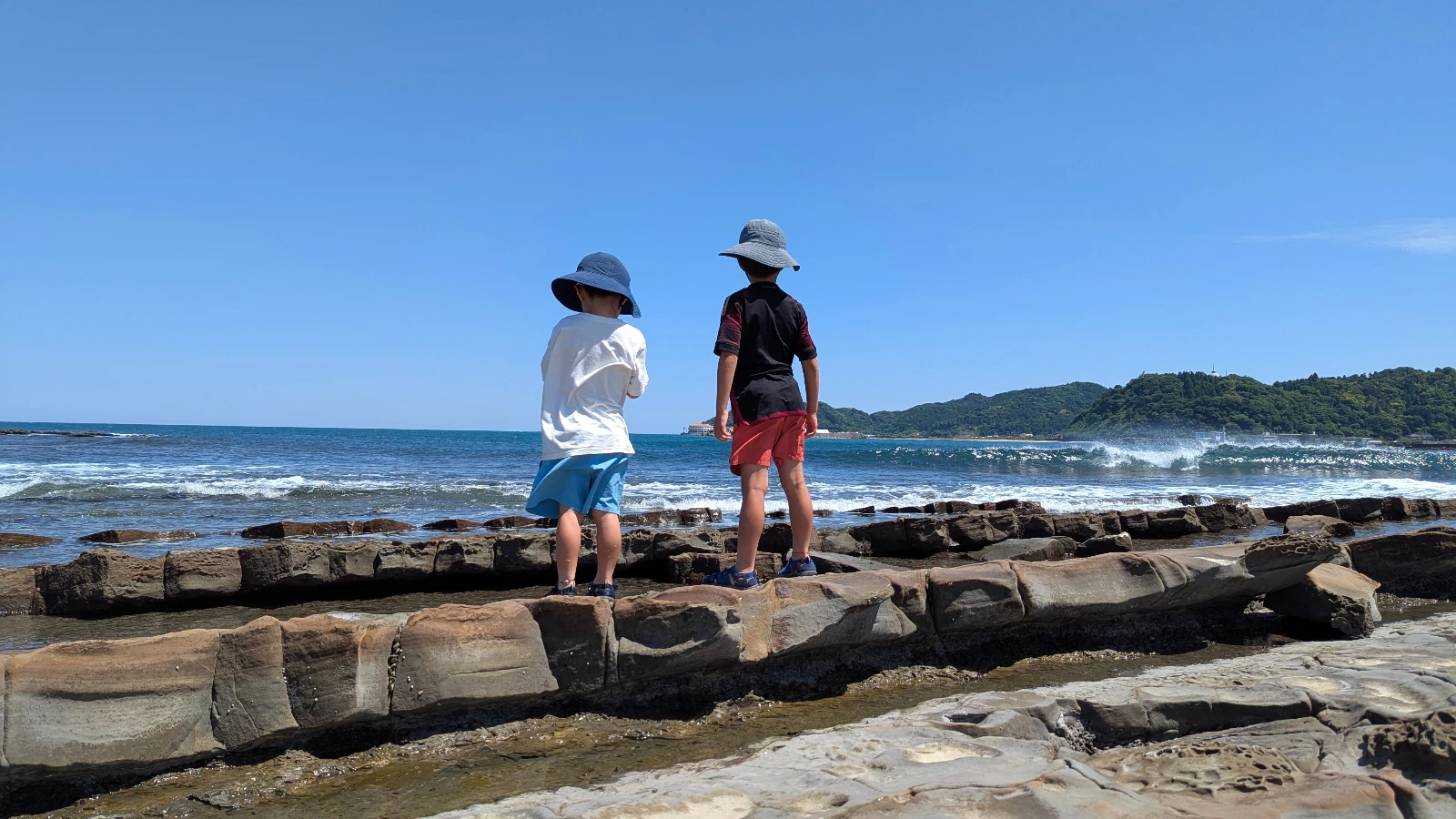
Luca & Nico standing on the Devil’s Washboard rock formations at Aoshima Beach, looking out at the waves on a sunny day.

Best Things to Do in Japan in Summer with Kids

The activities below are not a comprehensive list. They are the experiences that define the season specifically, things that either do not exist or are fundamentally different in spring or autumn.

Summer Fireworks (Hanabi Taikai): Major hanabi events in Tokyo (Sumida River and Edogawa), Osaka, Yokohama, and Sendai (Tanabata Fireworks) are among the largest pyrotechnic displays in the world. The combination of late-evening timing, festival food stalls surrounding every venue, and the collective energy of tens of thousands of people watching the sky together makes hanabi the defining summer experience for children in Japan. Book reserved seating for major events early: the free public viewing areas are crowded, and the premium positions sell out months in advance.

Evening Matsuri: Gion Matsuri (Kyoto, July), Awa Odori (Tokushima, August), Nebuta Matsuri (Aomori, August), and hundreds of neighborhood festivals across every city. Lantern-lit streets, taiko drumming, traditional dance, yukata-wearing locals, and food stalls selling everything from yakitori to goldfish scooping games. Most major matsuri are free to attend, entirely walkable, and calibrated by accident to precisely the sensory level that captures children without overwhelming them.

Beach and Ocean Days: Japan’s family beaches are better organized than most international visitors expect. Kamakura, Enoshima, Okinawa’s Emerald Beach, Hokkaido’s lake shores, and Wakayama’s Shirahama all offer designated swimming areas, seasonal lifeguard coverage, shade facilities, and beach rental equipment within walking distance. The quality of infrastructure means parents can focus on the children rather than managing logistics.

Water Parks: Tokyo Summerland, Nagashima Spa Land in Mie, and Spa World in Osaka provide the most direct heat relief available in Japan, with the additional advantage of being specifically designed for the midday window. Indoor zones mean families can continue using the facility during peak afternoon heat rather than retreating to a hotel.

Aquariums as the Midday Anchor: Osaka Aquarium Kaiyukan (one of the world’s largest), Sumida Aquarium in Tokyo (elevated and architecturally striking), and Churaumi Aquarium in Okinawa are not backup plans for bad weather. They are premium family destinations that happen to be perfectly positioned for the hours when outdoor summer activity is inadvisable. Plan for two to three hours minimum at each.

teamLab Installations: teamLab Planets in Toyosu and teamLab Borderless in Azabudai (Tokyo) offer fully air-conditioned immersive digital art experiences that children find genuinely absorbing. Both should be pre-booked well in advance; walk-up availability in summer is unreliable.

Early-Morning Temple and Shrine Visits: Fushimi Inari, Meiji Jingu, Senso-ji, and Arashiyama’s bamboo grove before 8am are different places from what families encounter at 11am. The combination of natural shade, dramatically lower crowd density, and the cool air that lingers in forested spaces until the sun is fully overhead makes early-morning shrine visits one of the most reliable summer experiences across all child profiles.

Kakigori: Japanese shaved ice is categorically different from the snow cones most Western children have encountered. It is fine, fluffy, and served with high-quality syrups, condensed milk, fruit, or matcha that soak through the ice rather than pooling at the bottom. Making the best kakigori in each city a family mission is a low-stakes, high-engagement game that gives children a specific, achievable goal at every destination.

Yusuzumi Evenings: The Japanese practice of deliberately stepping outside at dusk to enjoy the cooling air is built into every residential neighborhood in summer Japan. Riverside paths, shrine approaches, covered shotengai streets, and coastal promenades become naturally populated with families doing exactly this from around 5:30pm onward. This is not a named attraction. It is the texture of summer in Japan, and it is free.

The LuNi Intel: The most reliable cool-down spot in any Japanese city is not the aquarium or the shopping mall. It is the first floor of a covered shotengai shopping arcade, specifically the end near the park or the train station, where the cross-breeze runs the full length of the building. Every major city has one. They are always free, always accessible, and children in strollers and on foot handle the transition from outdoor heat to arcade cool in under thirty seconds. Find the shotengai on day one of each new city and use it as the reset point throughout the trip.

Best Beaches, Water Parks, and Swimming Spots in Japan for Kids

Kanto and Tokyo Region

Enoshima and Shonan Beaches (Kanagawa): The default summer beach run for Tokyo families, and consistently worth it. Wide sandy areas, gentle waves, beach rental facilities, showers, lockers, and direct access to Enoshima Island’s caves and the Enoshima Aquarium. Under 90 minutes from central Tokyo on the Odakyu Enoshima Line.

Kamakura Beaches (Kanagawa): Yuigahama and Zaimokuza are both shallow-entry, soft-sand beaches with seasonal lifeguard coverage and easy access to Kamakura’s compact city center for afternoon cultural exploration.

Odaiba Seaside Park (Tokyo): Swimming is not permitted, but the sandy, stroller-accessible waterfront is reliable for toddler sand play and coastal breezes. Immediately adjacent to Legoland Discovery Center Tokyo and multiple family-oriented shopping facilities for midday indoor retreat.

Okinawa

Emerald Beach (Okinawa Main Island): Three designated zones for swimming, relaxing, and viewing, adjacent to Churaumi Aquarium inside Ocean Expo Park. Lifeguards, changing rooms, shaded rest huts, and food facilities on site. The most complete single-location family beach experience in Japan.

Zanpa Beach: Long, clear-water stretch with gentle waves, safe swimming zones, water-toy rentals, and consistent shade options. Less crowded than Emerald Beach on peak weekends.

Maehama Beach (Miyako Island): Shallow, warm, and exceptionally clear. Minimal wave action. Among the most visually striking beaches in Japan and particularly well-suited to children under six.

Nirai Beach: Family-oriented resort beach with lifeguards, shade tents, float rentals, and a gradual sandy entry that suits non-swimmers and toddlers.

Kansai

Suma Beach (Kobe): A full beach day within easy reach of Osaka, with changing facilities, lockers, convenience store access, and a family-friendly summer atmosphere that is notably less crowded than Tokyo-area beaches.

Shirahama (Wakayama): Fine white sand, calm water, generous shade facilities, and strong family-oriented infrastructure. One of the Kansai region’s most reliable family beach destinations.

Hokkaido

Lake Toya: Warm enough for comfortable swimming on sunny days, with no ocean waves, a safe shallow entry, and the surrounding mountain scenery that makes Hokkaido summer distinctive. Canoeing and paddleboarding available.

Lake Shikotsu: Crystal-clear water, refreshingly cool temperatures, and options for canoeing and paddleboarding suited to older children and active families.

Mountain Lakes (Nagano)

Lake Suwa: Calm water, paddleboarding facilities, and mountain scenery, at temperatures meaningfully cooler than the major cities. A reliable option for families using Nagano as a summer base.

Lake Aoki: Clear, emerald-colored water, uncrowded, and quiet. Best for families who want a nature-first swimming day without the facilities or crowds of a resort beach.

Major Water Parks

Tokyo Summerland: Indoor and outdoor pools, waterslides, lazy rivers, and children’s zones with stroller-accessible paths throughout. Indoor zones absorb the midday peak without requiring families to leave the facility.

Nagashima Spa Land Water Park (Mie): One of Japan’s most comprehensive water parks, covering wave pools, dedicated toddler zones, a lazy river, and waterslides ranging from beginner to advanced. Strong for families with children across a wide age range.

Spa World (Osaka): Indoor and outdoor pools with themed environments. Air-conditioned relief without sacrificing the water-play experience.

Luca & Nico standing with Papa at the edge of the water at Zushi Beach, one of the best kid-friendly public beaches near Tokyo for families

How to Keep Kids Comfortable in Japan’s Summer Heat

The following is operational guidance, not general advice. Each point represents a specific decision that changes the quality of a summer day in Japan.

Hydration as infrastructure, not reminder: Japan’s heat extracts water from children faster than most parents expect, even during light walking in shade. The goal is not to remind children to drink when they report thirst. It is to create a structure where drinking happens before thirst arrives: at the start of each train ride, at the entry to each attraction, and at every transition point in the day. Pocari Sweat and Aquarius, Japan’s two leading ion drinks, are sold at every vending machine and convenience store and are appropriate for children. Pack a high-insulation reusable water bottle per child; convenience store cold drinks lose their temperature within thirty minutes in August heat.

SPF as a non-negotiable daily practice: UV intensity in Japan in summer, particularly near water, at elevation, and on clear July and August days, is significant. SPF 50+ water-resistant sunscreen applied before leaving the hotel, reapplied every 90 minutes or immediately after swimming, and extended to necks, ears, and the tops of feet. Wide-brim or neck-flap hats for children under ten. This is not precautionary: it is the difference between a child who hits the evening festival with energy and one who is sore and overtired by 4pm.

Cooling tools as daily carry items: Cooling towels (wet, wring, snap, effective for up to three hours), portable stroller fans, and cooling mist sprays are available at every Japanese convenience store and should be treated as standard daily equipment rather than emergency items. An ice pack fitted into a neck wrap provides meaningful temperature relief during peak afternoon heat. Pack the baseline from home and replenish as needed.

Early warning signs: Flushed cheeks with reduced sweating, unusual quietness in an active child, loss of appetite before a scheduled meal, and complaints of dizziness are the four signals that require immediate shade, hydration, and seated rest. In children, heat distress can escalate quickly. When these signs appear, the outdoor portion of the day ends regardless of what was planned next.

Dress as a daily operational decision: Quick-dry, moisture-wicking fabrics in light colors. One extra shirt per child per day is not excessive: the combination of heat, humidity, and physical activity means a midday change is realistic on most July and August days. UV shirts and rash guards at beaches and water parks. For June, add one lightweight breathable rain layer per child.

Japan’s infrastructure as a genuine advantage: Air-conditioned trains and subway stations, the near-universal coverage of convenience stores, and the concentration of indoor family attractions in every major city make summer heat in Japan more manageable than in comparable climates. The infrastructure exists to support exactly this kind of family visit. Use it deliberately rather than treating air conditioning as a fallback.

What to Pack for Japan in Summer with Kids

The principle behind packing for Japan in summer is specificity over volume. The goal is not to bring everything that might help. It is to bring the items that make a meaningful operational difference and rely on Japan’s convenience store network for everything else.

The High-Return Essentials

These are the items that change how a summer day in Japan feels, not marginally, but categorically.

Cooling towels (one per child): The single highest-return item on this list. Wet, wring, snap, and they stay cold for up to three hours. Japan sells these at convenience stores, but bringing quality versions from home is worthwhile for durability across a two-week trip.

Portable stroller fan: Essential for children in strollers and for any child who will be in a crowd during an evening matsuri. Battery-powered clip-on fans are small, light, and available in Japan, but packing one eliminates the need to find one on the first hot day.

High-insulation water bottles: One per child, ideally double-wall vacuum insulated. Cold water stays cold for four to six hours. This eliminates the cost of purchasing cold drinks continuously and ensures hydration is always immediately available.

SPF 50+ water-resistant sunscreen: Bring enough for the full trip. Japanese sunscreen is excellent and widely available, but international SPF formulations tend to come in larger quantities at lower cost. Calculate usage and pack accordingly.

Electrolyte packets: Child-appropriate electrolyte sachets for days with high exertion or significant sweating. Japan’s convenience stores sell Pocari Sweat and Aquarius reliably, but having sachets available for early mornings, beach days, and long festival evenings removes a logistical dependency.

Clothing Strategy

Lightweight, moisture-wicking, light-colored tops and shorts are the baseline. The key decisions are quantity and UV coverage. Pack one extra shirt per child per day (or plan for convenience store laundry detergent sheets and sink washes every two to three days). UV shirts and rash guards for beach and water park days. Sun hats with neck flaps for children under ten. For June, add compact umbrellas and one lightweight breathable rain jacket per child.

Swim and Water Gear

Swimsuits and rash guards in higher quantity than families typically expect: children in Japan in summer swim more frequently than most itineraries anticipate. Quick-dry towels (not full beach towels: they dry same-day and take up a fraction of the space). Water shoes for beach and water park days. A waterproof phone case for ocean and pool days.

The Often-Forgotten Items

Mosquito repellent, essential for evening festival and park time particularly in wooded or riverside settings. Zip-lock bags for wet swimsuits after beach days. A portable battery pack for days where maps run continuously and photo volume is high. Laundry detergent sheets for mid-trip sink washes.

Profile-Specific Additions

For Sensor profile children: noise-cancelling headphones. Japan’s major train stations and festival crowds regularly exceed 80dB, and for sensory-sensitive children this is not discomfort but genuine overload risk. For Sprinter profile children: a lightweight stroller even for children who have technically outgrown stroller age. A typical Japan summer day involves 15,000 to 20,000 steps. A stroller is a portable rest station, not a concession. For Anchor profile children: seven days of familiar breakfast foods. The morning meal is not negotiable for children who need food predictability to feel settled. Familiar granola bars, oatmeal sachets, or preferred snacks create the stable start that carries an Anchor child through an unfamiliar day.

Two children stand before the stone torii entrance of Shiogama Shrine in Sendai, Miyagi — a family travel moment in Japan.

Japan in Summer with Kids: Sample Itineraries

These are frameworks, not rigid schedules. Each follows the daily rhythm framework described above and is designed around the season’s operational reality rather than a best-case scenario.

3-Day Summer Itinerary: Tokyo Base with Coast

Designed for families with limited time who want the full summer experience without complex logistics.

Day Morning Afternoon Evening
Day 1: Tokyo Arrival Settle in. Odaiba waterfront walk for orientation and breezes. Legoland Discovery Center or indoor mall with family facilities. Waterfront dining. Check for local matsuri or hanabi.
Day 2: Asakusa and Sumida Senso-ji Temple before 9am. Nakamise street while cool. Sumida Aquarium or Tokyo Skytree observation deck. Sumida riverfront walk. Street food in Asakusa.
Day 3: Kamakura or Enoshima Coast Train to coast. Beach morning with shallow water, shade, and sand. Enoshima Island caves or shaded lunch and kakigori. Return to Tokyo. Hanabi show if scheduled.

Day 1: Tokyo Arrival


Morning Settle in. Odaiba waterfront walk for orientation and breezes.
Afternoon Legoland Discovery Center or indoor mall with family facilities.
Evening Waterfront dining. Check for local matsuri or hanabi.

Day 2: Asakusa and Sumida


Morning Senso-ji Temple before 9am. Nakamise street while cool.
Afternoon Sumida Aquarium or Tokyo Skytree observation deck.
Evening Sumida riverfront walk. Street food in Asakusa.

Day 3: Kamakura or Enoshima Coast


Morning Train to coast. Beach morning with shallow water, shade, and sand.
Afternoon Enoshima Island caves or shaded lunch and kakigori.
Evening Return to Tokyo. Hanabi show if scheduled.

5-Day Summer Itinerary: Tokyo Plus Regional Escape

Designed for families wanting city depth combined with a cooler or coastal second base.

Day Focus Highlights
Day 1 Tokyo arrival Odaiba waterfront evening. Early night.
Day 2 Tokyo: Ueno and museums Ueno Park morning. National Museum of Nature and Science or Ueno Zoo afternoon. Evening market.
Day 3 Departure to regional base Kamakura and Enoshima coast, Hakone mountain air and lake cruise, Nagano lakes and forest trails, or Okinawa beaches. Choose one.
Day 4 Regional base: nature and water Swimming, hiking, or shaded outdoor exploration. Relaxed afternoon.
Day 5 Festival finale or scenic close Summer matsuri, hanabi, or lakeside evening.

Day 1: Tokyo Arrival


Focus Tokyo arrival
Highlights Odaiba waterfront evening. Early night.

Day 2: Tokyo — Ueno and Museums


Focus Tokyo: Ueno and museums
Highlights Ueno Park morning. National Museum of Nature and Science or Ueno Zoo afternoon. Evening market.

Day 3: Departure to Regional Base


Focus Departure to regional base
Highlights Kamakura and Enoshima coast, Hakone mountain air and lake cruise, Nagano lakes and forest trails, or Okinawa beaches. Choose one.

Day 4: Regional Base — Nature and Water


Focus Regional base: nature and water
Highlights Swimming, hiking, or shaded outdoor exploration. Relaxed afternoon.

Day 5: Festival Finale or Scenic Close


Focus Festival finale or scenic close
Highlights Summer matsuri, hanabi, or lakeside evening.

7-Day Summer Itinerary: Tokyo, Mountain Escape, Osaka or Kyoto

The most complete summer arc available in one trip, covering city, nature, and cultural festival.

Day Location Framework
Day 1 Tokyo arrival Park walk, cold drinks, early family dinner.
Day 2 Tokyo: Odaiba teamLab Planets or Sumida Aquarium. Odaiba beach and sunset promenade.
Day 3 Tokyo: Asakusa Senso-ji early. Sumida River cruise. Evening matsuri or night market.
Day 4 Hakone or Nagano Hakone: pirate ship cruise, ropeway, lake views. Nagano: river play, forest trails, cooler air.
Day 5 Nature and water day Shaded hiking, lakeside swimming, open-air museum at a relaxed pace.
Day 6 Osaka or Kyoto Osaka: Kaiyukan, Kids Plaza, Okawa riverfront evening. Kyoto: shaded temples, Kamo River kawayuka, early-morning Gion.
Day 7 Festival finale Hanabi or major matsuri to close. The highest-energy possible final evening for children of any age.

Day 1: Tokyo Arrival


Location Tokyo arrival
Framework Park walk, cold drinks, early family dinner.

Day 2: Tokyo — Odaiba


Location Tokyo: Odaiba
Framework teamLab Planets or Sumida Aquarium. Odaiba beach and sunset promenade.

Day 3: Tokyo — Asakusa


Location Tokyo: Asakusa
Framework Senso-ji early. Sumida River cruise. Evening matsuri or night market.

Day 4: Hakone or Nagano


Location Hakone or Nagano
Framework Hakone: pirate ship cruise, ropeway, lake views. Nagano: river play, forest trails, cooler air.

Day 5: Nature and Water Day


Location Nature and water day
Framework Shaded hiking, lakeside swimming, open-air museum at a relaxed pace.

Day 6: Osaka or Kyoto


Location Osaka or Kyoto
Framework Osaka: Kaiyukan, Kids Plaza, Okawa riverfront evening. Kyoto: shaded temples, Kamo River kawayuka, early-morning Gion.

Day 7: Festival Finale


Location Festival finale
Framework Hanabi or major matsuri to close. The highest-energy possible final evening for children of any age.

Japan Summer Travel Costs for Families

Japan in summer has a clear cost structure: predictable in most categories, volatile in two.

The Volatile Categories

Flights: The two peak pricing windows are late July through early August (Japanese school holiday start) and Obon week, August 10-18. Prices outside these windows are meaningfully lower. For peak dates, booking four to six months in advance is the standard that produces reasonable fares. June and the first two weeks of July consistently offer better value than August for equivalent routing.

Hotels near beaches and festivals: Coastal destinations including Kamakura, Enoshima, Okinawa, and Shirahama see significant rate increases from mid-July through August. Festival cities including Kyoto during Gion Matsuri and Sendai during Tanabata carry premium rates during their specific event windows. Families who can stage hotel bookings to arrive one or two days before peak periods and depart before the price apex often access meaningfully better rates.

The Stable Categories

Transport costs in Japan do not fluctuate seasonally. Subway fares, JR line tickets, shinkansen pricing, and ferry rates are identical in August to what they are in November. The practical summer effect on transport is behavioral: families take more trains and fewer long walks during peak heat, which can modestly increase daily transport spend, but not at a level that materially affects the budget.

Most attraction pricing is also stable year-round. Shrines, temples, museums, aquariums, and theme parks maintain consistent admission. Seasonal costs appear primarily at water parks, which may carry summer-specific pricing, and at beach facilities where shade tents, lockers, and equipment rentals add to base costs.

The Free Summer Calendar

The strongest family experiences of Japan’s summer season carry no admission cost: beaches, lake and river swimming, public splash parks, neighborhood matsuri, and hanabi viewed from public areas. The daily rhythm framework, outdoor mornings (free), indoor attractions (paid), evening festivals (free), naturally produces a balanced spending structure. Families who commit to this rhythm consistently find Japan in summer more affordable per memorable experience than the headline accommodation costs suggest.

Budget Reference: Family of Four

Category Typical Range (Family of Four)
Hotels Per night Budget: ¥12,000–¥18,000 / Mid-range: ¥20,000–¥35,000 / Premium: ¥40,000–¥80,000+
Food Per day Budget: ¥9,000–¥14,000 / Moderate: ¥14,000–¥24,000 / Higher-end casual: ¥24,000–¥36,000
Attractions Per person Low-cost: ¥500–¥900 / Mid-range: ¥1,000–¥2,500 / Premium: ¥3,000–¥9,000
Local transport Per ride Subway and bus: ¥150–¥400 / Shinkansen: ¥8,000–¥15,000 per adult

Hotels

Per night
Budget ¥12,000–¥18,000
Mid ¥20,000–¥35,000
Premium ¥40,000–¥80,000+

Food

Per day
Budget ¥9,000–¥14,000
Moderate ¥14,000–¥24,000
Higher-end ¥24,000–¥36,000

Attractions

Per person
Low-cost ¥500–¥900
Mid ¥1,000–¥2,500
Premium ¥3,000–¥9,000

Local Transport

Per ride
Subway / Bus ¥150–¥400
Shinkansen ¥8,000–¥15,000 per adult

A note on Obon week: August 10-18 combines peak hotel pricing, crowded trains, and reserved shinkansen seats that sell out weeks in advance. Families who choose this window knowingly get Japan at its most festive and alive. Families who want value should plan to depart before August 10 or arrive after August 18.

Two boys stand by the wooden dock at Tokiwa Park in Asahikawa, gazing at rows of boats on the calm pond during sunset.

The Summer Briefing: Essential Intel

Q: What is the best month to visit Japan in summer with kids?

A: June is the strongest month for families with lower heat tolerance or children who struggle in sustained high temperatures. Crowds are lighter, temperatures are 5-8 degrees cooler than August, and the rainy season brings intermittent showers rather than sustained rain. July suits families prioritizing festival culture, specifically Gion Matsuri in Kyoto and the major hanabi season. Late August offers the season’s most animated Obon energy alongside the beginning of the crowd and temperature tapering that extends into September.

Q: Is Japan in summer too hot for young children and toddlers?

A: Not when the daily rhythm framework is applied consistently. The families who struggle are almost always running spring or autumn itineraries in summer heat. Toddlers and young children specifically benefit from the morning-outdoor, afternoon-indoor, evening-active structure because it naturally aligns with their rest patterns. Okinawa and Hokkaido are the two destinations where summer heat is most manageable for very young children, given ocean breezes and lower baseline temperatures respectively.

Q: What is Obon, and should families plan around it or for it?

A: Obon is Japan’s midsummer ancestral festival, observed primarily August 13-15 but with travel surges extending from approximately August 10-18. It is simultaneously one of the most culturally significant and logistically demanding periods in the Japanese calendar. Hotels are at peak pricing, popular trains sell out, and coastal and festival destinations are at their most crowded. For families who are flexible on dates, avoiding Obon week reduces cost and logistical complexity significantly. For families who can commit to advance booking and reserved transport, Obon delivers Japan’s most concentrated festival atmosphere of the year, with Bon Odori dancing, lantern ceremonies, and an outdoor energy across Japanese cities that is worth the planning overhead.

Q: Are Japan’s beaches safe for children?

A: Japan’s designated family beaches operate with strong infrastructure: seasonal lifeguard coverage at major locations, designated swimming zones, facilities, and clearly marked entry areas. Yuigahama and Zaimokuza in Kamakura, Emerald Beach in Okinawa, and the Shonan beaches near Enoshima are among the most reliably safe and well-managed. Parents should remain attentive after storms or during periods of elevated swell, but Japan’s beach management standard is high by international comparison.

Q: How do families handle Japan’s heat without losing full days to air conditioning?

A: The daily rhythm framework described in this guide is the answer. The key reframe is that the indoor afternoon is not lost time: Japan’s aquariums, teamLab installations, museums, and indoor family attractions are among the best in the world. A two-hour Kaiyukan visit or a teamLab session is not a heat-management backup plan. It is a genuinely premium family experience that happens to coincide with the hours when outdoor activity should be avoided. Families who stop treating the indoor afternoon as a compromise and start planning it as a feature of the day consistently report higher overall satisfaction with summer trips.

Q: Is June’s rainy season a problem for families?

A: No, for families who pack compact umbrellas and plan with flexibility. Tsuyu brings intermittent showers, typically in the morning or late afternoon, with clear windows in between. Most outdoor family experiences in June survive with minor timing adjustments. The practical benefit is significant: June is 15-20% less crowded than July at most major attractions, temperatures are the most comfortable of the summer season, and the country’s post-rainy-season greenery is striking. For families with scheduling flexibility, June is the underrated choice.

What Comes Next

Summer is one planning layer. The decisions about which cities to prioritize, how many nights to allocate to each, which child travel profile requires the most structural support, and where the trip is most likely to break are the decisions that determine whether the itinerary holds. The Japan Family-Friendly Travel Hub, the individual city guides, and the Family Fit™ framework exist specifically to answer those questions with the same precision this guide has applied to the season.