Ueno With Kids:which stop is for which child.
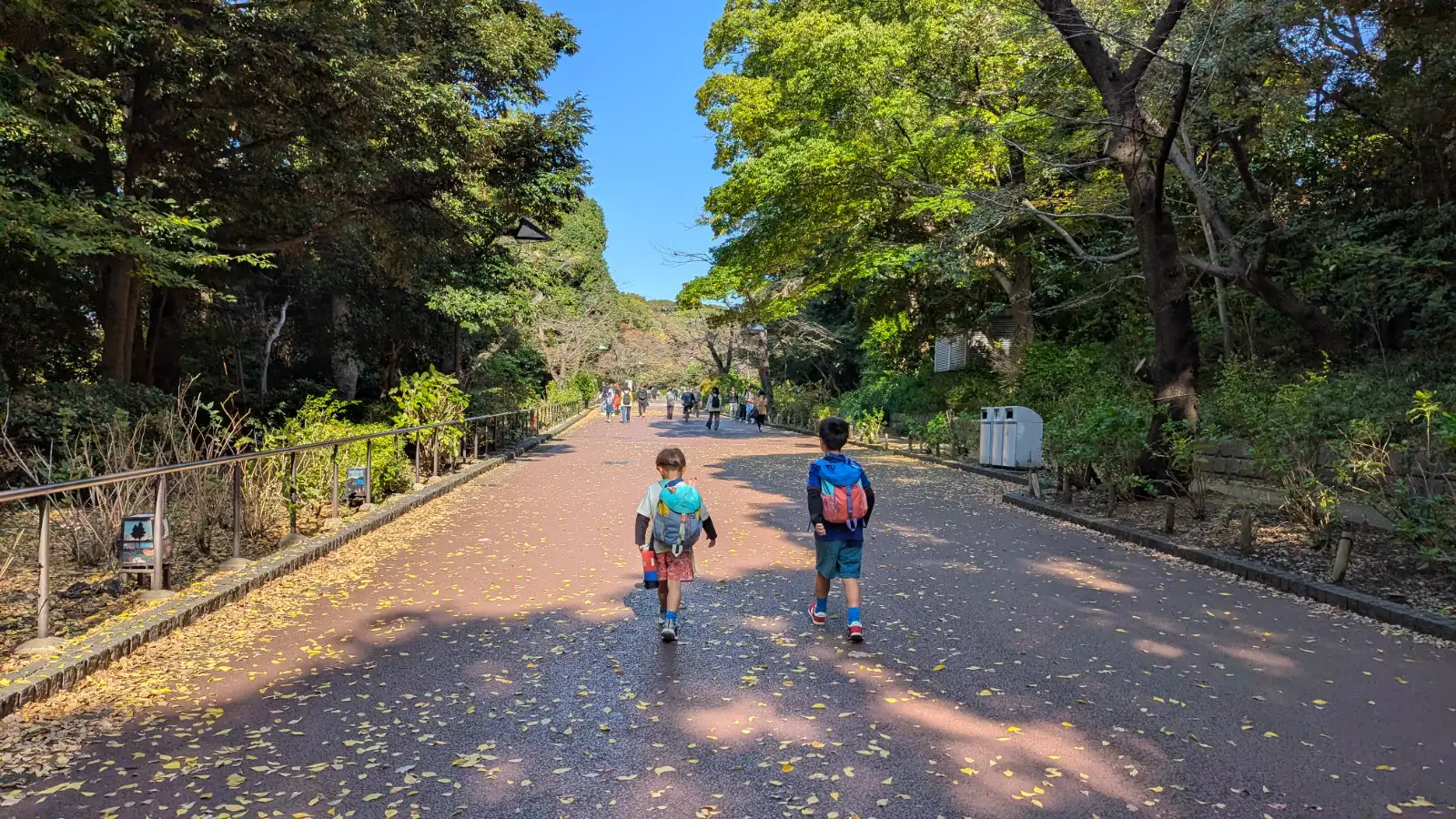
- Ueno Zoo
- Japan’s oldest zoo; go early
- Outdoor Playground
- In Ueno Park, with swan boats
- Room to Run
- Ueno Park’s open lawns
- How Long
- Two to four hours
- Quieter Stops
- Nature and Science, Tokyo National Museum
Some links on this page are affiliate links. LuNi may earn a commission at no extra cost to you.
Ueno with kids centers on Ueno Park, where the open lawns, the playground parents search for and the swan boats sit together, and on Ueno Zoo, Japan’s oldest, best visited early. Plan two to four hours, ideally on a spring or autumn morning, when the zoo and one museum fit a half day. The National Museum of Nature and Science and the Tokyo National Museum are the quieter rooms; Ueno Zoo and Toshogu Shrine give a child who settles once the plan is clear a clear shape; Ameyoko and the park food stalls go easy on tired legs. Seven stops, mapped by child.
Which stop is for which child.
These stops are not ordered best to worst. They are grouped by which child each one is for. Ueno packs a zoo, three world-class museums, a pond, a shrine, and a market street into one park, and the stop that thrills one of your children is the stop that empties another. So instead of one long list, you get four short ones, organized by how each child runs out of steam. The Dynamo runs short when they cannot move. The Sensor runs short on noise and crowds. The Anchor runs short when nothing is predictable. The Sprinter runs short on walking and standing. Find your child below, and start there.
For the Dynamo
Stops that relieve restricted-movement depletion.
For a child who depletes through restricted movement, the strongest stop is Ueno Park.
Wide, flat paths and open lawns give a movement-driven child the discharge the zoo queues and museum halls deny them. It is the one stop in the district that returns Reserve rather than spending it, which is why it anchors a Ueno day rather than ending it. The pedal swan boats on Shinobazu Pond turn that energy into something the child controls. A younger Dynamo runs the lawns and pedals with a parent close by; an older one takes the longer loop of the pond and steers the boat across the water.
Who it costs.The Sprinter. The park is large, and the distance that frees the Dynamo is real walking for a low-stamina child, with long stretches between benches.
How to make it work.Open here while legs are fresh and let the boats absorb the energy, then move to a seated indoor stop before the walking adds up.
If this isn’t your child: still the free, green heart of Ueno and the easiest place to let everyone reset between paid stops.For the Sensor
Stops that let a sensory-loaded child recover.
For a child who depletes through sensory input, the strongest stops are the Nature and Science museum and the Tokyo National Museum.
Climate-controlled halls, dispersed sound, and a clear walk-through route make this the indoor stop where a sensory-loaded child’s dial turns down: input drops, sightlines stay predictable, and the dinosaur skeletons and rocket hall hold attention without overwhelming it. A younger Sensor takes the dim, quiet fossil galleries at their own pace; an older one works through the interactive science floors without the press of a crowd.
Who it costs.The Dynamo, mildly. The walk-and-look format offers little discharge, so pair it with the park rather than stacking two still stops.
How to make it work.Go early, before the school groups arrive, when the halls are quietest and the Sensor’s Reserve is highest.
If this isn’t your child: a genuinely absorbing science museum, though a Dynamo will want a discharge stop chained to it.Japan’s oldest and largest museum is calm by design: high-ceilinged galleries, soft light, and a slow, hushed pace that is the acoustic opposite of the zoo. For a Sensor child it is a low-input space where the visit can continue after a loud morning, and the samurai armor and swords give younger and older children a fixed thing to look for. A younger Sensor hunts the armor displays room by room; an older one lingers over the scrolls and ceramics undisturbed.
Who it costs.The Sprinter, mildly. The galleries are spread across several buildings, so the museum involves more walking than its calm suggests.
How to make it work.Pick one or two galleries rather than the whole complex, so the Sensor gets the calm without the Sprinter paying for the full circuit.
If this isn’t your child: a beautiful, quiet museum, best in a focused hour rather than a full sweep.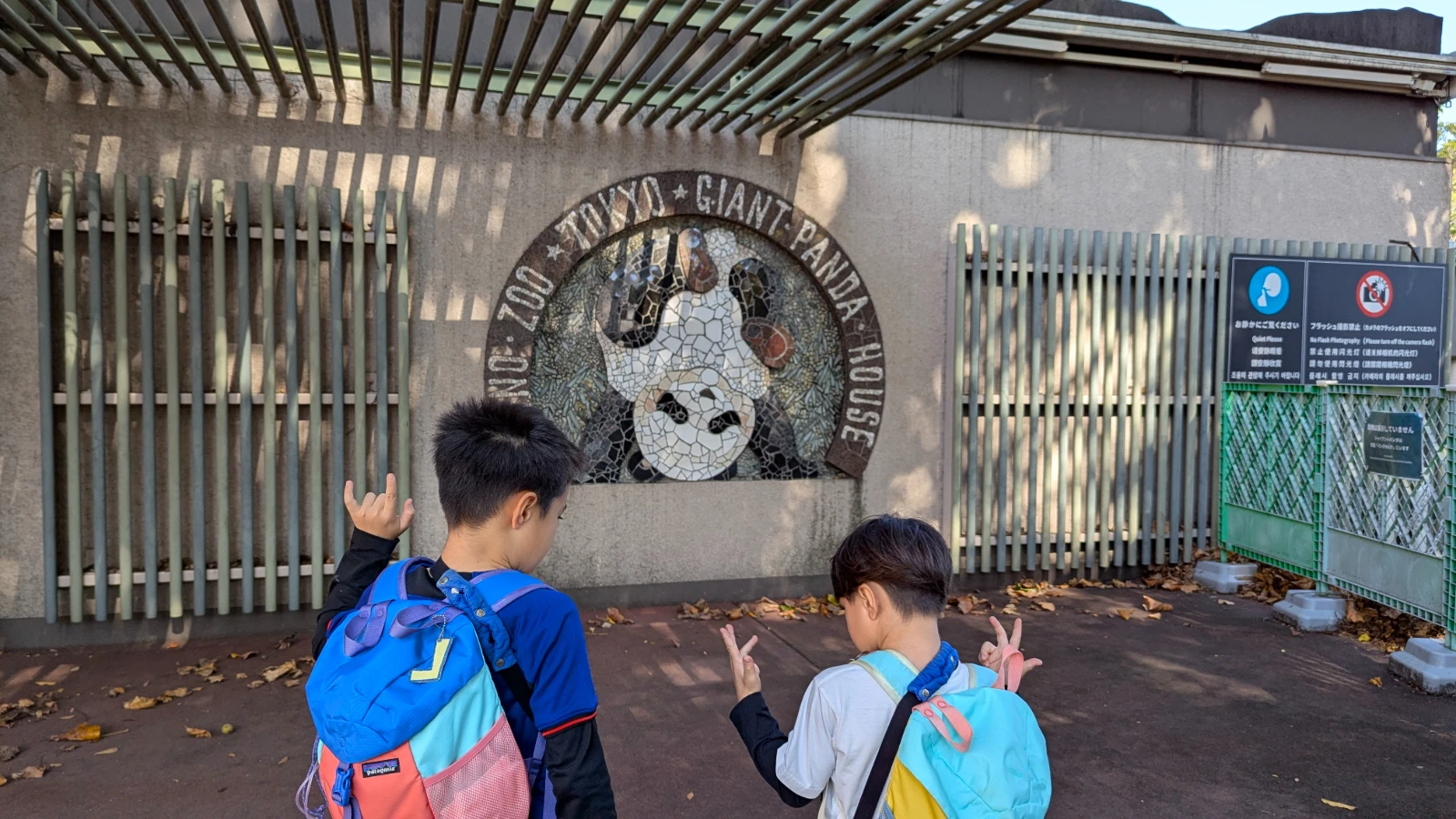
For the Anchor
Stops with confirmed, predictable structure.
For a child who depletes through unfamiliarity and unconfirmed structure, the strongest stops are Ueno Zoo and Toshogu Shrine.
Japan’s oldest zoo runs on a single, followable loop, and animals are the most internationally familiar thing a child meets all day: an Anchor arrives already oriented, because they know what an elephant, a tiger, and a monkey are before they walk in. The fixed path and known subjects are exactly the predictable structure the profile relies on. A younger Anchor names the animals they recognize on sight; an older one follows the marked route from enclosure to enclosure knowing what comes next. Admission is free for children twelve and under, so the structure costs a family almost nothing.
Who it costs.The Sensor and the Sprinter, both at Caution. The central paths concentrate crowd and noise by midday, and the full East-and-West loop is a long walk for low-stamina legs.
How to make it work.Go at opening and treat it as a morning-only stop rather than a full day. The zoo no longer keeps pandas, so anchor the visit on the elephants, big cats, and the Children’s Zoo petting area instead.
If this isn’t your child: the headline draw of Ueno for most families, best taken early before the crowd builds.A short, self-contained walk through golden gates and rows of stone and bronze lanterns gives an Anchor a small, legible stop with a clear beginning and end: enter, follow the lantern path, see the gilded shrine, leave. Nothing about it improvises, which is what makes it restful for a child who depletes when structure is unconfirmed. A younger Anchor counts the lanterns along the approach; an older one takes in the gold detail of the gate and the history beside it.
Who it costs.Almost no one, which is rare. It is short, flat, and quiet, so even the Sprinter and Sensor pay little here.
How to make it work.Fold it in on the way between the zoo and the museums, since it sits inside the park and asks only a few minutes.
If this isn’t your child: a quick, genuinely beautiful cultural stop that costs almost nothing in Reserve for any family.For the Sprinter
Short, low-stamina stops with little walking.
For a child who depletes through sustained walking and standing, the strongest stops are Ameyoko and the park food stalls.
Ameyoko is a dense, short market run of snack stalls and candy shops packed into a single covered stretch beside the station, so a low-stamina child gets a lot of interest for very little distance: the payoff per step is high, which is precisely what the Sprinter needs. A younger Sprinter hunts taiyaki and candy strawberries from stall to stall; an older one browses the cheap toy and snack shops along the same short run.
Who it costs.The Sensor, at Caution. The lanes are narrow, loud, and crowded, and the press of the market is the opposite of a recovery space.
How to make it work.Keep it short and go off-peak, and with a Sensor child use a carrier rather than a stroller through the tight lanes.
If this isn’t your child: a lively, cheap snack stop, fun in small doses and easy to fold into a station arrival or departure.The taiyaki, yakitori, and crepe stands around the park edges are the lowest-effort stop of the day: a child sits on a bench, eats, and refuels without walking or standing in a line, which buys the Sprinter back the stamina the park spends. A younger Sprinter shares a fish-shaped cake on a bench; an older one picks their own stall and eats on the move between sights.
Who it costs.No profile meaningfully. It is the natural breakpoint that resets every child mid-visit.
How to make it work.Use it as the planned reset between the park and a paid stop, so the snack does the recovery work rather than a long sit-down lunch.
If this isn’t your child: the easy, pay-as-you-go way to feed everyone without losing the morning to a restaurant.Open with the child who runs short first.
The order of a Ueno day is set by Reserve, not by the map. Each route opens with the stop that protects the named child, then chains to the nearest compatible one.
Settle these first. Ueno Zoo is at its calmest at opening and is best kept to the morning: by midday the central paths concentrate the crowd. Spring and autumn mornings are the widest window, mild and at the park’s most colorful. Everything else is walk-up fill-in arranged around that early zoo hour.
How to arrive, and what costs nothing.
Ueno Station sits at the park’s edge on the JR Yamanote Line and the Tokyo Metro Ginza and Hibiya Lines, with elevators, so the district is one of the easiest in Tokyo to reach with kids. The free stops carry real weight here: Ueno Park, its playground and lawns, and Toshogu Shrine’s lantern path all cost nothing, and they are also the stops that protect a child’s Reserve best, so the free route and the calm route are largely the same route. At the zoo, admission is free for children twelve and under, so a family pays only for its adults.
Three bases that fit a family’s Reserve.
A shortlist chosen for space and location logic, not price tier. The full set is in the complete Ueno hotel guide.
| Property | The LuNi Reason | Budget |
|---|---|---|
| LUNI Pick The Gate Hotel Ryogoku by Hulic Spacious family rooms, river views | Large family rooms with room to spread out and reset at the end of a full park day, a calm riverside base one short train hop from Ueno that holds an Anchor’s routine across a multi-night stay. | ¥¥¥ |
| Mimaru Tokyo Ueno Okachimachi Apartment suites, walk to the park | Apartment-style suites with kitchens a short walk from the park, the self-catering space that lets a family hold mealtimes steady and keeps an Anchor’s day predictable. | ¥¥ |
| dots.tokyo Apartment suite for longer stays | An apartment-style family suite built for longer stays or larger groups, with the floor space to rest tired Sprinter legs after a day of park walking. | ¥ |
The Gate Hotel Ryogoku by Hulic
Budget: ¥¥¥
Budget: ¥¥
Budget: ¥
For every family-friendly option in the district, see the full Ueno family hotel guide.