Yokohama with Kids the city that absorbs a hard day.
Most Japan cities ask a family to keep moving. Yokohama is the rare one where the waterfront sits close enough that a child who hits a wall can recover without the day being lost.
Overnight rather than day trip, and the core attractions and family dining are all walkable.
Minato Mirai on day one, Chinatown and a park on day two.
Designed for fives to twelves, with real toddler and teen options.
Blossoms and autumn comfort. Skip the Golden Week peak.
The Minatomirai Line then links the core with no transfer.
Some links on this page are affiliate links. LuNi may earn a commission at no extra cost to you.
Why Yokohama works for families.
Somewhere around three in the afternoon, a child stops asking questions and starts asking to leave. What has run out is the Reserve, the third currency The LUNI Framework tracks alongside money and time, and Yokohama’s case for a family rests almost entirely on how it answers that hour.
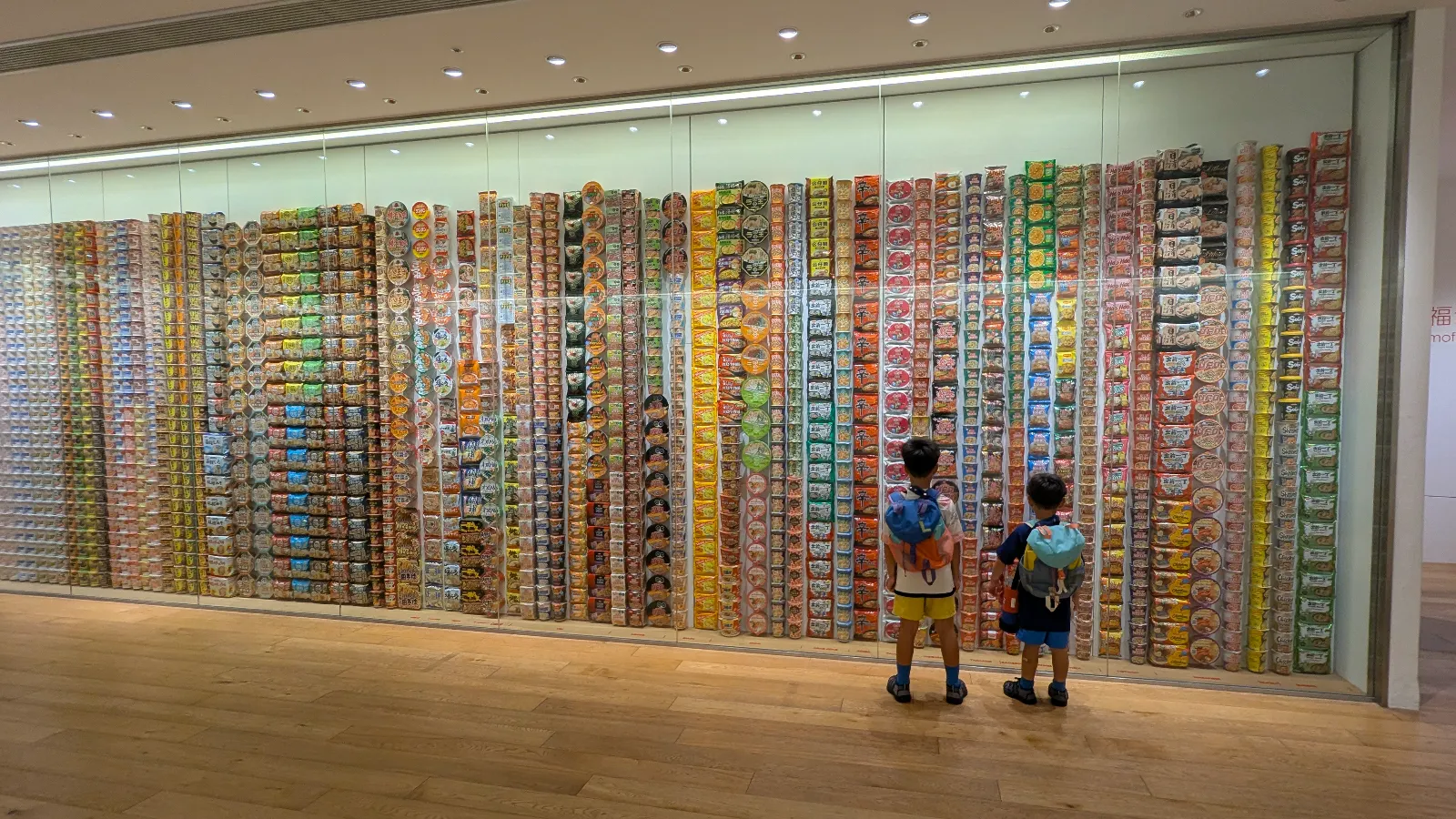
Yokohama answers it at the level of its geography, which is why the city protects a child’s Reserve, their finite capacity to absorb what a travel day asks of them, better than its size suggests. The Minato Mirai district concentrates the city’s highest-value family attractions inside a compact, flat, stroller-navigable waterfront loop, so Cosmo World, the Cup Noodles Museum, and the Red Brick Warehouse sit within walking distance of one hotel base, with no taxi, transfer, or route puzzle between them. Where Tokyo demands navigation and Kyoto demands patience, Yokohama lets a family cover ground without exhausting anyone to do it.
The deeper advantage is recovery distance. When a child hits a wall mid-afternoon in Minato Mirai, the exits are genuine: a ten-minute stroll to Yamashita Park, a short Air Cabin ride, or a waterfront bench with konbini snacks. That built-in decompression route does not exist in Shinjuku or Akihabara. Yokohama also works as both a standalone base and a day trip from Tokyo, roughly half an hour away, which lets a family calibrate commitment in real time: arrive for a day, stay for three, or extend without relocating. The whole city, in other words, is arranged so a depleting morning does not have to become a lost afternoon.
Yokohama’s specific gift is that it absorbs schedule disruption better than any comparably sized Japanese city. When a parent trades the next planned stop for a bench by the harbor, the child absorbs something quieter than the view: that their limits are read, not overridden. The city does not punish a family for slowing down, and that structural forgiveness is rare in Japan. It is worth planning around, because it is the thing that turns a hard hour into a recoverable one.
A pacing lens, not a rating.
The LUNI Framework reads a city through how each child depletes, not through whether the city is “good.” Yokohama suits all four profiles. What changes is how you sequence the day.
The Dynamo depletes through restricted movement. Yokohama is one of Japan’s strongest cities for this profile because Minato Mirai sequences movement and novelty without asking the family to travel between stops: the Cosmo Clock ferris wheel, the rides at Cosmo World, the hands-on Cup Noodles factory, and the short Air Cabin ropeway from Sakuragicho deliver four kinetic formats in a single morning circuit. The pressure point arrives on day two, when the core is covered and the remaining attractions shift to slower formats, zoo-paced Zoorasia, garden-paced Sankeien, the cultural rhythm of Chinatown. The planning consequence is to sequence a movement block or open outdoor space between any slow cultural segment and the trip home; the Air Cabin makes an efficient midpoint reset that needs no line and buys back a Dynamo’s attention before the next stop.
The Sensor depletes through sensory input. Yokohama is more manageable than Tokyo in one consequential way: its primary family district has a waterfront edge, so when load builds in Minato Mirai there is a literal escape route to an open promenade where crowd density drops and the child can regulate without leaving the neighborhood. The acute pressure point is Chinatown on weekends and public holidays, a narrow, high-density food corridor with competing vendor audio and no easy lateral exit once entered at peak. The planning consequence is timing, not avoidance: Chinatown before 10:30 a.m. or after 3:00 p.m. on a weekday delivers the same food and color without the corridor density that triggers overload. A younger Sensor resets fastest on the harbor promenade; an older one self-regulates when given the exit route in advance and permission to use it.
The Anchor depletes through unfamiliarity and unconfirmed structure. Yokohama helps this child, because its port history produced a reliable Western and international food infrastructure that requires no searching: family-palatable options sit beside Japanese ones in every major dining zone, so an Anchor who will not eat ramen still eats reliably in Minato Mirai. The city also makes one of the cleaner day trips from Tokyo, with the compact core reachable without multiple transfers. The pressure point is not the visit but what surrounds it. Stacking a Yokohama day immediately before or after another high-input Tokyo day creates schedule compression an Anchor cannot absorb. The planning consequence is to keep a lighter day on either side, which protects capacity and keeps the trip from becoming a disruption rather than a highlight.
The Sprinter depletes through sustained travel-style walking and standing. Yokohama is the most physically accessible major family destination in Japan for this profile, because the entire Minato Mirai loop is flat, paved, and stroller-navigable: the arc from Cosmo World to the Red Brick Warehouse to Yamashita Park involves no elevation, no gravel, and no unavoidable stairs. The demand escalates outside the core. Sankeien Garden has gravel and uneven terrain, Enoshima Island carries significant stair exposure with no stroller route, and Zoorasia spreads across a genuinely large site, all of which are day two or day three decisions to make after reading the child’s real energy in Japan, not estimating it from home. The planning consequence is to use the Air Cabin to erase the walk from Sakuragicho to the waterfront; for a Sprinter three hours into a day, that flat pavement is not trivial, and the ride buys energy that lasts the afternoon.
What the city works for.
A profile is a depletion mechanism, not an age. Yokohama holds up across the span, but what it offers shifts as a child grows.
Toddlers do well in Minato Mirai’s core. The Minatomirai Line has elevator access at every station, the promenade from Sakuragicho to Yamashita Park is flat and unobstructed, and the family floors at Landmark Plaza and Mark Is carry nursing rooms and changing facilities that make reliable mid-day reset points in any weather. The Cup Noodles Museum has play zones that engage under-fives independently of the Factory, and Nogeyama Zoo’s free entry and compact size make a low-commitment morning. The one caution is Chinatown: navigable by stroller, but weekend crowd density turns the food corridor into a slow, stressful bottleneck.
This is the age Yokohama is most directly designed for. The Cup Noodles Museum’s My Cup Noodles Factory, where a child chooses a soup base and four toppings and seals a custom cup, is calibrated for ages five and up and produces a take-home souvenir with real story value. Cosmo World delivers ride variety without the wait times of comparable Tokyo parks, Zoorasia holds attention across a half-day, and the Chinatown street-food circuit keeps children moving between cultural moments. Kodomo no Kuni, an outdoor children’s park with pedal boats and a petting zoo, is the strongest full-day option and stays undercrowded against Minato Mirai on peak weekends.
Teens get engagement most family guides do not map. The Shin-Yokohama Ramen Museum, a basement recreation of a 1958 street scene with active ramen shops, is a format that holds teens who find conventional museums passive, and the Red Brick Warehouse’s design-forward boutiques read as a credible shopping stop for older children who have outgrown character goods. Enoshima Island, under an hour by train, offers hiking, cliff views, and an aquarium, and a teen comfortable navigating can explore it independently once oriented, which is a meaningful independence offer in a Japanese city.
When to go, by profile.
Spring and autumn carry the lowest Reserve cost for every profile. Summer is a profile-specific choice, not a default.
The strongest window for most families is late March through early May. The cherry-blossom circuit along the Ooka River and inside Sankeien Garden gives a visual context specific to Japan, and temperatures stay mild enough for full outdoor days without heat management. The one crowd pressure point is Golden Week in late April, when domestic tourism peaks and Cosmo World wait times lengthen sharply, so Sensor and Anchor families should prioritize the two weeks before it rather than the holiday itself. Autumn, mid-September through November, is the second strong window, with lower humidity and genuinely comfortable walking.
Summer is a deliberate choice, not a default. The waterfront amplifies heat and humidity, and Sprinter and Anchor children already managing Japan’s walking demands feel the thermal load accelerate their depletion. Families visiting in July or August should front-load indoor attractions, the Cup Noodles Museum, the Shin-Yokohama Ramen Museum, Landmark Plaza, and reserve outdoor time for the evening, when the illumination is on and temperatures ease. Winter suits families whose children are not weather-dependent: the Minato Mirai lights are among Japan’s most consistent, and indoor attractions run without summer’s crowd pressure, though winter viewing rewards booking waterfront accommodation directly rather than commuting at the end of a cold evening.
| Season | What It Is Good For | Watch For |
|---|---|---|
| Mar–MayThe default window | Mild days and the Ooka River and Sankeien blossom circuit. Suits every profile. | Golden Week crowds from late April lengthen Cosmo World waits. Book before the holiday. |
| Jun–AugIndoor-first season | Evening illumination and the indoor museums, front-loaded before the heat. | Waterfront heat and humidity sit above the Sprinter and Anchor threshold by midday. |
| Sep–NovThe quiet window | Low humidity, comfortable walking, and the Cosmo Clock 21 lit from sunset each night. | Cooler harbor evenings. Pack a light layer for the waterfront after dark. |
Mar–May
The default windowJun–Aug
Indoor-first seasonSep–Nov
The quiet windowThe questions parents actually ask.
Is Yokohama worth visiting with kids?
Yes, and it earns a dedicated stop rather than a Tokyo day trip for many families, because it solves a different planning problem. Yokohama is less intense than Tokyo in every measurable way: smaller scale, lower crowd density, a cleaner district structure, and a waterfront edge that gives families a built-in recovery route. Families who find Tokyo logistically exhausting often report Yokohama as the easier city to hold a full day with children.
How many days do families need in Yokohama?
Two full days is the right commitment for most families. Day one covers Minato Mirai thoroughly, the Cup Noodles Museum, Cosmo World, and the waterfront. Day two covers Chinatown, Yamashita Park, and either Zoorasia or a day trip to Enoshima, depending on profile and energy. A single, pre-structured day is enough for a focused visit or a Tokyo day trip.
Where should families stay in Yokohama with kids?
Minato Mirai is the correct base, but the first decision is whether to stay overnight at all. A day trip from Tokyo is the default most families take, and it works when the trip has only three or four Tokyo nights and cannot absorb a hotel change, though it forces a choice between the Minato Mirai waterfront and the older harbor. Families ready to commit to Yokohama should base in Minato Mirai, which places the primary attractions within walking distance, carries the highest density of family-appropriate dining, and clears the core before the day-trip crowd arrives. Families anchored to the older harbor can consider Yamashita Park and Kannai, a short ride down the Minatomirai Line (Yamashita Park’s station, Motomachi-Chukagai, is three stops past Minatomirai), where hotel inventory is thinner. For specific properties, see the Yokohama family hotels guide.
Which Yokohama museums are best for kids?
The Cup Noodles Museum leads for children aged five and up: the My Cup Noodles Factory lets a child choose a soup base and four toppings and seal a custom cup to take home, the single highest-engagement activity in the city. The Factory needs no booking: numbered tickets for the day’s open slots go first come to visitors inside, and a limited advance ticket with entry included sells online until midnight the day before. Beyond the Factory, the broader exhibits engage younger children independently. The Shin-Yokohama Ramen Museum, a recreated 1958 street scene with active ramen shops, holds teens who find conventional museums passive.
Is Yokohama stroller-friendly?
Minato Mirai is among the most stroller-navigable districts in Japan. The Minatomirai Line has elevators at every stop, the waterfront promenade is flat and paved, and the major malls and museums accommodate stroller access throughout. The exceptions are Sankeien Garden, which has gravel paths and steps in sections, and Enoshima Island, which has significant stair exposure and no stroller route.
What is the best time to visit Yokohama with kids?
Late March through mid-April for cherry blossom season without Golden Week crowds, or mid-September through November for autumn comfort and the Minato Mirai illumination season. Families who must visit in summer should structure days around indoor attractions in the morning and the waterfront in the evening, rather than attempting outdoor full days in the coastal heat.