Cup Noodles Museum Yokohama with Kids: The museum you build by hand.
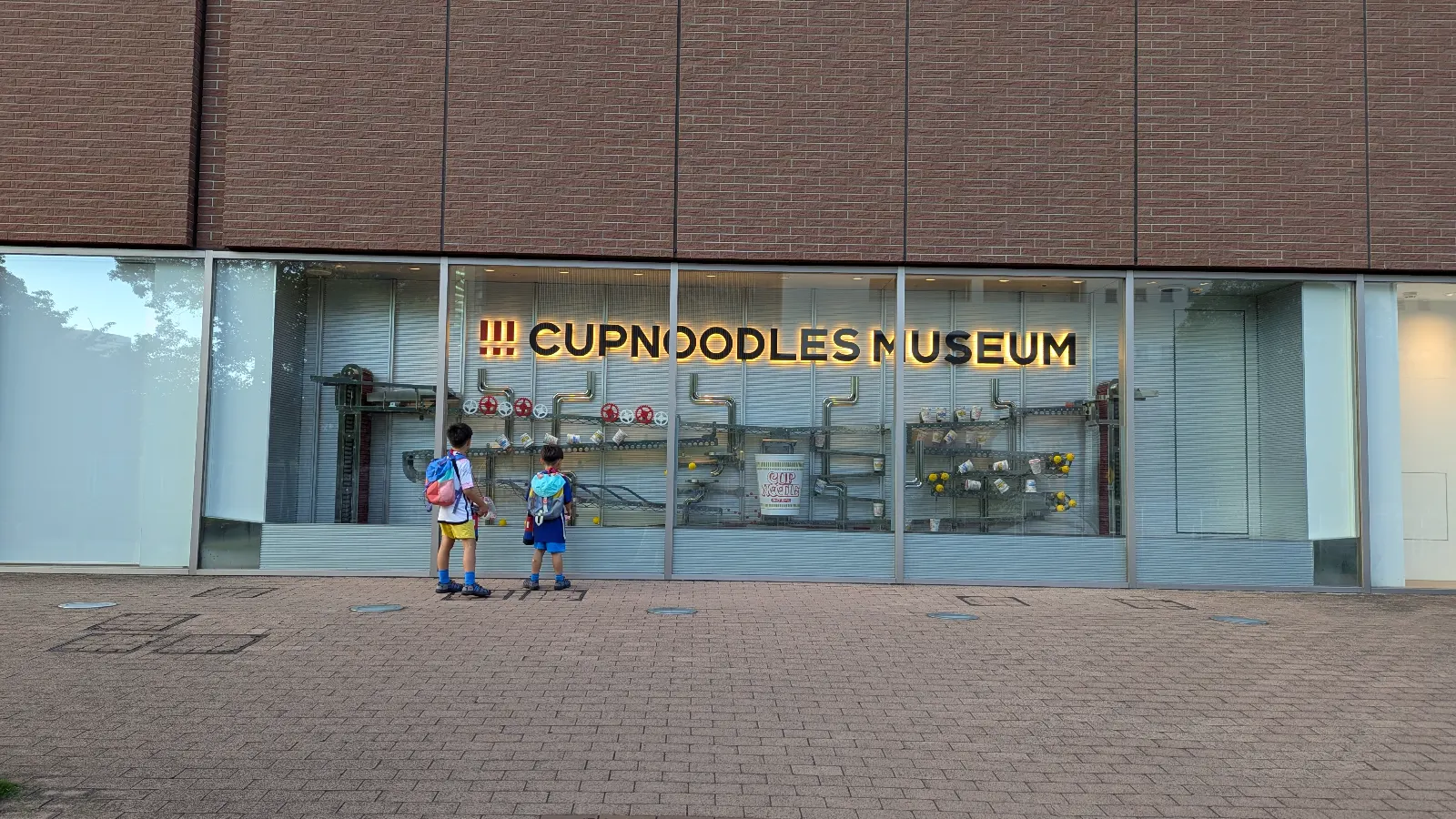
The cup a child makes here is the point, and the time slot to make it can be booked online the day before instead of chased at the door.
My CUPNOODLES Factory ¥500 a cup; Chicken Ramen Factory ¥600 or ¥1,200. Entry needs no booking; factory slots run out.
Closed Tuesdays (the next day when a Tuesday is a holiday) and over the year-end holidays.
CUPNOODLES Park sessions run 30 minutes, 25 of them play; the factory slot sets the rest.
CUPNOODLES Park takes ages 3 to elementary, 90 cm and over; My CUPNOODLES Factory has no age limit.
Barrier-free with elevators, but no stroller storage, and no strollers in the workshop and play areas.
Some links on this page are affiliate links. LuNi may earn a commission at no extra cost to you.
Is the Cup Noodles Museum worth it with kids?
The short version, before the costs, the timings and the case for each child.
Yes, and it is the rare museum where the souvenir is something the child made. At the My CUPNOODLES Factory a child makes their own cup of noodles, with no age limit, and that making is the reason to come. It suits almost every child, and it rewards most the child who needs a fixed point in the day, because the factory slot can be booked ahead and the morning built around it. The Chicken Ramen Factory is for older children, from elementary age, in pairs, with first to third graders partnered by someone of junior high age or older, so a younger sibling will need a plan for the wait outside. The one cost is the food rule: nothing from outside is eaten in the building, so meals sit around the visit.
Planning Your Visit to the Cup Noodles Museum with Kids.
Three decisions shape the day, and the first matters most. Decide the night before whether the factory is the reason for the visit, because if it is, the timed slot is bought online and the morning has a fixed point to build around. The second is the Chicken Ramen Factory, which is booked three months ahead, taken in pairs, with a partner of junior high age or older for a child in first to third grade, and closed to everyone else in the room, so a parent with a toddler needs a plan for who waits outside. The third is the stroller: it cannot be left in a locker or with staff, so it comes along for the whole visit. A Yokohama day is an easy stop between bigger ones, and this museum is its easiest morning.
Every LuNi attraction guide starts with a visit, with our own children
LuNi rates and writes about attractions only after visiting them with children. Luca and Nico were at the Cup Noodles Museum in Yokohama, and what they did there is recorded further down this page, including how each child actually met it.
Children arrive with different tolerances: for noise, for lines, for standing still, for being on their feet all day. A guide written for the average of them helps almost nobody. So every place on this site is read four ways, and each verdict says which children it already suits and what makes it work for the rest. Whoever you are bringing, the answer here is built for your family rather than for a general reader.
Restricted-movement depletion stays low when the visit is built around making things and a play attraction, so book the factory slot and plan the park.
Sensory-input depletion stays manageable when the factory runs to a booked time rather than a scramble, so buy the slot online the day before.
Unfamiliarity and unconfirmed structure ease once the factory slot is booked the day before and the Chicken Ramen rules are known, so confirm both at home.
Sustained walking and standing stay short with stations eight minutes away, elevators inside and same-day re-entry, so step out to rest when needed.
Hotels we would book for this visit.
Three Yokohama family hotels chosen by district: one in the museum’s own district, one in the park’s, and one for a family giving Yokohama a longer stay across several days.
| Property | The LuNi Reason |
|---|---|
| LUNI Pick InterContinental Yokohama Pier 8 | InterContinental Yokohama Pier 8 stands in the museum’s own district, for a family whose factory slot is booked for the morning. A child who wakes a short walk from the factory starts the day unhurried, eats a full breakfast first, and meets the slot time as the only clock that matters. |
| The Westin Yokohama In Yokohama | For a family spending several days in Yokohama with the museum as one of them: the museum is about eight minutes on foot from both Minatomirai and Bashamichi stations, so the approach stays short from anywhere along those lines, and one base serves the whole stay. |
| Hotel New Grand | Hotel New Grand stands in the district of Yamashita Park. It suits a family pairing the museum with the park, a morning making noodles and an afternoon outdoors, with the hotel at the second of the two, so the day ends where a child can still run. |
InterContinental Yokohama Pier 8
Nearby attractions, matched to your child.
Three nearby visits for what a museum of making leaves behind: open air for a child tired of a busy building, streets for a child who needs to move, and a ride with a known length.
| Pairing | Why This Solves the After-Visit | For Your |
|---|---|---|
| LUNI Pick Yamashita Park Motomachi-Chukagai Station Exit 4, 3 minutes | After a morning in a building busy enough to pause its entry, Yamashita Park gives a Sensor open air and a rose garden to wander. Sensory-input depletion eases in space, and a child who waited for a slot can walk with nowhere to be. | Sensor |
| Yokohama Chinatown Motomachi-Chukagai Station, 1 minute | In Yokohama Chinatown, about 500 meters square with some 200 Chinese restaurants among its shops, a Dynamo can keep walking from gate to gate, ten of them. A Sensor’s sensory input and an Anchor’s unfamiliarity and unconfirmed structure both run high there, so keep it to the Dynamo’s day. | Dynamo |
| Yokohama Cosmo World Minatomirai Station, about 2 minutes | The Cosmo Clock 21 at Yokohama Cosmo World takes about fifteen minutes for one revolution, a ride with a beginning, a middle and an end a child can be told in full. Unfamiliarity and unconfirmed structure ease when a ride’s length is known before boarding. | Anchor |
Yamashita Park
Motomachi-Chukagai Station Exit 4, 3 minutes For YourSensor
Yokohama Chinatown
Motomachi-Chukagai Station, 1 minute For YourDynamo
Yokohama Cosmo World
Minatomirai Station, about 2 minutes For YourAnchor
How two children actually met this attraction.
Both children came away with a cup, and neither of them was really there for the noodles. One wanted the story first, then treated the choices like a problem to solve, and kept the finished cup as an object rather than a meal. The other went straight to the making and wanted to do it again as soon as it was done. That is the museum’s quiet strength: the same stop satisfies a child who plans and a child who builds, and a family with one of each does not have to choose between them or split up for the morning. The practical lesson is time. Leave room before the factory for the careful child to read, and room after it for the eager one to ask for another turn.
Luca worked the museum in order, reading his way through the invention story and the production sequence before he would touch the cup at all. When he reached the My CUPNOODLES Factory he treated the topping station as an optimization problem rather than a free-for-all, weighing combinations instead of grabbing the ones he already liked. And once the cup was sealed, he wanted to keep it intact rather than eat it, because the finished object was the point.
This is the Anchor pattern, with a strong analytical pull. A child whose Reserve depletes through unfamiliarity and unconfirmed structure settles once the sequence is clear, and Luca made the museum a sequence to solve before he would make anything at all. Families with a similar child should let the reading come first and give the choosing time, rather than rushing to the making, because for this child the understanding is the enjoyment, and a hurried choice spoils a cup he means to keep.
Nico went straight for the making. He designed his own cup, decorated it end to end, chose his toppings on instinct, and stood watching the machine seal it shut, then wanted to see it happen again. It was the same thing he does at home with paper and tape, a physical task with an outcome he made himself, and it held him completely. He was building, not studying, and the finished cup was proof he had made something.
This is the Dynamo pattern. A child whose Reserve depletes through restricted movement stays regulated when the task is physical and ends in something he made, and the factory gave Nico exactly that. Families with a similar child should put the making near the start of the visit, add the CUPNOODLES Park for a child of the right age and size, and expect a request to do it all again, which is the sign the visit is working rather than running long.
Making something with their own hands and carrying it home is one of the most satisfying things a child can do on a trip. Here a child designs a cup, chooses what goes inside and watches it finished, and the pride in that small object can outlast every photograph from the day. Creating builds confidence in a way that watching never does. A child who has made something real, however simple, learns that ideas can become things, and that they are the kind of person who can make them.
The LUNI Rating for the Cup Noodles Museum.
One fact runs under all four verdicts: the best of this museum is making something, and the making can now be booked. So all four children are served without conditions. A child who needs to move gets hands-on stations and a play attraction; the child sensitive to input can take the scramble out of the day; the child who needs structure gets a slot time and rules that are all stated in advance; and the child whose legs tire first has short approaches, elevators and a ticket that allows re-entry. Book the factory slot the night before, and each of the four has something fixed to lean on.
Build the visit around making. The Dynamo depletes through restricted movement, and the Cup Noodles Museum is at its best as a place to make things rather than look at them. The My CUPNOODLES Factory has no age limit. The CUPNOODLES Park is a play attraction for children from three to the end of elementary school who are at least 90 centimeters tall, in thirty-minute sessions. And the Chicken Ramen Factory adds a hands-on session for elementary children and up, taken in pairs, with a first to third grader partnered by someone of junior high age or older.
Sequence is everything with this child. Book the factory slot for early in the visit, so the making comes before patience runs out, put the CUPNOODLES Park straight after it for a child who fits it, and treat the exhibits as the walk in between. Same-day re-entry with the ticket means a restless child can go outside and come back without ending the visit. Food brought from outside is not allowed, so plan snacks for the Noodles Bazaar or for before arriving.
What this means for your Dynamo: restricted movement is spent in making and play. A younger Dynamo needs the factory and the CUPNOODLES Park; an older one can take the Chicken Ramen Factory as the main event.Take the scramble out of it. The Sensor depletes through sensory input, and the load at the Cup Noodles Museum comes from people more than from the exhibits: entry can pause when the building is crowded, and the factory’s same-day numbered tickets go first come, first served. A booked slot removes that scramble. What this child meets then is a task with a clear end, a finished cup, which suits a Sensor far better than open-ended wandering through a busy building.
Keep the exits and the retreat close. Strollers cannot be left in lockers or with staff, so a younger Sensor’s stroller comes along and doubles as a place to withdraw to. The nursing room is on the first floor, and same-day re-entry means a step outside is always available. Keep the visit to the factory and one other stop rather than the whole building, and leave while it is still going well, not after it has started to go wrong.
What this means for your Sensor: sensory input stays within bounds once the scramble is booked away. A younger Sensor needs the stroller and a short route; an older one can choose one exhibit beyond the factory.Book it the night before. The Anchor depletes through unfamiliarity and unconfirmed structure, and the old unknown at this museum, whether a factory slot will still be there, can now be settled at home. An online entry ticket with a timed My CUPNOODLES Factory slot sells until midnight the day before, while they last, and cannot be changed afterward. The hours are fixed at 10:00 to 18:00, with last entry at 17:00, and the museum closes on Tuesdays, or the Wednesday when Tuesday is a holiday.
Settle every rule before the day. Tell the child the factory time, and that the date and the group cannot be changed once booked. If the Chicken Ramen Factory is part of the plan, explain that it is booked three months ahead, that children take part in pairs, a first to third grader with a partner of junior high age or older who pays too, and that nobody else goes into the room, not even a baby in a carrier. A child who knows each rule in advance meets none of them as a surprise.
What this means for your Anchor: a factory time booked at home leaves unfamiliarity nothing to guess. A younger Anchor needs the slot time repeated; an older one can do the booking with a parent.Keep the approach short and the exits open. The Sprinter depletes through sustained travel-style walking and standing, and the museum makes both easy to keep short. Minatomirai and Bashamichi stations are about eight minutes on foot, the Bayside Blue bus stops about three minutes away, and the Air Cabin station at Unga Park is about five. Inside, elevators serve the building, and the ticket allows same-day re-entry, so a rest outside does not end the visit.
Choose the approach, then place the break. Choose the bus or the nearest station rather than the twelve-minute walk from Sakuragicho, and plan one pause, at the Noodles Bazaar or outside, before the factory rather than after it. Strollers stay with the family, since the lockers will not take them and staff do not hold them, so a younger Sprinter can ride between floors by elevator. The whole visit then asks little of small legs.
What this means for your Sprinter: walking and standing stay short with a close station and same-day re-entry. A younger Sprinter needs the stroller and the elevators; an older one can walk from Bashamichi.The questions parents actually ask.
The Cup Noodles Museum is planned around its factories: how to get a My CUPNOODLES Factory slot, who can do the Chicken Ramen Factory, and who can go into the room with them. The rest is simple, from the free entry for high school students and younger to the Tuesday closing. The one rule that surprises families is food, because nothing brought from outside may be eaten anywhere in the museum, so meals are planned around the building. The museum is one of Yokohama’s family stops, and the afternoon after it can be a park, a street walk or a ride, chosen by the child.
Is the Cup Noodles Museum Yokohama worth visiting with kids?
Yes. The draw is a cup of noodles each child makes at the My CUPNOODLES Factory, at 500 yen, open to any age, while high school students and younger get in free. Book a timed factory slot online by midnight the day before, or take a same-day numbered ticket after entering.
How much are tickets?
Entry is 500 yen for adults, meaning university students and older, and free for high school students and younger. A cup at the My CUPNOODLES Factory is 500 yen, the Chicken Ramen Factory is 600 yen for elementary students and 1,200 yen from junior high up, and a CUPNOODLES Park ticket is 500 yen for a 30-minute session, 25 minutes of play.
How do you book the My CUPNOODLES Factory?
Two ways. Buy an online entry ticket with a timed factory slot, sold until midnight the day before while they last, with no changes to the date or group afterward. Or enter the museum and take a same-day numbered ticket, first come, first served. The factory itself has no age limit.
Who can do the Chicken Ramen Factory?
Children from elementary school up, in pairs; a child in grades 1 to 3 must be paired with someone of junior high age or older, who takes part and pays too. Single applications are not accepted. Booking opens at 10:00 three months ahead and closes at 18:00 the day before, and only participants enter the room, not even a baby in a carrier.
What are the opening hours?
The museum opens 10:00 to 18:00, with last entry at 17:00. It closes on Tuesdays, or on the Wednesday when Tuesday is a national holiday, and over the New Year. Entry can pause when the building is crowded, and the ticket allows same-day re-entry, so a break outside does not end the visit.
Can you bring a stroller?
Yes, and it stays with you: strollers do not fit the coin lockers, and staff do not hold strollers or large luggage. Elevators serve the building, multipurpose restrooms are on the first and fourth floors, and the nursing room is on the first floor, so a baby’s day can run from the stroller.
Can you bring food into the Cup Noodles Museum?
No. Food and drink brought from outside are not allowed in the museum. The Noodles Bazaar inside sells half portions for 500 yen, a good size for children, so plan meals around it or eat before arriving. Same-day re-entry with the ticket makes a meal outside possible too.
How do you get to the Cup Noodles Museum?
It is about 8 minutes on foot from Minatomirai or Bashamichi station, 12 minutes from Sakuragicho, 3 minutes from the Bayside Blue bus stop, and 5 minutes from the Air Cabin’s Unga Park station. With small children, the bus or the nearest station saves the most walking.
Where the Cup Noodles Museum fits your Japan trip.
Official site and opening information: Cup Noodles Museum Yokohama