Hakodate With Kids:which stop is for which child.
- Goryokaku
- Goryokaku and its tower, for tired legs
- Two Seasons at the Garden
- Monkeys in winter, splash play in summer
- Kids Plaza
- Paired with Hakodate Miraikan
- Getting There
- Shinkansen, then the Hakodate Liner
- Room to Move
- Morning Market and Children’s World
How a family trip to the port city splits between the harbor, the hills and the onsen, and where each kind of child fits.
Some links on this page are affiliate links. LuNi may earn a commission at no extra cost to you.
Hakodate with kids has two seasons at its Tropical Botanical Garden, monkeys in the winter and splash play in the summer, and twelve stops matched to the child each one serves. Goryokaku and its tower go easy on tired legs. The Hakodate Morning Market, Children’s World and the Kanemori Red Brick Warehouse give an active child room; Hakodate Miraikan with its Kids Plaza, the Mashu-maru ferry museum and the Jomon Culture Center lay out a clear plan for a child who needs one. From Tokyo, the Shinkansen and a Hakodate Liner transfer bring the family in.
Which stop is for which child.
These stops are not ordered best to worst. They are grouped by which child each one is for, across the four profiles. The reason is simple: Hakodate’s highlights are good almost everywhere, and the stop that thrills one of your children is the stop that drains another. So instead of one list, you get four short ones, organized by how each child runs out of steam. The Dynamo runs short when they cannot move. The Sensor runs short on noise and crowds. The Anchor runs short when nothing is predictable. The Sprinter runs short on walking and standing. This is the third currency The LUNI Framework asks parents to track alongside money and time, the child’s Reserve. Find your child below, and start there.
For the Dynamo
Stops that relieve restricted-movement depletion.
For a child who depletes through restricted movement, the strongest stops are the Hakodate Morning Market, Children’s World, and the Kanemori Red Brick Warehouse.
The Morning Market is wandered, not toured, and for a movement-driven child the live squid fishing pond turns the visit into a task: you hook a squid from the tank yourself, it spurts water, and a vendor slices it to sashimi on the spot. That is forward motion with a payoff, the rare market stop that discharges restricted-movement energy instead of asking a child to stand and look. A younger Dynamo works the rod with a hand on it and watches the catch prepared; an older one navigates the stalls, compares the crab and uni, and leads the family to the grill counter.
Who it costs.The Sensor and the Anchor. The aisles are narrow, loud, and wet, they crowd noticeably after 8:30 a.m. and when cruise ships are in port, and the squid fishing is first-come with no fixed schedule to confirm in advance.
How to make it work.Arrive early, ideally before 8:30, while the aisles are open and the squid are still running, so the Dynamo gets the catch and the Sensor avoids the late-morning crush. It is a minute’s walk from JR Hakodate Station, so it costs no transit reserve to reach.
If this isn’t your child: still the city’s signature breakfast and worth one pass for the donburi alone, just not a place to linger with a crowd-sensitive child once the aisles fill.Set inside Hakodate Park, Children’s World is a free-admission retro amusement park where roughly sixteen gentle rides run on per-ticket coupons and almost none carry a height limit, so a small child rides nearly everything. For the Dynamo that is continuous large-motor discharge across a contained green space, with a free petting zoo and a fountain plaza next door to keep moving between rides. A younger Dynamo cycles the merry-go-round and the airplane ride that has turned since 1956; an older one rides Japan’s oldest operating Ferris wheel, an open-gondola national cultural property, then runs the lawns of the surrounding park.
Who it costs.The Anchor, mildly. The coupon system and the choose-your-own-ride format mean nothing follows a fixed order, so a child who relies on a confirmed plan needs the sequence set before arrival.
How to make it work.Go on a clear day between mid-March and late November, when the park is open, and treat the free park lawns as the overflow discharge once the ride budget is spent. It closes in winter and in rain.
If this isn’t your child: a genuinely charming, low-cost hour for the 2-to-10 range, though most children above 10 reach its ceiling quickly.The restored brick warehouses on the bayfront are an open walk-and-browse environment rather than a fixed attraction, and for a movement-driven child that openness is the point: wide flat paths, harbor views, boutique shops, and seasonal light displays give a Dynamo a loose circuit to roam at their own pace. A younger Dynamo moves between the sweets counters and the waterfront railing; an older one works the shops and tracks the boats across the harbor.
Who it costs.The Sensor, mildly, during winter illuminations and peak weekends when the indoor lanes compress crowd noise. The outdoor harbor walk stays calm and gives an easy retreat.
How to make it work.Walk it late afternoon into early evening when the brick is lit, and keep a Sensor on the outdoor harborside rather than the busiest interior lanes.
If this isn’t your child: a waterfront stroll that folds neatly into any bay afternoon, a few minutes’ walk from the Morning Market.For the Sensor
Stops that let a sensory-loaded child recover.
For a child who depletes through sensory input, the strongest stops are the Motomachi District, Hakodate Hachimangu Shrine, and the Hakodate Tropical Botanical Garden.
Motomachi is the hillside above the bay where Hakodate’s Western-era churches, the Old Public Hall, the temple Koryuji, and the photogenic Hachiman-Zaka Slope all sit within a few quiet blocks. For a sensory-sensitive child the value is the low ambient load: residential streets, sea breeze, and long open sightlines down to the harbor instead of compressed crowd noise, with a church interior or a temple courtyard available as a genuine reset at any point. A younger Sensor decompresses on the wide slope with the bay in view; an older one takes in the 1910 Old Public Hall, the Orthodox church, and the gaslit street character at an unhurried pace.
Who it costs.The Sprinter, at high risk. The district is built on steep grades, Hachiman-Zaka in particular is a long climb, and the cumulative up-and-down draws down a low-stamina child’s Reserve well before the sights run out.
How to make it work.Ride the tram or the ropeway approach to gain the height, then walk Motomachi downhill toward the bay so a Sprinter spends gravity rather than stamina. For a Sensor, time it as the calm stretch between the louder bay stops.
If this isn’t your child: the most atmospheric walk in Hakodate, and the single circuit that takes in the Old Public Hall, the temple Koryuji, and the Hachiman-Zaka view together on one downhill route.Set on the wooded hillside of Yachigashira and ringed by tall cedars, Hachimangu is measurably quieter than the streets below, and that acoustic separation is the value for a Sensor: it is a real reset point, not just a photo stop, and the calm is a structural consequence of the tree cover and the setback from traffic. A younger Sensor settles in a few minutes of shade and the bell; an older one takes in the long stone approach and the bay views without a crowd pressing in.
Who it costs.The Sprinter. The main approach is a long stone staircase, so a low-stamina child spends real climbing reserve to reach the hall, though the grounds at the top are flat.
How to make it work.Go in the morning for the quietest air, and for a Sprinter treat the staircase as the day’s one deliberate climb rather than stacking it against another hill stop.
If this isn’t your child: a calm, cedar-shaded pause that pairs naturally with a Motomachi morning, prettiest under cherry blossoms in spring or gold leaves in autumn.This seaside garden in Yunokawa is best known for its troop of Japanese macaques soaking in a hot-spring bath, and for a Sensor it is a contained, predictable, low-noise outdoor stop: the monkeys are the single focal point, the paths are calm and uncrowded, and the sensory input stays gentle and natural rather than compressed. A younger Sensor watches the bathing monkeys and the splash zone in summer; an older one takes in the greenhouse and the seaside quiet without an acoustic ceiling.
Who it costs.The Dynamo, mildly. The garden is a watch-and-stroll stop with limited large-motor outlet, so a movement-driven sibling exhausts it fastest and needs a discharge stop chained to it.
How to make it work.Go in winter for the monkeys in the steaming bath, or in summer for the splash zone, and pair it with the nearby Yunokawa Onsen base so the trip out east does double duty.
If this isn’t your child: a distinctive, low-pressure hour with a payoff no other Hakodate stop offers.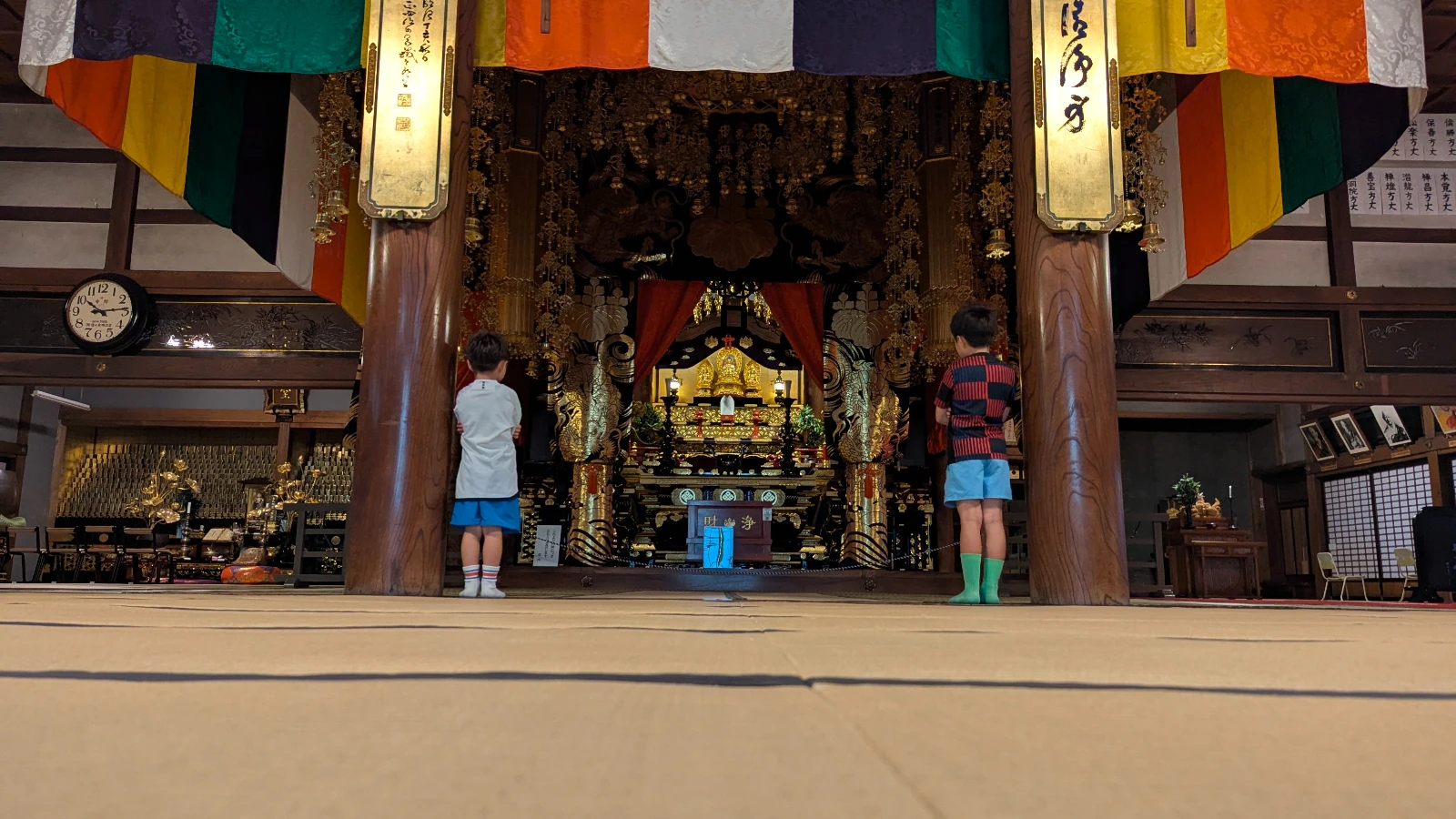
For the Anchor
Stops with confirmed, predictable structure.
For a child who depletes through unfamiliarity and unconfirmed structure, the strongest stops are Hakodate Miraikan and Kids Plaza, the Mashu-maru ferry museum, and the Jomon Culture Center with the Ofune Site.
Both sit in the Kiralis building, and the pairing works: Miraikan is a structured, sequenced digital-science floor where each interactive exhibit has a clear cause and effect a child triggers and confirms, and the 4th-floor Kids Plaza indoor playground is the contained, rules-known release valve afterward. For an Anchor that pairing is ideal, a predictable exhibit circuit with a known reward space at the end. A younger Anchor follows the motion-sensor and light exhibits step by step, then climbs in the playground; an older one works the coding and VR stations through their defined sequence.
Who it costs.The Sensor, mildly. The digital displays and the playground both concentrate sound as the floor fills, so a sensory-sensitive sibling needs the quieter exhibit corners or a café break between the two halves.
How to make it work.Buy the Miraikan-plus-playground combo so the structure is confirmed in advance, and go in the morning before the floor fills. It is a rainy-day anchor year-round, steps from the station.
If this isn’t your child: the best indoor option in central Hakodate for ages 4 to 12, and the one stop that solves a wet afternoon without leaving the station block.The Mashu-maru is a real retired ferry that once carried trains between Hakodate and Aomori, now moored as a museum you walk through on a fixed route: bridge, signal room, sleeping cabins, engine displays, in a set order that does not change. For an Anchor that defined path through a self-contained world is exactly the confirmed structure they need. A younger Anchor steps into the captain’s bridge and pretends to steer; an older one follows the maritime and vintage-train exhibits in sequence and reads how ferries once carried whole trains across the strait.
Who it costs.The Sprinter, mildly. Some deck areas involve stairs, so a low-stamina child meets a short climb or two.
How to make it work.Visit on a clear day to add the deck and harbor views, and let an Anchor know the bridge-to-cabins route in advance so the sequence is set before boarding.
If this isn’t your child: a genuinely distinctive 90 minutes for any child who loves vehicles, moored right on the waterfront near the Morning Market.Paired as one stop because they sit a short drive apart and explain each other: the Ofune Site is a UNESCO World Heritage Jomon settlement with reconstructed pit dwellings on an open grassy field, and the Hakodate Jomon Culture Center holds the artifacts dug from it, including the Hollow Clay Figurine, a national treasure. For an Anchor the value is a clear, ordered narrative, walk the ancient village outdoors, then see what was found indoors, with hands-on clay-figure workshops adding a sequenced, confirmable task. A younger Anchor moves dwelling to dwelling and shapes a clay figure step by step; an older one connects the field to the museum’s chronology and the figurine’s place in it.
Who it costs.The Sprinter, on the access side. The two sites sit outside central Hakodate and require their own transit, so the stop spends travel-style stamina before the child arrives.
How to make it work.Do the pair as a single half-day, the outdoor site first while energy is high, then the indoor center, and check the workshop timing before you go. For an indoor-history alternative closer to the center, the Museum of Northern Peoples covers Ainu and northern cultures in one calm hour.
If this isn’t your child: a quiet, genuinely educational outdoor-plus-indoor pairing for ages 8 and up, a deliberate choice rather than a drop-in given the location.For the Sprinter
Short or flat stops with little sustained walking.
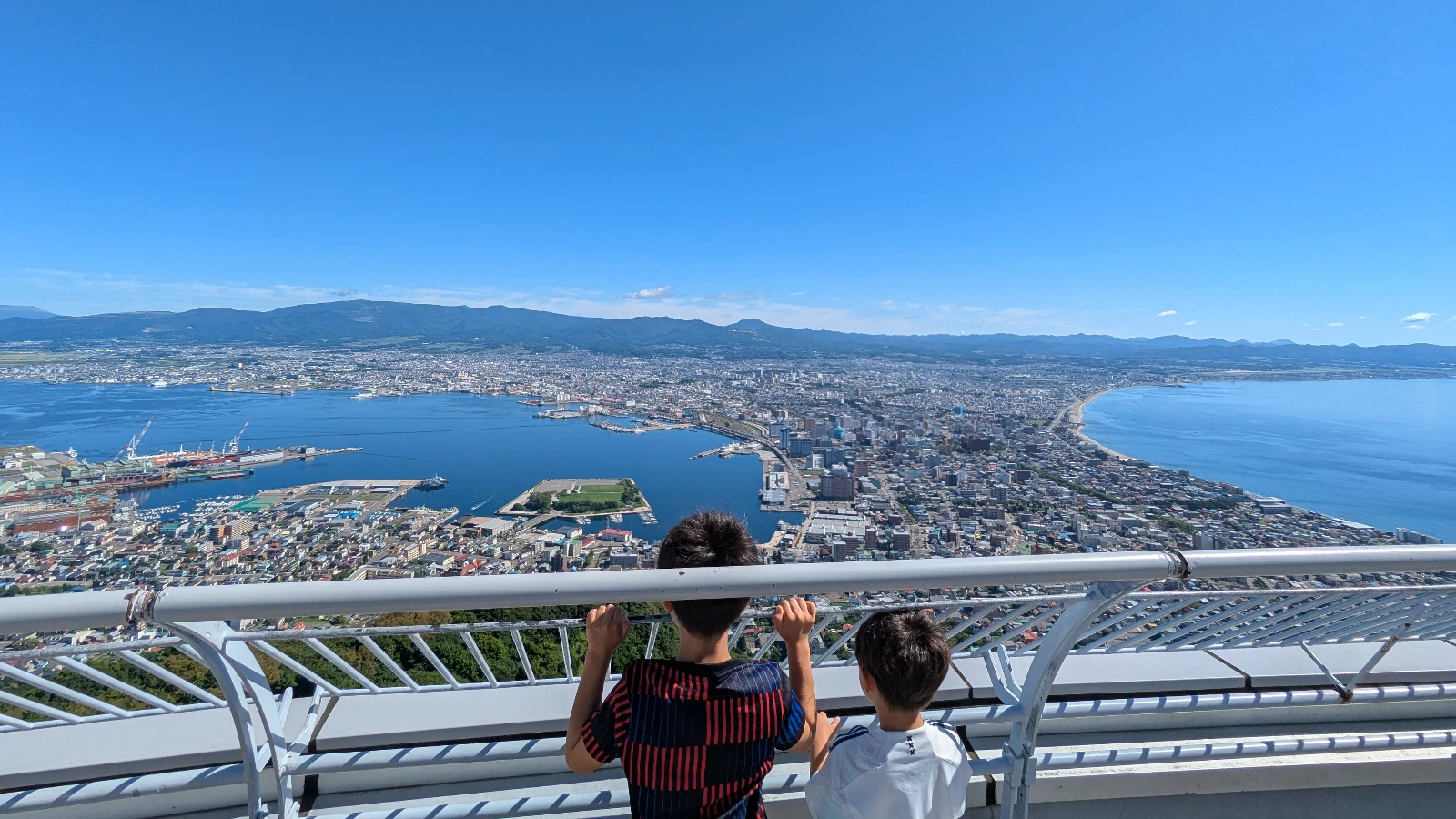
For a child who depletes through sustained walking and standing, the strongest stops are Goryokaku and its tower, the Mt. Hakodate ropeway, and Onuma Quasi-National Park.
Hakodate’s star-shaped fort sits inside a park with a moat loop, and for a Sprinter the walk is optional in length: the loop can be cut short at any point. A younger Sprinter is strolled part of the moat loop and taken up the tower to spot the star below; an older one walks the full perimeter at an even pace and reads the star design from the deck.
Who it costs.The Anchor, mildly. The park is open and free-form rather than a fixed route, so a child who wants a confirmed sequence does best with the tower-first, then moat-loop plan set in advance.
How to make it work.Take the tower first for the orientation view, then walk the moat loop at whatever length the legs allow. Spring cherry blossoms and autumn gold are the peak windows; mornings are calmest.
If this isn’t your child: the park alone is free, flat, and the most substantial green space in the city, worth a visit with no tower ticket at all.The ropeway is the whole reason this view works for a low-stamina child: it lifts the family to the summit in a few minutes, removing the climb entirely, and the summit deck is served by elevators, with a café to rest in. For a Sprinter that is a high-return stop at almost no stamina cost, best taken when the legs are already tired. A younger Sprinter rides the cable car as the event itself; an older one takes the open deck and the famous night view across the bay.
Who it costs.The Sensor, at the sunset peak. The deck is busiest and most crowded in the 30 minutes around sunset, the exact window everyone wants, so a sensory-sensitive child meets the densest crowd of the visit.
How to make it work.For the night view, arrive at least 30 minutes before sunset for a railing spot, or for a Sensor go just after full dark when the crowd thins but the lights are out. Check the ropeway is running, as wind can pause it.
If this isn’t your child: the signature Hakodate experience and worth the ride for the view alone, fully accessible once you are at the summit.A short train ride north of the city, Onuma is a lakeside park where small islands are linked by footbridges into flat, well-marked walking courses of several lengths, so a family chooses the length to match the legs. For a Sprinter that is the ideal day trip: scenery and movement with no sustained climb, the loop ended whenever Reserve runs low. A younger Sprinter is strolled or carried across the bridges at the shortest course; an older one walks a longer island-hopping route with Mt. Komagatake reflected in the water.
Who it costs.The Anchor, on the transit. The day trip adds an unfamiliar train leg and a change of setting, so a child who needs structure does best with the route and return time confirmed in advance. Most Hakodate-to-Sapporo limited expresses stop here, making it an easy add.
How to make it work.Take the Limited Express Hokuto or a local train, and pick the short bridge course first, extending only if the legs hold. On the same coast road sits the Tobetsu Trappist Monastery, whose tree-lined approach and cookie-and-soft-serve shop make a brief stop, though the monastery itself is closed to visitors.
If this isn’t your child: the most scenic half-day near Hakodate, free to enter, and a natural break point on the journey to or from Sapporo.Open with the child who runs short first.
The order of a Hakodate day is set by Reserve, not by the map. Each route opens with the stop that protects the named child, then chains to the nearest compatible one.
When to go, and what costs nothing.
Mornings hold the most Reserve, so the single-route and hands-on stops that small children manage best, the Morning Market and Children’s World, belong early before crowds build. The ropeway and the Motomachi slopes close the day, the first because the night view is the point, the second because walking downhill at dusk spends gravity rather than stamina. The free stops carry real weight: Goryokaku Park, the Motomachi streets, Hachimangu Shrine, and the Kanemori harborside all cost nothing, and Children’s World charges only per ride. Several of those free stops are also among the calmest in the city, so for a family watching both budget and Reserve, the low-cost route and the reserve-protecting route are largely the same.
Season matters more here than in most cities: the Botanical Garden monkeys peak in winter, Children’s World and Onuma close or thin out from late November to mid-March, and spring and autumn bring the cherry blossoms and gold leaves that make Goryokaku and the shrine worth timing for.
Three bases that fit a family’s Reserve.
A shortlist chosen for location logic, not price tier. Two bay-and-onsen anchors and one transit-efficient base, no budget bunks.
| Property | The LuNi Reason | Budget |
|---|---|---|
|
LUNI Pick
La Vista Hakodate Bay
Bayfront, rooftop onsen
|
A harborfront anchor that solves two Reserve problems at once: the rooftop hot springs let a sensory-loaded child decompress fully at day’s end, and the bay location puts the Morning Market and Kanemori within walking distance, so day one opens with no transit spent. Its celebrated breakfast buffet settles the morning before the day begins. | ¥¥¥ |
| Bourou Noguchi Hakodate Yunokawa Onsen, private baths | The recovery base, a modern ryokan at Yunokawa Onsen with private open-air baths and family suites. This is the choice for the family whose priority is end-of-day decompression over walking-distance sightseeing: an Anchor holds a settled multi-night routine, and the private baths matter for a Sensor who cannot manage a communal onsen. The Botanical Garden monkeys sit nearby. | ¥¥¥ |
| La’gent Stay Hakodate Ekimae Beside Hakodate Station | The transit-efficient base, beside Hakodate Station with family rooms and public baths. For a Sprinter family, minimizing the daily station walk is the single highest-leverage lodging decision, and this delivers it: shortest reach to the trams, the Hakodate Liner, and the Onuma day trip, without dropping to a compact budget room. | ¥¥ |
Budget: ¥¥¥
Budget: ¥¥¥
Budget: ¥¥