Sapporo TV Tower with Kids: The View Up, the Park Below.

A tower you reach without going outside is the easiest view in Sapporo for tired legs, and the dullest hour of the trip for a child who needs to move.
Preschoolers free; birthdays free within three days either side. Sold at the 3F deck counter.
No weekly closing day; hours may change for events, and waits build at the Snow Festival.
One deck visit: no re-entry to the deck, and a day-and-night ticket covers two.
Preschoolers go up free; elementary and junior high pay the child rate.
Strollers are not lent, and there are no lockers; the nearest are at Odori Station Exit 27.
Some links on this page are affiliate links. LuNi may earn a commission at no extra cost to you.
Is Sapporo TV Tower worth it with kids?
The short version, before the costs, the timings and the case for each child.
Yes, as a short stop, and it is at its best as the start or the end of a day in the park it stands over. The tower is one of the easiest sights in Sapporo to reach: you can walk underground from Sapporo Station and come up at its door, and the visit is one ticket and one deck. It stays open late, so it can be the after-dinner outing that tired children still enjoy. What it gives a moving child is very little to do, and the building is less equipped for small children than its fame suggests, which is worth knowing before the ride up. Go up, come down, and let the park do the rest.
Planning Your Visit to Sapporo TV Tower with Kids.
The tower asks for almost no planning, which is exactly why a few small decisions matter. Decide when: daytime, with the park below, or evening, with the city lit, or both on one day-and-night ticket, because a single ticket does not let you back onto the deck. Decide how you arrive: underground from Sapporo Station keeps a family out of the weather the whole way, which matters in winter. And decide what comes before: the third floor and the basement food court are the places to stop on the way up, not after, while the child still has patience to spare. Settle those three and the visit takes care of itself. The park at its foot is the natural partner, and together they make one easy evening of a Sapporo week.
Every LuNi attraction guide starts with a visit, with our own children
LuNi rates and writes about attractions only after visiting them with children. Luca and Nico were at Sapporo TV Tower, and what they did there is recorded further down this page, including how each child actually met it.
Children arrive with different tolerances: for noise, for lines, for standing still, for being on their feet all day. A guide written for the average of them helps almost nobody. So every place on this site is read four ways, and each verdict says which children it already suits and what makes it work for the rest. Whoever you are bringing, the answer here is built for your family rather than for a general reader.
Restricted-movement depletion builds on a deck made for looking, so do the park below first and keep the time upstairs short and definite.
Sensory-input depletion stays low on a single deck visit away from festival crowds, so avoid Snow Festival week and consider the evening.
Unfamiliarity and unconfirmed structure ease on a visit with one counter, one deck and no re-entry, so describe the three steps first.
Sustained walking and standing stay short when the route is underground to Exit 27 and the visit is one deck, so arrive from below.
- Cost
- ¥1,200 adults / ¥600 elementary and junior highPreschoolers free; birthdays free within three days either side. Sold at the 3F deck counter.
- Booking
- Walk up to the 3F counterGroup bookings get no priority, so families lose nothing by walking up.
Hotels we would book for this visit.
Three hotels in central Sapporo, for a tower that works best as a short stop folded into a city stay: one on the tower’s own street line, and two a few streets away.
| Property | The LuNi Reason |
|---|---|
| LUNI Pick Hotel Monterey Edelhof Sapporo | Hotel Monterey Edelhof sits on the tower’s own street line, which makes the after-dinner visit an easy one. A child who wants to see the city lit can go up after the evening meal and be back in the room soon after, with bedtime barely moved. |
| Sapporo Grand Hotel | A hotel a few streets from the park, for a family that wants a larger hotel and the tower and park as part of every day rather than a single outing. The tower’s late hours suit a city-center hotel: an outing after dinner, and the view of the lit city. |
| Sapporo Prince Hotel | The choice at the western end of the city center, closer to the rose-garden end of Odori Park than to the tower. It suits a family that walks the park from west to east and finishes at the tower, with the deck as the last stop of the day. |
Hotel Monterey Edelhof Sapporo
Nearby attractions, matched to your child.
Three pairings for what a deck leaves unmet: a child who needs to move straight after, a child who wants another place with a fixed shape, and a child who wants a quiet museum next.
| Pairing | Why This Solves the After-Visit | For Your |
|---|---|---|
| LUNI Pick Odori Park Sapporo At the tower’s foot, the park’s West 1 block | The deck asks a moving child to stand and look; Odori Park, beginning at the tower’s foot, gives them twelve blocks to cover, with play equipment in the middle blocks in season. Restricted-movement depletion is spent the moment the child is back on the ground. | Dynamo |
| Sapporo City Sewage Science Museum Namboku Line from Odori to Asabu | The Sapporo City Sewage Science Museum is another visit with a clear shape: free, set hours, a known walk from Asabu’s Exit 2. Unfamiliarity and unconfirmed structure ease when the next stop can be described in full before the train leaves. | Anchor |
| Sapporo Olympic Museum Tozai Line to Maruyama-Koen, then a bus | The Sapporo Olympic Museum keeps each activity to a couple of minutes, with a film and a history floor for a slower pace. Sensory-input depletion stays low when a museum can be taken one short station at a time, with pauses between. | Sensor |
Odori Park Sapporo
At the tower’s foot, the park’s West 1 block For YourDynamo
Sapporo City Sewage Science Museum
Namboku Line from Odori to Asabu For YourAnchor
Sapporo Olympic Museum
Tozai Line to Maruyama-Koen, then a bus For YourSensor
How two children actually met this attraction.
Two children went up the same tower and came down with different stories. One arrived with a guess about how tall it was, and the whole visit went into testing that guess, from the deck and then from the ground looking up; the view mattered less than getting the number right. The other barely looked out at all. He found the one thing in the building he could work with his own hands, made a souvenir with it, and rated that the best part of the day. Neither was much interested in the panorama itself, which is what the tower is famous for. Between them they show that a viewpoint works on children through what it lets them figure out or do, and rarely through the view.
Luca arrived with a fixed idea of how tall the tower was, and the visit spent itself correcting it. Up on the deck he studied how far down the park and streets sat, and then, back at the base, he looked straight up the structure and said it felt much higher than he had thought. He kept returning to the gap between his estimate and the real thing, working out where he had been wrong.
This is the Anchor pattern. A child whose Reserve depletes through unfamiliarity and unconfirmed structure settles by building an accurate picture of a place, and Luca spent the visit replacing a guess with his own measurement. Families with a similar child should treat that working-out as the point rather than a delay, and give the child time on the deck and again at the base, looking up, before anyone suggests moving on to the next stop.
Nico did not settle at the glass for long. What held him was the souvenir coin press, where he fed in his own money, worked the machine, and came away with a pressed TV Tower medal he had made himself. He talked through the whole process and rated making the coin the best part of the visit, well above standing to look at the view.
This is the Dynamo pattern. A child whose Reserve depletes through restricted movement meets a look-only space by finding the one thing in it that can be done with the hands. Families with a similar child should keep the time on the deck short, let the child go looking for whatever can be worked or made, and put the open ground of the park straight after, so the movement comes before the child has to ask for it.
A tower reached without stepping outside is a reminder that the easiest outings can still be memorable ones. For a tired child, riding up after dinner to see a city lit below turns an ordinary evening into a small event, and a view that costs almost no walking can mean more than a long day of sights. Children do not measure a trip by effort. An hour chosen for its gentleness, shared at a window above the city, often becomes one of the calm memories a family carries home.
The LUNI Rating for Sapporo TV Tower.
One fact sits under all four verdicts: the tower is a single, short visit with nothing to do but look. That is its strength for three kinds of child. A child who takes in every sound gets one deck and a quick exit, a child who needs structure gets one counter, one deck and no re-entry, and a child who tires on foot can arrive underground from Sapporo Station. It is the reason one child needs a plan: a child who needs to move has very little to move on. A moving child gets room at Es Con Field Hokkaido on a non-game day.
Park first, deck short. The Dynamo depletes through restricted movement, and an observation deck is a room built for standing and looking. The visit up the tower offers a moving child very little to do, and the deck has no cafe and no re-entry, so there is no stepping out and coming back once the energy starts to build. The difficulty is that simple: this child will be ready to leave well before anyone else in the family.
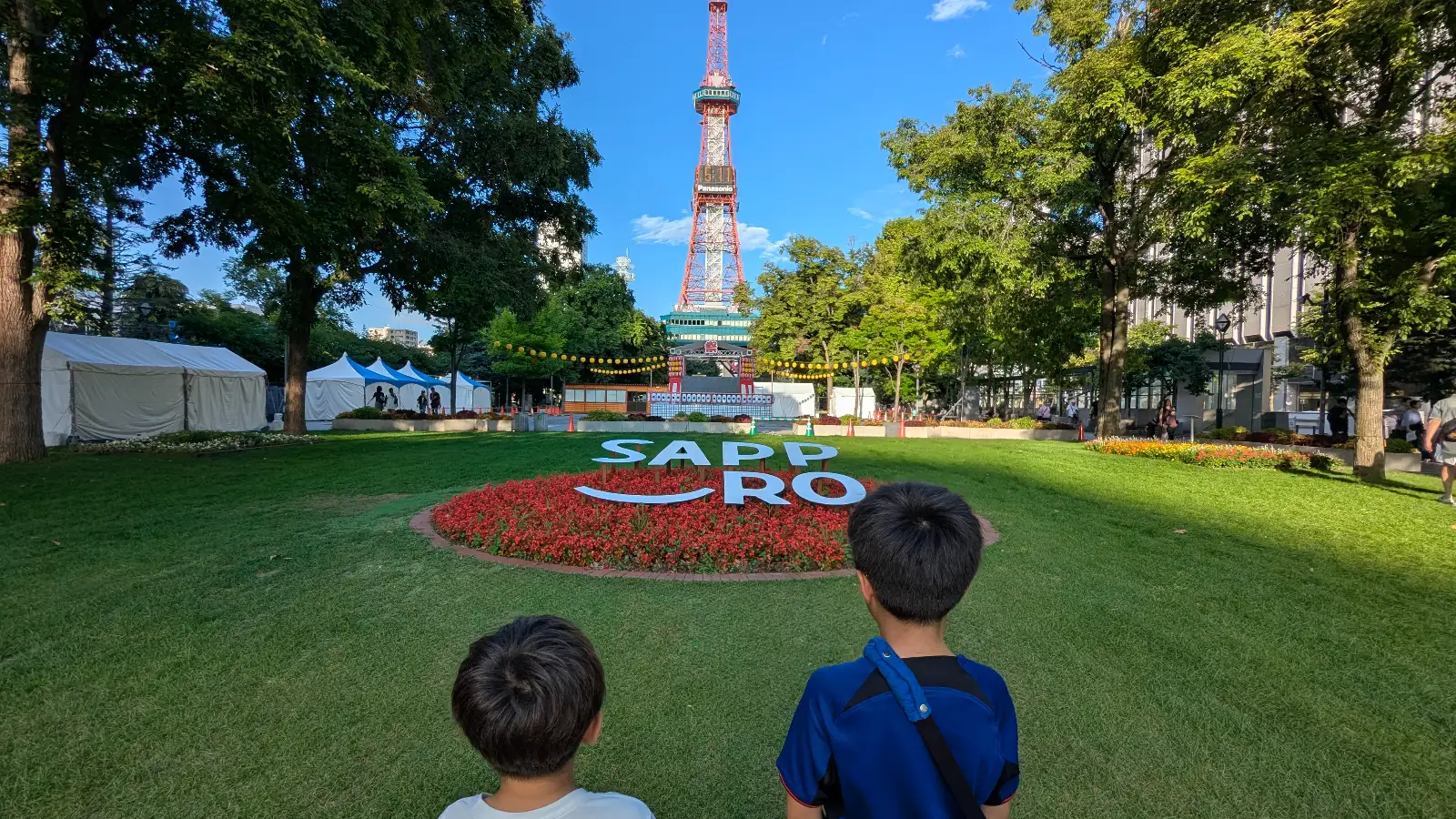
The park at the tower’s foot is the answer. Odori Park begins at the West 1 block, right where the tower stands, and its play equipment and play slope sit at West 6 to 9, in season. Put the park first, so the child arrives at the tower having already moved, and keep the time upstairs to a look rather than a stay. Or reverse it: a quick deck visit, then the park as the reward. Either way, the movement belongs to the ground.
What this means for your Dynamo: restricted movement builds on the deck. A younger Dynamo needs the play blocks first and a very short deck visit; an older one can manage the deck if the park comes straight after.Choose the hour, and avoid the festival. The Sensor depletes through sensory input, and the tower is one of the lighter loads in central Sapporo: a single visit, one deck, and a way down whenever the child wants it. What changes the picture is the calendar. During the Snow Festival and other busy periods, visitors wait to go up, because the festival brings its crowds to the park below.
Choosing the hour does most of the work. Outside festival weeks, the tower is an easy daytime stop. The evening is the other option: the tower is open until ten, and after dinner the deck shows the city lit up, a different way to see the same view. Arriving underground from Sapporo Station also spares the child the street, the traffic and the weather on the way in, which counts for a child who arrives already tired of noise.
What this means for your Sensor: sensory input stays low outside festival crowds. A younger Sensor needs a quiet daytime visit and the underground route; an older one can choose the evening view of the lit city.Describe the three steps first. The Anchor depletes through unfamiliarity and unconfirmed structure, and the tower has an unusually simple shape. Tickets are sold at one counter, on the third floor. There is one observation deck. The rule on the ticket is clear: once you leave the deck, you cannot go back, unless you hold a day-and-night ticket for two visits. The hours are nine in the morning to ten at night on every open day, though events can change them.
Before arriving, lay that shape out for the child: the underground walk, Exit 27, the third-floor counter, the deck, the way down. Say the rule about re-entry out loud, so leaving the deck is a decision the child expects rather than a door that closes behind them. And plan the restroom stop on the third floor, because the deck has none, so the visit does not end early for a reason nobody named.
What this means for your Anchor: a three-step visit leaves unfamiliarity little room. A younger Anchor needs the steps named, counter, deck, way down; an older one can plan the day-and-night ticket.Arrive from below, and keep it to the deck. The Sprinter depletes through sustained travel-style walking and standing, and the tower’s strength is how little of either it takes to arrive. A family can walk underground from JR Sapporo Station, along the Ekimae-dori walkway and through the Aurora Town mall, and come up at Exit 27, right at the tower. The visit itself is one deck and a way down; the outside stairs open only for stair-climb events.
What the tower does not offer is support for a child who tires: no stroller loan and no accessible restroom in the building. The lever is to keep the visit short and to bring what the tower lacks. Carry a small child or bring your own stroller, use the third floor before going up, and set the length of the deck visit before arriving, so the standing ends before the legs do.
What this means for your Sprinter: the walking is short if you come underground. A younger Sprinter needs a stroller from home and a brief deck visit; an older one can take the underground route and the deck without strain.The questions parents actually ask.
The TV Tower is open late, preschoolers go free, and it can be reached underground from Sapporo Station, so getting a family up is the easy part of the evening. The exception is facilities for small children, which are thinner than a family expects. Plan it as a short stop with a clear start and an end, and a small child will not miss what the tower lacks. There are no lockers at the tower, so leave the bags at the hotel. Touching, which the tower offers none of, is what Sapporo Science Center does all day, on another morning.
Is Sapporo TV Tower worth visiting with kids?
Yes, as a short stop rather than an outing. Its door is at Exit 27 of Odori Station, the whole route from Sapporo Station can be walked underground, and the visit is one ticket and one observation deck, open until 22:00. Preschoolers go free. Pair it with Odori Park at its foot, which gives a moving child what the deck cannot.
What are the Sapporo TV Tower opening hours?
The tower opens 9:00 to 22:00, with last entry to the deck at 21:50, and hours can change for events. There is no weekly closing day; the whole building closes on facility inspection days and at New Year. Tickets are sold at the counter on the third floor.
How much are Sapporo TV Tower tickets?
Adults, from high school up, pay 1,200 yen, and elementary and junior high students 600 yen; preschoolers are free. A day-and-night ticket covers two deck visits within three days of purchase. Visitors enter free within three days either side of their birthday. Tickets are sold at the third-floor counter.
How do you get to Sapporo TV Tower?
Take the subway to Odori Station and use Exit 27, which opens right at the tower. From JR Sapporo Station you can walk underground the whole way, along the Ekimae-dori underground walkway and through the Aurora Town mall, and an underground route also connects it to Susukino.
Is Sapporo TV Tower stroller-friendly?
Not especially. The tower does not lend strollers, the building has no wheelchair-accessible restroom, and there are no restrooms on the deck, so use the third floor before going up. The only diaper table is in the third-floor women’s restroom. There are no lockers; the nearest are at Odori Station Exit 27.
Can you leave the deck and come back?
No. Once you leave the observation deck, the same ticket does not let you back in. For a family that wants the view by day and again after dark, the day-and-night ticket covers two visits. The deck has free Wi-Fi, but no cafe and no restrooms, so eat and use the third floor first.
Where can families eat at Sapporo TV Tower?
In the basement food court, which is part of the tower building and closes with it on inspection days. There is no cafe on the observation deck, so plan a meal before or after going up, not during. With children, eat first: a hungry child on a deck with no food is the fastest way to end the visit.
When is Sapporo TV Tower busiest?
During the Sapporo Snow Festival and other busy periods, when visitors wait to go up, and group bookings get no priority over families. Evenings are the other option: the tower stays open until 22:00, so a family can come after dinner and see the city lit up from the deck instead.
Where Sapporo TV Tower fits your Japan trip.
Official site and opening information: Sapporo TV Tower