Hill of the Buddha with Kids: A family visitor’s guide.
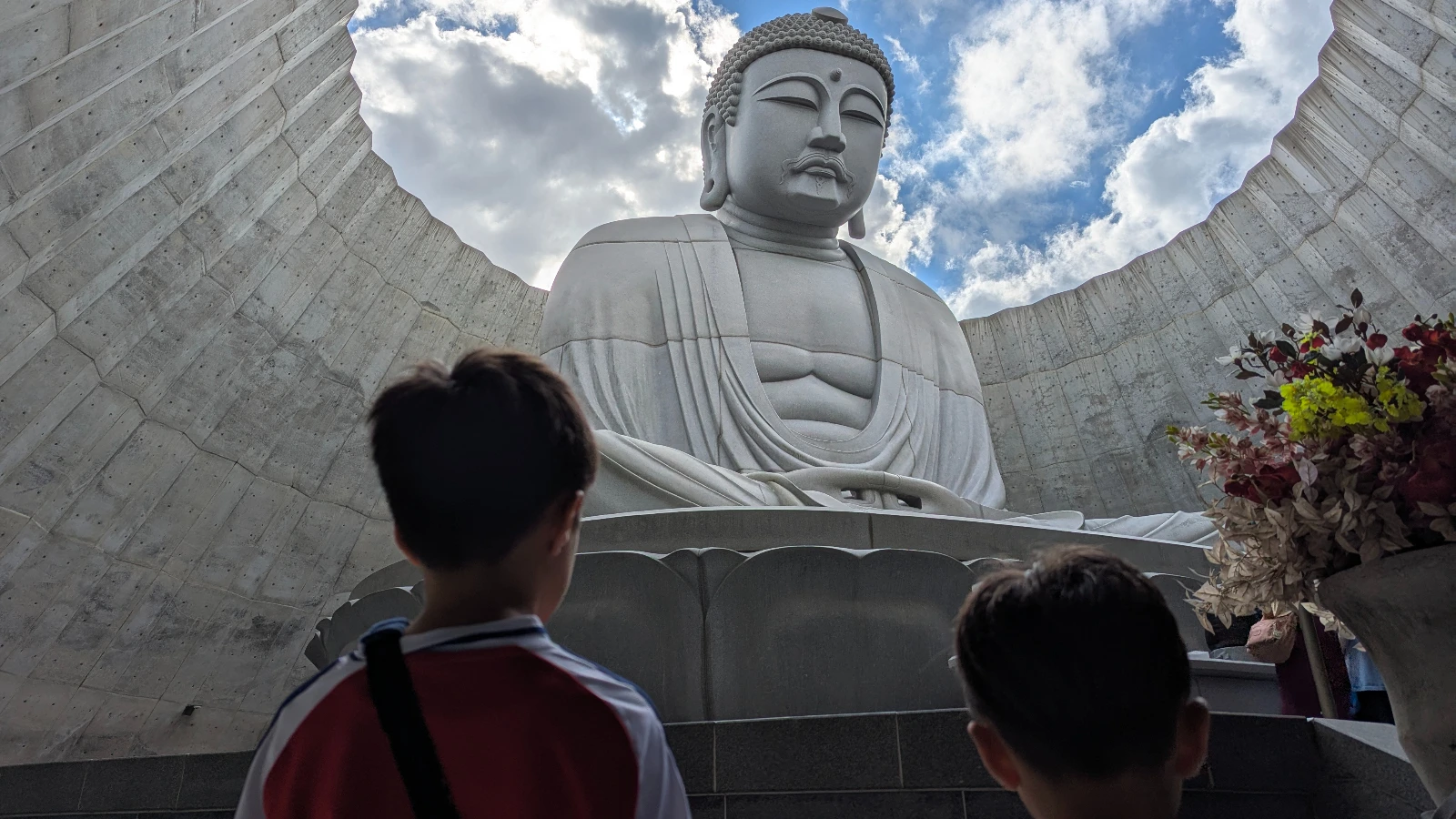
A great Buddha hidden inside a hill is one of Sapporo’s most striking sights, and it sits in a cemetery that asks children to walk and keep quiet.
Free through elementary school; pay at the machine on arrival, or buy a web ticket from the cemetery’s site.
From November to March, 10:00 to 15:00; the water garden drains from November 4.
The approach is 135 m, through a 40 m tunnel.
Old enough to walk quietly through a cemetery; free until the end of elementary school.
Wheeled vehicles are banned, except wheelchairs and strollers.
Some links on this page are affiliate links. LuNi may earn a commission at no extra cost to you.
Is the Hill of the Buddha worth it with kids?
The short version, before the costs, the timings and the case for each child.
Yes, and it is one of the few sights near Sapporo that is genuinely built for a child to discover. You walk up an approach, into a tunnel, and only at the end does the whole Buddha appear, with only its head rising above a hill of lavender. That reveal works on children in a way a statue on a plinth never does. What a parent needs to know first is where it is. The Buddha sits inside a cemetery, and the grounds are a place of remembrance, so children walk rather than run, and voices stay low. For most children that is easy for the length of the visit. Go with that expectation set, keep the visit to the Buddha itself, and let the running happen somewhere else afterward.
Planning Your Visit to Hill of the Buddha with Kids.
Three things shape the day, and all of them are settled before you leave. The first is the rules, because this is a cemetery before it is a sight: talk them through at breakfast, so no child hears them for the first time at the gate. The second is getting there, which is a subway ride to Makomanai and then a bus to the end of its line, or a drive, and the bus runs to a seasonal schedule worth checking the night before. The third is the season. Winter shortens the hours and drains the water garden, and summer leaves both in place. Plan the afternoon around somewhere a child can move, such as Sapporo Science Center, because the morning asks children to be still.
Every LuNi attraction guide starts with a visit, with our own children
LuNi rates and writes about attractions only after visiting them with children. Luca and Nico were at Hill of the Buddha, and what they did there is recorded further down this page, including how each child actually met it.
Children arrive with different tolerances: for noise, for lines, for standing still, for being on their feet all day. A guide written for the average of them helps almost nobody. So every place on this site is read four ways, and each verdict says which children it already suits and what makes it work for the rest. Whoever you are bringing, the answer here is built for your family rather than for a general reader.
Restricted-movement depletion stays low on a visit walked from the approach to the Buddha and back, so keep it moving at a walk.
Sensory-input depletion stays low in open air where quiet is the rule for everyone, so let the tunnel and the reveal set the pace.
Unfamiliarity and unconfirmed structure ease on one path with one destination, approach, tunnel, Buddha, so describe that sequence to the child before arriving.
Sustained walking and standing come mostly from the journey and the wider grounds, so drive or bus to the Buddha and skip the extra loop.
Hotels we would book for this visit.
Three city bases for a family making the Buddha a morning out. Each is a starting point for the subway to Makomanai and the bus beyond it, with the family back in the city by lunch.
| Property | The LuNi Reason |
|---|---|
| LUNI Pick JR Tower Hotel Nikko Sapporo | The Buddha is a morning trip, not a stay, and a large city hotel suits that shape: an early start, the subway to Makomanai, the bus to the end of its line, and back for lunch. Choose it if the rest of the trip is city-based. |
| Mitsui Garden Hotel Sapporo West | Mitsui Garden Hotel Sapporo West is for a family spending several nights in Sapporo: it is a steady base for the whole week, and on the day a tired child cannot face the bus and the subway again, a taxi back from the cemetery is the answer. |
| Keio Plaza Hotel Sapporo | Keio Plaza Hotel Sapporo, a large city hotel, is for a family that wants the same central base all week, then sets out for the subway to Makomanai and the quiet morning at the Buddha, with the city waiting at the other end of the ride. |
Mitsui Garden Hotel Sapporo West
Nearby attractions, matched to your child.
Three pairings for what a quiet morning leaves behind: energy held in at a walk, a child who wants a task with a start time, and legs that want the next stop at a subway exit.
| Pairing | Why This Solves the After-Visit | For Your |
|---|---|---|
| LUNI Pick Odori Park Sapporo Namboku Line back to Odori | The Buddha asks a moving child to walk and keep quiet all morning. Odori Park is where the rest of that energy goes, twelve blocks of open park with play equipment in season, and restricted-movement depletion has nowhere left to build once the child is loose on the lawns. | Dynamo |
| Sapporo Ainu Culture Promotion Center Both by bus from Makomanai Station | The Sapporo Ainu Culture Promotion Center is reached from the same station and gives the day a hands-on half: touchable exhibits and one craft session per child. Unfamiliarity and unconfirmed structure ease when the afternoon holds one task with a known start and length. | Anchor |
| Sapporo TV Tower Namboku Line to Odori, then Exit 27 | After the bus and the cemetery walk, the Sapporo TV Tower starts at the subway exit: it stands right at Exit 27 of Odori Station, with one ticket and one deck. Sustained walking and standing stay lower when the second sight of the day starts at the subway exit. | Sprinter |
Odori Park Sapporo
Namboku Line back to Odori For YourDynamo
Sapporo Ainu Culture Promotion Center
Both by bus from Makomanai Station For YourAnchor
Sapporo TV Tower
Namboku Line to Odori, then Exit 27 For YourSprinter
How two children actually met this attraction.
Two children stood in front of the same Buddha and did very different things with it. One barely looked at the statue in front of him; he was already planning a better visit, deciding which season would show the place at its best and wanting to picture it before he committed. The other looked at almost nothing else, and walked around the figure again and again to watch its face change. Neither was interested in the architecture or the history, though those are the reasons most adults make the trip. Between them they show what the place offers a child: something to imagine and something to walk around, and a parent who knows which one they are bringing can set up the visit before the tunnel.
Luca was less interested in standing in front of the Buddha than in working out which season was the right one to come back for. He weighed it out loud, deciding the hill would look best either in spring with the flowers or in deep winter under snow. Before settling on either, he wanted to know exactly what each version would look like, treating the visit as something to plan rather than simply take in.
This is the Anchor pattern. A child whose Reserve depletes through unfamiliarity and unconfirmed structure settles into a place by picturing it before arriving, and Luca was doing exactly that with the seasons. Families with a similar child should show them the version of the hill they are about to see, the season and the sequence of approach, tunnel and Buddha, so the visit arrives already imagined and the child can spend it looking rather than guessing.
Nico went straight for the face. He fixed on the Buddha’s expression as the best thing on the hill and would not stay in one place about it, circling to look from one side, then the other, then craning up from directly below to see how the face changed with each angle. The tunnel and the history did not hold him at all; the giant face did, because it gave him something to move around.
This is the Dynamo pattern. A child whose Reserve depletes through restricted movement meets a still monument by moving around it, and Nico turned the Buddha into a circuit walked at his own pace. Families with a similar child should give that circuit room, make clear before arriving that it is walked, not run, and keep the visit short enough that the walking stays a choice rather than a restriction, with a park waiting afterward.
A great Buddha revealed at the end of a tunnel offers a child a moment of awe that asks for quiet rather than noise. Holding back a shout in a place of stillness is hard for children, and managing it teaches self-control in a way that feels meaningful rather than imposed. The reveal rewards patience with beauty. A child who has walked quietly toward something astonishing learns that some of the most powerful experiences arrive in silence, and are worth approaching slowly, one step at a time.
The LUNI Rating for Hill of the Buddha.
One fact sits under all four verdicts: the Hill of the Buddha is a short, designed walk inside a place of remembrance. The architecture does the work, an approach, a tunnel and then the whole figure, and the setting sets the terms, walking pace and low voices. A child who takes in every sound gets one of the calmest visits in Sapporo, and a child who needs structure gets a single path with a single destination. A child who needs to move gets a walk, not a run. The real cost is the journey, a subway and then a bus, before the walking even starts.
Keep the visit moving, at a walk. The Dynamo depletes through restricted movement, and what holds it together is that the visit keeps the child moving from start to finish. The visit is a walk from start to finish: up the long approach, through the tunnel, into the hall with the Buddha, and back out, all of it on foot and at the child’s own pace. What the place does not allow is running, anywhere in the cemetery grounds, and that sets the limit on how much energy the visit can take.
Keep the walking continuous and the stops short. Let the child lead the approach, give them the job of spotting the Buddha’s head from outside, and let them walk around the figure at their own pace, as long as it stays a walk. Then leave while the walking is still a pleasure, and put somewhere open next in the day, where the energy the cemetery held in can finally go.
What this means for your Dynamo: restricted movement stays low while the visit keeps walking. A younger Dynamo needs a short visit and a park straight after; an older one can take the full approach and circuit at a steady walk.Let the tunnel set the pace. The Sensor depletes through sensory input, and few sights in Sapporo ask so little of it. The visit is outdoors, on a hill, in a cemetery where every visitor is asked to keep quiet, so the usual noise of a sightseeing crowd is held down by the setting itself. The design adds a sequence of calm spaces rather than a single loud one: the approach, a water garden in the warmer months, and a tunnel that opens onto the Buddha.
Going at the child’s speed is nearly the whole plan. The walk is theirs to pace, so a child who needs a minute at the tunnel’s mouth can have it. The one sensory change worth naming is the season. In winter the hours are shorter, the water garden is drained, and snow covers the ground, which gives a different, starker walk, so say which version you are going to see.
What this means for your Sensor: sensory input stays low where quiet is the rule. A younger Sensor needs the sequence described before the tunnel; an older one can take the walk alone, at their own pace.Describe the sequence before you arrive. The Anchor depletes through unfamiliarity and unconfirmed structure, and this site is unusually easy to confirm. There is one path and one destination: the approach, the tunnel, the Buddha, and the way back. The rules are fixed and simple, walk, stay quiet, keep off the lavender and out of the water, and paying is a single step at a machine that gives you the day’s pass.
Tell the child all of it in advance, in order. A child who knows the Buddha will appear at the end of the tunnel gets to enjoy the reveal instead of worrying about where the path goes. Say also where the visit ends: back at the gate, and then the bus or the car. The bus runs to a seasonal schedule, so check the return times before leaving, and a child who dislikes open-ended waits will not have to stand at an unknown stop.
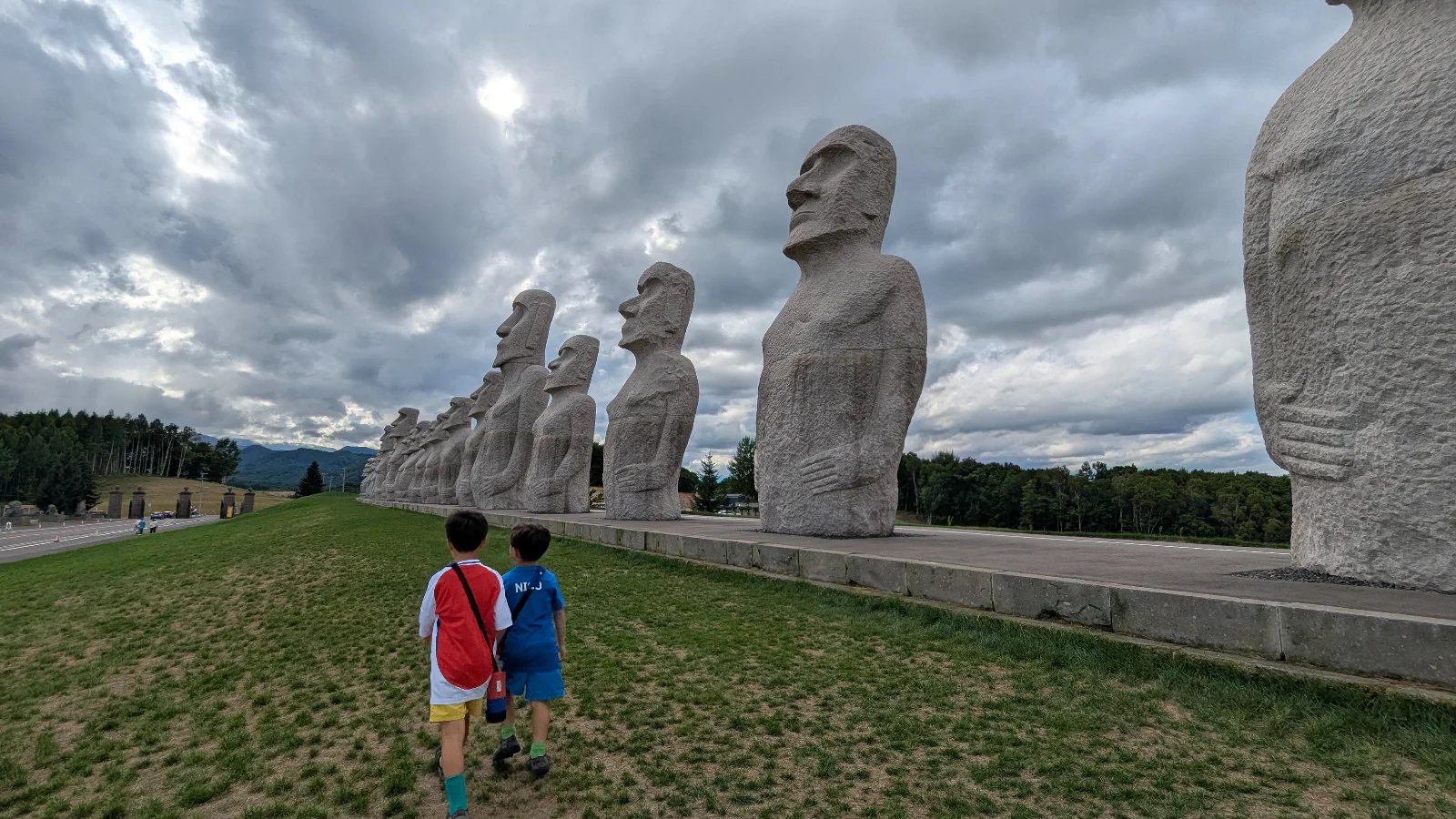
What this means for your Anchor: unfamiliarity fades on a single known path. A younger Anchor needs the order named, approach, tunnel, Buddha; an older one can plan the return bus and the next stop.Cut the journey, not the Buddha. The Sprinter depletes through sustained travel-style walking and standing, and the Buddha itself asks little: a 135 m route from the entrance, through a 40 m tunnel, each way. The cost is everything around it. By public transport the day is a subway ride to Makomanai, a wait at the bus stand, and a bus to the end of its line. The cemetery grounds beyond the Buddha, the Moai figures among them, add more walking for anyone who explores them.
Shorten the journey, and keep the visit to the Buddha. Drive if you can: parking opens at 7:00, and the car takes the subway, the wait and the bus out of the day. On the bus, check the seasonal schedule so the wait at Makomanai is short. Once there, walk to the Buddha and back, and leave the wider grounds for a child with walking left in them.
What this means for your Sprinter: walking and standing come from the trip more than the sight. A younger Sprinter needs the car and the Buddha alone; an older one can take the bus if the schedule is checked first.The questions parents actually ask.
The Hill of the Buddha is a cemetery first, and its grounds ask for walking and quiet. Children through elementary school are free, and the bus leaves from Makomanai. The rest comes down to the season you choose, because winter shortens the hours and drains the water garden. A family that knows which season it has chosen can tell a child what the hill will look like before the bus arrives. The visit is an hour to an hour and a half, so the rest of the day belongs to Sapporo’s other family stops, where a child can be loud, quick and free again.
Is the Hill of the Buddha worth visiting with kids?
Yes, for a child who can keep a quiet place quiet. The visit is a short walk through an approach and a tunnel to a great Buddha whose head rises out of a hill. It sits inside a cemetery, so running and noise are not allowed in the grounds. Children through elementary school enter free.
How much does the Hill of the Buddha cost?
Admission is 1,000 yen per person from junior high school up, and free for elementary school children and younger, so two adults with two elementary-age children pay 2,000 yen. Pay at an automatic machine with 1,000-yen notes or a credit card; the receipt is your pass for the day.
What are the Hill of the Buddha opening hours?
From April to October the Buddha can be viewed from 9:00 to 16:00, and from November to March from 10:00 to 15:00. It closes on designated and maintenance days and may close for weather. The cemetery gates open earlier and close later than the Buddha hall.
How do you get to the Hill of the Buddha from central Sapporo?
Take the subway Namboku Line to Makomanai, then Chuo Bus route Ma108 from stand 2 to its last stop, named for the Buddha. The fare is 500 yen, and the bus runs to a different schedule from April to November and from December to March, so check it for your season. Parking opens 7:00 to 16:00.
Can children run around at the Hill of the Buddha?
No. The Buddha stands inside a working cemetery, and visitors are asked not to run or make noise anywhere in the grounds, not to run in the worship hall, and to keep out of the lavender field and the snowfield. Tell a child before arriving, and plan somewhere to run afterward.
Is the Hill of the Buddha stroller-friendly?
Strollers and wheelchairs are allowed; they are the only wheeled vehicles that are. Keep them, and children, out of the water garden, which visitors must not step into. Pets are not allowed, including on the lawn of the Buddha hall, and the statue itself must not be touched.
Is the Hill of the Buddha worth visiting in winter?
Yes, with shorter hours, 10:00 to 15:00, and a drained water garden from November 4 until late April. The snowfield is off-limits and heavy snow can close the site. If heavy snow closes it, the Sapporo City Sewage Science Museum is a free indoor morning in the city instead.
What is special about the Hill of the Buddha?
The design, by the architect Tadao Ando. A Buddha 13.5 m tall is covered by a hill planted with lavender, so from outside only the head shows. Visitors reach it along a 135 m route that passes through a 40 m tunnel, and the whole figure appears only at the end.
Where the Hill of the Buddha fits your Japan trip.
Official site and opening information: Makomanai Takino Cemetery, Hill of the Buddha