Sapporo City Sewage Science Museum with Kids: The City From Below.
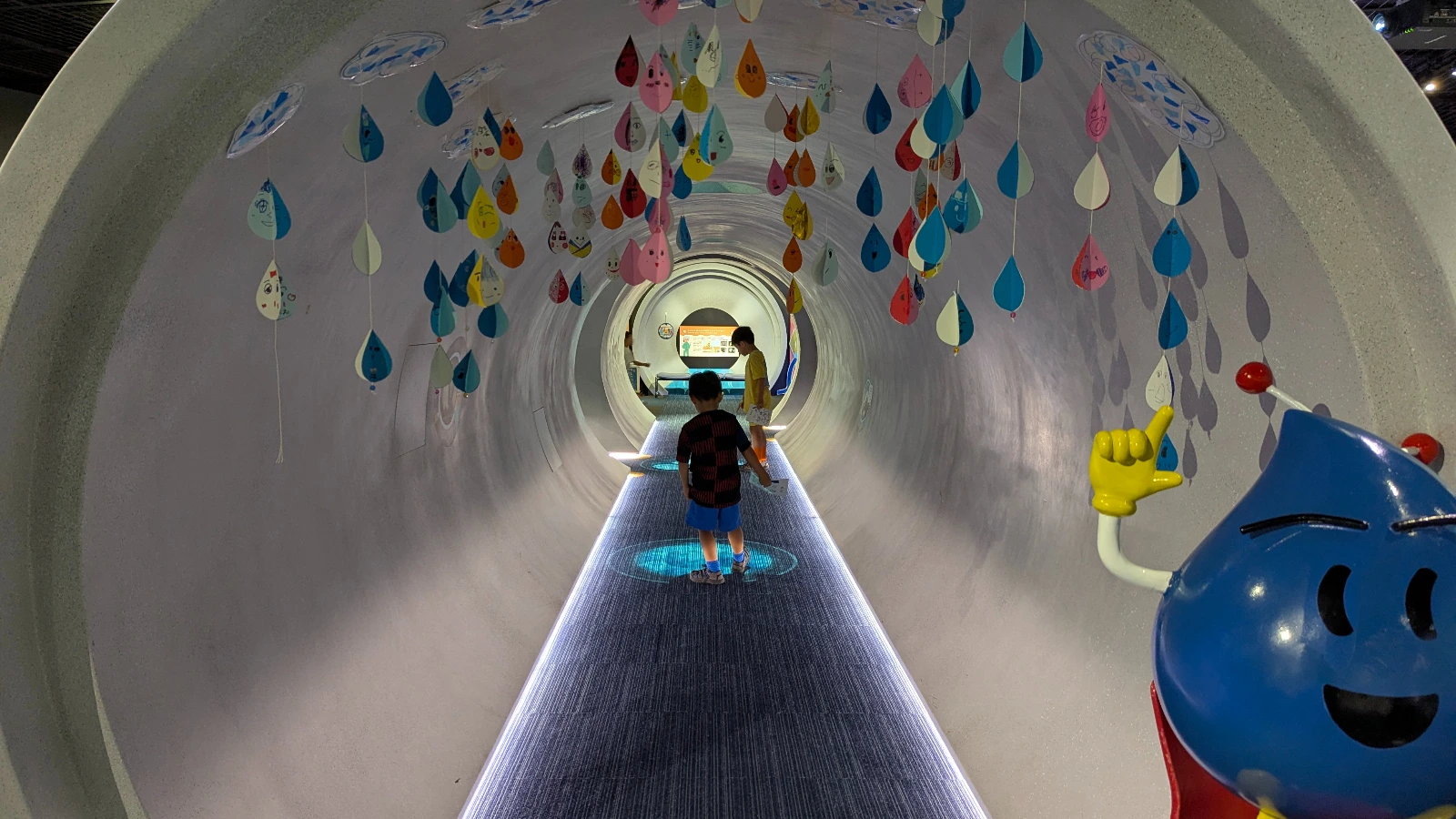
A free museum about what flows beneath Sapporo’s streets gives a curious child a system to work out, and costs a tired family nothing to leave early.
Self-guided visits; groups phone ahead to book, and parking is free too.
Closed Mondays (the next day after a Monday holiday) and at New Year; no closing days June to August.
As long as it holds them: there is no ticket to get the value of.
A kids’ space, a nursing room, a diaper table and strollers on loan.
Listed among the infant facilities; free parking beside the museum.
Some links on this page are affiliate links. LuNi may earn a commission at no extra cost to you.
Is the Sapporo City Sewage Science Museum worth it with kids?
The short version, before the costs, the timings and the case for each child.
Yes, for a young child especially, because it asks nothing of a family’s patience: walk in, stay while the child is interested, and leave the moment they are not. That makes it one of the best wet-day answers in Sapporo for families with young children, who also get a kids’ space, a nursing room and strollers to borrow. The subject sounds unpromising and usually turns out not to be, because children like knowing where things go, and a child who asks how things work gets the most from it. Two honest caveats. The museum’s lowest level is closed until further notice after an equipment failure, and the museum is a fifteen-minute walk from the nearest subway station. Drive, or bring the stroller, and go.
Planning Your Visit to Sapporo City Sewage Science Museum with Kids.
There is almost nothing to plan here, and that is part of the appeal. No ticket, no booking and no timed entry: the only decisions are the day and the way in. For the day, summer is simplest, because from June to August the museum has no closing days, while the rest of the year it keeps a weekly closing day. For the way in, the subway takes you to Asabu, and from there it is a fifteen-minute walk; a car is easier, with free parking beside the museum. Tell the children before you go that one floor is closed, so nobody goes looking for it. This is a morning out, not a whole day of its own, and the afternoon can go to any of Sapporo’s family stops.
Every LuNi attraction guide starts with a visit, with our own children
LuNi rates and writes about attractions only after visiting them with children. Luca and Nico were at Sapporo City Sewage Science Museum, and what they did there is recorded further down this page, including how each child actually met it.
Children arrive with different tolerances: for noise, for lines, for standing still, for being on their feet all day. A guide written for the average of them helps almost nobody. So every place on this site is read four ways, and each verdict says which children it already suits and what makes it work for the rest. Whoever you are bringing, the answer here is built for your family rather than for a general reader.
Restricted-movement depletion stays low where entry is free and the kids’ space is open, so let the child lead and leave when they tire.
Sensory-input depletion stays manageable indoors when the family sets the length, so keep the visit short and use the kids’ space to pause.
Unfamiliarity and unconfirmed structure ease with a free visit and a set walking route, so say before arriving that the lowest floor is closed.
Sustained walking and standing come mostly from the fifteen-minute walk in from the station, so drive to the free parking or bring the stroller.
Hotels we would book for this visit.
Three city hotels, for a museum that is a morning out rather than a place to stay near. Each works with the Namboku Line out to Asabu, or with a car and the museum’s free parking.
| Property | The LuNi Reason |
|---|---|
| LUNI Pick JR Tower Hotel Nikko Sapporo | A wet-day museum wants a base that makes a short outing easy to decide on at breakfast. From the city, the Namboku Line reaches Asabu directly, so the museum can be a morning chosen on the day rather than planned a week ahead, with a stroller borrowed at the door. |
| Hotel Sosei Sapporo MGallery Collection In Sapporo | A second city base, for a family with a baby or a toddler. With the youngest, the hotel room carries more of the day than any museum does, so a morning here can end early with a nap back in the room, and the museum is there again the next wet day. |
| Keio Plaza Hotel Sapporo | Keio Plaza Hotel Sapporo is a large central base for the same kind of week. A free museum with nothing to book suits a family that decides at breakfast, and this is a base to decide from on a day the weather keeps everyone indoors. |
Hotel Sosei Sapporo MGallery Collection
Nearby attractions, matched to your child.
Three pairings along the same subway line, for what a free indoor morning leaves over: a child who wants open space, a child who wants a fixed finish, and a child who wants somewhere quieter still.
| Pairing | Why This Solves the After-Visit | For Your |
|---|---|---|
| LUNI Pick Odori Park Sapporo Namboku Line from Asabu to Odori | An indoor museum holds a moving child for a morning; Odori Park gives the afternoon twelve open blocks, with play equipment in the middle ones in season. Restricted-movement depletion that held off indoors finally gets space once the weather allows it. | Dynamo |
| Sapporo TV Tower Namboku Line to Odori, then Exit 27 | The Sapporo TV Tower is a sight with an unmistakable shape: one ticket, one deck and a clear end. After a museum with a closed floor, unfamiliarity and unconfirmed structure ease when the next stop is exactly what it looks like. | Anchor |
| Hill of the Buddha Namboku Line to Makomanai, then a bus | The same subway line runs to Makomanai, where the bus leaves for the Hill of the Buddha, a walk through a tunnel to a great Buddha in a cemetery that asks for quiet. Sensory-input depletion stays low where silence is everyone’s rule. | Sensor |
Odori Park Sapporo
Namboku Line from Asabu to Odori For YourDynamo
Sapporo TV Tower
Namboku Line to Odori, then Exit 27 For YourAnchor
Hill of the Buddha
Namboku Line to Makomanai, then a bus For YourSensor
How two children actually met this attraction.
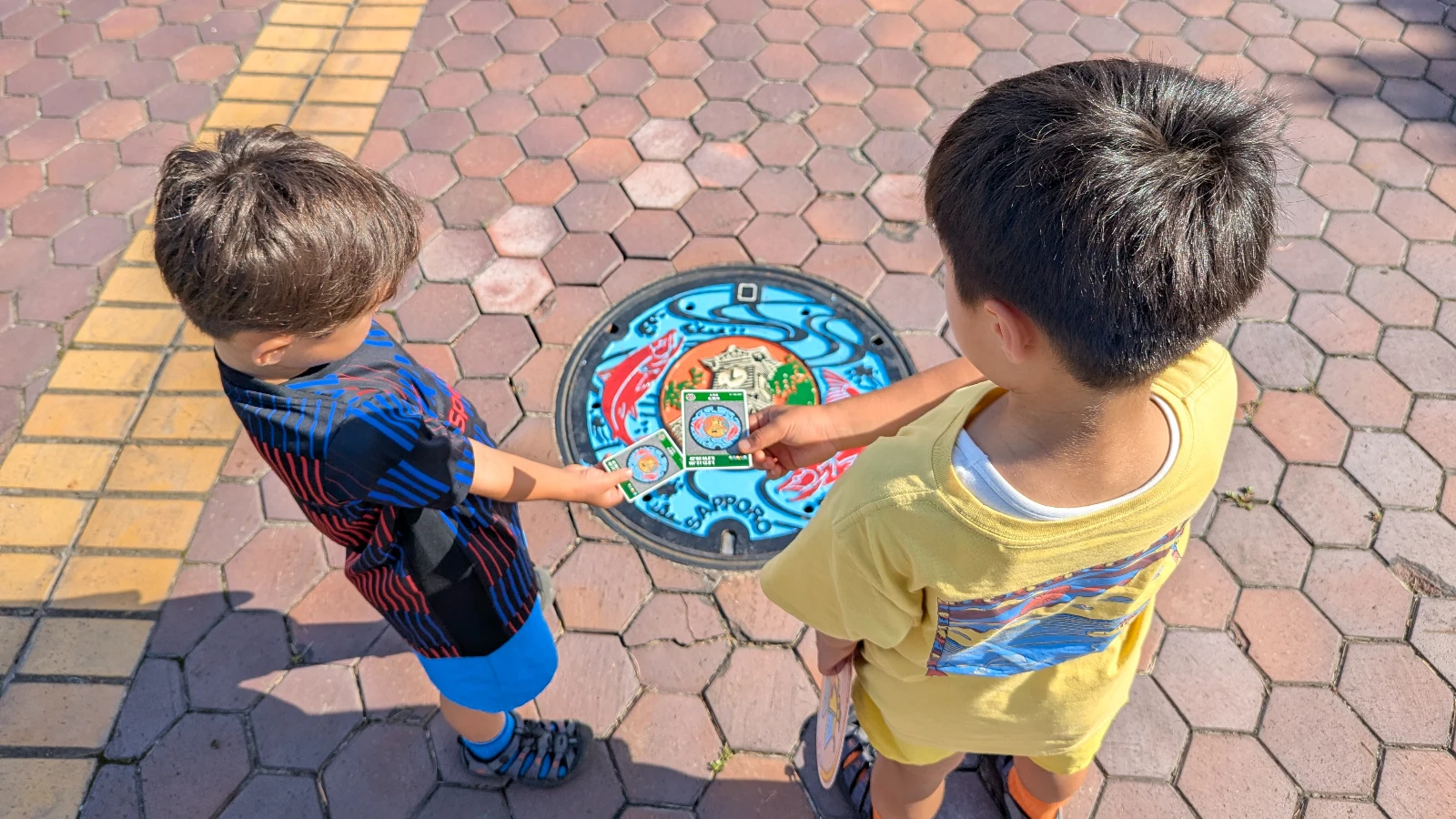
Two children spent the same morning in a museum about sewers, and neither found the subject dull. One found a single game and stayed with it until he understood exactly how its scoring worked, and a high score was his proof. The other never stayed anywhere long: he moved from station to station, pressing and turning and narrating, and the constant supply of the next thing was what kept him going. Neither needed the subject explained first. Both of them, in their own way, wanted the museum to explain itself through their hands. Between them they show how a free museum works for children who approach it differently, one exhibit mastered or every exhibit tried, and why there is no wrong way to spend a visit that costs nothing.
Luca locked onto a pinball-style game and stayed with it, working out how the scoring behaved rather than just flinging the ball and hoping. He treated each run as a test of the last, adjusting his timing to push the number higher, and when he and his father landed the second-highest score on the board he was thrilled, because the score was proof he had figured the mechanism out.
This is the Anchor pattern. A child whose Reserve depletes through unfamiliarity and unconfirmed structure settles the moment a place hands them a system they can confirm and master, and Luca turned a fast game into a set of rules he could beat. Families with a similar child should let one exhibit be worked out properly rather than all of them briefly; a child who has mastered one thing moves through the rest with confidence.
Nico met the museum the way he meets any hands-on floor, in constant motion, moving from station to station and finding all of it cool to touch and figure out. He did not settle on one exhibit the way his brother did; the appeal for him was that there was always another button to press or model to work, so he kept his hands and his narration going the whole way through.
This is the Dynamo pattern. A child whose Reserve depletes through restricted movement spends a museum visit well when the visit lets them keep going, and Nico kept going for the whole morning. Families with a similar child should let them roam rather than route them, stay close enough to answer the questions, and use the free entry to stop the moment the moving turns to wandering, with no ticket wasted and no argument about leaving.
A free museum about what flows beneath a city’s streets shows children the hidden systems that make everyday life work. Following where water goes after it leaves a kitchen or a bathroom turns something invisible into a puzzle to solve, and a child who understands one system starts wondering about others. Museums like this reward curiosity without asking anything in return, not even the price of a ticket. A child who learns that a city has secret workings beneath it looks at every drain and pipe differently afterward.
The LUNI Rating for Sapporo City Sewage Science Museum.
One fact sits under all four verdicts: the museum is free. A family pays nothing to enter, so every child can be given exactly the visit they can manage, and the family can leave the moment it stops working. It is also indoors and set up for small children, with a kids’ space and strollers to borrow. Most of the walking a family can plan for comes from getting there, fifteen minutes from the station. Decide the length at the door by the child, not the clock, and every verdict holds, since leaving costs nothing. Borrow a stroller at the door for the walk back to the station.
Let the child lead, and leave when they tire. The Dynamo depletes through restricted movement, and the risk in any museum is being asked to stand and look. What decides it here is that the family, not the ticket, decides how long the child stays. Entry is free, so there is no sunk cost pushing a family to stay past the point where a moving child has had enough, and the museum keeps a kids’ space for a younger child to spend energy in.
Treat the museum as a morning of the child’s choosing. Let them lead from one part to the next, follow at their pace rather than steering them, and use the walk from Asabu as part of the movement rather than an obstacle to it. When the moving turns into wandering, that is the signal to leave, not to push on, and a park on the same subway line is the obvious next stop.
What this means for your Dynamo: restricted movement stays low when the child sets the length. A younger Dynamo needs the kids’ space and a short visit; an older one can lead the whole museum at their own speed.Keep the visit short, on purpose. The Sensor depletes through sensory input, and the lever that matters most here is one the family holds: the length of the visit. Because entry is free, a family can plan a short visit from the start and stop well before the child is full, with no ticket to justify. The museum is indoors, out of the weather, and the kids’ space gives a younger child a smaller place to retreat to within it.
Set the length before going in, and keep to it. Tell the child how long you will stay, and make the kids’ space or the nursing room the place to pause if the halls become too much. For a child who dislikes surprises, name the closed lowest floor in advance, so its absence is not one more unexpected thing. A second visit, if the child asks for one, costs nothing.
What this means for your Sensor: sensory input stays manageable when the visit is short by design. A younger Sensor needs the kids’ space as a retreat; an older one can set the length of the visit themselves.Walk the route together, and name what is closed. The Anchor depletes through unfamiliarity and unconfirmed structure, and this visit can be confirmed step by step before it starts. The way in is a set route: the Namboku Line to Asabu, Exit 2, along to Soseigawa-dori, and turn left. The hours are fixed, entry is free, and there is nothing to book, so there is no ticket or time slot to get wrong. One thing has changed: the fourth basement floor is closed until further notice.
All of that can be shared in advance. Walk through the route on a map, name the exit number and the left turn, and say plainly that one floor is closed, so it becomes a known fact rather than a locked door. Inside, let the child choose one thing to understand properly. A child who has worked one exhibit out tends to settle for the rest of the morning.
What this means for your Anchor: unfamiliarity fades with a known route and a named closure. A younger Anchor needs the walk from Exit 2 described; an older one can lead the family from the station themselves.Take the car, or the stroller. The Sprinter depletes through sustained travel-style walking and standing, and here the walking to plan for is the journey. From Asabu Station it is about fifteen minutes on foot, and the same from JR Shin-Kotoni, so a round trip by subway means half an hour of walking before and after the visit. That walk is the part of the day a family can plan around.
Remove the walk wherever possible. Drive if you can: parking is free, for twenty-seven cars, next to the museum. Several Chuo Bus routes also serve the museum; check the city’s bus navigator for the nearest stop. For a younger child, bring a stroller or borrow one at the museum, and use the kids’ space as the halfway rest. Because entry is free, a short visit wastes nothing, so stop before the legs are gone and leave enough for the walk back.
What this means for your Sprinter: the walking and standing sit in the fifteen minutes in and out. A younger Sprinter needs the car or a stroller; an older one can walk from Asabu if the visit stays short.The questions parents actually ask.
Free entry and a kids’ space shape a visit here more than any exhibit. It is fifteen minutes on foot from Asabu or a short drive with free parking, the lowest floor is closed for the time being, and it is set up for babies and toddlers. The only real planning is the day, because the museum closes on Mondays outside summer, and the route, because the nearest station is not next door to the museum. Movement is the one thing a museum floor like this cannot give, and the Sapporo Olympic Museum, where most stations ask a child to jump or race, is the day that does.
Is the Sapporo City Sewage Science Museum worth visiting with kids?
Yes, especially on a wet day or with a young child, because it is free and indoors, with a kids’ space, a nursing room and strollers on loan. The lowest level, the fourth basement floor, is closed until further notice after an equipment failure, and the rest of the museum is open as usual.
How much does it cost, and do you need a reservation?
Admission is free. Groups are asked to phone ahead, but a family can simply arrive during opening hours; there is no ticket to buy and no booking system for individual visitors. Because it costs nothing, a short visit loses nothing, which makes it easy to fit around a child’s energy.
What are the museum’s opening hours?
It opens 9:30 to 17:00, with last entry at 16:30. It closes on Mondays, or the day after, when Monday is a holiday, and over the year-end and New Year. From June to August it has no closing days at all. Occasional temporary closures appear on the museum’s calendar, so check before going.
How do you get to the Sewage Science Museum?
Take the Namboku Line to Asabu Station, leave by Exit 2, walk to Soseigawa-dori and turn left: about 15 minutes on foot. JR Shin-Kotoni Station is also about 15 minutes on foot, and several Chuo Bus routes also serve the museum; check the city’s bus navigator for the nearest stop. Parking is free for 27 cars, entered from the one-way road west off Soseigawa-dori.
Is the whole museum open?
No. Entry to the fourth basement floor, B4, has been prohibited since September 19, 2026, because part of its equipment failed, and the closure runs until further notice. The rest of the museum is open. Tell a child who has heard about the lower floor before you go, so the missing level is not a surprise.
Is the museum good for toddlers and babies?
It is set up for them. There is a kids’ space, a nursing room and a diaper-changing table, and strollers can be borrowed. With the long walk from the station, a stroller from home is still worth bringing for a toddler, and the free parking makes a car the easiest way to arrive with a baby.
Is there English information at the museum?
The museum’s website is in Japanese only, so check the hours and any closures with a translation tool before the trip. For a child who cannot read Japanese, plan to explain what each part is about as you go, or choose the museum for the doing rather than the reading.
How does it compare with Sapporo Science Center?
The Sapporo Science Center runs timed sessions, a planetarium and a minus-30-degree room, and adults pay for entry. The Sewage Science Museum is free and has a kids’ space. For a first museum morning with young children, start with the free one; for a full day of timed sessions, choose the Science Center.
Where the Sapporo City Sewage Science Museum fits your Japan trip.
Official site and opening information: Sapporo City Sewage Science Museum