Spring is the season that converts first-time Japan families into permanent advocates for the country. Mild temperatures from late March through May, a blossom forecast that staggers city by city, and parks built for exactly the kind of long, slow mornings that families actually want create conditions that are difficult to replicate anywhere else. The central planning question for Japan in spring with kids is not whether it is worth the trip. It is knowing which weeks and which destinations match your family’s specific pace, because the spring window contains three distinct travel personalities, and booking into the wrong one will cost you more than an itinerary adjustment.
This guide covers Japan spring travel with kids in full: the 2026 cherry blossom forecast by city, the right destinations for different family profiles, what the season actually costs, how to pack for weather that changes by the hour, and the itinerary frameworks that make spring planning concrete rather than aspirational. For families mapping out the broader trip structure, our Japan Family-Friendly Travel Hub is the right starting point.
Japan Spring With Kids: At a Glance
Most families arrive at this guide already knowing they want to visit Japan in spring. The table below exists not to confirm that instinct, but to calibrate it: to surface the practical variables that will shape how the season actually performs for your family.
| What Parents Want to Know | Quick Answer |
|---|---|
| Best Time to Visit | Late March to mid-April for cherry blossoms; May for warm weather and lower crowds |
| Weather Range | Cool and layered in March; mild and comfortable in April; warm and bright in May |
| Temperatures | 5–15°C in March; 10–20°C in April; 14–24°C in May |
| Rain and Wind | Brief spring showers through April; brisk winds in March, particularly outdoors |
| Crowd Levels | Moderate to high during peak bloom and Golden Week (April 29 to May 5); calmer in March and mid-to-late May |
| Best Experiences | Cherry blossom picnics, park days, spring festivals, castle grounds, stroller-friendly riverside walks |
| Kid Comfort Level | One of the easiest seasons in Japan for all child profiles |
| Packing Logic | Layers over bulk: light jacket, long sleeves, comfortable walking shoes, compact umbrella |
| The One Decision That Changes Everything | Whether you travel during peak bloom, just before it, or just after. Each scenario has different crowd, price, and availability implications. |
Best Time to Visit
Weather Range
Which costs your child more,
a museum or a playground?
You have the days. Now the nights.
Where to stay in Japan →Temperatures
Rain and Wind
Crowd Levels
Best Experiences
Kid Comfort Level
Packing Logic
The One Decision That Changes Everything
Why Spring in Japan Works for Families
Spring in Japan is not universally gentle. The gap between a smooth spring family trip and a frustrating one comes down to a single variable that most planning articles ignore: which week you arrive.
Late March through mid-April delivers the blossoms, the festivals, and the postcard scenery. It also delivers the year’s highest hotel rates, the busiest parks, and the Golden Week pressure wave that compounds everything if your dates extend into late April. That is not a reason to avoid peak season. It is a reason to plan it with precision.
Families with Dynamo children, those who burn energy in open spaces and disengage quickly in lines, will find spring’s outdoor orientation exactly right. Wide castle parks, riverside walking paths, and open garden lawns give high-energy kids the discharge zones they need with no indoor containment required.
Families with Sensor children will find early May more sustainable than peak bloom weeks. The parks remain beautiful, wisteria and azaleas replace sakura, and the crowd volume drops noticeably from its late-March peak.
For Sprinters and Anchors, the pacing framework matters more than the date window. Japan’s spring parks reward early morning arrivals: the crowds arrive mid-morning, but the first hour after opening at Shinjuku Gyoen or Osaka Castle Park runs at a fraction of midday density. Building the day around a 9:00 AM park arrival and a hotel return by 2:00 PM gives Sprinter families the full spring experience without the physical cost.
Parent Insight: Spring invites a specific type of attention that children find easier to access than adults. Cherry blossoms are brief, impermanent, and visibly changing day by day. The Japanese concept of mono no aware, an appreciation for beautiful things precisely because they do not last, is something children understand intuitively even without the vocabulary for it. When a child notices that the tree that was full of petals yesterday is half-empty today, and stops to ask why, that is not a distraction from the trip. It is the point of it. Slow down when that happens.
Japan Spring Weather by Month: What Families Actually Experience
The temperature tables are widely available. What they do not capture is how the weather functions for a family moving through a full day. The decision that changes packing and planning is not average temperature. It is the gap between morning and afternoon, which in spring can reach 8 to 10 degrees.
March in Japan with Kids
March marks the beginning of spring in practice if not always in feel. Temperatures across most of Japan run 5-15°C (41-59°F), with mornings that require jackets and afternoons that reward taking them off. Rain is minimal and humidity stays low, which makes long outdoor days physically comfortable even for younger children. Cherry blossoms begin appearing in Kyushu and western Honshu by mid-to-late March, giving families who travel early a quieter, more spacious experience at spots that will be packed four weeks later.
The trade-off is unpredictability. Wind in March can be brisk, particularly in elevated spots and along rivers. Having a windproof layer in the day bag is a more practical solution than a heavier jacket.
April in Japan with Kids
April is the season families picture when they book. Temperatures settle into the 10-20°C (50-68°F) range, afternoons become consistently mild, and cherry blossoms move north from Tokyo through Tohoku across the first three weeks of the month. Occasional light showers appear, especially at peak bloom, but rarely last long enough to disrupt a full day.
For families, April is the most logistically demanding month to plan and the most rewarding month to be in Japan. Both things are true simultaneously. The key operational decision is arrival timing: families who build their peak bloom days around early morning park access find the experience far closer to the one they imagined.
May in Japan with Kids
May is the season’s underrated chapter. Temperatures warm to 14-24°C (57-75°F), humidity remains low, and cherry blossoms give way to wisteria tunnels, azalea gardens, and the intense fresh-green scenery that Japanese parks call shinryoku. Crowds thin significantly outside of Golden Week (April 29 to May 5), hotel availability improves, and families who travel in mid-to-late May often report the most relaxed version of a spring Japan trip.
For Sprinter families especially, May’s longer afternoons and more forgiving midday temperatures allow a more sustained outdoor schedule than peak bloom weeks.
Best Places to Visit in Japan in Spring with Kids
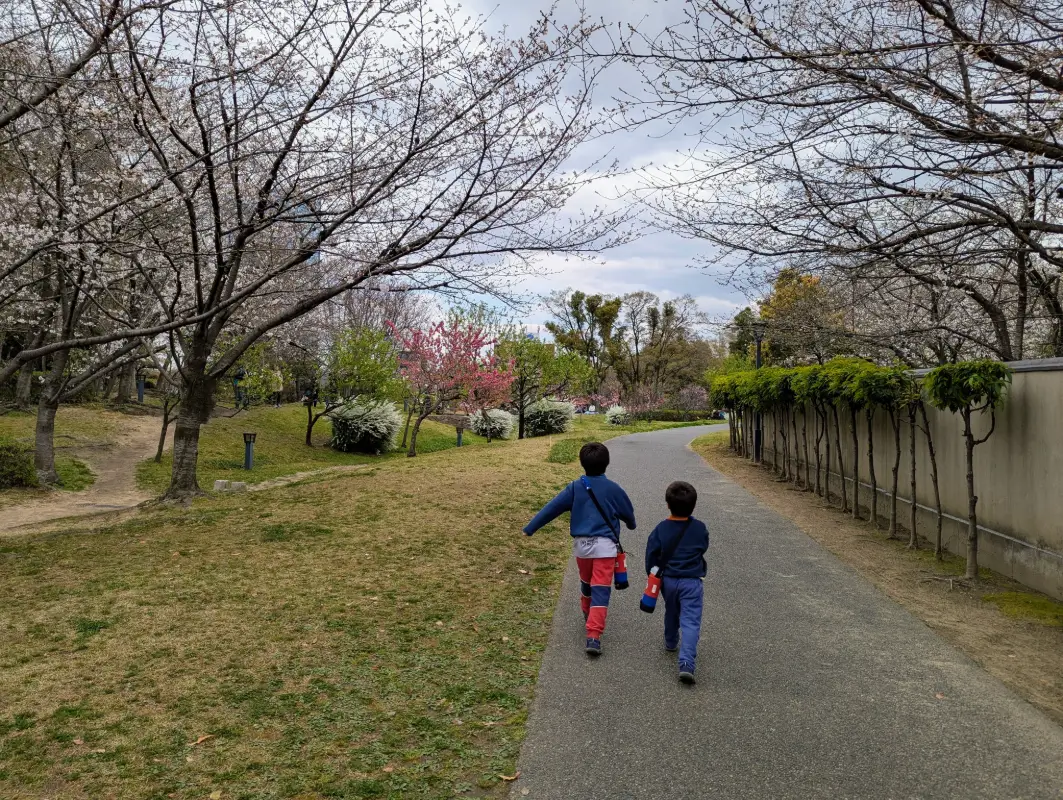
The destinations below are ranked by editorial weight, not alphabetically or arbitrarily. The four primary destinations earn the most depth because they offer the strongest combination of cherry blossom access, stroller-friendly infrastructure, kid-relevant attractions beyond the blossoms, and the logistical reliability that families with children require. Secondary destinations follow with appropriate brevity.
Tokyo
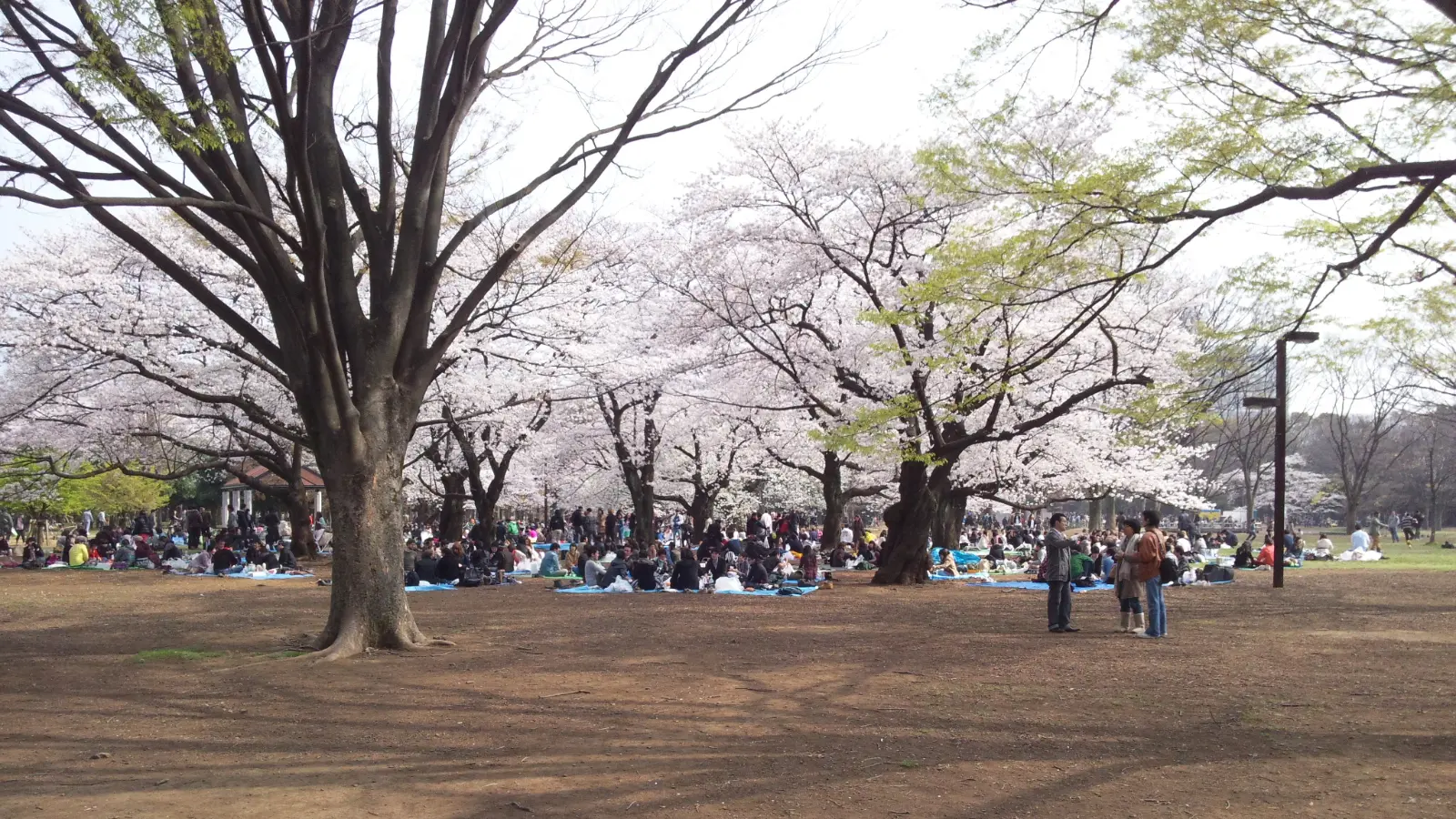
Tokyo is the primary spring destination for most families, and the infrastructure supports that volume. Shinjuku Gyoen, Ueno Park, and Yoyogi Park offer distinct spring experiences within a single city. Shinjuku Gyoen is the best pure blossom park: wide lawns, multiple sakura varieties that extend the bloom window by up to two weeks, and no alcohol, which meaningfully reduces the matsuri crowd density that affects Ueno during peak season. Ueno Park pairs cherry blossoms with Ueno Zoo next door, making it the most efficient full-day destination for families with young children. Yoyogi functions as an open-play extension, ideal for children who need unstructured running space after structured sightseeing.
Best for: Families visiting Japan for the first time; Dynamo and Anchor families who benefit from predictable infrastructure and dense kid-friendly options.
Kyoto
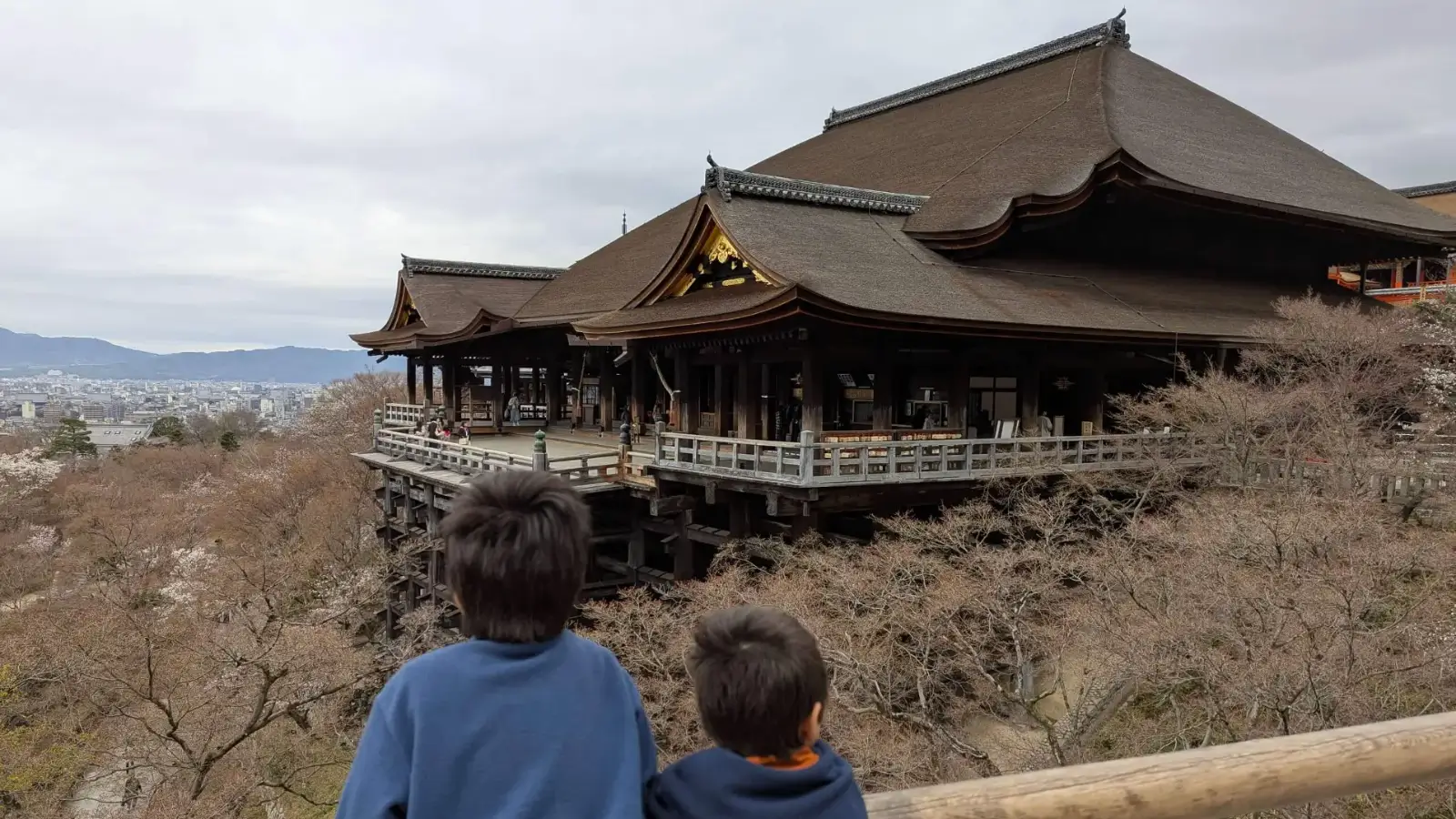
Kyoto in spring rewards families who can manage a slow pace. The Philosopher’s Path, a canal walk lined with cherry trees connecting two of Kyoto’s quietest temple neighborhoods, is one of the most stroller-friendly blossom routes in the country: flat, well-surfaced, and bookended by cafés where families can break the walk without losing ground. Maruyama Park offers Kyoto’s most famous single blossom tree, the massive weeping cherry that illuminates at night, surrounded by open lawn space that gives young children room to move. The Kamogawa riverbank is the least visited of the three but arguably the most practical for families with toddlers: flat, safe, and oriented toward picnic culture rather than foot traffic.
Best for: Sensor families who benefit from quieter, culturally textured environments; multi-generational groups who want scenery that satisfies all ages simultaneously.
Osaka
Osaka Castle Park is the best single spring destination in Japan for families who prioritize open space. Over 3,000 cherry trees surround a castle that provides visual scale without requiring entrance fees to appreciate. The park’s lawns are wide enough for Dynamo children to run parallel to the blossom viewing rather than through it, making this the most relaxed picnic environment of any major bloom spot. For families planning a cherry blossom picnic as a deliberate part of the day, rather than an improvised pause, Osaka Castle Park is the single best venue in Japan: flat ground, shade options, and enough space that arriving without a reserved spot is never a problem. Kema Sakuranomiya Park, a long riverside lined with trees and navigable by rental bike, functions as an excellent secondary option for families with older children or those seeking a more local experience.
Best for: Dynamo families who need open-space infrastructure; families prioritizing street food culture alongside outdoor experiences.
Nara
Nara Park occupies a category that no other Japanese spring destination matches: it is the only major blossom spot where children are genuinely engaged by two simultaneous things. Hundreds of freely roaming deer wander under the sakura canopy, and the combination of animals and flowers holds the attention of children who might otherwise be indifferent to blossom viewing on its own. The terrain is flat, the park entrance is a short walk from Kintetsu Nara Station, and the visit structure is naturally self-pacing.
Nara functions best as a day trip from Osaka or Kyoto rather than a standalone base. The primary bloom aligns with those cities’ late-March window.
Best for: Families with toddlers and early primary-school children; Anchor families who benefit from a clear, bounded destination with a natural exit point.
RELATED GUIDE
Fukuoka
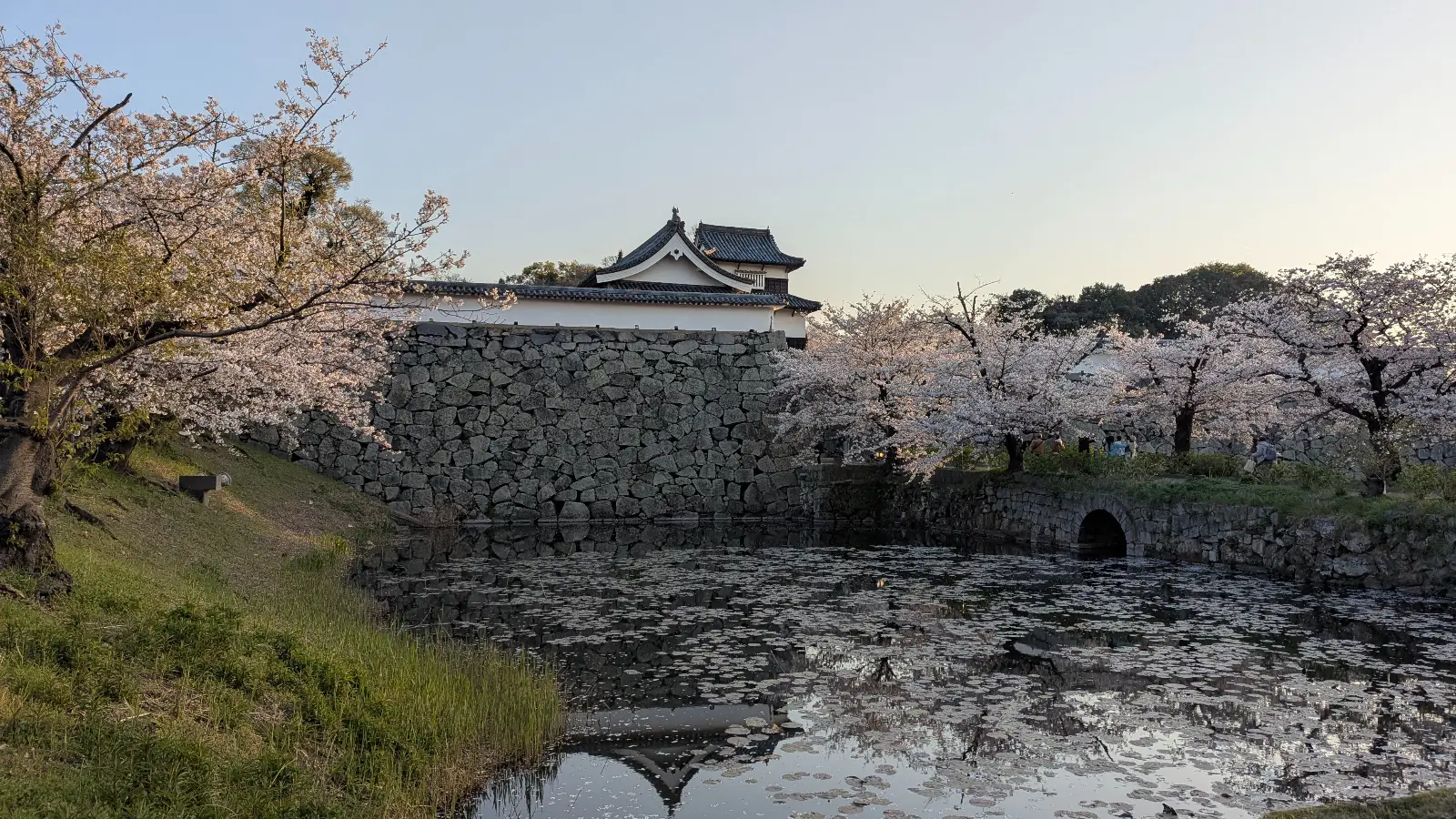
Fukuoka earns its place on this list not because it competes with the above four in blossom volume, but because it delivers the spring experience at a significantly lower crowd density. Maizuru Park around Fukuoka Castle ruins and Ohori Park, with its lakeside circuit and playground infrastructure, provide full spring days without the logistical friction of Tokyo’s peak-week pressure.
Best for: Families who prioritize calm over scale; Sensor and Sprinter families who find Tokyo or Kyoto’s crowd volume difficult to manage.
Hakone
Hakone functions as a spring nature break rather than a blossom destination. Lake Ashi, the pirate ship cruise, the Hakone Open Air Museum, and family-appropriate onsen are the draws, and all of them perform well in spring’s mild temperatures. Hakone is the correct choice for families who need a slower day between city stages, particularly Anchor families who benefit from a predictable, contained environment, and Sprinter families whose physical capacity requires a morning that does not involve 15,000 steps.
Best for: Recovery days in longer itineraries; Anchor and Sprinter families; first-time onsen visitors.
Kanazawa, Hiroshima, and Sendai
These three destinations serve specific family profiles rather than the spring trip in general. Kanazawa’s Kenroku-en blooms several days earlier than Tokyo, meaning families who cannot secure late-March accommodation in the capital can arrive in Kanazawa first and catch full bloom there before the bigger cities peak. Hiroshima’s Peace Park and the ferry crossing to Miyajima Island become particularly comfortable for young children in spring: plan Itsukushima Shrine for a rising tide to see the torii gate at its most dramatic. Sendai blooms around early April, reliably one to two weeks after Tokyo, making it the correct contingency for families who arrive after peak has passed further south: Nishi Park and Tsutsujigaoka Park both offer full blossom coverage within a 20-minute taxi ride of Sendai Station.
Best for: Families on second or subsequent Japan trips; those seeking a quieter spring alternative to the primary Golden Route.
Where to See Cherry Blossoms in Japan with Kids: 2026 Forecast
The blossom window is shorter and more location-specific than most families realize when they book. A day’s difference in arrival can shift the experience from peak to post-peak at a given park. The staggered bloom timing across Japan’s regions is not a problem to manage around. It is the planning mechanism that gives families flexibility.
The 2026 forecast below reflects the official eleventh projection issued on April 2, 2026. Flowering typically begins five to seven days before full bloom. Trees remain beautiful for approximately one week after full bloom in calm conditions, and longer if temperatures stay mild.
| Region / City | Expected Full Bloom 2026 | Best Family Spot |
|---|---|---|
| Tokyo | March 28 | Shinjuku Gyoen, Ueno Park |
| Nagoya | March 30 | Tsurumai Park |
| Fukuoka | April 3 | Maizuru Park, Ohori Park |
| Himeji | March 30 | Himeji Castle grounds |
| Kyoto | March 30 | Philosopher’s Path |
| Osaka | April 3 | Osaka Castle Park |
| Sendai | April 4 | Nishi Park, Tsutsujigaoka Park |
| Aomori / Hirosaki | April 19 | Hirosaki Castle moat |
| Sapporo | April 25 | Maruyama Park, Hokkaido Shrine |
Tokyo
Nagoya
Fukuoka
Himeji
Kyoto
Osaka
Sendai
Aomori / Hirosaki
Sapporo
Key Family-Friendly Blossom Spots by City
Tokyo
Shinjuku Gyoen is the strongest single recommendation for families. Multiple cherry varieties create a bloom window that runs from late March into early April, the enclosed entry fee system reduces peak-day crowd levels compared to free parks, and the absence of alcohol consumption keeps the atmosphere calm. Shinjuku Gyoen is also the most practical hanami destination for families who want a genuine picnic experience rather than a standing crowd: the lawns are wide enough that children can run alongside the blossom canopy without the family losing their spot Ueno Park pairs blossoms with immediate access to Ueno Zoo: arrive at opening, do the zoo in the morning, and walk the blossom path in the early afternoon before midday density peaks. Meguro River is best suited for families with school-age children who can manage a narrow riverside walk; it is not a stroller-first environment.
Kyoto
The Philosopher’s Path is the family recommendation. Two kilometers of flat canal-side walking, lined with single-variety cherry trees that peak simultaneously, with clear exit points at either end. Arrive at the Nanzen-ji end before 9:00 AM. Maruyama Park is the evening complement: the illuminated weeping cherry is visible from the outer lawns, and families do not need to navigate the full park interior to see it.
Osaka
Osaka Castle Park is the primary recommendation by scale: over 3,000 trees, castle views included, free entry to the outer park. Kema Sakuranomiya Park is the rental bike option for families with older children.
Nara
One destination: Nara Park. The deer-blossom combination is unreplicated elsewhere in Japan. Arrive on a weekday morning for the quietest experience.
Hirosaki (Aomori)
The Hirosaki Castle moat during late bloom, when fallen petals form a pink layer across the water, is widely considered the most dramatic single cherry blossom image in Japan. The late April bloom timing makes it accessible for families who miss peak season further south. Combine with Hakodate for a northern Japan spring itinerary.
LuNi Intel: At Shinjuku Gyoen specifically, the Greenhouse section in the northwest corner of the park houses tropical plants and early-blooming varieties that stay interesting for children who have exhausted their capacity for standing still under cherry trees. It functions as a 20-minute reset: warm, enclosed, different sensory environment, and it gives parents another pass through the outer gardens before the children’s patience fully expires.
Best Spring Festivals and Flower Events for Families
Not every spring festival in Japan is worth a family’s time. The events below were selected on three criteria: a child has something specific to look at or do rather than stand and observe, the crowd configuration allows families to enter, rest, and exit without being trapped in a single-direction flow, and the timing is reliable enough to plan around rather than hope for. Festivals that are primarily adult drinking events under trees, or that require two hours of standing in a narrow street for ten minutes of spectacle, are not on this list.
| Spring Event | Timing | Why It Works for Kids |
|---|---|---|
| Sanja Matsuri, AsakusaTokyo | Mid-May | Drums, portable shrine processions, and festival stalls along Nakamise Street |
| Takayama Spring FestivalGifu | Mid-April | Ornate festival floats in a compact historic town; manageable crowd scale for young children |
| Hakata Dontaku FestivalFukuoka | Early May | City-wide parade routes with open viewing areas, minimal crush at outer positions |
| Fuji Shibazakura FestivalMount Fuji | Late April to late May | Pink moss phlox fields visible from accessible walking paths, with Fuji as backdrop |
| Ashikaga Flower Park Wisteria FestivalTochigi | Late April to mid-May | Wisteria tunnels in multiple varieties; timed entry manages crowds effectively |
| Kawachi Fujien Wisteria GardenFukuoka | Late April to early May | Private garden with dramatic wisteria canopy; advance booking required |
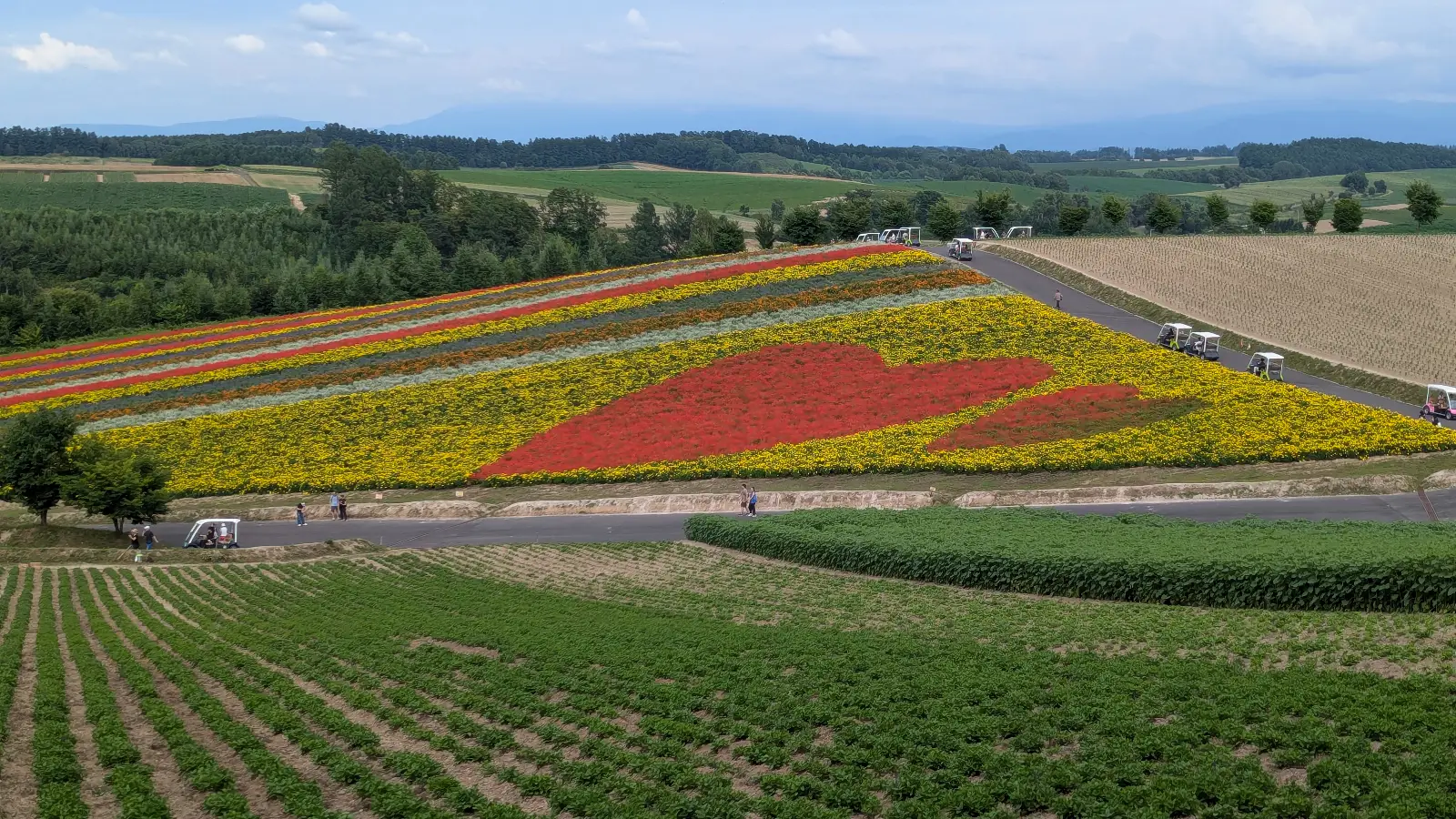
| Hitachi Seaside Park Nemophila BloomIbaraki | Late April to mid-May | A hillside covered in blue nemophila flowers; easy for strollers, visually overwhelming for children in the best possible way |
| Children’s Day Carp StreamersNationwide | Until May 5 | Koinobori streamers visible across every city and rural town; no ticket, no queue, ubiquitous |
Sanja Matsuri, Asakusa
Takayama Spring Festival
Hakata Dontaku Festival
Fuji Shibazakura Festival
Ashikaga Flower Park Wisteria Festival
Kawachi Fujien Wisteria Garden
Hitachi Seaside Park Nemophila Bloom
Children’s Day Carp Streamers
For Sensor families, Takayama’s festival is the strongest recommendation: the historic scale is intimate, the street width is manageable, and the festival culture is participatory rather than passive. For Dynamo families, Hakata Dontaku’s wide boulevard parade routes give children space to move alongside the celebration rather than standing compressed in a viewing line.
What to Pack for Japan in Spring with Kids
The two decisions that categorically change how spring travel with kids performs are layering logic and the rain plan. Everything else is supporting equipment. Japan’s spring parks are reliably stroller-friendly at their core routes, but the best blossom paths, particularly at Shinjuku Gyoen and Osaka Castle Park, require a stroller that folds quickly for train gates and narrow entrance turnstiles.
The Layering Decision: Spring in Japan runs a 8-10°C gap between 8:00 AM and 2:00 PM on most days in April. A family that packs one jacket each will spend the morning overdressed or the afternoon carrying that jacket through a park. The correct system is three layers per child: a base long-sleeve, a mid-layer fleece or cardigan, and a windproof outer shell that compresses to bag size. The outer shell handles March wind and unexpected rain. The mid-layer handles cool evenings. The base layer handles midday.
The Rain Plan: Spring showers in Japan are brief and predictable in the sense that they happen, not in the sense that you will see them coming. A compact umbrella in the day bag is non-negotiable. For families with strollers, a rain cover stored in the stroller basket eliminates the scramble. A hooded rain jacket for each child is more useful than an umbrella on days with wind.
Clothing by Month
- March: Full three-layer system in use throughout the day; waterproof sneakers or trail shoes; warm hats for early morning outdoor starts
- April: Three layers available but the outer shell often stays in the bag by midday; umbrella in the day bag daily
- May: Two-layer system for most days (base plus mid-layer); sun hat becomes necessary in open parks after 11:00 AM
Spring Essentials That Families Frequently Underpack
- Allergy medication: Cedar pollen season runs through March and early April; children without known allergies can react for the first time in Japan’s pollen-dense spring air
- Picnic sheet: Cherry blossom hanami picnics are a core experience, not an optional add-on; a compact, waterproof-backed picnic sheet takes minimal bag space and opens up every park visit
- Reusable water bottle per child: Long blossom walks and park mornings create consistent hydration demand; vending machines are everywhere but a filled bottle prevents the midday negotiation entirely
- Portable phone battery: Spring photography volume is higher than any other season; a depleted phone battery mid-afternoon is a predictable and preventable problem
Japan in Spring with Kids: Sample Itineraries
The three itineraries below are structured around specific family scenarios rather than generic day-count slots. Use the one that matches your profile and adapt it rather than treating it as a fixed schedule.
3-Day Spring Itinerary: First Japan Trip, Tokyo Only
Designed for families on a short trip or first-time Japan visitors who want blossom coverage without multi-city logistics. Best suited to Anchor and Sprinter families who benefit from a fixed base.
| Day | Area | Key Experiences |
|---|---|---|
| Day 1Ueno | Ueno | Morning: Ueno Zoo (animals most active in mild spring weather). Afternoon: Ueno Park blossom walk and picnic. Exit before 3:00 PM to avoid peak afternoon crowd. |
| Day 2Asakusa + Sumida River | Asakusa + Sumida River | Senso-ji Temple and Nakamise Street in the morning. Sumida River cruise past riverside sakura in early afternoon. Optional Skytree observation deck before dinner. |
| Day 3Shinjuku + Harajuku | Shinjuku + Harajuku | Shinjuku Gyoen at opening (9:00 AM) for the best stroller access before midday crowds. Harajuku crepe walk in early afternoon. Yoyogi Park for unstructured play before departure. |
Day 1 — Ueno
Day 2 — Asakusa + Sumida River
Day 3 — Shinjuku + Harajuku
5-Day Spring Itinerary: Tokyo to Kyoto or Osaka
Designed for families comfortable with one Shinkansen transfer. Best suited to Dynamo and older-kid families who benefit from destination variety.
| Day | Area | Key Experiences |
|---|---|---|
| Day 1Tokyo: Shinjuku + Harajuku | Tokyo: Shinjuku + Harajuku | Shinjuku Gyoen blossom morning. Afternoon at teamLab Borderless or the National Museum of Emerging Science and Innovation (Miraikan) in Odaiba. |
| Day 2Asakusa + Sumida River | Asakusa + Sumida River | Senso-ji Temple. Sumida River cruise. Afternoon rest or Tokyo Skytree. |
| Day 3Shinkansen to Kyoto or Osaka | Travel: Shinkansen to Kyoto or Osaka | Morning departure. Afternoon arrival: Philosopher’s Path stroll (Kyoto) or Osaka Castle Park picnic. Evening illuminations at Maruyama Park or Osaka Castle. |
| Day 4Kyoto or Osaka | Kyoto or Osaka | Kyoto: Arashiyama bamboo grove and riverside. Osaka: Kids Plaza Osaka and Dotonbori food walk. |
| Day 5Nara or Flexible Day | Nara or Flexible Day | Nara Park for deer and blossoms (45 minutes from Osaka or Kyoto by express train). Or: aquarium and park day in the base city before departure. |
Day 1 — Shinjuku + Harajuku
Day 2 — Asakusa + Sumida River
Day 3 — Shinkansen to Kyoto or Osaka
Day 4 — Kyoto or Osaka
Day 5 — Nara or Flexible Day
7-Day Spring Itinerary: Tokyo, Hakone, Kyoto, Nara
Designed for families who want the full spring arc: urban blossoms, a nature break, cultural Kyoto, and a closing day-trip memory. Works for most profiles when paced correctly.
| Day | Area | Key Experiences |
|---|---|---|
| Day 1Tokyo: Ueno | Tokyo: Ueno | Settle in. Ueno Park blossom walk in the afternoon. Early dinner and rest. |
| Day 2Asakusa + Sumida River | Asakusa + Sumida River | Senso-ji morning. Sumida River cruise. Evening in neighborhood: Kappabashi or Yanaka for local character. |
| Day 3Shinjuku + Harajuku + Yoyogi | Shinjuku + Harajuku + Yoyogi | Shinjuku Gyoen at opening. Harajuku in early afternoon. Yoyogi Park playtime before hotel return. |
| Day 4Hakone | Hakone | Lake Ashi pirate ship cruise. Hakone Open Air Museum. Optional family onsen in the evening. |
| Day 5Kyoto: Philosopher’s Path + Maruyama | Kyoto: Philosopher’s Path + Maruyama | Arrive Kyoto by Shinkansen (approximately 35 minutes from Odawara). Philosopher’s Path in the afternoon. Evening at Maruyama Park for illuminated weeping cherry. |
| Day 6Kyoto: Arashiyama or Fushimi Inari | Kyoto: Arashiyama or Fushimi Inari | Arashiyama bamboo grove and Oi River waterfront for families with young children. Fushimi Inari lower trail for families with older kids. |
| Day 7Nara or Osaka | Nara or Osaka | Nara Park half-day (deer and blossoms) before departure, or Osaka Castle Park final picnic. |
Day 1 — Ueno
Day 2 — Asakusa + Sumida River
Day 3 — Shinjuku + Harajuku + Yoyogi
Day 4 — Hakone
Day 5 — Kyoto: Philosopher’s Path + Maruyama
Day 6 — Kyoto: Arashiyama or Fushimi Inari
Day 7 — Nara or Osaka
Japan Spring Travel Costs for Families
Spring is Japan’s highest-demand travel season. That is the single most important budget fact for families to internalize before any other cost discussion. The cost implication is specific and front-loaded: flights and accommodation near peak bloom dates and Golden Week surge significantly, while transportation, food, and the vast majority of spring attractions remain stable year-round.
Volatile cost categories (require advance planning)
Flight prices to Japan increase from late March through mid-April and surge again for Golden Week (April 29 to May 5). Families who have flexibility should book 3-6 months in advance. Traveling one week after peak bloom, in mid-April rather than late March, frequently yields 20-30% lower flight costs with minimal experience trade-off; the parks are still in bloom, the crowds thin, and availability improves.
Hotels near popular blossom parks, particularly in Kyoto and central Tokyo, reach their year-round pricing peaks during sakura season. Family rooms and larger suites book first. The operational decision that delivers the most cost relief is not staying at budget properties, but choosing a hotel one neighborhood removed from the most famous parks: a 15-minute train ride from Ueno costs meaningfully less than a Ueno-adjacent hotel and adds no practical friction.
Stable cost categories
Transportation costs do not increase in spring. Local subways, regional trains, and Shinkansen tickets are priced identically to every other season. Families using IC cards (Suica or ICOCA) for local transit and purchasing Shinkansen tickets at standard rates will encounter no spring premium on transport.
Food costs are stable. Cherry blossom-themed seasonal menu items appear at convenience stores and cafés from late March through April, but they are priced at standard menu cost, not seasonal premiums. A family of four eating a mix of convenience store meals, ramen shops, and sit-down casual restaurants will spend the same daily food budget in spring as in autumn.
The majority of the best spring experiences, including all major park blossom viewing, riverside walks, most castle grounds, and spring festivals, are free.
Spring cost ranges for a family of four
| Category | Typical Range (Family of Four) |
|---|---|
| Hotels Per night | Budget: ¥12,000–¥18,000 / Mid-range: ¥20,000–¥35,000 / Premium: ¥40,000–¥80,000+ |
| Food Per day | Budget: ¥9,000–¥14,000 / Moderate: ¥14,000–¥24,000 / Higher-end casual: ¥24,000–¥36,000 |
| Attractions Per person | Low-cost: ¥500–¥900 / Mid-range: ¥1,000–¥2,500 / Premium: ¥3,000–¥9,000 |
| Local transport Per ride | Subway and bus: ¥150–¥400 / Shinkansen: ¥8,000–¥15,000 per adult |
Hotels
Food
Attractions
Local Transport
The budget leverage point for spring in Japan: Families who shift one week after peak bloom and stay one neighborhood away from the most famous parks capture approximately 80% of the spring experience at 60-70% of peak-week cost. That is the single most valuable cost optimization available, and it does not require a budget accommodation or a shorter trip.
The Spring Briefing: Essential Intel
A: The best time to visit Japan in spring with kids is late March through mid-April for cherry blossoms, with late April and May offering warmer weather and lower crowds. Families who want peak bloom in Tokyo should target the final week of March. Families who prioritize space and lower prices over absolute peak timing will find mid-April through May a stronger overall experience.
A: In 2026, cherry blossoms reach full bloom in Tokyo around March 28, in Fukuoka & Osaka around April 3, in Kyoto around March 30, in Sendai around April 4, in Aomori/Hirosaki around April 19, and in Sapporo around April 25. This staggered timing means families traveling from late March through early May can reliably encounter blossoms somewhere in Japan.
A: Yes, peak sakura weekends in late March and early April are among the busiest travel days of the year in Tokyo and Kyoto. Families manage this most effectively by visiting major parks at opening time, typically 9:00 AM, before midday crowd density peaks, and by choosing less central blossom spots that deliver equivalent beauty with lower foot traffic.
A: The best family blossom spots in Japan are Shinjuku Gyoen and Ueno Park in Tokyo, Osaka Castle Park, Nara Park, and Kyoto’s Philosopher’s Path. All five offer stroller-accessible paths, open lawns, and kid-relevant context beyond the blossoms alone. For families who miss peak southern bloom, Hirosaki Castle in Aomori blooms around April 21 and delivers the most dramatic blossom scenery in Japan.
A: Families should pack a three-layer clothing system for each child: a base long-sleeve, a mid-layer fleece or cardigan, and a windproof outer shell. A compact umbrella, stroller rain cover, and picnic sheet are the key functional additions. For March and early April, allergy medication for cedar pollen is a practical precaution even for children without known sensitivities.
A: Spring is one of the strongest seasons for Japan travel with toddlers, because the outdoor orientation of the season aligns with how toddlers move best: open park spaces, flat riverside paths, and castle grounds with unstructured roaming area. Shinjuku Gyoen, Nara Park, and Osaka Castle Park are the three most toddler-functional blossom spots, combining wide access paths with genuine engagement.
A: Seven to ten days is the practical standard for a spring family trip that covers more than one city. Families who want cherry blossoms plus a cultural destination plus a nature break (Tokyo, Kyoto, and Hakone form the most common structure) need a minimum of seven days to pace those elements without compression. Shorter trips of three to five days work well as Tokyo-only or Kyoto-only experiences.
A: Golden Week (April 29 to May 5) is Japan’s highest-pressure domestic travel period. Domestic trains book out, hotels in resort destinations surge in price, and popular parks reach their annual crowd maximum. Families who have flexibility should either complete their spring trip before April 29 or begin it after May 5. If Golden Week dates are unavoidable, booking Shinkansen tickets the moment they become available (exactly one month in advance) and staying in major cities rather than resort destinations is the most practical mitigation.
What Comes Next
With the seasonal timing, destination hierarchy, and cost framework established, the next planning decision for most families is accommodation structure: where to base, how many overnight moves to build in, and which neighborhoods minimize logistical friction during peak bloom week. Our family hotel guides for Tokyo, Kyoto, and Osaka cover that decision in full, organized by child profile and proximity to the spring blossom spots identified in this guide.