Nara With Kids:
which stop is for which child.
Nara is sold as a temple city, and a family finds out on arrival that it is really a park: about 511 hectares, most of it forest, where wild deer will take a map out of a child’s hand. The temples sit inside that park, so a temple day is walked among animals from the first gate on, and what separates a good Nara day from a hard one is how much of that walking each child can take.
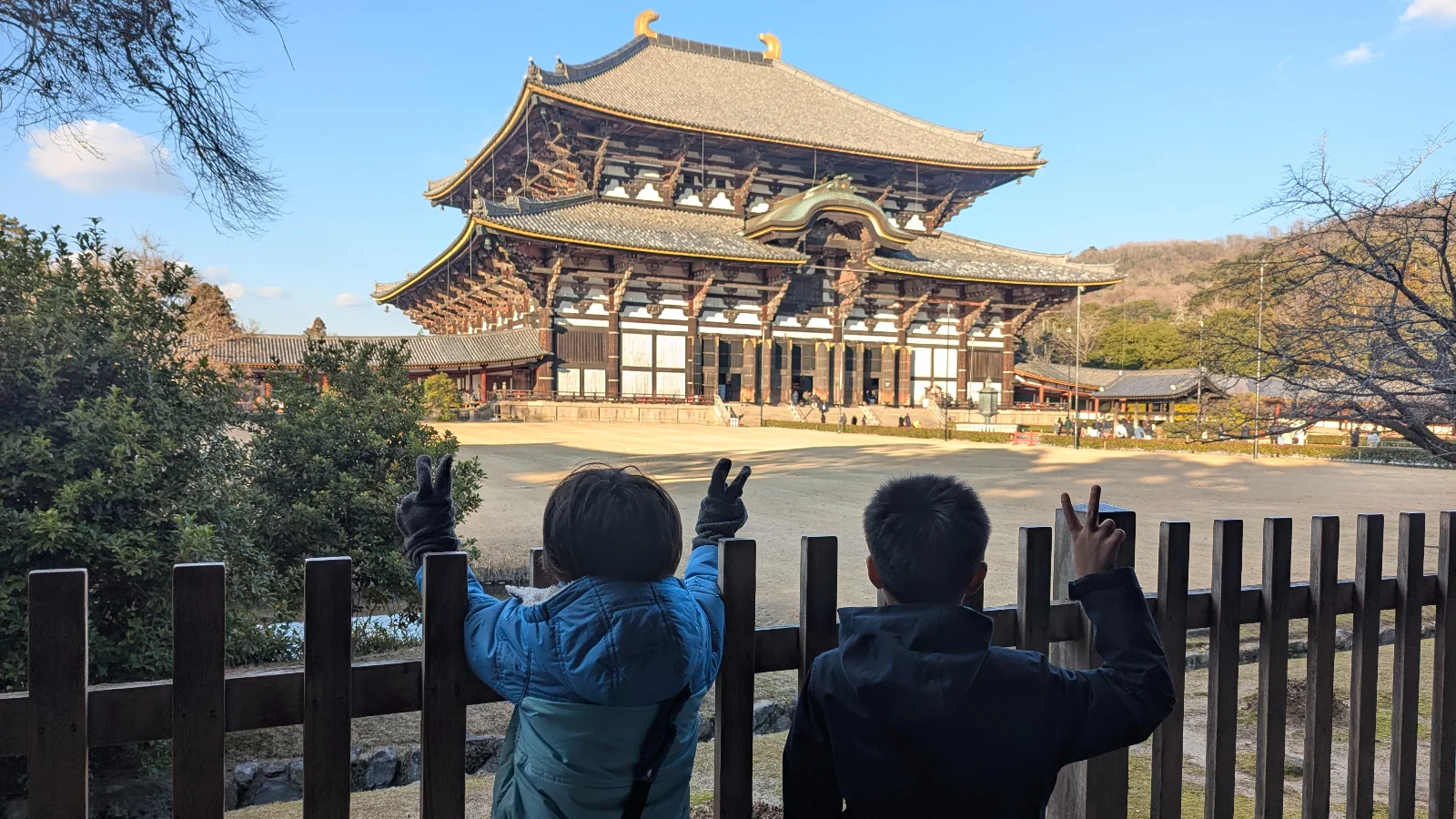
One of the largest wooden buildings in the world, seen on one route.
342 meters high and grassed to the top, harder coming down than going up.
Old mechanical toys a child is allowed to pick up and work.
Three small gardens, pond, moss and tea flowers, walked in free.
Which stop is for which child.
Nine stops in and around Nara Park, each placed with the child it suits most.
These nine are not ordered best to worst. They are grouped by which child each one is for, across the four profiles of The LUNI Framework. Family travel runs on three currencies, not two: money and time, plus the child’s reserve, their finite capacity to absorb what travel asks of them. In Nara the three great temples all stand inside one park, so a single day can hold a grass hill, a dark treasure room and a crowd of deer, and the stop that settles one child is often the next one along the path for a sibling who is already done. The Dynamo runs short when they cannot move, the Sensor on noise and crowding, the Anchor when nothing is predictable, and the Sprinter on walking and standing. Find your child below, and start there.
The Karakuri Toy Museum, for the toys that move.
This is not a claim that the toy museum is Nara’s best stop for any one child. It is the stop that asks least of whichever child walks in. It is a Meiji-era townhouse about 10 minutes on foot from Kintetsu Nara, no ticket needed, where restored mechanical toys from the Edo period onward are there to be handled, wound and set going, with staff on hand to show how each one works. A child who needs to move has something to do with their hands, a child who needs quiet has a small room, and a tired child can play without walking anywhere. The play space suits about twenty people, and groups of ten or more book ahead and may be held back in busy periods.
Match your child to one of the four profiles, then read that entry.
| The Stop | What It Settles | Best For |
|---|---|---|
| Nara Park and the deerAround Kofuku-ji, Todai-ji and Kasuga | A morning of walking among wild deer at the child’s pace. | Dynamo |
| Mount WakakusaAbout 30 min on foot from Kintetsu Nara | An open grass hill to climb, with the effort as the point. | Dynamo |
| Heijo Palace SiteAbout 20 min on foot from Yamato-Saidaiji | Open ground so wide that bicycles are the way around it. | Dynamo |
| Isui-enAbout 15 min on foot from Kintetsu Nara | A gated garden where the only thing to do is walk and look. | Sensor |
| Todai-jiAbout 20 min on foot from Kintetsu Nara | One enormous hall and one statue, easy to describe beforehand. | Anchor |
| Kasuga Taisha11 to 15 min by bus from either Nara station | A shrine precinct walked in without a ticket, reached by its own bus. | Anchor |
| Kofuku-jiAt the western edge of the deer’s ground | Three buildings entered one at a time, so the visit fits the child. | Anchor |
| Yoshiki-en3 min on foot from the Kencho-higashi bus stop | Three small gardens, each one a place to stop. | Sprinter |
Nara Park and the deer
Dynamo
Mount Wakakusa
Dynamo
Heijo Palace Site
Dynamo
Isui-en
Sensor
Todai-ji
Anchor
Kasuga Taisha
Anchor
Kofuku-ji
Anchor
Yoshiki-en
Sprinter
For the Dynamo
Stops where the ground is open and the pace is the child’s own.
Which Nara stops suit a child who empties out when made to keep still? The three below, all on open ground.
A park where the sightseeing is done on foot, among animals. East of Kofuku-ji’s grounds the deer can be met anywhere in the park during the day, so crossing it is walking, stopping and turning as the animals come and go, with roofed rest houses and arbors scattered through it for the pauses. For a child who empties out when made to keep still, that is sightseeing with room in it: the temples are destinations, and the ground between them is where the child spends the energy the halls will ask them to hold in. A five-year-old needs an adult’s hand between them and the deer from start to finish; a twelve-year-old can buy the crackers, hand each one over at once, and keep a younger sibling back.
Who it costs.The Anchor, for whom a morning that cannot be rehearsed is the drain. Deer walk up without warning, eat maps and plastic bags out of a child’s hand and can hook a bag on an antler, so the animal half of the day is the half that cannot be rehearsed.
How to make it work.Never let a child walk up to the deer alone: they are wild, and they can charge, butt, bite and kick. Give a cracker the moment it is out of the packet, because teasing a deer with one makes it angry, and take more care still in spring, when mothers guard their fawns, and in autumn, the rut. Hold bags and paper tight, and bring one bag for everything the family carries in, since the park has no trash cans. Ball games are not allowed, so the running is done on foot.
If this isn’t your child: Todai-ji, Kasuga Taisha and Kofuku-ji all stand inside the park, so even a child who wants nothing to do with the deer will cross their ground on the way to anything else.A grass hill to climb, with a slope that tests the knees on the way down. Mount Wakakusa rises to 342 meters under 33 hectares of grass, with a burial mound said to date from the fifth century at the top. It is the one stop in central Nara where a child simply goes up, on open ground, as fast as their legs will carry them, and for a child who empties out when made to keep still, a hill after a morning of halls is the part of the day that gives back rather than takes. A seven-year-old runs the first slope and turns to look at how far they have come; an older child can go ahead, pick the family’s stopping place, and wait there with the view.
Who it costs.The Sprinter, and heavily, since a climb is walking at its most demanding. The slope is steeper than it looks, and hardest on the way down, and the foot of the hill is itself about fifteen minutes’ walk from the nearest loop-bus stop, or thirty from Kintetsu Nara.
How to make it work.Agree on one gate before anyone runs ahead, because the south and north gates stand about 300 meters apart. For a child who cannot face the climb, the toll driveway runs to a parking lot five minutes’ walk below the top, which turns the hill into a view rather than an ascent. Save it for the second half of the day, after the halls, when the child most needs somewhere to put their energy. The hill closes for winter after the second Sunday of December and reopens on the third Saturday of March, so a winter trip gives its place in the day to the Heijo Palace Site.
If this isn’t your child: a climb that pays the family members who wanted one; for everyone else, the park at its foot is the better use of the same hour.A palace site so large that the way around it is a bicycle. The Heijo Palace Site spreads its reconstructed First Imperial Audience Hall, Suzakumon Gate and East Palace Garden across ground so wide that rental bicycles are the recommended way to cover it, and the buildings inside ask for no ticket. For a child who empties out when made to keep still, it is space with a landmark at each end, and a day that moves from one gate to the next rather than from one line to another. It is about 20 minutes on foot from the south exit of Kintetsu Yamato-Saidaiji, or a short bus ride from Yamato-Saidaiji, JR Nara or Kintetsu Nara. A six-year-old can borrow a stroller at the visitor center for the plaza by Suzakumon; a fifteen-year-old can take a bicycle and cover the whole site.
Who it costs.The Sprinter, whose limit is the distance on foot. The distances are the visit, and the strollers lent at the visitor center stay within the Suzakumon plaza, so a child who tires at the far end of the site walks back.
How to make it work.Rent bicycles at Tenpyo Miharashikan if the family rides, and bring lunch: food from home is allowed, though some buildings limit eating, and Tenpyo Umashikan serves meals for a family that packed nothing. Choose one reconstructed building as the goal of the visit and let the ground on the way be the rest of it.
If this isn’t your child: a half day of open ground with palace halls as waypoints, and a long walk for anyone who came to see buildings rather than to cover distance.For the Sensor
A garden set apart from the streets around it.
Where can a child who runs short on noise and crowding reset in central Nara? In a garden entered by ticket.
A garden entered through a gate, quiet and set apart from its surroundings. Isui-en stands beside Todai-ji on its west side, about 15 minutes on foot from Kintetsu Nara, and one ticket covers the garden and its small art collection, the Neiraku Museum. No food may be brought in, and the visit is spent walking and looking. For a child who runs short on noise and crowding, in a city where a map in a child’s hand can draw a deer, a quiet garden with nothing to feed is the reset the rest of Nara cannot promise. A younger child walks one loop at an adult’s side; a teenager can take the museum as well and the garden at their own pace.
Who it costs.The Sprinter, on uneven footing rather than distance. Some of the stepping stones are worn smooth and rounded and are hard to walk, and the garden cannot be toured in a wheelchair, so a small child who is tired is carried across them.
How to make it work.Outside food cannot be brought in, but the garden’s own restaurant, Sanshu, serves meals overlooking the front garden. Pair Isui-en with Todai-ji next door, which is best taken early, and carry a small child over the stepping stones rather than asking them to pick their way.
If this isn’t your child: a formal garden for looking, beside Todai-ji, and a short visit for a child who wants to be doing something.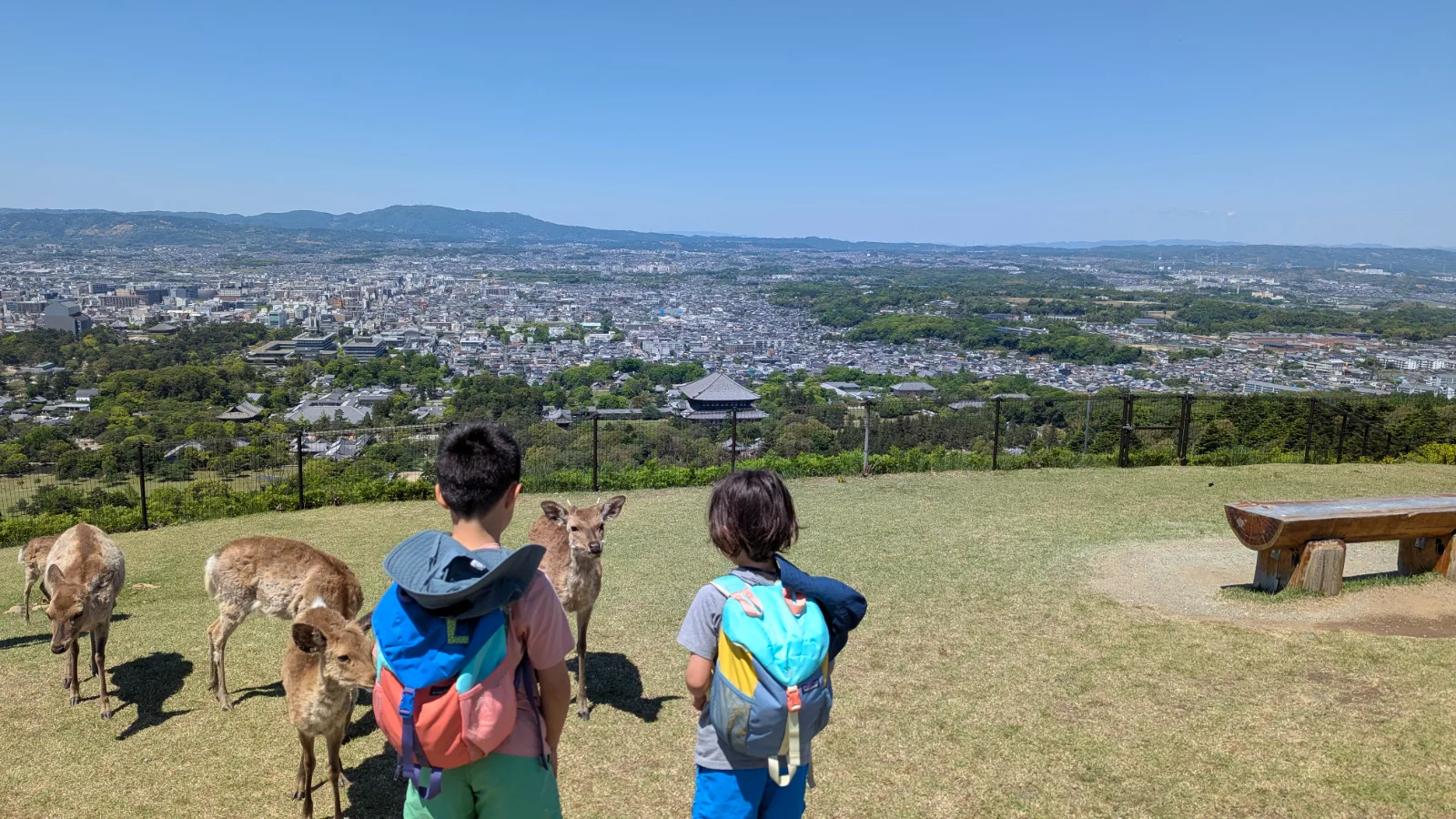
For the Anchor
Stops whose shape can be told to a child before the family leaves the hotel.
Which Nara stops suit a child who needs the day confirmed in advance? Those with one route or a clear edge.
One hall, one statue, and a building that can be shown to a child in advance. The Great Buddha Hall is almost 49 meters high, 57 meters across and 50 deep, one of the largest wooden buildings in the world, and it is walked along a set route past the Great Buddha. No reservation is needed, for a family or a school group. For a child who runs short when nothing is predictable, that makes it the easiest temple in Nara to prepare for: one hall, one statue, a size that can be shown in a picture the night before and then found to be true. It is about 20 minutes on foot from Kintetsu Nara, or a loop bus and five minutes’ walk. A six-year-old is told what the Buddha looks like and goes looking for it; a teenager can take the English audio guide and lead the family through.
Who it costs.The Sprinter, because here the walking comes before the sight. The walk from the station comes before anything has been seen and again at the end, twenty minutes each way unless the loop bus takes one leg.
How to make it work.Photographs are allowed along the route, but not with tripods or flashlights, and sketching is not allowed either, so tell a child with a camera or a notebook before the gate rather than inside. Take the bus one way and walk the other, and let the walk be the stretch of the day the child chooses.
If this isn’t your child: a building that needs no explaining once a child is inside it, and a long walk each way for one who would rather be with the deer outside.A shrine whose main precinct asks no ticket, with an old forest behind it. Kasuga Taisha’s main worship area needs no ticket, and a bus bound for the shrine runs to its door in 11 to 15 minutes from JR or Kintetsu Nara, or it is about 25 minutes on foot from Kintetsu Nara. For a child who runs short when things are unconfirmed, a shrine that can be walked into and out of freely, on a bus that carries its name, is a stop whose shape is settled before the family leaves the hotel. Behind it, the Kasugayama Primeval Forest has been protected from hunting and felling for more than 1,100 years, with a walking trail around it. A younger child sees the precinct and turns back; a fifteen-year-old can take a stretch of the forest trail, which starts about fifteen minutes’ walk from the Wariishi-cho bus stop.
Who it costs.The Sensor, for whom a dark room is the hardest input. The shrine’s National Treasure Hall opens with a darkened room of projected light and water, so a child who finds dark rooms hard meets one at the door.
How to make it work.Decide on the Treasure Hall before the family arrives: skip it for a child who struggles in the dark, or describe the first room in advance for one who can manage it. Keep the forest to a short walk out and back, because the whole loop runs 9.4 kilometers.
If this isn’t your child: a shrine that fits into a morning with the deer, and a forest walk only for a family that came for one.Three buildings, each entered on its own, at the edge of the deer’s ground. Kofuku-ji’s Central Golden Hall, Eastern Golden Hall and National Treasure Museum are separate buildings entered separately, so the visit can be one room or all three, decided at the gate. The temple also marks a line on the map: east of its grounds, the deer can be met anywhere. For a child who runs short when nothing is confirmed, a temple that can be sized to the child’s mood on the day, with a clear edge where the animals begin, is far easier to promise than one long visit. A younger child takes a single hall and leaves happy; an older one can choose the order of all three and keep the time.
Who it costs.The Sensor, once the halls fill with other visitors. Entry to the halls and the museum is held back when they are crowded, which is the plainest sign that they fill.
How to make it work.Use a restroom before going in, because none of the halls or the museum has one; public restrooms stand at the south gate site and at Noborioji-enchi. Choose the single hall for a younger child before reaching the gate, and save all three for a morning when the halls are quiet.
If this isn’t your child: a temple that can be as short as one room, and the line where the deer’s ground begins.For the Sprinter
A stop sized in small pieces, each of which can be the last.
Where does a child who runs out on walking and standing get a Nara stop that asks little? In a free garden near the bus.
Three small gardens with no ticket, three minutes from a bus stop. Yoshiki-en is three gardens in one, a pond garden, a moss garden with a separate tea house, and a garden of the flowers used for tea, and it is free to walk into, about 15 minutes on foot from Kintetsu Nara or three minutes from the Kencho-higashi stop on the loop bus. For a child who runs out on walking and standing, a garden in three small parts is a visit where every part can be the last, and the family decides after each one whether to go on. A four-year-old walks the pond garden and is done; a thirteen-year-old can walk all three and say which one they would keep.
Who it costs.The Dynamo, a little, because a garden asks a child who needs to move for slow feet. A moss garden is for looking rather than playing, and three small gardens leave little room to run.
How to make it work.Ride the loop bus to Kencho-higashi instead of walking from the station, and place the garden after the longest walk of the day rather than before it, so tired legs meet a stop that asks little of them.
If this isn’t your child: a small free garden, best used as the rest between two bigger stops rather than as a trip of its own.Open with the child who runs short first.
Central Nara runs outward from Kintetsu Nara in one direction: Kofuku-ji at the western edge of the deer’s ground, Todai-ji about 20 minutes on foot, Kasuga Taisha about 25 and the foot of Mount Wakakusa about 30. The Heijo Palace Site is the exception, a separate trip out near Yamato-Saidaiji, and the toy museum sits back toward Kintetsu Nara, 10 minutes on foot from the station.
The deer set the season, too.
Spring and autumn are the seasons of the fawns and the rut, when the deer are at their touchiest, and they are also the park at its best: cherry blossom from late March into early May, maples from late November into early December, both varying by year. A family planning around those windows can read Japan season by season with children for the rest of the calendar. In rain, the park’s rest houses and arbors are roofed and free to use.
Three bases for the end of the day.
Chosen for location, not price tier: where the walk back ends decides a tired child’s evening.
| Property | The LuNi Reason |
|---|---|
| LUNI Pick Nara Hotel Beside Nara Park, Kintetsu Nara 15 min on foot | It stands beside Nara Park, and its free shuttle runs to both stations, so a child who has walked the park all day rides back. Its two Japanese-Western rooms take four, two beds and two futons, and preschoolers share a bed free. |
| JW Marriott Hotel Nara A pool and a children’s program | Its pool takes children from 6 to 15, none younger, and Family by JW runs activities for ages 5 to 12, an evening reward after the temples. Every room holds three at most, so a family of four needs two, and some connect. |
| Hotel Nikko Nara Connected to JR Nara, West Exit | Connected straight to the West Exit of JR Nara, with a roofed way in for rainy days, so arriving with bags and a tired child is short. The Large Fourth room sleeps four, and a preschooler sharing a bed stays free. |
The questions parents actually ask.
What are the best things to do in Nara with kids?
Nara Park and its deer first, because the park holds Nara’s great temples. After that it depends on the child: Mount Wakakusa and the Heijo Palace Site for a child who needs to move, Isui-en for one who needs quiet, Todai-ji, Kasuga Taisha and Kofuku-ji for one who needs the day confirmed, and Yoshiki-en for one who cannot walk far. The Karakuri Toy Museum suits nearly every child.
Is Nara Park safe for children with the deer?
Yes, with an adult close by. The deer are wild animals, not pets, and they can charge, butt, bite or kick, so no child should walk up to them alone. Take extra care in spring, when mothers protect their fawns, and in autumn, the rut, and keep bags and maps out of reach. The animal encounters guide sets Nara beside Japan’s other places to meet animals.
How do you get to Nara from Osaka or Kyoto?
By Kintetsu: about 40 minutes from Osaka-Namba and about 50 minutes from Kyoto to Kintetsu Nara. From there Todai-ji is about 20 minutes on foot, and Kasuga Taisha about 25, or 11 to 15 minutes by the bus bound for the shrine. The loop bus serves Todai-ji and the stops around the park.
Is Nara good for toddlers?
Yes, if an adult stays between the child and the deer. Several park restrooms carry child seats and diaper-changing beds, the toy museum lets small hands work the toys, Yoshiki-en is three short gardens, and the Heijo Palace Site lends strollers for its main plaza. The guide to Japan with toddlers covers the rest of the trip at that age.
What is free to do in Nara with kids?
Kasuga Taisha’s main worship area, Yoshiki-en’s three gardens, the Karakuri Toy Museum and the buildings of the Heijo Palace Site ask for no ticket. The halls of Todai-ji and Kofuku-ji, the treasure halls, Isui-en and Mount Wakakusa each take a ticket of their own.
Do you need to book anything in Nara?
No reservation is needed at Todai-ji, even for a group, though it is best early, like the deer. What fills instead is Kofuku-ji, which limits entry to its halls when they are crowded, so it works best early in the day. At the toy museum, groups of ten or more book ahead.