Nagoya With Kids:
which stop is for which child.
Nagoya sits on the shinkansen just over an hour and a half from Tokyo and just over half an hour from Kyoto, and it holds a LEGO park, a hall of real trains, two Toyota museums and an aquarium with orcas. They lie along several lines out of Nagoya Station, so a family plans the city by the train it takes, not by the neighborhood it sleeps in.
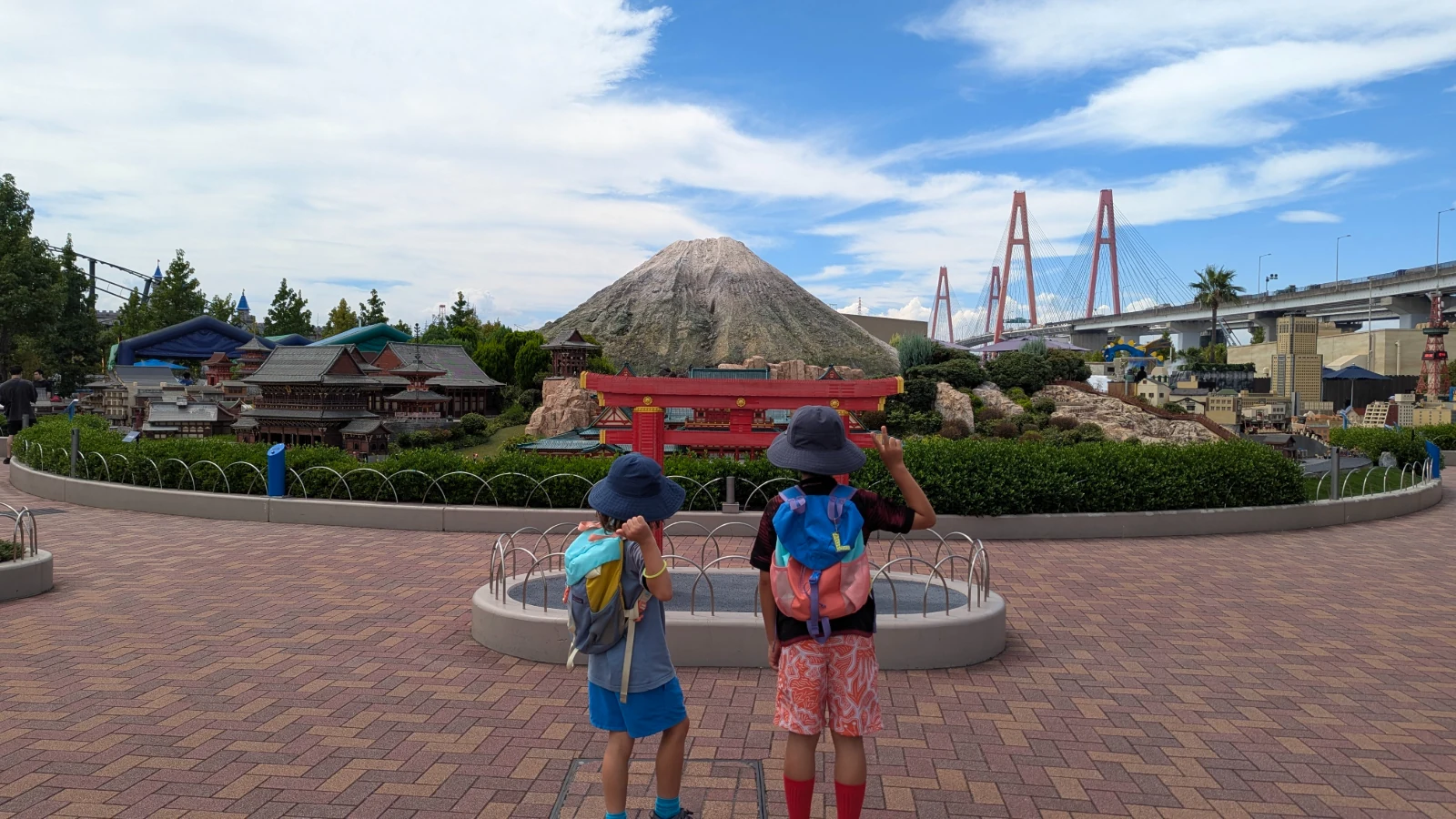
An outdoor park made for children from two to twelve.
Tickets by reservation only, released two months ahead.
Trains, some open to board, and simulators to drive.
Large exhibits, a nine-meter tornado among them, one stop from the station.
Which stop is for which child.
Nine Nagoya stops, each filed under the child it serves best.
None of these is ranked above another. Each is placed with the child it serves best, across the four profiles of The LUNI Framework, which starts from one premise: family travel runs on three currencies, not two, money and time plus the child’s reserve, the limited store a child has for taking in what travel asks of them. In Nagoya the stops sit on different lines, so the ride between two of them can spend a child before the second one begins. The Dynamo runs down when held still, the Sensor under noise and crowding, the Anchor when the day is unconfirmed, and the Sprinter on long stretches of walking and standing. Find your child below, and plan the day from there.
The Fuji Nagoya Science Museum, for almost any child.
It goes first because it works for three of the four children in a single building, indoors, one subway stop from Nagoya Station and five minutes on foot from Fushimi. Its large exhibits are the Water Plaza, a tornado of air nine meters tall, Tesla coils whose sparks reach four meters, and a room kept at minus 30 degrees Celsius. A child who needs to move has labs to work, a child who finds noise hard can leave the sparks out, and a child who needs the day settled gets numbered lab tickets and set rooms for a packed lunch. The building is step-free, with ramps wherever there are steps, and the science museum guide walks through each lab.
Find your child in the right-hand column, then read that stop.
| The Stop | What It Settles | Best For |
|---|---|---|
| Nagoya CastleNagoyajo Station, exit 7, 5 min on foot | Open grounds around one palace, with lunch on the grass. | Dynamo |
| SCMaglev and Railway ParkKinjo-futo Station, Aonami Line, about 2 min | Real trains to board, and a simulator to drive at the end. | Dynamo |
| Ghibli ParkLinimo, Ai-Chikyuhaku Kinen Koen Station | Film-world areas spread through a large public park. | Dynamo |
| Port of Nagoya Public AquariumNagoyako Station, exit 3, 5 min on foot | Orcas and dolphins on an announced program, and a crowd calendar. | Sensor |
| Toyota Automobile MuseumGeidai-dori Station, Linimo, about 5 min | Halls of still cars, and a floor where children may climb in. | Sensor |
| LEGOLAND JapanKinjo-futo Station, Aonami Line | A park built for children, with its rules readable at home. | Anchor |
| Toyota Commemorative MuseumSako Station, Meitetsu, 3 min on foot | Machines that run to a posted schedule, and a hands-on lab. | Anchor |
| Nagoya Touken WorldOsu Kannon Station, exit 2, 9 min on foot | A samurai museum whose main exhibits take about an hour. | Sprinter |
Nagoya Castle
Dynamo
SCMaglev and Railway Park
Dynamo
Ghibli Park
Dynamo
Port of Nagoya Public Aquarium
Sensor
Toyota Automobile Museum
Sensor
LEGOLAND Japan
Anchor
Toyota Commemorative Museum
Anchor
Nagoya Touken World
Sprinter
For the Dynamo
Stops with open ground, or something a child can climb into.
Which Nagoya stops suit a child who runs low when made to keep still? The castle grounds, the trains at Kinjo-futo and Ghibli Park.
Wide grounds walked at the child’s pace, with one palace at the center. The rebuilt keep is closed, but the grounds, the gardens and the Hommaru Palace are open, and the palace stands about ten minutes on foot from the Main and East gates. For a child who runs low when made to keep still, that walk is the visit’s best feature: open ground first, one building to go into, then a picnic on Ninomaru Plaza on the way out, with a canteen for noodles if nobody packed. The whole castle takes about an hour to an hour and a half. A six-year-old walks to the palace with a goal in sight; a twelve-year-old can carry the map and choose the way back through the gardens.
Who it costs.The Sensor, inside the palace rather than on the grounds. The Hommaru Palace is the one building the visit goes into, so on a busy morning the crowd and the child meet in its rooms, not on the open ground.
How to make it work.Take the subway to Nagoyajo, exit 7. Go into the palace first, before it fills, and save the grounds and the picnic for after. Strollers are lent at the Main and East gates in limited numbers, and none can be reserved. The full castle guide covers the palace room by room.
If this isn’t your child: a short morning of grounds and one palace, a subway ride from the science museum for the afternoon.Real trains, some of them open to climb into. Full-size trains stand at Kinjo-futo, among them the record setters, the steam locomotive C62 17, the 300X and the MLX01-1 maglev, and some are open to board. For a child who runs low when made to keep still, a museum where looking turns into climbing into a cab keeps moving, and the driving simulators give the visit an end point worth walking toward. A large diorama runs through a full day and night for the moments when legs need a rest. A seven-year-old goes from door to door; a fourteen-year-old can aim the whole visit at the shinkansen simulator.
Who it costs.The Sprinter, because a whole museum of trains is a long walk once every door has been tried, and the end of it is whatever the family decides.
How to make it work.Buy date-specific tickets online to skip the counter, and buy the simulator tickets first, since they are sold first come and only one N700 or conductor ticket goes to each person or group. Say the no-running rule before the doors, and keep an adult beside the child at the exhibits, as the rules require.
If this isn’t your child: a long walk among standing trains; pair it with LEGOLAND Japan at the same station only for an older child.Areas set apart in a large park, with the walking between them part of the day. Ghibli Park spreads its areas, Ghibli’s Grand Warehouse, the Hill of Youth, Dondoko Forest, Mononoke Village and the Valley of Witches, through the Expo 2005 Aichi Commemorative Park, so a day there is spent moving from place to place rather than standing in one. For a child who runs low when made to keep still, that is a shape that works, and its play spaces, the Catbus Room, Children’s Town and Dondoko-do, are kept for children of elementary-school age and under. A six-year-old needs one play space written into the plan; an older child can take on more of the areas.
Who it costs.The Anchor, because entry is not assured late in the day, and an unconfirmed plan is what drains this child. The Hill of Youth and Dondoko Forest crowd toward closing and some visitors miss entry, so a plan that leaves them late can change at the gate.
How to make it work.Book the day the month’s tickets go on sale, two months out, and see the Hill of Youth and Dondoko Forest early, before the late crowd. Bring a carrier for a small child, since strollers stay outside most buildings, and plan lunch in the surrounding park: food from home is not eaten inside the areas.
If this isn’t your child: a day booked months out; the Toyota Automobile Museum is on the same Linimo line for anyone who misses it.For the Sensor
Indoor halls where the big moments come on a schedule.
Where can a child who runs short on noise and crowding still have a full Nagoya day? Among still cars, or where the events are announced.
An aquarium where the big moments are on a program, set out in advance. The orca training, the dolphin performance, penguin feeding and a sardine tornado all run on the aquarium’s program, and a crowd forecast for the whole year is posted ahead. For a child who runs short on noise and crowding, that makes the loudest moments a choice and the quietest dates something to pick before the trip. Allow about two to three hours for the whole building, the dolphin performance included, with elevators in each building. A younger child takes one event and the main tanks; a thirteen-year-old can plan the program and the route between events.
Who it costs.The Dynamo, between the events. The halls are long, and the time at the glass from one event to the next is standing still, which is exactly where this child runs down.
How to make it work.Pick a quiet date from the crowd calendar, fix the two big animal events before anything else, and use the outdoor Shiokaze Plaza as the place to move and to eat. Leave balloons and bouncy balls at the hotel, since they are not allowed in. The aquarium guide sets out each event.
If this isn’t your child: two to three hours on foot; worth it for a child who loves big animals, and long for one who does not.Cars standing still, walked at the child’s own pace. Cars from Japan, the United States and Europe stand in the halls, some 140 years of them, and none of them is going anywhere. For a child who runs short on noise and crowding, a museum walked at the child’s own speed among still machines is a calm stop in a Nagoya trip, and the Culture Hall’s first floor keeps exhibit cars children are free to climb into. The visit runs about an hour and a half to two hours. A younger child takes the boardable cars and the lawn; a fifteen-year-old can hunt down one decade of cars from end to end.
Who it costs.The Dynamo, because the cars stand behind fences and are not to be touched, so most of the visit is looking. The cars on the Culture Hall’s first floor are the release, and they belong early in the visit.
How to make it work.Take the Linimo to Geidai-dori, about five minutes on foot. Say the no-touching rule at home, borrow a stroller at the desk if a small child needs one, and eat at the restaurant, which has a children’s menu, or on the outdoor lawn, since no food from home is eaten inside.
If this isn’t your child: a calm two hours among cars; for a child who needs to move, the Culture Hall floor is the part that lets them.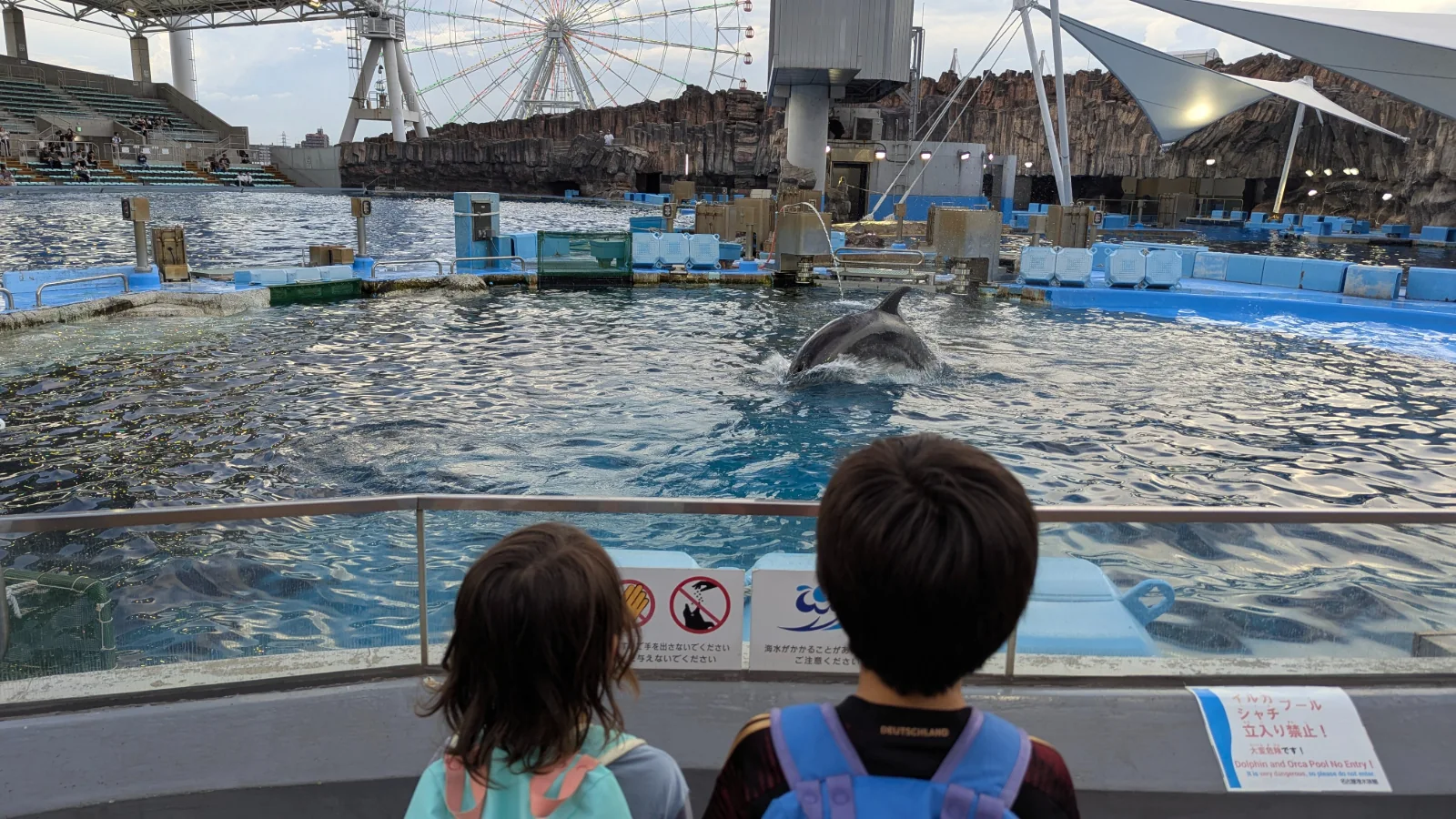
For the Anchor
Stops whose rules and shape can be learned before the trip.
Which Nagoya stops suit a child who needs the day confirmed in advance? A park with written rules, and machines that run to a schedule.
A park built for children from two to twelve, with rules that can all be read before the gate. Rides, shows and attractions fill the park’s outdoor areas, and for a child who runs short when nothing is predictable, nearly all of it can be learned in advance: the rides are listed with their height rules, every attraction carries a sensory guide rating sound, sight, touch, taste and smell from 0 to 10, and the food rule comes with its exceptions written out. A five-year-old needs the ride list shown at home; an eleven-year-old can plan the order of the areas and keep the family to it. The LEGOLAND Japan guide sets out the rides and the rules.
Who it costs.The Sensor, on a busy day. Parts of the park are loud with music and sound effects, and the cool-down room exists because some children need it.
How to make it work.Buy dated tickets online, since buying at the gate costs more, measure the child against the height rules before the trip, and know the food rule: outside meals are refused except baby food, a water bottle that fits in a bag, and meals for anyone with a food allergy. The Aonami Line runs from Nagoya Station to Kinjo-futo in 24 minutes, and the city’s day tickets do not cover it.
If this isn’t your child: half a day outdoors, built for younger children; for a teenager, the trains at the same station suit better.A museum of machines that run on a schedule a family can plan around. Looms, a steam engine and a violin-playing robot are shown working at set times through the day, and across the museum machines move at the press of a button. For a child who runs short when things are unconfirmed, a museum whose demonstrations can be written down as a schedule before the family leaves holds its shape all day. Technoland, the hands-on lab, runs in timed sessions from numbered tickets handed out at the museum. A seven-year-old follows two demonstrations and one button-run machine; a fourteen-year-old can take the English guided tour.
Who it costs.The Sprinter, because two pavilions and Technoland add up on foot, and strollers and wheelchairs may not ride the escalators, so a tired child’s route runs by the elevators.
How to make it work.Collect a Technoland ticket on arrival, since none can be booked ahead, and check a child’s height against its 120 cm rides. The Me~guru bus stops inside the grounds, and Sako Station on the Meitetsu line is three minutes on foot.
If this isn’t your child: a schedule of machines more than a playground; for a child who wants to drive, the trains at Kinjo-futo suit better.For the Sprinter
A stop that asks little of tired legs.
Where in Nagoya can a child whose legs give out first keep the walking short? At a samurai museum seen in about an hour.
Swords and armor seen in about an hour, with elevators between the floors. Nagoya Touken World shows Japanese swords, samurai armor, guns and ukiyo-e prints, and its main exhibits take about an hour, two to three hours for a thorough visit. For a child whose legs give out first, that is a visit with a short version built in, and the building is barrier-free, with elevators between the floors, an escalator up from the entrance and a cafe restaurant inside. A photo spot lets a child put on a samurai helmet and surcoat. A seven-year-old sees the armor and the photo spot and is out within the hour; a fifteen-year-old can take the long version through the swords.
Who it costs.The Dynamo, because the swords and armor are there to be looked at, and nothing may be eaten or drunk inside, so every break to move or snack means stepping out of the building.
How to make it work.Plan the short version: the main exhibits first, then the photo spot, and out. Bring the family’s own stroller for a small child, since none is lent, and step outside for a drink, since the ticket’s QR code lets the family back in the same day. Take the subway to Osu Kannon, exit 2.
If this isn’t your child: an hour indoors, step-free, with elevators to spare the legs; for a child who needs to run, the castle grounds suit better.Open with the child who runs short first.
Nagoya’s stops run out from Nagoya Station in three directions: the castle, the science museum, the samurai museum and the Toyota Commemorative Museum in and near the center; LEGOLAND Japan and the trains at Kinjo-futo, 24 minutes out on the Aonami Line; and the Toyota Automobile Museum and Ghibli Park east on the Linimo. The aquarium sits on its own at Nagoyako, on the Meiko subway line.
Book the two that sell out first.
Two stops shape a Nagoya trip before it starts: Ghibli Park sells only by reservation, two months ahead, and LEGOLAND Japan’s dated tickets cost more at the gate than online. On the day, the science museum’s Deep Freezing Lab and Technoland at the Toyota Commemorative Museum hand out numbered tickets, and SCMaglev’s simulators sell first come, so each is the first errand on arrival.
The Toyota Automobile Museum’s Culture Hall asks no ticket on its first and third floors, and the first is where the exhibit cars children may climb into stand.
Three bases, chosen by the line.
Chosen for the platform each day starts from, since most of Nagoya’s family stops are a train ride out.
| Property | The LuNi Reason |
|---|---|
| LUNI Pick Nagoya Marriott Associa Hotel Above JR Nagoya Station | It stands above Nagoya Station, where the shinkansen stops and the Aonami Line, the subway and the Me~guru bus all depart, so most days in this guide begin downstairs. The Family Fourth room sleeps up to five. |
| Nagoya Prince Hotel Sky Tower Sasashima Live Station, Aonami Line, 2 min | An official LEGOLAND Japan partner hotel, it sits by Sasashima Live on the Aonami Line, the line that runs on to Kinjo-futo, so the port day starts close by. Corner rooms from the 32nd floor up sleep four. |
| LEGOLAND Japan Hotel | It stands at Kinjo-futo itself, for a family that wants the port day without the train back. Theme and Premium rooms sleep two adults and two children, Premium Plus adds a bed for a third, and a water play area stands in for a pool. |
The questions parents actually ask.
What are the best things to do in Nagoya with kids?
It depends on the child. The castle grounds, SCMaglev and Ghibli Park suit a child who needs to move; the aquarium and the Toyota Automobile Museum suit one who needs quiet; LEGOLAND Japan and the Toyota Commemorative Museum suit one who needs the day settled; Nagoya Touken World suits one whose legs tire first. The Fuji Nagoya Science Museum works for almost any child, which is why it goes first.
How do you get around Nagoya with kids?
By train from Nagoya Station. The subway reaches the castle, the science museum and the aquarium; the Aonami Line runs to Kinjo-futo for LEGOLAND Japan and SCMaglev; the Linimo serves the Toyota Automobile Museum and Ghibli Park. The city’s day tickets cover the subway and buses but not the Aonami Line, the Meitetsu line or the Linimo, and Japan’s trains with small children covers strollers at the gates.
Is Nagoya good for toddlers?
Yes, with the right stops. LEGOLAND Japan is built for children from two, rents strollers up to age four and has a baby care room, and the castle lends strollers at its gates. The science museum lends none, so bring a folding stroller there. For the trip around it, the guide to Japan with toddlers takes each stage in turn.
What can you do in Nagoya with kids on a rainy day?
Go indoors. The Fuji Nagoya Science Museum, SCMaglev and Railway Park and both Toyota museums are indoor visits, and the aquarium’s tanks are indoors, though the dolphin performance is watched from roofed open-air stands. LEGOLAND Japan, the castle grounds and Ghibli Park are outdoor days, better moved to a dry one.
Can you do LEGOLAND Japan and SCMaglev on the same day?
With an older child, yes. Both are at Kinjo-futo Station on the Aonami Line, SCMaglev about two minutes from the station. With a younger child, half a day of rides, shows and attractions at LEGOLAND Japan is enough on its own, longer for a LEGO fan, so keep the trains for another morning.
How long do the Nagoya stops take?
The castle takes about an hour to an hour and a half, the Toyota Automobile Museum an hour and a half to two hours, and the aquarium two to three hours with the dolphin performance. The science museum runs from an hour to half a day, depending on the labs, and LEGOLAND Japan takes half a day or more.