Hakone or Fuji Five Lakes with Kids:which base suits your child.
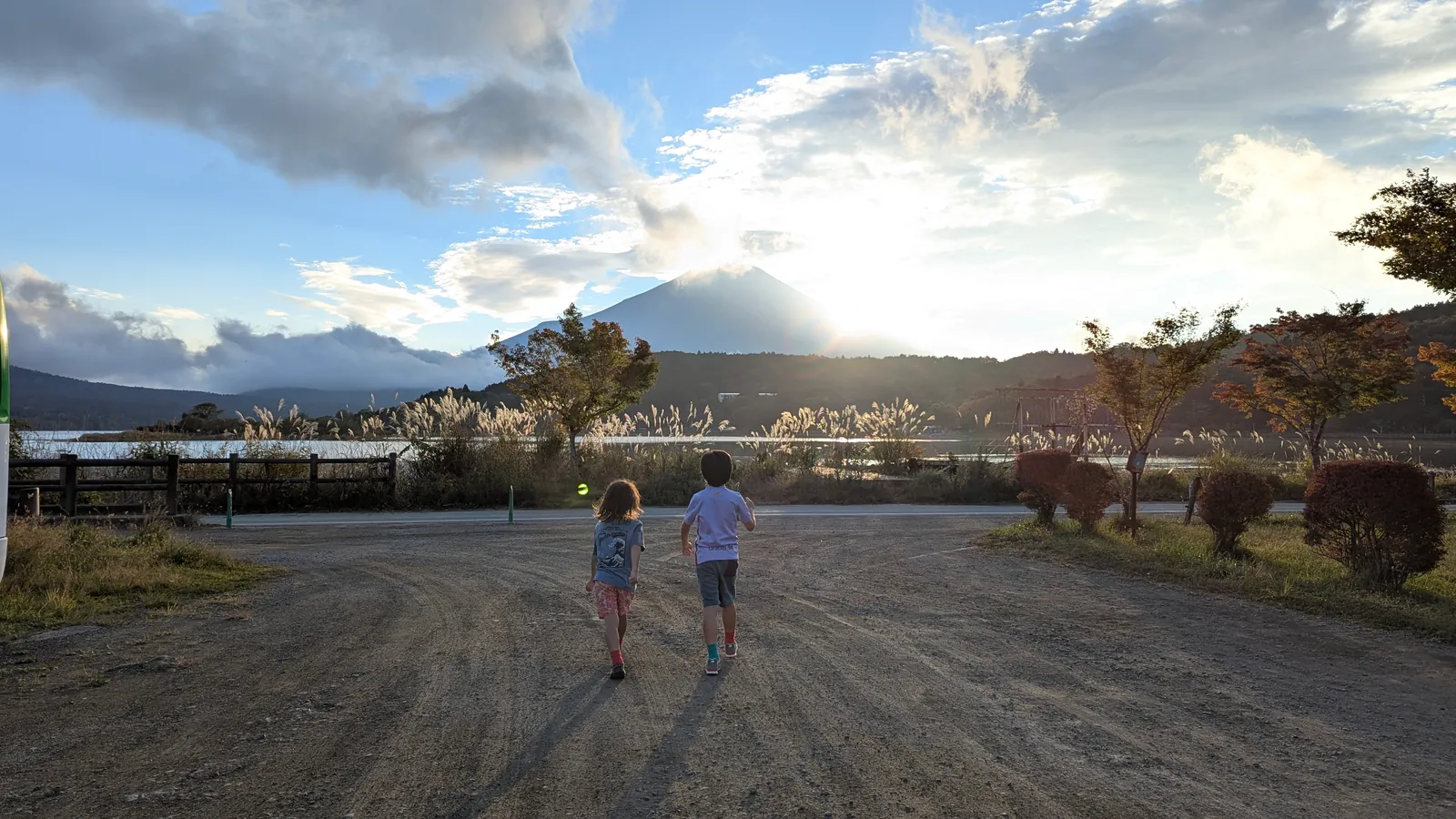
- From Shinjuku
- Hakone-Yumoto, about 80 min by Romancecar
- To the Lakes
- About 100 min on Fujikyu’s highway bus
- The Simpler Day
- Hakone: train, ropeway and ship in one circuit
- The Bigger Rides
- Fuji-Q Highland: FUJIYAMA from 110 cm
- Both Sides
- The three-day Fuji Hakone Pass
Base in Hakone when the child does best with a day laid out in advance: one linked circuit of mountain railway, cable car, ropeway and sightseeing ship, no leg longer than about 40 minutes, all of it on the Hakone Freepass. Base at the Fuji Five Lakes when the child needs room to move and a choice of stops, with Fuji-Q Highland’s rides at its center. Hakone-Yumoto is about 80 minutes from Shinjuku by Romancecar; the lakes are about 100 by Fujikyu’s highway bus. For a trip that takes in both, the three-day Fuji Hakone Pass covers much of the transport on each side.
Choose the day, not the view.
It is tempting to weigh Hakone against the Fuji Five Lakes by where Mt. Fuji looks best. That is the weakest way to choose. The mountain shows from both sides on a clear day, the Hakone Ropeway frames it on two of its three legs, and cloud can hide it from either. What the base really sets is the shape of every day a child spends there, and that is where The LUNI Framework earns its place: it asks what a place costs a particular child to get through, not only what it holds.
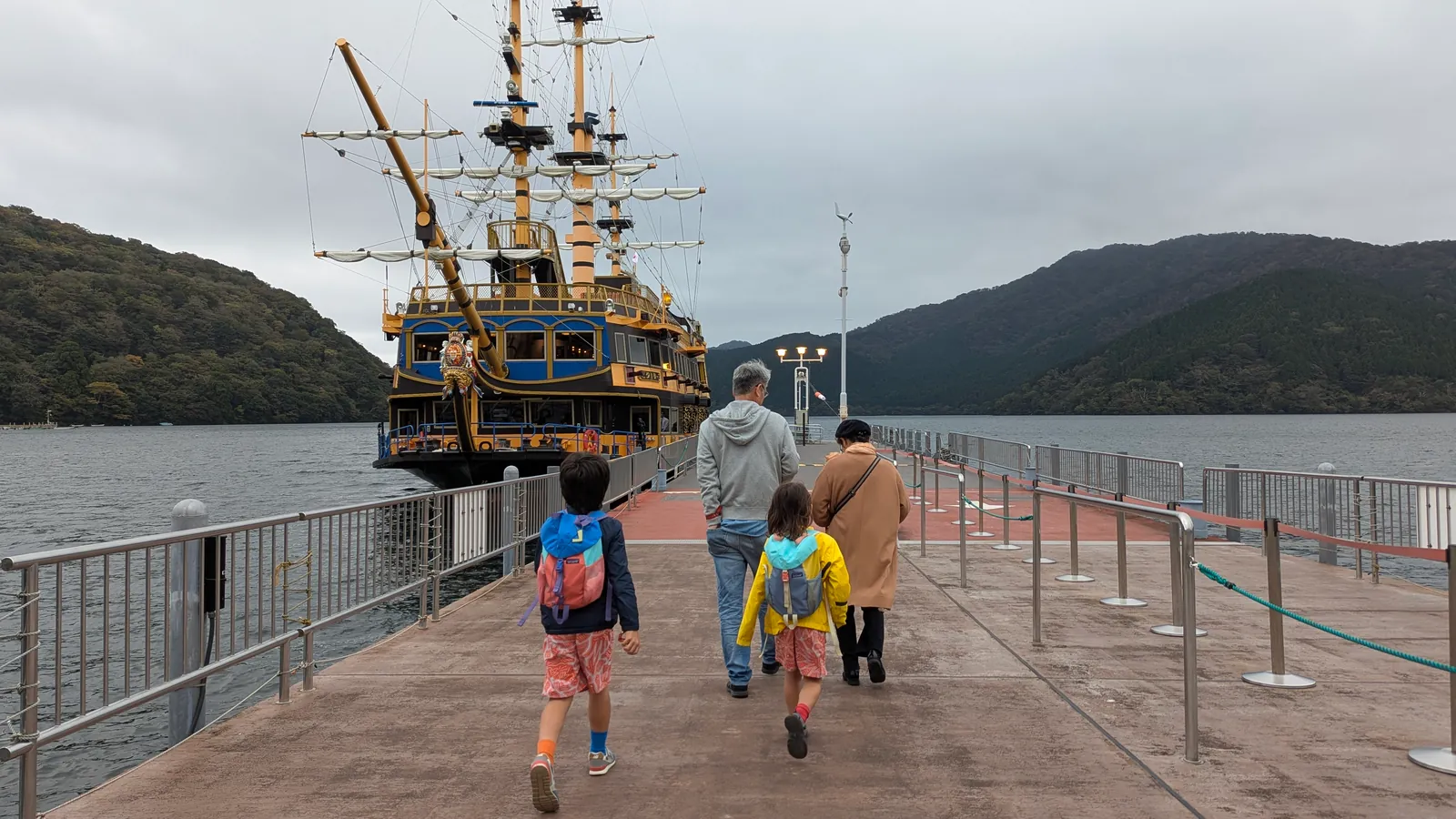
Hakone is a chain. From Hakone-Yumoto the mountain railway climbs to Gora in about 40 minutes, reversing at three switchbacks where the driver and conductor swap ends; a cable car climbs on to Sounzan in about 10; the ropeway crosses to Togendai on Lake Ashi in three legs of about 10 minutes each, with a change of gondola at Owakudani; and a sightseeing ship crosses the lake in 25 to 40 minutes. The changes at Sounzan and Togendai each happen inside one building, two or three minutes on foot, and the Hakone Freepass covers every leg, so the day is one continuous ride with stops along it.
The Fuji Five Lakes is a scatter. Its pieces sit apart, around the lakes and the towns at the mountain’s foot, joined by Fujikyu’s buses and railway: Fuji-Q Highland, where entry is free and each ride is paid for; the Swan Lake boat on Lake Yamanaka, a loop of about 20 minutes; the Fugaku Wind Cave’s course of about 15 minutes; and the Chureito Pagoda, whose viewing deck sits 398 steps up. A family assembles each day from those pieces and the rides between them, which gives a child more choice and asks the parent for more planning.
Hakone and the lakes, compared.
The two sides of the mountain differ on almost every point a child feels in a day, from the ride out of Tokyo to who tires first.
| Factor | Hakone | Fuji Five Lakes |
|---|---|---|
| From Shinjuku | About 80 min to Hakone-Yumoto by Romancecar, plus its surcharge | About 100 min by Fujikyu highway bus |
| A day’s shape | One linked circuit: train, cable car, ropeway, ship | Separate stops, joined by bus and rail |
| Local pass | Hakone Freepass, 2 or 3 days | Mount Fuji and Fuji Five Lakes Passport, 2 days |
| Suits best | A child who wants each day explained first | A child who needs to move between stops |
| Costs most | A child held in place too long | A child who tires on steps and walking |
Hakone
Fuji Five Lakes
The passes decide more than the price. Neither the Hakone Freepass nor the Fuji Hakone Pass includes the Romancecar’s limited express charge, which is paid separately. On the Fuji side, the highway bus from Shinjuku sits outside both the Fuji Hakone Pass and the Mount Fuji and Fuji Five Lakes Passport, so a family arriving that way pays for the bus on its own. JR through trains also run daily from Tokyo to Kawaguchiko, and both passes cover the Fujikyu Line, the shorter version of the passport only between Shimoyoshida and Kawaguchiko, and on the passport an express train needs its own express ticket.
Which child is coming.
Family travel runs on three currencies, not two: money and time, plus the child’s Reserve, their finite capacity to absorb what travel asks of them. The two bases spend that Reserve in different places, and each of the four profiles feels the difference in its own way.
The Dynamo, who depletes through restricted movement, is the child the Fuji Five Lakes suits best. Hakone’s circuit is a run of vehicles, train to cable car to gondola to ship, and for this child every leg is time held in place. The planning consequence: in Hakone, break the chain at the Hakone Open-Air Museum, a two-minute walk from Chokoku-no-Mori Station, where the Woods of Net lets children up to elementary age play and an 18-meter stained-glass tower has a spiral stair to climb. At the lakes, build the day on Fuji-Q Highland: a five-year-old can range around Thomas Land, whose indoor playground has no height limit, and a teenager can take FUJIYAMA, from 110 centimeters.
The Sensor, who depletes through sensory input, does best where the family controls the dose. Hakone’s circuit is shared with everyone riding it that day: 18-person gondolas leave about every minute, there is no priority boarding, so every family lines up on the day, and the sightseeing ships take bookings only for groups of 15 or more. The planning consequence is to start the circuit early and keep the afternoon free. The lakes make the dose easier to set, because each piece is short and the family chooses how many to string together: a 20-minute boat loop, a 15-minute cave course, a pagoda park open around the clock. A seven-year-old may need a break after one boat; a twelve-year-old can often hold out for Hakone’s whole circuit if nothing follows it.
The Anchor, who depletes through unfamiliarity and unconfirmed structure, is Hakone’s child. The circuit can be told leg by leg, each with a stated ride time, and one pass covers all of it, so nothing new has to be bought or worked out at a change. The planning consequence: the night before, walk the child through it in order, the mountain railway and its switchbacks, the cable car, the three gondola legs, the ship, and let them check off each one. A younger Anchor holds on to the list; an older one can follow the route on the map and call out each change. The lakes ask more of this child, since each day is put together from separate stops and the buses between them, and Fuji-Q Highland’s opening and closing times move with the date.
The Sprinter, who depletes through sustained travel-style walking and standing, gets the most from Hakone, where the vehicles do the moving and the changes at Sounzan and Togendai take two or three minutes on foot. Even Hakone Shrine, whose main approach climbs about 90 stone steps, has a side approach along a forest path with no steps. The lakes cost this child more: Fuji-Q Highland is crossed on foot from ride to ride, and the Chureito Pagoda’s view is reached by 398 steps. The planning consequence is to give a lakes day to the boats, which carry the child while the shore goes by, and to treat the pagoda as optional. For a younger Sprinter, leave the steps out; an older one can take them on a day whose other stops sit by the water.
The questions families ask most.
Is Hakone or the Fuji Five Lakes better with kids?
Hakone is the better base for a child who needs the day laid out, and the Fuji Five Lakes for one who needs to move. Hakone’s railway, cable car, ropeway and ship form one circuit on one pass, so the day can be explained before it starts. Around the lakes, a family builds each day from separate stops, with Fuji-Q Highland at the center. For a teenager after big coasters, the lakes win; for a child who tires on stairs and long walks, Hakone asks less.
How long does it take to get from Tokyo to Hakone or the Fuji Five Lakes?
From Shinjuku, the Odakyu Romancecar reaches Hakone-Yumoto in about 80 minutes, with a limited express charge each way of 1,200 yen, or 600 for a child, paid on top of the ordinary fare. Fujikyu’s highway buses from Shinjuku toward Fuji-Q Highland, Kawaguchiko Station and Lake Yamanaka take about 100 minutes, and about 130 from Tokyo and Ueno stations. JR through trains also run daily between Tokyo and Kawaguchiko.
Is there one pass for both Hakone and the Fuji Five Lakes?
Yes: the Fuji Hakone Pass, valid three days, at 11,100 yen for an adult and 3,600 for a child aged 6 to 11. It covers an Odakyu round trip between Shinjuku and Odawara, eight transport networks in Hakone including the mountain railway, the ropeway and the sightseeing ship, Fujikyu’s buses in their designated areas and the Fujikyu Railway between Kawaguchiko and Otsuki. It does not cover the Romancecar charge, the highway bus from Shinjuku to Kawaguchiko or the JR Chuo Line. A family staying on one side only is better served by the Hakone Freepass or the two-day Mount Fuji and Fuji Five Lakes Passport.
Do young children need tickets in Hakone?
A child under 6 needs no Hakone Freepass of their own. On the Hakone Tozan buses that has a limit: up to two children under 6 ride free with each paying adult or child; a third, or an under-6 riding alone, pays the child fare. For an older child, the two-day Freepass from Shinjuku costs 1,600 yen, against 7,100 for an adult, and the three-day pass 1,850 against 7,500.
Can a baby ride the Hakone Ropeway?
Because of volcanic gas, the Hakone Ropeway does not let anyone with allergic asthma, a bronchial, lung or heart condition or a pacemaker, or anyone feeling unwell, ride between Sounzan and Ubako. It also asks people sensitive to the gas, naming pregnant women, newborns and infants, people with allergies and older people, to consider not riding, because even trace levels may bring on an asthma attack. Service is suspended when gas readings call for it. For a family with a baby, plan Hakone around the mountain railway, the cable car and the lake’s sightseeing ships, and leave the ropeway out.
Can you see Mt. Fuji from Hakone?
Yes, on a clear day. The Hakone Ropeway shows Mt. Fuji on the legs from Sounzan to Owakudani and from Owakudani on to Ubako, and in summer the mornings are the best time to look. The ropeway stops in winds of 30 meters a second or more, and the lake’s sailings can be changed or called off in fog or strong wind, so a family set on the view keeps a second day free for it.
Is Fuji-Q Highland good for young children?
Yes, in Thomas Land. Thomas Land’s indoor playground sets no height or age limit, and children from age 3 can ride its mini coaster, though a preschool child on either must be accompanied by someone in junior high school or older. Entry to the park itself is free, so a family pays only for the rides it takes. The big coasters are another matter: FUJIYAMA starts at 110 centimeters, with a companion required up to 130, and Takabisha and Eejanaika at 125.