Mt. Fuji with Kids: The easy, no-hiking family guide.
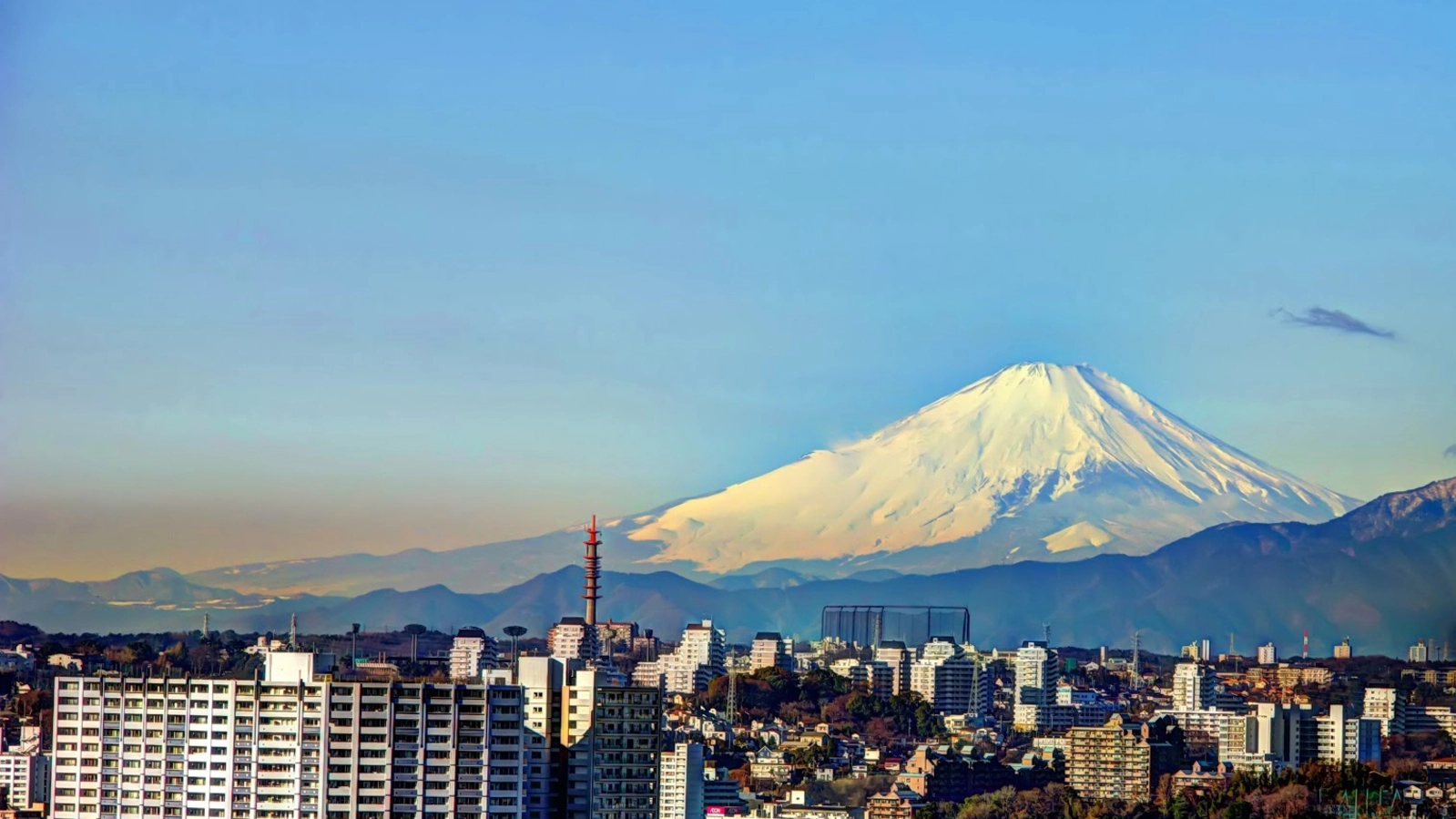
The way to do Mt. Fuji with children is from the base, where each of the three best sites carries one condition: steps, wind or a monthly closing day.
¥1,200 / ¥600 from November 1, 2026; the Heritage Center is free, and the Chureito steps cost only effort.
The 2026 climbing season ended September 10; the ropeway can stop in strong wind.
Shinjuku to Kawaguchiko is 1 hour 53 minutes at fastest on the Fuji Excursion; a night nearby adds a second chance.
Built from base sites, not the climb; the 398 Chureito steps are the one real exertion.
64 steps at the lakeside station and 112 at the top; wheelchair travel is difficult.
Some links on this page are affiliate links. LuNi may earn a commission at no extra cost to you.
Is Mt. Fuji worth it with kids?
The short version, before the costs, the timings and the case for each child.
Yes, and the key decision is to leave the climbing to other people. The summit trails are closed for winter above the fifth station, and even in season the climb is not a family day out. The mountain gives children far more from the base. The Chureito Pagoda’s viewing deck sits at the top of 398 steps, a real climb for a child who wants one. The Panoramic Ropeway lifts a family up with far fewer steps, when the weather allows. And the Fujisan World Heritage Center is free and indoors, the right answer on a day when cloud hides the peak. Choose one of the three as the day’s anchor, keep the others as fallbacks, and let the weather do the rest.
Planning Your Visit to Mt. Fuji with Kids.
Three decisions make the day. The first is which base site leads, and the answer depends on the child: the 398 Chureito steps for a climber, the ropeway for a child who tires, the Heritage Center for a child who needs a roof. The second is a fallback, because the ropeway can stop in strong wind, for an hour or the whole day, and the view itself depends on cloud. The third is whether to stay the night, which gives the family a second morning and a second chance at the mountain, and takes the pressure off a single cloudy day. Made as a day trip from Tokyo, it leaves a family one chance at the view, which is the whole case for the night.
Every LuNi attraction guide starts with a visit, with our own children
LuNi rates and writes about attractions only after visiting them with children. Luca and Nico were at Mt. Fuji, and what they did there is recorded further down this page, including how each child actually met it.
Children arrive with different tolerances: for noise, for lines, for standing still, for being on their feet all day. A guide written for the average of them helps almost nobody. So every place on this site is read four ways, and each verdict says which children it already suits and what makes it work for the rest. Whoever you are bringing, the answer here is built for your family rather than for a general reader.
Restricted-movement depletion finds an outlet in the 398 Chureito steps and the walk from the station, so let a moving child take the climb.
Sensory-input depletion stays manageable at open base sites with a free indoor center as the fallback, so plan the quiet stop before the crowds.
Unfamiliarity and unconfirmed structure ease when the weather is named as the one unknown, and the fixed parts, closing days and fares, are told first.
Sustained walking and standing ease when the ropeway replaces most of the steps and its weather rule is known, so have an indoor fallback ready.
- Cost
- Ropeway ¥1,000 adults / ¥500 children, round trip¥1,200 / ¥600 from November 1, 2026; the Heritage Center is free, and the Chureito steps cost only effort.
- Booking
- Fuji Excursion seats from ShinjukuFour round trips a day, plus one in some seasons, so the train a family books sets its hours at the mountain.
Hotels we would book for this visit.
A night by the mountain buys a second morning at the view. The three family hotels sit at Fujikawaguchiko and Fujiyoshida, and Konansou is 10 minutes on foot from Kawaguchiko Station, with a free pick-up on request.
| Property | The LuNi Reason |
|---|---|
| LUNI Pick Fujikawaguchiko Onsen Konansou | An onsen hotel in Fujikawaguchiko, 10 minutes on foot from Kawaguchiko Station with a free pick-up on request. It is the choice for a family making the mountain the trip’s one big night: the point of staying is a second morning at the view, and this is the stay to spend it in. |
| La Vista Fuji Kawaguchiko | La Vista Fuji Kawaguchiko is for a family that wants the lake town’s second morning at a simpler stay. A child who missed the mountain in the first day’s cloud gets a second chance at it, and the day is planned around whichever base site the weather allows. |
| Hotel Mystays Fuji Onsen Resort | Hotel Mystays Fuji Onsen Resort is in Fujiyoshida, the town of the Chureito steps, for a family on a longer stay in a large hotel. A child who wants the climb can do it first thing on any morning of the stay, with the steps in the same town as the room. |
Fujikawaguchiko Onsen Konansou
Hotel Mystays Fuji Onsen Resort
Nearby attractions, matched to your child.
Three base sites, each matched to the child it suits best: a climb of 398 steps for a child who needs to move, a ropeway for a child who tires, and a free indoor center for a child who needs quiet.
| Pairing | Why This Solves the After-Visit | For Your |
|---|---|---|
| LUNI Pick Chureito Pagoda Arakurayama Sengen Park: about 25 minutes’ walk from Shimo-Yoshida Station | The first of the three base sites, not a stop beyond them: the viewing deck above the pagoda sits at the top of a long staircase. Restricted-movement depletion needs a job for the body, and a staircase with the mountain at the top is about as clear a job as a child can be given. | Dynamo |
| Mt. Fuji Panoramic Ropeway Round trip ¥1,000 adults, ¥500 children; ¥1,200 / ¥600 from November 1, 2026 | The second base site lifts a family up with far fewer steps than Chureito, 64 at the lakeside station and 112 at the top. Sustained walking and standing are what it saves, with one condition: wind or lightning can stop it, and a stop can mean walking down, so keep a second plan ready. | Sprinter |
| Fujisan World Heritage Center Yamanashi: admission free | The third base site is the roof over the other two: free, with its north building open all year and the south closed on the fourth Tuesday of each month. Sensory-input depletion after outdoor viewpoints recovers best indoors, on a day when cloud has hidden the mountain anyway and a roof is the better plan. | Sensor |
Chureito Pagoda
Arakurayama Sengen Park: about 25 minutes’ walk from Shimo-Yoshida Station For YourDynamo
Mt. Fuji Panoramic Ropeway
Round trip ¥1,000 adults, ¥500 children; ¥1,200 / ¥600 from November 1, 2026 For YourSprinter
Fujisan World Heritage Center
Yamanashi: admission free For YourSensor
How two children actually met this attraction.
Two children spent the same morning at the foot of the same mountain, and the mountain spent most of it in cloud. One of them turned the missing view into a project and organized the whole morning around the moment it would appear. The other gave up on the view almost at once and spent the time moving instead, which suited him far better. Both had a good day, and neither needed the summit. That is the case for doing Fuji from the base with children: the mountain rewards patience and movement alike, and a family can plan for both without climbing anything taller than a staircase. The one thing a family cannot plan is the cloud, so the plan has to work whether or not the peak ever shows.
With the summit lost in cloud for most of the morning, Luca turned the uncertainty into a system. He claimed the binoculars, declared a spotting game, and assigned himself the job of calling out the first clear sight of the peak, checking the sky and announcing the odds like a forecast. The unconfirmed view became the structure he organized the whole morning around. When the cloud broke near the lake, he had been ready for it for an hour.
This is the Anchor pattern. A child whose Reserve depletes through unfamiliarity and unconfirmed structure, handed an outcome nobody can promise, will often build his own predictability around it. Families with a similar child can do it on purpose: give the child a defined role in the day’s one uncertain element, the weather, with a job and a signal, and the uncertainty stops draining him and starts holding his attention for the whole morning, whatever the sky does.
Nico had no patience for standing at a viewpoint waiting on weather. Within minutes of the first lakeside stop he was off down the open shoreline, picking up a quick pace, doubling back, testing how far the flat path ran before anyone called him in. The slow viewing did nothing for him; the wide, unrestricted ground did. He was steadiest on the day not while looking at the mountain but while moving freely beneath it.
This is the Dynamo pattern. A child whose Reserve depletes through restricted movement is not bored by the view so much as held by the stillness it asks for. Families with a similar child should put the moving first, the Chureito steps or open ground at the base, and the waiting for the view second, because a Dynamo who has climbed can wait for the cloud to clear far longer than one asked to wait from the start.
Seeing Mt. Fuji with a child is a lesson in patience, and in letting nature have the final word. The mountain may stand clear or hide in cloud, and a child who learns to wait for the view, or to enjoy the day even without it, is learning something that reaches far beyond travel. Planning for more than one chance teaches flexibility. And when the peak does appear, often suddenly, a child understands why people have traveled so far to see it, and why a view can be worth the wait.
The LUNI Rating for Mt. Fuji.
One fact runs under all four verdicts: Mt. Fuji with children is a mountain to look at, not to climb, and the base offers something for each kind of child. The steps suit the one who needs to move, the ropeway the one who tires, the free center the one who needs quiet, and a named plan the one who needs structure. That is why every profile is well served, with the weather as the one condition on all of them, and a fallback as the answer. The weather is the only condition, and a named fallback answers it for every child.
Give the child the steps. The Dynamo depletes through restricted movement, and the hardest thing about a mountain for this child is the waiting: for the view, for the cloud, for the adults to finish looking. The base answers that with a real climb. The Chureito Pagoda in Arakurayama Sengen Park is about 25 minutes on foot from Shimo-Yoshida Station, its viewing deck is at the top of 398 steps, and a child can spend as much as he likes on the way up.
It all depends on putting the moving before the looking. Start the day at Chureito rather than at a viewpoint, let the child take the steps at his own pace, and do the looking from the deck, where the effort has earned it. If the peak is in cloud, the climb still counts, which is exactly why it suits this child: the day is not lost when the view is. Keep the summit trails out of the conversation, since they are closed outside the summer season and are not a family day.
What this means for your Dynamo: restricted movement discharges on a staircase with the mountain at the top. A younger Dynamo needs a parent alongside on the 398 steps; an older one can climb ahead and wait at the deck.Keep the free center as the roof. The Sensor depletes through sensory input, and the input at the base comes from people and weather rather than from the mountain. Famous viewpoints draw visitors, and wind and cloud can change the day quickly. What steadies it is a place to retreat to. The Fujisan World Heritage Center in Yamanashi is free, and its north building is open all year; the south building closes on the fourth Tuesday of each month, or the next day after a holiday.
So the day rests on choosing the sites and the order. Start with the site the child likes best, keep the visit there short, and put the Heritage Center into the plan as the planned quiet stop, not as an emergency. Last entry is fifteen minutes before closing. On a day when the peak is hidden anyway, go indoors early rather than waiting at a busy viewpoint. The ropeway, when it runs, offers the view from above.
What this means for your Sensor: sensory input comes from crowds and weather, and a free indoor center absorbs it. A younger Sensor needs the quiet stop planned; an older one can choose when to go in.Name the weather as the one unknown. The Anchor depletes through unfamiliarity and unconfirmed structure, and a mountain view is the definition of unconfirmed: the peak may appear or may not. The base, though, has fixed parts a parent can promise. The Chureito steps number 398. The ropeway has set fares, rising on November 1, 2026, and runs shortened hours on inspection days. The Heritage Center is free, with a fixed monthly closing day. The summit trails are closed for winter, full stop.
The answer is to separate those two kinds of fact out loud. Tell the child what is certain first, the places, the order, the fares, and then name the weather as the one thing nobody controls, and give the child a role in it: watching for the peak, calling the first sighting. A child who owns the unknown settles far better than one told the view is guaranteed. If the family stays the night, say so in advance: tomorrow morning is the second chance.
What this means for your Anchor: a day of fixed parts with one named unknown leaves unfamiliarity little to feed on. A younger Anchor needs the weather named as the unknown; an older one can take on the watching job.Ride up, if the wind allows. The Sprinter depletes through sustained travel-style walking and standing, and the famous Fuji views ask for both. The Chureito deck sits at the top of 398 steps, above a pagoda about 25 minutes on foot from the station. The Panoramic Ropeway is the trade that makes it work: its two stations have 64 steps at the lakeside and 112 at the top, far fewer than Chureito’s. But it runs only when the weather allows, and if lightning or a sudden gust stops it while the family is up, passengers may have to walk down.
Make the ropeway the first choice, and keep an indoor fallback ready. Check it on the morning, with the last ride up at 15:00 on inspection days, and ride only under a settled sky, since a walk down is the one outcome a tired child cannot absorb. If it is stopped, skip the Chureito steps rather than asking a tired child to climb them, and go to the free Heritage Center instead. Stay the night if the budget allows, because a second morning means the family never has to push for the view on one day.
What this means for your Sprinter: the ropeway takes most of the walking and standing off the view, when the weather allows. A younger Sprinter needs a settled day for the ropeway, or the indoor center; an older one can climb the Chureito steps if the day is short.The questions parents actually ask.
Mt. Fuji starts with the climb, and the family day is at the base. The trails above the fifth station close for a Japan winter and are warned against out of season. The base sites suit different children, the ropeway can stop in wind, and the Heritage Center is free. It all points the same way: choose one site, keep a second in reserve, and let the weather that morning decide the order. A child told the order at breakfast takes a cloudy summit in stride. The family day was never built on the view alone, and the steps and the center both work under cloud.
Is Mt. Fuji worth visiting with kids?
Yes, from the base. The Chureito Pagoda’s viewing deck, the Panoramic Ropeway and the free Fujisan World Heritage Center each give children the mountain without the climb. The summit trails close for winter above the fifth station, and climbing outside the season is dangerous, so the family day is at the foot of the mountain, not on it.
Can kids climb Mt. Fuji?
Not as part of a family day at the base, and not outside the summer season. The 2026 season has ended, and the trails are closed above the fifth station, or the sixth on the Fujinomiya route. Climbing out of season is warned against as extremely dangerous: huts and aid stations are shut, phone signal is patchy and the weather is severe.
How many steps are there at the Chureito Pagoda?
398, up to the viewing deck above the pagoda in Arakurayama Sengen Park. The pagoda is about 25 minutes on foot from Shimo-Yoshida Station, and the viewing deck above it is at the top of those steps. For a child who loves climbing, the steps are the highlight; for a child who tires, decide before the first step how far the family goes.
Does the Mt. Fuji Panoramic Ropeway run in bad weather?
Not always. In strong wind it may stop, for a while or for the whole day, and if lightning or a gust stops it while passengers are up, they may have to walk down. Inspection days end with the last ride up at 15:00. A round trip is 1,000 yen for adults and 500 for children, and 1,200 and 600 from November 1, 2026.
Is the Fujisan World Heritage Center free?
Yes, admission is free. The north building is open all year; the south building closes on the fourth Tuesday of each month, or the next day when that Tuesday is a holiday, and last entry is 15 minutes before closing. It makes a good indoor stop on a day when cloud hides the mountain.
Where should families stay near Mt. Fuji?
A night by the mountain gives a family two chances at the view. The three hotels here sit at Fujikawaguchiko and in Fujiyoshida, each a base for a second morning. Konansou is a 10-minute walk from Kawaguchiko Station, on the Fujikyu line that also serves Shimo-Yoshida, the station for the Chureito steps.
What is the best way to see Mt. Fuji with young children?
Pick one base site, not three, and let the weather choose the order. The Chureito steps suit a climber, the ropeway a child who tires, if the wind allows, and the Heritage Center a child who needs a roof. Keep the mountain itself as something to look at, since the trails are for the summer season and not for a family day.
How much does it cost to climb Mt. Fuji in season?
In the summer season the climbing fee is 4,000 yen per person per climb on every route. For a family, the more useful number is the ropeway’s child round-trip fare, 500 yen, or 600 from November 1, 2026, because the base sites give children the mountain without asking them to climb it.
Where Mt. Fuji fits your Japan trip.
Official site and opening information: Mt. Fuji Climbing