Yamashita Park with Kids: A Free Waterfront Reset.
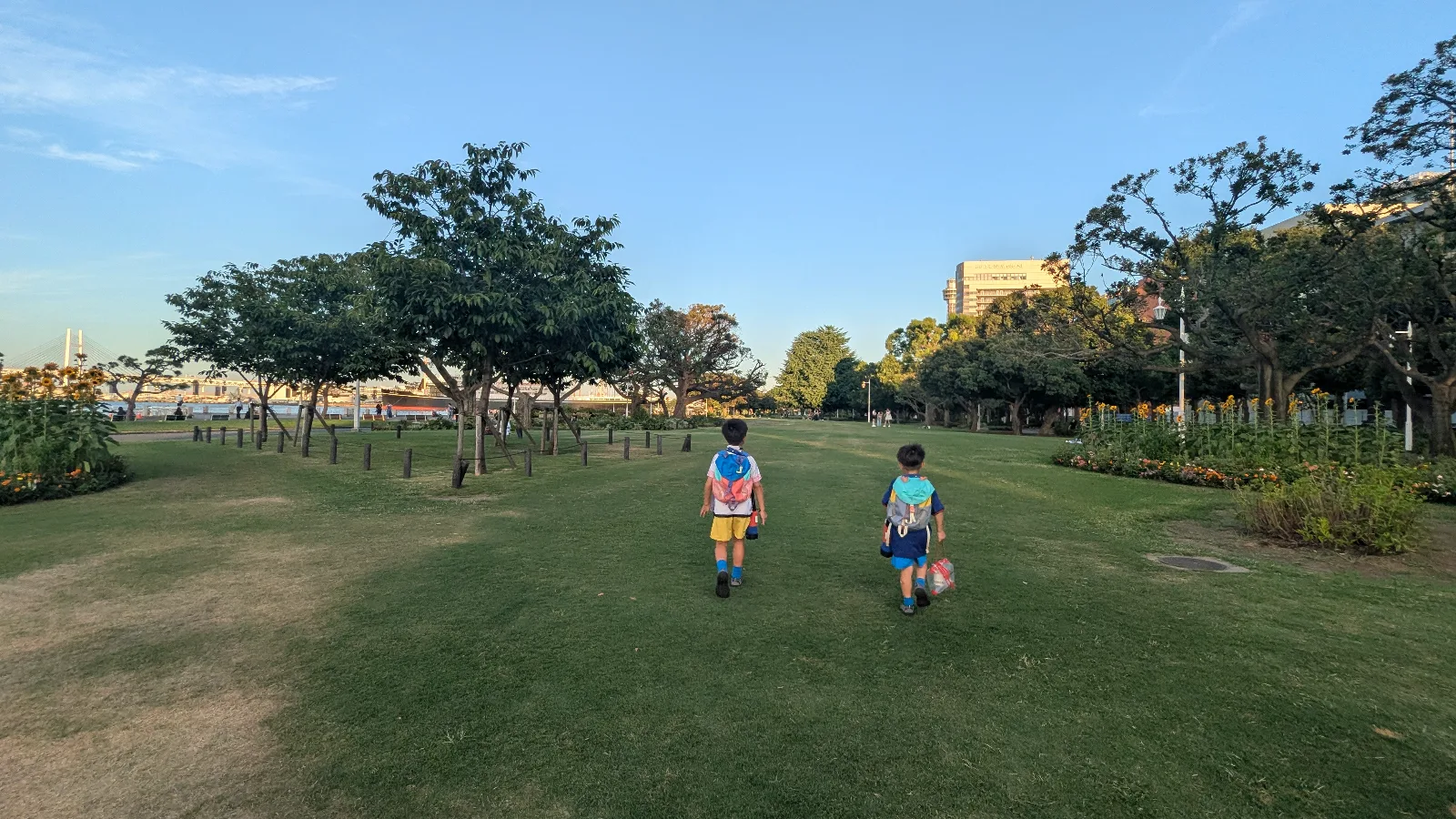
A free park built on earthquake rubble in 1930, where the best thing on offer for a restless child is room to run between a fountain, a statue and the roses.
No ticket for the park and nothing to book; the Hikawa Maru keeps its own hours.
No hours and no closing day for the park itself; the Hikawa Maru is open 10:00 to 17:00, closed Mondays (on a holiday Monday, the next weekday instead).
Open-ended; the child decides, around the elevators’ hours and the Hikawa Maru’s.
Open ground to run, a rose garden and named statues to find.
Two elevators from the underground parking to the World Plaza, 8:30 to 17:00; outside those hours, call the parking office.
Some links on this page are affiliate links. LuNi may earn a commission at no extra cost to you.
Is Yamashita Park worth it with kids?
The short version, before the costs, the timings and the case for each child.
Yes, and it is the hour in Yokohama that a moving child most needs, after a morning indoors. The park is big enough for a child to run properly, and for a child who needs something to aim for it offers three named places: the Guardian of Water fountain in the central plaza, a gift from San Diego; the statue of the girl in red shoes from the children’s song; and a rose garden with some 160 varieties. It suits almost every child, and it costs a tired child very little, since two elevators run from the underground parking up to the World Plaza. A child who cannot run anywhere else that day can run here.
Planning Your Visit to Yamashita Park with Kids.
Three small decisions make the park work. The first is the hour: come when the child needs to run, after a morning indoors rather than at the end of a day already spent, and check the Hikawa Maru’s calendar before promising it. The second is a destination, which matters more than it sounds, because a child who needs something to aim for will find open ground thin without one: pick the fountain, the statue of the girl in red shoes or the rose garden and head there first. The third is the approach, the easiest of the three and the one to settle last: Motomachi-Chukagai Exit 4 is three minutes away, and the bus from Sakuragicho stops at the park itself, so no child walks far to reach it.
Every LuNi attraction guide starts with a visit, with our own children
LuNi rates and writes about attractions only after visiting them with children. Luca and Nico were at Yamashita Park, and what they did there is recorded further down this page, including how each child actually met it.
Children arrive with different tolerances: for noise, for lines, for standing still, for being on their feet all day. A guide written for the average of them helps almost nobody. So every place on this site is read four ways, and each verdict says which children it already suits and what makes it work for the rest. Whoever you are bringing, the answer here is built for your family rather than for a general reader.
Restricted-movement depletion drains away in a free park of about 74,000 square meters, so give the child the open ground first and the sights second.
Sensory-input depletion stays low in open air, with roses and a fountain to slow down at, so make the park the quiet half of the day.
Unfamiliarity and unconfirmed structure ease with named landmarks to head for, a fountain, a statue and a rose garden, so plan the route between them.
Sustained walking and standing stay short with the station three minutes away and elevators from the parking, so arrive by train or car.
Hotels we would book for this visit.
Three Yokohama family hotels chosen by district: one in the park’s own district, one in the Cup Noodles Museum’s, and one for a family that reaches the park by train.
| Property | The LuNi Reason |
|---|---|
| LUNI Pick Hotel New Grand | Hotel New Grand shares the park’s district, and is the one to book first. For a family using the park as the open-air reset in a busy Yokohama day, a room in the park’s own district means the reset sits in the hotel’s own streets, whatever the rest of the day holds. |
| InterContinental Yokohama Pier 8 | InterContinental Yokohama Pier 8 shares its district with the Cup Noodles Museum. It suits a family splitting a Yokohama day between making something in the morning and running in the park in the afternoon, with the hotel at the museum’s end of that day and the park as its second half. |
| Citadines Harbour Front Yokohama In Yokohama | For a family that reaches the park by train, three minutes on foot from Motomachi-Chukagai Exit 4, and wants a base that serves the whole city rather than one district. The park is then one train ride and three minutes on foot, on any day of the stay. |
InterContinental Yokohama Pier 8
Citadines Harbour Front Yokohama
Nearby attractions, matched to your child.
Three nearby visits for what an open park leaves undone: a museum with elevators and re-entry for tired legs, streets of gates for a child still full of energy, and a ride with a fixed length.
| Pairing | Why This Solves the After-Visit | For Your |
|---|---|---|
| LUNI Pick Cup Noodles Museum Yokohama Shinko: Minatomirai or Bashamichi Station, 8 minutes | After a park, the Cup Noodles Museum keeps the next stop easy on the legs: stations about eight minutes away, elevators inside, and a ticket that allows same-day re-entry. Walking and standing stay short for a Sprinter, and making a cup of noodles gives the afternoon a purpose. | Sprinter |
| Yokohama Chinatown Motomachi-Chukagai Station, 1 minute | Its largest gate, Choyo-mon, stands on the Yamashita Park side, and Yokohama Chinatown behind it has ten gates and some 630 shops to walk between. A Dynamo spends energy well there, while for a Sensor the sensory input climbs fast, and for an Anchor so do unfamiliarity and unconfirmed structure. | Dynamo |
| Yokohama Cosmo World Minatomirai Station, about 2 minutes | At Yokohama Cosmo World, free to enter, the Cosmo Clock 21 turns once in about fifteen minutes, and its reception closes fifteen minutes before the park does. Unfamiliarity and unconfirmed structure ease when a ride has a known length, though the park closes on Thursdays and takes cash only. | Anchor |
Cup Noodles Museum Yokohama
Shinko: Minatomirai or Bashamichi Station, 8 minutes For YourSprinter
Yokohama Chinatown
Motomachi-Chukagai Station, 1 minute For YourDynamo
Yokohama Cosmo World
Minatomirai Station, about 2 minutes For YourAnchor
How two children actually met this attraction.
The same park meant almost nothing to one child and everything to the other, and the difference is the most useful thing a parent can know about it. For a child who needs to move, open ground is the whole attraction: one of these two invented his own game and ran it until he was done. For a child who needs something to work out, open ground stays empty until it holds an object with parts and a history. Neither child needed a ticket, and neither needed the other’s version of the day. Give the careful child a destination before arriving and the restless child a head start, and the park turns from a gap in the itinerary into the part of the day both of them remember.
The lawns and the water did little for Luca on their own. What he wanted was the Hikawa Maru, the retired ocean liner moored at the park’s edge, and once aboard he went straight for the systems: the engine room, the bridge, and the ship’s history, which he wanted in full rather than in summary, read and examined rather than glanced at. Without the ship, the park alone would have held him for a much shorter stretch.
This is the Anchor pattern. A child whose Reserve depletes through unfamiliarity and unconfirmed structure can find an open space thin, because there is nothing defined to fix onto, and switches on when something offers a bounded system to work through. Families with a similar child should not expect open ground to carry the visit alone: arrive with one concrete thing to head for, a named statue, the fountain or the rose garden, so the outing gains the structure the space itself does not supply.
Nico used the park exactly as it is meant to be used. He took the open lawn and the sea wall and turned them into a running circuit, inventing a game out of whatever was to hand, talking the whole time. He did not need an exhibit or a ticket; the space itself was the activity. His energy was highest early and the park absorbed all of it, which made the rest of the Yokohama day workable afterward.
This is the Dynamo pattern. A child whose Reserve depletes through restricted movement refills through the freedom to keep moving, and open ground with a game of his own making is the ideal outlet, giving the movement a direction without imposing a route. Families with a similar child should use the park on purpose as the day’s discharge, early while the energy is high, because a Dynamo who has run freely for an hour arrives at the next stop ready to stand still.
A free park by the water, with nothing to buy and nothing to finish, gives a child something precious on a busy trip: time that is entirely their own. Running between a fountain, a statue and the roses, a child sets the pace and the purpose while the adults simply follow. That freedom restores more than any attraction can. Knowing that the park grew from the rubble of a great earthquake adds a quiet lesson too: cities rebuild, and beautiful places can come from hard times.
The LUNI Rating for Yamashita Park.
One fact sits under all four verdicts: Yamashita Park is a big, free park three minutes from a station, with named landmarks to head for. Every child does well. The child who needs to move has room; the child sensitive to input has open air; the child who needs structure has a fountain, a statue and a rose garden to use as fixed points; and the child whose legs tire first has a short approach and elevators from the parking. It is the stop to hold loosely in a Yokohama stay: on a day when a museum runs long or a child runs low, the park takes the spare hour.
Give the child the ground first. The Dynamo depletes through restricted movement, and Yamashita Park answers it with space: about 74,000 square meters of public park, free, with no ticket to buy before the running can start. After a morning in a museum or on a train, this is the stop where a restless child can spend energy freely rather than on a ride’s schedule. The fountain, the statue and the rose garden are there for later; the first job of the visit is simply to let the child move.
An order and a game carry this child. Walk in, point at a far landmark, and let the child get there first, then invent the next target from whatever is in view. Save the sights for once the first rush has run its course, when a child who has moved will look properly. A family pairing the park with a paid stop should put the park first on a morning when the child is wound up, and after the paid stop on a day when patience ran out indoors.
What this means for your Dynamo: restricted movement discharges in open space. A younger Dynamo needs a landmark to race to; an older one can invent the game and the route himself.Use the park as the quiet half. The Sensor depletes through sensory input, and a city park is one of the easiest places in Yokohama to take a load off. The park is open air all around, with a rose garden of about 1,900 plants and some 160 varieties, a fountain in the central plaza and a statue of the girl in red shoes. Being free and open, it asks nothing of a child on arrival, and that is why this child takes to it so easily.
Schedule the park after the noisy part of the day, not before it. A morning at a busy museum or in the streets of Chinatown fills a Sensor quickly; an hour here lets that settle before the next thing. Let the child choose where to walk, stop at the roses or the fountain for as long as they like, and treat the visit as recovery rather than sightseeing. There is nothing here that has to be seen.
What this means for your Sensor: sensory input stays low in open air. A younger Sensor needs the park straight after the busiest stop; an older one can choose the route and the time.Name the landmarks, then walk between them. The Anchor depletes through unfamiliarity and unconfirmed structure, and open ground on its own gives this child little to hold. What Yamashita Park offers instead are named fixed points: the Guardian of Water fountain in the central plaza, a gift from San Diego; the statue of the girl in red shoes from the well-known children’s song; and the Future Rose Garden. With those named in advance, the park stops being a space and becomes a route with stops.
Tell the story before arriving. The park opened in March 1930, built on rubble from the Great Kanto Earthquake, which is the kind of fact that turns ground into a place for a child who wants to understand. Set the order of the three landmarks, say which comes last, and add the Hikawa Maru only on a day it is open, since it closes on Mondays unless the Monday is a holiday, when it closes the next weekday.
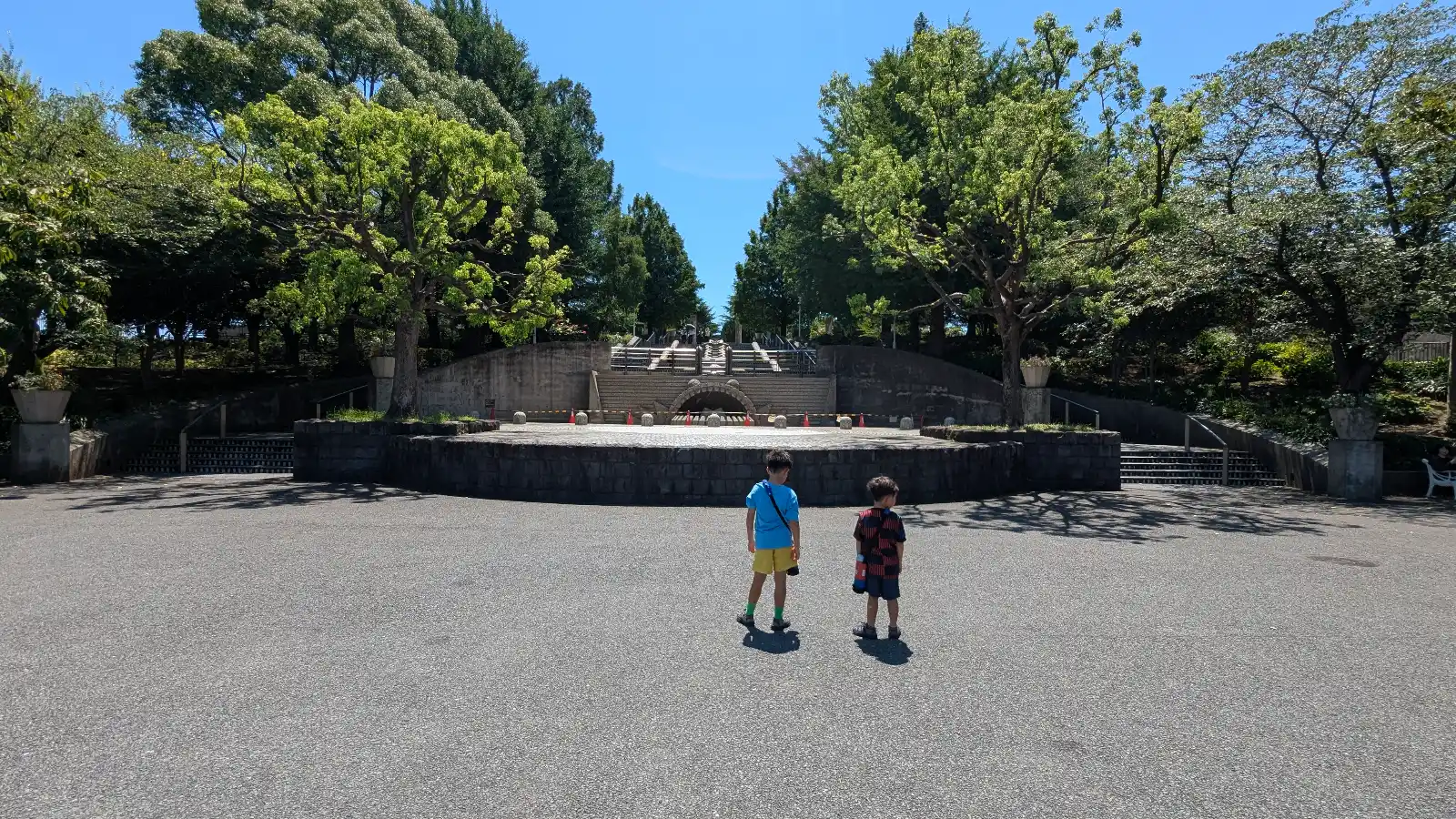
What this means for your Anchor: a route of named landmarks leaves unfamiliarity little to work on. A younger Anchor needs the three stops in order; an older one can take the history and plan the route.Arrive close, and check the elevator hours. The Sprinter depletes through sustained travel-style walking and standing, and the park keeps the approach short: Motomachi-Chukagai Exit 4 is three minutes away, and bus 26 from Sakuragicho stops at Yamashita Koen-mae, at the park. For a family driving, the paid garage underneath has 222 spaces, and two wheelchair-accessible elevators rise from it to the World Plaza. A multipurpose restroom stands near the Stone Stage, with baby changing in three of the restrooms.
The approach and the clock are what to manage. Choose Exit 4 or the bus rather than the fifteen or twenty minutes on foot from the JR stations, and with a stroller, use the elevators between 08:30 and 17:00, or call the parking office to use them outside those hours. Let the child set the length: this is a free park, so leaving after half an hour costs nothing, and a Sprinter who leaves early and happy has had the right visit.
What this means for your Sprinter: walking and standing barely start when the train stops three minutes away. A younger Sprinter needs the elevators from the parking; an older one can walk in from JR Ishikawacho.The questions parents actually ask.
Yamashita Park is free and open, and the only clocks it keeps belong to other things: the elevators from the parking and the Hikawa Maru’s Monday rule. Both are easy to check the evening before, at the hotel. Everything else can be decided on the day, which is its value in a busy trip: a park that waits for the family rather than the reverse. It fits a Yokohama day on foot as the break between a museum morning and the streets of Chinatown. A child who spent the morning holding still needs that break more than any single landmark in it.
Is Yamashita Park worth visiting with kids?
Yes, above all as a free break between paid sights. It is a park of about 74,000 square meters, three minutes from Motomachi-Chukagai Station, with a central fountain, the statue of the girl in red shoes and a rose garden. Stroller users should note that the parking elevators run 08:30 to 17:00; outside those hours, call the parking office.
Does Yamashita Park cost anything?
No, the park is free. The Hikawa Maru, if you go aboard, keeps its own hours: 10:00 to 17:00, with last entry at 16:30, closed on Mondays except holiday Mondays, when it closes the next weekday instead. The paid parking garage under the park has 222 spaces.
What is there for children to see?
Three things to find: the fountain in the central plaza, called the Guardian of Water and given by San Diego; a statue of a girl wearing red shoes, from a children’s song; and the Future Rose Garden, which holds about 1,900 plants of some 160 varieties. The park opened in March 1930, built on rubble from the Great Kanto Earthquake.
How do you get to Yamashita Park?
Motomachi-Chukagai Station on the Minatomirai Line is the closest, 3 minutes from Exit 4. JR Ishikawacho is about 15 minutes on foot and JR Kannai about 20, and bus 26 from Sakuragicho stops at Yamashita Koen-mae, right at the park. With small children, Exit 4 is the easy choice.
Is Yamashita Park stroller friendly?
Partly. Two wheelchair-accessible elevators run from the underground parking garage up to the World Plaza, 08:30 to 17:00; outside those hours, call the parking office to use them. There is a multipurpose restroom near the Stone Stage, and baby changing in three of the park’s restrooms.
When is the Hikawa Maru open?
The ship is open from 10:00, and visitors go aboard until 16:30 before it shuts at 17:00. Mondays are closed, though a Monday that is a national holiday opens, and the following weekday closes instead. It also closes now and then for work on board, so check its own site on the morning of the visit.
Is Yamashita Park near Yokohama Chinatown?
Yes. Chinatown’s largest gate, Choyo-mon, stands on the Yamashita Park side of the district, and Motomachi-Chukagai Station serves both: the park is 3 minutes from Exit 4 and Chinatown 1 minute from the station. Chinatown is far heavier on the senses, so give it to the day of a child who needs to move.
Where can you park?
Under the park, in a paid garage with 222 spaces, and from its first basement floor the two elevators rise to the World Plaza between 08:30 and 17:00, and outside those hours on request to the parking office. Arriving by train is simpler, since Motomachi-Chukagai Exit 4 is three minutes away and the bus from Sakuragicho stops at the park itself.
Where Yamashita Park fits your Japan trip.
Official site and opening information: Yamashita Park (City of Yokohama)