Japan With Kids:the case for the first trip abroad.
- Why Japan First
- Safety and trains carry the hard parts
- First Base
- Tokyo, for its family infrastructure
- What to Prepare
- A Suica or ICOCA card: tap in, tap out
- How Many Days
- 10 or more from North America or Europe
- Best Age Window
- 5 to 12, old enough to remember it
How Japan compares with the usual first international trips, a European capital or a beach resort, and why the country chosen matters more than the itinerary.
Some links on this page are affiliate links. LuNi may earn a commission at no extra cost to you.
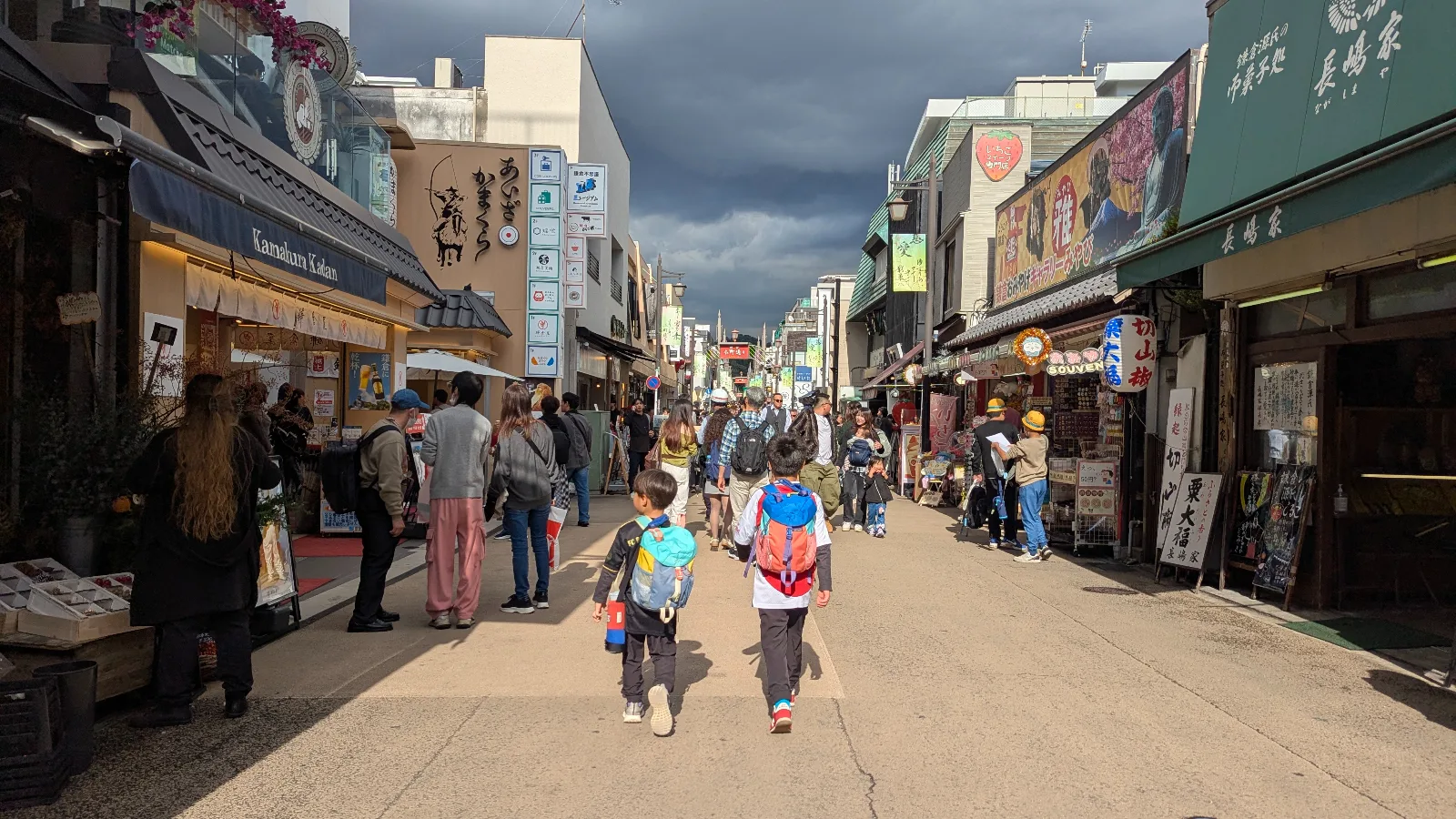
Japan is the right first trip abroad for most families: it supports a tired child instead of fighting one. Safety is structural: a child can walk ten paces ahead in Shinjuku without a parent scanning the crowd. Trains depart on time, major hubs are signed in English, and a Suica or ICOCA card means tap in, tap out, with children under six riding free on a parent’s lap on most trains. 7-Eleven, Lawson and FamilyMart stay open around the clock, and drugstores sell diapers and formula. Plan at least 10 days from North America or Europe, start in Tokyo, aim for ages 5 to 12.
The choice is not Japan versus somewhere exciting.
Most first-trip decisions come down to a quiet comparison. On one side sits the exciting default: a European capital, a big-name beach resort, the place that photographs well and sounds impressive at dinner. On the other sits the country that will actually hold up when the day cascades at 4 p.m. and a jet-lagged toddler refuses dinner. The first list is chosen for the adults. The second is chosen for the trip you are really taking, which is a trip built around children who have no tolerance for things going wrong. Japan belongs firmly on the second list, and once the two are compared on operational grounds rather than on excitement, the contest stops being close.
Safety here is structural, not statistical. The often-cited ranking matters less than what it produces on the ground. A child can walk ten paces ahead in Shinjuku without triggering the scanning instinct. You can set a bag on a bench while you steady a day that has started to cascade. The exciting-in-theory destinations ask you to hold vigilance all day, and vigilance is the first thing that exhausts a parent. Japan hands that budget back.
The logistics run at a precision most destinations do not attempt. Trains depart on the second, major hubs are signed in English, and strollers move through designated spaces and elevators rather than being carried up stairs. A Suica or ICOCA card removes ticketing decisions entirely: tap in, tap out, and children under six ride free on most transit. The usual alternatives make the transit day the hardest part of the trip. Japan makes it the part that runs itself.
Convenience removes the friction that ends good trips early. The konbini network, 7-Eleven, Lawson, and FamilyMart, works as a distributed support system open around the clock in every neighborhood. Hot meals and familiar snacks are rarely more than a block away, and drugstores sell diapers and formula. When something runs out at the wrong moment, and with children it always does, the fix is close. That single fact changes the math of every travel day.
The culture is actively on the side of children. Restaurant staff fold origami for a waiting child. Passengers step aside for a stroller before being asked. The social expectation of calm public behavior gives children a clear signal to calibrate to, and most do it faster than their parents expect. None of the exciting-default destinations is hostile to families. The point of the comparison is narrower and more useful: Japan removes an entire category of operational risk that the alternatives leave in place.
What the alternatives get right, and where they break.
The case for the familiar first trip is real, and worth stating honestly before dismantling the four worries that keep families from booking Japan.
The conventional first trips earn their popularity. A European city shares an alphabet and, often, a language you can half-read. A beach resort promises a fixed base, a pool, and no transit to solve. A trip closer to home means a shorter flight and a smaller time-zone gap, which is not a trivial advantage with a toddler. These are genuine strengths, and a family that weights them highest is not making a mistake. The problem is that each strength is front-loaded. It helps most on the first day and matters less by the third, exactly when a child’s Reserve is running lowest and the destination’s operational quality starts to decide how the trip feels.
This is where The LUNI Framework changes the comparison. Families already plan around two currencies, money and time. The framework names a third: each child’s Reserve, the finite capacity to absorb what a travel day asks of them. Reserve is the currency the exciting-default destinations quietly overspend and Japan quietly protects, and it is the one most parents do not track until it is gone. Hold that lens while working through the four objections families raise most, because each one dissolves against it.
The train system will be too complicated. Japan’s full rail network is genuinely complex. The slice a first-time family uses is not. The lines between Tokyo, Kyoto, and Osaka are color-coded, signed in English, and predictably scheduled, and the IC card removes fare decisions completely. The system rewards preparation, not fluency.
My children are too loud or energetic for Japan. Japan values quiet in specific settings: trains, shrines, and traditional ryokan. It does not extend that expectation to children everywhere. Parks, restaurants, and most outdoor spaces run with ordinary tolerance, and locals are consistently patient with foreign families in ways first-time visitors do not anticipate.
We will hit temple fatigue in three days. Only on an itinerary that ignores a child’s real engagement threshold. Temple fatigue is a stacking problem, four historic sites in a day with no discharge between them. The fix is rhythm: a shrine followed by an open park, a museum followed by a food market, a cultural site followed by an unstructured hour. Japan supports both without forcing the tradeoff.
Picky eaters will struggle. This is the most reliably wrong assumption families bring. The konbini alone covers rice balls, plain noodles, soft bread, mild fried chicken, and recognizable snacks in every neighborhood, and tourist-area menus lean on photographs. Ramen, udon, tempura, and plain rice are everywhere. Most picky eaters settle within 48 hours.
Resolve the choice by the child, not the brochure.
The comparison does not resolve at the level of the country. It resolves at the level of the specific child making the trip, and one variable decides more than any other.
The complaint that comes back most often from first trips is a version of the same sentence: I was not ready for how much we walked. Walking is the primary operational risk of a Japan trip, and it is where Reserve is spent fastest. A conservative day covers 15,000 steps. A full touring day in Tokyo or Kyoto reaches 20,000. The distance itself is not the problem. Cumulative depletion across a multi-week trip is, compounded by jet lag in the first three days and by travel excitement that masks fatigue until the afternoon cascades. This is why the resolution runs through the four profiles rather than through a single rule, because each child spends Reserve on a different thing.
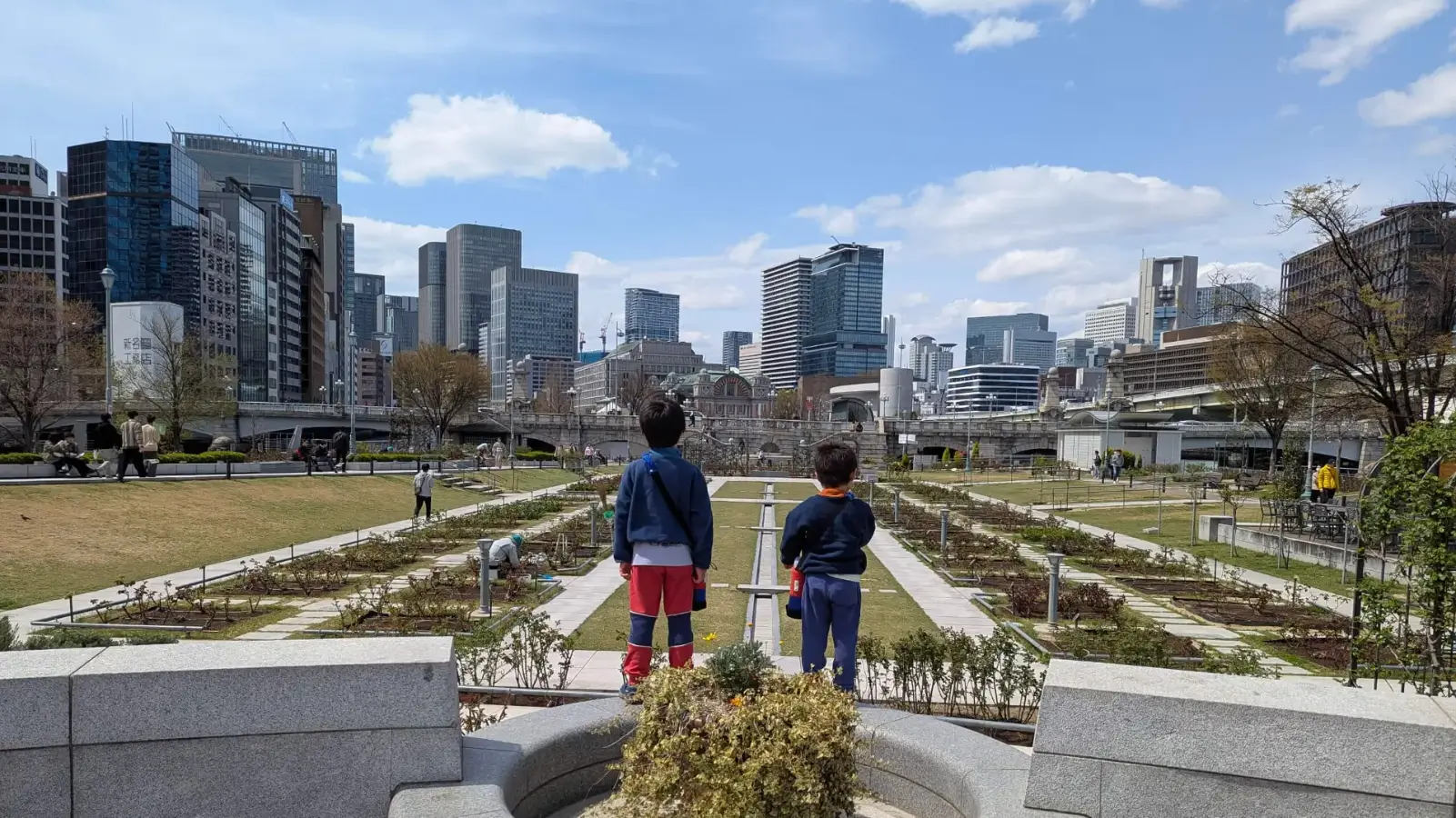
The Dynamo depletes through restricted movement, and a day stacked with low-motion indoor culture compresses that energy rather than discharging it. Against the familiar-resort alternative, Japan actually wins here, because a city built for walking offers constant outlets a pool deck does not. The planning consequence is one unstructured outdoor block a day, and this is the thing the resort alternative genuinely cannot supply on demand: a park or a plaza that is free, near, and available the moment the child needs it rather than at the hour the schedule allows. A younger Dynamo runs a park or a riverside path; an older one takes a defined solo loop to a meeting point.
The Sensor depletes through sensory input, and the comparison is unusually clean here: the alternative destination spreads its load thinly across a whole day, while Japan stacks it into named, avoidable windows, a rush-hour carriage and a hub like Shinjuku or Namba, which is worse to walk into unprepared and far easier to route around. This is the one profile for which the quieter alternatives hold a real edge on paper. The planning consequence is to move through those environments early, before the threshold drops, and to hold a low-stimulation recovery stop in reserve immediately after rather than chaining two dense venues. A younger Sensor is done by the second rush-hour carriage of the day; an older one can absorb Shinjuku or Namba once, provided the second dense venue is not also indoors.
The Anchor depletes through unfamiliarity and unconfirmed structure, and for this child that surfaces around food and disrupted sleep before the walking even registers. Here the comparison tilts back to Japan, because the konbini supplies a familiar, repeatable anchor an unfamiliar foreign kitchen cannot. The planning consequence is to confirm the next day’s shape the night before so it is not an open question, and to let a predictable konbini breakfast hold the start of each day. A younger Anchor leans on the fixed routine; an older one accepts improvisation once the spine of the day is set.
The Sprinter depletes through sustained travel-style walking and standing, and the physical ceiling arrives earlier than any itinerary expects, often by early afternoon on the second or third day. No destination erases this, but Japan’s density means the best sites sit close together, so a strong morning does not require a punishing afternoon. The planning consequence is the thing the comparison actually turns on: put the one thing you flew for in the morning of a day you are not also changing cities, because the alternative destination lets you postpone it and Japan does not. A lightweight stroller earns its place up to about age six, working less as a ride than as a portable rest station in queues, long transfers, and shrine grounds where there is nowhere to sit.
Knowing the profile before you book is the decision that settles the rest. It tells you which base city to choose, and Tokyo is the correct first base for most families on density of family infrastructure and English resources, with Kyoto a better second city than a first. It tells you to plan 10 days at a minimum from North America or Europe, since five-day trips lose two days to jet lag and arrive home without the trip having landed, while a family flying from Asia or Australia can do it properly in five to seven. And it frames the rail-pass question honestly: the Japan Rail Pass rarely earns its cost for a family, even on a four-city week, so the numbers are worth running against your own city sequence before booking.
Two smaller decisions carry more weight than they appear to. Japan’s luggage forwarding, the takuhaibin service at hotels and convenience stores, ships bags between accommodations for roughly 2,200 to 3,200 yen per suitcase and converts a stressful transit day into an easy one. And the highest-demand bookings run on release calendars rather than a queue: the Studio Ghibli Museum sells advance tickets only, nothing at the door, in one monthly release at 10am Japan time on the 10th for the following month, and certain teamLab venues and peak-season ryokan rooms go the same way. First-time families usually discover this after they arrive.
The shift most parents describe after their first day is not about what they saw. It is about what they stopped doing. The hypervigilance that shadows parenting in an unfamiliar place, the scanning, the proximity checks, the reflex to say be careful, quiets faster than expected here. When it does, something difficult to engineer at home becomes possible: the child navigates, and the parent watches without stepping in. A child tapping their own transit card or walking ahead toward a shrine gate is not a side benefit of the trip. It is the reason to take it.
The questions families ask most.
Is Japan a good first international trip with kids?
Japan is the most structurally sound first international trip available to families with children. Public safety, legible transit, clean and accessible facilities, and a culture that is patient with children remove the operational friction that makes first trips abroad hard. Most families find Japan noticeably easier than they expected.
What age is best for a child’s first trip to Japan?
Japan works well at every age above toddlerhood, but the 5 to 12 range consistently delivers the most memorable first trip. Children in this band are old enough to engage with cultural specifics and remember the trip, and young enough to find everyday Japan, the conveyor-belt sushi, the transit-card tap, the shrine stamp book, genuinely exciting.
How long should a first family trip to Japan last?
Ten days is the practical minimum from North America or Europe, where two to three days go to jet lag before the trip properly starts. That leaves a primary base of five to six nights and one secondary city without a pace that exhausts the child the trip is meant to engage. From Asia or Australia the flight is short and the time shift small, so five to seven days does the same work.
Is the Japan Rail Pass worth it for a first family trip?
Rarely. At JR’s own fares in October 2026, a 7-day pass for two adults and two children aged 6 to 11 costs 150,000 yen bought online, and no week-long model trip reached it, not even Tokyo, Kyoto, Hiroshima and Osaka at 124,080 yen in tickets; the pass paid off only on a 14-day loop of eight stops. Run the numbers against your specific route before booking, because the answer is not automatic in either direction.
What do picky eaters eat in Japan?
Picky eaters adapt faster than parents expect. The convenience-store network alone provides rice balls, plain noodles, soft bread, mild fried chicken, and recognizable snacks at every hour in every neighborhood. Tourist-area menus use photographs, and ramen, udon, and plain steamed rice are universally available. Most picky eaters settle within 48 hours.
Is public transportation in Japan manageable for first-time family travelers?
Japan’s public transit is the most family-manageable system available to international visitors. Trains run on exact schedules, are signed in English and Japanese, and accommodate strollers with designated spaces and elevator access at most major stations. The IC card, Suica or ICOCA, removes ticketing complexity for day-to-day use entirely.