
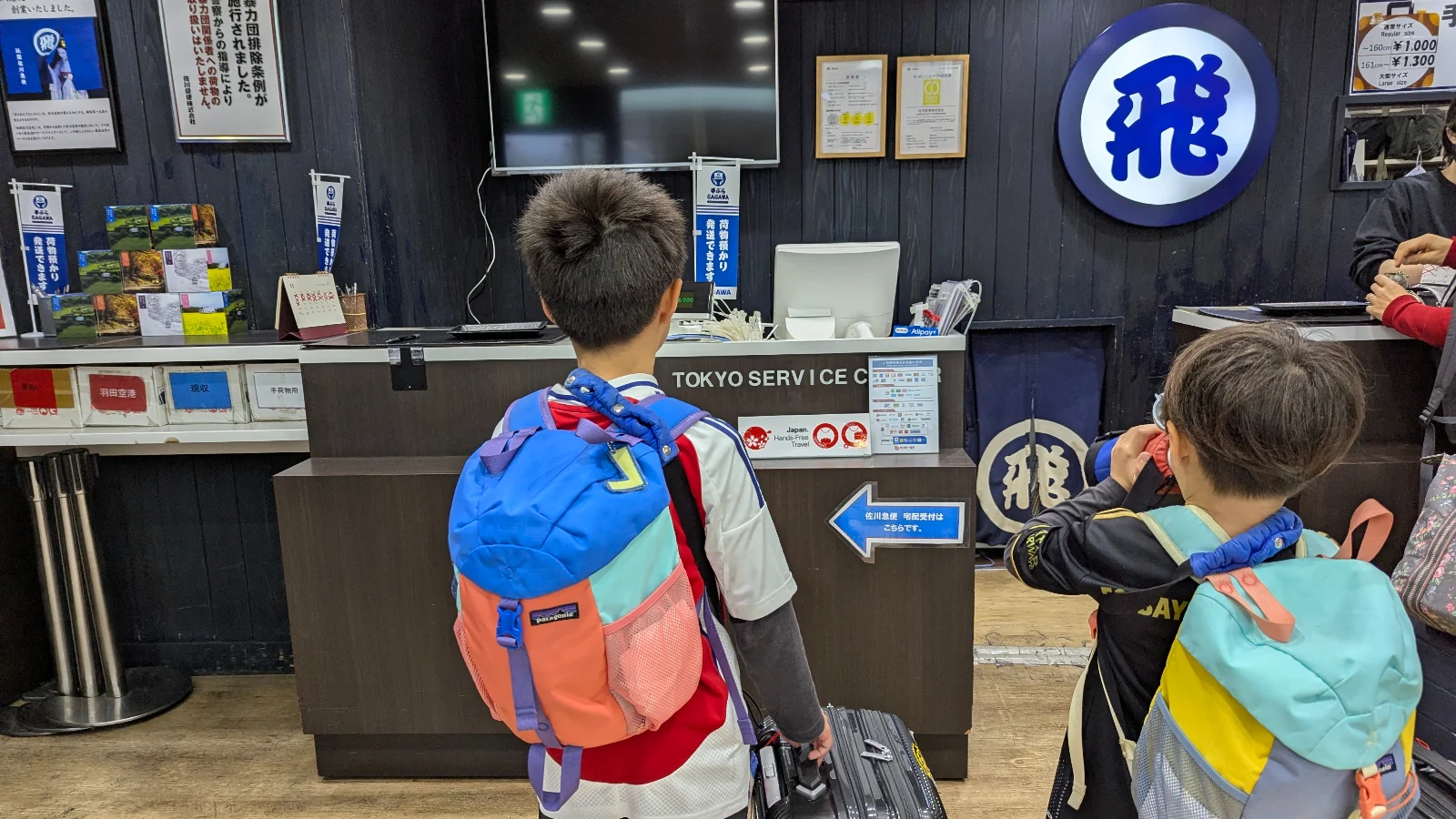
Traveling through Japan with kids becomes so much easier when you use Japan luggage delivery services, one of the country’s most helpful travel conveniences for families. Whether you’re moving between Tokyo and Kyoto, navigating subways with a stroller, or catching the Shinkansen, luggage transfer, also known as takuhaibin in Japan, lets you ship your suitcases ahead so you can travel hands-free.
Families planning multi-city trips often rely on Japan luggage forwarding to skip hauling heavy bags through stations, while parents researching luggage delivery cost quickly learn how affordable and stress-free it really is. In this guide, we break down exactly how providers like Yamato Transport (Kuroneko) work, why they’re a game changer for family travel, and how to use them confidently on your next adventure.
To make the most of your family adventure, you can start planning with our Planning a Family Trip to Japan guide, which walks you through routes, timing, and what to expect with kids. If you’re navigating Japan’s train system, our Japan Train Tips for Families article explains how to choose the easiest options for little travelers. And before hopping on the bullet train, be sure to read Shinkansen With Kids so your family is fully prepared for smooth, stress-free travel days. To see how everything fits together across Tokyo, Kyoto, and Osaka, use our Japan 2-Week Itinerary with Kids as your starting point.
LuNi Strategy: Don’t Turn the Shinkansen Into a Stress Test
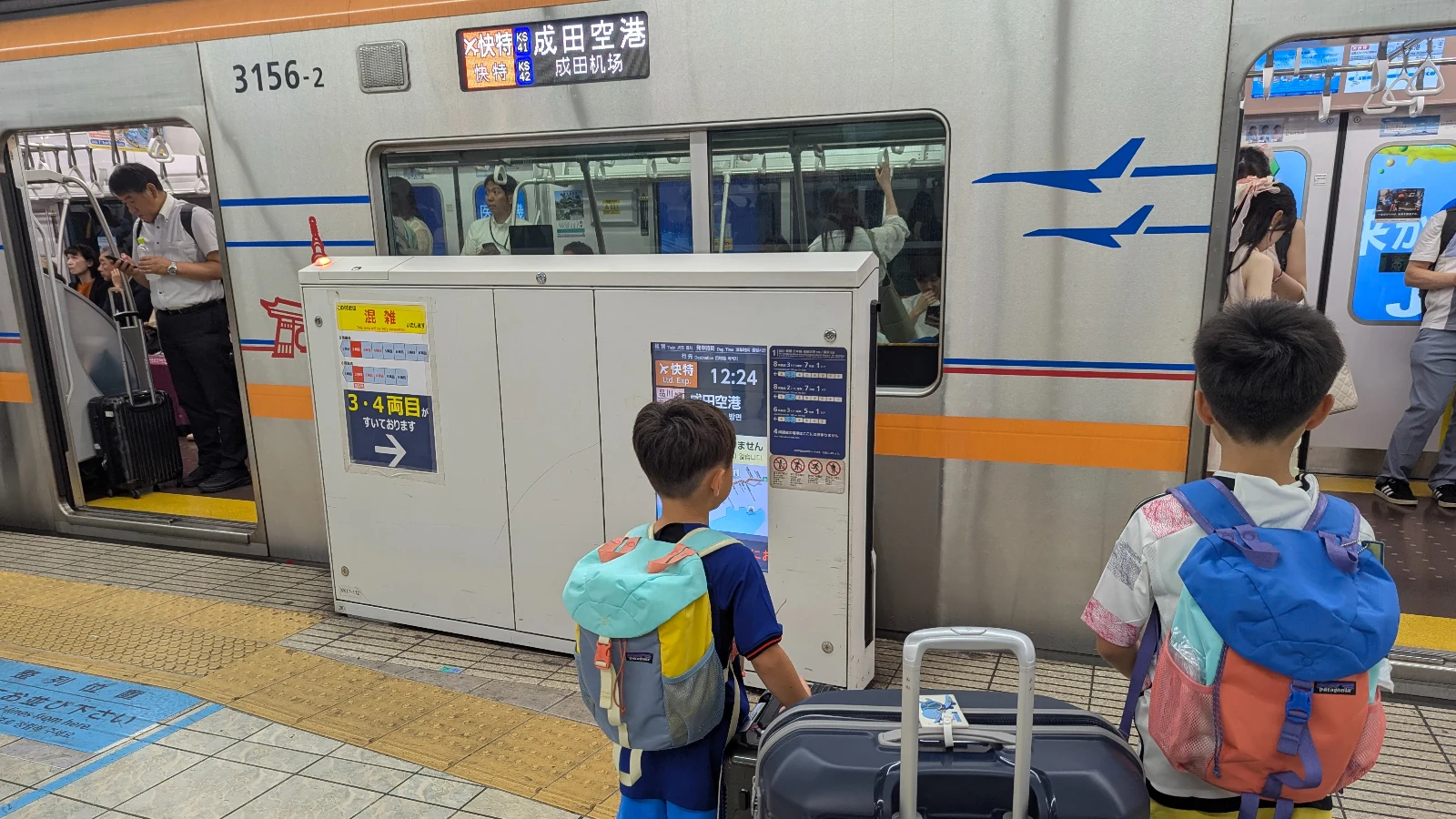
Japan’s train stations are efficient, but they are not built for families hauling luggage. Places like Shinjuku, Tokyo, and Kyoto Station turn suitcases into a full-body workout.
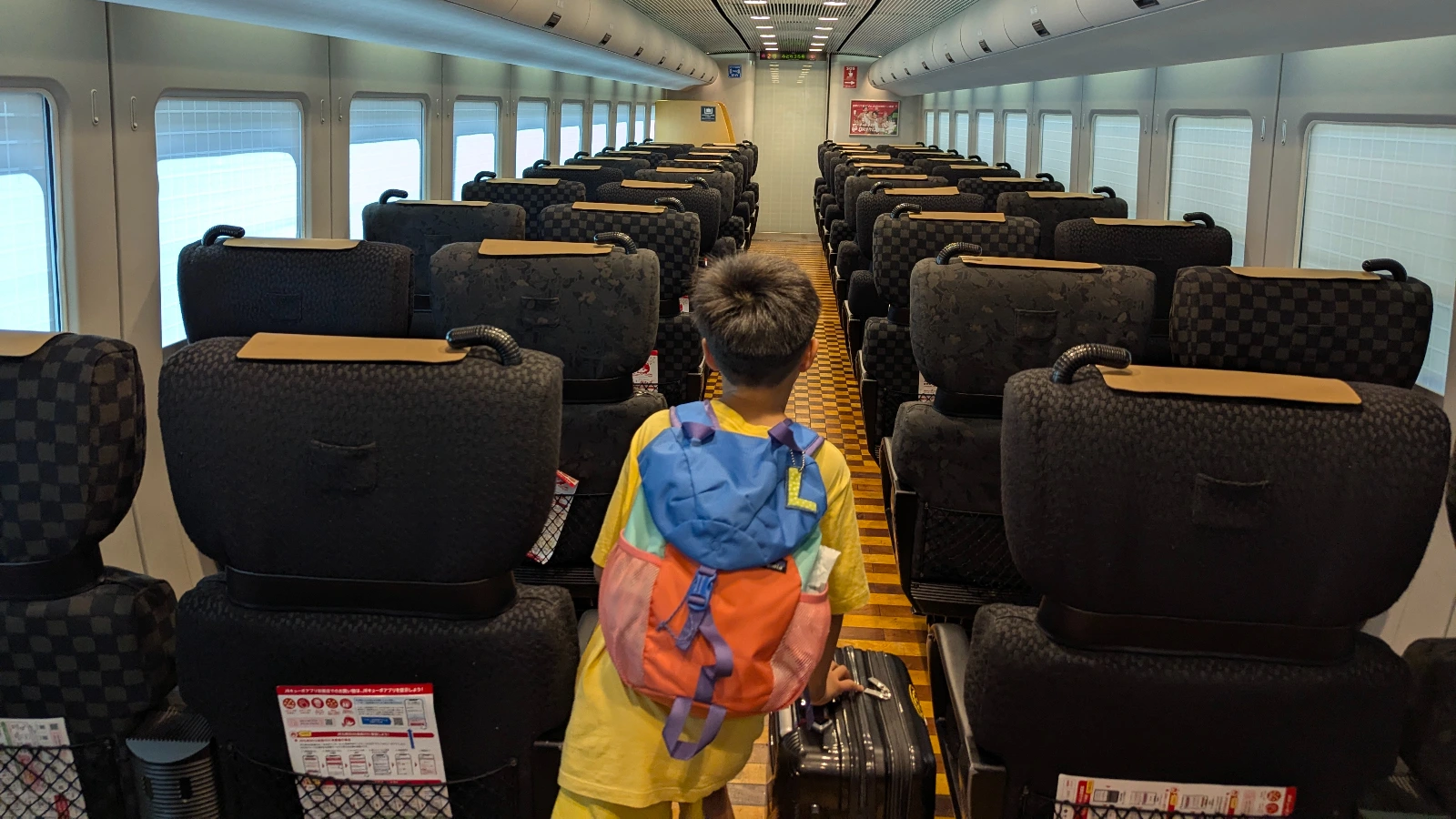
The Parent Moment You Can’t Undo – Parents dragging suitcases often realize too late that the elevator is far away, the platform is packed, and the departure clock is counting down. On the Shinkansen, forgetting to reserve oversized luggage space can mean standing awkwardly with bags while your kids are already seated. By the time the train moves, you’re sweating, stressed, and snapping at each other, and the bullet train moment you were excited about is already gone.
The LuNi Move – Ship your luggage ahead. Drop large suitcases at the airport or your hotel the day before. On travel day, walk through the station holding your child’s hand, not a suitcase handle. Board calmly, sit anywhere, and actually enjoy the ride.
The Shinkansen should feel like the start of the adventure, not the moment parents realize they made travel harder than it needed to be.
What Is Japan’s Luggage Delivery Service (Takuhaibin)?
Japan’s luggage delivery service, known as takuhaibin, is a nationwide system that lets travelers ship suitcases, strollers, and even sports gear directly between hotels, train stations, airports, and homes across Japan. Instead of carrying heavy bags through busy stations or onto the Shinkansen, you hand your luggage to a counter (often inside your hotel lobby), fill out a quick form, and it’s delivered safely to your next destination, usually within same-day or next-day timing. Many families also find that luggage delivery pairs perfectly with the strategies we share in our Traveling Japan With Noisy Kids guide, which helps parents manage busy travel days with calmer, happier children.
The most well-known provider is Yamato Transport (Kuroneko Black Cat), but airports and hotels also partner with companies like JAL ABC and Sagawa Express. These services are incredibly reliable, affordable, and widely trusted by families, business travelers, and locals alike.
For families traveling with kids, Japan’s luggage delivery service removes one of the biggest sources of travel stress, letting parents navigate stations, transfers, and sightseeing hands-free while knowing their bags will arrive securely at their next stop.
How Japan’s Luggage Transfer Service Works for Travelers
Japan’s luggage delivery system is designed to make travel days flow smoothly, especially for families managing little travelers. Instead of focusing on paperwork or logistics, the process feels more like handing off a responsibility. You drop your bags at a hotel desk, airport counter, or convenience store, confirm the destination, and the staff take care of the rest. A quick handoff, a receipt, and your suitcase begins its separate journey while you begin yours, lighter, faster, and without the usual travel-day friction.
Most families use takuhaibin on days that involve movement, long Shinkansen rides, transfers through major stations, or city-to-city transitions between Tokyo, Kyoto, and Osaka. Providers like Yamato (Kuroneko), JAL ABC, and Sagawa Express have streamlined the process so thoroughly that parents barely think about it after drop-off. Kids can explore stations freely, parents can focus on navigation instead of luggage, and getting from Point A to Point B feels calmer.
For parents, the biggest benefit is predictability: your luggage will arrive within the scheduled window, allowing your family to move freely, explore comfortably, and check in at a relaxed pace without juggling heavy bags.
The Family Fit Reality
Researching the endless details of a Japan family trip, from figuring out what to pack to managing your daily yen budget, is a massive undertaking that requires careful logistical preparation.
But here is the hidden trap most parents miss: all the practical preparation in the world won’t save your trip if your entire vacation hinges on the hope that “everyone will just cooperate”. If your plan collapses the moment someone gets overstimulated, it is built on hope, not capacity.
Removing the stress from this trip requires understanding exactly how your child processes a foreign environment. An Anchor needs you to pack specific familiarity tools to feel safe, and a Sensor needs you to plan for sensory overload before it happens. A Sprinter requires a strict physical energy budget to prevent exhaustion, while a Dynamo needs you to rewrite the standard rules of travel so they aren’t constantly being shushed in a culture that rewards stillness.
Stop guessing and discover exactly how your child’s energy is wired to travel. Before you finish your general planning, take the free, 60-second Family Fit Check to identify your family’s exact profile and unlock the personalized strategies that prevent daily meltdowns.
Why Japan’s Luggage Delivery Service Is a Game Changer for Families with Kids
For families traveling across Japan, luggage delivery isn’t just convenient, it’s transformative. Moving between hotels, train stations, and attractions becomes dramatically easier when you’re not hauling suitcases, diaper bags, and strollers through crowds. Instead of juggling bags on platforms or squeezing oversized luggage onto the Shinkansen, parents can focus entirely on helping kids navigate the day with comfort, safety, and energy.
Because takuhaibin removes the physical burden of luggage, it also reduces the emotional load of travel. Kids walk more freely, parents feel less rushed, and everyone arrives at the next destination in a calmer, happier mood. Long walking days, tight transfers, and multi-city itineraries suddenly feel manageable, even enjoyable. Many families say it’s one of the best decisions they made for their trip.
Parent Insight: Luggage delivery shifts the rhythm of family travel. When parents aren’t weighed down by bags, they can walk at kid-speed, react to spontaneous moments, and stay fully present. Less carrying means more connecting, and that’s where the most memorable family moments happen.

Types of Japan Luggage Delivery and Takuhaibin Services
Japan offers several luggage delivery options, and while they’re all reliable, each one works best in different family travel situations. The information below helps parents quickly choose the option that fits their itinerary, energy level, and travel day.
|
Service Type |
Best For Families Who… |
Delivery Speed |
Typical Cost |
Notes |
|---|---|---|---|---|
|
Hotel to Hotel |
Want hands-free travel days |
Next-day |
¥¥ |
Most family-friendly |
|
Airport to Hotel |
Arrive with multiple suitcases |
Same-day / Next-day |
¥¥¥ |
Great after long flights |
|
Convenience Store Drop-Off |
Need flexibility |
Next-day |
¥ |
Cheapest but more steps |
Cost ranges are relative. Exact pricing depends on suitcase size, distance, and provider.
Traveling between hotels or cities?
Hotel-to-hotel luggage delivery is the easiest and most popular choice for families.
Arriving in Japan or flying home?
Airport luggage delivery lets you enjoy travel days hands-free.
Staying in an Airbnb or small inn?
Convenience store drop-off offers flexibility when hotel desks aren’t available.
How Each Luggage Delivery Option Works for Families
Hotel-to-Hotel Luggage Delivery
This is the most popular and easiest option for families traveling between cities like Tokyo, Kyoto, Osaka, or Hiroshima. You drop your luggage at your hotel’s front desk, and it’s delivered directly to your next accommodation, usually the following day. Parents love this option because it removes luggage entirely from travel days involving Shinkansen rides, station transfers, or long walks.
Airport Luggage Delivery (Arrival & Departure Days)
Airport luggage delivery is available at major hubs such as Narita, Haneda, and Kansai International Airport. Providers like Yamato Transport (Kuroneko Black Cat), JAL ABC, and Sagawa Express operate counters inside the terminals. Families can send bags from the airport to their hotel on arrival, or from their hotel back to the airport before departure. This is especially helpful on flight days when parents want to enjoy the city without dragging suitcases through trains and crowds. If you’re flying into Tokyo, our Haneda Airport to Tokyo With Kids guide and Narita Airport to Tokyo With Kids guide explain exactly what to expect when arriving with little travelers.
Convenience Store Luggage Delivery
For families staying in Airbnbs, guesthouses, or small inns, many convenience stores, including 7-Eleven and FamilyMart, partner with Yamato Transport to offer luggage drop-off. This option provides flexibility when hotel desks aren’t available, though it involves filling out the delivery form yourself and handling the drop-off independently.
No matter which option you choose, Japan’s luggage delivery providers are known for their exceptional reliability, clear delivery windows, and careful handling, giving parents confidence that their bags will arrive exactly where and when they’re supposed to.
Cost of Luggage Delivery in Japan
Japan’s luggage delivery service is surprisingly affordable, especially when you compare the cost to the physical and emotional energy it saves families traveling with kids. Pricing is based mainly on suitcase size and distance, and rates are standardized across major providers, making costs predictable and easy to budget for in advance.
|
Suitcase Size (cm) |
Typical Use Case |
Estimate |
|---|---|---|
|
Size 120 |
Small carry-on / kids suitcase |
~ ¥2,000 |
|
Size 140 |
Medium suitcase |
~ ¥2,500 |
|
Size 160 |
Large suitcase |
~ ¥2,900 |
|
Size 180 |
Extra-large suitcase |
~ ¥4,200 |
|
Size 200 |
Oversized family suitcase |
~ ¥5,000 |
*Suitcase size is calculated by adding length + width + height in centimeters.
What Most Families Pay for Luggage Delivery in Japan
Most families traveling with kids use standard checked suitcases, which typically fall into the size 140–160 range. This means most hotel-to-hotel luggage delivery within Japan costs around ¥2,000–¥3,000 per suitcase, even when traveling between major cities like Tokyo, Kyoto, and Osaka.
Shorter regional transfers may be slightly cheaper, while longer routes or oversized items, such as large strollers or sports equipment, cost more. These prices include door-to-door delivery, tracking, and reliable delivery windows, making luggage forwarding one of the best-value conveniences in Japan.
Airport Luggage Delivery Costs in Japan for Families
Airport luggage delivery generally costs a little more due to distance and handling, usually around ¥1,500–¥3,500 per bag, depending on suitcase size and whether you’re sending luggage from the airport to your hotel or from your hotel back to the airport.
For families arriving on long international flights, this cost often pays for itself immediately:
no lifting heavy bags onto trains, no juggling suitcases with kids, and no navigating busy stations while exhausted.
Can Families Budget for Luggage Delivery in Advance?
Yes. Pricing is consistent across major providers like Yamato Transport (Kuroneko Black Cat), JAL ABC, and Sagawa Express, and hotel staff will always confirm the cost before sending your luggage. This transparency allows parents to plan confidently without worrying about surprise charges.
For many families, luggage delivery feels like a rare travel luxury that’s both affordable and genuinely helpful, especially on multi-city trips or Shinkansen travel days.
How Long Does Luggage Delivery Take in Japan?
Japan’s luggage delivery service is known for its predictable timing, which is especially helpful for families planning travel days around kids’ energy levels. Most luggage delivery arrives the next day, with a few important exceptions depending on distance and drop-off time.
|
Route Type |
Drop-Off Timing |
Typical Delivery Window |
|---|---|---|
|
Tokyo to Kyoto / Osaka |
Before 10:00 AM |
Next Day |
|
Tokyo to Other Major Cities |
Before 10:00 AM |
Next Day |
|
Long-Distance (Hokkaido, Kyushu, Okinawa) |
Any Time |
2–3 Days |
|
Airport to Hotel |
By Midday |
Same Day (Evening) |
|
Hotel to Airport |
1-2 Days Before Flight |
Flight Day (Check-in Ready) |
What Families Should Expect from Luggage Delivery in Japan
For most families traveling between major cities like Tokyo, Kyoto, and Osaka, luggage delivery is next-day and highly reliable. In some cases, if bags are dropped off early in the morning, luggage sent between nearby major cities may arrive later the same day, though parents should plan around next-day delivery unless same-day is confirmed.
Longer routes, such as shipments to or from Hokkaido, Kyushu, or Okinawa, typically take two to three days, making luggage delivery best suited for multi-night stays rather than overnight transfers.
Airport luggage delivery follows a similar rhythm. Bags sent from the airport to your hotel usually arrive the same day, while luggage sent from your hotel to the airport should be forwarded one day before your flight to ensure it’s ready for check-in.
For families traveling with kids, this consistency is invaluable. You can plan sightseeing days, Shinkansen rides, or final departure days without carrying heavy suitcases, knowing exactly when your luggage will be waiting for you.
Where to Send Your Luggage in Japan (Airports, Hotels, Stations, Convenience Stores)
One of the biggest advantages of Japan’s luggage delivery service is how many places accept it. Families aren’t limited to hotel-to-hotel transfers, luggage can be sent from airports, train stations, convenience stores, and hotels across the country, making it easy to plan travel days around kids’ energy levels.
|
Drop-Off Location |
Best For Families Who… |
What to Know |
|---|---|---|
|
Hotels |
Want the easiest, hands-off option |
Front desks handle paperwork and timing |
|
Airports |
Want to arrive or depart luggage-free |
Dedicated counters inside major terminals |
|
Major Train Stations |
Plan to sightsee before hotel check-in |
Available at select large stations only |
|
Convenience Stores |
Aren’t staying in hotels |
Requires filling out forms yourself |
Hotels That Support Luggage Delivery in Japan
Nearly all hotels in Japan, from large chains to small ryokan, partner with companies like Yamato Transport (Kuroneko) and Sagawa Express. This is the simplest option for families, as hotel staff handle the paperwork and confirm delivery timing.
Airport Luggage Delivery Services (Narita, Haneda, Kansai, Chubu)
Major airports like Narita, Haneda, Kansai, and Chubu have luggage delivery counters operated by providers such as JAL ABC and Yamato. Families can send bags to their hotel on arrival or back to the airport before departure, making flight days far less stressful.
Luggage Drop-Off Counters at Major Train Stations
Some large stations, including Tokyo, Kyoto, Osaka, and Sapporo, offer takuhaibin counters. This option is useful for families heading straight to sightseeing before hotel check-in, though availability is limited to major hubs.
If you’re exploring Japan’s major cities, our Tokyo With Kids, Kyoto With Kids, and Osaka With Kids guides offer parent-focused tips for enjoying each area without the stress of juggling large suitcases.
Convenience Store Luggage Delivery (7-Eleven, FamilyMart, Lawson)
Many 7-Eleven, FamilyMart, and Lawson locations accept luggage for Yamato Transport. This option is ideal for families staying in apartments, guesthouses, or Airbnbs, but requires filling out the delivery slip independently.
Wherever your itinerary takes you, luggage delivery is usually within easy reach, giving families far more flexibility and calmer travel days.
Step-by-Step: How to Send Your Luggage in Japan
Sending luggage through Japan’s takuhaibin service is quick and effortless. Here’s the simple version families actually need.
- Drop your bags at a counter: Go to your hotel front desk, an airport luggage counter, a train station delivery desk, or a convenience store partnered with Yamato (7-Eleven, FamilyMart, Lawson).
- Confirm the delivery slip: Staff fill out most of the form for you, you simply confirm your next hotel or airport, your name, and your delivery date/time.
- Choose your delivery timing: Most routes are next-day. Some major city routes offer same-day if you drop bags off early in the morning.
- Pay and receive your tracking receipt: You’ll get a barcode slip with tracking info. Typical cost is ¥1,000–¥3,000 per suitcase.
- Pick up your luggage at your destination: Your bags will be waiting at your next hotel’s front desk or at an airport delivery counter, no hauling required.
Why Families Love Using Luggage Delivery in Japan
- No dragging suitcases through busy stations
- No lifting heavy bags onto trains
- No juggling luggage + stroller + tired kids
- Just smooth, hands-free travel days
Best Situations to Use Luggage Delivery in Japan (Especially for Families)
Japan’s luggage delivery service is useful on almost any trip, but some travel days make it especially valuable for families. These are the moments when forwarding your bags turns a stressful stretch into a calm, hands-free experience.
|
Travel Situation |
Why Luggage Delivery Helps Families |
|---|---|
|
Shinkansen Travel Days |
Bullet train stations move fast, luggage space is limited, and boarding with kids can feel chaotic. Sending bags ahead means parents manage only a backpack instead of suitcases, strollers, and snacks. |
|
Long Walking Days Between Hotels |
Switching hotels often involves long walks through stations or busy streets. Without heavy bags, families can stop for food, explore parks, and move at kid-speed until check-in. |
|
Airport to Hotel (Arrival Day) |
After a long international flight, luggage delivery removes the hardest part of arrival. Bags go straight to the hotel while parents focus on getting kids settled and regulated. |
|
Hotel → Airport (Departure Day) |
One of the most loved uses for families. Send bags the day before and enjoy your entire final day hands-free, no rush hour stress, no hauling luggage with tired kids. |
|
Staying in Airbnbs or Small Inns |
Narrow hallways, stairs, or buildings without elevators make suitcases difficult. Nearby convenience stores (7-Eleven, FamilyMart, Lawson) offer easy drop-off for Yamato deliveries. |
|
Traveling with Strollers or Toddlers |
When you’re already juggling a stroller, a toddler, and backpacks, luggage delivery removes the biggest physical and mental stressor. Parents can focus on comfort and safety instead of carrying weight. |
Luggage Delivery vs. Carrying Bags on the Shinkansen With Kids (Which Is Easier?)
Traveling on the Shinkansen with kids is one of the highlights of visiting Japan, but how you handle your luggage can make the difference between a smooth travel day and a stressful one. While families can bring luggage onto the Shinkansen, many find that forwarding bags ahead creates a far calmer experience.
|
Feature |
Carrying Luggage Yourself |
Using Luggage Delivery |
|---|---|---|
|
Station Navigation |
Effortful: Requires finding elevators, navigating crowds, and managing bags on busy platforms |
Easy: Move freely through stations using stairs or escalators, hands free |
|
On the Train |
Restrictive: Large suitcases must fit overhead or require reserved oversized-luggage seats |
Comfortable: Sit anywhere without worrying about luggage storage |
|
Boarding Experience |
Rushed: Lifting bags while guiding kids during short boarding windows |
Calm: Board at a relaxed pace with hands free for children |
|
Stroller Management |
Challenging: Balancing a stroller and suitcases at the same time |
Simple: Parents can focus fully on kids and stroller handling |
|
Planning Requirements |
Extra Planning: Oversized luggage seats may need advance reservations |
Minimal Planning: No special seat reservations required |
|
Overall Stress Level |
High: Especially during peak travel times |
Low: Predictable and manageable |
|
Cost |
Lower Cost: Free or small seat reservation fee |
Moderate Cost: Around ¥2,000–¥3,000 per bag |
|
Best Fit For |
Light Travelers: Backpackers or minimal packers |
Families: Traveling with kids or multiple bags |
Carrying Luggage on the Shinkansen with Kids
- Station Navigation: Effortful – Finding elevators and navigating crowds with bags
- On the Train: Restrictive – Large suitcases need overhead space or reserved seats
- Boarding Experience: Rushed – Lifting bags while guiding kids during short boarding windows
- Stroller Management: Challenging – Balancing a stroller and multiple suitcases
- Planning Requirements: Extra planning – Oversized luggage seats may need advance reservations
- Overall Stress Level: High – Especially during peak travel times
- Cost: Lower – Free or small seat reservation fee
- Best Fit For: Light travelers or backpackers
Using Japan’s Luggage Delivery Service Instead
- Station Navigation: Easy – Move freely through stations, hands free
- On the Train: Comfortable – Sit anywhere without worrying about luggage storage
- Boarding Experience: Calm – Board at a relaxed pace with hands free for children
- Stroller Management: Simple – Parents can focus fully on kids and strollers
- Planning Requirements: Minimal – No special seat reservations required
- Overall Stress Level: Low – Predictable and manageable
- Cost: Moderate – Around ¥2,000–¥3,000 per bag
- Best Fit For: Families traveling with kids
Final Verdict: Is Luggage Delivery Worth It for Families in Japan?
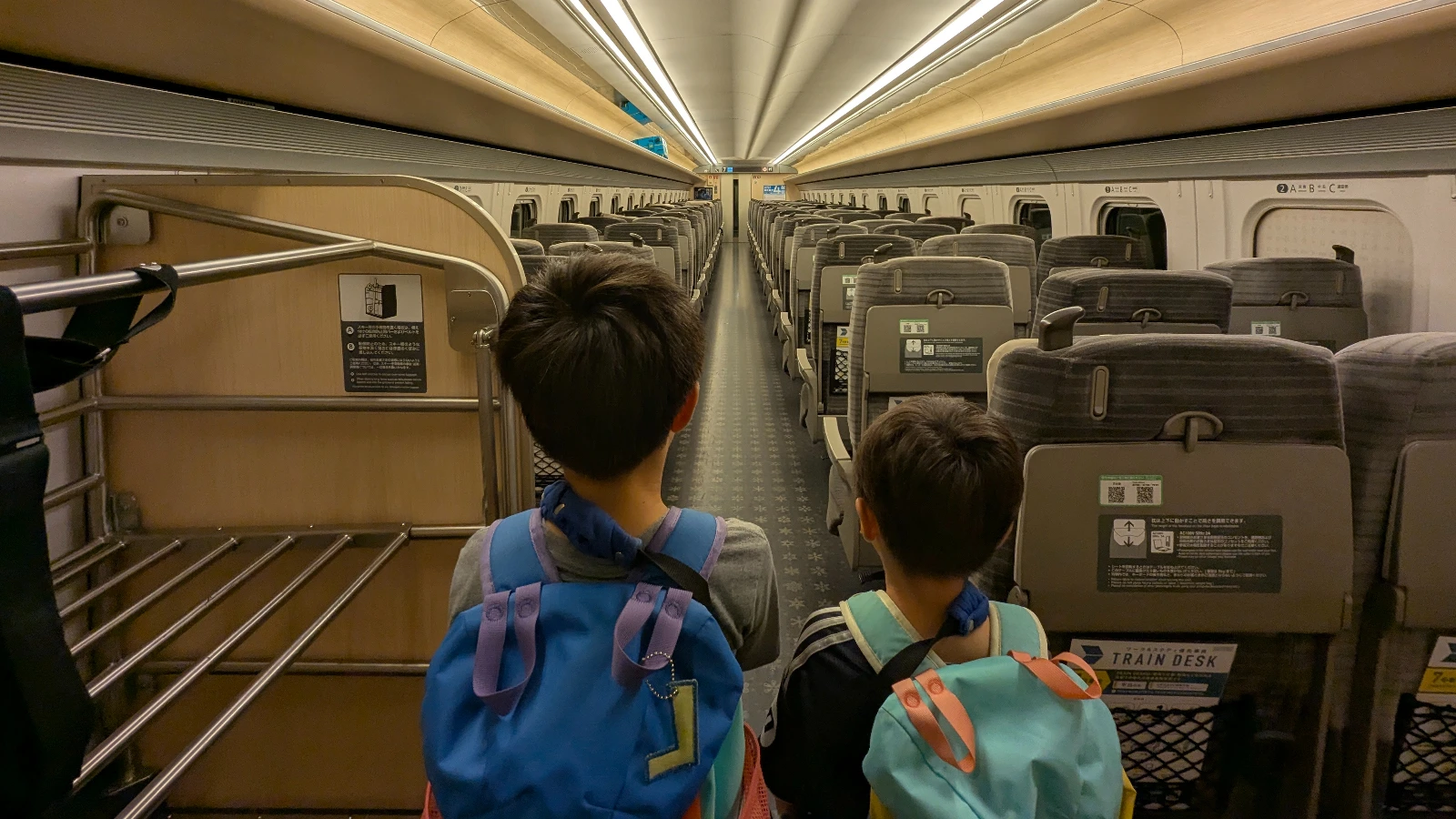
For most families traveling on the Shinkansen, luggage delivery creates a noticeably calmer and safer travel day. Parents can focus on guiding children, settling in comfortably, and actually enjoying the ride rather than managing heavy bags in a fast-moving environment.
The Shinkansen is one of Japan’s most memorable experiences, and it’s far more enjoyable when your only bags are a backpack and a snack pouch. For detailed guidance on seating, rules, and child-friendly tips, our Shinkansen With Kids guide walks families through everything you need to know.
Tips for Using Japan’s Luggage Delivery Service (Family-Friendly Advice)
Using Japan’s luggage transfer service is already simple, but a few smart tips can make the experience even smoother for families traveling with kids. These small adjustments help you avoid common mistakes, plan confidently, and enjoy hands-free travel days without worrying about where your bags are or when they’ll arrive.
- Send bags early: Morning cutoff times (often before 10:00 AM) determine same-day or next-day delivery. Hand luggage to your hotel right after breakfast.
- Pack a kid-friendly day bag: Snacks, water, a change of clothes, small toys, and any essentials you’ll need before check-in.
- Label your luggage: Add a tag with your name, phone number, and next hotel (extra helpful on multi-city trips).
- Check your hotel’s delivery schedule: Some front desks only accept shipments at certain times.
- Use convenience stores when not staying in hotels: 7-Eleven, FamilyMart, and Lawson partner with Yamato for easy drop-off.
- Keep your tracking receipt: You’ll need the barcode if you want to check arrival status.
Luca & Nico’s Tip: Try sending your luggage the night before a big travel day, then wake up to a “no-luggage morning.” It feels like starting a new mission where backpacks are power-ups and you can walk freely without carrying anything heavy!
Parents who want to keep travel costs under control can also explore our Japan Budget Family Travel Tips guide for smart ways to balance comfort and affordability.
FAQs: Japan Luggage Delivery and Transfer Services
Looking for answers about Japan luggage delivery, takuhaibin, luggage transfer cost, and how to send bags between hotels or airports in Japan? These parent-focused FAQs cover everything families commonly search for, helping you travel confidently and hands-free with kids.
A: Japan’s luggage delivery service, called takuhaibin, is a nationwide system that lets travelers ship suitcases, strollers, and bags between hotels, airports, and train stations. Instead of carrying heavy luggage, families hand their bags to a counter and they are delivered safely and reliably to the next destination, often same-day or next-day.
A: To use Japan’s luggage transfer service, you drop your bags at a hotel desk, airport counter, or convenience store, fill out a short form, choose your delivery time, and receive a tracking receipt. Companies like Yamato (Kuroneko) transport your luggage door-to-door, making travel hands-free and stress-free, especially for families with kids.
A: The cost of luggage delivery in Japan typically ranges from ¥1,000–¥3,000 per suitcase, depending on size and distance. Airport-to-hotel delivery usually costs a little more. For most families, the price is well worth it for the convenience of avoiding heavy bags on trains and during city transfers.
A: Most luggage deliveries in Japan arrive the next day, while major city routes (like Tokyo to/from Kyoto or Osaka) sometimes offer same-day service if bags are sent early. Longer distances, such as Hokkaido, Kyushu, or Okinawa, may take 24–48 hours. Delivery timing is very reliable, making it easy for families to plan ahead.
A: Yes, Japan’s luggage delivery service is known for being extremely safe and dependable. Companies like Yamato (Kuroneko) and JAL ABC use barcode tracking, secure handling, and guaranteed delivery windows. Bags almost always arrive precisely when expected, giving parents peace of mind during busy travel days.
A: Absolutely. Major airports like Narita, Haneda, Kansai, and Chubu have counters where you can send luggage directly to your hotel. This is one of the easiest options for families after a long flight, no hauling heavy bags through trains, no navigating crowds, just a smooth, hands-free arrival.
A: Yes. Most hotels in Japan can send your luggage directly to the airport using services like Yamato (Kuroneko) or JAL ABC. Parents usually send bags one day before their flight to guarantee on-time delivery. This lets families enjoy their final day hands-free, without dragging suitcases through stations.
A: Yes, many families use luggage delivery specifically for Shinkansen days. Bullet trains have limited luggage space, and boarding with kids, strollers, and large bags can be stressful. Sending your suitcases ahead means you only carry a small backpack, making Shinkansen travel much easier and safer for children.
A: Absolutely. Japan’s takuhaibin system allows you to send luggage between hotels anywhere in the country, including long-distance routes like Tokyo to Kyoto, Osaka to Hiroshima, or Sapporo to Tokyo. Delivery is fast, predictable, and highly reliable, making multi-city family trips far smoother.
A: You can drop off luggage at hotel front desks, airport delivery counters, major train stations, and many convenience stores like 7-Eleven, FamilyMart, and Lawson. Hotels are the easiest option for families, while convenience stores are ideal for guests staying in Airbnbs or small inns.
A: Yes. Many convenience stores partner with Yamato Transport (Kuroneko) to offer easy luggage drop-off. Parents can hand over bags at 7-Eleven, FamilyMart, or Lawson and have them delivered to their next hotel or airport. This is especially helpful when staying in non-hotel accommodations.
A: For most families, luggage delivery is absolutely worth it. It removes the stress of carrying heavy bags through crowded stations, juggling suitcases with strollers, or managing luggage on the Shinkansen. Parents can focus on comfort, safety, and enjoying the day, making travel much smoother and more enjoyable.
To continue planning your adventure, you can browse our Japan Family-Friendly Travel Hub, which brings all our city guides, tips, and family travel insights into one easy place.
Stay curious, stay adventurous, and keep dreaming!
~ The LuNi Travels Family ~