Japan with School-Age Kids:
the sweet spot for family travel.
Old enough to navigate a platform alone, young enough to find a capsule toy thrilling. That combination is rare in travel, and Japan is one of the few places engineered to reward it.
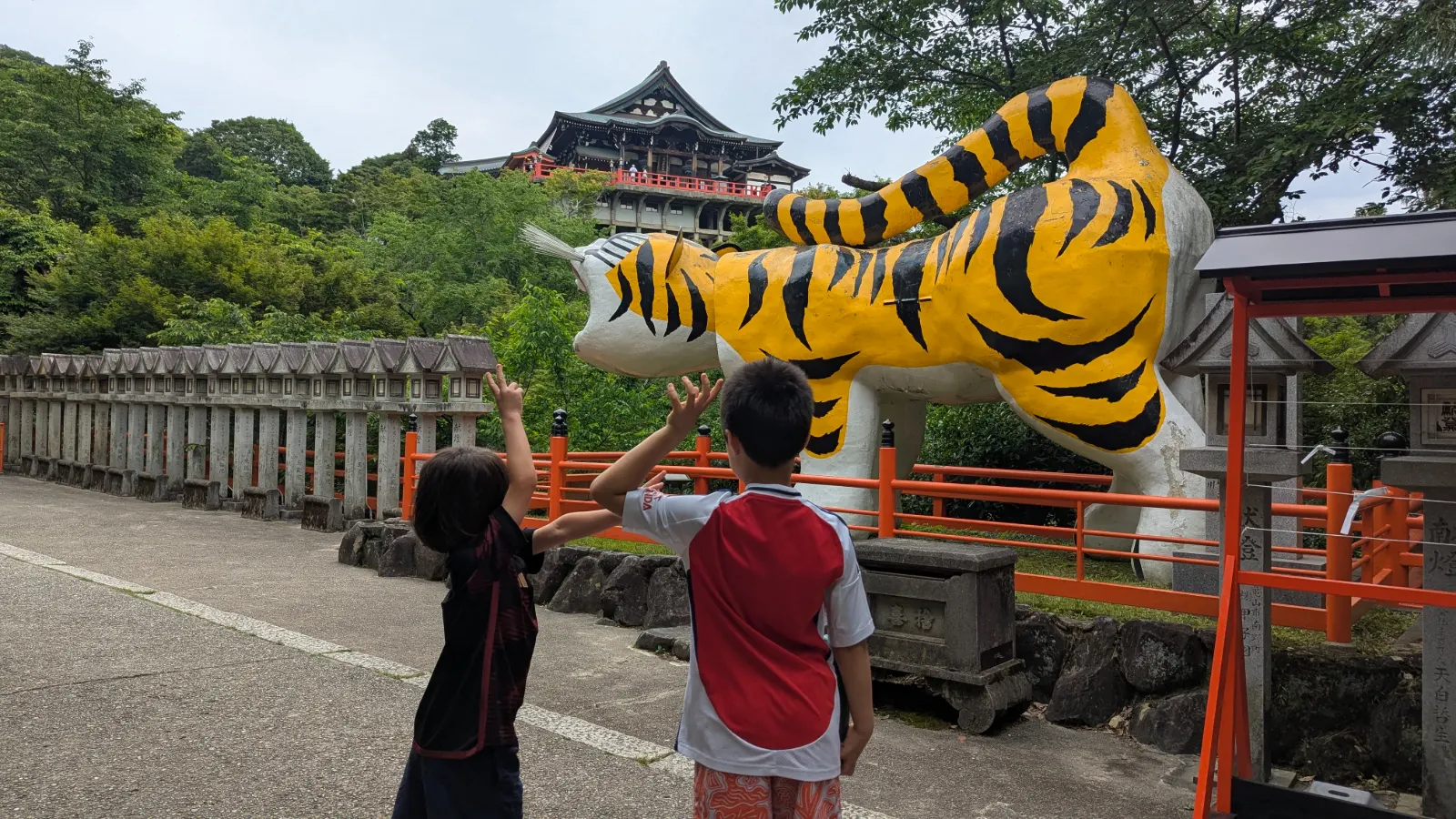
The densest return per day of effort.
Ages 6 to 11, local trains and Shinkansen.
Restrooms, platform checks, vending solo.
The afternoon rest window is load-bearing.
Some links on this page are affiliate links. LuNi may earn a commission at no extra cost to you.
You have the days. Now the nights.
Where to stay in Japan →What actually changes at school age.
Japan rewards the curious, the capable, and the observant. For families traveling with children between 6 and 12, it rewards all three at once.
School-age kids are old enough to navigate a train platform, appreciate the ritual of a shrine visit, and feel the specific satisfaction of ordering lunch from a ticket machine without help. They are still young enough to find a capsule toy thrilling. That combination is rare in travel, and Japan is one of the few destinations on earth actively engineered to exploit it. The structural logic of the country, its visual systems, its social clarity, its culture of earned independence, maps almost precisely onto the developmental needs of a child in elementary or middle school. Families planning their first major international trip will find the full case laid out in our Japan Family Travel Hub.
The shift between the toddler years and elementary school is not primarily about stamina. It is about the kind of engagement a child can sustain and the kind of responsibility they can carry. At this stage, children develop genuine attention spans, an emerging grasp of cause and effect in social settings, and a desire to be trusted with real tasks. They are used to operating inside clear systems: the schedule of a school day, the social code of a classroom, the predictable structure of rules and consequences. That orientation is exactly why Japan resonates with them in a way it cannot with younger children. Japan is not chaotic, it is complex, and a 9-year-old who has spent three years learning to read a room is surprisingly well-equipped to decode it.
This is the lens The LUNI Framework brings to the question. Most family travel advice treats age as a number. The framework treats it as a question of what a child can absorb and what they can carry, which is why the 6-to-12 window reads as a genuine sweet spot rather than a marketing claim.
Why Japan is built for this age.
Most destinations accommodate children. Japan, at this age range, actively engages them. Four structural features do the work.
It is a visual system, not a language barrier. The most common parental anxiety about Japan, the inability to read the language, is the least consequential for school-age kids. The infrastructure is not text-dependent. Subway lines are color-coded and numbered, restaurant kiosks show photographs of every dish beside the matching button, and platform signage runs on pictograms and numbers a child can follow without any Japanese literacy. The practical result: a 10-year-old can buy lunch independently, find the correct platform, and manage their own IC card, not because they are exceptional, but because the system was designed to be understood without language. That success, earned in a foreign country, is not a small thing for a child’s confidence.
It offers safe independence. Japan’s safety record is well documented, but for parents of school-age kids the more relevant benefit is operational. You can extend the leash here in ways that are genuinely impossible in most other international destinations. An 8-year-old can walk 20 meters ahead in a station to check the platform number. A 10-year-old can take 500 yen to a vending machine and return with the right drink and the correct change. These are small, accumulating wins that shift how a child sees themselves relative to the world, and Japan makes them available because the environment is safe enough to allow them and organized enough for children to succeed.
Its social scripts create security, not restriction. School-age kids are rule-oriented by developmental stage. They want to know what is expected. Japan supplies that clarity with unusual consistency: stand on the correct side of the escalator, use an indoor voice on the Shinkansen, take your shoes off here, bow when entering the shrine. Children do not experience that clarity as constriction. They experience it as information. Many become the family’s enforcement officers within 48 hours, reminding parents to pack out their convenience-store trash. That shift, from passive tourist to active participant, is one of the quietly powerful things Japan does for children this age.
Its culture is participation, not observation. Japan’s most significant cultural sites are participatory. A visit to Senso-ji in Asakusa is not a walkthrough: it involves drawing a fortune, ringing the bell, bowing at the altar, collecting a goshuin stamp. The Great Buddha in Kamakura is a landmark and a puzzle, inviting children to work out the scale, the history, the construction. This matters because a school-age child’s threshold for passive observation is limited. After two temples where the instruction is only to look and be respectful, attention collapses. At sites where culture is something you do, that threshold extends significantly.
What kids actually engage with.
Ask families returning from Japan what their children remember, and the answer is rarely the landmark. It is the system. The mechanism. The game.
School-age kids are drawn to the operational logic of Japan more than to its aesthetic. Nearly every train station, major shrine, and museum maintains a commemorative rubber stamp, the eki stamp, free at the information counter. The design changes location by location, so a blank notebook bought at a 100-yen shop on day one becomes a collection ledger: every transfer is a mission, every museum a mark. Buy that notebook early. The quality of the stamp hunt improves the moment a child has a system to maintain rather than a random accumulation of images, and a station without a stamp becomes a conversation rather than a disappointment. Gachapon capsule machines run on a parallel principle. For a child learning to manage a coin purse in a foreign currency, a daily 200-to-300-yen budget turns into a lesson in restraint and prioritization, with stakes low and the payoff immediate.
The single most effective way to keep a school-age child engaged in the transit system is to give them a role inside it. Assign one child the Ticket Master for each travel day: they carry the family’s IC cards, watch the balance, tap through the gates, and confirm the platform. The signage is clear enough that they succeed, and the shift in posture is immediate. Children aged 6 to 11 ride at 50 percent of the adult fare on local trains and the Shinkansen, applied automatically through a Child Suica or Pasmo card collected at the airport, so the role costs nothing and teaches plenty.
Then there is the middle ground Japan excels at: experiences that are visually engaging for adults and physically interactive for children. teamLab Planets in Tokyo, where visitors wade barefoot through shallow water into rooms of shifting light, is the most cited example but not an exceptional one. The Cup Noodles Museum in Yokohama, where children design custom packaging and invent their own flavors, works the same way, and the Ghibli Museum in Mitaka rewards close observation in layers that suit a curious 9-year-old far better than a 4-year-old who cannot yet read the narrative. The editorial principle: choose one or two of these per city rather than stacking them. The depth at a single well-chosen interactive site exceeds what three passive cultural stops will produce.
Why the afternoon decides the day.
A school-age child can walk all day. What they cannot do is process a foreign country all day, and that distinction is the one most itineraries miss.
Families already track two currencies, money and time. The framework names a third: Reserve, a child’s specific, finite capacity to absorb what a travel day asks of them. A cascade at 4:00 p.m. in Japan rarely means a child is physically exhausted. It means Reserve is spent. Decoding a foreign-language environment, regulating behavior in quiet public spaces, and processing unfamiliar sensory input all draw on that finite daily budget, and it runs out around mid-afternoon regardless of how many steps have been walked.
The correction is structural, not motivational. Build a genuine rest window into the afternoon. A park, a return to the hotel, 45 minutes with a book all count as recovery, and recovery is not wasted time. It is the move that preserves capacity for dinner and the next morning. Younger children may need the hotel and a true nap; older ones often just need a quiet hour and a vending-machine drink before they are ready again. Either way, the family that treats the rest block as load-bearing is the one that comes home calling Japan manageable.
The cognitive budget of a school-age child in Japan depletes faster than the physical one, and the families who return calling the trip manageable are almost always the ones who treated the mid-afternoon rest block as non-negotiable rather than optional. A child given permission to stop before they hit depletion carries more genuine curiosity into the next day. That daily rhythm is a parenting discipline that keeps paying out long after the trip ends.
Where parents misjudge it.
Because school-age kids are demonstrably capable, it is easy to plan as though capability is the only constraint. It is not.
The education trap. Japan is a genuinely rich cultural destination, and parents who want their children to learn often build itineraries heavy with historical sites. The problem is that a 9-year-old’s capacity for quiet appreciation of similar environments runs to roughly two before they blur together. The third Shinto shrine produces less retention than the second, and far less than the first. Commit to one or two iconic cultural sites chosen for what they offer this age group. The Great Buddha at Kamakura and Todai-ji in Nara both reward curiosity about scale and construction in ways smaller shrines do not. Use the brand’s “Is It Worth It?” guides to filter high-stress, low-engagement options before they reach the itinerary.
Treating capability as permission to overschedule. Japan’s rail network makes multi-city coverage genuinely achievable in a short window, and that creates a trap: because transit between Tokyo and Kyoto is effortless, families assume the days in between can absorb proportionally more. They cannot. The transit is efficient; the cognitive load of a new city, a new neighborhood, and a new hotel is not. Staying in a single city for four to five consecutive nights yields a qualitatively different experience, because by day three a child recognizes the local convenience store and knows which vending machine carries their drink. That familiarity is the emotional base from which real exploration becomes possible.
Who needs the schedule calibrated.
Japan suits school-age families across almost every configuration. Four profiles tell you where the schedule needs adjusting rather than the destination reconsidered.
The Dynamo depletes through restricted movement, and a cultural itinerary conducted largely in low-noise indoor environments gives that energy nowhere to go. A temple does not absorb a Dynamo’s energy, it compresses it. The planning consequence is to build an active outdoor block, a park, a plaza, an unstructured hour, into every single day and treat it as load-bearing rather than optional.
The Sensor depletes through sensory input, and Japan concentrates that load in predictable places: a rush-hour train carriage, the crowd-and-announcement density of a major shrine approach, and the projection-and-sound rooms of the very edutainment venues that reward this age group. The planning consequence is to time those environments deliberately, a teamLab or a packed arcade early in the day before the Sensor’s threshold is low, and to keep a quieter recovery stop in reserve immediately after, rather than stacking two high-input venues back to back.
The Anchor depletes through unfamiliarity and unconfirmed structure, which surfaces most often around food. The planning consequence is to lock a known-safe breakfast routine at the hotel and treat the dinner meal, supported by the reliable fallback of convenience stores and family restaurants, as the day’s exploration window rather than a daily gamble.
The Sprinter depletes through sustained travel-style walking and standing, and a typical Japan day runs 15,000 to 20,000 steps. The planning consequence is to anchor the highest-value activity in the morning when physical capacity peaks, and to let the afternoon be rest rather than a second opportunity to spend the same reserve twice.
The questions families ask most.
Is Japan too much walking for a 7-year-old?
A typical family day in Japan runs 15,000 to 20,000 steps, which most school-age children sustain physically without difficulty. The more relevant constraint is cognitive rather than physical: decoding a foreign-language environment and regulating behavior in quiet public spaces depletes a child faster than walking does. Build an afternoon rest window into every day regardless of physical capacity, and the walking rarely becomes the problem.
Do children pay reduced fares on Japanese trains and the Shinkansen?
Yes. Children aged 6 to 11 are charged 50 percent of the adult fare on both local trains and the Shinkansen. A Child Suica or Pasmo IC card, available at major airport stations on arrival, applies the child rate automatically at every tap-in. At age 12, children are reclassified as adults for fare purposes, which is one reason the 6-to-11 window is particularly cost-efficient for families.
Is it safe for a school-age child to use public restrooms alone in Japan?
Yes. Japan is among the safest countries in the world for this kind of minor independent task. In major stations and department stores, it is standard practice for elementary-age children to use restrooms independently while a parent waits outside the entrance. It is also a low-stakes, high-return opportunity to practice the independence Japan makes available at this age.
Should school-age kids lead the navigation, or is that unrealistic?
It is not only realistic, it is one of the highest-return strategies available for this age group in Japan. Assign one child the platform-confirmation task per train journey, and give them a specific instruction: locate the correct exit, confirm the line number, check the next departure. Japan’s signage is sufficiently visual and numbered that children in this range succeed consistently, and the confidence that follows a successful navigation task is categorically different from anything a domestic trip offers.
At what age does Japan really click for kids?
The shift is visible around age 6 to 7, when children are old enough to follow the social scripts Japan asks for, carry their own Suica card, take part in shrine rituals, and treat the stamp and gachapon systems as genuine pursuits rather than novelties. The experience deepens through age 12, at which point the Shinkansen fare reclassification and the move toward adolescent independence both change the dynamic. By most family accounts, the 8-to-11 window is the densest period of return per day of effort.