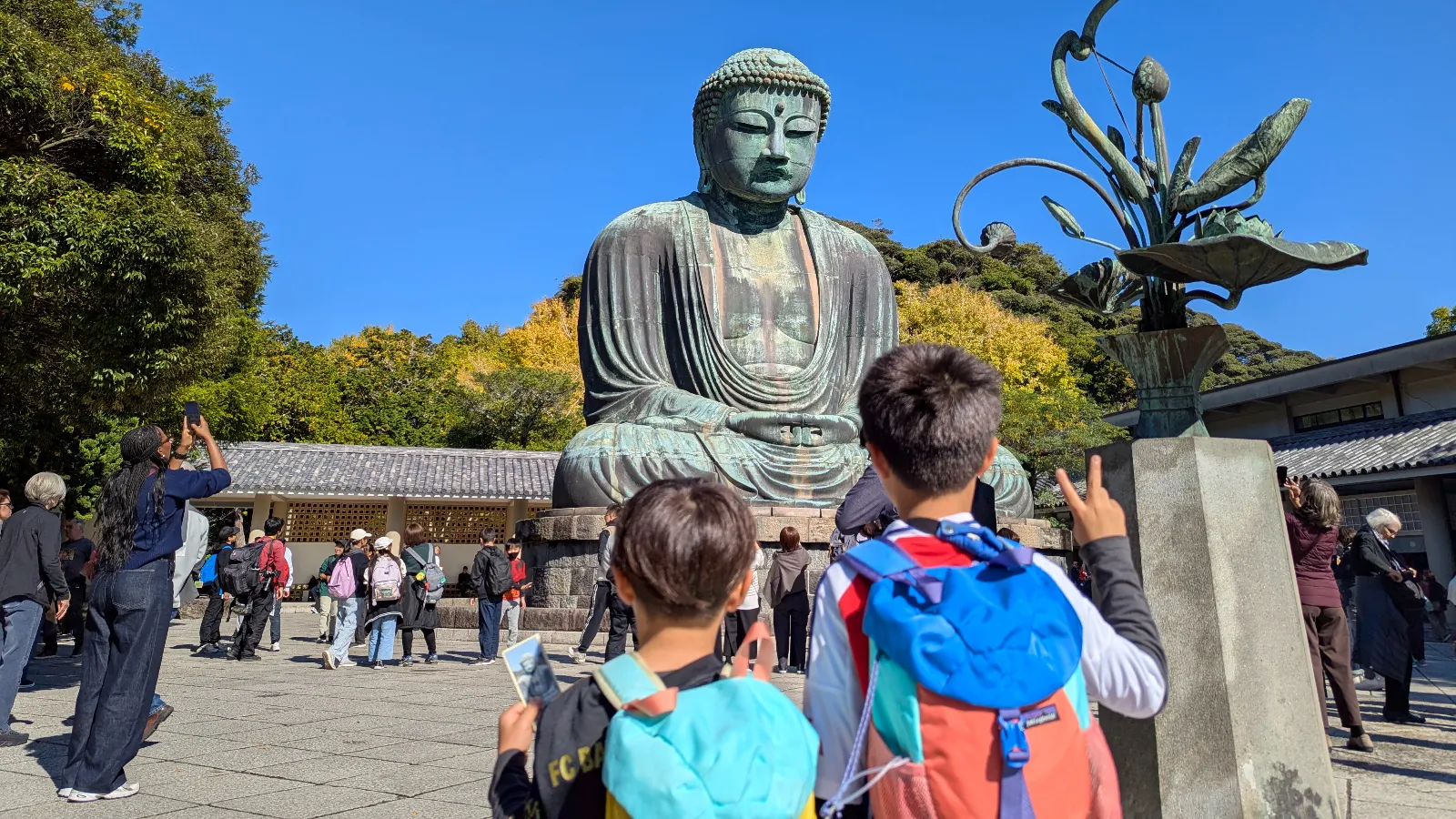
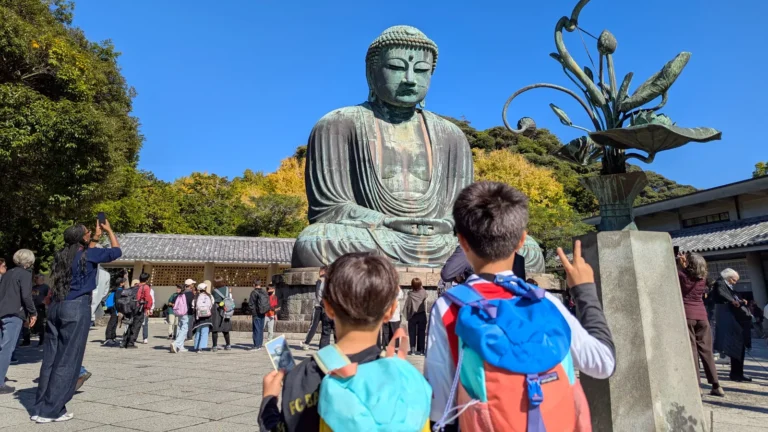
As a highlight of any Kamakura family-friendly travel itinerary, visiting the Kamakura Great Buddha (Kotoku-in) is one of those rare travel moments where a famous landmark truly lives up to the hype, especially for children seeing it for the first time. Standing before the massive bronze statue, families can feel its impressive height and size in a way that photos never quite capture.
But for parents, the real appeal isn’t just the history, it’s the logistics. Because the Great Buddha is easy to enjoy thanks to its simple cost, flexible hours, and convenient location, it works beautifully as a relaxed, family-friendly stop. Unlike larger temple complexes that require hours of walking, you can plan to spend just 30–60 minutes here, leaving plenty of time to explore the surrounding snack shops and cafés.
Best of all? It’s interactive. Many visitors are surprised to learn they can actually step inside the statue, a hands-on experience that older kids find fascinating.
Whether you are navigating with a stroller from Hase Station or looking for a relaxed activity for your child, this guide covers the essential tips, from the ¥50 interior tour to the best stroller routes, to make your visit smooth and memorable.
Why the Kamakura Buddha is Great for Families with Kids
- The open-air courtyard gives kids plenty of space to explore while still keeping the Great Buddha in view, making the visit calm and manageable for parents.
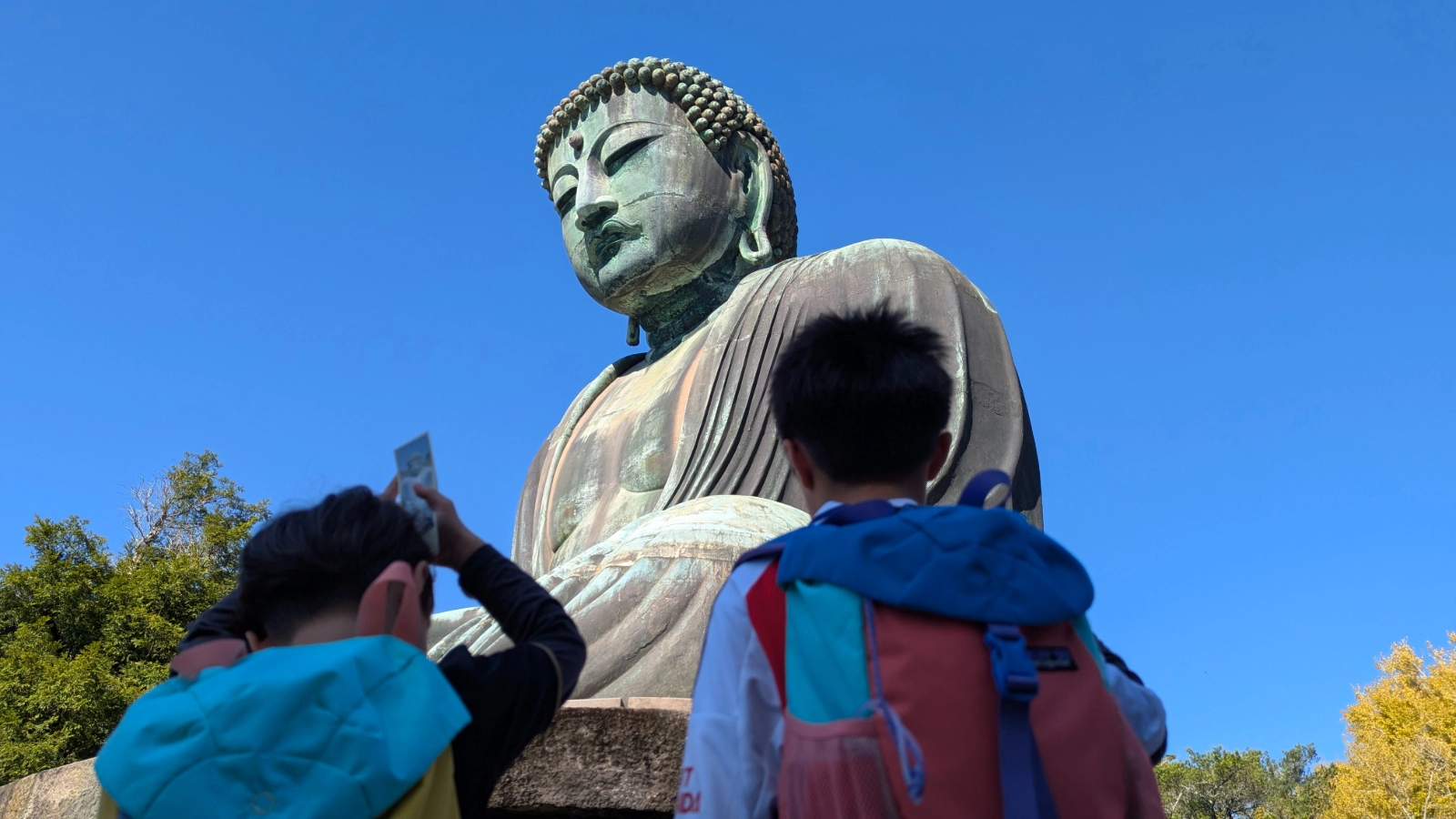
- Children love seeing how small they look beneath the towering bronze statue, turning the moment into a fun scale-and-perspective discovery.
- The short walk from Hase Station makes the visit easy for families with strollers or younger children who tire quickly.
- Entering the inside of the statue adds a memorable, hands-on learning moment older kids usually find fascinating.
- The surrounding streets are filled with snack shops and cafés, making it easy to pair the temple with a relaxed family stroll.
Parent Insight: Historical sites don’t have to be complicated for kids, sometimes all it takes is standing beneath something extraordinary to spark their curiosity. Let your children ask simple questions like “How did they make this?” or “Why is it outside?” Those wonder-filled conversations help them connect emotionally to the culture and turn a quick stop into a meaningful shared moment.
LuNi Family Fit Check: Kamakura Great Buddha
Every child experiences busy places differently. Not sure which profile fits your kid? Take the free Family Fit Quiz in 60 seconds to see if this spot is a ‘Green Light’ for them.
🟢 The Dynamo
🟢 The Sensor
🟢 The Anchor
🟢 The Sprinter
Best Things to Do at the Kamakura Buddha with Kids
- Stand beneath the Great Buddha: Kids love looking up at the massive bronze statue, 11.31 meters tall (13.35 meters including the platform), and seeing how tiny they appear in comparison. It’s an instant “wow” moment.
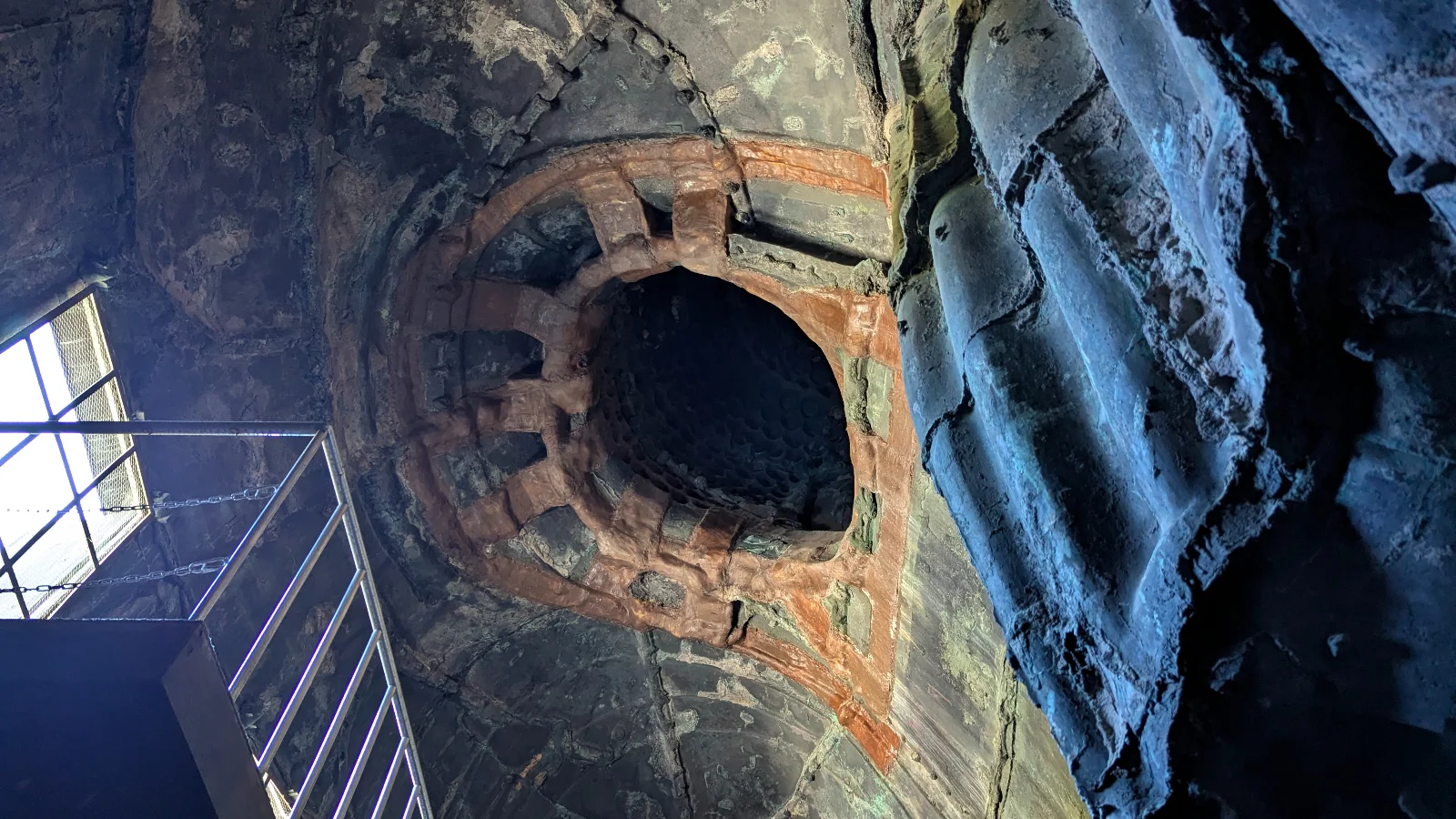
- Go inside the Buddha: Older kids are fascinated by the chance to walk through the hollow interior, a quick but memorable peek into how the statue was built.
- Search for symbolic details: Invite kids to spot lotus petals, the Buddha’s hand position, or how the facial expression changes depending on the angle.
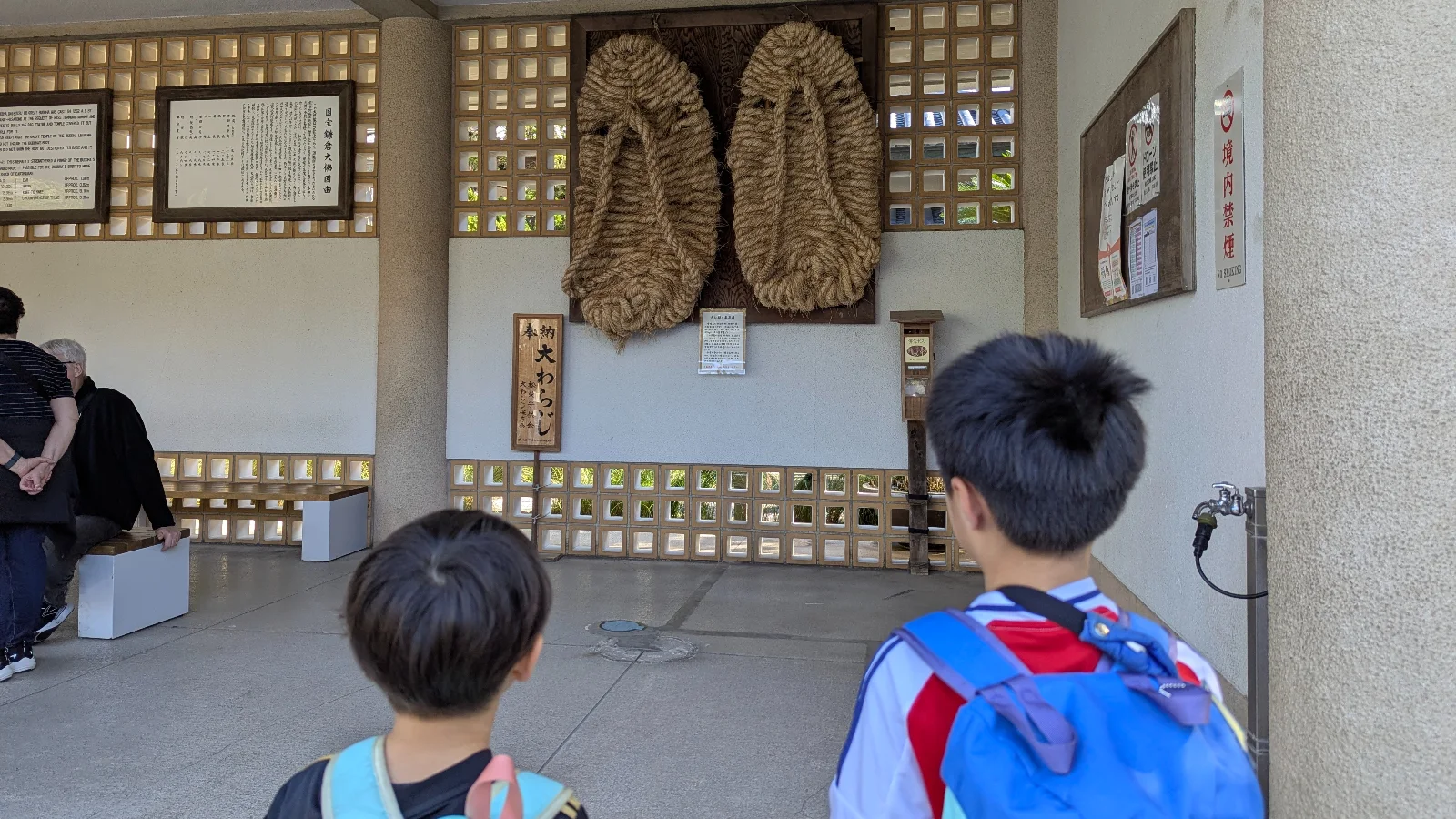
- Spot the giant warazori: Kids are always intrigued by the pair of huge straw sandals hanging beside the statue, a fun symbol created after World War II as an offering for the Buddha to “walk and bring happiness to the people.”
- Explore the peaceful temple grounds: The open layout, gentle pathways, and quiet corners make it easy for kids to wander without feeling overwhelmed.
- Pass through the Nio-mon Gate: The temple’s guardian gate is watched over by fierce-looking Nio statues, giving kids a dramatic entrance and a chance to talk about temple protectors.
- Visit the Kangetsu-do Hall: This smaller hall, once part of the Kyoto Imperial Palace, gives families a chance to see a historic relocated structure and notice the contrast in architectural style.
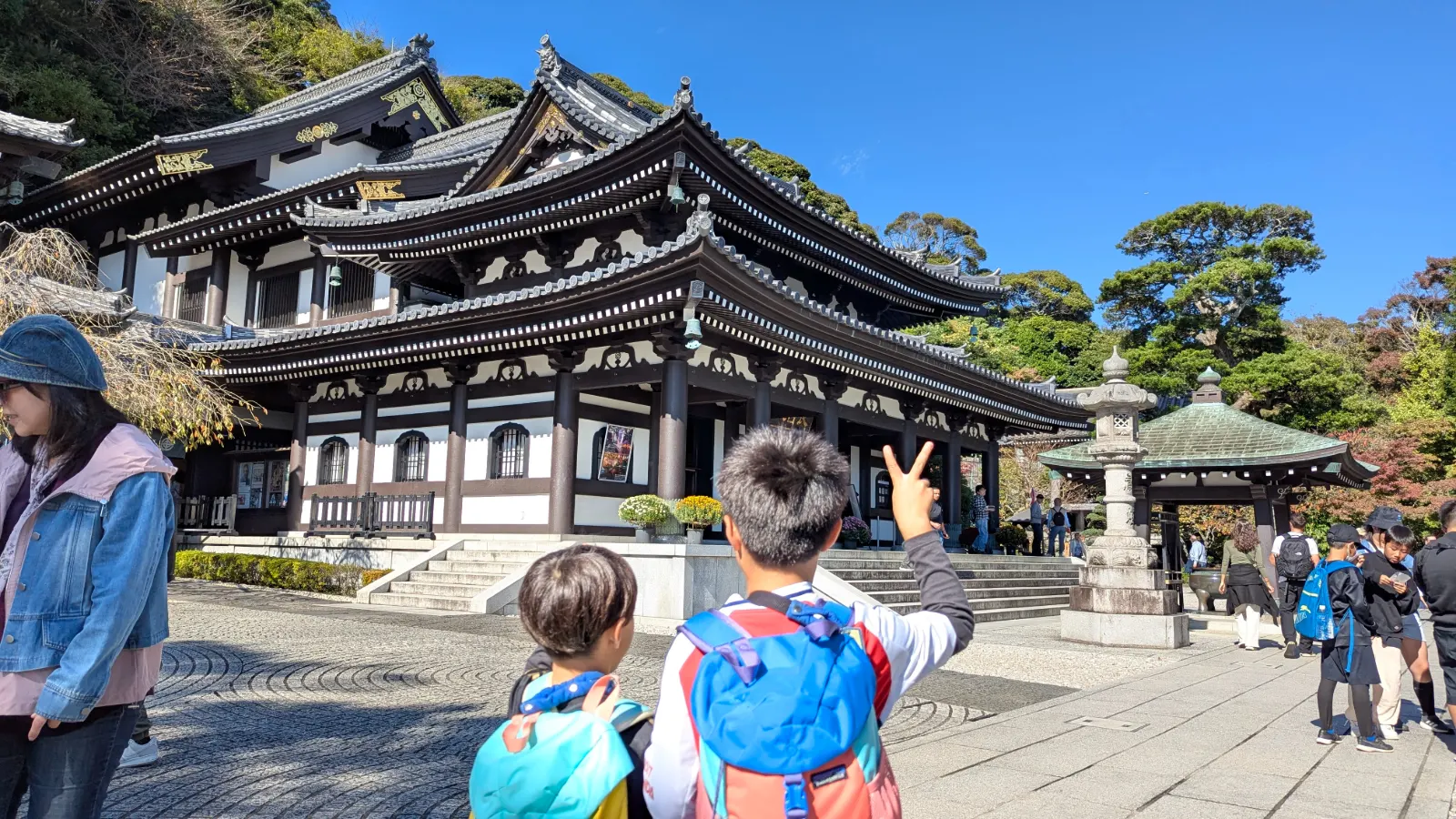
- Pair your visit with Hasedera Temple: Just a short walk away, this temple offers gardens, caves, and ocean views, a perfect extension to a family outing.
The Family Fit Reality
Researching the endless details of a Japan family trip, from figuring out what to pack to managing your daily yen budget, is a massive undertaking that requires careful logistical preparation.
But here is the hidden trap most parents miss: all the practical preparation in the world won’t save your trip if your entire vacation hinges on the hope that “everyone will just cooperate”. If your plan collapses the moment someone gets overstimulated, it is built on hope, not capacity.
Removing the stress from this trip requires understanding exactly how your child processes a foreign environment. An Anchor needs you to pack specific familiarity tools to feel safe, and a Sensor needs you to plan for sensory overload before it happens. A Sprinter requires a strict physical energy budget to prevent exhaustion, while a Dynamo needs you to rewrite the standard rules of travel so they aren’t constantly being shushed in a culture that rewards stillness.
Stop guessing and discover exactly how your child’s energy is wired to travel. Before you finish your general planning, take the free, 60-second Family Fit Check to identify your family’s exact profile and unlock the personalized strategies that prevent daily meltdowns.
Practical Tips for Visiting the Kamakura Buddha with Kids
- Cost: ¥ – Admission ¥300, Ages 6–12 ¥150, Under 6 Free; optional entry inside the Buddha is an additional ¥50.
- Best Age Range: Ages 3+ (interior structure best for kids 6+).
- Stroller-Friendly?: Mostly yes, as temple grounds are flat and open, but the interior access is not stroller-friendly and requires a short, narrow stairway.
- Rest Areas: Benches around the courtyard and several shaded spots near the entrance.
- Food: No food inside the temple grounds; lots of kid-friendly cafés and snack shops between Hase Station and the temple.
Best Time to Visit the Kamakura Buddha with Kids
The best time to visit the Kamakura Buddha with kids is in the morning during spring or autumn, when the air is cooler, the light is soft, and the crowds are lighter around the courtyard. Spring brings gentle cherry blossoms along the walk from Hase Station, while autumn adds colorful foliage that makes the statue feel even more dramatic against the seasonal backdrop.
Summer afternoons can be hot and bright with very little shade, and winter mornings offer a quieter, more peaceful atmosphere for families who prefer fewer visitors. Arriving early helps kids explore comfortably before school groups and tour buses begin to gather.
How Long to Spend at the Kamakura Buddha with Kids
Plan to spend about 30–60 minutes at the Kamakura Buddha with kids, which gives your family enough time to walk the grounds, take photos, and explore the inside of the statue at a relaxed pace. This timeframe comfortably covers the main courtyard, the Nio-mon Gate, the warazori sandals, and a quick look at Kangetsu-do Hall.
Toddlers and younger kids often prefer a shorter visit focused on the big visual highlights, while school-age children may enjoy taking extra time to notice symbolic details or ask questions about the statue’s history and construction.
RELATED GUIDE
12 Best Things to Do in Kamakura with Kids (Toddler to Teen Guide 2026)
Read the full guide ➔
How to Get to the Kamakura Buddha with Kids
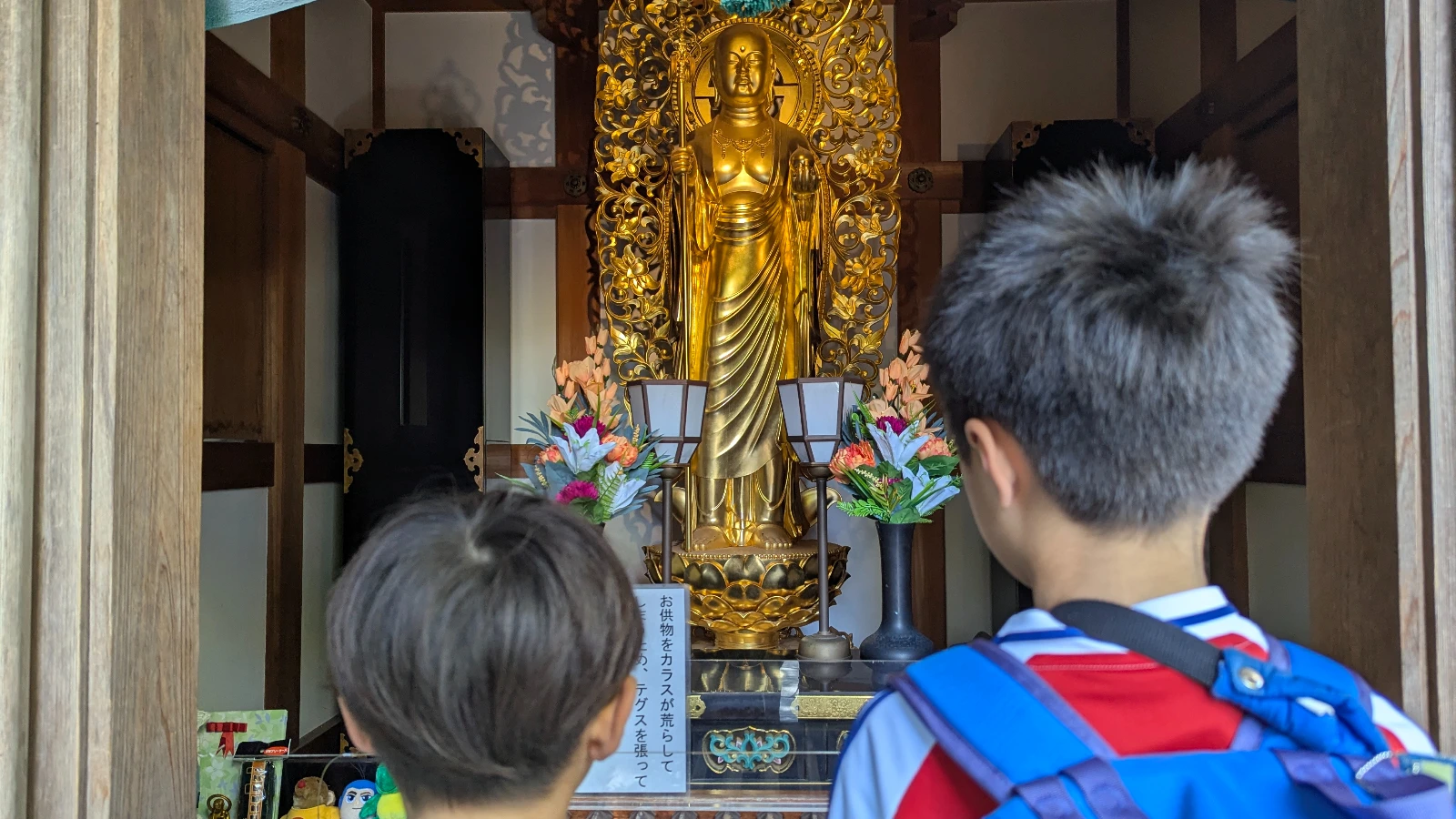
- By Train: From Kamakura Station, ride the Enoden Line to Hase Station, then walk 7–8 minutes to Kotoku-in.
- By Bus: Local buses from Kamakura Station stop near Daibutsu-mae, just a 2–3 minute walk from the temple entrance.
- Special Note: The walk between Hase Station and the temple has narrow sidewalks that get crowded on weekends, so arriving early or visiting on weekdays makes the walk much smoother for families.
Luca & Nico’s Tip: Check the Buddha’s cheeks for tiny gold remnants, a cool detail from when the statue was once covered in gold.
RELATED GUIDE
Japan by Train with Kids: The Complete Guide to Strollers, Passes & Stress-Free Travel (2026)
Read the full guide ➔
Family-Friendly Hotels Near the Kamakura Buddha in Kamakura
- Luxury
- Hotel Metropolitan Kamakura – About 6 minutes by train from Hase Station. Modern, calm, and spacious rooms with easy access to Komachi Street for kid-friendly food.
- Kamakura Prince Hotel – Around 15 minutes by bus to Hase. Ocean views, a peaceful setting, and large rooms ideal for families wanting a beach–temple combo stay.
- WeBase KAMAKURA – About 12 minutes on foot to Hase Station, then a short walk to the Daibutsu. Stylish, relaxed atmosphere with onsite amenities families appreciate.
- Mid-Range
- Kamakura Park Hotel – About a 20-minute walk to the Buddha. Spacious rooms and excellent ocean proximity for families who want both cultural and coastal experiences.
- Tosei Hotel Cocone Kamakura – Around 5 minutes by train from Kamakura Station to Hase. Clean, comfortable rooms near shopping and casual dining.
- Budget
- Hotel Hokke Club Shonan Fujisawa – About 12 minutes by train to Hase Station. Reliable, clean, and a great value pick with easy JR access.
- Sotetsu Fresa Inn Kamakura-Ofuna Higashiguchi – Around 12 minutes by train to Hase via Kamakura Station. Simple, well-run, and perfect for budget-minded families wanting convenience.
Family-Friendly Attractions Near the Kamakura Buddha
- Hasedera Temple – A beautifully landscaped temple with ocean views, blooming gardens, and a small cave kids love exploring, making it a peaceful and engaging add-on to your visit.
- Yuigahama Beach – A relaxed stretch of sand perfect for running, digging, and taking a break by the water after exploring temples and streets.
- Kamakura Kokomae Crossing – A famous seaside railway crossing brought to life in the Slam Dunk manga and anime, where kids love watching the Enoden trains pass and fans enjoy spotting the iconic scene with the ocean behind it.
- Komachi Street – A lively pedestrian street filled with soft-serve shops, colorful snacks, and easy-browsing souvenir stalls that kids naturally gravitate toward.
- Enoshima Island – A mini adventure destination with caves, viewpoints, and coastline paths that give families a mix of nature, light exploring, and ocean air.
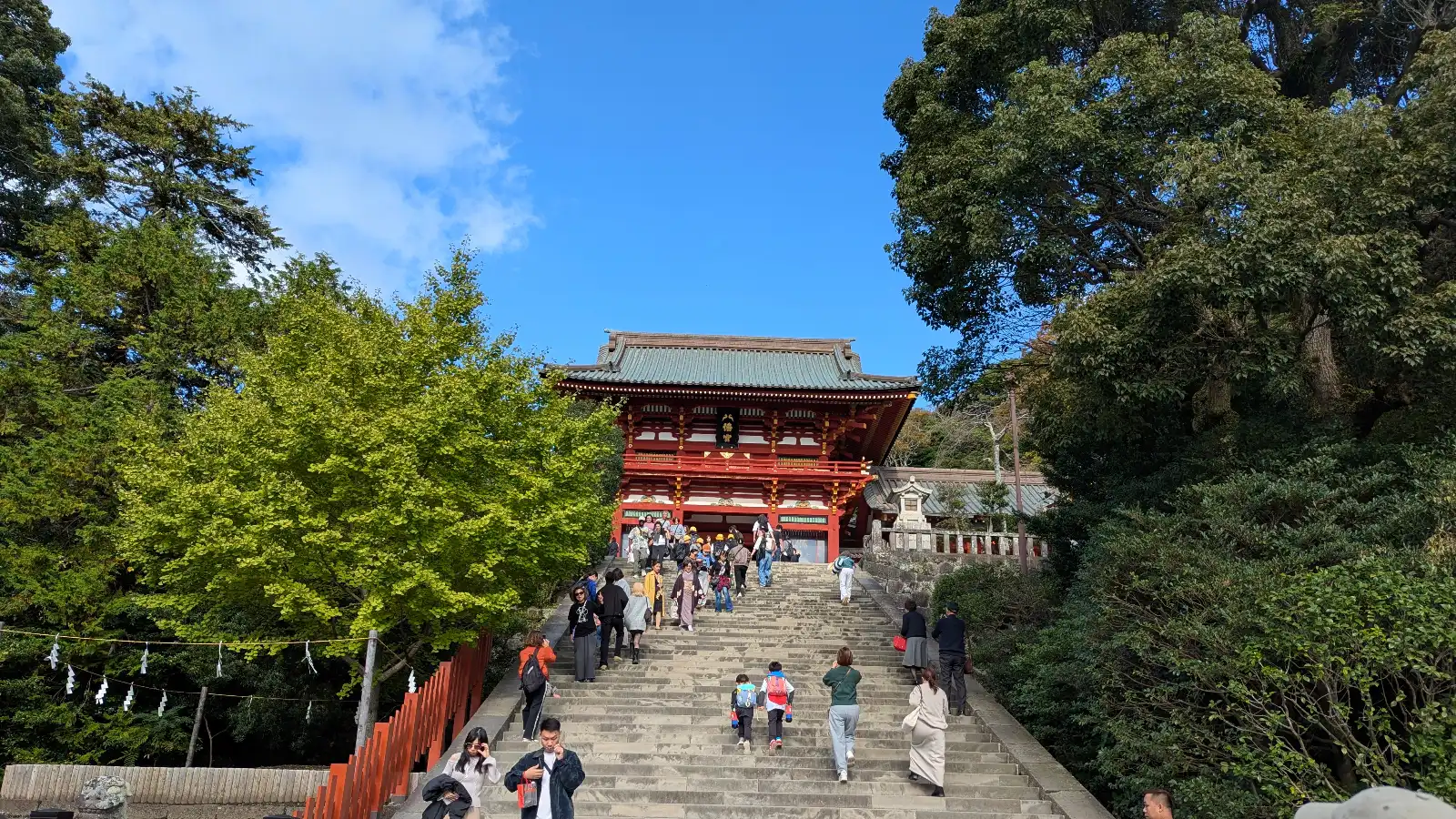
- Tsurugaoka Hachimangu – Kamakura’s grandest shrine, with wide paths, ponds, and long stairways that feel like a mini adventure for children eager to explore.
- Zushi Beach – A quiet, family-friendly shoreline perfect for sand play, splashing, and taking a break from temple sightseeing.
- Enoshima Aquarium – A popular seaside aquarium with glowing jellyfish rooms, local marine life, and dolphin shows that keep kids fully engaged.
- Kamakura Seaside Park – A large, open coastal area with playgrounds, grassy lawns, and plenty of space for families to unwind with ocean views.
FAQs: Visiting the Kamakura Buddha with Kids
Planning a family visit to the Kamakura Great Buddha? These FAQs cover everything parents search for most, from location, hours, cost, stroller access, going inside the statue, and the best time to visit with kids; see here for the official temple grounds map.
A: The Kamakura Great Buddha is a massive bronze statue of Amida Buddha located at Kotoku-in Temple in Kamakura. It dates back to the 13th century and remains one of Japan’s most iconic outdoor Buddhist images, known for its peaceful expression and impressive craftsmanship.
A: The Kamakura Buddha is located at Kotoku-in Temple in Kamakura’s Hase district, a short walk from Hase Station on the Enoden Line. The temple sits in a quiet residential area surrounded by small shops and traditional streets, making the location easy for families to explore.
A: Visiting the Kamakura Great Buddha costs ¥300 for adults and ¥150 for children (ages 6–12). There is an additional ¥50 fee to enter the interior of the statue. The overall cost is low, making it a budget-friendly stop for families visiting Kamakura.
A: The Kamakura Great Buddha is open 8:00 a.m.–5:30 p.m. from April–September and 8:00 a.m.–5:00 p.m. from October–March. Visitors may enter the temple grounds up to 15 minutes before closing, and entry inside the statue is available 8:00 a.m.–4:30 p.m., with last entry 10 minutes before closing.
A: The Kamakura Buddha stands 11.31 meters tall, or 13.35 meters when including the stone platform. Its impressive height is one of the main reasons families enjoy standing beneath it, and kids love seeing how tiny they look next to the towering bronze statue.
A: Yes, visitors can go inside the Kamakura Great Buddha for a small fee. The interior offers a close-up look at the statue’s construction, though the space is narrow and best suited for older children who can manage the short staircase and tighter walkway.
A: The Kamakura Buddha was built in the 13th century as a symbol of peace, protection, and spiritual devotion for the region. Historical records suggest it replaced an earlier wooden statue and was constructed in bronze so it could withstand the elements and serve as a lasting cultural landmark for Kamakura.
A: The Kamakura Buddha is located outdoors, sitting in the open air at Kotoku-in Temple. The original hall that once housed it was destroyed multiple times centuries ago, leaving the statue exposed to the sky, one of the reasons it feels so striking and memorable to visitors.
A: To reach the Kamakura Great Buddha from Kamakura Station, take the Enoden Line to Hase Station, then walk about 7–8 minutes to Kotoku-in Temple. Families can also take a local bus to Daibutsu-mae, which drops you close to the entrance and offers a simple, stroller-friendly route.
A: Most families spend 30–60 minutes at the Kamakura Buddha, enough time to explore the temple grounds, take photos, and go inside the statue. Younger children may prefer a shorter visit, while older kids often enjoy noticing symbolic details and learning about the site’s history and construction.
A: Yes, the Kamakura Buddha is great for families with kids. The massive bronze statue, open courtyard, and unique chance to walk inside the structure make it both engaging and memorable for children. The visit is short, simple, and pairs well with nearby beaches, temples, and kid-friendly streets.
A: The Kamakura Great Buddha is mostly stroller-friendly, with flat, open walkways throughout the temple grounds. However, the interior of the statue requires a short staircase, so strollers are not permitted inside. Parents often find it easy to navigate the grounds with a lightweight stroller.
Until Next Time…
A visit to the Kamakura Great Buddha is more than a quick stop, it’s a quiet moment of awe, a chance for families to stand beneath a symbol that has watched over Kamakura for centuries. Whether your kids remember the towering bronze statue, the gentle walk through the temple grounds, or the spark of curiosity that comes from seeing something so unique up close, this is the kind of experience that stays with them long after the trip ends. The Kamakura Buddha offers a simple but meaningful pause in a busy travel day, inviting families to slow down, look up, and share a moment of calm together.
Stay curious, stay adventurous, and keep dreaming!
~ The LuNi Travels Family ~
More from LuNi Travels