Miyako Island with Kids the beach is the whole itinerary.
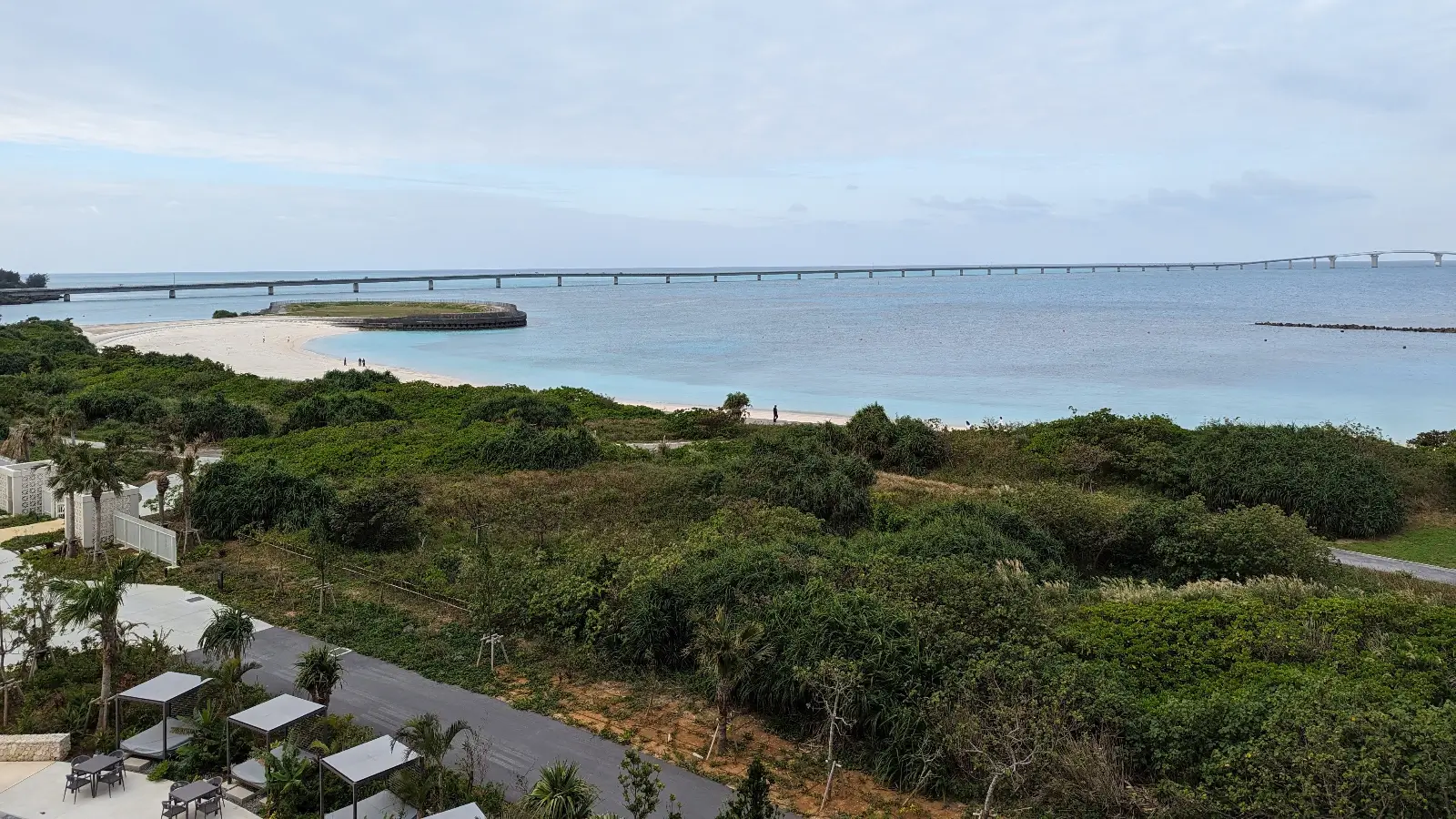
Most Japan trips reward the family that plans density. Miyako rewards the one that plans less, builds the day around the tide, and lets the ocean carry the trip.
Beachfront resorts on Japan’s calmest swimmable water.
Covers the core beaches and one water tour. Five for a slower pace.
Built for five to twelve; calm for toddlers, restful for teens.
Warm, clear water and manageable humidity. Summer brings heat and typhoons.
Miyako Airport by rental car; book the car weeks ahead in summer.
Some links on this page are affiliate links. LuNi may earn a commission at no extra cost to you.
Why Miyako works for families.
Most families land in Japan believing a good trip has to be proved by programming, one more temple, one more district, one more train. Miyako refuses that arithmetic, and the LUNI Framework explains what the island hands back instead: the child’s Reserve, the currency a trip usually only spends.
The argument for Miyako starts with what the island does not ask of a child. A travel day draws on a finite Reserve, and most Japan destinations reward planning density, stacking stops the way a city rewards efficiency. Miyako inverts that. Here the primary activity is the ocean itself, and the days are built around tides and light rather than train schedules. The island’s infrastructure is minimal by design, which means the Reserve is spent slowly, on sun and water, not on transfers and crowds.
The case rests on the quality of a single experience rather than variety: prolonged, unstructured time at some of the most swimmable water in Japan. The shallows at Yonaha Maehama and Aragusuku let young children wade without the shore break common on Pacific-facing coasts, and gradual sandy entries mean no single bottleneck where crowds concentrate at the waterline. Rental-car culture is the default, which removes the stroller-and-train-gap problem that exhausts families in urban Japan. And the absence of an urban core keeps sensory load categorically lower than anywhere else in the country, which is what makes a recovery day here genuinely restorative rather than merely slower. That is the case for Miyako, and it is a different case from the one Tokyo or Kyoto makes.
Miyako dismantles the assumption most families carry into Japan, that a good trip requires constant cultural programming. Children who struggled with the pace of Tokyo or Kyoto often find a different relationship with the trip here, because the island’s demands are physical and sensory in a way that replenishes rather than depletes. Resist the instinct to fill the schedule. The beach is the itinerary.
A pacing lens, not a rating.
The LUNI Framework reads a destination through how each child depletes, not through whether it is “good.” Miyako suits all four profiles. What changes is how you sequence the day.
The Dynamo depletes through restricted movement, and Miyako is one of Japan’s strongest destinations for this profile, on one condition: the accommodation has to be right. A Dynamo based at a beachfront property at Yonaha Maehama has a discharge environment within walking distance at all hours; the same child in downtown Hirara exhausts the surrounding streets within a day. The snorkeling circuit at Aragusuku and Yoshino gives sustained engagement without waiting in line, and a guided mangrove kayak near Higashi-Hennazaki burns energy at a high rate while keeping the group contained. The planning consequence is to front-load active water into the morning and treat the afternoon beach as open-range discharge, not a scheduled activity. For a younger Dynamo, framing the Irabu Ohashi bridge crossing as a counting game sustains the full drive without incident; for an older one, the kayak tour reads as an adventure of their own.
The Sensor depletes through sensory input, and Miyako is the strongest Sensor destination in Japan by a clear margin. There are no festival crowds on a typical visit, no station noise, no urban compression; the ambient environment at most beaches is wind, water, and intermittent birdsong. The planning consequence is to choose one beach and commit to it rather than moving between several in a day. Yonaha Maehama is the widest and gives the most space per family even in peak season; Sunayama’s short sandy trail limits crowds and gives a younger Sensor a sense of arrival and enclosure that open resort beaches do not. The one window to plan around is the Paantu festival in October, when mud-covered performers make close-range contact. An older Sensor is fine anywhere else on the island, but the Naiku district during that event is worth avoiding outright.
The Anchor depletes through unfamiliarity and unconfirmed structure, and Miyako presents a challenge that is not obvious from its reputation: the food infrastructure is thinner than any Japanese city, so a child with a narrow repertoire can struggle outside the resort ecosystem. The planning consequence is to base at a resort with a buffet breakfast, which supplies the familiar food-choice structure an Anchor relies on to start the day, and to stock familiar snacks at AEON Town near the airport on arrival. The two-to-four-day trip suits this profile well, because the day templates quickly: beach morning, lunch at a fixed spot, afternoon activity, dinner from two or three pre-chosen restaurants. For a younger Anchor the routine locks within a day; an older one settles once the shape of the day is confirmed out loud before leaving the room.
The Sprinter depletes through sustained walking and standing, and Miyako is the most physically manageable Japan destination for this profile, with one non-negotiable: the rental car is not optional. Every beach of consequence requires driving, and the distances make walking or cycling impractical, so with a car the physical demand of a day drops to beach-walking distance only. The planning consequence is to build beach mornings with a hotel return by early afternoon, before heat and energy both fall away. A boat tour to Yabiji reef is the high-value, low-exertion option for a younger Sprinter, seated and engaged with no walking involved; the Miyako Island Underwater Park is the strongest single option for an older one, with a fixed path and a clean exit.

What the island works for.
A profile is a depletion mechanism, not an age. Miyako holds up across the span, but what it offers shifts as a child grows.
Yonaha Maehama’s gradual entry and calm water make it one of the most toddler-safe beach environments in Japan. Reaching the waterline crosses soft sand, so a baby carrier makes Sunayama and the final approach easier. Bring a full supply of diapers for the trip rather than counting on restocking on the island.
This is the age the island is built for. Children old enough to snorkel independently, manage a short kayak tour, and read the Underwater Park observatory as real discovery get the most from Miyako’s core offering. Assigning a specific task at each beach, counting fish species, finding the largest shell, or identifying bird calls, sustains engagement across the longer sessions that beach days ask for.
Miyako is honest about what it offers a teenager: decompression, not independence. There is no urban core to navigate alone and limited Wi-Fi outside resort properties. Teens who take to paddleboarding, snorkeling, or kayaking, or who are content with long unstructured beach time, find the island genuinely restorative; those who need urban stimulation tend to run out of it after day two.
When to go, by profile.
Spring and autumn carry the lowest Reserve cost for every profile. Summer is a profile-specific choice, not a default.
The strongest windows for families are April through early June and October to mid-November. Both offer warm water and manageable humidity. April ocean temperatures sit around 24 to 25C, comfortable for extended snorkeling, and marine visibility is at its clearest before the summer plankton bloom. These shoulder months carry the lowest Reserve cost for every profile, and especially for Sensor and Sprinter children, who feel heat as the first threat to a day’s capacity.
Summer is a deliberate choice, not a default. July and August bring Japanese school-vacation traffic that concentrates at Yonaha Maehama and pushes parking and beach density past comfortable for families with young children, and typhoon risk runs highest from August into September, with storms capable of grounding flights for a day or two. Winter is mild by Japan standards, around 18 to 20C and nearly empty, too cold for most children to swim but fine for cycling, bridge drives, and the Underwater Park. Sensor families should also avoid Golden Week, when domestic tourism spikes the beaches to their spring maximum despite the good weather.
| Season | What It Is Good For | Watch For |
|---|---|---|
| Apr–JunThe default window | Warm, clear water and low crowds. Suits every profile. | Golden Week spikes the beaches in early May. Avoid it for a Sensor. |
| Jul–SepPeak and storm season | Warmest water and full resort operation, the discharge a Dynamo needs. | Peak crowds, heat, and typhoon risk that can ground flights for a day or two. |
| Oct–NovThe second window | Warm water and manageable humidity. October draws about as many visitors as July. | The Paantu festival brings close contact in the Naiku district. |
Apr–Jun
The default windowJul–Sep
Peak and storm seasonOct–Nov
The second windowThe questions parents actually ask.
Is Miyakojima worth visiting with kids?
Yes, for families whose priority is water rather than sightseeing. Miyako is quieter and far less developed than Okinawa’s main island, with no urban core and a sensory baseline below any Japanese city. Families who want cultural programming will find more on the main island; families who want calm, swimmable water and unstructured beach days will find Miyako the stronger destination.
How many days do families need on Miyakojima?
Three to four days is the practical minimum to cover Yonaha Maehama, a second beach, a bridge drive, and one snorkeling or boat tour. Five days allows a slower pace. Longer trips turn repetitive unless a family is genuinely content with extended beach time.
Where should families stay on Miyakojima?
Families with young children should prioritize the Yonaha Maehama beach area for direct water access and resort amenities within walking distance. The Shigira resort area is the strongest choice for all-inclusive convenience and hot-spring access. Downtown Hirara suits families who value restaurant and market proximity over immediate beach access.
Is Miyakojima stroller-friendly?
In parts. Beach access crosses soft sand, which is easier with a baby carrier for the final approach, and sandy trails to beaches like Sunayama need a carrier outright.
What is the best beach on Miyakojima for first-time family visitors?
Yonaha Maehama is the standard first choice: calm, shallow water, a gradual sandy entry, a wide shore, and resort facilities within walking distance. Families with older children who want snorkeling should add Aragusuku or Yoshino Beach on a second day, where fish density in the shallows rewards snorkelers of any experience level.
Is snorkeling safe for children at Miyakojima beaches?
Aragusuku and Yoshino beaches have calm, shallow conditions suitable for children from about age five with adult supervision. Life vests rent at most beach access points, and reef-safe sunscreen with water shoes protects against coral contact.