Sendai With Kids:which stop is for which child.
- Rainy Day
- Science Museum, Anpanman, Tohoku History
- Low-Cost Route
- Osaki Hachimangu, Aoba Park, Tsutsujigaoka
- Room to Move
- Yagiyama Zoological Park
- Out at the Bay
- Sendai Umino-Mori Aquarium
- A Bus Ride Out
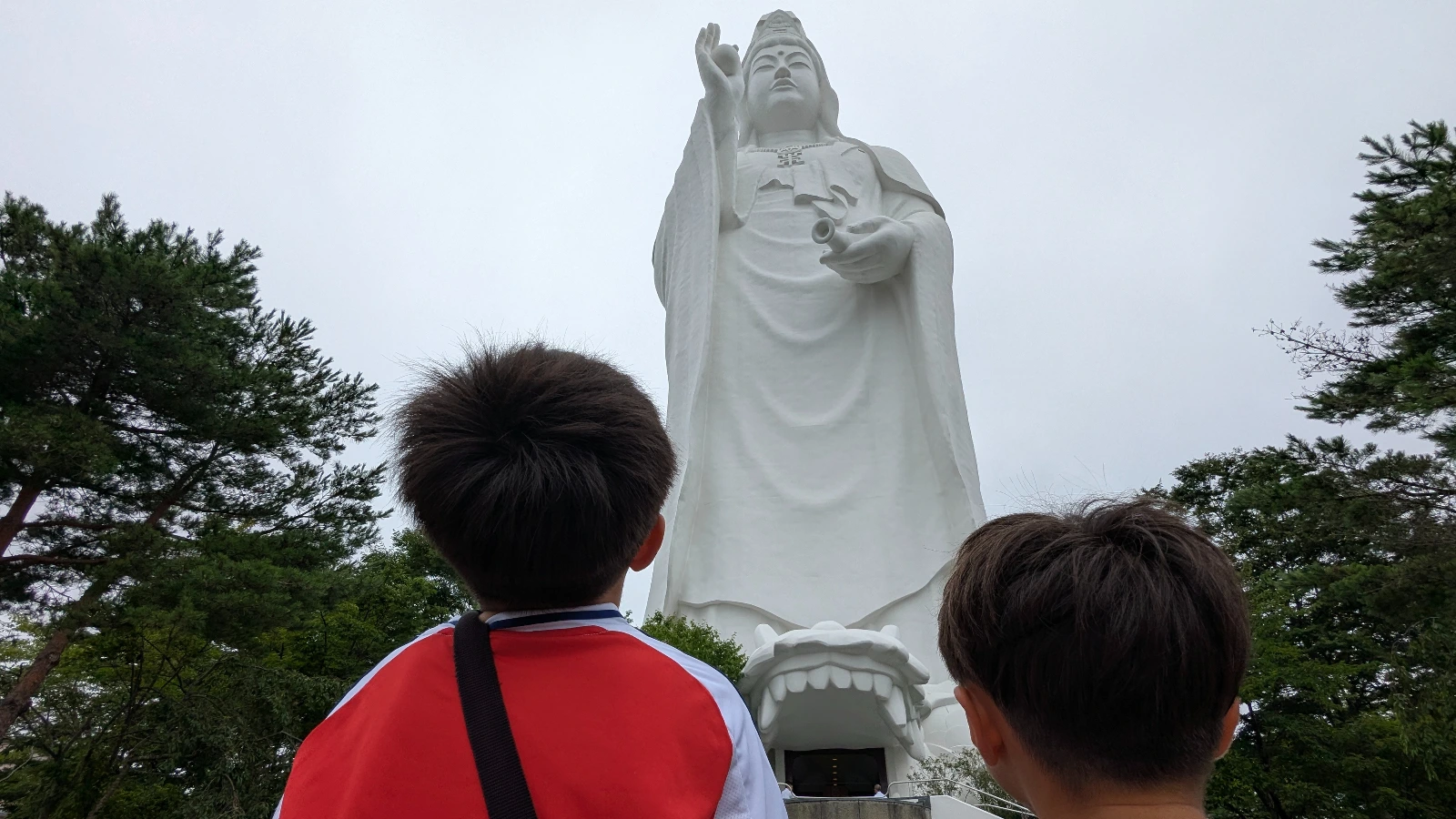
- The Sendai Dai Kannon
Family attractions and places to visit across the city, and how to travel between the center, the hills and the coast.
Some links on this page are affiliate links. LuNi may earn a commission at no extra cost to you.
Sendai with kids has twelve stops, grouped by child. On a rainy day the HOKUSHU Sendai City Science Museum, the Sendai Anpanman Children’s Museum and the Tohoku History Museum are full indoor visits, whatever the forecast. Yagiyama Zoological Park gives an active child room; Zuihoden, the Astronomical Observatory and Osaki Hachimangu Shrine are the quieter stops. Plan around distance: the Sendai Umino-Mori Aquarium sits out at the bay, and the Dai Kannon is a bus ride from the center. Osaki Hachimangu, Aoba Park and Tsutsujigaoka make the low-cost route, and the Sendai Castle Ruins rest tired legs.
Which stop is for which child.
These stops are not ordered best to worst. They are grouped by which child each one is for. The reason is simple: Sendai’s family list leans green and calm, heavy on shrines, museums, and parks, and the stop that steadies one of your children is the stop that runs another short. So instead of one list, you get four short ones, organized by how each child runs out of steam. This is The LUNI Framework at work: alongside money and time, every trip spends a third currency, each child’s Reserve, their finite capacity to absorb what the day asks of them. The Dynamo runs short when they cannot move. The Sensor runs short on noise and crowds. The Anchor runs short when nothing is predictable. The Sprinter runs short on walking and standing. Find your child below, and start there.
For the Dynamo
Stops that relieve restricted-movement depletion.
For a child who depletes through restricted movement, the strongest stops are Yagiyama Zoological Park, the Sendai Anpanman Children’s Museum, and the HOKUSHU Sendai City Science Museum.
Yagiyama is walked, not toured, and for a movement-driven child that is the whole point: over a hundred species are spread across a hillside of shaded paths, so forward motion between the elephants, giraffes, and red pandas is the activity itself, discharging restricted-movement depletion rather than penning it behind a rail. A younger Dynamo runs the loop between enclosures with a hand held; an older one navigates the full hillside and leads the family to the next animal house. Families searching Zao Fox Village as the region’s marquee movement day trip should know LuNi does not recommend it on animal-welfare grounds, and Yagiyama returns the same open-air discharge without that concern.
Who it costs.The Sprinter. The hillside terrain means gentle but sustained slopes, and by the back half of the zoo a low-stamina child is spending travel-style walking reserve on the gradient itself, not just the distance.
How to make it work.Enter from the Yagiyama Zoological Park subway station at the top of the site and walk the slopes downward, so the Dynamo gets the movement while the Sprinter spends the day on descent rather than climb.
If this isn’t your child: a genuine, well-priced half-day zoo a short subway ride from the center, with a quirky Babe Ruth statue most visitors walk straight past.The museum is built around open, soft-surfaced play zones and a live character stage, and every space asks for physical interaction rather than passive watching. For a younger Dynamo that is sustained large-motor discharge in a contained indoor setting, with slides, tubes, and climb structures that hold a small child without ever requiring stillness. A three-year-old lives in the ground-floor play zones; a six-year-old works the whole floor and the stage shows before the content ceiling arrives. It sits a nine-minute walk from Sendai Station, which makes it the rare indoor discharge stop a family can reach on foot in the rain.
Who it costs.The Sensor, and the family budget. Crowds concentrate noise as the play floor fills and the stage show runs at full volume, and admission is charged per head with a firm age ceiling: most children above six reach the end of it fast.
How to make it work.Go at opening on a weekday before the floor fills, check the single daily show time on arrival, and treat the free mall level as the Sensor’s planned step-out when the play floor peaks.
If this isn’t your child: a bright, well-run indoor stop for ages two to six, and the adjoining mall is free to enter even if you skip the paid museum.The science museum runs on hands-on exhibits that reward pushing, cranking, and testing across several floors of physics, energy, and natural history, so for a Dynamo it is large-motor discharge disguised as learning: nothing here asks a child to sit still and watch. A younger Dynamo works the button-and-lever stations and the mammoth skeleton hall; an older one follows the physics and engineering demonstrations at their own pace. It is the rare stop that suits nearly every child in the family, which makes it the safest single pick in this group.
Who it costs.Very little, which is unusual here. Its one real cost is location: it sits up in Dainohara, a short subway ride and a park walk out from the center, so it spends a little transit time other central stops do not.
How to make it work.Pair it with the adjacent Dainohara Forest Park green space so a Dynamo chains indoor discharge to outdoor running without a second transit leg.
If this isn’t your child: an inexpensive, city-run museum that holds nearly any child for two hours, and the one stop in this group that suits all four profiles.For the Sensor
Stops that let a sensory-loaded child recover.
For a child who depletes through sensory input, the strongest stops are Zuihoden Mausoleum, the Sendai Astronomical Observatory, and Osaki Hachimangu Shrine.
Zuihoden sits inside a stand of tall cedars, and that forest setting is the value for a sensory-sensitive child: the canopy muffles sound, the light is filtered and even, and the ornate mausoleum itself is a single contained focal point rather than a wall of competing stimulus. For a Sensor it is a genuine reset, not just a photo stop, and the calm is a structural consequence of the trees rather than luck. A younger Sensor decompresses in a few minutes of quiet on the approach; an older one takes in the carved dragons and phoenixes without a crowd pressing in.
Who it costs.The Dynamo, and the Sprinter on the approach. The grounds are small and quickly exhausted for a movement-driven child, and the entrance is reached by a stone stairway that draws on a low-stamina child’s Reserve before the visit begins.
How to make it work.Time it as a mid-itinerary calm between two louder stops, and let a Sprinter set the pace on the stair climb rather than chaining it straight after another walking-heavy site.
If this isn’t your child: a short, striking, genuinely peaceful cultural stop, and the clearest window in the city into the Date Masamune story.The observatory pairs a planetarium with hands-on space exhibits, and for a Sensor the planetarium dome is the draw: a reclined seat, a slow visual program, and a controlled low-volume soundtrack deliver stimulus the child can absorb without the unpredictable spikes of a crowded indoor floor. There is even a shoes-off area in the exhibition hall where younger children play among space picture books and building blocks, a built-in decompression space rare in a science venue. A younger Sensor settles in the quiet play area; an older one takes the full dome program and the telescope exhibits.
Who it costs.The Dynamo. The seated planetarium and the measured exhibit pace offer little large-motor discharge, so a movement-driven sibling exhausts the visit fastest and needs an outlet chained to it.
How to make it work.It sits up in the Nishikigaoka hills, close to an hour out by bus, so check the planetarium program times before you go and treat it as a deliberate half-day rather than a drop-in, pairing an outdoor stop afterward for a Dynamo sibling.
If this isn’t your child: a calm, well-built stop with a genuine planetarium, worth the trip out on a rainy afternoon or a clear stargazing evening.Built over four hundred years ago in striking black lacquer and gold leaf, Osaki Hachimangu sits in a quiet cedar precinct whose walls hold the noise of the surrounding streets at bay. For a Sensor that acoustic separation is the value: the grounds are calm and even underfoot, and the single dazzling main hall gives the eye one thing to settle on rather than many. A younger Sensor takes a few minutes of quiet and the simple bow-and-clap ritual; an older one studies the rare Momoyama-era decoration. It is also free, which puts it on the low-cost route as well as the calm one.
Who it costs.The Sprinter, on the final rise. The approach climbs a stepped stone stairway to the hall, which draws on a low-stamina child’s Reserve, and the Dynamo finds the still grounds quickly exhausted. Families wanting a second calm shrine can add Shiogama Shrine nearby, though its 202-step approach makes it a firm skip for a Sprinter.
How to make it work.Fold it into a Date Masamune morning near Zuihoden, and let a Sprinter take the stairway at their own pace rather than after a walking-heavy stop.
If this isn’t your child: a dazzling, genuinely calm shrine that most families walk right past, easy to pair with the mausoleum in one quiet morning.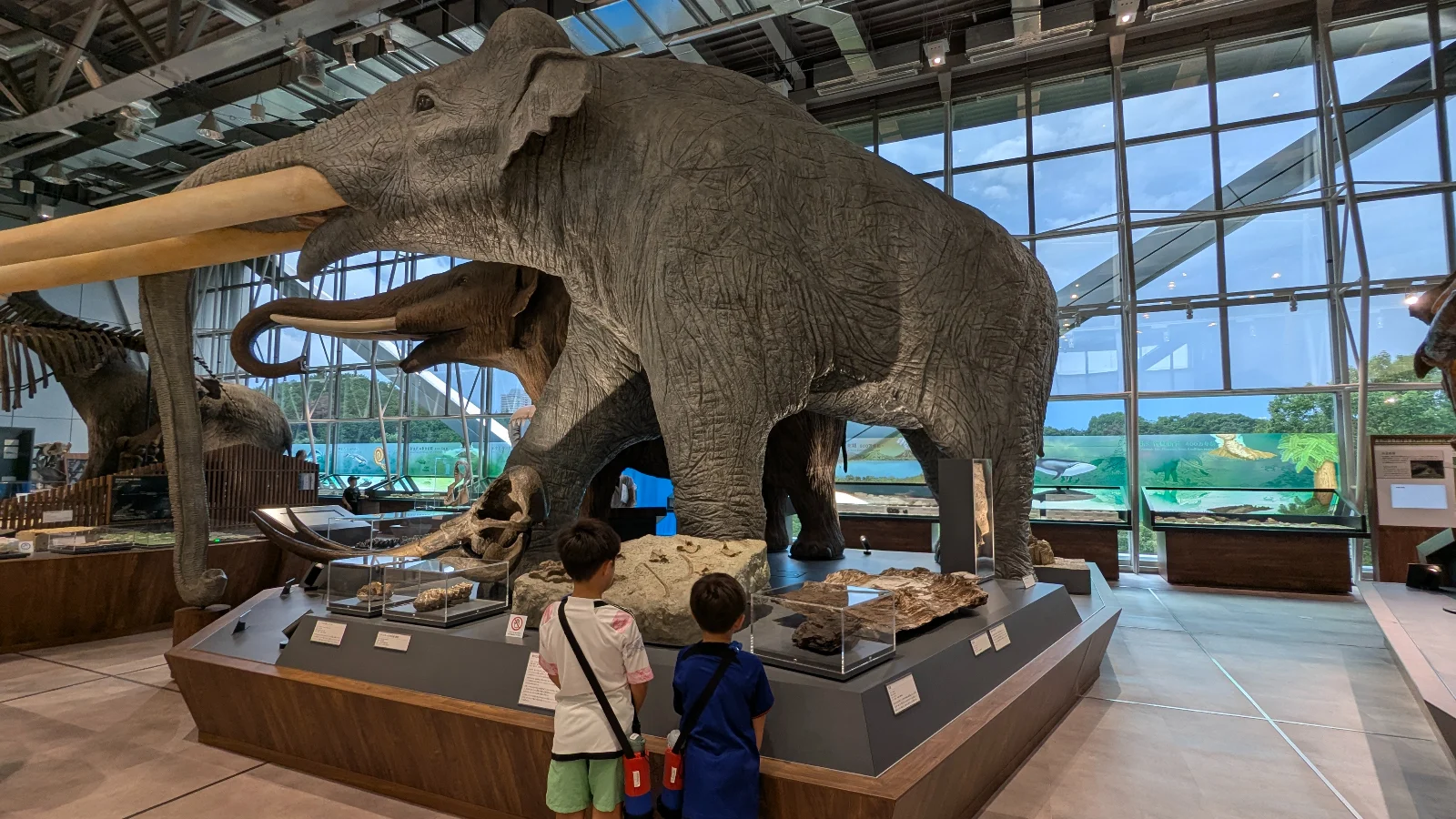
For the Anchor
Stops with confirmed, predictable structure.
For a child who depletes through unfamiliarity and unconfirmed structure, the strongest stops are the Sendai Umino-Mori Aquarium, the Tohoku History Museum, and Earthquake Heritage Arahama Elementary School.
The aquarium runs on a single continuous route from entrance to exit, building toward the vast Sparkling of Life tank and the dolphin and sea lion show, and that fixed one-way path is exactly the confirmed structure an Anchor needs: there are no branching decisions and no doubling back, so the child always knows what comes next. A younger Anchor follows the route tank to tank on a clear thread; an older one reads the Sanriku and Tohoku ocean exhibits in the set order. It is fully indoor and stroller-smooth end to end, which also makes it the city’s strongest all-weather stop.
Who it costs.The Dynamo, mildly, and the day’s logistics. The single route offers little re-entry or self-directed movement, so a movement-driven sibling moves through faster than the visit warrants, and the aquarium sits out at the bay in Nakano, reached by a shuttle rather than a short subway hop.
How to make it work.Confirm the outbound shuttle time before you set out, since the bay location is the one piece of unpredictability here, and time your visit to the posted show so the route peaks at the dolphin tank.
If this isn’t your child: the single most reliable family stop in Sendai, where a toddler and a teenager reach the same awe at the main tank.The museum lays the whole Tohoku story out as a single walkable circuit in chronological order, from Jomon artifacts through samurai armor to folk tradition, with a defined path that does not change from visit to visit. For an Anchor that set sequence is the draw: a confirmed route through a self-contained world, with hands-on discovery zones and a replica-house section as fixed waypoints along the way. A younger Anchor moves through the replica homes room by room; an older one follows the historical thread in order. It is fully indoor, which puts it among the city’s strongest rainy-day options.
Who it costs.The Dynamo, mildly. The measured, read-as-you-go pace offers limited large-motor discharge, so a movement-driven sibling needs the hands-on zones front-loaded and an outlet chained afterward.
How to make it work.It sits just outside the center near Kokufu-Tagajo station, so treat it as a deliberate half-day rather than a drop-in. For a central-city alternative on a tight day, the recently renovated Sendai City Museum at the Aoba Castle site tells the Date Masamune story on a similar fixed route.
If this isn’t your child: a large, genuinely well-built regional museum, best for a rainy afternoon when you want a slower, weather-proof stop.The preserved school building is walked on a single, clearly marked route: you move through the damaged ground-floor classrooms, read the documentary exhibits in sequence, and climb to the rooftop where students and teachers waited for rescue in 2011. For an Anchor that fixed, guided path through a solemn place is what makes it manageable: the structure is confirmed and the child always knows the next step. This is the guide’s one stop with a firm age floor. It suits children roughly eight and older who can process the subject, and it draws hard on a younger movement-driven child, for whom the quiet, contained gravity of the place is the wrong fit entirely.
Who it costs.The Dynamo most of all, at the youngest end, where the still and sober setting offers no outlet and the content sits above a young child’s reach. The Sensor and the Anchor can both find the emotional weight demanding, even when the physical route is easy.
How to make it work.Bring only school-age and older children, read the story together before you arrive so the rooftop lands as history rather than shock, and pair it with the open seaside nearby to lift the mood afterward.
If this isn’t your child: free, brief, and quietly powerful for an older child, and a stop to save for another year with a family of only young ones.For the Sprinter
Short, low-stamina stops with little walking.
For a child who depletes through sustained walking and standing, the strongest stops are the Sendai Dai Kannon, the Sendai Castle Ruins, and Tsutsujigaoka Park.
At a hundred meters, the Dai Kannon is one of the tallest statues in the world, and the visit costs a low-stamina child almost nothing: an elevator carries the family up through the interior, past floors of Buddhist figures, to the viewing levels, so the height is gained without the climb. For a Sprinter that vertical shortcut is the value, a high-return sight with a small stamina price, best taken when the legs are already tired. A younger Sprinter rides up and watches the city drop away; an older one takes the upper-level panorama and counts the smaller statues on the way down.
Who it costs.The access, more than any one child. The statue stands out in the Izumi hills, a bus ride from the center rather than a subway stop, and a short set of stairs remains on the uppermost sections above where the elevator reaches.
How to make it work.Go on a clear afternoon for the view, treat the bus ride out as part of the outing rather than a quick add-on, and let the elevator carry the visit so a Sprinter spends the day’s last Reserve on the panorama, not the climb.
If this isn’t your child: an unforgettable piece of scale for any child who likes big things, and a calm, uncrowded stop once you have made the trip out.The castle site sits atop Mount Aoba, and the Loople sightseeing bus climbs straight to it, which is what makes it a Sprinter stop rather than a hike: the child arrives at the summit view without the ascent, then walks a short, flat loop of the ruins, the Date Masamune statue, and the panorama across the city to the sea. A younger Sprinter takes the view and the open plaza; an older one reads the stonework and the castle history at the Aoba-jo Honmaru Kaikan. It is free to walk the grounds, which puts it on the low-cost route too.
Who it costs.The Anchor, mildly. The ruins are ruins, with the original keep long gone, so a child expecting a standing castle meets something more abstract, which preparation resolves.
How to make it work.Take the Loople bus up rather than the road on foot, tell an Anchor in advance that this is a hilltop view and ruins rather than a castle building, and chain the nearby Aobayama or Nishi Park green space for a Dynamo sibling who needs to run.
If this isn’t your child: a panorama over Sendai and an easy Loople-bus stop, worth the ride for the view alone even without the history.Tsutsujigaoka is flat, open, and a short walk from Sendai Station, which makes it the guide’s lowest-stamina outdoor stop: a low-stamina child gets green space, open lawns, and a gentle stroll with no gradient and no gate, and the family can arrive and leave on their own clock. A younger Sprinter plays on the open grass; an older one walks the shrine-topped rise at the park’s edge without a stamina spike. In cherry-blossom season it is one of the city’s calmest hanami spots.
Who it costs.Very little for a Sprinter, which is the point. It offers a Dynamo less than a play-led stop would, so a movement-driven sibling treats it as a discharge lawn rather than a destination.
How to make it work.Use it as a reserve-buying break between two paid indoor stops rather than a destination in itself, and time a spring visit for the blossoms.
If this isn’t your child: a central, genuinely restful green break, and an easy stop to fold into any Sendai afternoon.Open with the child who runs short first.
The order of a Sendai day is set by Reserve, not by the map. Each route opens with the stop that protects the named child, then chains to the nearest compatible one.
Settle these first. The Umino-Mori Aquarium is the one stop whose logistics control the day: it sits out at the bay in Nakano, so confirm the shuttle time before you set out and time your arrival to the posted dolphin show. The Anpanman Children’s Museum runs a single daily character show, worth checking on arrival so a younger Dynamo does not miss it. The Sendai Dai Kannon is a bus ride into the Izumi hills rather than a subway stop, so it earns a dedicated half-day. Everything else is walk-up fill-in arranged around those three. Sendai reaches Tokyo in about ninety minutes on the Tohoku Shinkansen, so families basing here can also fold the city into a wider northern loop.
When to go, and what costs nothing.
Mornings hold the most Reserve, so the single-route stops that low-stamina and routine-driven children manage best (the aquarium, the science museum, Yagiyama) belong early, before crowds build. The free stops carry real weight here: Osaki Hachimangu Shrine, the Sendai Castle Ruins and Aoba Castle Park, and Tsutsujigaoka Park all cost nothing to enter, and Earthquake Heritage Arahama is free as well for families with older children. Two of the free stops, the shrine and Tsutsujigaoka, are also among the calmest in the city, so for those the low-cost route and the reserve-protecting route are the same route. On seasons: spring brings cherry blossoms to Tsutsujigaoka and the castle grounds, autumn colors the cedar sites, and December lights Jozenji-dori for the Pageant of Starlight, the one time the center itself becomes an evening stop.
Three bases that fit a family’s Reserve.
A shortlist chosen for location logic, not price tier. Sendai is compact and best worked from a single central base.
| Property | The LuNi Reason | Budget |
|---|---|---|
|
LUNI Pick
Sendai Royal Park Hotel
Resort base, garden space
|
A resort-style base with gardens and room-to-spread suites that hold an Anchor’s routine across a multi-night stay and let a sensory-loaded child decompress fully at the end of a full Sendai day, with kid-friendly grounds on site. | ¥¥¥ |
| The Westin Sendai Station tower, high floors | Spacious high-floor family rooms in the tower above Sendai Station, putting the subway, the Loople bus, and the Shinkansen a few minutes below the door, so a Sprinter spends the day’s Reserve on sights rather than the walk to transit. | ¥¥¥ |
| Hotel Metropolitan Sendai East Direct station access | Direct access to Sendai Station removes the daily commute on either end, so an Anchor arrives and departs on a confirmed, repeatable route and a low-stamina child banks the walk that a farther base would spend twice a day. | ¥¥ |
Budget: ¥¥¥
Budget: ¥¥¥
Hotel Metropolitan Sendai East
Budget: ¥¥