Tennoji Zoo with Kids: go early, and never on a Monday.
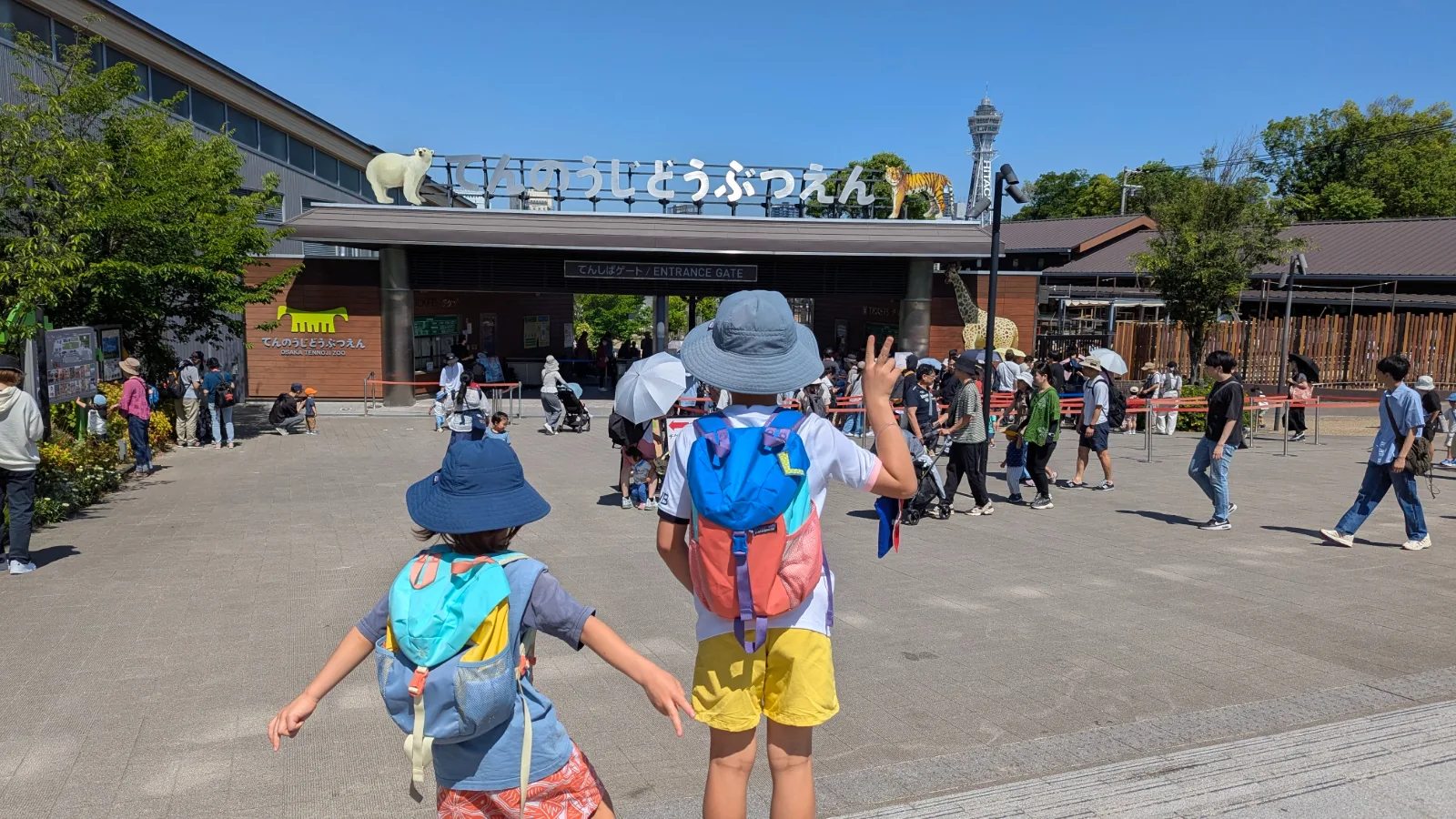
Tennoji Zoo rewards the family that arrives at 9:30 on a weekday, because on Mondays it is shut and from 15:00 some of its animals can no longer be seen.
Preschool free, and Osaka City students can enter free. No booking needed, even on weekends; a web ticket skips the window line.
From 15:00 some animals are off view. Closed Mondays (the next day after a holiday Monday) and December 29 to January 1.
Best done before 15:00, since entry ends at 16:00; tell the gate window before stepping out to come back in.
Preschool children enter free, and the zoo’s paths take a stroller for the youngest.
Wheelchairs too; skateboards and other wheeled toys are banned.
Some links on this page are affiliate links. LuNi may earn a commission at no extra cost to you.
Is Tennoji Zoo worth it with kids?
The short version, before the costs, the timings and the case for each child.
Yes, for most children, and for a child who needs to move it is an easy big day to plan. It is an outdoor zoo walked along its paths, with strollers welcome, and its newest area, Polar Bear Coast, opened in August 2026 with an underwater viewing area joined to the penguins and sea lions. Two things trip families up. It closes every Monday, and some animals go off view in the last hour before entry ends, so a late start makes a thinner visit. The paths are long, but a child who tires can ride in a stroller, and the day is easy to shape around one long rest. Go early, and go on a weekday.
Planning Your Visit to Tennoji Zoo with Kids.
Three decisions set the day. The first is when. Plan a weekday morning, not an afternoon, because some animals go off view in the zoo’s last hours and a late arrival sees a thinner zoo. The second is the ticket. On weekends and holidays lines form at the windows, so buy a web ticket, valid on any open day for a month but impossible to cancel. The third is lunch. The zoo lets a family out and back in if they tell the gate window before leaving, so a meal outside, and a quieter half hour with it, need not end the day. A family that arrives at the weekday opening with the ticket already in hand has solved most of what goes wrong here. The zoo is listed on the Osaka Amazing Pass, which suits a family already riding on one.
Every LuNi attraction guide starts with a visit, with our own children
LuNi rates and writes about attractions only after visiting them with children. Luca and Nico were at Tennoji Zoo, and what they did there is recorded further down this page, including how each child actually met it.
Children arrive with different tolerances: for noise, for lines, for standing still, for being on their feet all day. A guide written for the average of them helps almost nobody. So every place on this site is read four ways, and each verdict says which children it already suits and what makes it work for the rest. Whoever you are bringing, the answer here is built for your family rather than for a general reader.
Restricted-movement depletion spends itself on outdoor paths walked at the child’s pace, so go early and let the moving animals set the route.
Sensory-input depletion rises with the weekend crowds, when lines form at the ticket windows, so come on a weekday with a web ticket bought.
Unfamiliarity and unconfirmed structure ease with stated edges, entry from 9:30 to 16:00 and one closing day, so give the child the limits first.
Sustained walking and standing build over a zoo seen on foot, so bring the stroller, which is allowed, and use re-entry for a break outside.
- Cost
- ¥800 adults / ¥200 students from outside Osaka CityPreschool free, and Osaka City students can enter free. No booking needed, even on weekends; a web ticket skips the window line.
- Booking
- Web ticket for weekendsValid a month on any open day, no cancellation; lines form at the windows on weekends and holidays.
Hotels we would book for this visit.
Three Osaka family hotels, each chosen for a family planning to be at the zoo gate when it opens, the pick first and the third in the zoo’s own part of the city.
| Property | The LuNi Reason |
|---|---|
| LUNI Pick OMO7 Osaka by Hoshino Resorts | OMO7 Osaka is for a family that plans the zoo as a morning. A zoo that thins out as the afternoon goes on rewards the family at the gate when it opens rather than an hour later, and a hotel chosen for the morning, not the evening, makes that early start easy. |
| Osaka Marriott Miyako Hotel | Osaka Marriott Miyako Hotel is for a family that wants the hotel to be part of the trip’s pleasure rather than a place to sleep. Book it when an early zoo morning is one of several days based in the same part of the city, so the children come back each evening to a room they already know. |
| Anda no Mori Osaka Tennoji Tower | Anda no Mori Osaka Tennoji Tower, in the zoo’s own part of the city, is for a family basing a longer stay on this side of the city. A child who settles slowly in new places spends the evenings before the zoo morning in streets that are already familiar, so the day itself holds only one new thing. |
Anda no Mori Osaka Tennoji Tower
Nearby attractions, matched to your child.
Three pairings for what the zoo leaves unmet: a child who needs open ground and no rules about balls, a child who needs a calmer, paced building, and a child who wants a day of known jobs.
| Pairing | Why This Solves the After-Visit | For Your |
|---|---|---|
| LUNI Pick Osaka Castle Road train from JO-TERRACE OSAKA | Where the zoo bans balls and wheeled toys, the park at Osaka Castle covers 105.6 hectares for a Dynamo to cross on foot. Restricted-movement depletion has room there, though a Sprinter’s walking and standing are spent on a step-free walk in of over a kilometer, then seven flights of stairs down from the top. | Dynamo |
| Osaka Aquarium Kaiyukan Captain Line to Kaiyukan West Pier, 10 minutes | For a weekday after a busy zoo weekend, Osaka Aquarium Kaiyukan paces its entry every fifteen minutes and puts on no dolphin or sea lion shows. Sensory input is easier to hold in a building that controls its arrivals; book the e-ticket up to thirty days ahead. | Sensor |
| Kids Plaza Osaka Ogimachi; open 9:30 to 17:00 | Indoors, Kids Plaza Osaka gives an Anchor a street of pretend jobs, Kids Mart, a post center and a police box among them, with stated hours from 10:15. Unfamiliarity eases around roles a child can learn fast; say which station comes first before the family arrives. | Anchor |
Osaka Castle
Road train from JO-TERRACE OSAKA For YourDynamo
Osaka Aquarium Kaiyukan
Captain Line to Kaiyukan West Pier, 10 minutes For YourSensor
Kids Plaza Osaka
Ogimachi; open 9:30 to 17:00 For YourAnchor
How two children actually met this attraction.
Two children followed the same polar bear and then parted company at a smaller enclosure. One wanted the facts that explained what he saw; the other wanted the animals to have room and was upset when they did not. That is the honest picture of a zoo with children: it is not only a place to see animals, it is a place where children form opinions about them, and the opinions arrive fast. A family that expects questions, and has time to stop for them, gets a better day than one racing to see everything. At Tennoji that time is there, as long as the family arrives early enough to spend it. Let each child have the animal they came for before insisting on anyone else’s, and the argument at the small enclosure becomes a conversation instead.
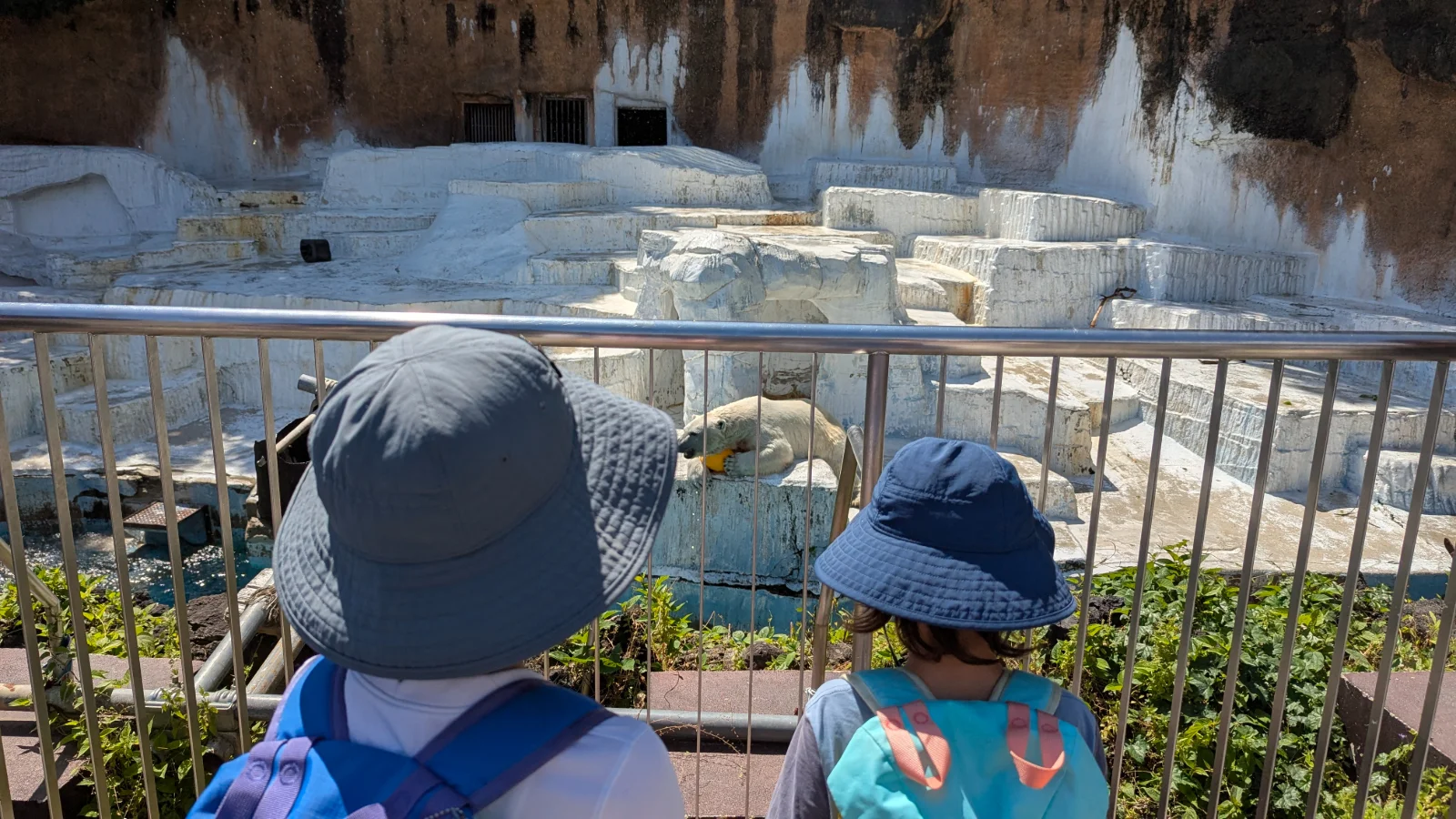
Luca arrived early enough to catch the polar bear at full tilt, running the length of the enclosure and pushing a yellow ball around, and he stayed with it. Later, when his brother objected that the wolves had too little space, Luca answered with something he had read, reporting that wolves can run for roughly as long as a school day. Then he found a statue of two monkeys and stopped to read it. The signs held him.
This is the Anchor pattern with an analytical hook. A child whose Reserve depletes through unfamiliarity and unconfirmed structure settles fastest when a place can be explained, and Luca settled an argument about an enclosure by finding the information that made sense of it. For families with a similar child, point them at the signs early and let them report back: a child who can explain the zoo to the family is a child who feels it is under control.
Nico locked onto the polar bear because it was moving, and so he could be too, following it from one end of the enclosure to the other as it ran and dropped into the water. The wolf enclosure stopped him cold. He was upset by how little room the wolves seemed to have, and would not be talked out of it until his brother produced the fact about how far they run.
This is the Dynamo pattern in an unexpected place. A child whose Reserve depletes through restricted movement reads restriction everywhere, including in the animals, which is why a small enclosure landed harder for Nico than any rare species did. For families with a similar child, follow the animals that are moving, as he followed the bear, and walk past the enclosures that trouble them rather than stopping to explain, because a moving child copes with confinement best by moving past it.
A city zoo offers children something they will not find anywhere else on a trip: the chance to watch animals go about their day, close enough to notice how they eat, rest and move. Those small observations build empathy, and a child who lingers at one enclosure is learning to pay attention to another living thing. Parents can help by slowing down rather than covering every path. The animals a child remembers are the ones they spent time with, and that patience is something a child carries home.
The LUNI Rating for Tennoji Zoo.
One fact sits under all four verdicts: Tennoji Zoo is a day walked on foot, with firm limits at either end. A child who needs to move is well matched to the walking, and a child who needs structure is steadied by those two limits. A child sensitive to input needs a plan because weekends bring lines at the windows, and a child who tires needs one because every animal is seen on foot, eased by the stroller and re-entry. Neither cost is a reason to skip the zoo; both are reasons to plan it. Plan the weekday, and both ease.
Go early, and follow what moves. The Dynamo depletes through restricted movement, and a zoo is walked, not watched from a seat. Tennoji Zoo is an outdoor zoo seen along its paths, and it lets a family out and back in if they tell the gate window before leaving. Web tickets are valid on any open day within a month, so there is no timed slot to hurry toward. A moving child sets the route, and the animals give all that walking a point, which is exactly what this child needs from a day.
The zoo’s rules take away a Dynamo’s usual tools, though: balls, balloons, soap bubbles, skateboards and wheeled toys other than strollers and wheelchairs are not allowed in, and animals may not be fed or startled. So the energy has to go into walking. Arrive at 9:30, head for whichever animals are moving, and plan the day’s energy around the zoo rather than inside it, with open ground afterward if the child still needs it.
What this means for your Dynamo: restricted movement spends itself on paths walked at the child’s pace. A younger Dynamo needs the moving animals first and no ball to fight over; an older one can plan the route and lead it.Choose a weekday, and buy the ticket first. The Sensor depletes through sensory input, and at Tennoji Zoo the input that varies most is people. On weekends and holidays, lines form at the ticket windows, which is why web tickets are recommended for those days, and a sensitive child can spend their patience in a line before seeing a single animal. The newest area, Polar Bear Coast, opened in August 2026 and joins an underwater viewing area to the penguin and sea lion zone, so the marine animals are seen together.
So come on a weekday, at the 9:30 opening, with a web ticket already bought, and take the marine zone early. Visitors are asked not to use flash on the animals and to keep other visitors out of their photographs, rules worth explaining to a child who dislikes being looked at.
What this means for your Sensor: sensory input rises with weekend crowds at the windows. A younger Sensor needs a weekday with the ticket bought in advance; an older one can take the marine zone at the start of the day.Give them the edges of the day. The Anchor depletes through unfamiliarity and unconfirmed structure, and Tennoji Zoo states its edges plainly. It opens at 9:30, some animals go off view from 15:00, and entry ends at 16:00. It closes every Monday, or the next day when Monday is a holiday, and from December 29 to January 1. Re-entry is allowed if the family tells the gate window before leaving, so a break outside is part of the plan, not an end to it.
Hand the child those limits as the frame, then fill it together. Name the animals they most want to see, and put the polar bears near the top. Tell them the rules too, no feeding and no startling the animals, so the child can hold the family to them and enjoy being the one who knows.
What this means for your Anchor: unfamiliarity eases when the day’s limits are known before the gate. A younger Anchor needs the opening and the 16:00 cut-off said aloud; an older one can plan the route inside them.Bring the stroller, and plan a break outside. The Sprinter depletes through sustained travel-style walking and standing, and a zoo is seen on foot: each animal is a walk from the last and a stand in front of the next. Tennoji Zoo allows strollers and wheelchairs even while it bans other wheeled toys, so a small child can ride between the animals. Some animals are off view from 15:00 and entry ends at 16:00, so a tired family loses little by leaving early.
Here the rule that matters is re-entry. A family may leave and come back in if it tells the gate window first, so a tired child can have a real break outside, a meal or a sit, and return for the animals they missed. Plan that break at midday rather than waiting for the child to stop, and keep the afternoon to the few animals that matter most to them, rather than trying to see everything.
What this means for your Sprinter: a day seen on foot is where walking and standing pile up. A younger Sprinter needs the stroller and a midday break outside; an older one can walk it if the route is chosen in advance.The questions parents actually ask.
Tennoji Zoo is a day on foot with firm rules at the gate, and its banned list reaches past what families expect, to balls, balloons and soap bubbles. Students who live and study in Osaka City enter free, and students from elsewhere pay 200 yen. The polar bears are the draw, because the newest area, Polar Bear Coast, is joined to the penguin and sea lion zone and is seen from underwater. Pack for the list rather than against it, and a child arrives with nothing to hand over at the gate. A child who needs to climb afterward has Osaka’s indoor playgrounds.
Is Tennoji Zoo worth visiting with kids?
Yes, for most children, if the family goes early and not on a Monday. It is an outdoor zoo walked along its paths, with Polar Bear Coast, opened in August 2026, as its newest area. Entry ends at 16:00, and from 15:00 some animals can no longer be seen, so a morning start gives the fullest visit.
How much are Tennoji Zoo tickets?
Adults pay 800 yen. Elementary and junior high students who live and study outside Osaka City pay 200 yen, Osaka City students can enter free, and preschool children enter free. Two adults and two students from outside the city pay 2,000 yen. An adult donation ticket costs 1,000 yen, and an adult annual pass 3,200 yen.
When is Tennoji Zoo open?
From 9:30 to 17:00, with entry until 16:00. It closes every Monday, or the next day when a Monday is a holiday, and from December 29 to January 1, with extra opening days on the calendar. From 15:00 some animals can no longer be seen, so arrive well before then.
Should you buy Tennoji Zoo tickets online?
For weekends and holidays, yes: lines form at the ticket windows, and web tickets, sold through Asoview, are valid for a month from purchase on any open day. They cannot be canceled, so buy once the dates are firm. On a quiet weekday, buying at the window is the simpler choice for most families.
What can’t you bring into Tennoji Zoo?
Balls, balloons, soap bubbles, skateboards and wheeled toys other than strollers and wheelchairs are not allowed, and neither is alcohol. Animals may not be fed or startled. Photographs from the paths are fine, but not with flash, strobes or reflectors aimed at the animals, and live streaming is not allowed.
Can you leave Tennoji Zoo and come back?
Yes. Tell the gate window before leaving, and the family can come back in. That makes a break outside, for a meal or a rest, part of the plan rather than the end of the visit, which suits a child who tires before the afternoon’s animals and a parent who wants lunch somewhere other than a bench.
Can you see the polar bears at Tennoji Zoo?
Yes. Polar Bear Coast opened on August 4, 2026, with two outdoor yards and an underwater viewing area in Polar Bear Lodge, joined to the penguin and sea lion zone. As the newest area it is worth reaching early in the day; photographs from the paths are fine, but not with flash aimed at the animals.
Is Tennoji Zoo on the Osaka Amazing Pass?
Yes, the zoo is on the Osaka Amazing Pass list, so a pass holder pays nothing more at the gate. Without it, two adults and two students from outside the city pay 2,000 yen, which makes the zoo a small part of any pass’s value; the case for buying one rests on the other days of the trip.
Where Tennoji Zoo fits your Japan trip.
Official site and opening information: Tennoji Zoo