Tokyo Joypolis with Kids: count the rides before the pass.
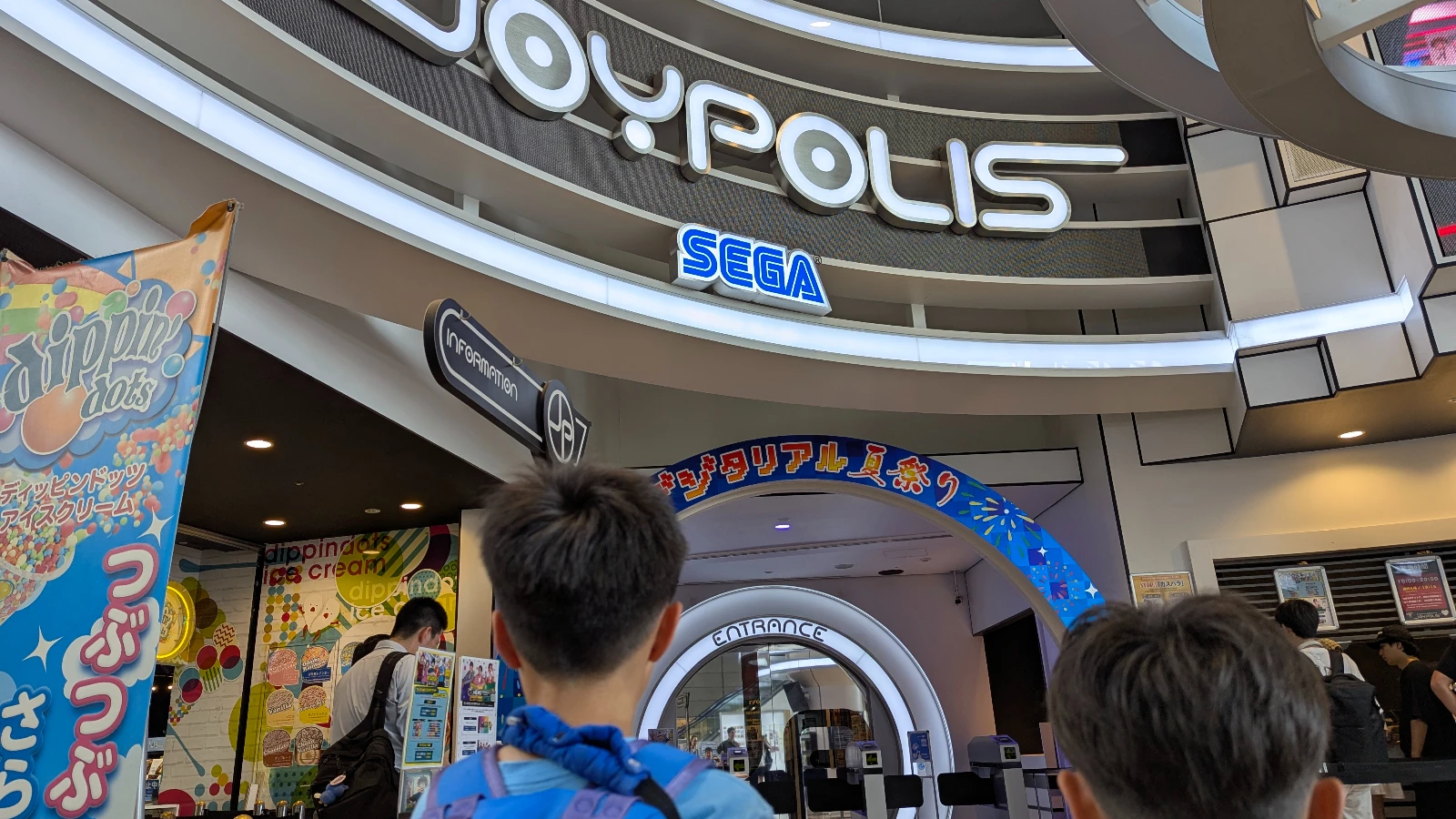
Tokyo Joypolis is an indoor park where every ride has its own price, so the first decision is not which ride but how many a child will really take.
Passport ¥6,000 / ¥5,000; preschool children and over-60s enter free. Discounted web tickets, not required.
Last entry 45 minutes before closing, and hours can change without notice.
Re-entry is free on the same day, so a long visit can include a break outside.
Height limits of 90 to 140 cm decide more than age; under 110 cm rides with a guardian of 16 or over.
Loaners at the first-floor information counter; staff guide strollers to a service elevator between floors.
Some links on this page are affiliate links. LuNi may earn a commission at no extra cost to you.
Is Tokyo Joypolis worth it with kids?
The short version, before the costs, the timings and the case for each child.
Yes, for the right child and with the right ticket. Joypolis is an indoor amusement park in Odaiba, and for a child who needs to move, it is one of the easiest wins in Tokyo: a building full of rides and games where energy is the point. The catch is the pricing. Every ride has its own fee, and the Passport only pays off for a child who rides a lot, so count honestly before you buy. The other catch is noise. Joypolis itself asks visitors who are extremely sensitive to it to speak to staff before riding, and that is worth taking seriously. For a quiet child, plan a shorter visit and use the free re-entry to step out when the noise builds.
Planning Your Visit to Tokyo Joypolis with Kids.
Three decisions shape a day at Joypolis, and the ticket comes first. Entry alone suits a child who will ride a handful of times; the Passport suits one who will ride all day, so count the rides the child can actually take, height limits included, before choosing, and let the child see the list. The second decision is the day, since the hours are set day by day and the last entry comes well before closing. The third is the break: re-entry is free on the same ticket, so a family can step out for a meal elsewhere on Odaiba and come back fed for the rides that matter most to the child. Settle all three with the child, since the rides are theirs to count.
Every LuNi attraction guide starts with a visit, with our own children
LuNi rates and writes about attractions only after visiting them with children. Luca and Nico were at Tokyo Joypolis, and what they did there is recorded further down this page, including how each child actually met it.
Children arrive with different tolerances: for noise, for lines, for standing still, for being on their feet all day. A guide written for the average of them helps almost nobody. So every place on this site is read four ways, and each verdict says which children it already suits and what makes it work for the rest. Whoever you are bringing, the answer here is built for your family rather than for a general reader.
Restricted-movement depletion finds a real outlet in a building of rides and games, so let a moving child set the order and choose the Passport.
Sensory-input depletion is real here, and noise-sensitive visitors are asked to consult staff, so ask on arrival and use free re-entry for breaks.
Unfamiliarity eases with rides priced one by one and height limits set per ride, so measure the child and choose the rides together before arriving.
Walking and standing build across floors of rides, though strollers are admitted and rented at the first floor, so plan one sitting break per floor.
- Cost
- ¥1,700 adult / ¥1,400 student entryPassport ¥6,000 / ¥5,000; preschool children and over-60s enter free. Discounted web tickets, not required.
- Booking
- Entry or Passport, by ride countThe Passport pays off at about four to six rides for a child, a few more for an adult.
Hotels we would book for this visit.
A child who has ridden all day needs the trip to bed short, and the evening is where a Joypolis day is won or lost. Three of Odaiba’s family hotels on the waterfront, the pick first.
| Property | The LuNi Reason |
|---|---|
| LUNI Pick Grand Nikko Tokyo Daiba | For the child who rides hardest, the evening matters as much as the rides, and the Grand Nikko keeps it short: out of the park, dinner, and bed without a train. Re-entry is free on the same ticket, so the room can also take a midday rest between two rounds of rides for a child who needs one. |
| Hilton Tokyo Odaiba | Hilton Tokyo Odaiba is for a family that splits Odaiba across two days: the rides one day, the rest of the island the next. A child who spent the first day on noise and speed starts the second somewhere quieter without a journey first, which matters most for the one who rode hardest. |
| Hotel Trusty Tokyo Bayside | Hotel Trusty Tokyo Bayside is for a family that wants the waterfront without the busiest part of the island. The rides are loud, and a child who has spent the day on noise and speed needs an evening that asks for nothing new, which a room on the bay keeps within reach of the next morning’s plan. |
Nearby attractions, matched to your child.
Three pairings for what the rides leave unmet: a gentler building afternoon in the same complex, a calm, seated aquarium for a child the noise has worn down, and a barefoot museum with a skip route for a child who still wants more.
| Pairing | Why This Solves the After-Visit | For Your |
|---|---|---|
| LUNI Pick Legoland Discovery Center Tokyo Decks Tokyo Beach, Odaiba; the same complex | In the same Decks Tokyo Beach complex, Legoland Discovery Center Tokyo turns the afternoon toward building, and strollers are allowed in, with free loans in the mall. For a Sprinter whose walking and standing have added up across the rides, it is a gentler second half. | Sprinter |
| Sumida Aquarium Tokyo Skytree Town; Solamachi 5F and 6F | After a loud park, Sumida Aquarium gives a Sensor a quieter kind of wonder: chairs at the big Ogasawara tank, sofas at the Penguin Cafe, and a hand stamp that allows a break outside. Sensory input comes down when the next place is seated and slow. | Sensor |
| teamLab Planets TOKYO Shin-Toyosu Station, North Exit, 1 min | For a Dynamo with energy left, teamLab Planets TOKYO is a walk through water and light, barefoot, at the child’s own pace. Restricted movement has a whole route to spend itself on; a Sensor’s sensory input runs high in its strong light and dark rooms, so ask staff for the bypass at the start. | Dynamo |
Legoland Discovery Center Tokyo
Decks Tokyo Beach, Odaiba; the same complex For YourSprinter
Sumida Aquarium
Tokyo Skytree Town; Solamachi 5F and 6F For YourSensor
teamLab Planets TOKYO
Shin-Toyosu Station, North Exit, 1 min For YourDynamo
How two children actually met this attraction.
Two children came through the same doors and did the opposite thing first. One stopped and read the place before touching it; the other did not stop at all. Both ended the day happy, which is the real lesson of Joypolis with children: it rewards a child who needs to move and a child who needs to understand, as long as each gets to do it their own way. Do not hurry the reader. The time he spends working out the rules is the time that lets him relax later. Do not slow the mover either, but watch the clock, because the energy that fills the first hour will not last the afternoon, and the second half needs a seat planned before anyone asks for it.
Luca hung back when the family first walked in, taking in the layout before committing to anything, and skipped the loudest motion rides entirely. What pulled him in were the competitive fighting and skill games: once he understood how one worked, he stayed at it, studying the scoring and replaying to beat his own result. He read the posted rules and height notices in full before deciding what to try.
This is the Anchor pattern. The early caution was not reluctance but a child confirming the structure before spending anything on it, since a child whose Reserve depletes through unfamiliarity and unconfirmed structure needs the rules before the fun. For a similar child, read the ride list and the height limits together before the trip, choose a few games in advance, and let him spend the first minutes looking. The plan he makes himself is the one he will enjoy.
Nico was in constant motion from the moment he arrived, moving between the active games and the simulators and rarely standing still long enough to finish a thought before starting the next thing. He was at his best in the first stretch of the visit, when his energy was highest. By the later part of the afternoon that engine ran down noticeably, and he started slowing and looking for somewhere to sit.
This is the Dynamo pattern. A child whose Reserve depletes through restricted movement stays regulated as long as the room lets him move, and a ride floor lets him move freely all morning. For a similar child, put the visit early in the day, choose the Passport if he will ride all day, and plan the seat before he asks for it, because the crash at the end is the part a parent can see coming.
An indoor park where every ride carries its own price hands a child a real decision, and that is worth more than any single ride. Choosing between two attractions, and living with the choice, is a small lesson in wanting, waiting and deciding that ordinary days rarely offer. The older child planning a Passport’s worth of rides and the younger one riding free alongside are practicing the same skill: turning a room full of noise into a sequence of their own. A day of choices teaches more than a day of everything.
The LUNI Rating for Tokyo Joypolis.
The verdicts split on what a loud indoor park asks of a child. For a child who needs to move, a building of rides and games is exactly right, which is why the Dynamo thrives, and the Anchor is well served too, because every ride has a stated price and height limit. The Sensor needs care because noise-sensitive visitors are asked to consult staff, and the Sprinter does too, because floors of standing add up. Neither cost is a reason to stay away; both are reasons to plan the day in halves. The meal between halves is the part of the plan that carries both.
Buy the Passport, and let the child choose the order. The Dynamo depletes through restricted movement, and Joypolis is a place built for a child who needs to spend energy. It is a building of rides and games, each one paid for separately or covered by a Passport, and a moving child can go from one to the next as fast as the lines allow. This is the kind of day a Dynamo does not have to be managed through.
The only real decision is the ticket. A child who will ride all day should have the Passport, since it pays for itself once the rides pass five or so; a child who will ride twice should not. Check heights first, because limits run from 90 to 140 cm. Then let the child set the order, and plan a seat for the afternoon, when the energy that filled the morning runs out. This is a child for whom Joypolis can be the best day of the trip.
What this means for your Dynamo: a building of rides and games is an outlet for restricted movement, not a strain on it. A younger Dynamo needs the gentler rides and a guardian on them; an older one needs the Passport and a free hand.Ask staff first, and use the free re-entry. The Sensor depletes through sensory input, and Joypolis is loud by design, with noise and dark spaces built into its rides. The park’s own rule is the lever here: visitors who are extremely sensitive to noise, or extremely afraid of enclosed, dark or high places, are asked to speak to staff before riding. For a child who takes in everything at once, that conversation belongs before the first ride, not after it, and it tells a parent which rides to leave out.
The load stays manageable because a family can plan around it. Ask staff on arrival which attractions to skip, choose single rides rather than a Passport, and use the free same-day re-entry to step outside when the noise builds, before the child needs to. A shorter visit, planned as two halves with a break between, will serve this child far better than a long one. If the child wants to go home early, let that be the plan working, not failing.
What this means for your Sensor: input runs high, with noise and dark spaces to plan around. A younger Sensor needs staff asked first and short halves; an older one can choose the calmer games and call the break.Choose the rides together, before you arrive. The Anchor depletes through unfamiliarity and unconfirmed structure, and Joypolis is easier to confirm in advance than it looks. Every ride has its own fee and its own height limit, from 90 to 140 cm, and one attraction has its own age rule. Hours are set day by day, and last entry is 45 minutes before closing. A child who likes to know the rules can know nearly all of them before leaving the hotel.
So make the plan together. Read the ride list, measure the child against the limits, and choose which rides to take and in what order. Tell them, too, that the family can leave for a break and come back in on the same ticket. With that done, the busy floor is a place the child already understands, and a child who already understands a place can enjoy it. Keep the list in a pocket; it will be checked more than once.
What this means for your Anchor: unfamiliarity eases once the rides, the heights and the ticket are chosen at home. A younger Anchor needs the list read aloud; an older one can plan the order and hold the ticket.Plan a seat per floor, and rent the stroller. The Sprinter depletes through sustained travel-style walking and standing, and a day at Joypolis is more standing than it seems: in lines, beside rides, and between floors. The park helps. Strollers are admitted, they can be rented at the first-floor information desk, and staff guide families to a service elevator between floors, so a small child need not walk the whole building.
The cost is the standing, which still adds up across a long visit. Outside food is not allowed, but there are cafes on the second and third floors, so plan a sit-down on each floor rather than waiting for the child to ask. Free re-entry helps here too: step out for some air and come back for the last rides. A child who has sat down twice in the afternoon will still be smiling at closing, and a child who has not will not be, whatever the rides were like.
What this means for your Sprinter: across floors of rides and lines, walking and standing add up. A younger Sprinter needs a rented stroller and the elevator; an older one needs a cafe stop planned on each floor.The questions parents actually ask.
Every ride at Joypolis is priced on its own, and the ticket you buy follows from that: entry alone, or a Passport for a child who will ride all day. Preschool children enter free, the Passport pays off at about four to six rides for a child, a few more for an adult, and noise-sensitive visitors are asked to consult staff. Re-entry is free on the same day. A child who wants making rather than riding has KidZania Tokyo, a city of jobs instead of a floor of rides. At Joypolis itself, count the rides before spending the money, with the child beside you.
Is Tokyo Joypolis worth visiting with kids?
For a child who wants to move and play, yes: it is an indoor park of rides and games, each paid for one by one or covered by a Passport. It is harder for a child very sensitive to noise, and those visitors are asked to consult staff before riding. Count the rides your child will actually take before choosing a ticket.
How much are Tokyo Joypolis tickets?
Entry is 1,700 yen for adults 18 and over and 1,400 yen for elementary, junior high and high school students. The Passport, entry plus unlimited rides, is 6,000 yen and 5,000 yen, and an Evening Passport is 5,000 yen and 4,000 yen. Preschool children and visitors aged 60 and over enter free, with ID for the over-60s.
Is the Joypolis Passport worth it?
The Passport costs 4,300 yen more than entry for an adult and 3,600 yen more for a child, and single rides cost 700 to 1,000 yen, so it pays for itself at about four to six rides for a child and five to seven for an adult. A child who will ride all day should have one; a child who rides twice should not.
What are the height limits at Tokyo Joypolis?
Limits run from 90 cm to 140 cm by ride, and Halfpipe Tokyo needs 130 cm. Children under 110 cm must ride with a guardian aged 16 or over, and one attraction refuses children under 7 and needs a guardian for ages 7 to 10. Measure your child before choosing a Passport, since a short child may not reach enough rides to use it.
Is Joypolis suitable for a child who is sensitive to noise?
Plan carefully. Joypolis asks visitors who are extremely sensitive to noise, or extremely afraid of enclosed, dark or high places, to speak to staff before riding, and it asks the same of visitors with ADHD or photosensitive seizures. Staff can say which attractions to skip, which is worth doing on arrival rather than at the first ride.
Can you bring a stroller to Tokyo Joypolis?
Yes. Strollers are admitted, and they can be rented at the first-floor information desk, with staff guiding families to a service elevator between floors. There is also a nursing room. Outside food and drink are not allowed, but there are cafes on the second and third floors, so plan the snack stop around them.
Can you leave Tokyo Joypolis and come back?
Yes. Re-entry is free on the same day with your ticket, until last entry, which is 45 minutes before closing. That makes it possible to step outside for a break, or into the rest of the mall, and come back for the rides a child most wanted. Check the closing time for your day, since hours are set day by day.
Can children under 16 stay at Joypolis in the evening?
Yes. Joypolis counts as an amusement park rather than a game center, so it sets no evening curfew for children under 16. A child under 110 cm still needs a guardian aged 16 or over on the rides, and the Evening Passport is the ticket to compare for a late visit.
Where Tokyo Joypolis fits your Japan trip.
Official site and opening information: Tokyo Joypolis