Tokyo Indoor Activities With Kids:the stop that fits the child.
- The One to Book First
- Sumida Aquarium, which asks little of any child
- A Rainy Tokyo Day
- Two stops in one part of the city, not five
- For a Child Who Must Move
- KidZania, Joypolis, teamLab Planets, Toy Museum
- Book Months Ahead
- KidZania Tokyo, three months out
- For a Noise-Sensitive Child
- Nature and Science in Ueno: large halls
Indoor family attractions across the city, and how a family pairs two buildings in one area instead of crossing town between them.
Some links on this page are affiliate links. LuNi may earn a commission at no extra cost to you.
The best indoor activities in Tokyo with kids are the ones that fit the child. Sumida Aquarium is the one to book first when the day has to suit everyone: a hand stamp brings a family back in after a break, food brought in may be eaten seated, and it sits by Tokyo Skytree Station. A child who needs to move does best at KidZania Tokyo, Tokyo Joypolis, teamLab Planets or the Tokyo Toy Museum; a child who tires on noise does better in the large halls of the National Museum of Nature and Science. A wet day takes two stops, not five.
The building that fits the child.
These stops are not ordered best to worst. They are grouped by which child each one is for, across the four profiles. The LUNI Framework starts from the claim that a family travels on three currencies rather than two. Beside money and time sits the child’s Reserve, their finite capacity to absorb what travel asks of them, and a Tokyo indoor day is settled by what a building asks of that Reserve, not by how famous the building is. The Dynamo runs short when movement is restricted, the Sensor on noise, light and crowding, the Anchor when nothing is confirmed, the Sprinter on long walking and standing.
Sumida Aquarium.
| The Stop | What It Settles | Best For |
|---|---|---|
| KidZania TokyoToyosu | A city of jobs the child does while the adults watch through the glass. | Dynamo |
| Tokyo JoypolisOdaiba | Rides and motion games over several floors, with height gates that set the list. | Dynamo |
| teamLab PlanetsToyosu | Barefoot rooms where a child wades through water deep enough to reach an adult’s knee. | Dynamo |
| Tokyo Toy MuseumYotsuya | Wooden toys in Yotsuya, built to be played with rather than looked at. | Dynamo |
| Nature and Science MuseumUeno | Long, quiet halls of dinosaur skeletons, with a lounge to sit and eat. | Sensor |
| MiraikanOdaiba | A kids’ space that lets children in by timed turns rather than all at once. | Sensor |
| Science and Technology MuseumKitanomaru Park | One direction through the building: up by escalator, room by room, then down by the stairs. | Anchor |
| LEGOLAND Discovery CenterOdaiba | On busy days a wristband sets how long the visit lasts, and staff call the end. | Anchor |
| Sumida AquariumOshiage | Re-entry by hand stamp, seats at the big tank and lunch allowed sitting down. | Sprinter |
| Art Aquarium GinzaGinza | A single floor of goldfish works, right by Ginza Station’s exit A7. | Sprinter |
KidZania Tokyo
Dynamo
Tokyo Joypolis
Dynamo
teamLab Planets Tokyo
Dynamo
Tokyo Toy Museum
Dynamo
National Museum of Nature and Science
Sensor
Miraikan
Sensor
Tokyo Science and Technology Museum
Anchor
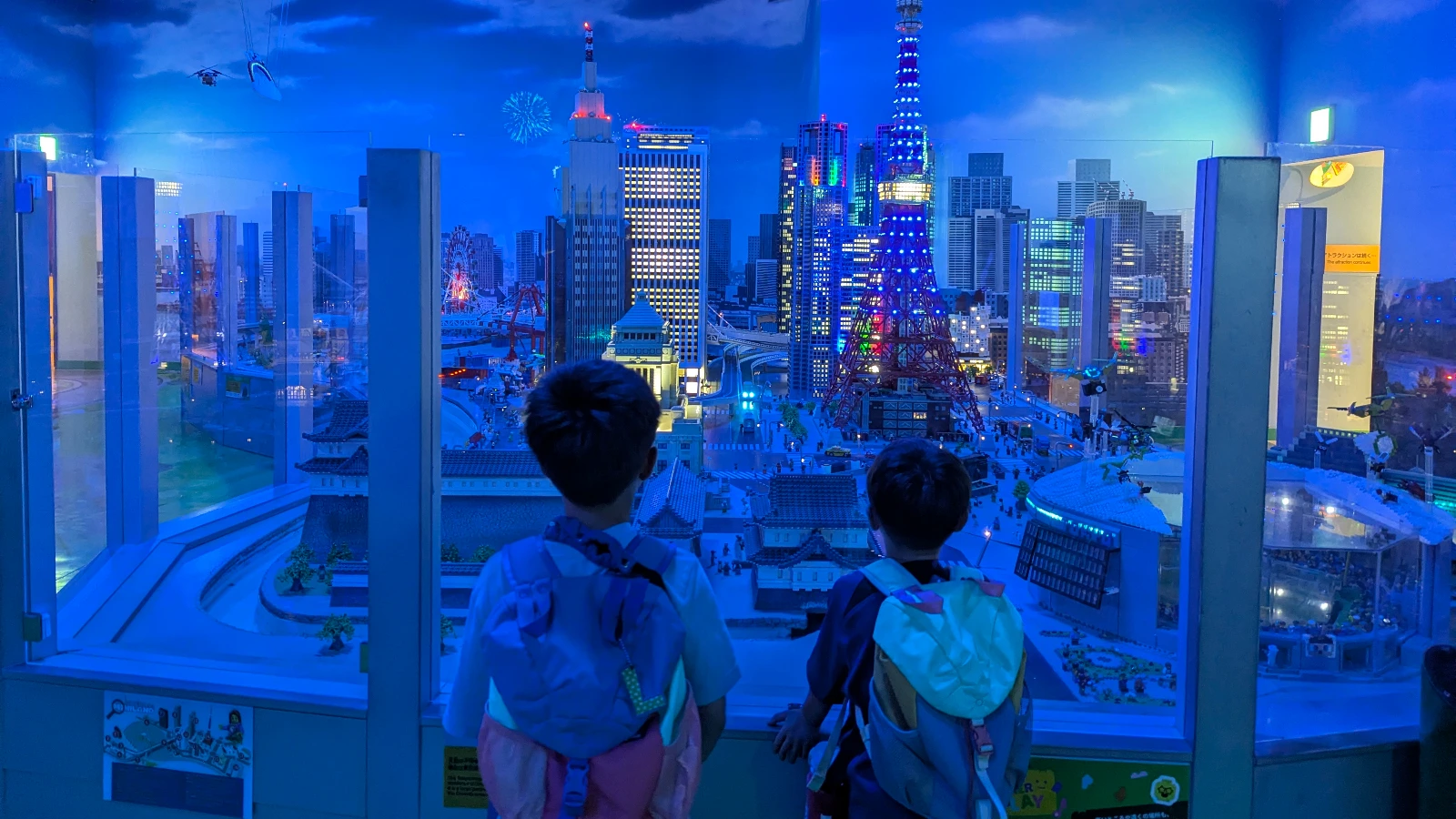
LEGOLAND Discovery Center Tokyo
Anchor
Sumida Aquarium
Sprinter
Art Aquarium Museum Ginza
Sprinter
For the Dynamo
Buildings where the visit is something a child does with their body.
For the child who runs short when they are made to keep still.
A city of jobs where the child does the work and the parent does the watching. Each job is booked by the child at its own pavilion after entry, most last around half an hour, and adults stay outside, following through windows or on monitors. For a child who empties out when made to sit still, the whole session is a run of tasks done in uniform with their own hands, each with a clear end. A five-year-old takes the simpler roles with staff beside them; a twelve-year-old banks the city’s own currency across several jobs and decides what to spend it on.
Who it costs.The Sensor, who runs short on noise and crowding. The city is busy for hours, and a child aged fifteen or under cannot step outside once in, so a loud stretch cannot be broken with a walk. Plan a quiet evening after it rather than a second stop.
How to make it work.Bookings open on the second of each month for dates three months ahead (paid members book a day earlier), and a party of adults alone cannot book, and only a child of thirteen or over may come without an adult. Take the morning session and let it be the day, because leaving early ends the visit for the whole group.
If this isn’t your child: a full day in one building that a family cannot leave and come back to, booked well ahead for a child who will use every hour of it.An amusement park under a roof, where moving is the whole point. Rides and motion games fill several floors in Odaiba. It counts as an amusement facility rather than a game center, so under-sixteens may stay into the evening, and a same-day ticket brings a family back in after a break outside. A child who has been held still on trains all morning gets an afternoon built for the opposite. Height gates run from 90 centimeters to 140 by ride, so a seven-year-old and a thirteen-year-old will not ride the same list.
Who it costs.The Sensor, who runs short on noise and flashing light. Riders who are extremely sensitive to noise, or afraid of dark and enclosed spaces, are asked to speak to staff first, which is an honest description of the floors. Plan it as a short block between calmer stops, with the exit time agreed before the first ride.
How to make it work.Measure your child before choosing between paying ride by ride and a passport, because the height gates decide how much of the building they can use. A child under 110 centimeters rides only with a guardian aged sixteen or over, and strollers are lent at the first-floor information desk.
If this isn’t your child: a loud, bright afternoon in Odaiba that a calmer child will finish early, and should be allowed to.A route walked barefoot, where the body is how the art is seen. Shoes and socks come off at the lockers, half-pants are lent free, and one room is water that reaches the knee even on an adult, while floors ripple and bloom underfoot elsewhere. For a child who needs to move, that turns an art museum inside out: wading, walking and reaching are the visit. A child with an inseam under 40 centimeters is carried through the water by a parent; a teenager takes the mirrored rooms at their own pace.
Who it costs.The Sensor, and heavily. The rooms are dark and the light is intense in places, so a child who runs short on input has no quiet stretch on the route. There is a bypass for works you want to skip: ask the nearest member of staff before the room.
How to make it work.Book a timed entry, and take the first slot of the day if a sensitive child is coming at all. There is no way back in once past the exit gate, so the restroom stop comes before the route. Shin-Toyosu Station’s north exit is a minute from the door.
If this isn’t your child: a knee-deep, lights-low hour that a child short on input should skip without regret.Toys that are there to be handled, inside Yotsuya Hiroba. The rooms are screen-free, given over to wooden toys and hands-on play corners, with a separate Baby Room run in one-hour sessions for children aged two and under. A movement-led child gets a building where picking things up is the point, not the thing to stop. A two-year-old has the Baby Room; a seven-year-old takes a craft event, which is often first come, first served.
Who it costs.The Sensor, who runs short here on crowding rather than noise. The museum is a former school building with narrow passages and a daily ticket allocation, and it gets crowded in spring break, Golden Week and the summer and winter vacations. Go on a weekday outside them, when a full room can be left and come back to on the same ticket; benches in the corridors and on each floor give a pause without leaving.
How to make it work.Buy online, because once the day’s allocation is gone the counter stops selling too. On weekdays a ticket lets you leave and come back; on weekends and holidays it does not, so a weekend or holiday visit is one block with lunch before or after it. Strollers stay folded at the building entrance because the corridors are narrow, so a child who usually rides walks the whole visit. Bring a carrier for anyone too small to manage the floors.
If this isn’t your child: a gentle, hands-on morning that suits the youngest end of the range far better than a teenager.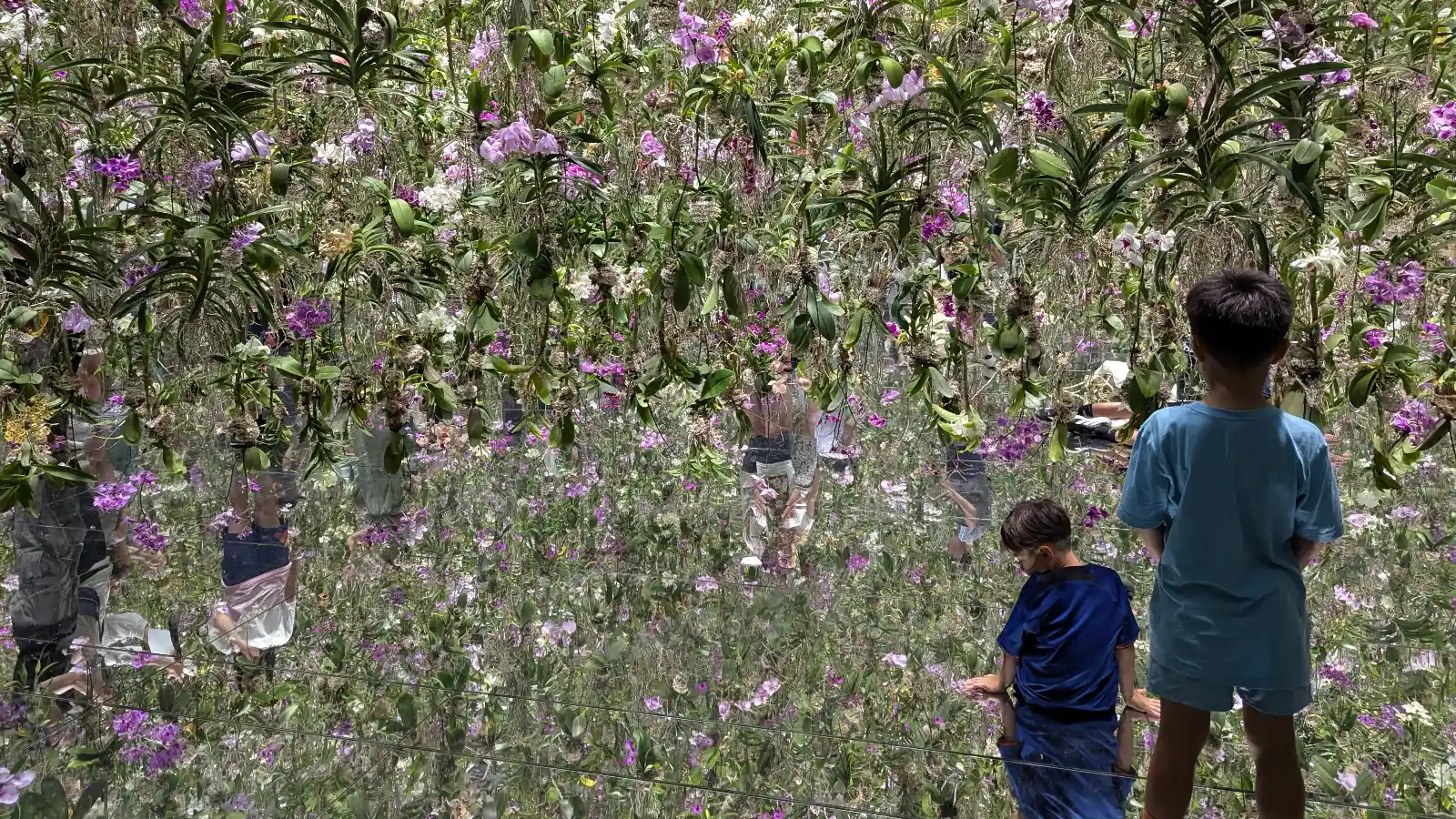
For the Sensor
Rooms that keep the volume down, or let a family step out of it.
For the child who runs short on noise, light and a pressing crowd.
Large halls spread a crowd thin, which is what a child short on input needs from a museum. The permanent galleries hold dinosaur skeletons (the life-size blue whale model stands outside the door), a basement lounge is set aside for eating and resting, and a free phone guide over the museum’s Wi-Fi lets an older child read at their own pace instead of following a tour. A four-year-old has ComPaSS, the discovery room for children up to sixth grade with a parent; a teenager takes the galleries directly.
Who it costs.The Sprinter, who runs short on walking and standing. The scale that steadies one child is distance for another, so plan two galleries rather than the building, and put the lounge between them.
How to make it work.Book ComPaSS ahead if a younger child is coming, because everyone in the room needs a timed booking, babies included. Strollers and wheelchairs are lent at the entrance desk without a booking, and JR Ueno’s Park Exit is five minutes away.
If this isn’t your child: a serious, roomy museum that rewards a reader and tests a child who needs to move.A science museum with a room for its youngest visitors, run in timed turns. The kids’ space admits children with a parent in timed rotations, up to four children to each adult, so a small child plays alongside one rotation rather than the whole building’s worth of children. Exhibit text runs mostly in Japanese and English, eating has its own set spaces, and strollers and wheelchairs are lent on request. A three-year-old takes the kids’ space; a twelve-year-old works the main floors.
Who it costs.The Dynamo, who runs short when held still. The Dome Theater is a seated show with no entry once it starts, so keep it for a settled older child and let a restless one skip it.
How to make it work.On weekends, holidays and busy days the kids’ space runs on first-come numbered tickets, so collect one on arrival, before anything else.
If this isn’t your child: a calm, bilingual science floor in Odaiba, with a dome show best kept for the patient.For the Anchor
Places with a shape a child can be told before the door opens.
For the child who runs short when the plan is new or unconfirmed.
The building runs one way, and a child can be told the whole of it at the door. Visitors ride escalators up through the floors and walk down by the stairs, room by room, in a 1964 building that was never laid out around step-free routes. For a child who runs short when nothing is confirmed, that single direction removes every choice but the next floor. The exhibits are not built to preschool size, so this is a school-age stop: a seven-year-old works the hands-on rooms, a fifteen-year-old the experiments.
Who it costs.The Sensor, who runs short on noise, light and dark. Several exhibit rooms carry sudden or loud sound and some are dark, so a sound-sensitive child needs those rooms named in advance.
How to make it work.Check the stroller at the first-floor ticket counter: the way up is by escalator and the way down usually by the stairs, and a free stroller can be borrowed on the third floor. Packed lunches are eaten in the second- and fourth-floor rest areas, when no school group or event has them.
If this isn’t your child: a full, hands-on afternoon in Kitanomaru Park for a school-age child, and a hard building for a toddler.On a busy day the visit has a stated length, and the end is announced rather than sprung. Wristbands go on when it is crowded, two to three hours is the guide, and a child who needs to know when something stops is told rather than pulled away. Inside, the rooms are named, from DUPLO Village and City Builders to the LEGO Factory, Miniland, a 4D cinema and Kingdom Quest, so the visit can be walked through in words beforehand. The target age is three to ten, and adults cannot enter without a child.
Who it costs.The Sensor, who runs short on noise and crowding. The rooms are bright and busy with children, and the cinema and workshops run to a schedule; late afternoon is the calmer half of the day.
How to make it work.Buy online beforehand: no day tickets are sold at a counter, and online day tickets are withdrawn when it is crowded. Strollers may come in, and free ones are lent at the Decks Seaside Mall information desk.
If this isn’t your child: a bright, build-and-ride afternoon in Odaiba that a child outgrows around ten.For the Sprinter
Stops that let a family sit down without ending the visit.
For the child whose legs give out before their interest does.
An aquarium that lets a tired family stop, sit and eat without ending the day. A hand stamp at the information desk brings a family back in, food from outside may be eaten as long as everyone is seated, and the two big moments come with somewhere to sit: seats in front of the Ogasawara tank, sofas at the Penguin Cafe beside the two-story penguin tank. A toddler watches the penguins from a sofa; a twelve-year-old takes the jellyfish and the natural aquascape floor.
Who it costs.The Dynamo, who runs short when movement is held in. An aquarium is a watching visit, so let a moving child lead the climb to the sixth floor at the start, then sit them for the penguins on the way down.
How to make it work.Enter on the fifth floor and take the stairs to the sixth first, which is the way the route runs. Strollers stay parked outside the entrance and none are lent, so bring a carrier for a child who will not walk the whole loop.
If this isn’t your child: a forgiving indoor hour beside the Skytree, and a natural first stop after the tower.One floor of goldfish works, reached by a single escalator down from the ticket gate. The museum sits on the eighth floor of the Ginza Mitsukoshi New Building with its entrance on the ninth, and the works are lit tanks, water walls and low tanks viewed from above, changed from time to time. For a child who tires on long walks, the visit is short and level from start to finish. A teenager follows the lighting and the photographs; a younger child moves through quickly and is ready to go.
Who it costs.The Dynamo, and sharply. It is a looking-only gallery: hands stay out of the tanks, the fish are not to be touched, and there is no re-entry, so a child who runs short when held still has nothing to push against. Go after a moving morning, never before one.
How to make it work.Buy a web ticket: day tickets from the ninth-floor machines can sell out, and when the web allocation is gone there are none at all. Strollers are not admitted and wait in a ninth-floor park, so a small child walks or is carried.
If this isn’t your child: a short, striking stop in Ginza for a calm child, and a frustrating one for a child who needs to move.Lead with the child who tires first.
Start where the child who will run short soonest is best held, whether that is the Dynamo kept still, the Sensor flooded by input, the Anchor facing an unconfirmed day or the Sprinter standing too long, then chain a second stop in the same part of the city.
Three bookings that shape the day.
KidZania Tokyo opens its bookings on the second of each month for three months ahead, and the session it sells is the whole day, so it is fixed before anything else. teamLab Planets sells timed entry, and a ticket bought from its own web store can be moved up to two hours before, three times at most, and the earliest slot is the one to hold for a child who is sensitive to light and noise.
LEGOLAND Discovery Center and the Art Aquarium Museum Ginza both sell ahead online and can run out on the day, and the Tokyo Toy Museum’s counter stops selling once the day’s allocation is gone. At the National Museum of Nature and Science, the ComPaSS discovery room is booked separately.
Tokyo Joypolis, the Tokyo Science and Technology Museum and, outside peak periods, the Sumida Aquarium are decided on the morning, which makes them the fill-in around the booked stops.
What earns a stop its place.
One measure sorts these ten: what the building asks of a child’s body and senses once the family is inside.
Four questions settle it. Is there something to do rather than watch? Can the noise and light be stepped away from? Can the shape of the visit be told before it starts? Can a family sit down without leaving? A stop takes the group of the child it holds best and names the child it costs, which is why a toy museum in Yotsuya can stand in the same group as a barefoot art museum in Toyosu.
The questions parents actually ask.
What are the best indoor activities in Tokyo with kids?
If you only do one, make it the Sumida Aquarium, a stop that asks little of any child: a stamped exit and re-entry, seated eating, and seats at the big tank. Beyond that the choice belongs to the child. KidZania Tokyo, Tokyo Joypolis, teamLab Planets and the Tokyo Toy Museum hold a child who needs to move; the National Museum of Nature and Science a child short on quiet; the Tokyo Science and Technology Museum and LEGOLAND a child who needs to know what comes next; the two aquariums a child who tires on long walks.
What are the best indoor things to do in Tokyo on a rainy day?
The ones that keep the wet part of the trip short. The Sumida Aquarium sits right by Tokyo Skytree Station, the Art Aquarium Museum Ginza by Ginza Station’s exit A7, and teamLab Planets a minute from Shin-Toyosu Station’s north exit. Choose by the child first, then take whichever of those fits, and keep the Ueno museum and Kitanomaru Park, both a walk from their stations, for a drier day.
What indoor activities in Tokyo are best for hot summer weather?
The same short-approach stops as on a wet day, plus a long session at KidZania Tokyo, booked ahead, which keeps a child busy indoors through the hottest part of the day. Pair a museum morning in Ueno with the lounge for lunch rather than crossing the park twice in the heat.
Are Tokyo’s indoor attractions stroller-friendly?
Some are and several are not, so it is worth knowing which before you pack. LEGOLAND Discovery Center admits strollers and lends them free from the mall’s information desk, and the National Museum of Nature and Science lends them too. The Tokyo Toy Museum and the Art Aquarium keep strollers at the door, teamLab Planets parks them before the route, and the Sumida Aquarium parks them outside its entrance with none to borrow.
Which Tokyo indoor attractions need advance reservations?
KidZania Tokyo above all: bookings open on the second of each month for three months ahead. teamLab Planets sells timed entry, and the first slot of the day is the gentler one for a child sensitive to light and noise; if the choice is between Planets and its sister museum, the Planets and Borderless comparison settles it. LEGOLAND and the Art Aquarium sell ahead online and can sell out, and the Tokyo Toy Museum stops selling at the counter once the day’s tickets are gone.
What are the best indoor activities in Tokyo for toddlers?
The Tokyo Toy Museum, whose Baby Room is kept for children aged two and under in one-hour sessions, and the Sumida Aquarium, where a toddler watches the penguins from a sofa. Plan around the strollers: the Toy Museum keeps them at the door and the aquarium outside its entrance, so a carrier does more work than wheels here.